
Student of Deen. Lifelong Learning. Black Tea.
Joined September 2021
- Tweets 932
- Following 14
- Followers 243
- Likes 2,169
196 Photos and videos


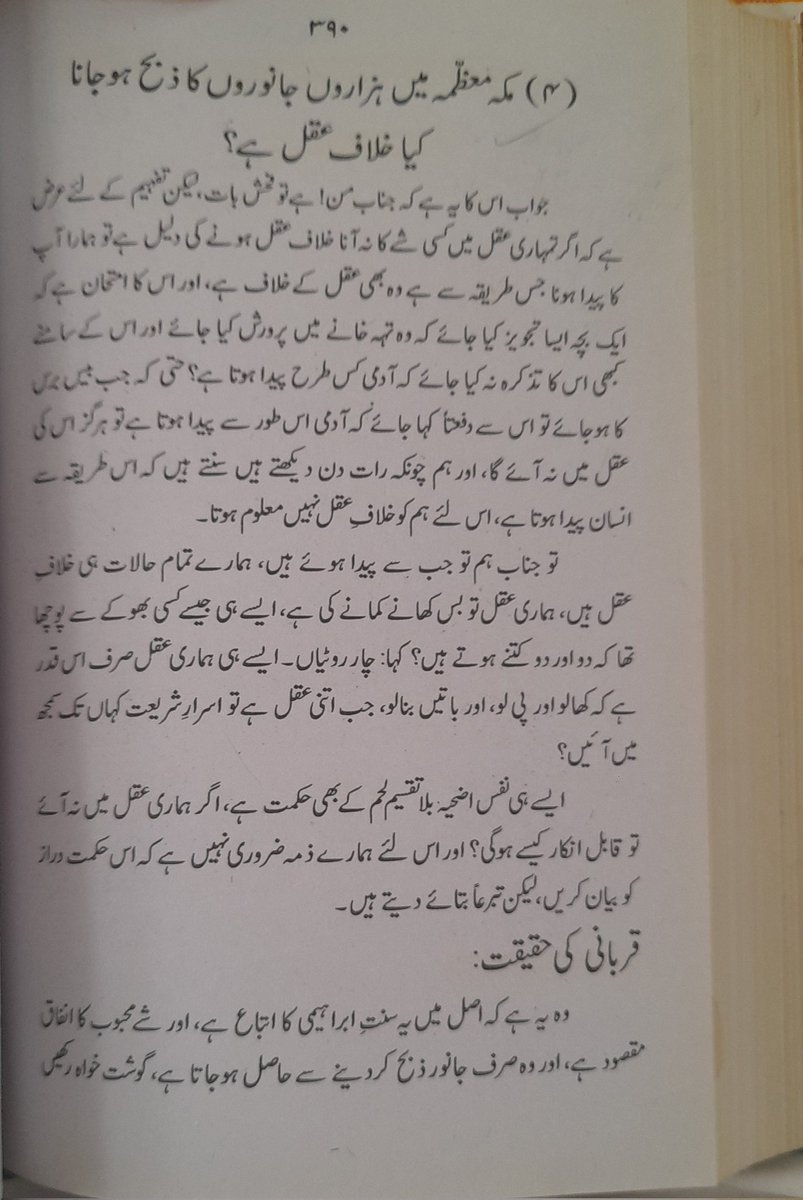
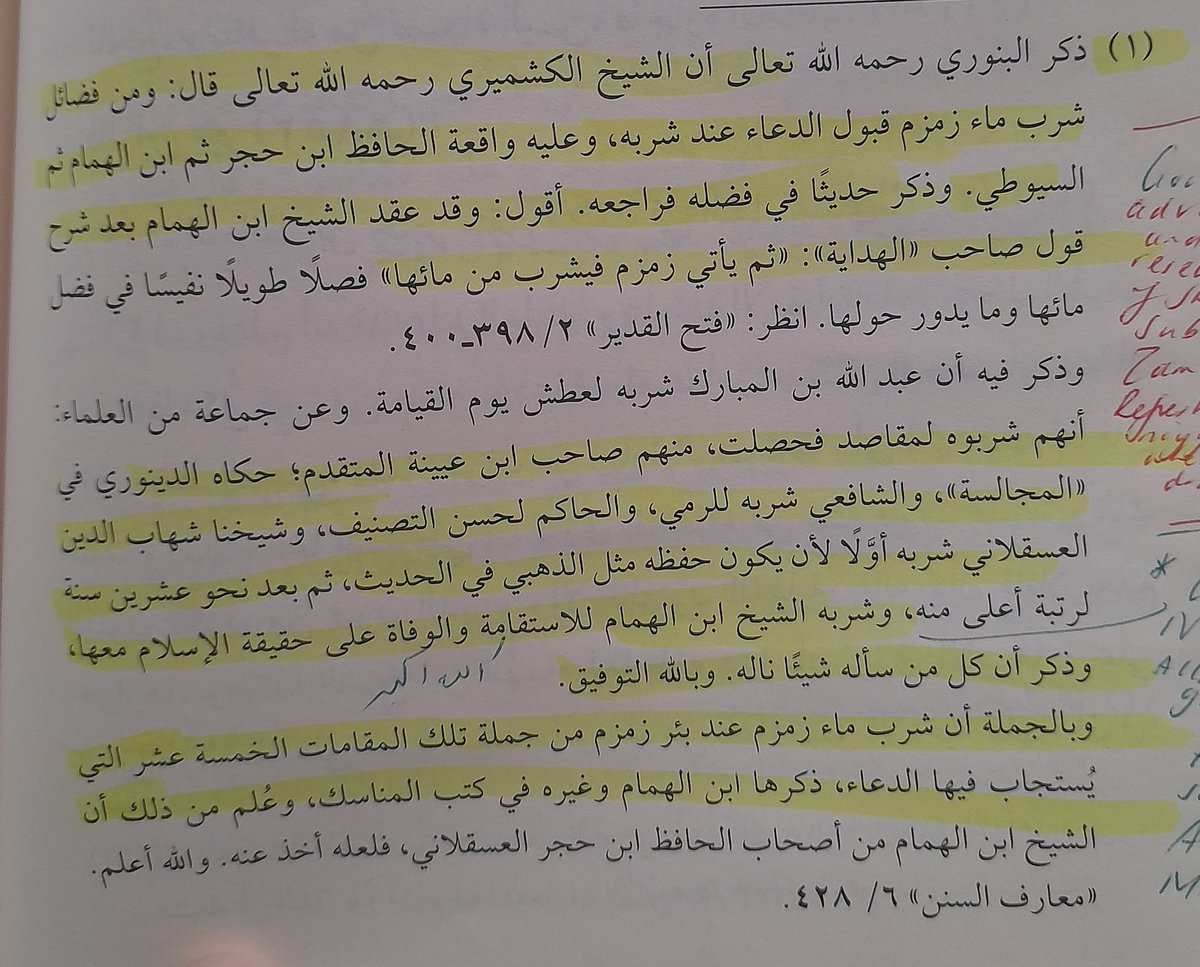
AbuMAAdam retweeted

24 Feb 2024
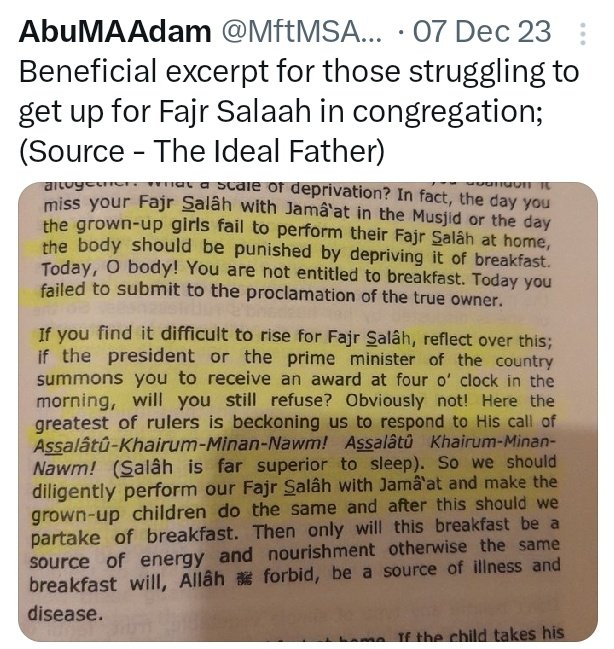
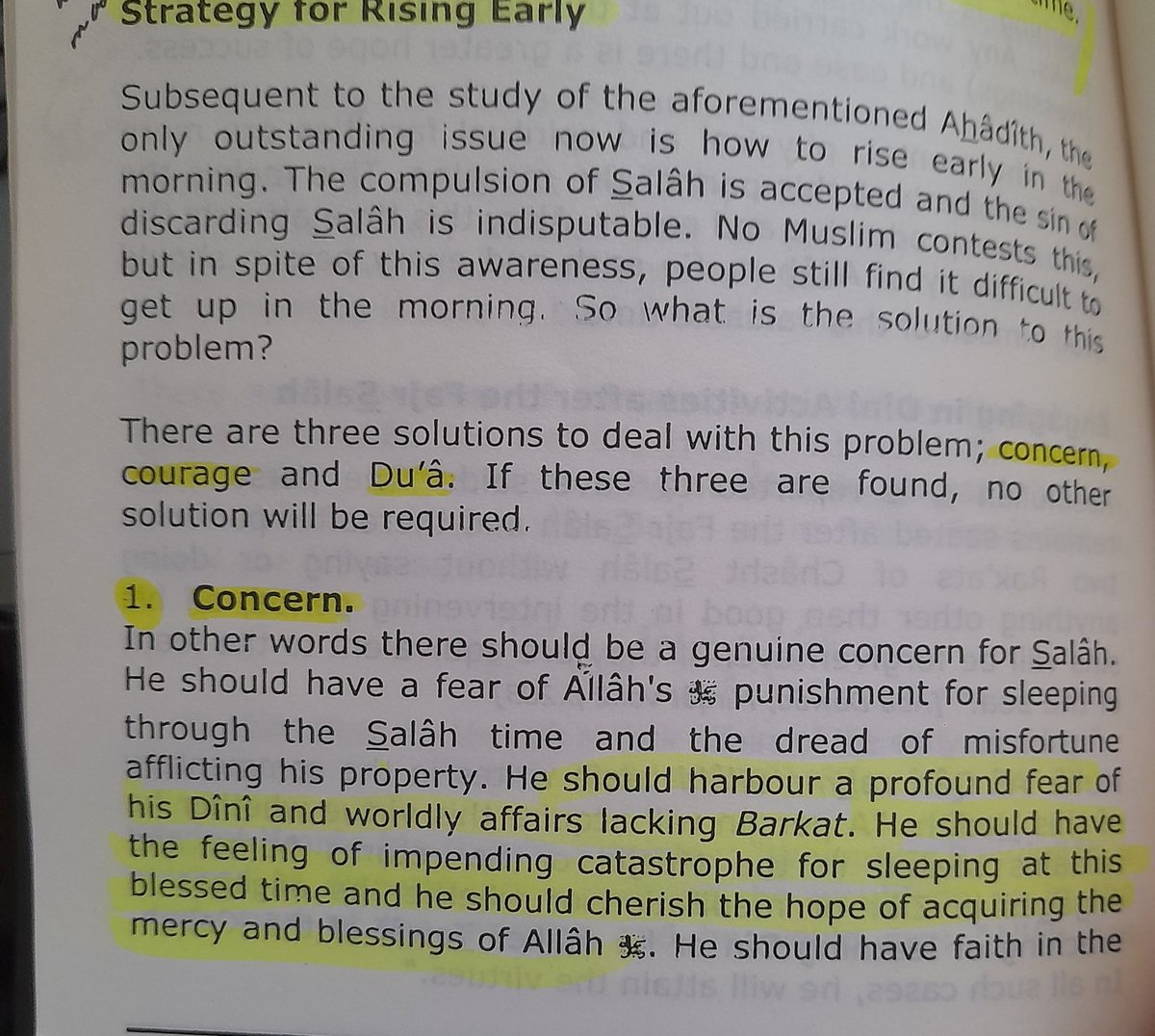
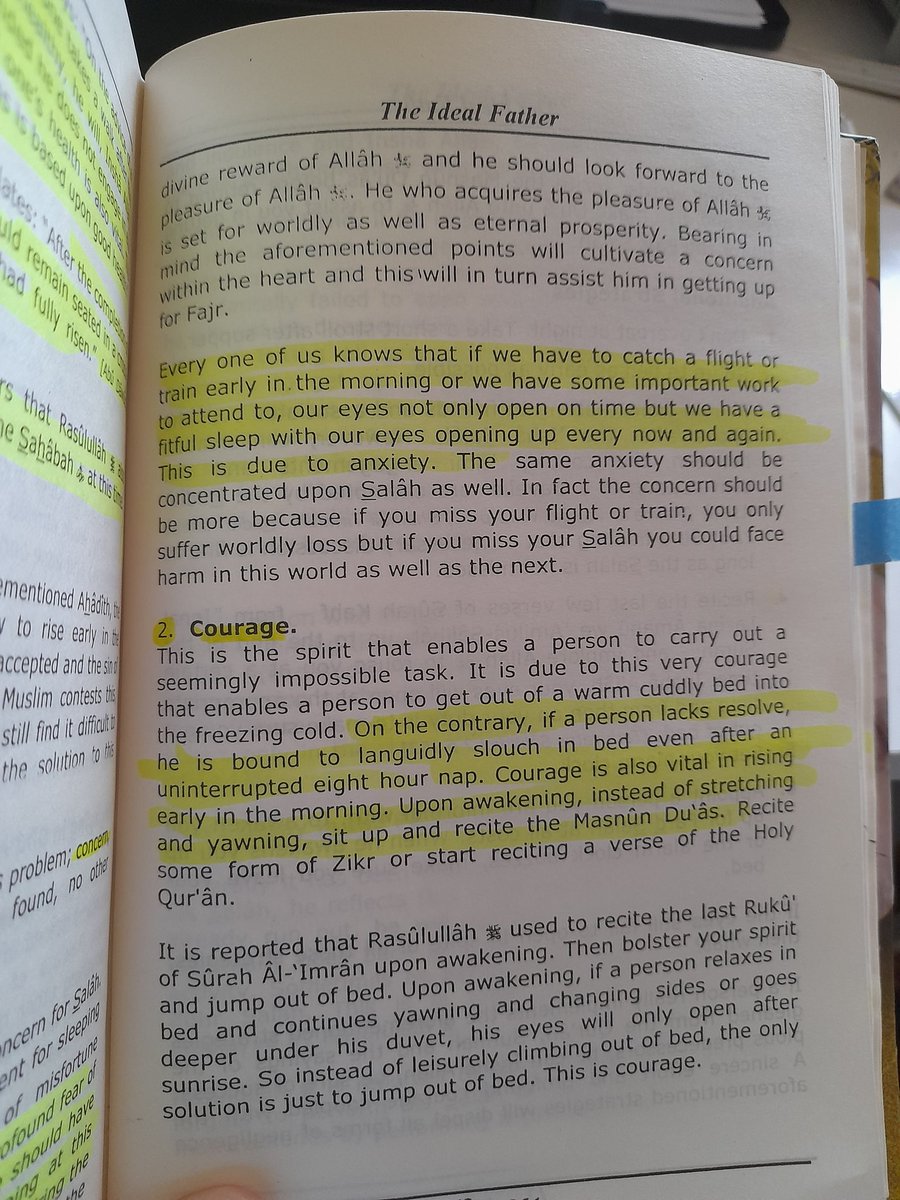
Handy advice for those struggling to get up for Fajr Salah;
#FajrSalah
#Routetosuccess
1
2
258
AbuMAAdam retweeted
8 Jun 2024
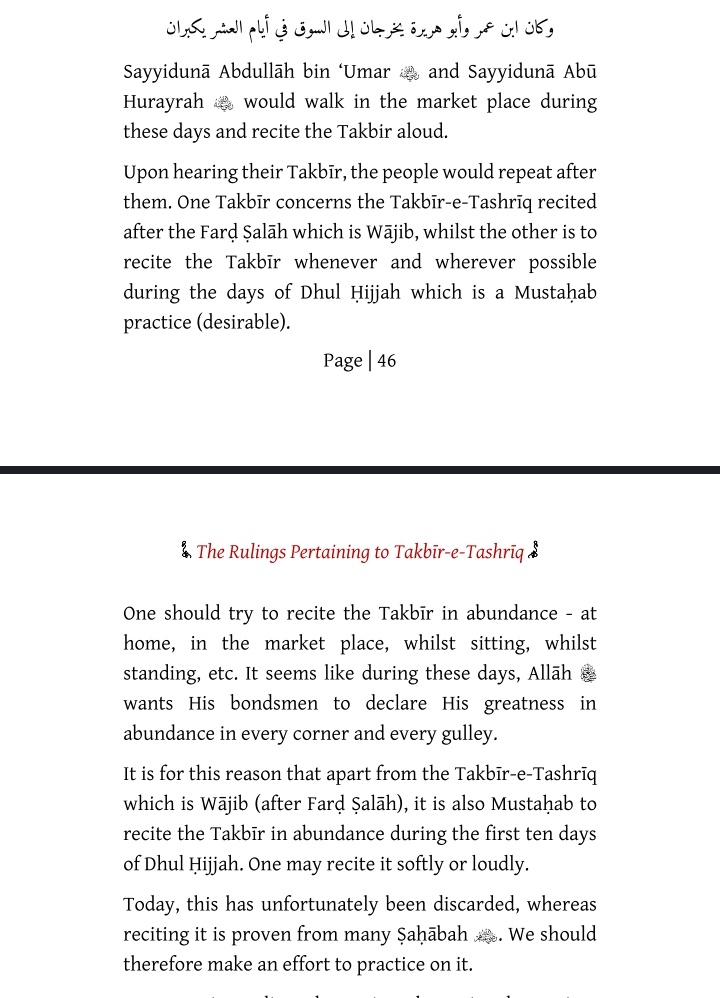
Revive this forgotten practice during these meritorious days of Dhul Hijjah,
#TakbeerTashreeq
1
1
4
231
AbuMAAdam retweeted
16 Jun 2024
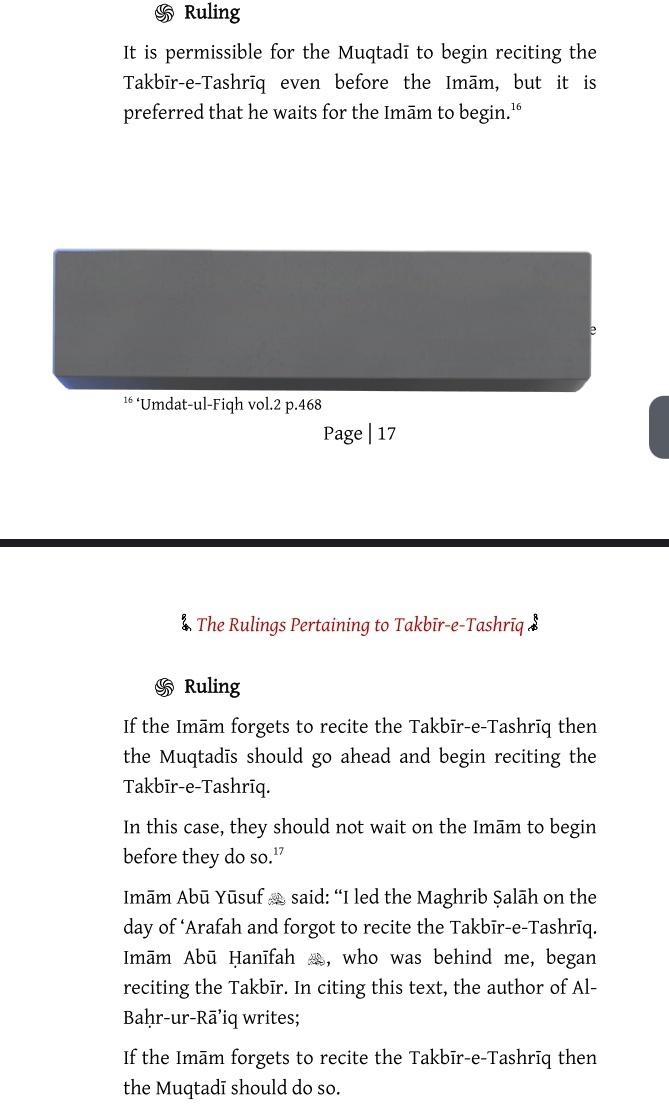
Beneficial reminder on the Takbeer-e-Tashreeq
#TakbeerTashreeq
1
1
2
227
AbuMAAdam retweeted
19 Jun 2024
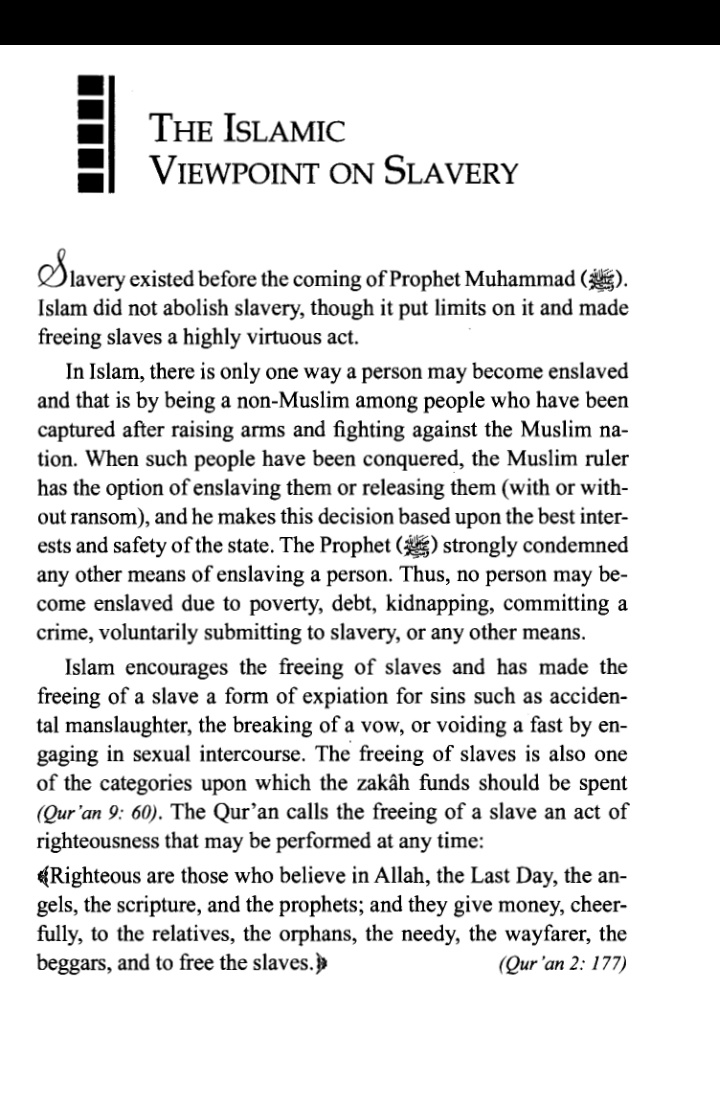
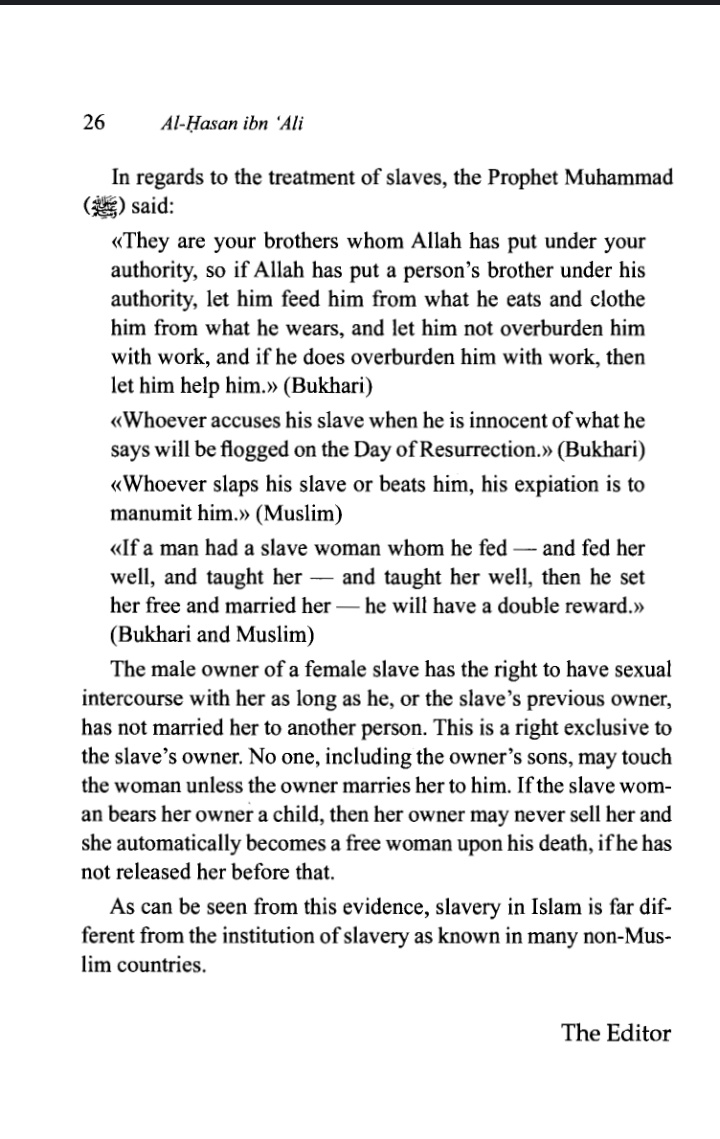
Beneficial note on the concept of slavery in Islam, clears a number of misconceptions on the topic; Ref : Al-Hasan ibn Ali by Salabi
#SlaveryinIslam
1
194
AbuMAAdam retweeted
Jan 19
There are hundreds of burst pipes all over the city&authorities dont bother sorting out, calling authorities is useless unless they pay hectic sums to get these fixed. Potholes well we don't sort these during the year and we then wait for the rains and expect someone to report
1
329
AbuMAAdam retweeted
Jan 19
Not one single location in Harare is spared tens and tens of terrible tyre popping potholes, more like craters.
1
31
AbuMAAdam retweeted
Mar 29
Spare a Thought!
A life in futility
Bereft of spirituality
Regret will ultimately be its eventuality
An undoubted fact of reality
So who then would like to be a casualty???
#Islamicpoetry
AbuMA-MAinstitute
1
74
AbuMAAdam retweeted
21 May 2025
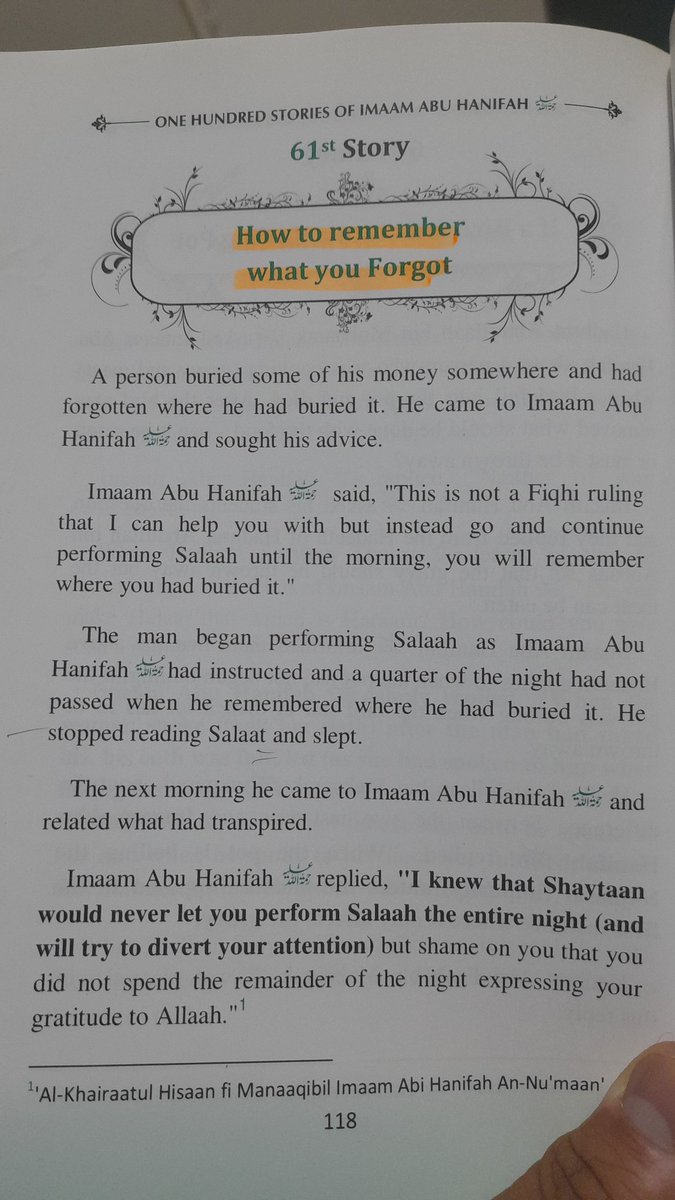
Useful practical tip to remember what you forget
1
6
213
AbuMAAdam retweeted
1 Jun 2022
i.e. obeying the commandments of Allah & following the Sunnah lifestyle of Nabi (sallallahu alayhi wasallam).
2
12
AbuMAAdam retweeted
1 Jun 2022
For Deen to come alive, the 'effort of Deen' is necessary, but Deen remains the objective. Therefore, those involved in the various efforts to promote & propagate Deen should ensure that they themselves are firm & steadfast on practicing Deen.....
1
5
41
AbuMAAdam retweeted
9 Jun 2022
One major blow against these enemies of Deen insulting Nabi (sallallahu alayhi wasallam) is for us to add a Sunnah or two from today onwards in our daily lives.
This is also a sincere expression of our love for the Messenger of Allah (sallallahu alayhi wasallam).
2
9
AbuMAAdam retweeted
23 Oct 2022
To greet with 'slm' or 'salams' or to respond with 'wslm', or to write 'jzk' in apparent appreciation is inappropriate and truly speaking, simply wrong. An effort should be made to write each of these completely. Adab wins the day, wins the mind and ultimately, the heart.
2
3
23
Jan 3
The world will carry on without us; the sun will rise, it will set, the feasting and everything else will all just continue, we not that important, therefore rather focus on building ourselves and sending something ahead for the life to follow. Be intelligent.
69
AbuMAAdam retweeted

27 Dec 2025
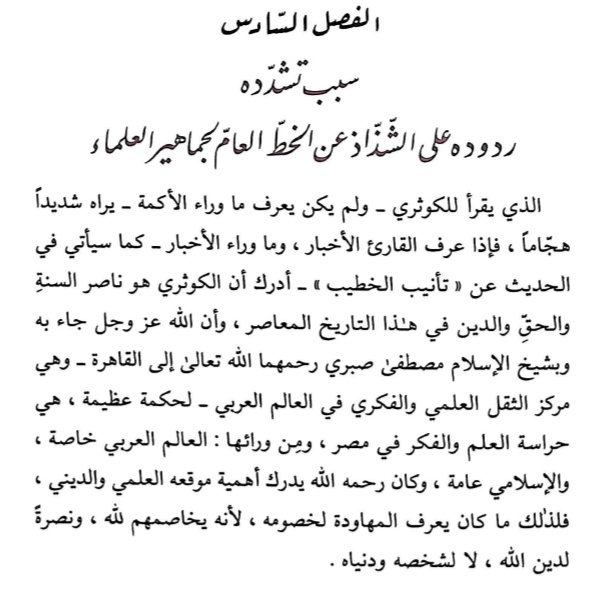
The Reason for His [al-Kawtharī’s] Strictness & His Refutations of Those Who Deviated from the Main Path of the Majority of Scholars.
Shaykh Muḥammad ʿAwwāmah writes:
“Whoever reads al-Kawtharī, without knowing what lies behind the hill, will see him as harsh and aggressive. But when the reader comes to know the reports [akhbār], and what lies behind the reports, as will come in the discussion of “Taʾnīb al-Khaṭīb”, he will realize that al-Kawtharī was the defender of the Sunnah, the truth, and the religion in this contemporary period, And that Allāh, Mighty and Exalted, brought him, together with Shaykh al-Islām Muṣṭafā Ṣabrī, may Allāh have mercy on them both, to Cairo, which is the center of ʿilmī [scholarly/learned] and intellectual weight in the Arab world, for a great wisdom, which is, to safeguard knowledge and thought in Egypt, and beyond it, the Arab world in particular and the Islāmic world in general. He, may Allāh have mercy on him, was aware of the importance of his scholarly and religious position; therefore, he knew no conciliation with his opponents, for he opposed them for the sake of Allāh, and in defense of the religion of Allāh, not for himself or for worldly interests.”
Source: 📖 Manhaj al-Imām Muḥammad Zāhid al-Kawtharī fī Naqd al-Rijāl | p. 37.
26 Dec 2025

Did Shaykh Zāhid al-Kawtharī attack the lineage and the Arabic proficiency of Sayyid al-Fuqahāʾ, al-Imām al-Shāfiʿī?.
Before we actually discuss the topic, there are a few key points that need to be noted.
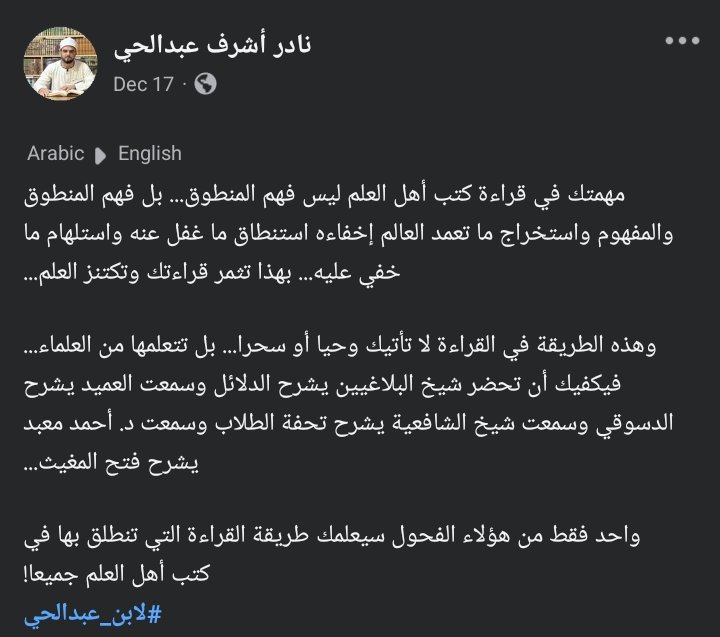
Sh. Nādir ʿAbd al-Ḥayy al-Shāfiʿī said:
“Your task when reading the books of the scholars is not merely to understand what is explicitly stated [i.e., the manṭūq], but to understand both the explicit meaning and the implicit meaning, to extract what the scholar deliberately left unstated, to make speak what he passed over, and to draw inspiration from what was hidden from him. By this method, your reading bears fruit and your knowledge becomes a stored treasure. This way of reading does not come to you by revelation or by magic; rather, you learn it from the scholars. It is enough for you that you attend the master of rhetoricians explaining Dalāʾil, to hear al-ʿAmīd explaining al-Dusūqī, to hear the Shaykh of the Shāfiʿiyyah explaining Tuḥfat al-Ṭullāb, and to hear Dr. Aḥmad Maʿbad explaining Fatḥ al-Mughīth. Just one of these mighty scholars is enough to teach you the method of reading by which you can then proceed through all the books of the scholars.”
It is necessary for a person to read the books of scholars with fairness and honesty, making a genuine effort to understand the author’s intent, methodology, circumstances, and other relevant factors, especially when the author is someone with whom one disagrees. This type of intellectual fairness in reading is severely lacking in this Ummah. And I say this candidly, without hesitation in speaking the truth, I myself often fall short of this standard when dealing with those I oppose, though I do try, even if I sometimes fail. Perfection belongs to Allāh alone. That being said, many people, when reading the works of al-Kawtharī, fall into the very problems mentioned above. One example is the claim that al-Kawtharī denied the Qurashī lineage of al-Imām al-Shāfiʿī, a claim that has become widespread among Salafī claimants and even among the scholars who teach them.
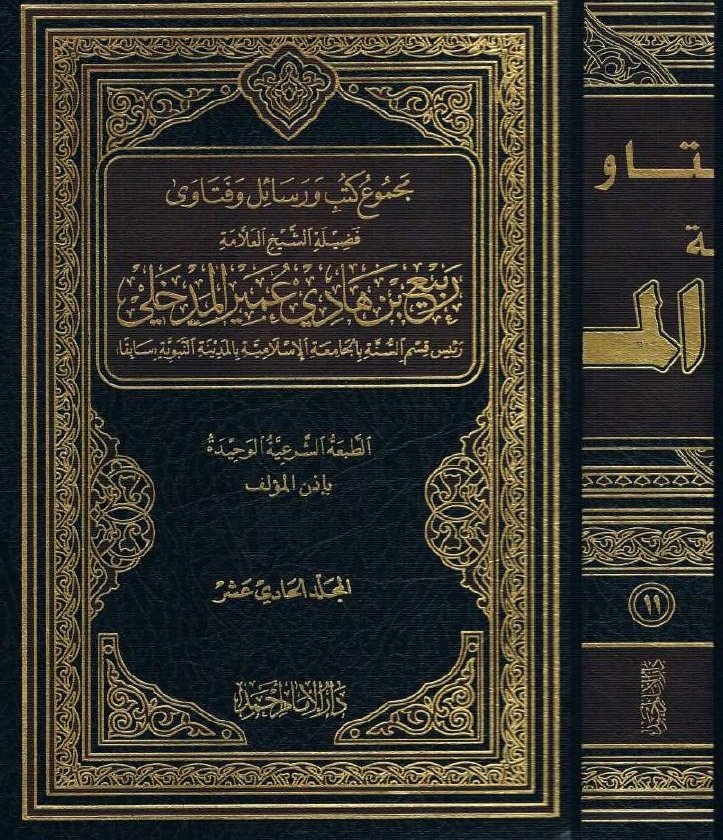
For instance, Dr. Rabīʿ ibn Hādī al-Madkhalī states this in the eleventh volume of al-Majmūʿ: “And have you read what was written by the one called Masʿūd ibn Shaybah, who was given the title “Shaykh al-Islām,” in the introduction to the book al-Taʿlīm, which was edited and annotated by one of al-Kawtharī’s students, meaning, his attacks against al-Shāfiʿī regarding his lineage, his [knowledge of the aarabic] language, and his jurisprudence, and likewise against al-Imām Mālik as well?..”
He also says: “The editor of the book then transmitted from his shaykh al-Kawtharī his statement: “No one before Zakariyyā al-Sājī ever raised the lineage of Shāfiʿ, the grandfather of al-Shāfiʿī to whom he is ascribed, to ʿAbd Manāf, and al-Sājī is someone who has been spoken against.” Al-Kawtharī and those like him ignore the consensus of the scholars on the Qurashī lineage of al-Imām al-Shāfiʿī, may Allah abase the nose of Shantīyah and of those who attack him [al-Shāfiʿī] and his brothers among the Imāms of Islam.”
The issue here is that Dr. Rabīʿ is not well-versed in al-Kawtharī’s methodology of criticism. Once he declares certain individuals to be innovators, he refuses to accept anything from them whatsoever. As a result, he also disregards the statements and explanations of al-Kawtharī’s students and those similar to him, despite their being well-versed in their shaykhs’ methodologies. He dismisses their words entirely on the basis that, in his view, they too fall under the category of innovators. This approach has been transmitted to his followers, who attempt to replicate it in the same manner. Moreover, he has authored works criticizing a number of mashāyikh, such as Abū Ghuddah, Muḥammad ʿAwwāmah, Ḥasan Ḥītū, and others. In discussions where he critiques one of their teachers, al-Kawtharī often becomes the central focus. However, he fails to grasp al-Kawtharī’s actual intent and critical methodology,...

5
7
53
6,991
AbuMAAdam retweeted
25 Oct 2022
If you can't make your day, make someone else's, but just don't spoil anyone's day.
1
5
AbuMAAdam retweeted
14 Nov 2022
Once you grey
Dye as you may
For youth is not there to stay
So prepare for that day
When you will be taken to task for all that you say
2
3
AbuMAAdam retweeted
24 Dec 2022
Let us learn how to appreciate &
be grateful for the great bounty of health. Last night visited yet another brother with a part of his leg freshly amputated due to a diabetes related complication. If we are grateful Allah Ta'ala will protect what we have and increase therein.
1
1
303
AbuMAAdam retweeted
29 Dec 2022
One practice the Fuqaha (Jurists) of the Ahnaaf despise is for one to face his face/head feetwards (towards the feet) when doing Takbeer-e-Tahreemah.
(Al-Hadiyyat ul Alaaiyya, Page 68)
1
2
342
AbuMAAdam retweeted
19 Sep 2023
Ref : Safr dir Safr (Mufti Taqi Usmani) with reference of Tabaqaat-e-Shafi
1
1
208