
Spiritual Trigger | Motivational quotes | Crypto Enthusiast 🪙 | Web3 Educator 📝| Finance 💰 AI 🤖| Explorer 🔬 | Football lover ⚽ | Computer Scientist 💻
Joined June 2024
- Tweets 56,268
- Following 4,445
- Followers 5,618
- Likes 56,083
1,454 Photos and videos







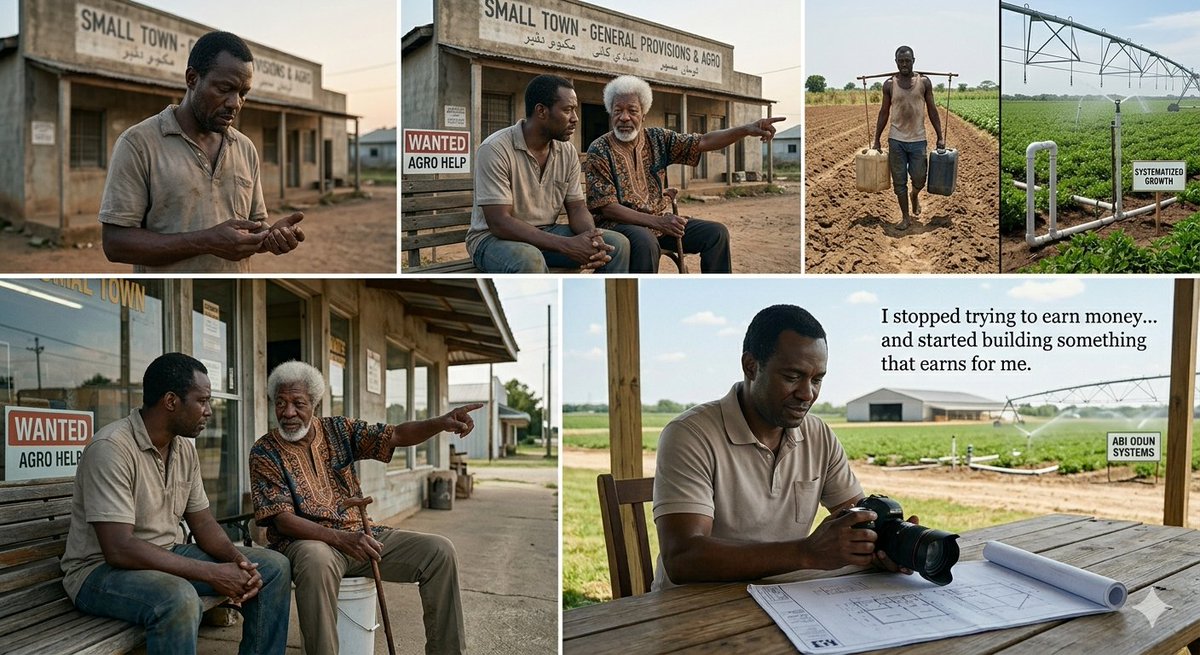


There are people who will actively drain your battery and then complain that you lack energy. Protect your field.
18
4
26
234

12h
Beware of the crowd that only cheers when you are down so they can feel superior by helping you up. Watch their faces when you actually win.
41
8
55
857
13h
👥 The Social Matrix
Some people only love you when you fit into their box. The moment you expand, they find a reason to leave. Let them.
28
6
42
580
15h
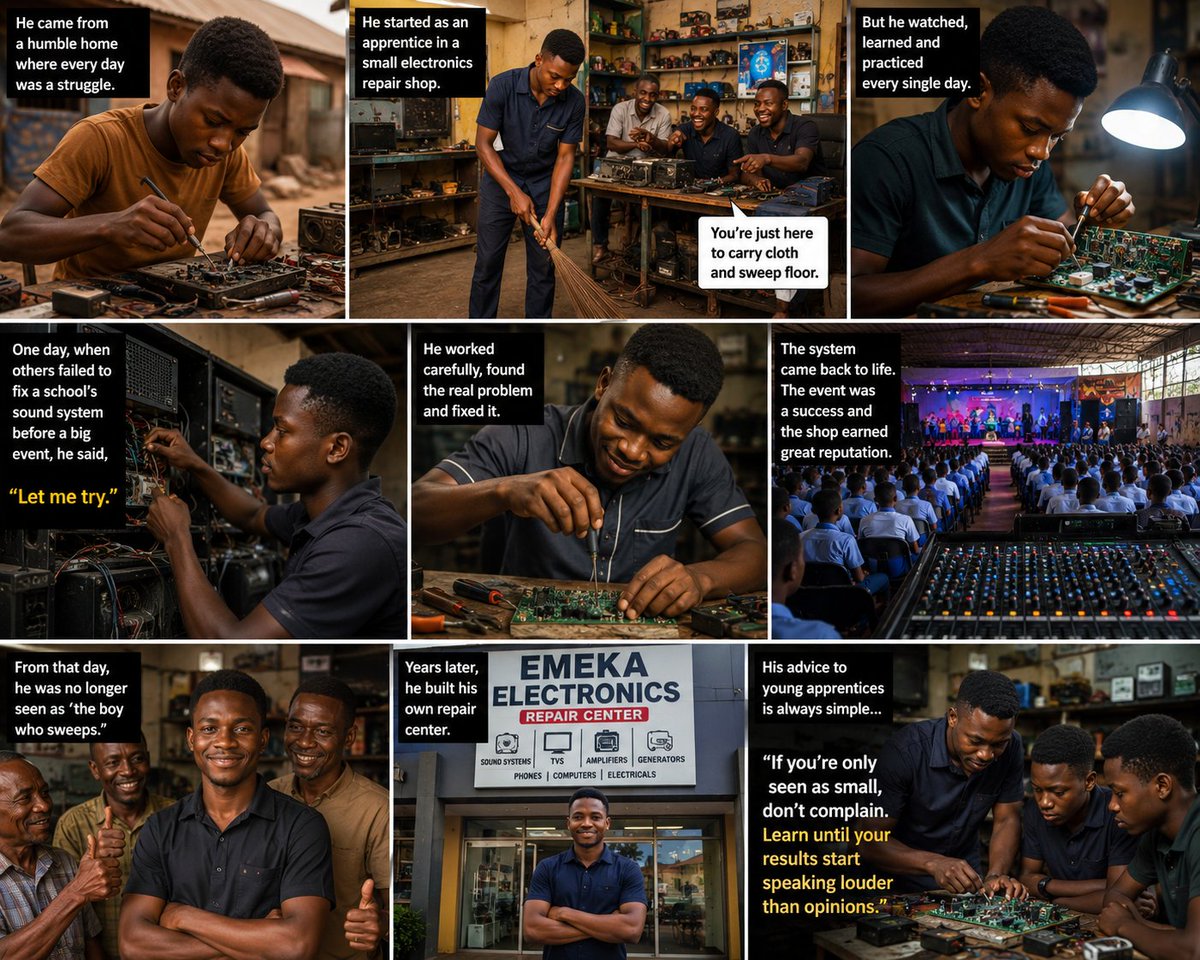
A young man named Emeka grew up in a crowded neighborhood where every day felt like a battle between hope and reality. His father repaired old generators behind their small house, and his mother sold pepper soup late into the night just to keep food on the table.
After finishing secondary school, Emeka couldn’t afford university. Instead, he started working at a small electronics repair shop. The job paid almost nothing, and most of his duties were cleaning tools, fetching parts, and watching the senior technicians work.
Some of them laughed at him.
“You’re just here to carry cloth and sweep floor,” one of them said.
But Emeka didn’t argue. He watched. He learned.
Whenever he was sent on errands, he would return faster than expected just so he could stand quietly and observe repairs. At night, he went home and practiced fixing broken radios and old phone chargers people threw away.
Months passed like that.
One afternoon, the shop received a serious job: a local school’s sound system had completely failed two days before a major event. The senior technicians tried and failed to fix it. The owner was under pressure, and the school threatened to cancel payment.
Frustration filled the room.
Then Emeka spoke softly. “Let me try.”
The room went quiet. Some people even laughed. But the owner, tired and desperate, nodded.
Emeka worked slowly. He checked wiring, traced faults, replaced a burnt component no one else noticed, and tested everything twice. After an hour, the system came alive—clear and loud.
Silence filled the shop, then shock.
The school event went on successfully, and the shop earned a bigger reputation because of it.
From that day, Emeka was no longer just “the boy who sweeps.” He became the one people called when things got difficult.
Years later, he opened his own repair center. Small at first, then growing steadily.
And whenever young apprentices joined him, he never insulted them. He only said:
“If you’re only seen as small, don’t complain. Learn until your results start speaking louder than opinions.”
21
1
32
414

Smitec retweeted

14h
Pretending to be clueless to people’s shady behavior is the final level of being smart.
106
1,258
6,417
86,735
Smitec retweeted
Jun 13
You can't build an empire with a minimum-wage work ethic.
Jun 13
.
5
1
22
326
18h
Good Morning, Fam! 🌞
As the weekend winds down, take time to rest and recharge for the week ahead. A well-rested mind thinks clearly, makes better decisions, and executes goals more effectively.
Use today to recover, reset, and prepare for the opportunities and challenges of tomorrow.
Wishing you a peaceful and productive Sunday! 💜🙏
56
8
57
787
18h
If you haven't seen it yet, I have a Dot (.) Tweet Challenge pinned on my profile.
Quote the dot with absolutely anything, and I'll repost every quote. 🚀🔥
5
79
Smitec retweeted
Jun 13
I once had an experience that changed the way I see life and setbacks.
At my workplace, I was accused of siphoning a certain amount of money. The truth was simple—my colleague who went with me on the purchase knew exactly what happened. But when it mattered most, he chose silence. Worse still, he refused to speak in my defence and instead sided with a woman who was the manager.
What made it more painful was that I later realized the manager already had her own fears. She saw me as a threat—someone who might take her position in the future. But in reality, I had no such intentions. I was just doing my job.
Still, I was sacked.
Just like that, everything I had worked for seemed to collapse. It wasn’t just any job—it was a lucrative opportunity that could have taken me out of Nigeria. That loss hit hard. I felt dejected, betrayed, and stuck. It looked like my future had been cut short in one moment.
But life has a way of continuing even when your plans don’t.
I kept going, even when it didn’t make sense. Even when I had questions with no answers. I struggled, rebuilt, and started again from a place I never expected.
Then, over time, God opened another door. A better one. A stronger one.
Today, I’m in a better place—not because nothing went wrong, but because I refused to let one wrong season define my entire life.
A lost opportunity is not a lost life.
Keep striving.
30
2
44
647
Jun 13
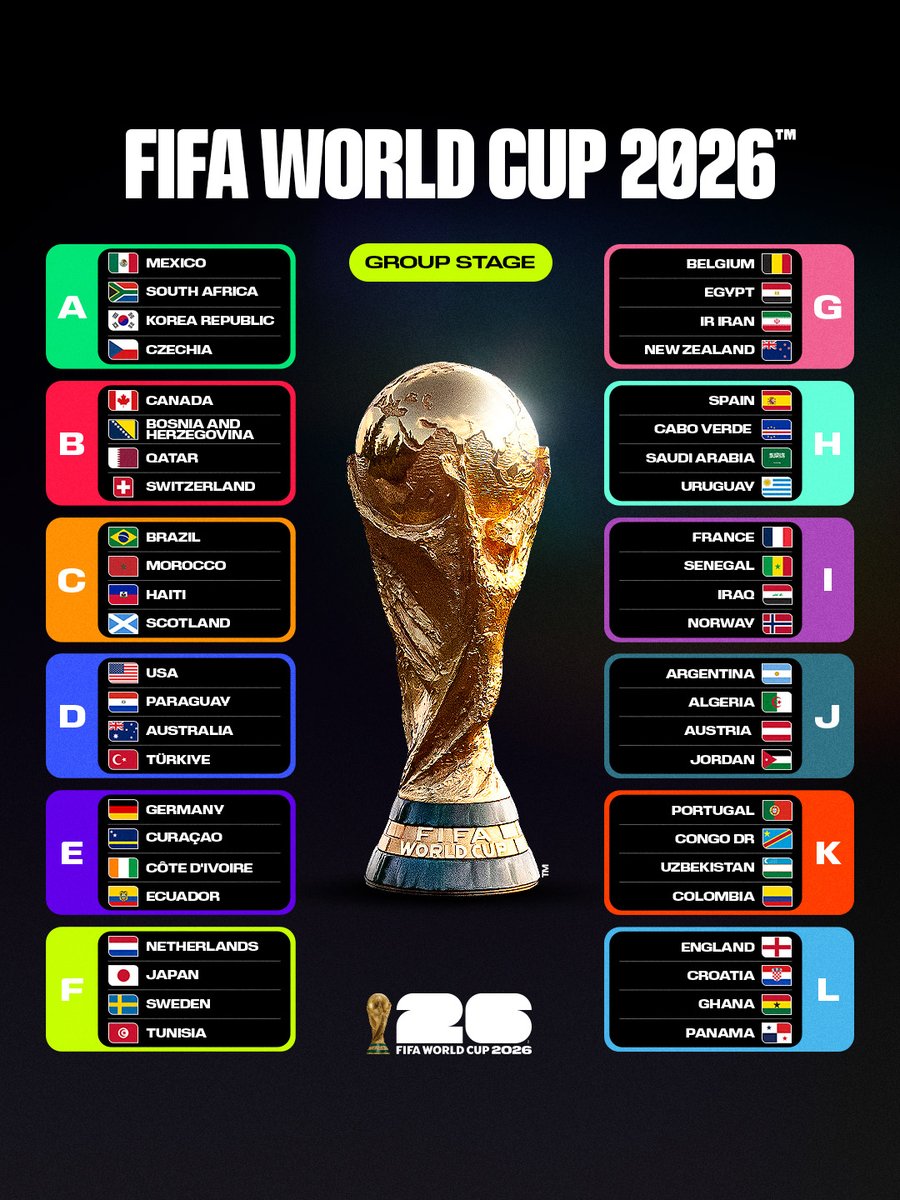
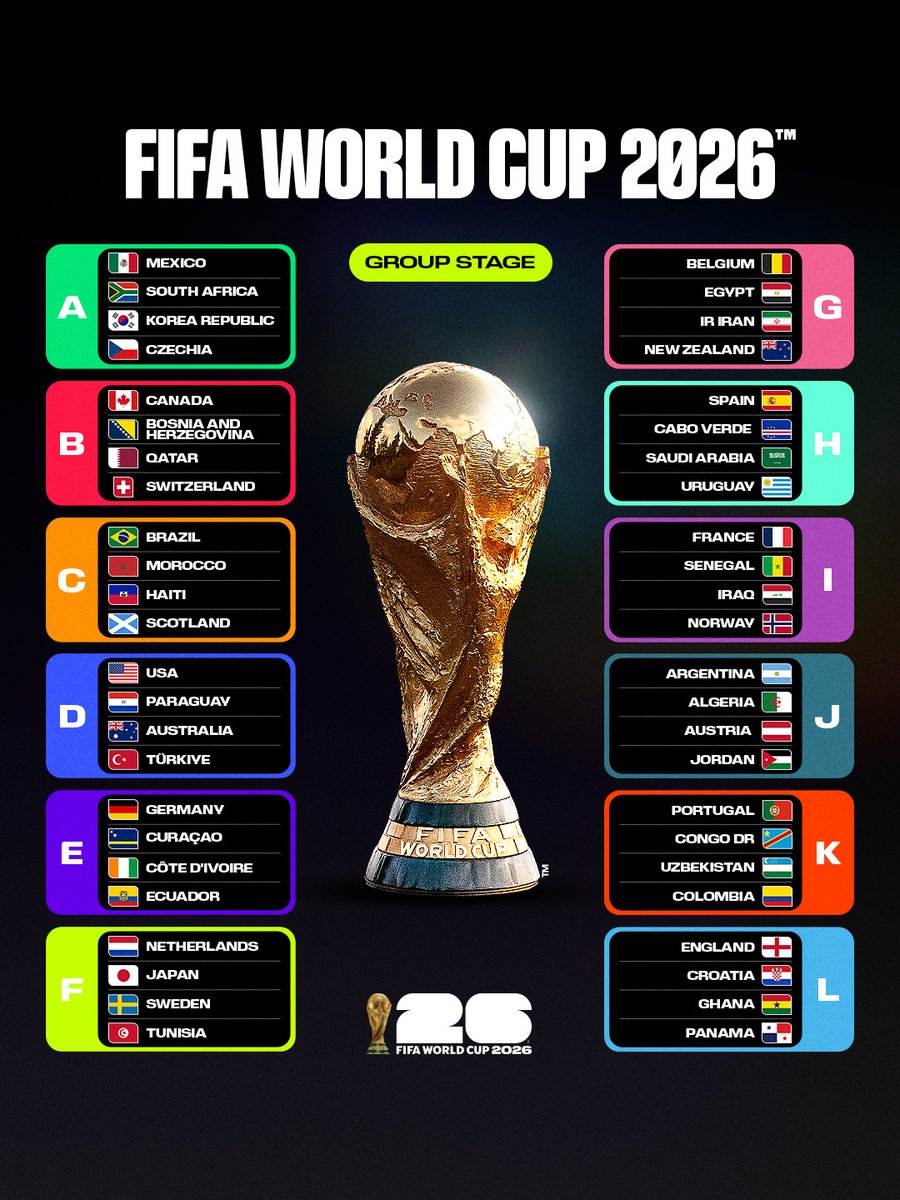
Big update for football fans.
@X’s brand new Soccer Custom Timeline powered for the beautiful game.
48 nations, one platform — this is how you follow football in 2026.
Here we go! ⚽🔥

5
1
11
401
Jun 13
On 21 Jan 2026, Lobistars @john322226 posted a viral dot tweet that has now reached 9.4M impressions. It was just a single “.” but carried one simple message 😊
I’ve now created my own dot tweet and pinned it on my profile.
Please quote it with anything you like and I’ll repost all quotes. Let’s go 🚀
Jan 21

.
4
9
133
Jun 13
Today is International Albinism Awareness Day (IAAD) 🤍
A day to spread awareness challenge stereotypes and remind the world that people with albinism deserve equal opportunities respect protection and love
Being different is not a weakness it’s part of what makes us unique
#IAAD2026 #AlbinismAwarenessDay #AlbinismAwareness
Jun 13

Today is International Albinism Awareness Day (IAAD) 🤍
A day to spread awareness challenge stereotypes and remind the world that people with albinism deserve equal opportunities respect protection and love
Being different is not a weakness it’s part of what makes us unique
#IAAD2026 #AlbinismAwarenessDay #AlbinismAwareness


6
1
11
385
Smitec retweeted

Jun 13
Stop porn, stop masturbation.
You’ll go to Hell
984
369
2,517
98,647