
Harvard professor studying how teams channel ingenuity and love. Dynamic teamwork. Joint problem-solving. Integrated services. Healthcare.
Joined November 2012
- Tweets 283
- Following 337
- Followers 598
- Likes 620
4 Photos and videos

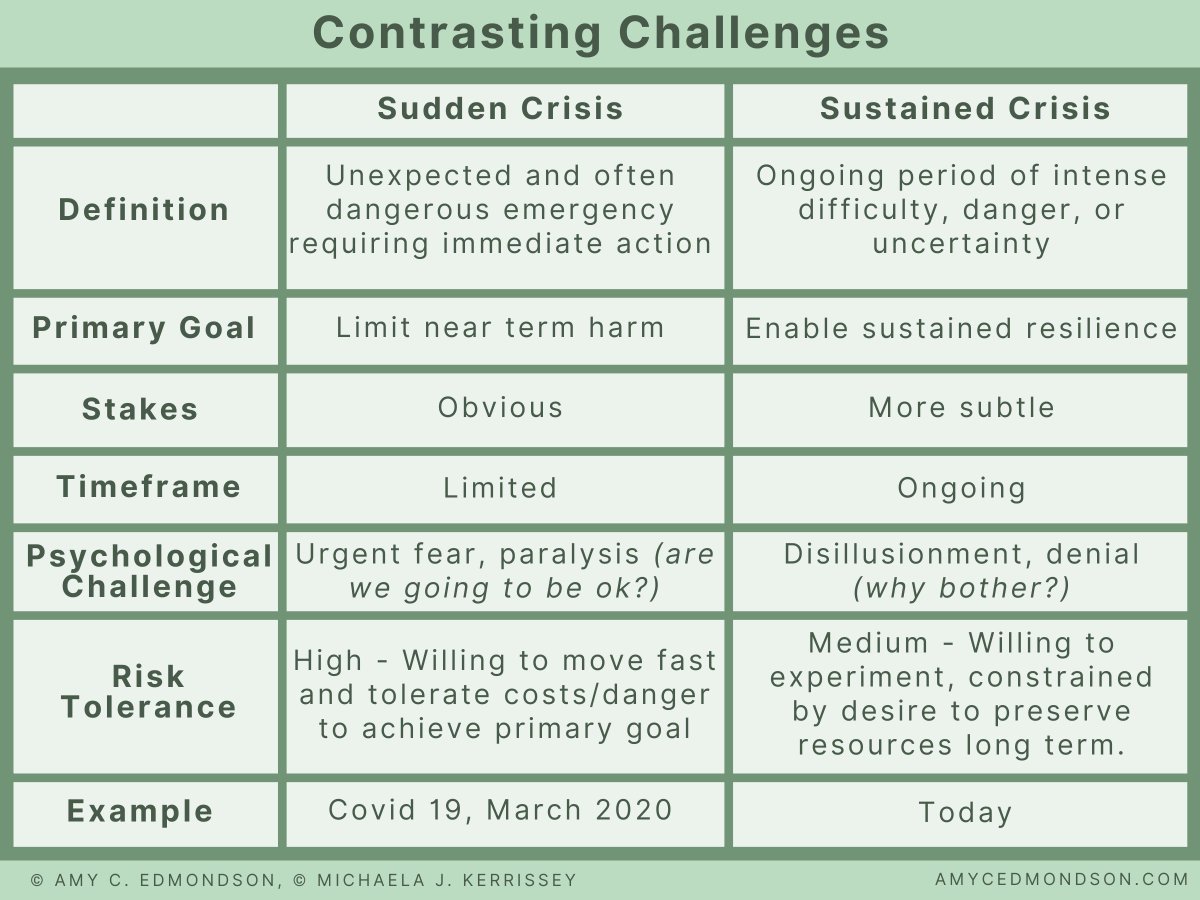
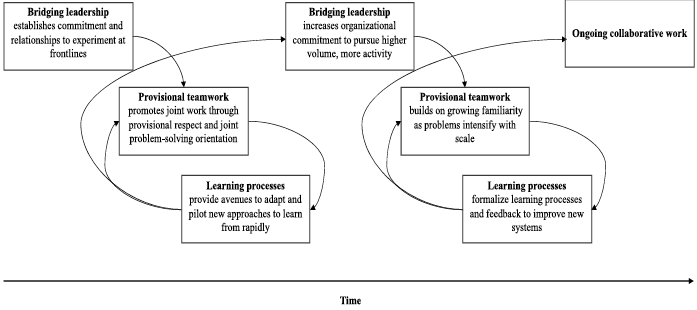
Michaela June Kerrissey retweeted

18 Jul 2024
Research: New Hires’ Psychological Safety Erodes Quickly hbr.org/2024/07/research-new… by @DerrickBransby @MichaelaJuneK @AmyCEdmondson
#Recruiting #Culture #PsychologicalSafety #PeopleAnalytics

6
7
981
Michaela June Kerrissey retweeted

4 Apr 2024
Agree and wondering where the
“Sensors” are in the org - in healthcare nice article from @MichaelaJuneK here dlvr.it/SzgvGh
1
1
2
322

6 Apr 2024
Loved talking teaming with @ruthadewuyamd @StanfordCME -- especially: if most people in healthcare understand the need for psychological safety and teaming, why is it still so hard to generate
2 Apr 2024

Learn more about teaming, fostering collaboration, addressing challenges & nurturing team dynamics with @MichaelaJuneK from @HarvardChanSPH on @StanfordMedcast Ep 81 of the #Leadership Mini-Series. #CME #MedEd
Stream now 🎙️medcast.stanford.edu/
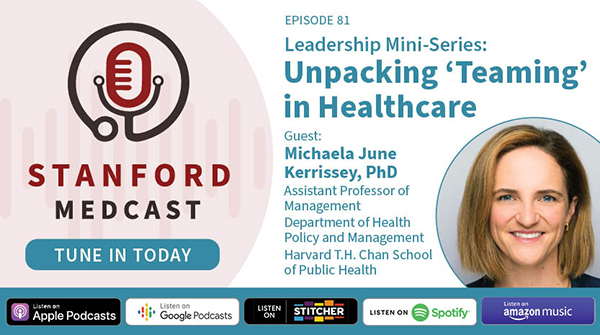
1
4
431
6 Apr 2024
Truly well deserved. Congratulations @jessicaleecohen
3
417
5 Mar 2024
Feeling heard at work matters. But when do people feel heard (or not)? We conducted interviews with nurses to find out. Two different types of issues:
-->walls (outright dismissal)
-->voids (ideas get lost in the system).
Both can be overcome, but with different tactics
4 Mar 2024

Overcoming walls and voids: Responsive practices that enable frontline workers to feel heard dlvr.it/T3b6X8
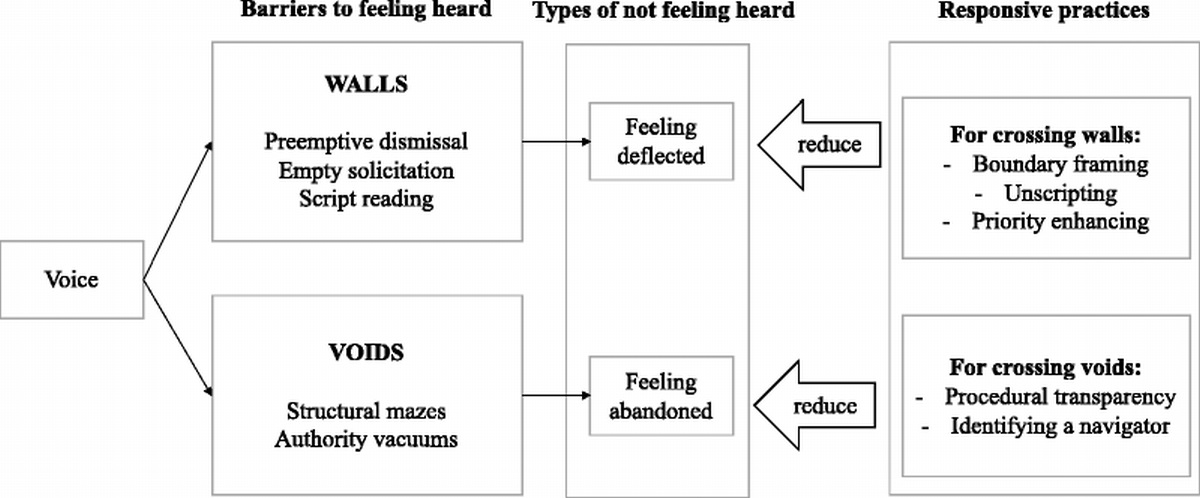
4
9
1,380
Michaela June Kerrissey retweeted

4 Mar 2024
Overcoming walls and voids: Responsive practices that enable frontline workers to feel heard dlvr.it/T3b6X8
4
1
1,582
Michaela June Kerrissey retweeted
27 Feb 2024
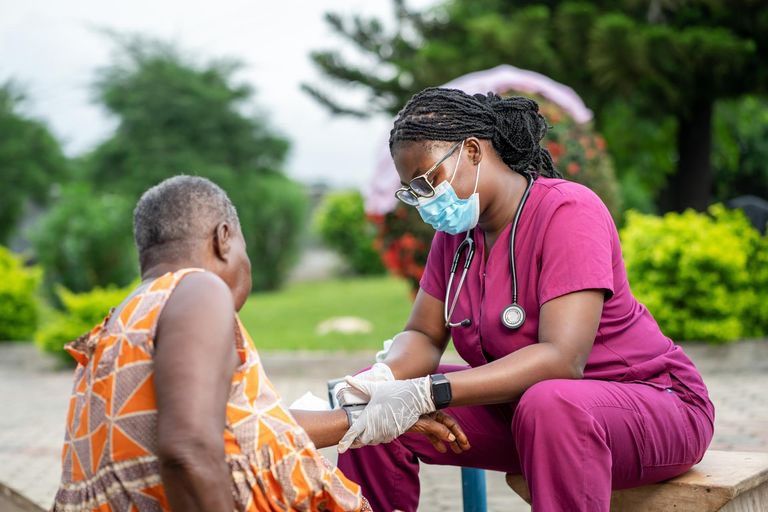
New article identifies the organizational barriers and facilitators for clinic–community collaboration: journals.lww.com/hcmrjournal… #HCLDR #HealthcareManagement #CommunityHealth #HealthcareInnovation
2
159
21 Feb 2024
Your next opportunity to join @AmyCEdmondson and me in our latest course with @Harvard Online is here! Apply by Monday, Feb 26 to learn how to create strategic approaches for improving team performance and outcomes in health care: harvardx.link/tmhc-f
2
164
20 Feb 2024
We are hiring a Research Assistant to join our team 🤸♂️ Projects focused on teamwork and process improvement in healthcare delivery. Looking for someone who is organized, eager, communicative and curious. Will fill quickly -- apply today! @HarvardHPM
sjobs.brassring.com/TGnewUI/…
3
4
878
13 Feb 2024
How can you get varied experts to generate value together -- even when time is tight and work complex? This large sample study (26k workers) suggests that joint problem-solving orientations differentiate high performing units. With @zhanna_novikov :)
frontiersin.org/journals/psy…
2
219
Michaela June Kerrissey retweeted

5 Dec 2023
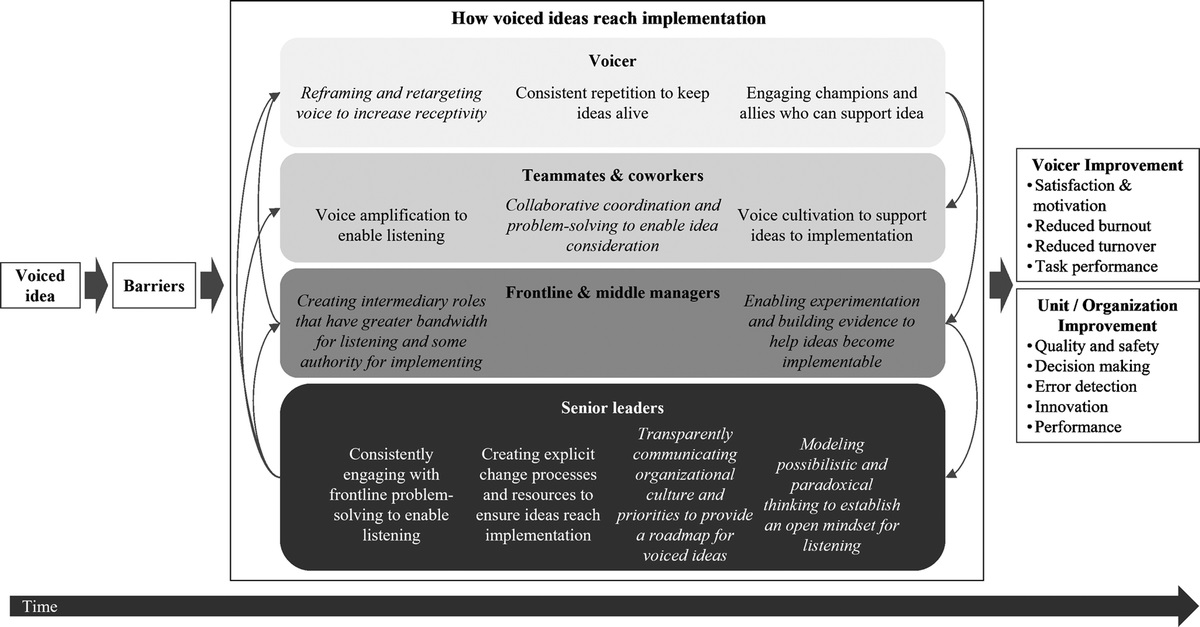
Really proud of this paper with Pat Satterstrom (@nyuwagner) @_ojung @MichaelaJuneK in @HCMRonline. In it we build a process model of how to get voiced ideas that are blocked or flagging to implementation. Check the link below.
4 Dec 2023
Voice is not enough: A multilevel model of how frontline voice can reach implementation dlvr.it/SzgvGh
1
5
20
1,995
Michaela June Kerrissey retweeted
6 Feb 2024
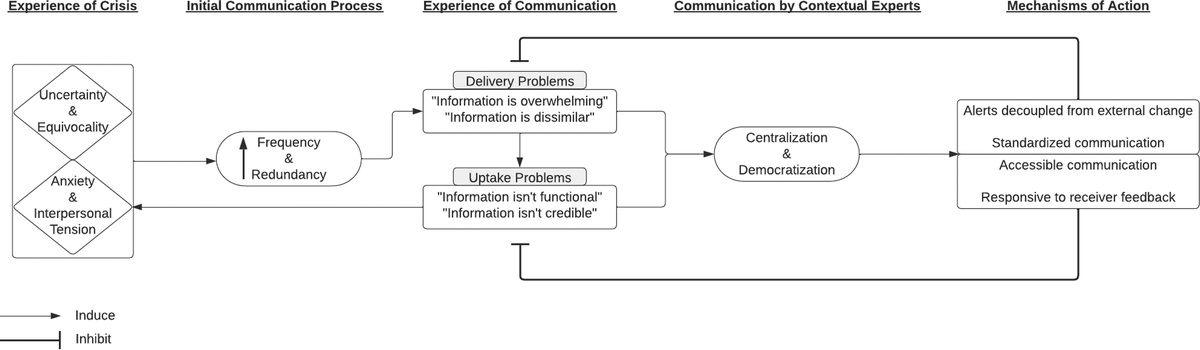
Attn health care managers, managing crisis communication in health care delivery: journals.lww.com/hcmrjournal… #HCLDR #HealthSystems #HospitalLeaders #HealthComm #HealthcareManagement @MichaelaJuneK

1
1
116
Michaela June Kerrissey retweeted

13 Feb 2024
New article published in @HCMRonline provides senior leaders with evidence-based strategies for bolstering rejected or ignored ideas from teammates and colleagues: journals.lww.com/hcmrjournal… #HCLDR @Owen4Aidan @NYUWagner @_ojung @MichaelaJuneK

2
4
179
13 Feb 2024
Enjoyed doing this study with @SianTsuei
The devil with ACOs and performance is apparently in the details. Here we look at: Where should care coordinators be located? Does it matter? Here the signs point to yes...and with tradeoffs worth considering.
13 Feb 2024
Trade-offs in locational choices for care coordination resources in accountable care organizations: journals.lww.com/hcmrjournal… #HCLDR #AccountableCare #ACO #PatientCare #HealthPolicy #HealthcareManagement @SianTsuei @MichaelaJuneK

1
219
11 Dec 2023
Why do we still use pagers in medicine?
@npr's Planet Money did an episode based on a case I wrote on this. Following 2 doctors who attempted (unsuccessfully) to kill the pager in their hospital 🧐
A fascinating and fun listen: podcasts.apple.com/at/podcas…
@HarvardHPM
2
4
312
10 Nov 2023
A great few days in London @thinkers50. It was an honor to be on the Radar Award Shortlist -- and a treat to be see @AmyCEdmondson rank #1 in the world (AGAIN). Plus who doesn't love a fancy party!


4
18
918
10 Nov 2023
Helpful paper and thread. Notably, "Productivity impact of hybrid WFH about zero. Productivity impact of fully-remote varied, dependent on how well managed this is."
9 Nov 2023

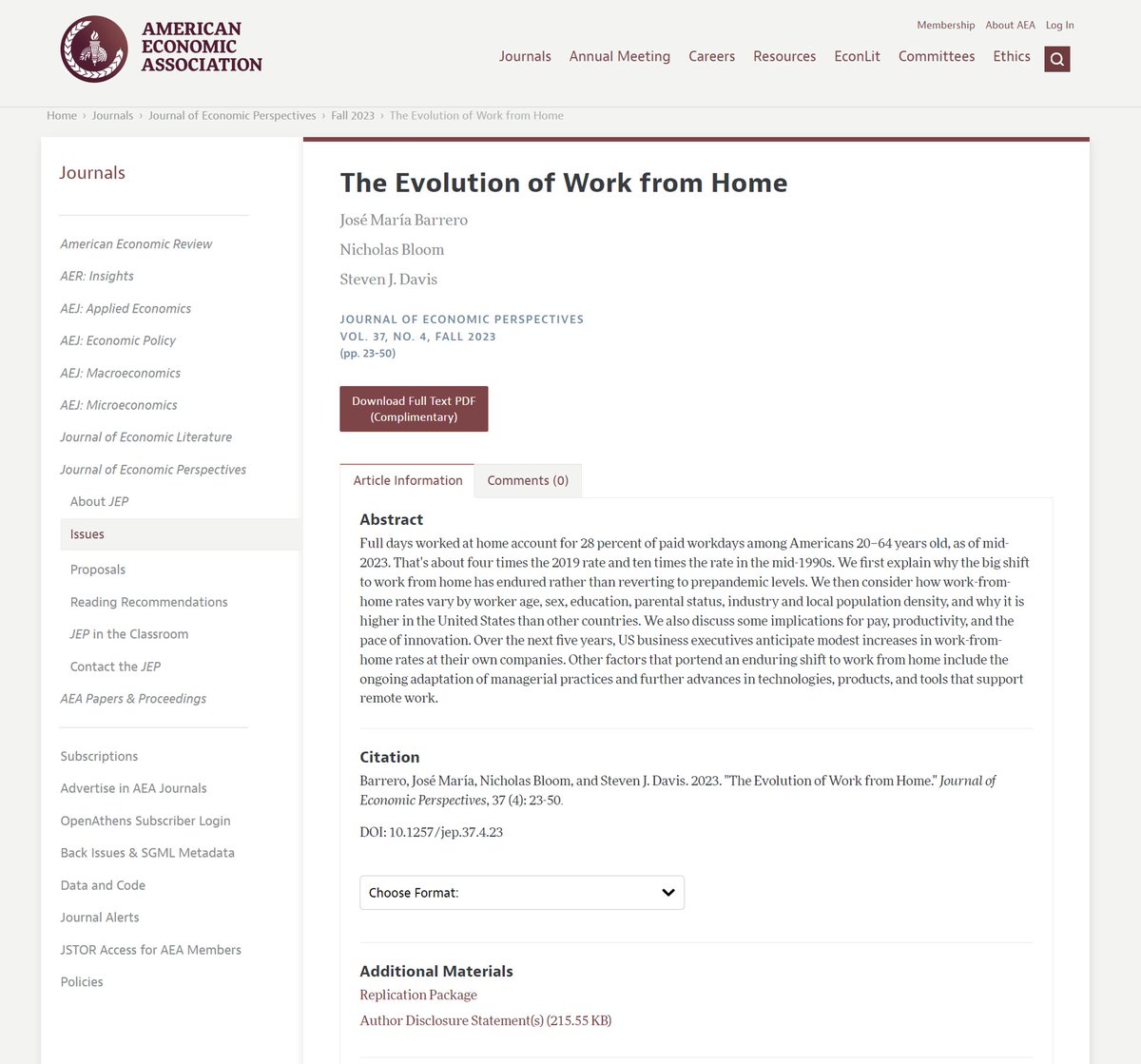
Our paper the "Evolution of Working from Home" just published pubs.aeaweb.org/doi/pdfplus/… overviewing the latest WFH data, trends, and research. Summary points:
1) WFH levels dropped in 2020-2022, then stabilized in 2023
2) Self-employed and gig workers are 3x more likely to be fully remote than salary workers (if you are your own boss you WFH a lot more)
3) Huge variation by industry, with IT having 5x WFH level of food service
4) WFH rises with density, and is 2x higher in cities than rural areas
5) WFH levels peak for folks in their 30s and early 40s (kids at home), those in their 20s have lower levels (mentoring, socializing and small living spaces)
6) Similar WFH levels by gender pre, during and post-pandemic
7) Much higher levels of WFH for graduates with kids under 14 at home
8) Productivity impact of hybrid WFH about zero. Productivity impact of fully-remote varied, dependent on how well managed this is.
9) Future will see rising levels of fully remote (the Nike Swoosh).
1
402
Michaela June Kerrissey retweeted
29 Aug 2023
Centralization and democratization: Managing crisis communication in health care delivery dlvr.it/SvKc0s
2
5
359
Michaela June Kerrissey retweeted

28 Aug 2023
ACOs must make trade-offs in choosing care coordinators' locations, considering enhanced care quality versus facilitating information sharing.
Date of Publication: 2023 Oct-Dec 01
pubmed.ncbi.nlm.nih.gov/3761…
#Medicaid
1
1
184