
Streaming thoughts, editing chaos || Building AI agents, on-chain identity & interactive connections for products | Reshaping ownership & commerce @kinnectibles
Joined December 2009
- Tweets 20,117
- Following 3,932
- Followers 4,976
- Likes 54,184
7,439 Photos and videos
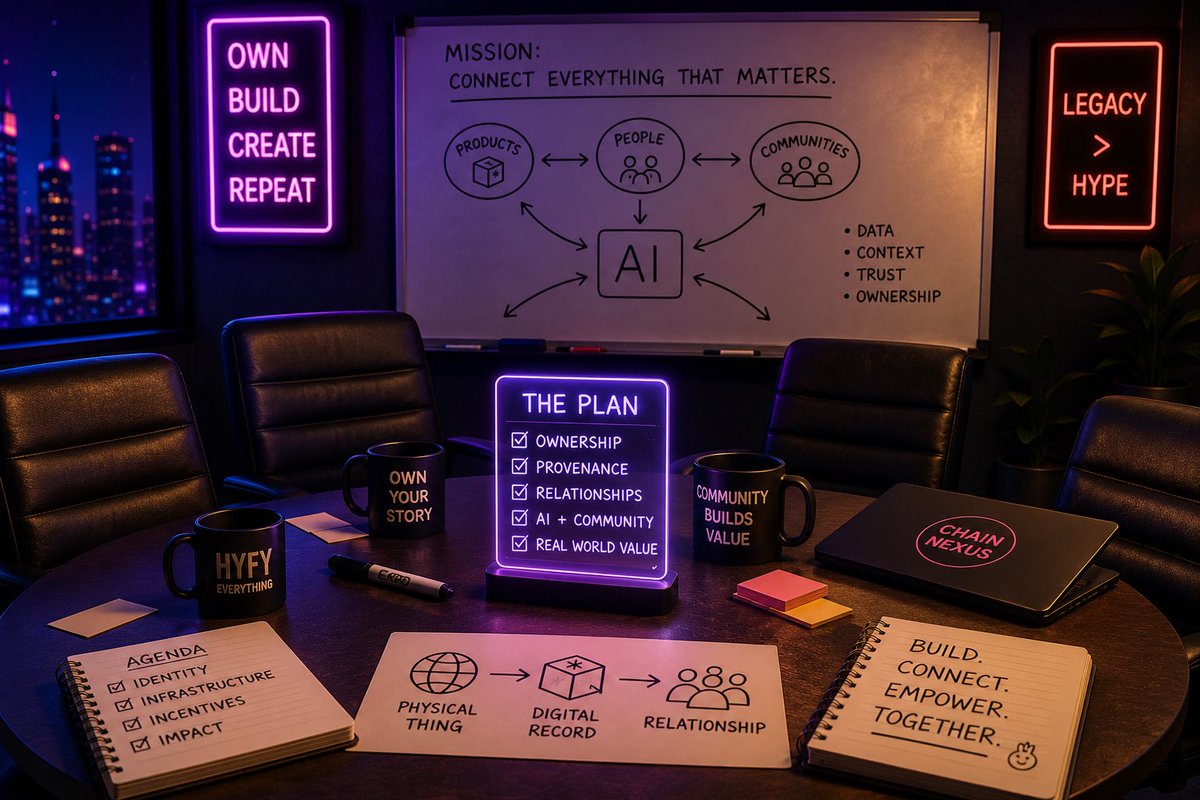








The people leading AI initiatives aren’t looking for more AI content.
They’re looking for people who have actually built something.
I’ve had a few conversations recently with people in charge of AI at large companies. Enterprise brands, big 4 consulting, venture capital.
One thing keeps surprising me.
Many of them know the headlines, know where the money is being spent, see the business demands.
Few of them know anyone actually effectively building.
And that’s not a criticism. It’s just where we are in the cycle.
Most AI conversations today fall into three buckets:
Consumers
Specialists
Operators
Consumers use the tools.
Specialists understand the technology.
Operators are trying to answer a different question:
“How does this create value in the real world?”
That’s where things get messy.
Data.
Workflows.
Incentives.
Adoption.
Governance.
Customers.
People.
The technology is often the easiest part.
What’s interesting is that some of the ideas many of us explored in Web3 weren’t wrong.
Many were simply early.
Identity.
Provenance.
Ownership.
Trust.
Context.
Reputation.
Relationships.
The implementation may have missed or are a work in progress.
The underlying problems never went away.
My background has always been around product serialization and lifecycle management.
For years I’ve looked at systems through a simple lens:
Physical Thing
↓
Digital Record
↓
Ownership
↓
Behavior
↓
Relationship
The more I work with AI, the more I realize the pattern hasn’t changed.
The language changed.
The pattern didn’t.
A lot of people saw NFTs as JPEGs.
Some saw them as relationship infrastructure.
A lot of people see AI as chat interfaces.
I suspect the bigger opportunity is relationship infrastructure again.
Products.
People.
Communities.
Experiences.
Connected through identity, memory, and context.
We’re still very early.
2
1
8
224
“How many communities do you support?”
I came in with an idea of how I’d answer and left with anchors that will propel me further.
If you love it, it’s sustainable and it leaves a legacy, support it.
Thanks to @peanutt, @TheStevenWarner and all who contributed to helping me see this clearly.

2
2
11
404
NFT = Limitless
If NFTs are limitless, then the logic isn’t “NFT > everything.”
It’s “NFTs can contain everything.”
Art. Access. Identity. IP. Community. Commerce. Media. Memory. Utility. AI agents.
NFTs aren’t the asset class.
They’re the wrapper.
May 11

Nft > everything else
4
9
384
🚀 🏄🏾♂️ 👀
May 12

Had a great call yesterday with @MicroM43 discussing the upcoming changes we'll be making to @SpaceRidersXYZ.
Micro has been a longtime holder of Space Riders and has always supported us throughout our journey.
He’s incredibly knowledgeable when it comes to blockchain, serialization, and using NFTs from both a technical and business standpoint.
It was refreshing, insightful, and a big help.
The future is bright.
5
3
24
722
If you’re still here wondering how blockchain, NFT technology and decentralization actually disrupt the world, this is the most important post you’ll read this year.
Only through 5 years or belief, sacrifice and a willingness to keep evolving can you gain this type of perspective.
Shoutout to the Founders who took the time to make this happen. Couldn’t have said it better myself.🫡
May 11

~20 founders and builders met in Miami for 4 hours discussing how the NFT industry must mature.
Team members and founders from @MetaMask, @opensea, and top collections showed up at @IglooInc HQ to discuss what needs to change.
This post is meant to be a starting point, not a definitive recap.
What we discussed does not apply to every project. Some are strictly crypto-focused, and that's fine.
Here are the 5 things that stuck with me:
1/5: NFTs aren't the product. And the word itself is radioactive.
The market alone is no longer enough to sustain the category. The founders in the room want to escape the "crypto casino" frame and become something closer to Pokémon, Rolex, fine art, country clubs, designer toys, or a TCG.
The NFT itself is one part of the business:
> the receipt
> the identity layer
> the membership layer
> the collector layer
> the coordination layer
But there is more:
> licensing
> retail
> media
> distribution
> emotional attachment
> recurring revenue
> products
Nobody buys a Pokemon card for the cardstock technology.
Nobody waits in line for Supreme for the supply chain.
No one buys an Piguet for the clock tech.
Good NFT brands stop acting like crypto projects. They act like brands, media companies, and consumer businesses.
The word "NFT" itself is probably permanently damaged.
I almost never tell people outside of crypto that I have an NFT brand. In their mind, the word triggers "scam" before I even finish the sentence.
The industry is looking for replacements like "digital collectibles" or "tokenized assets".
But outside of an investor/crypto audience, the technology layer should be consumer-invisible.
Nobody says:
"I bought a JPEG compressed with advanced image protocols"
"I streamed an MPEG-4 encoded file"
"I transferred a TCP/IP packet"
The abstraction layer has to disappear. The brand wrapper has to be the thing.
I don't see @bearish_af as an NFT company. For us, NFTs are one tool wrapped around a thesis: build cool things people like.
For people outside of our industry, NFTs must be downstream of something larger.
--
2/5: The industry has a love problem, not a liquidity problem.
The best parts of NFT culture were never just financial.
They were:
> identity
> taste
> friendship
> inside jokes
> shared language
> digital tribes
> lore
> collecting
> weirdness
> belonging
At its best, NFT culture made the internet feel smaller, stranger, and more alive.
You could travel to any city and find your people.
You could show up with a PFP and immediately have context.
You could collect something not only because you thought it might go up, but because it said something about you.
This matters.
And I think the industry forgot how important it was.
When everything becomes about floor price, liquidity, exits, and incentives, the culture starts to rot.
The question is not just:
“How do we bring in more buyers?”
The better question is:
“How do we build worlds people actually want to be part of?”
Because the projects that survive long term will not only be the ones that create financial upside.
They will be the ones that create emotional gravity.
The ones where people want to stay even when the chart is boring.
The ones where the community itself feels like the product.
--
3/5: There are actually two completely different businesses hiding inside "NFTs."
1. Web2 consumer / IP / revenue business
2. Web3 financial / speculative business
Different physics and audiences.
Web2 looks like:
>retail
> licensing
> toys / games
> emotional attachment
> MRR / revenue
Web3 looks like:
> speculation
> liquidity
> status
> trading
> leverage
> cycles
Most projects try to fuse these into one product and get crushed by the contradiction.
Web3 holders demanded utility. But when utility became the whole story, it capped the mythology.
At minimum, the two need separate strategies, teams, P&Ls, and success metrics.
The Web3 side creates early alignment, cultural ignition, and capital formation. The Web2 side gives the brand durability outside the bubble.
When a community gets trained to only care about price, the project becomes structurally unstable until there is a deeper reason to belong.
You don't have to pick. But you have to separate if your goal is to break out of the crypto bubble.
--
4/5: Founders are deeply traumatized.
Every founder in this space has lived through some combination of:
> burnout
> betrayal
> community resentment
> unrealistic expectations
> price collapse
> toxicity
> emotional exhaustion
> community turning on the founder
> culture decay
If you ever see a founder disappear, step back, or go quiet, it is probably because of that.
Everyone still believes in the category. Almost nobody trusts the market.
Which is why the conversation kept collapsing into three questions:
> how do we survive?
> how do we monetize?
> how do we change sentiment?
The anonymous PFP is empowering and corrosive at the same time. The same identity layer that made the culture powerful can also make it brutal for the people building inside it.
--
5/5: Utility can cap upside.
This one hits hard for real builders.
The moment you ship utility, you ship a spreadsheet. And the moment a spreadsheet exists:
> ROI expectations appear
> entitlement appears
> price-to-value math appears
> finite valuation models appear
Culture doesn't behave rationally.
Rolex isn't valuable because of utility.
Birkin isn't valuable because of utility.
The Mona Lisa isn't valuable because of utility.
They're valuable because:
> status
> mythology
> emotional meaning
> social signaling
> collective belief
> scarcity
> narrative
Punks proved this. No utility, no roadmap, no promises.
Just first, scarce, and mythologized. Still standing.
The trap most projects fell into: they needed near-term cash, so they shipped utility.
Utility paid the bills and capped the ceiling at the same time.
--
Final thoughts:
This felt historically important because the room finally sounded like operators instead of traders.
2021 was:
> greed
> novelty
> chaos
> speed
> extraction
> infinite optimism
This was:
> distribution
> positioning
> retention
> emotional durability
> monetization
> onboarding
> consumer psychology
> culture design
> operational sustainability
The industry is remembering that culture has to be felt before it can be financialized.
--
There were real next steps discussed privately. I’m leaving those out for now, but the important part is the coordination from people that really care about this industry and its people.
Thank you @LucaNetz for organizing, and everyone who was able to participate. I am incredibly bullish on the people still here and what we can build from here.
1
1
9
343
Live, get in the game!!

1
2
128
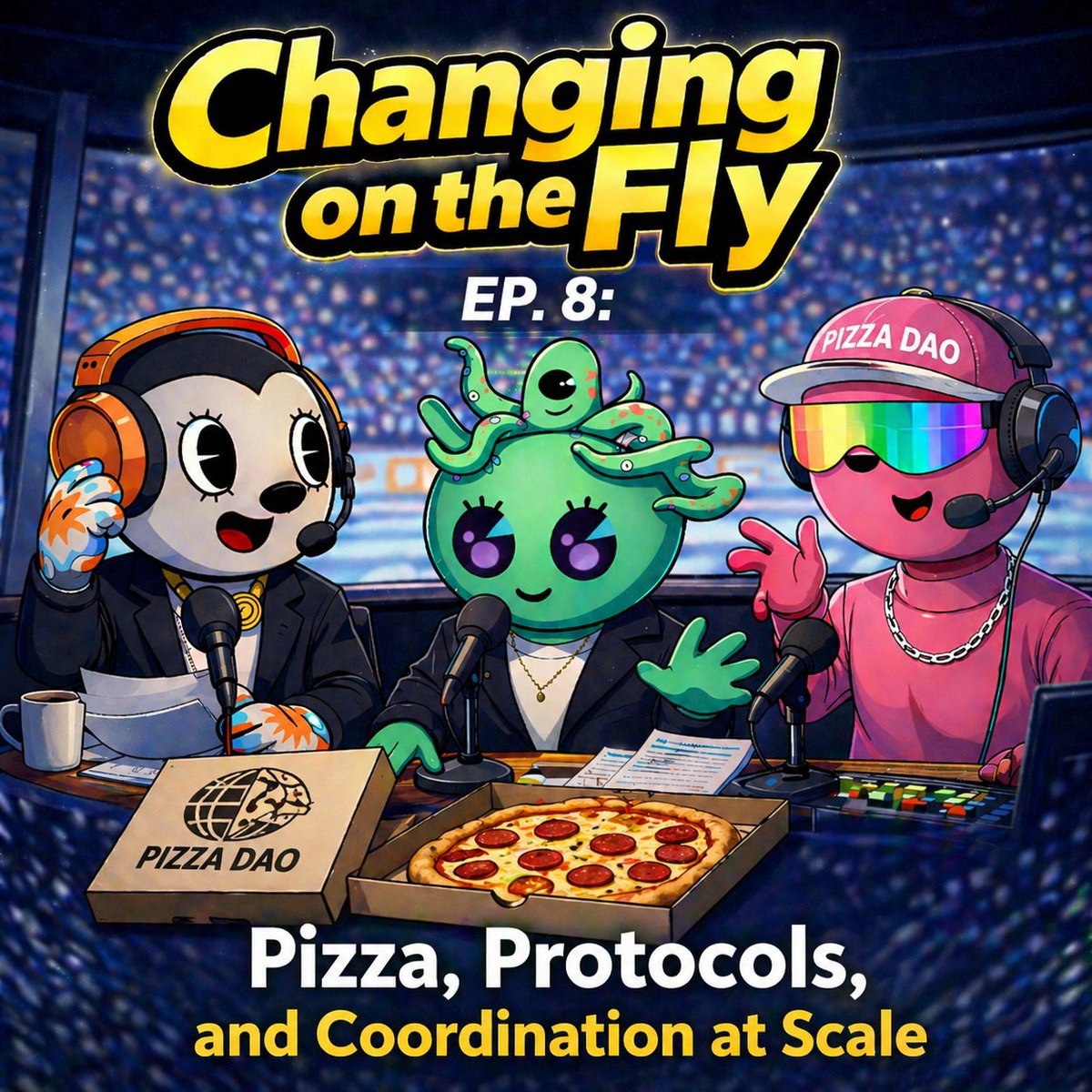
🎙️ This week on Changing on the Fly:
@snack_man from Pizza DAO joins the show 🍕
From personal AI workflows → weird internet tools → global coordination at scale
AI × DAOs × Real-world execution
This isn’t theory…
they’re feeding the world.
Vibes go up this week 🤙
Link below 👇
3
2
14
379
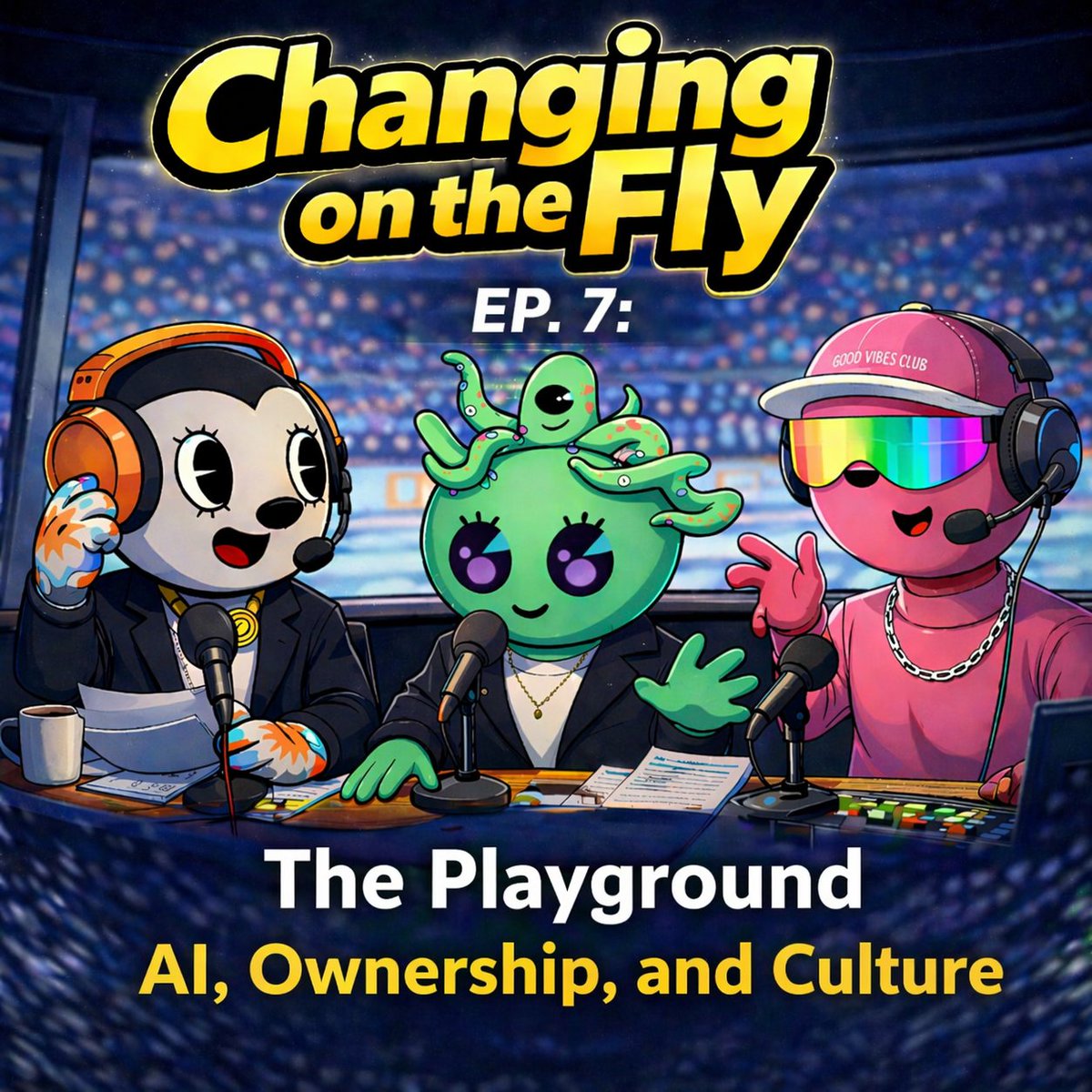
This is the moment that digital collectibles as non-fungible tokens was made for.
Congrats to the team and community on pushing boundaries and incorporating new tools. The Playground awaits.
🫡 🤙🏻
Apr 21

1/ Vibetown is BUZZ’N ⚡
We've been equipping our studio with the technology of the future. In-house AI tools that supercharge the way we create.
Some of the shots in our latest feature?
Made using our latest and greatest creation: The Playground.
Now for the first time, it’s yours.
2
17
454
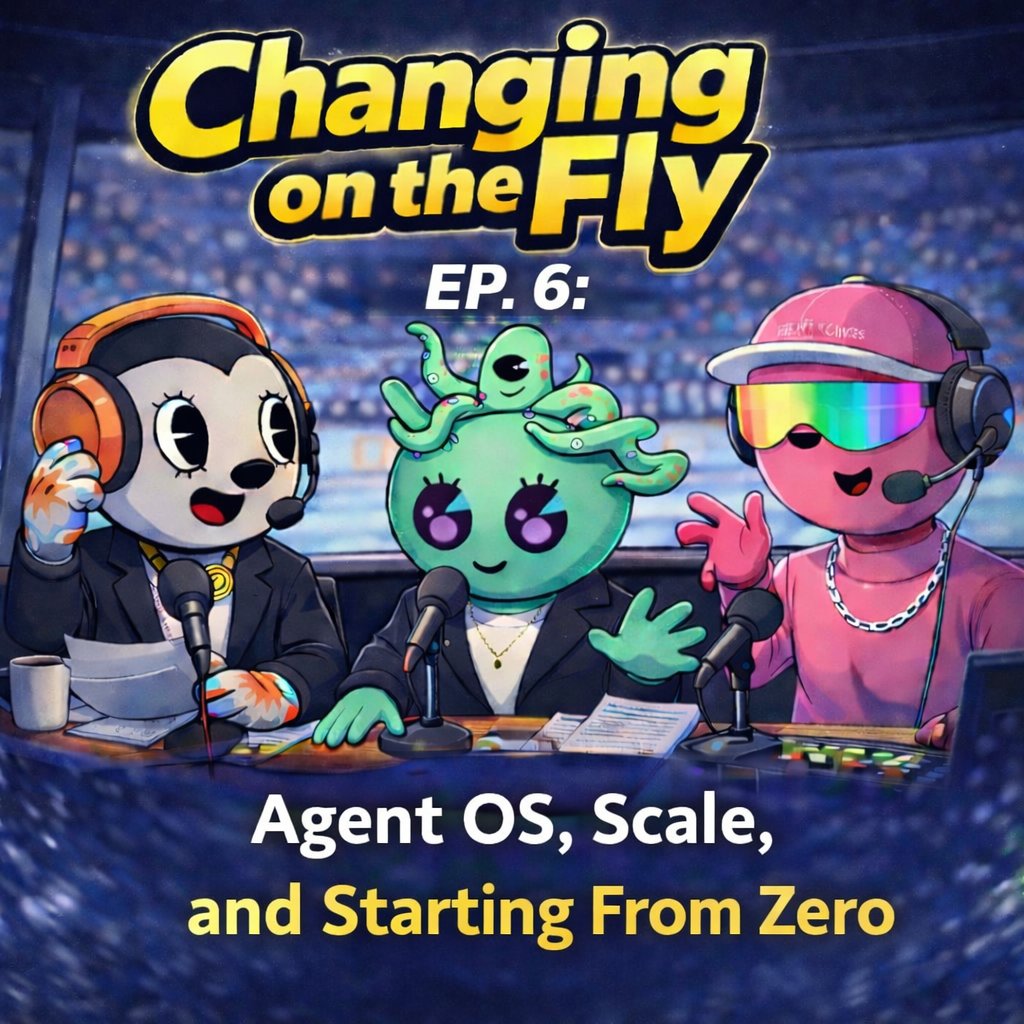
🎙️Changing on the Fly EP. 6: Agent OS, Scale & Starting From Zero 🏒🤖
1 agent is interesting.
36 agents is a system.
This week we cover:
🔹 Building Agent OS in the wild
🔹 What actually breaks at scale
🔹 How to go from ZERO → builder
w/ @Shills_81
🗓 Thursday, April 16th
⏰1:00 PM EST
📍X spaces
Hosts: @MicroM43 , @pyra_m1d & @quirk_quirky
If you’ve been watching from the sidelines… this is your entry point. 🎧👇
1
3
17
542
1
27
Live AI Mastetclass with @Shills_81 👀
Come get in the game!!
3
66