
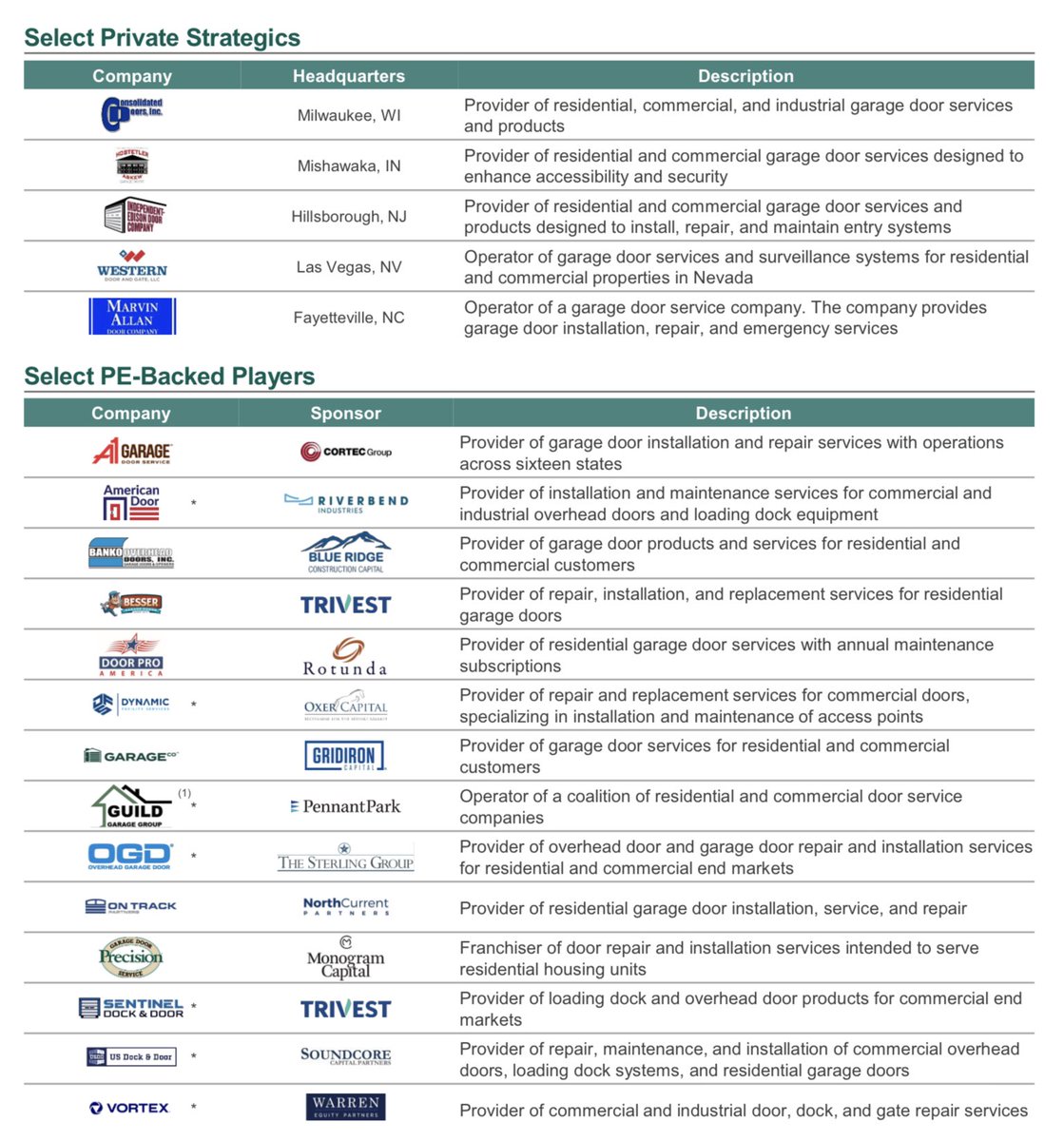
Previously exited a commercial service rollup.
Joined June 2012
- Tweets 24,700
- Following 463
- Followers 17,218
- Likes 4,737
753 Photos and videos



Pinned Tweet

6 May 2017
Don't be afraid to try what you're not qualified to do.
If I only did what I was qualified to do, I'd be pushing a broom somewhere.
-Sacca
22
86
568
Jun 13
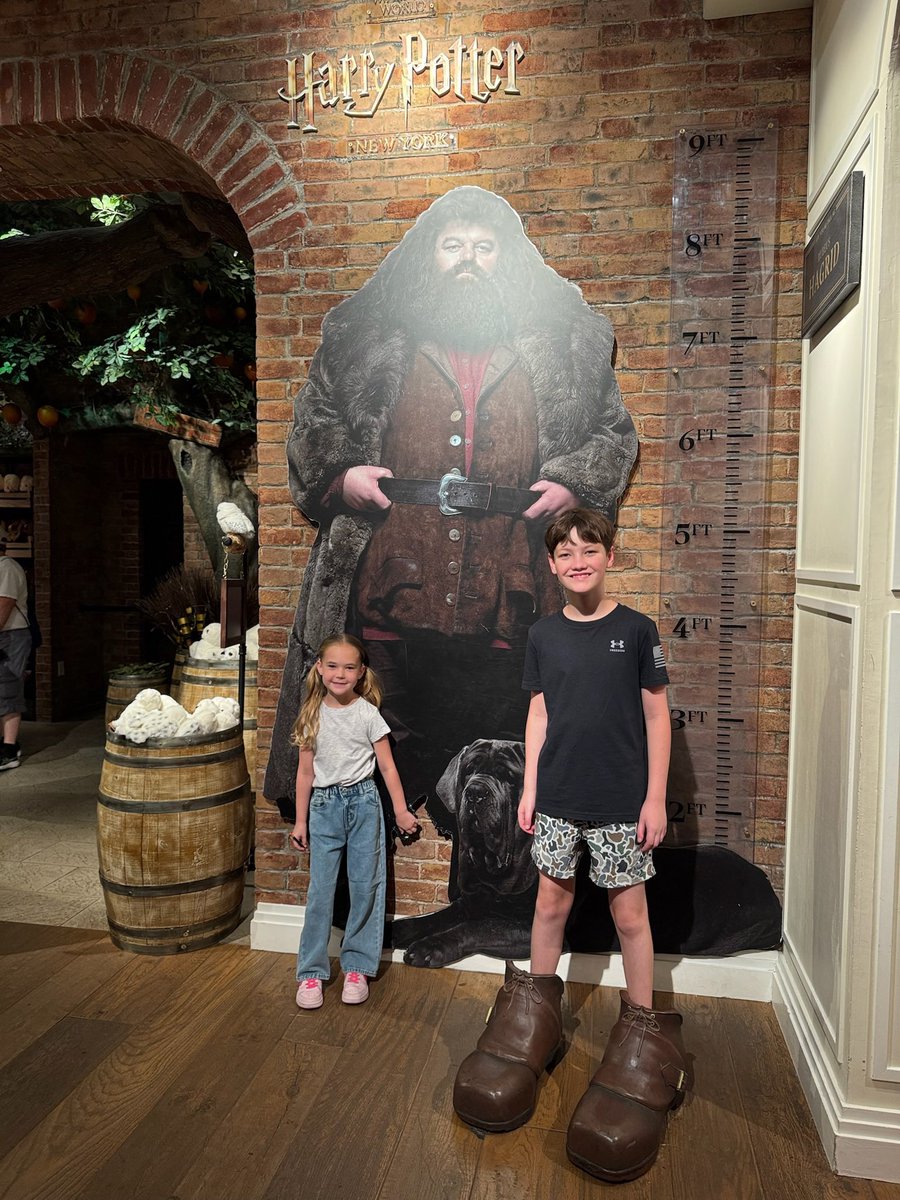
We spent the last week visiting Newport, Rhode Island and NYC.
Newport rocketed up the list of favorite places for us. Highly recommend.


4
31
3,895
Jun 12
When seeking advice on acquiring an SMB as a first-time buyer using SBA debt, be aware that the advice you receive often comes from people who have gotten rich or built/enhanced their careers by selling the shovels, or who have selection bias.
3
1
34
4,153
Jun 6
Is there a way to filter out posts from people I do not follow, even if people I do follow reply to them? It’s quite annoying to have my ‘following’ page filled with posts by people I do not follow. @nikitabier ?
2
1
756
May 1
The book American Icon by Bryce Hoffman, goes into his story and the turnaround. Fascinating book.
Highly recommend the book or at least watch this.
Apr 16

In 2011, Ford CEO Alan Mulally gave a 52-min masterclass on leading a turnaround when everything is broken.
He walked into a company losing $17B a year.
His frameworks:
- The data sets you free
- One Ford, not 97 distractions
- Weekly truth-telling at 7 a.m.
12 lessons:
1
22
6,495
Apr 27
Wild that this is even a story. It's very common, if not standard.
Heck, even LMM PE firms give CEO's the ability to take out loans.
Apr 24

Elon Musk has used SpaceX as a kind of piggy bank over the last two decades, turning to the company as a financial tool to get loans and bolster his struggling companies, according to an examination by The New York Times. nyti.ms/4w8dInZ
Community note
Musk's ~$500M SpaceX loans (2018-2021) at low rates were repaid in full by end-2021 with ~$14M interest. Legal and routine for private company owners; Sarbanes-Oxley prohibition applies only to public firms.
nytimes.com/2026/04/24/tec…
lw.com/admin/upload/S…
1
15
4,951
Mike Botkin retweeted
Apr 25
I think people are missing the point of your post, or maybe I am.
Are deals out there? Sure.
Are they quality? Beauty is in the eye of the beholder.
My problem is they may pencil to “get it done” (a stretch, in my view), but buying these SBA-level deals is significantly riskier today than 3-4 years ago.
In my opinion, what was 3x in 2020-2022 is now 5-6x. What is 3x today wasn’t even considered for purchase back then due to quality and characteristics.
Just because you can buy it doesn’t mean you should.
I hope I’m wrong, but I think we’ll see a graveyard stemming from people buying lower-quality businesses in the last 24 months with PG debt at high leverage and the post-close value creation never happened.
A wise man once said….’all the fools ain’t dead’ and ‘paper doesn’t refute ink’
3
1
20
3,249
Apr 24
Interesting thread and research paper. It makes me wonder how the kids from 2020 to today who have a laptop with them all day long in school will be impacted by that versus the pen/paper generations before them.
Apr 23

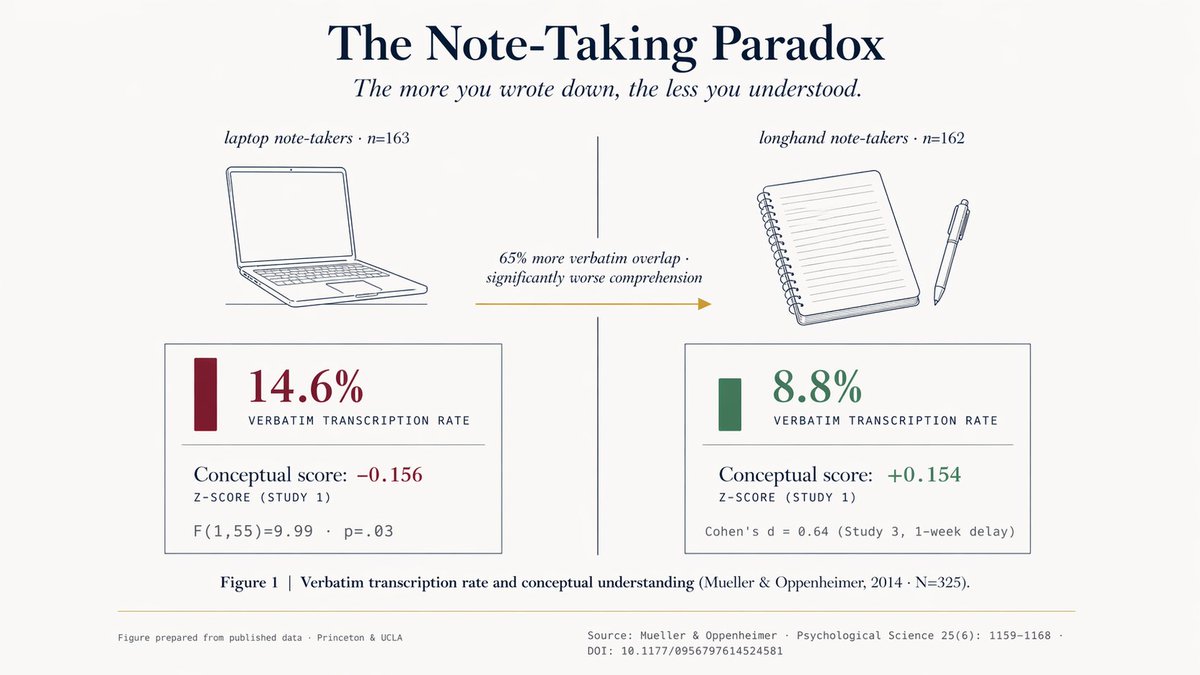
You take notes in meetings because you think you'll remember more.
Princeton and UCLA proved the opposite.
Laptop note-takers wrote down 65% more words than longhand note-takers. They also scored significantly worse on understanding questions.
A week later — with their own notes in front of them — they were still worse.
This effect has a name. It's not what you think. 🧵
1
3
1,939
Apr 24
One of the best ways to recruit A talent, is to articulate or demonstrate to them that their specific skillset is needed and will have impact.
Human nature is leans towards wanting to help and fill voids. A talent likes to know they will be able to flex and it will help company.
Apr 23

Steve Jobs really pulled a reality distortion field to poach Tim Cook from Compaq (in 1998, it was worth $30B to Apple’s $3B).
All of Cook’s friends and advisors told him not to join almost-bankrupt Apple.
Cook says it took Jobs one meeting to convince him:
“I had gotten a call several times from the search people that [Jobs] had employed, and I kept saying no.
I was happy at Compaq — or thought I was — and they were persistent.
So, I finally thought, ‘you know, I’m going to go out and take the meeting. Steve created the whole industry that I’m in. I’d love the meeting.’ […]
All of a sudden, he’s talking about his strategy and his vision and what he was doing.
He was going 100% into consumer when everybody else in the industry had decided you couldn’t make any money in consumer. They were headed to servers and storage and the enterprise. […]
I always thought following the herd was a bad idea.
He showed me a bit of the design to get me interested [of what later would be called the iMac].
The way that he talked and the chemistry. I could tell I could work with him.
I looked at the problems Apple had and I thought ‘you know, I can make a contribution here’ and working with [Jobs would be] the privilege of a lifetime.
All of a sudden I thought, ‘I’m doing it. I’m going for it.’
You hear this voice in your ear that says, ‘Go west, young man, go west.’
[The move to Apple] didn’t make sense. And yet my gut said ‘go for it’ and I listened to my gut.
There was literally no one around me that was advising me to do it.”
In March 1998, Cook joined Apple as Senior Vice President of Worldwide Operations on a $400k base salary (and a $500k signing bonus).
He was 37. Incredible gut call.
***
Full episode here from 2014: youtu.be/u9Sy3qwthCw?si=cLn6…
1
4
23
11,301
Apr 16
This is amazing!
Apr 16

I analyzed/mapped every SBA Loan issued since 1992 (2.1M Loans)
So much interesting data: sba.mazekalabs.com/
18
14,099
Apr 15
Super interesting story in the @homeprosnews newsletter.
Wonder how this plays out and the impact it has.
10
38
6,401
Apr 13
LMC is on market right now, with guidance of 12-14x
EBITDA is $20, but they are trying to get PF EBITDA of $35. (Best wishes to you)
How pissed do you think the owners of Prestige are about to be?

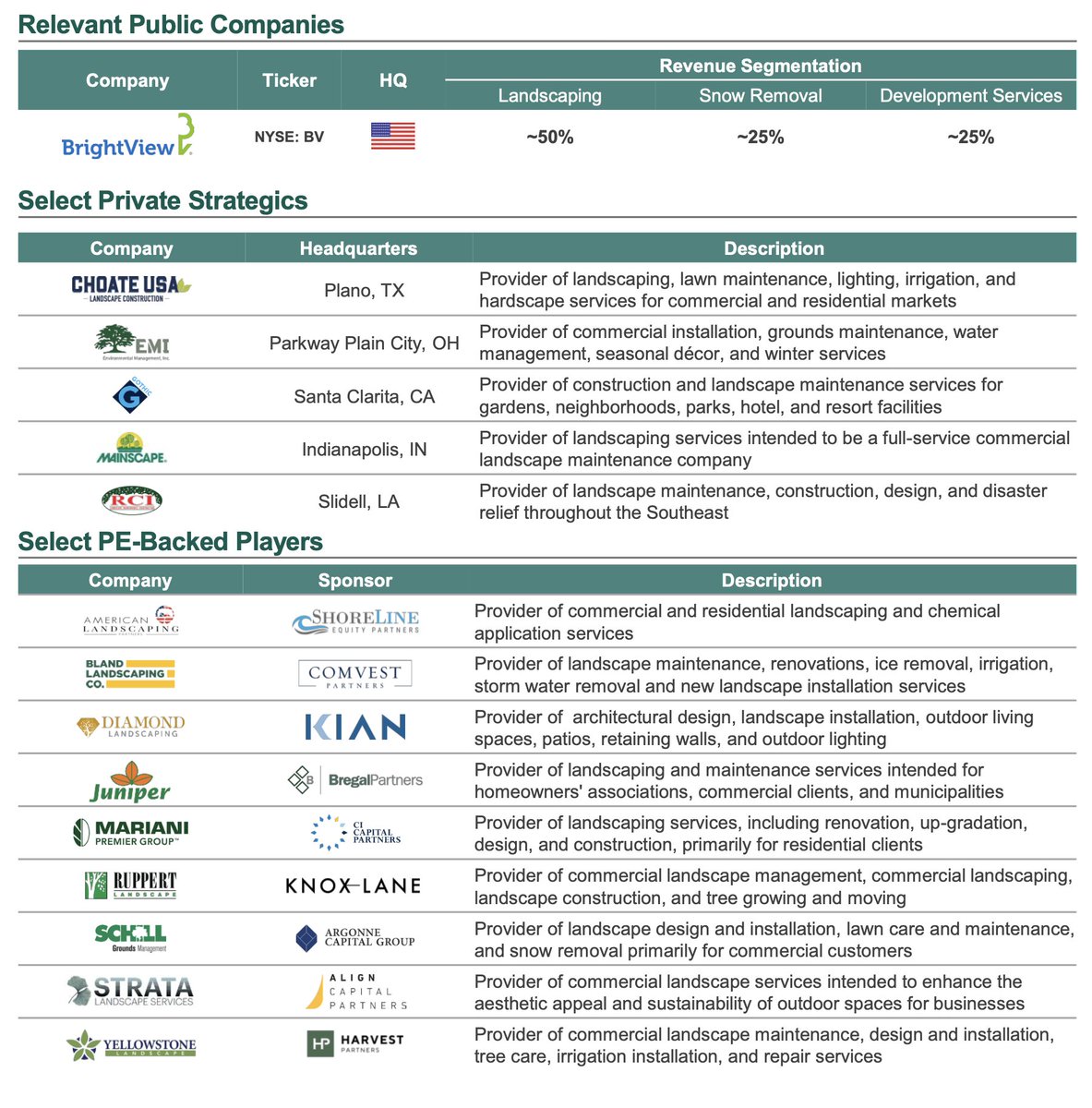
LMC Landscape Partners, a portfolio company of Trivest Partners, has acquired Prestige Landscape Services, a full-service landscape maintenance company based in Dallas.
Read the story: lawnandlandscape.com/news/lm…

6
34
37,290
Apr 11
I have an 8 hour drive tomorrow.
What’s something I should listen to?
13
9
4,821
Apr 3
Here is my contribution of the day.
The industry that I tried rolling up but could not gain traction?
Residential irrigation.
I love...(repeat)...LOVE residential irrigation.
A-MAZ-ING business.
I just could not get traction/momentum.
I hope somebody sees this and does it.
Send me a check when you sell for $$$$$$
20
37
6,998
Apr 1
Tip for brokers
If the current owner does something on an annual basis (takes the team to events, gives annual Christmas bonuses, etc.) …..it is not an add-back.
E.g., each quarter, the top salesman at company gets to pick a Bucs game or Magic game and owner pays for great seats, food, travel, etc to the game.
Yeah….be the new owner and stop that perk and watch what happens.
8
24
3,298
Mar 29
This is how I've approached this at a few different companies (across all revenue sizes):
1. Everyone in the company goes through a base level of financial literacy training. The level and frequency depend on the person or group.
I was never shy with employees about a) money matters, b) I care about making money, and c) making a profit is non-negotiable.
As the great philosophers Wu-Tang Clan once proclaimed: "C.R.E.A.M."
The balance with having a CREAM mantra of sort is that, as a leader, you have to over-communicate how and why money matters. And you really have to ensure that if you say "it matters that we make money so we can have nice trucks," then you better damn well have nice trucks when the company is successful.
2. We were extremely data driven. We kept score of everything, with financials being one of them - arguably the main one.
3. The C-suite (or equivalent) has full access to all financials: every chart of accounts, every general ledger, etc.
Keeping financials from the C-suite is asinine to me.
4. The rest depends on where their incentives lie.
For example, in a residential home service business, technicians received bonuses above certain gross profit thresholds. They went through constant financial training on sales, COGS, and gross profit. What each means, how each is impacted by their work and other factors, and how they correlate. They were also given broad examples of what happens to gross profit.
In the landscaping rollup I did, crews were incentivized on actual hours on-site vs. budgeted hours, non-billable hours, and quality scores. Those were the numbers they needed to know, along with the background behind them.
Branch managers in the landscaping business had a different set. They had branch-level P&L responsibility and went through appropriate financial training.
Sales guys had to know sales and gross profit, etc.
I cared about XYZ financially, so why would I not want people - relative to their impact and level - to know the finances? I just don't get it.
Mar 26

Someone in Hampton (1000 founders) asked people if they share revenue and P&L with employees.
Here's what they said:
Founder A (bootstrapped, ~20 employees): "I share nothing. Not even with my COO. I've never been happier running a company."
Founder B (also anti-transparency): When an employee pushed back on the secrecy, he told them: "if you want a bonus from the upside, you also take the downside." Said that ended the conversation immediately.
Founder C (sold his company for $360M ): "If a CEO shares nothing with their C-suite, that's a red flag. Full stop."
Founder D (middle ground): "I only share what employees can actually impact. Revenue without context just creates anxiety."
Founder E (went full open-book): "We ran P&L tutorials for the whole team. It completely changed the culture."
Where do you land on this?
2
32
9,025
Mar 22
One of the most fascinating businesses I looked at over the last two years was an OFS business in the O&G space in Texas.
Insane margins. Insane growth.
It absolutely printed money.
Very volatile though - you have to navigate massive ups and downs in the industry, unrelated to your actual biz.
Every conversation I had when I spoke to people in or around the O&G space always started with them saying “yeah, but….” followed by a horror story.
The gambler in me wanted it badly. Ha.
28
3
61
23,361
Mar 19
Rick Rubin hosts a podcast called Tetragrammaton. It is very good. He is an excellent interviewer (not surprising) and gets people to really open up. When things start to sound complex, he asks clarifying questions and has the person explain in simpler terms.
Big fan.
1
9
1,468
Mar 18
When doing acquisitions in the SMB space, something often overlooked is the amount of talent you can accumulate through acquisition - relative to your ability to hire someone of equal skill, knowledge, and experience.
When I evaluated targets, I looked at their ownership and key people and thought:
“In what world could I hire someone of his [the owner’s or their team’s] caliber?”
You can’t.
But by acquiring the business, you get all of that talent - not just the owner.
If you do it right, the sheer amount of skill, knowledge, and experience can be a massive cheat code and launching pad for the business.
Talent. Was usually the #1 reason why I did an acquisition during the rollup I did.
2
1
22
1,574