
Joined November 2025
- Tweets 106
- Following 48
- Followers 105
- Likes 1,231
19 Photos and videos


Pinned Tweet

Apr 3
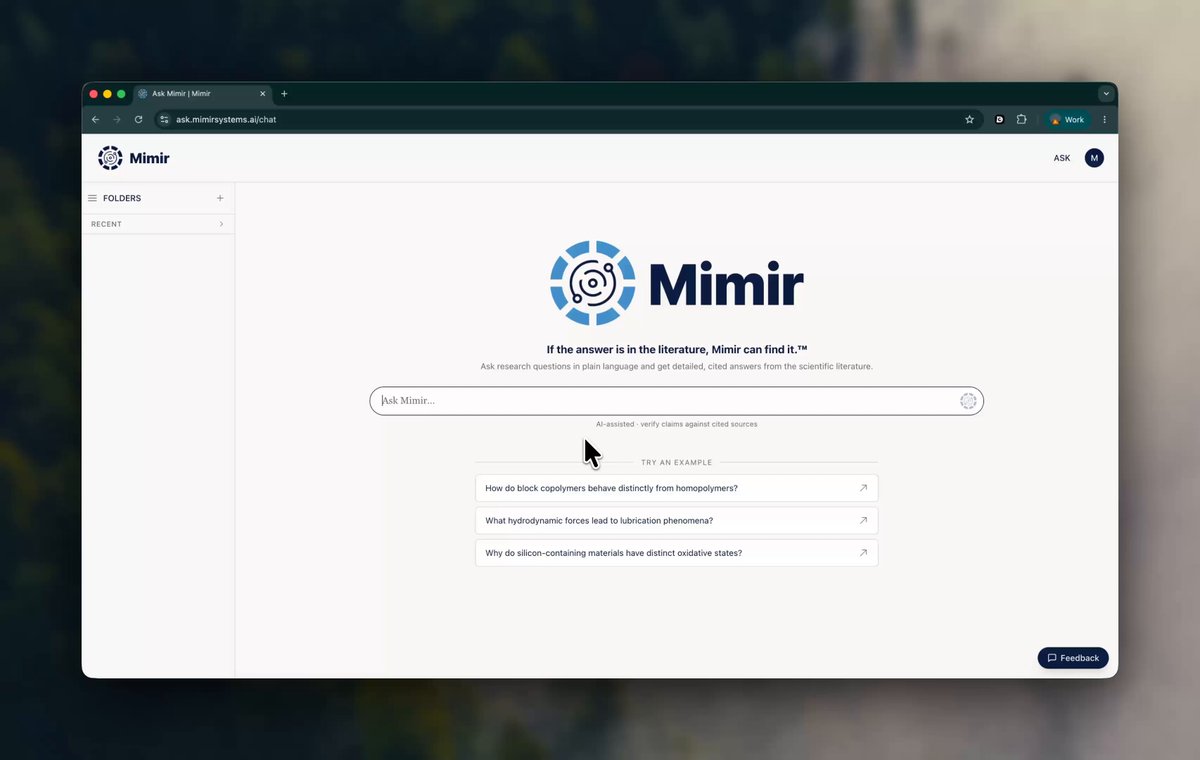
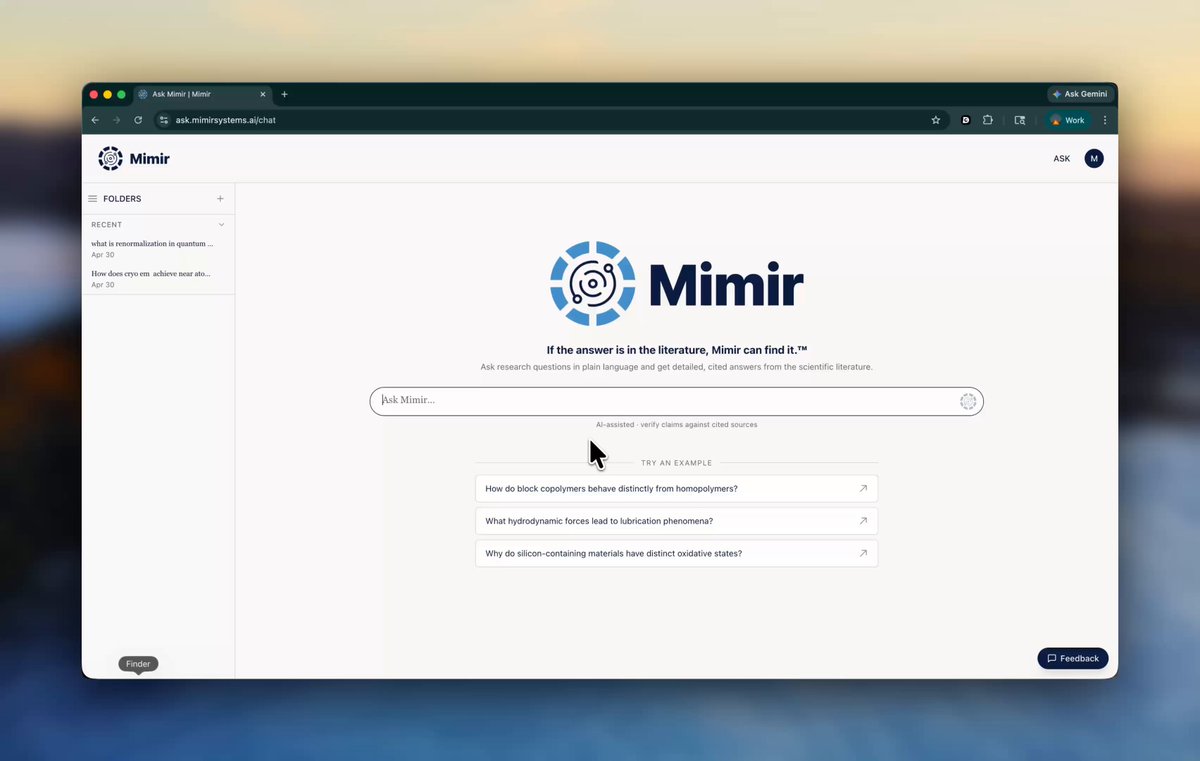
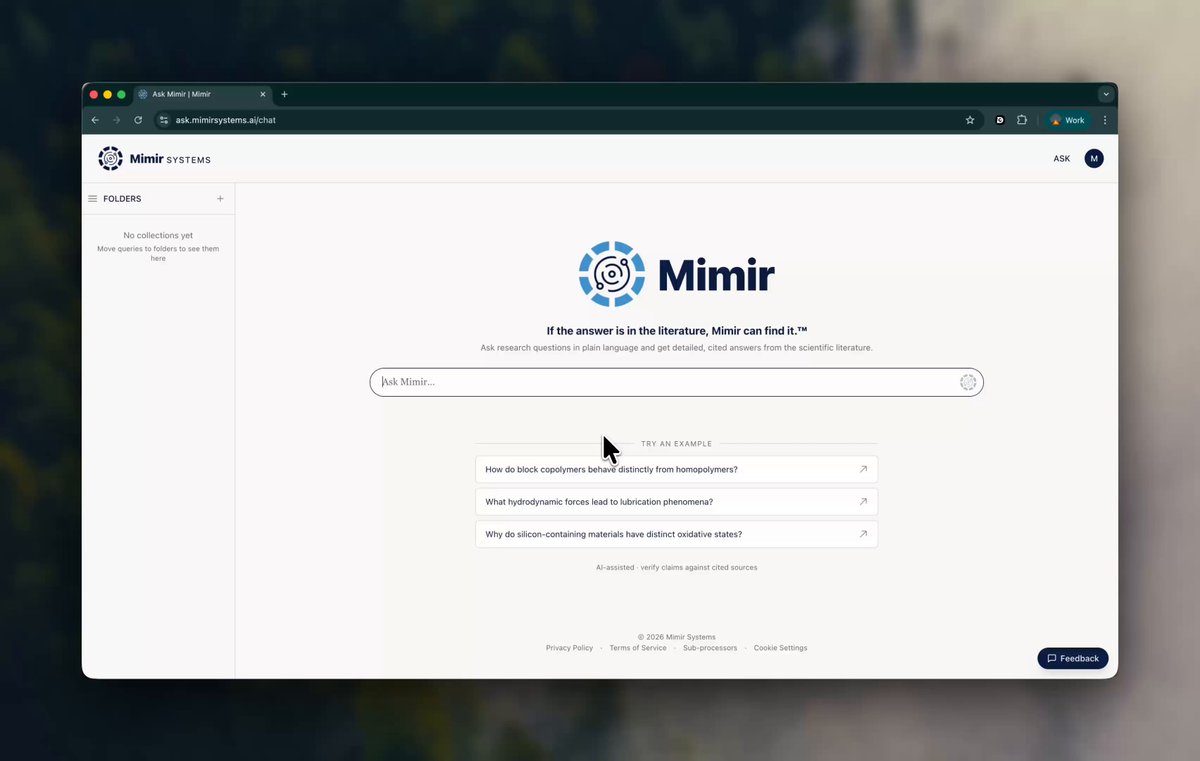
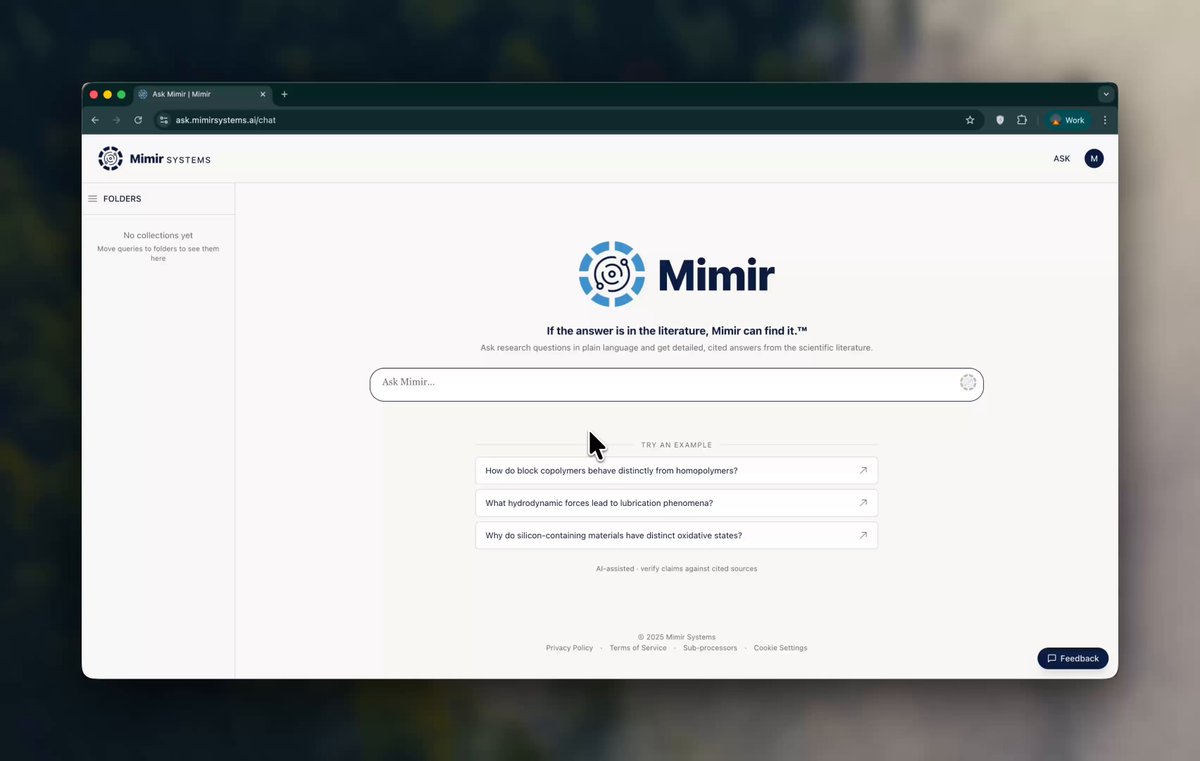
Mimir is now in open beta.
Ask a materials science question, if the answer is in the literature, Mimir can find it.
Free for .edu & .gov emails
Try it out with the link below.
Apr 2

Tomorrow we're opening beta access to Mimir, an AI research tool for materials science that only cites real papers from reputable journals.
Ask a question, get an answer with citations from over 1 million papers.
6
3
23
1,467
Jun 11
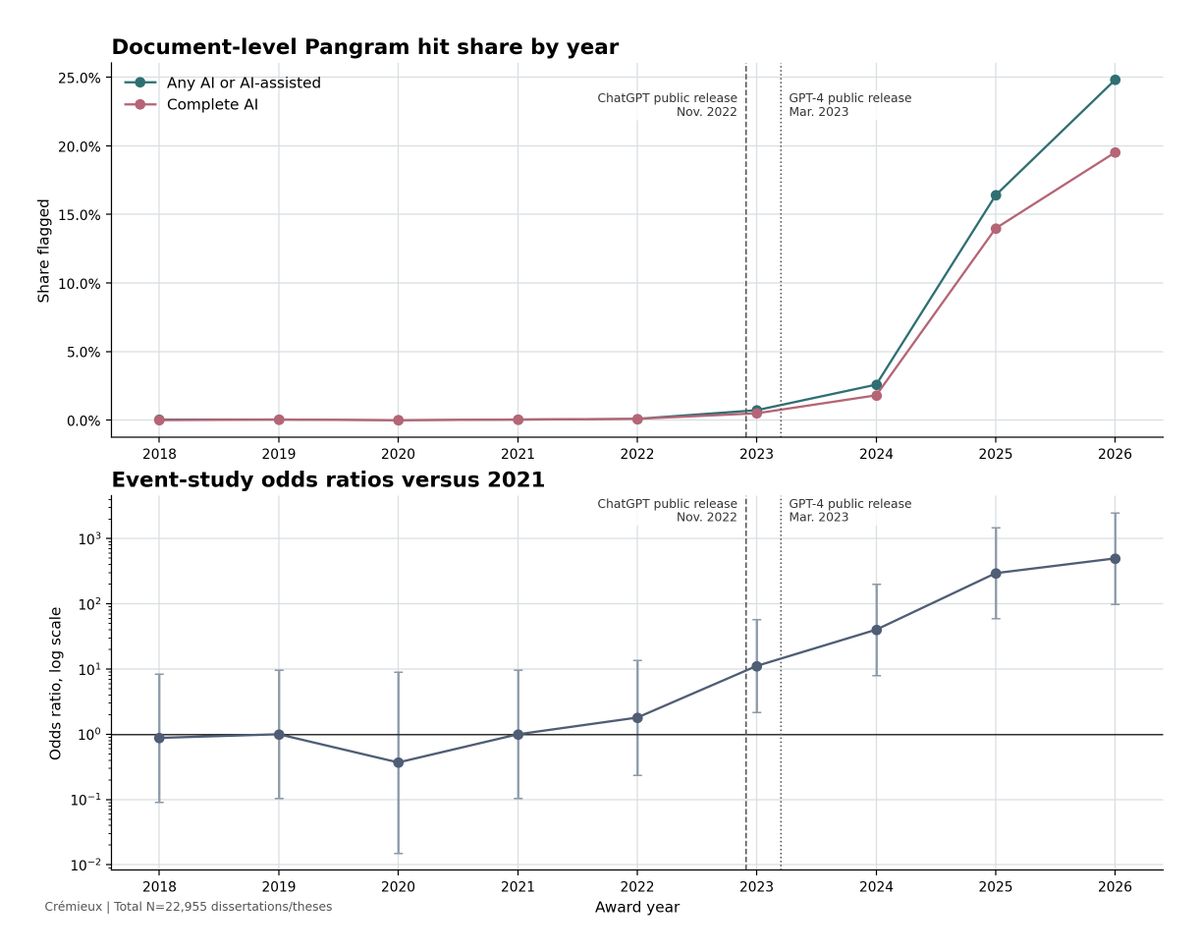
A recent study has quantified a phenomenon that researchers have observed over the past two years.
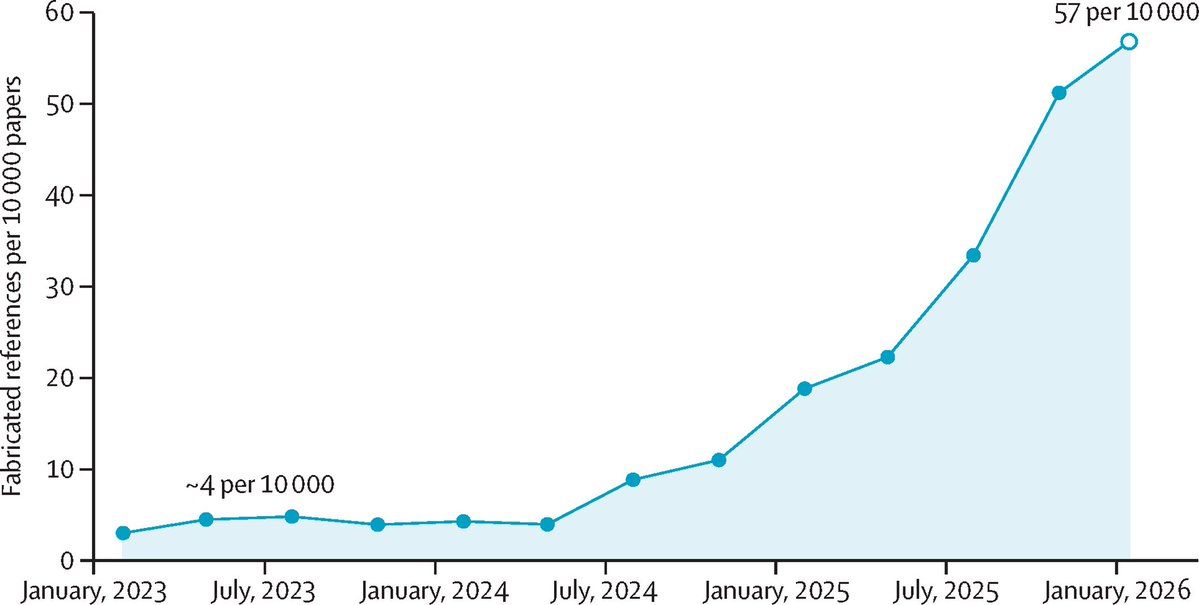
Zhao et al. conducted an audit of 111 million references across 2.5 million papers from arXiv, bioRxiv, SSRN, and PubMed Central. Their findings revealed approximately 147,000 citations scheduled for 2025 that refer to non-existent papers.
The timeline of this increase is particularly noteworthy. The proliferation of these fabricated citations did not coincide with the launch of ChatGPT but rather began around mid-2024, a period marked by the increasing adoption of AI research assistants designed for automatic citation generation.
This suggests that these tools are a primary source of the spurious citations.
Furthermore, the peer-review process has largely failed to detect these fabrications. Approximately 85% of the fabricated citations identified in preprints were subsequently found in their published versions.
It is important to note that the reported number represents a minimum.
The study exclusively focused on citations referencing non-existent papers and did not account for instances where real papers were cited for claims they did not make.
arXiv:2605.
5
29
Jun 8
Someone on our team tried to use the product to look up a vacation spot.
It told them
"Mimir is designed to provide comprehensive answers to scientific questions. It is not a general purpose chat bot."
Embarrassing for them, but exactly right for the product.
As most AI will answer anything you ask, which is precisely why you can't trust them on the things you actually need.
Mimir is working as intended.
2
28
Jun 3
There are fabricated citations to catch, the ones that don't show what they're cited for, and the methods section is missing the detail you need.
The literature keeps growing while the day stays the same length, so the tax keeps rising.
Many tools have gotten better at finding papers faster but almost none have touched the reading and verifying underneath, which is the part that actually takes much time.
Jun 3
The sharp rise in fake references doesn't line up with ChatGPT's launch, it starts about 18 months later.
The authors tie it to a specific shift, the arrival of AI search and agentic research assistants that generate citations automatically from live web results.
The fabrication is increasingly produced by tools built to help with research, sitting inside papers that look completely normal, which makes it both harder to spot and harder to stop.
1
39
Jun 3
The sharp rise in fake references doesn't line up with ChatGPT's launch, it starts about 18 months later.
The authors tie it to a specific shift, the arrival of AI search and agentic research assistants that generate citations automatically from live web results.
The fabrication is increasingly produced by tools built to help with research, sitting inside papers that look completely normal, which makes it both harder to spot and harder to stop.
2
4
100
Jun 1
This is exactly why we built Mimir the way we did. Every citation comes from our indexed corpus. If a paper isn't in it, it can't be cited.
Jun 1

Every researcher has done this:
Asked ChatGPT for verified references on a technical question. Got 10 papers that looked perfect. Real-sounding titles. Real-sounding authors. Real-sounding journals.
Then you tried to verify them.
6 don't exist. 2 have the wrong authors. 1 is from a journal that was never published. The last one is real but says the opposite of what ChatGPT claimed.
You just wasted 45 minutes fact-checking an AI that confidently lied to you. And you're back to doing the literature review manually.
This is the single biggest problem with using AI for research. The models are trained to sound right, not to be right. They generate plausible-looking citations the same way they generate plausible-looking code. Sometimes it works. Sometimes it's fabricated from scratch.
Someone finally built a tool where this is structurally impossible.
Mimir searches millions of real scientific papers. It reads them. It understands your question in plain language. And it returns a cited answer where every single reference is a verified, real publication.
Not "probably real." Not "we tried to check." Architecturally impossible to hallucinate.
The system indexes actual papers, books, patents, and industry reports. It can only cite what exists in its corpus. If a paper isn't real, it can't appear in your results. The architecture won't allow it.
Ask a complex technical question. Get an answer with 10 verified references in seconds. Each citation links to the actual paper. Real title. Real authors. Real journal. Real data.
What it covers right now: materials science, chemistry, physics, engineering. Expanding into new domains continuously.
What used to happen: 2 days reading papers, cross-referencing citations, verifying sources, discovering half your references are garbage.
What happens now: ask a question. Get a cited answer. Every reference is real. Move on.
Founded by a materials scientist and a computer scientist who spent too many years on the wrong side of this problem. They built Mimir because they've been the person spending two days answering a question that should take minutes.
1,000 researchers already using it.
Free for .edu and .gov emails.
1
4
49
Mimir Systems retweeted

Jun 1
Every researcher has done this:
Asked ChatGPT for verified references on a technical question. Got 10 papers that looked perfect. Real-sounding titles. Real-sounding authors. Real-sounding journals.
Then you tried to verify them.
6 don't exist. 2 have the wrong authors. 1 is from a journal that was never published. The last one is real but says the opposite of what ChatGPT claimed.
You just wasted 45 minutes fact-checking an AI that confidently lied to you. And you're back to doing the literature review manually.
This is the single biggest problem with using AI for research. The models are trained to sound right, not to be right. They generate plausible-looking citations the same way they generate plausible-looking code. Sometimes it works. Sometimes it's fabricated from scratch.
Someone finally built a tool where this is structurally impossible.
Mimir searches millions of real scientific papers. It reads them. It understands your question in plain language. And it returns a cited answer where every single reference is a verified, real publication.
Not "probably real." Not "we tried to check." Architecturally impossible to hallucinate.
The system indexes actual papers, books, patents, and industry reports. It can only cite what exists in its corpus. If a paper isn't real, it can't appear in your results. The architecture won't allow it.
Ask a complex technical question. Get an answer with 10 verified references in seconds. Each citation links to the actual paper. Real title. Real authors. Real journal. Real data.
What it covers right now: materials science, chemistry, physics, engineering. Expanding into new domains continuously.
What used to happen: 2 days reading papers, cross-referencing citations, verifying sources, discovering half your references are garbage.
What happens now: ask a question. Get a cited answer. Every reference is real. Move on.
Founded by a materials scientist and a computer scientist who spent too many years on the wrong side of this problem. They built Mimir because they've been the person spending two days answering a question that should take minutes.
1,000 researchers already using it.
Free for .edu and .gov emails.
5
8
32
4,073
Jun 1
If you work in materials, physics, or chemistry, the new hallucination rate data looks almost reassuring.
The highest fabricated citation rates are in social science and CS. Physics adjacent fields sit far lower, around a fifth of a percent, that a fifth of a percent across millions of references is still thousands of fake citations, and the study only caught references to papers that don't exist.
The real papers cited for the wrong claim, which careful technical fields are not immune to, weren't counted at all.
3
34
May 31
all you have to do is start searching

2
24
May 31
3.4 million scientific papers were published worldwide in 2025.
The number of indexed research studies rose 48% between 2015 and 2024.
The volume of published science is growing faster than the number of researchers who can read it.
(Source: Web of Science, UNESCO Science Report)
1
6
58
May 30
If you've asked ChatGPT for sources, you've had it hand you one that looked perfect and didn't exist.
With title that sound real, etc.
That happens because a general model predicts what a citation should look like instead of pulling a real one.
Mimir builds its answers from a corpus of indexed peer-reviewed papers, so the citations point at literature that actually exists, and you can open every one.
5
27
May 28
On a screen, a confident answer and a correct answer look exactly alike, and that's a whole problem.
A model can write something clean and well sourced looking on top of a paper that doesn't actually support it, and nothing in the formatting tells you.
The better it's written, the easier it is to wave through.
1
5
51
May 25
A Lancet study audited about 2.5 million scientific papers.
They found ~146,900 AI-generated fake citations in 2025. By early 2026, 1 in every 277 published papers contained a hallucinated reference.
Mimir only retrieves from indexed, peer-reviewed papers. If a paper isn't in the corpus, it can't be cited.
1
7
294
Mimir Systems retweeted

May 22
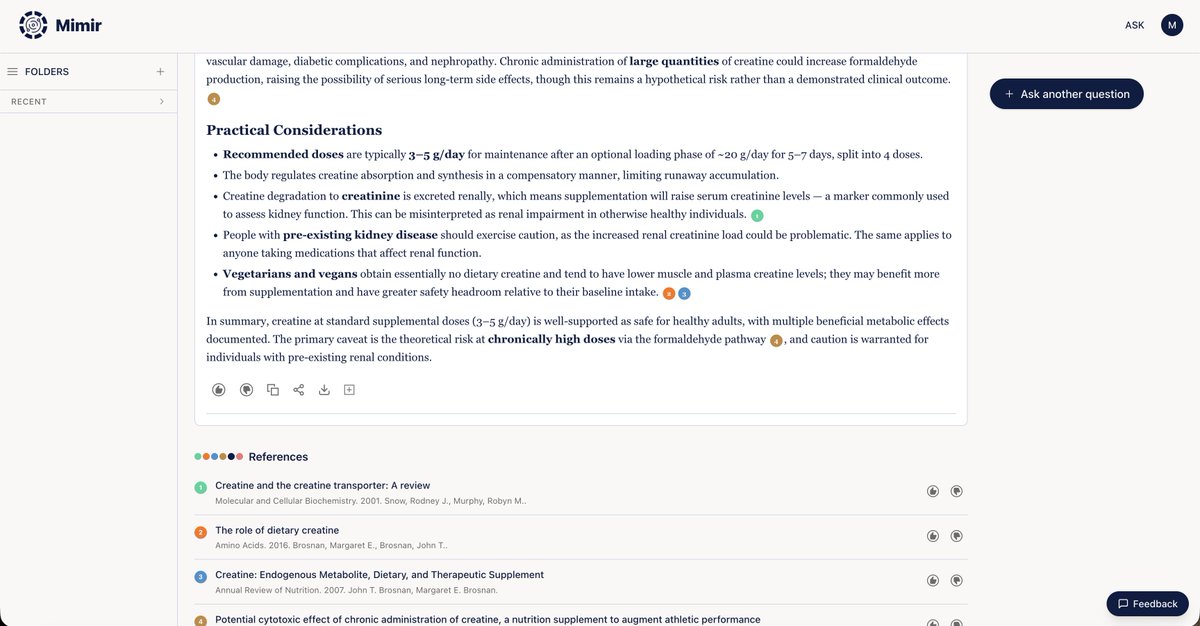
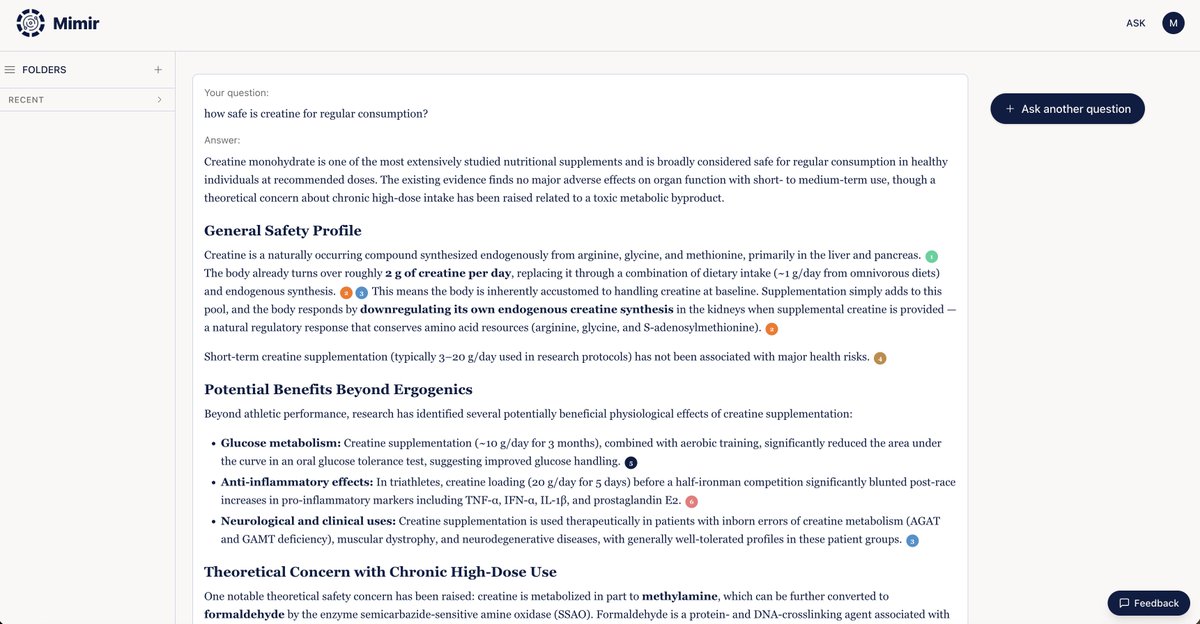
i genuinely wanted to know the effects of constant consumption of creatine, so i put it into @MimirSystems
the answer came back with papers from 2000-2016 covering everything from kidney function to anti-inflammatory effects
didnt expect that range.
May 21

how safe is creatine for regular consumption?
2
4
21
278
May 20
If you
1. need to find references in physical sciences
2. want to be able to find them without the pain of manual search
3. don't want to worry about getting banned from arXiv
Ask Mimir next time

The physical-sciences repository arXiv is banning researchers from posting their manuscripts on the platform for one year if a submission is found to contain references that have been hallucinated by artificial-intelligence tools.
go.nature.com/4dlcb6D
1
5
148
May 19
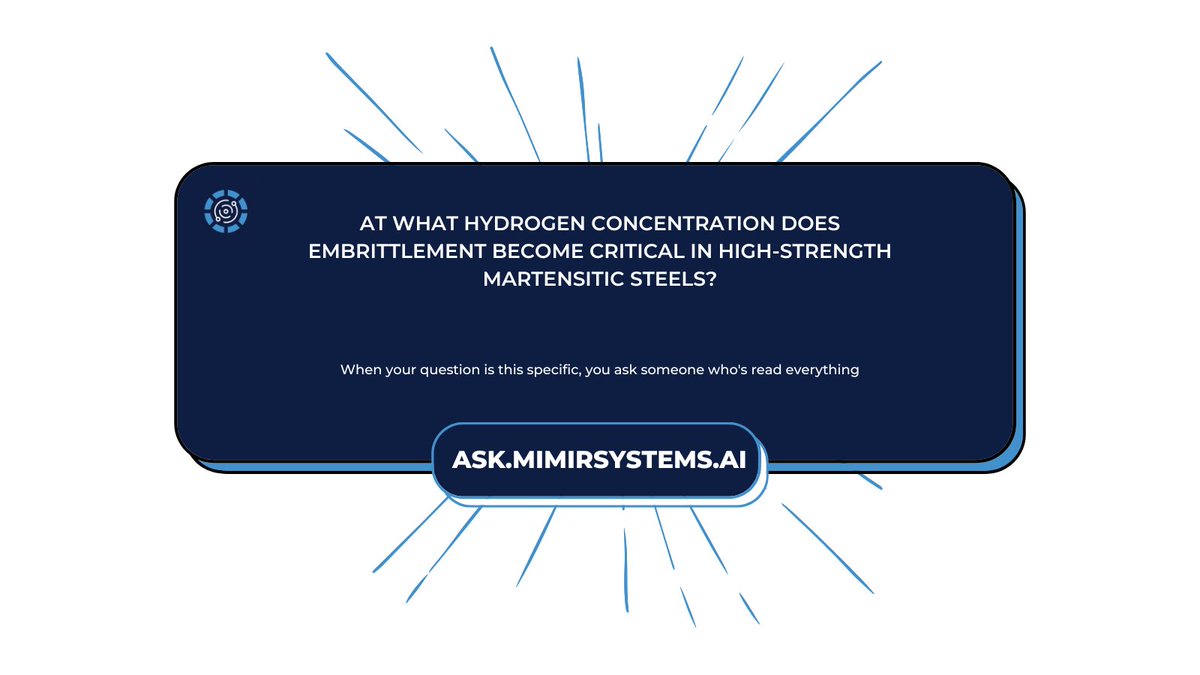
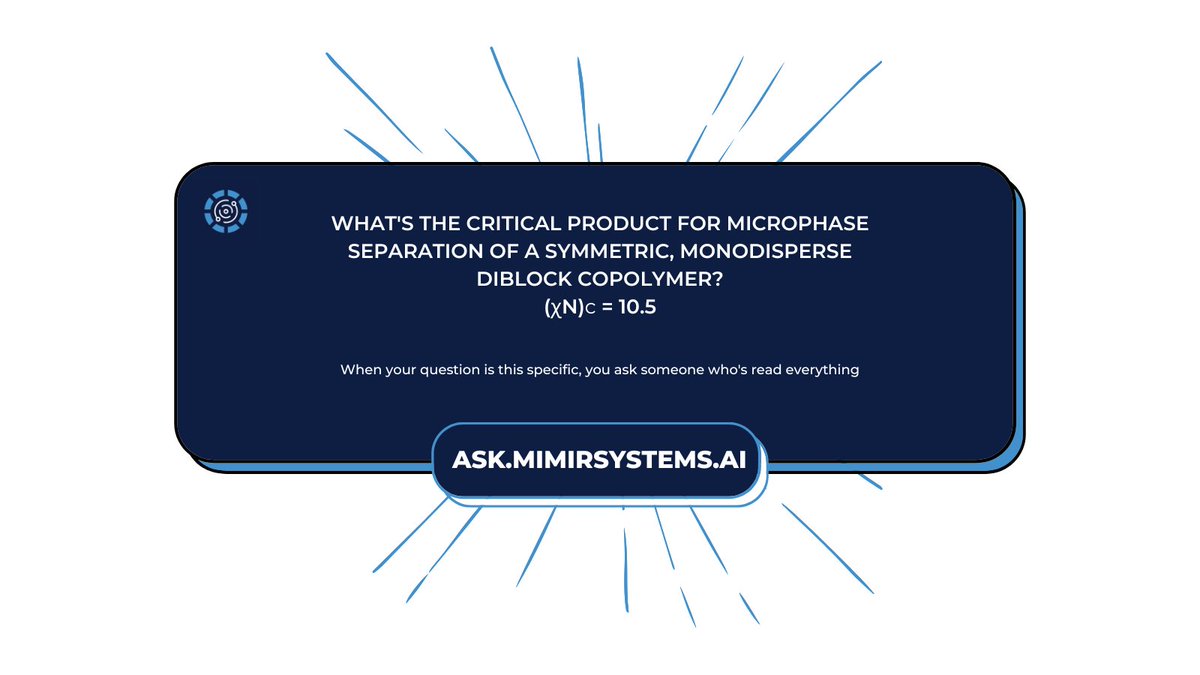
When your question is this specific, you ask someone who's read everything.
May 5
If it's in the literature, Mimir can find it.
Quote reposting with what Mimir finds.
1
5
118
May 18
This is the reason we built Mimir. Every citation is retrieved from an indexed paper. If the paper doesn't exist in the index, it can't appear in the answer.
ask.mimirsystems.ai
May 17

i honestly don’t understand how a hallucinated citation even makes it into a paper. like made-up references are embarrassing lmao. using a reference manager and citing real papers is not that hard. polishing your writing with ai is one thing but skipping the minimum step of checking whether the cited work actually exists is just bad scholarship!
4
59
May 18
How many tabs do you have open during a literature review?
🔲 Under 10 (respectful)
🔲 10–30 (normal)
🔲 30–60 (concerning)
🔲 60 (send help)
3
5
448
May 15
The question is:
环氧树脂的固化温度如何影响其玻璃化转变温度?
A researcher in Shanghai doesn't need to translate this into English to get a cited answer.
Mimir reads the papers and responds in Chinese.
Every citation is a real paper.
May 13
Did you know you can ask Mimir a question in Arabic, Chinese, French, or any major language and get a cited answer in the same language?
The papers are in English. The answer comes back in yours.
ask.mimirsystems.ai
4
83
Mimir Systems retweeted

May 13
The bulk of contemporary academic literature is in English, but your answers don't have to be
Instead of uploading papers to ChatGPT to ask for a translation and hoping it's ok, ask the question directly to a system that's read the paper
May 13
Did you know you can ask Mimir a question in Arabic, Chinese, French, or any major language and get a cited answer in the same language?
The papers are in English. The answer comes back in yours.
ask.mimirsystems.ai
1
1
79
May 13
Did you know you can ask Mimir a question in Arabic, Chinese, French, or any major language and get a cited answer in the same language?
The papers are in English. The answer comes back in yours.
ask.mimirsystems.ai
5
382