Joined August 2021
- Tweets 5,614
- Following 113
- Followers 3,797
- Likes 1,892
2,165 Photos and videos







Pinned Tweet

Apr 26
Ready to contribute your voice? Submit your own articles and let's explore the frontier of AGI together! #BeneficialAGI #SingularityNet #MindplexMagazine #CommunityWritingContest
magazine.mindplex.ai/contrib…
4
121
Jun 12
This post collects links to other interesting news that we have considered but not included in our regular news this week.
1
37
Jun 12
Researchers have built an artificial intelligence system that predicts long term changes in molecules over ten thousand times faster than usual computer simulations.
1
1
1
104
Jun 11
Three moments, three continents, one shared problem: no one really knows how to govern AI technology.
1
23
Jun 11
The work investigates whether natural vibration frequencies can help p53 activate specific gene groups to support dna repair and limit cancer risk.
1
39
Jun 11
The trial activates three genes to partially reprogram aged cells in an effort to regenerate damaged optic nerve neurons in glaucoma patients.
1
1
98
Jun 10
It is difficult to think of a more important theme right now than the impact of digital technologies, AI and robotics on every level of our social interactions and structures.
1
29
Jun 10
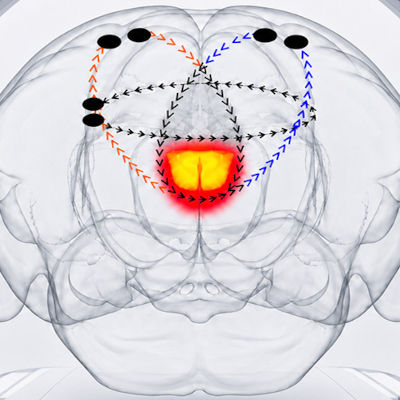
Adding a cancellation field to temporal interference stimulation reduces off-target effects in mouse tests and strengthens its potential for treating neurological disorders.
1
1
2
77
Jun 10
Stretchable materials modeled on brain chemistry allow computing devices to bend with organs and use very low power for health monitoring and prosthetics.
1
1
2
76
Jun 10
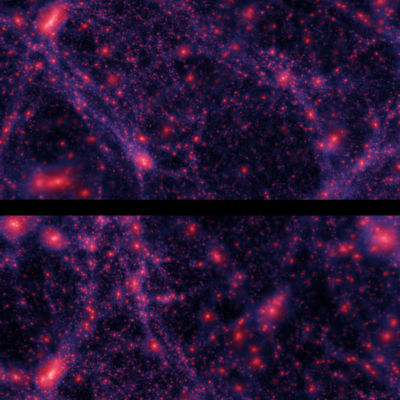
Study reveals that pretraining artificial intelligence on standard universe models speeds up analysis yet can cause misinterpretation when novel effects resemble familiar ones.
1
1
1
74
Jun 9
The president proposes a new company type with limited liability and low taxes to attract AI firms while keeping early rules to a minimum.
1
1
60
Jun 9
Researchers develop a new type of neural network that learns continually with much lower power consumption than today's large AI models.
2
1
2
60
Jun 9
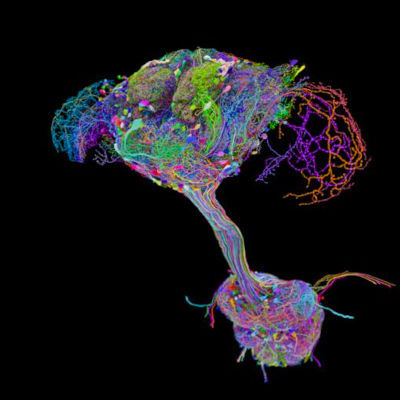
A full map of nerve cell connections linking the brain and nerve cord in an adult fruit fly supports new research on behavior and nervous system organization.
1
1
1
78
Jun 8
Why just ask AI for answers when it can evolve them? LEAPS blends LLMs and evolutionary algorithms to generate, mutate, and refine solutions like nature.
1
29
Jun 8
New genomic breakthrough reveals exactly where diseases strike. By decoding polygenic signals, scientists pinpoint the tissues and cell types driving illness for precision medicine.
1
30
Jun 8
AI agents no longer forget. EvoSC’s self-consolidation lets them learn from successes and failures, turning experience into lasting intuition — without memory overload.
1
22
Jun 8
Your code editor is smarter than you think. A new parse-based framework builds powerful IDE features for any language — without ever running the code.
1
42
Jun 8
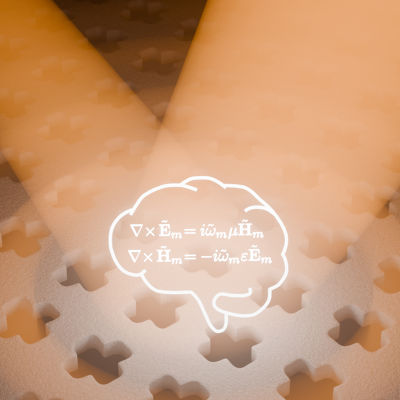
Researchers at Chalmers University of Technology teach neural networks the laws of physics and electromagnetism to design light-controlling materials much faster.
1
1
2
75
Jun 8
Scientists at Virginia Commonwealth University create a method with nanomagnets and acoustic waves to manage electron spins more precisely for scalable quantum computing.

1
1
1
86
Jun 5
This post collects links to other interesting news that we have considered but not included in our regular news this week.

1
45