
Joined May 2020
- Tweets 3,744
- Following 323
- Followers 79,479
- Likes 2,124
1,212 Photos and videos


Pinned Tweet

May 5
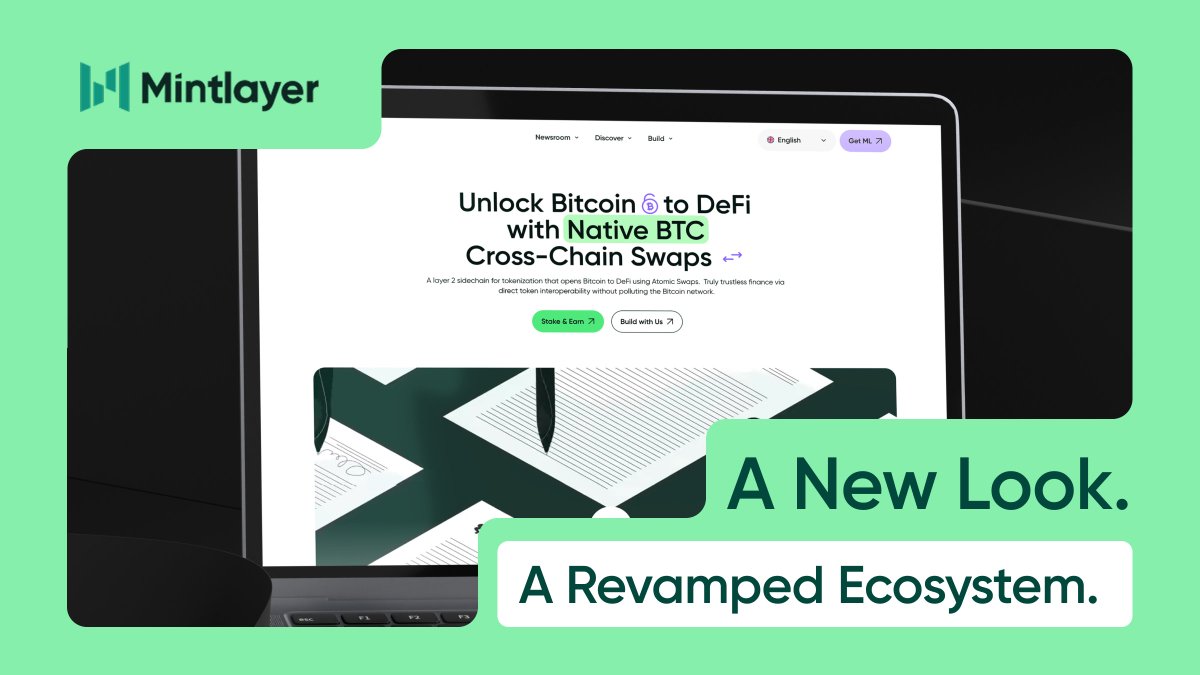
A new look with a broader vision for what comes next.
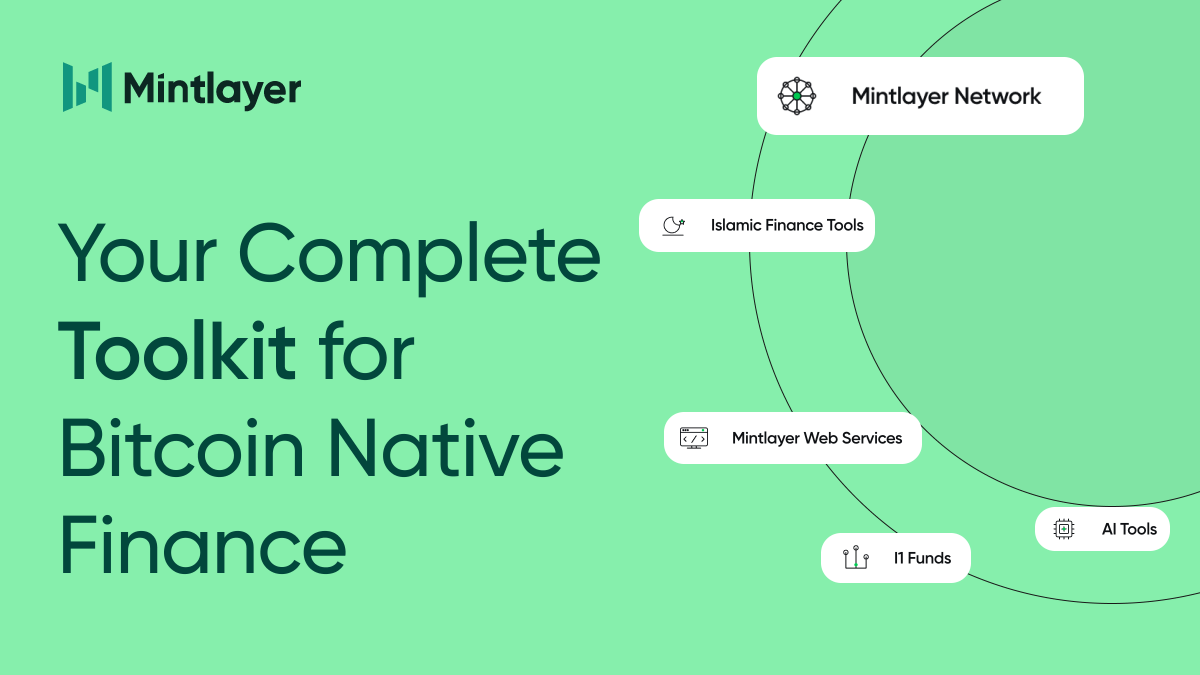
Mintlayer introduces 5 revamped verticals, expanding its ecosystem across infrastructure, finance, and emerging technologies:
🟢 Mintlayer Network
🟢 Mintlayer Web Services
🟢 I1 Funds
🟢 Islamic Finance Tools
🟢 AI Tools
From core blockchain infrastructure to advanced financial and AI-driven solutions, we continue to evolve with a focus on real-world utility and scalable innovation.
Explore it all now: mintlayer.com
17
23
104
4,171
Mintlayer retweeted

Everyone asks if quantum computers can break Bitcoin. Nobody runs the numbers on what it would actually cost.
The answer: ~$1.15M in electricity. ~$7.9 trillion in hardware. The math reframes the threat entirely.
mintlayer.com/blog/quantum-c…
8
17
292
Jun 11
The blockchain industry has spent years measuring success through TPS, TVL, and user growth.
But as institutions begin exploring tokenization and on-chain finance, another metric is becoming increasingly important, and that's TRUST.
Who can provide the security, transparency, and settlement assurances needed for long-term adoption?
As the industry matures, trust will likely become a stronger differentiator than raw performance metrics.
This is we, at Mintlayer.com, are taking a Bitcoin-first approach, utilizing one of the most battle-tested networks in the industry to support the next generation of tokenized assets and financial applications.
The next wave of adoption will be driven more by confidence.
17
27
102
2,076
Jun 8
As the world counts down to the FIFA World Cup 2026, development at Mintlayer HQ remains in full swing.
The latest GitHub update was recorded just 19 hours ago:
github.com/mintlayer
The shipping never stops.
13
20
88
2,107
Mintlayer retweeted

Jun 5
The hardest problem in AI is not intelligence, but accountability and trust.
Four out of five organizations have already deployed AI agents at some level. These systems are making financial decisions, coordinating healthcare protocols, running supply chains, and handling customer interactions, often without a human in the loop at any intermediate stage. The governance frameworks meant to oversee them are months, possibly years, behind where deployment already is.
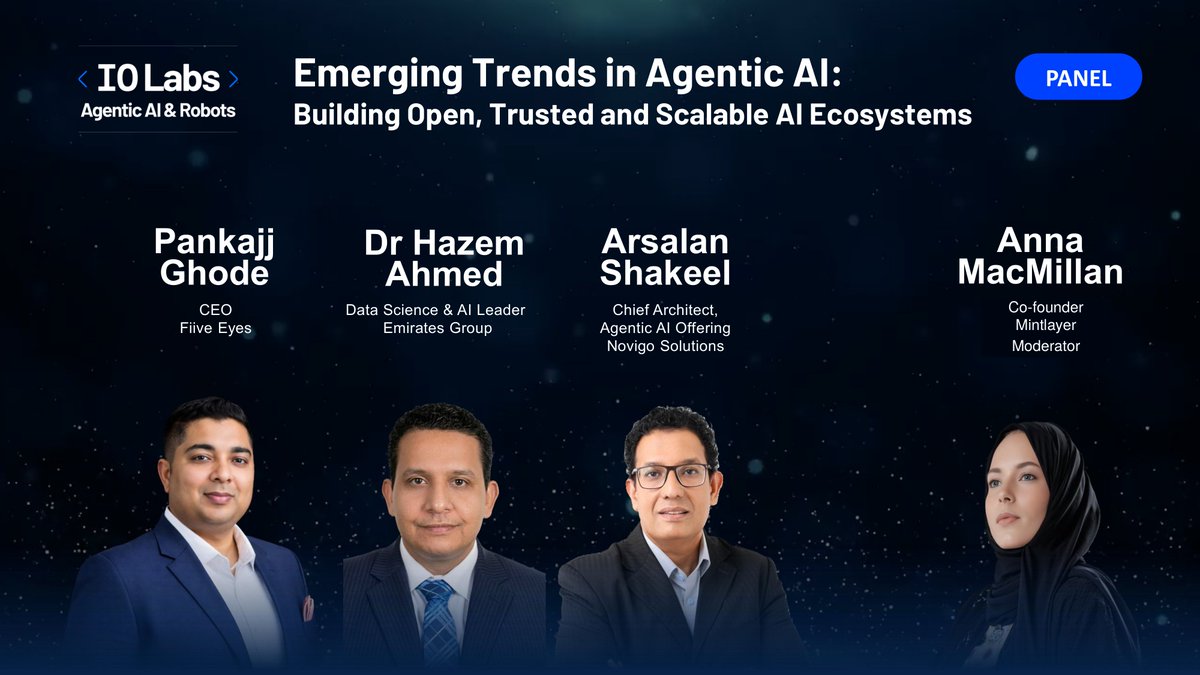
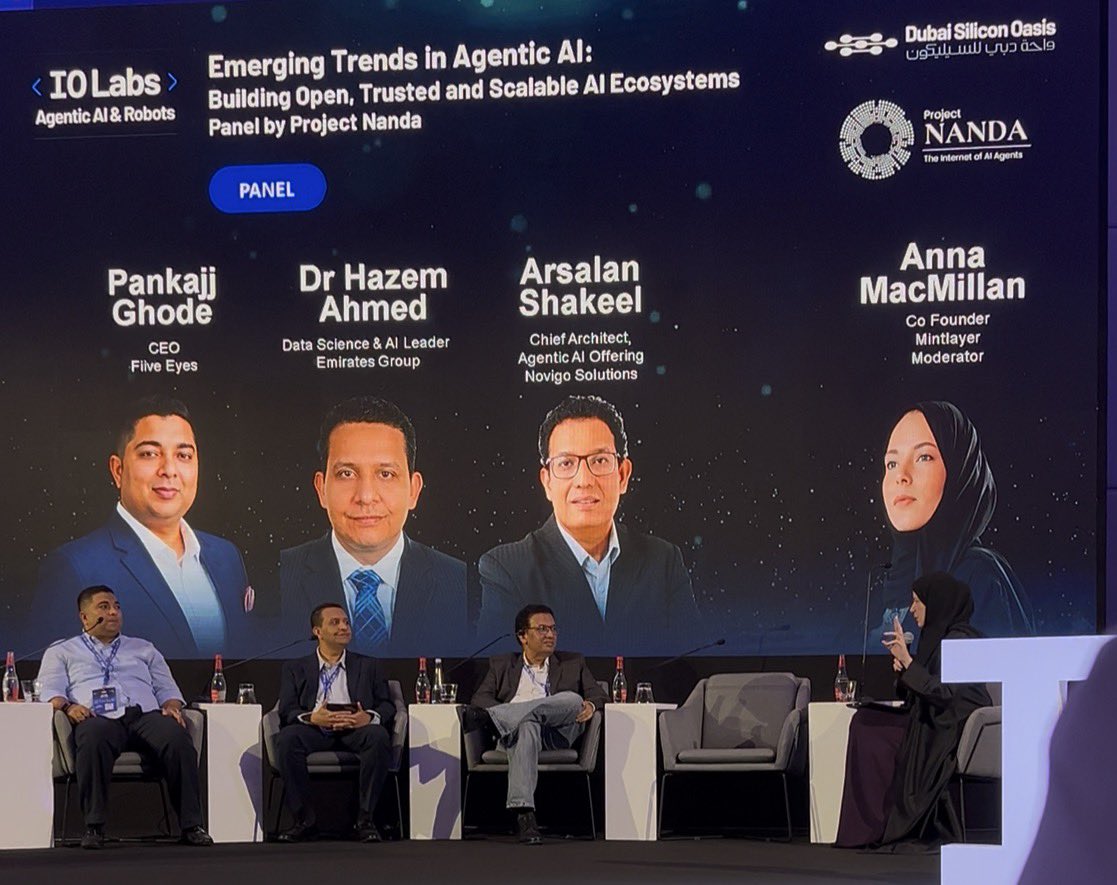
I was on a panel recently with Arsalan Shakeel, Dr. Hazem Ahmed, PhD, and Pankajj Ghode exploring this exact territory. We got into autonomous decision-making, enterprise readiness, trust frameworks, what's actually being built versus what's being announced. The conversation was sharp. But one question kept surfacing that we didn't fully resolve: when an agentic system causes harm, can you reconstruct exactly what happened, at the exact moment it happened, in a form that can't be altered after the fact?
In most deployments today, the answer is no, and that is not a monitoring problem, but an infrastructure problem.
My view is that intelligent systems require forensic-grade rails underneath them to be genuinely accountable. Not compliance dashboards, or observability tools. Immutable, timestamped, tamper-proof infrastructure that closes the learning loop every time something goes wrong, so it doesn't go wrong the same way again.
I've written up the full argument, including where existing governance frameworks fall short and what the architecture of trusted agentic AI actually needs to look like.
Link in the comments
19
28
82
2,294
Jun 3
TLDR: May Development Update
🔹 Core protocol (v1.3.1): Released with improvements to transaction processing, validation, networking reliability, and overall node stability.
🔹 Wallet fixes: Resolved issues around order command conflicts, cold wallet input commitments, and mempool access errors in cold mode.
🔹 Documentation: Ongoing improvements to the Mintlayer docs portal to make developer onboarding and ecosystem understanding more structured and accessible.
🔹 Mojito Wallet: UI redesign in progress, focused on improving usability, simplifying workflows, and enhancing overall user experience.
🔹 Hardware wallets: Continued development of Ledger support for secure asset management via Wallet CLI.
Read the full update 👇
mintlayer.com/blog/mintlayer…
12
22
87
2,181
Jun 2
What’s the first thing you think of when someone mentions "AI"?
19
24
78
2,043
May 28
Our Co-founder @annamacmillan will be joining this exclusive X Space session to discuss all things AI agents with wallets!
See you in exactly 1 hour ⬇️
x.com/i/spaces/1yxBeePbAjoJN…
May 26

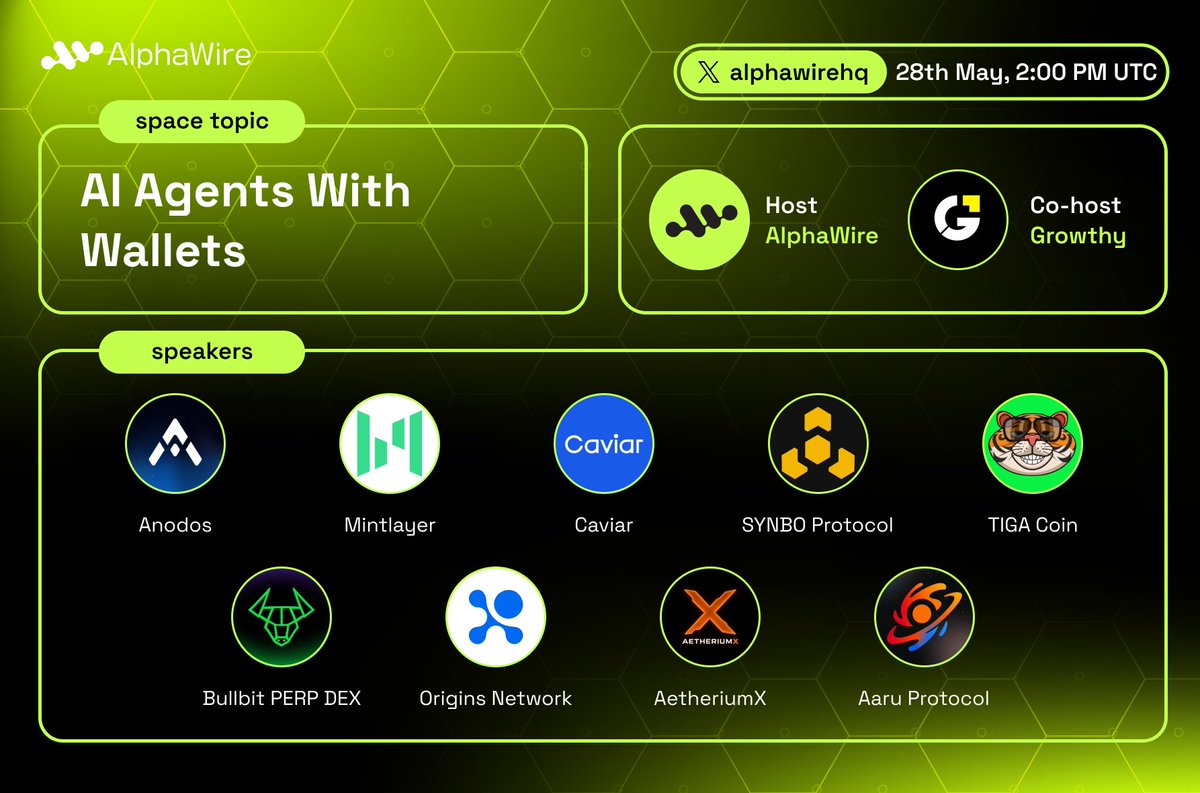
NEW SPACE: AI Agents With Wallets 🎙️
AI agents can now hold wallets, move money, trade onchain, and drain themselves through prompt injection attacks!
Coinbase launched agentic wallets. Virtuals is already processing billions. Researchers just proved LLM routers can be hijacked to steal funds.
@OriginsNetwork_ @SynboLabs @mintlayer 6 more!
14
18
79
2,820
Mintlayer retweeted

May 26
NEW SPACE: AI Agents With Wallets 🎙️
AI agents can now hold wallets, move money, trade onchain, and drain themselves through prompt injection attacks!
Coinbase launched agentic wallets. Virtuals is already processing billions. Researchers just proved LLM routers can be hijacked to steal funds.
@OriginsNetwork_ @SynboLabs @mintlayer 6 more!
127
123
188
9,538
May 26
As we observe Eid and the values of gratitude, togetherness, and giving, may this special occasion bring happiness, peace, and prosperity to you and your loved ones.
Eid Mubarak from all of us at Mintlayer ✨
10
22
87
2,053
May 25
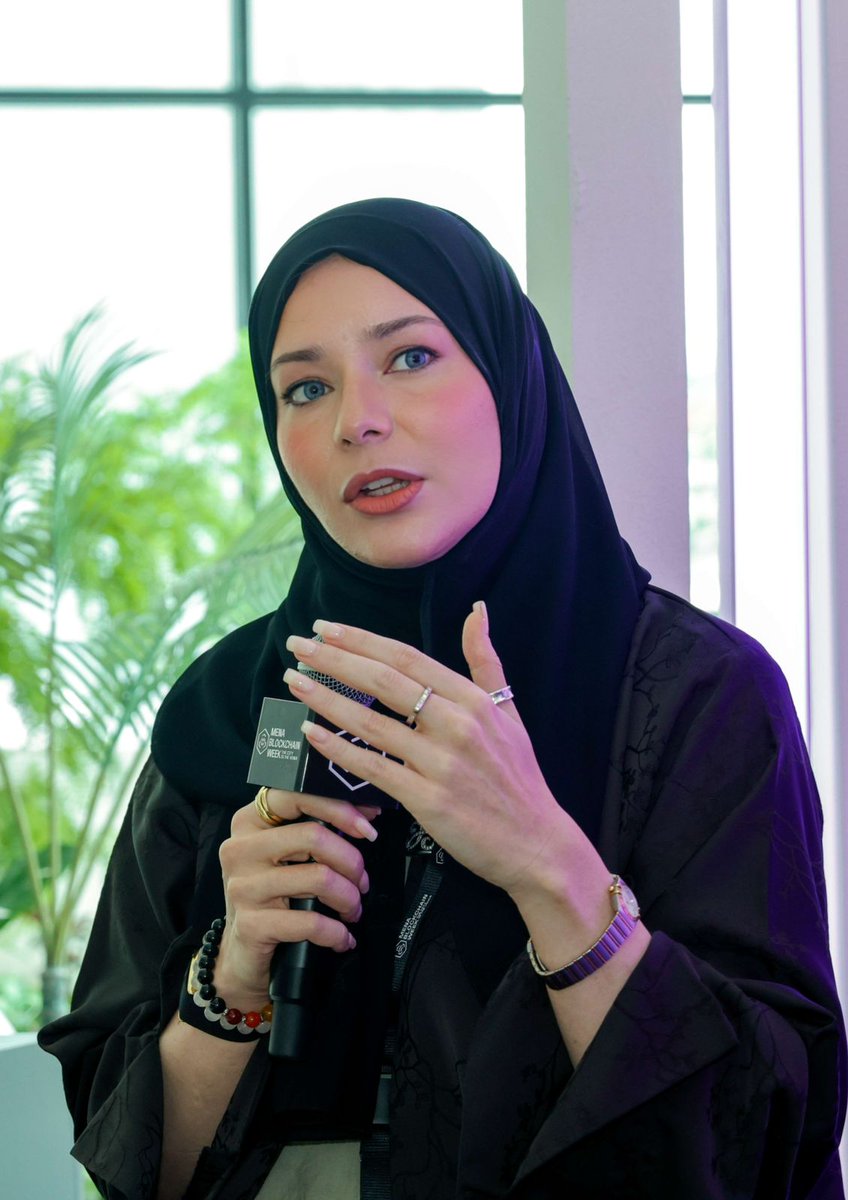
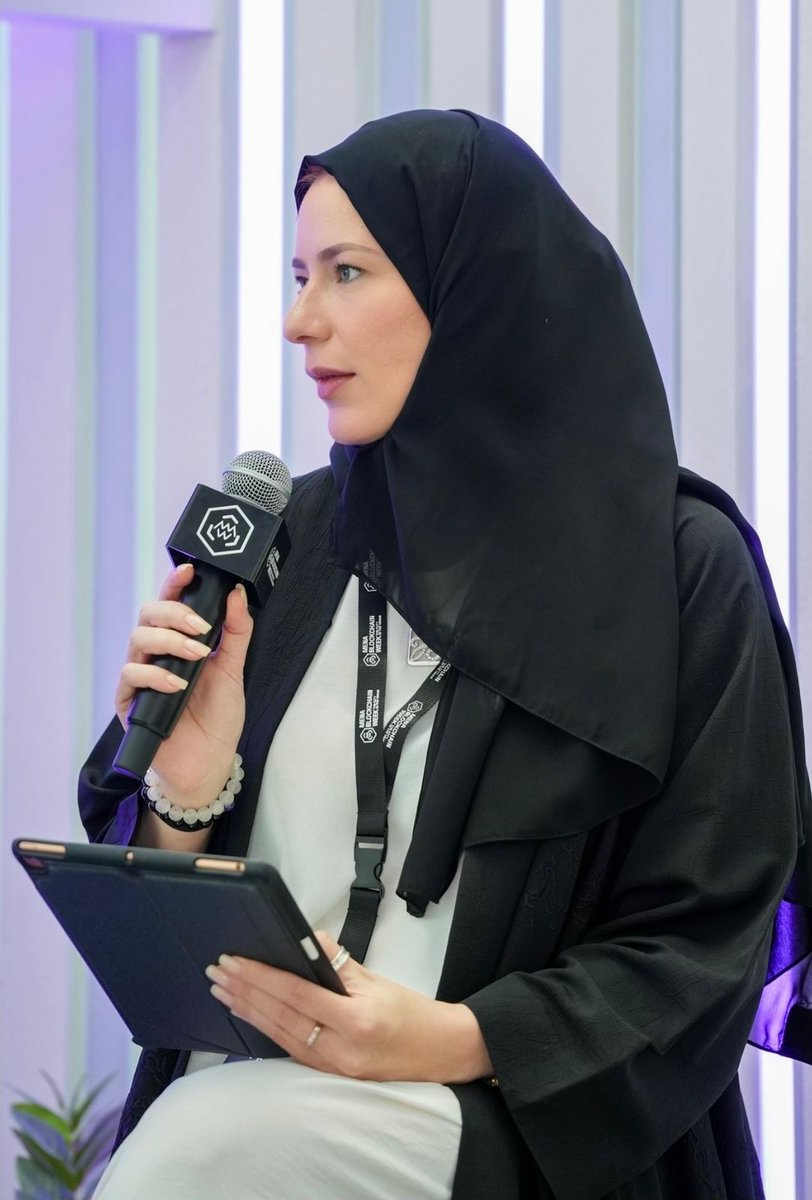
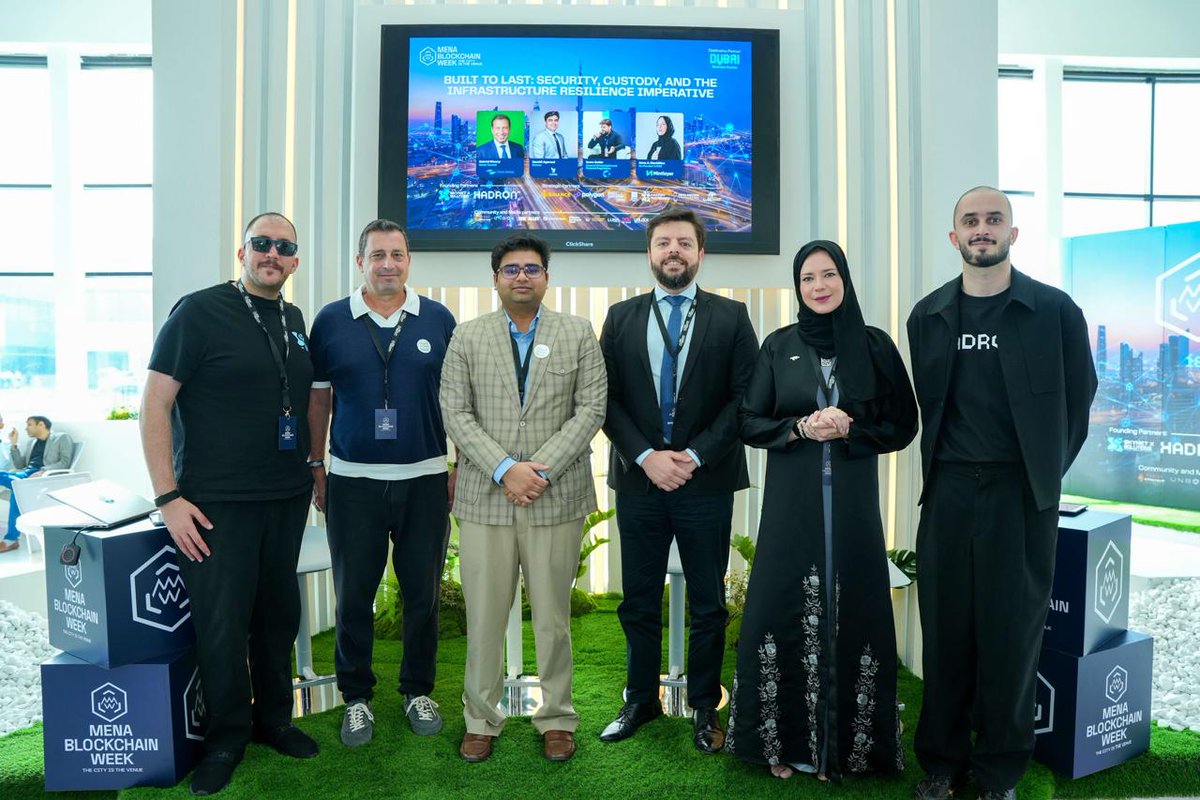
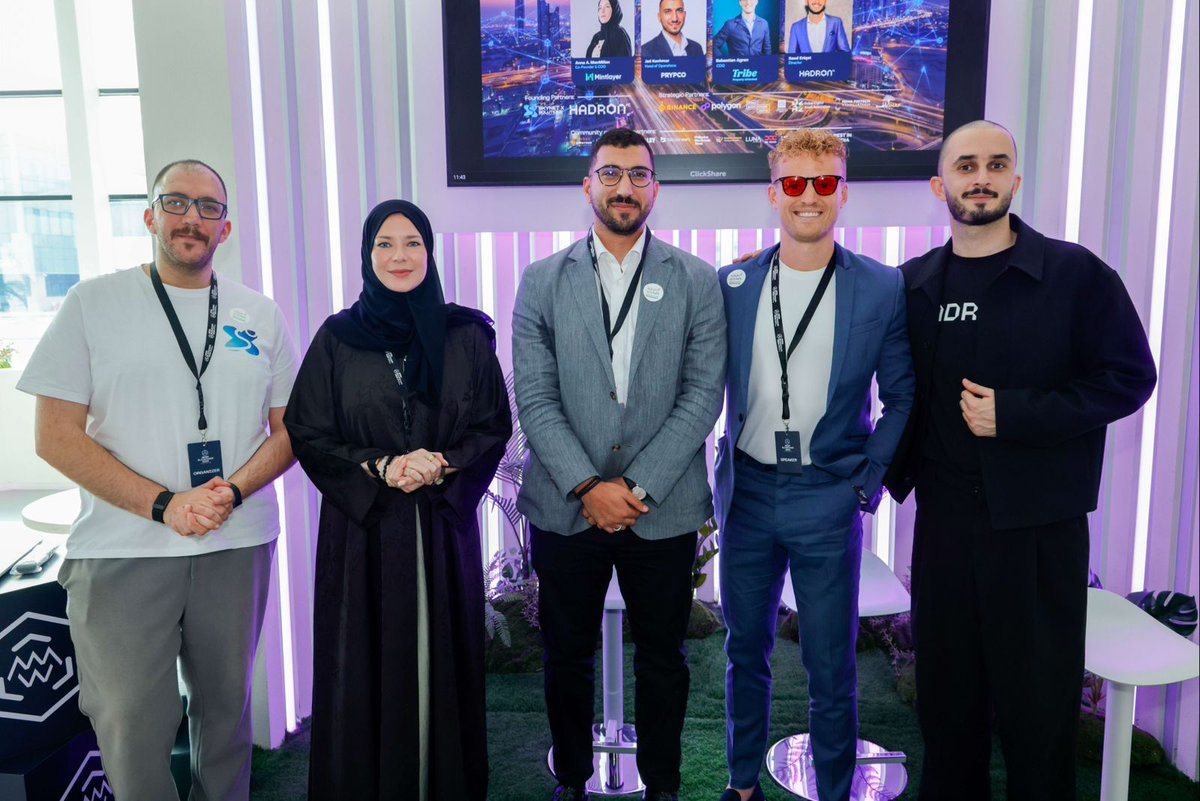
From RWAs to custody, infrastructure, and beyond, MENA Blockchain Week in Dubai brought together the critical conversations shaping how the industry moves forward.
Watching our Co-founder @annamacmillan chair some of these strong panels was truly a treat!
Dubai is THE ultimate crypto hub, and if you’re building in Web3, you should experience the energy this city gives builders every single day.
What a week it has been @MENABCW!
19
29
108
3,352
May 22
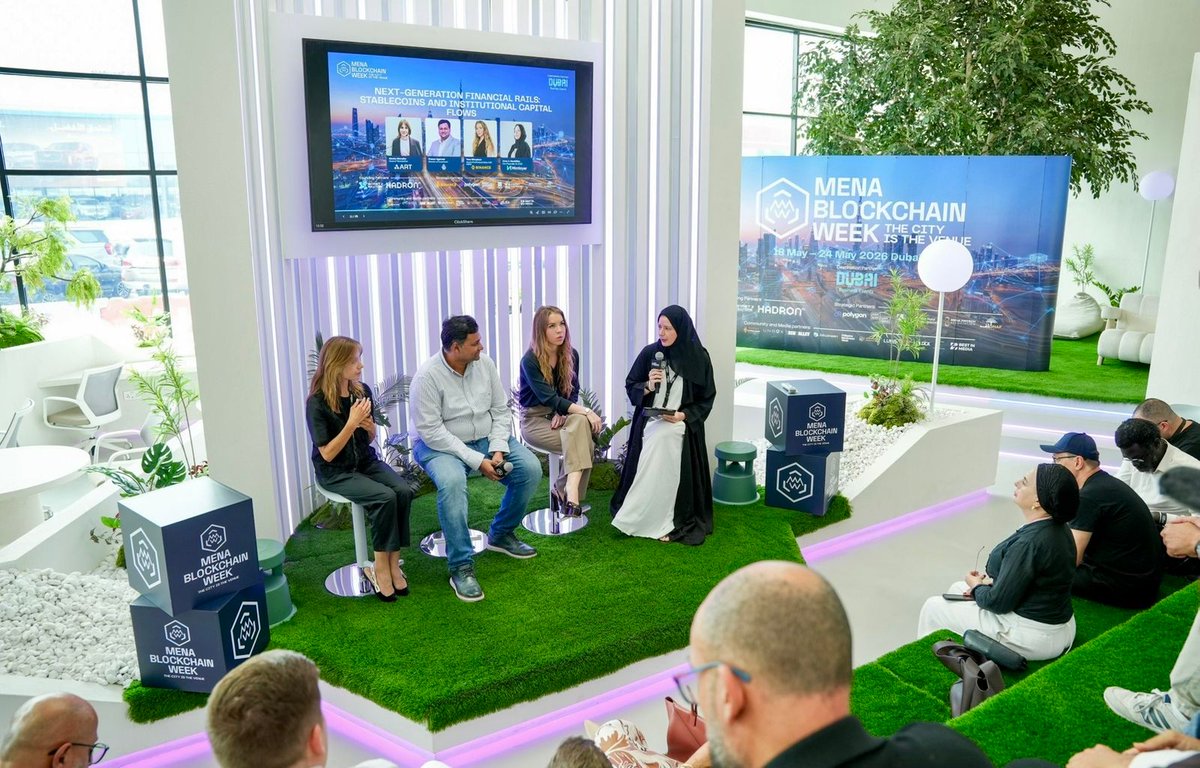
MENA Blockchain Week showed what happens when a space is united by a common goal, regardless of regional differences.
Here are some captures featuring our Co-founder @annamacmillan taking the stage to moderate a panel focused on next-generation financial rails, including stablecoins and institutional capital flows.
Thank you for having us @MENABCW!
17
29
109
2,383
May 22
RT @Moexba: Day 5 of 7 at @MENABCW on stage @prypcocom @annamacmillan @mintlayer @Hadronfc 🔥 from Dubai to the world 🇦🇪🇦🇪 t.co/Yfky…
10
Mintlayer retweeted

May 20
Cross-border payments just got a blockchain upgrade. Dubai witnessed it first.
🎬 Day 3 Recap
One City. One Week. One Nation. 🇦🇪
🔥When settlement is instant and borderless, who needs the correspondent bank?
Day 3 of MENA Blockchain Week 2026, where the future of finance stopped being theoretical.
40 events. 5,000 attendees. 100 speakers.
📍Dubai: May 18 to May 24, 2026
🎟️Full Agenda: agenda.menablockchainweek.ae…
🌐Register NOW: luma.com/menablockchainweek
#MENABCW #ProudofUAE #Dubai
@DubaiDET @SNXS_ae @Hadronfc @0xPolygon
16
31
105
3,209
May 18
Mark the date: 19th May 2026 📌
Our Co-founder @annamacmillan takes the stage to moderate a panel featuring distinguished speakers, highlighting the emerging trends in Agentic AI and what it takes to build open, trusted, and scalable AI ecosystems.
👉 luma.com/40ba3jot
12
19
88
2,378
May 18
📌 Save the Dates!
Catch our Co-founder @annamacmillan this week at @MENABCW!
🟦 20th May 2026
Panel: The New Payment Stack
📍 luma.com/qe9hrfy3
🟦 21st May 2026
Panel: Built to Last: Security, Custody, and the Infrastructure Resilience Imperative
📍 luma.com/MENABCW04
🟦 22nd May 2026
Panel: Beyond the Buzz: Is There Real Institutional Demand for RWAs?
📍 luma.com/MENABCW05
See you there!
May 17

It’s MENA Blockchain Week!
Dubai is preparing for a week filled with high-impact events, networking sessions, private meetings, and industry conversations, while our Co-founder @annamacmillan takes the stage across multiple panels alongside renowned speakers discussing what’s next for Web3 in the region and beyond.
More to follow! But...
Are YOU coming?
11
19
93
3,340
May 17
It’s MENA Blockchain Week!
Dubai is preparing for a week filled with high-impact events, networking sessions, private meetings, and industry conversations, while our Co-founder @annamacmillan takes the stage across multiple panels alongside renowned speakers discussing what’s next for Web3 in the region and beyond.
More to follow! But...
Are YOU coming?
14
23
99
5,520
Mintlayer retweeted
May 15
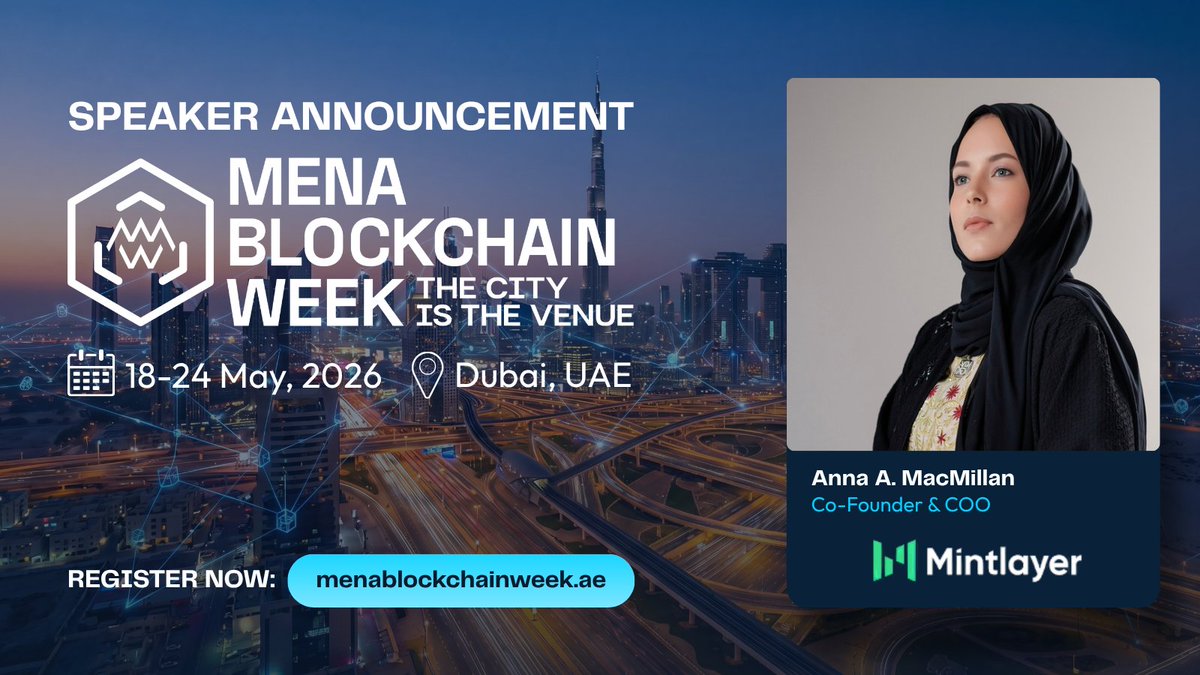
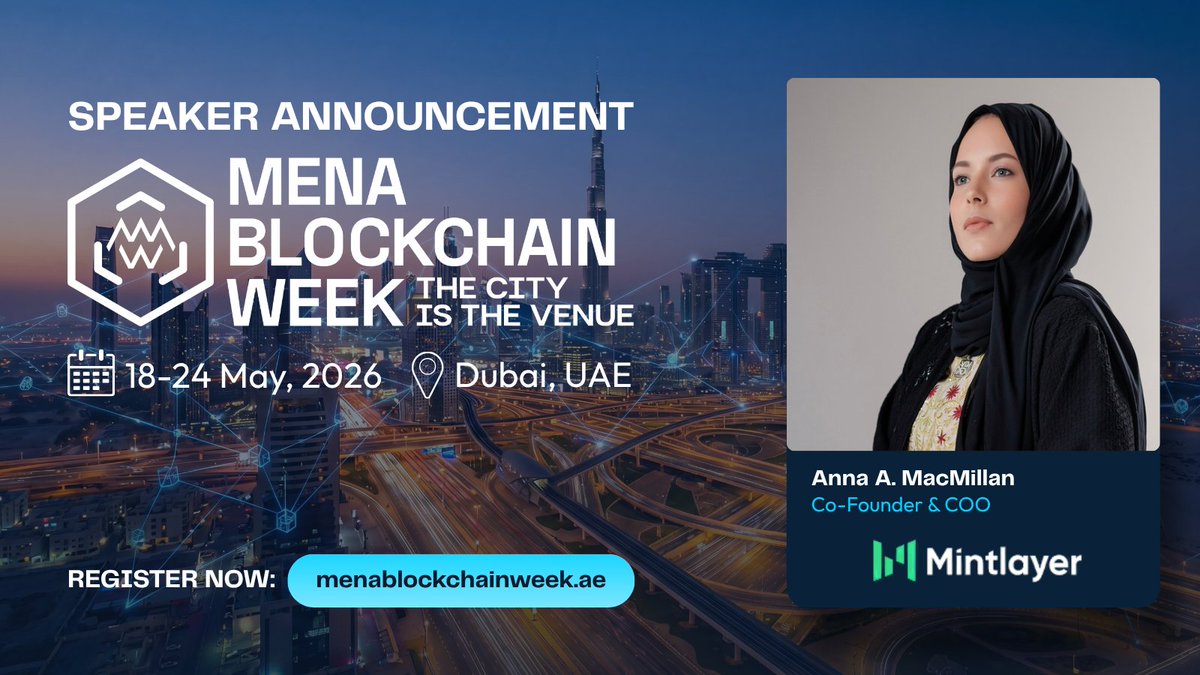
🎤 Speaker Announcement
We're proud to welcome Anna MacMillan, Co-Founder & COO, Mintlayer, as a featured speaker at MENA Blockchain Week 2026.
Anna MacMillan is a venture investor and operator building institutional-grade infrastructure at the intersection of Bitcoin, real-world asset tokenization, and AI-native financial systems. She is Co-Founder and COO of @mintlayer, a Bitcoin Layer-2 and Layer-3 protocol built for institutional RWA tokenization, native Bitcoin DeFi, and financial settlement at scale.
@annamacmillan
She is the architect of Mintlayer Atlas, her framework for how intelligent systems, digital assets, and blockchain infrastructure converge in the next generation of financial markets. She also led the strategic and intellectual development of Mintlayer’s Islamic finance initiative, building the foundations for Shariah-aligned models within tokenized environments.
Through Mintlayer she launched Interest.one, the first fully tokenized fund of funds generating yield on Bitcoin across real estate, AI, healthcare, energy, cybersecurity, and sustainability.
Her advocacy for ethical AI spans governance, transparency, and accountability across finance, science, and healthcare. She believes how we build AI is as consequential as what we build it for.
She is Co-Founder of Venture Factore and Founder of the Women in Investment Network (WiiN).
Her work spans pharma, defense, food and water security, investments, and decentralized science, across Latin America, the Middle East, Europe, and the United States.
Get ready for powerful insights, real-world strategies, and forward-thinking perspectives shaping the future of Blockchain in MENA.
One City. One Week. One Nation. 🔥
40 events. 5,000 attendees. 100 speakers.
📍 Dubai | May 18 – May 24, 2026
🎟️ Register → luma.com/MENABCW
🌐 menablockchainweek.ae
#MENABCW #ProudOfUAE #Dubai
15
25
85
2,490
May 15
We introduced, AI Tools.
You asked, "What's that?"
AI powered services designed to extend Mintlayer across intellectual property, compliance, and developer infrastructure.
Bringing together machine intelligence and verifiable on chain systems to support the next generation of scalable digital applications.
Mintlayer.com
15
23
99
2,197