
Building @mintlayer. Ex-Bitfinex/Tether. Bitcoin infrastructure, institutional adoption, and AI
Joined October 2008
- Tweets 3,484
- Following 964
- Followers 2,234
- Likes 9,945
100 Photos and videos










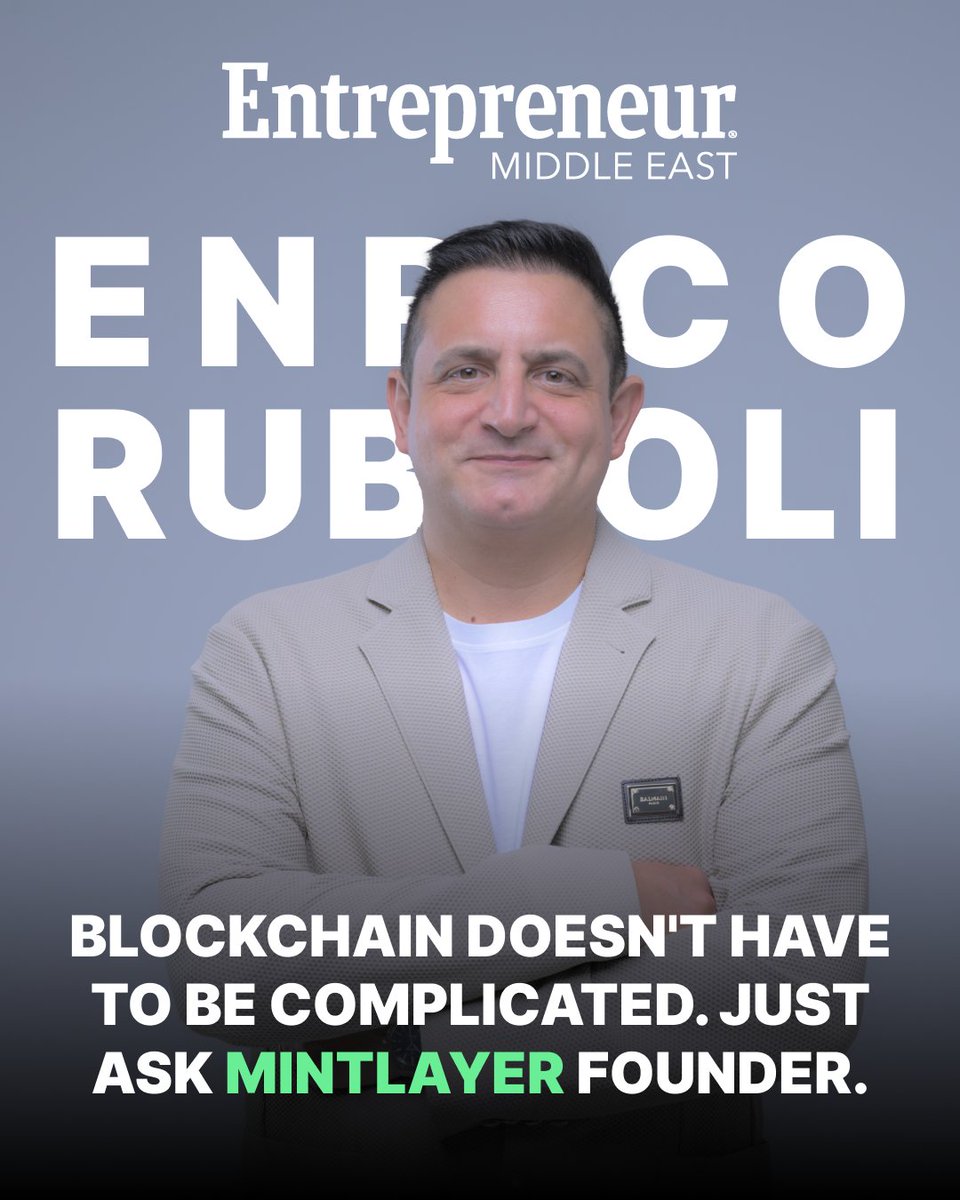
Everyone asks if quantum computers can break Bitcoin. Nobody runs the numbers on what it would actually cost.
The answer: ~$1.15M in electricity. ~$7.9 trillion in hardware. The math reframes the threat entirely.
mintlayer.com/blog/quantum-c…
7
13
258
Enrico Rubboli ⚡ retweeted

Jun 7
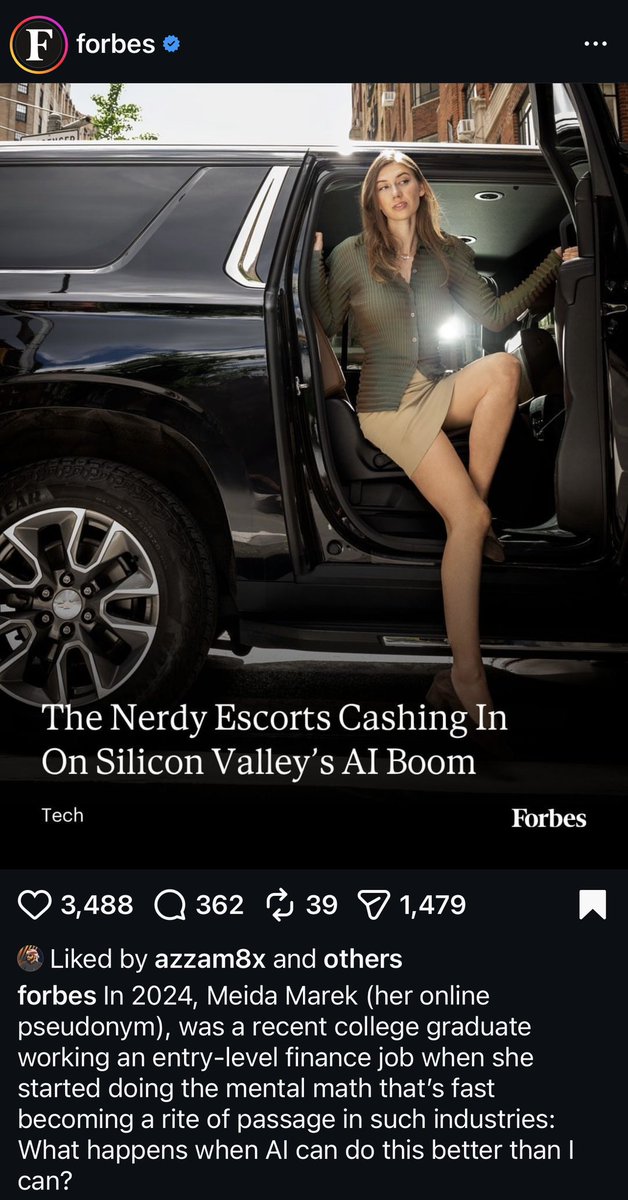
As a founder, I’ve spent years building institutional grade Bitcoin, and AI infrastructure. I’m one of very few female founders in this niche globally, but you wouldn’t know it from reading Forbes . This week they gave the cover story to an escort servicing Silicon Valley’s AI engineers, filing it under #Tech, giving it the photo shoot, the distribution, the cultural weight. That editorial choice says something specific about what kind of woman in tech is considered worth the spotlight.
Here’s what troubles me about the framing. The woman profiled is described as “intelligent, well-read, conversant in AI and crypto and biohacking.” She studied, built skills, and the story Forbes chose to tell is that she used all of that to service the men building the industry rather than building alongside them. Female founders currently receive roughly 2% of global venture funding. Women are close to half the global population. In the UAE alone, 64% of university graduates are women. So what exactly are we telling those women, and the girls watching them, about where their intelligence and ambition are supposed to lead?
Unfortunately, what nobody talks about honestly, is what happens to the technology itself when women aren’t in the room as founders and decision-makers. Facial recognition systems that perform significantly worse on women and people of color were built without adequate female representation in the teams designing them. AI hiring tools trained on historical data have systematically downgraded applications from women. These are not hypothetical risks, but are documented systemic failures that exist, because the people building the systems didn’t reflect the full range of people those systems would affect. That’s the real cost of this pipeline problem, and it compounds every year we celebrate the wrong stories.
I want to be clear: this is not about the woman profiled. Her choices are her own, and that’s not the conversation. The real conversation is about what Forbes chose to amplify, and what that choice signals to every girl right now deciding whether a career in technology is worth the fight. If the message is that the realistic path for women to break through in AI is to monetize proximity to male founders rather than become one, then the industry will keep looking exactly like it does today.
That’s not inevitable, but a choice, and media is part of making it.
6
6
24
1,284

Jun 2
Most institutional venues hide three things: the real order book, how trades clear, and who holds the assets during settlement. Mintlayer removes all three by making the book on-chain and settlement atomic.
4
4
14
678
Jun 2
For firms evaluating Bitcoin-adjacent trading venues, the right question is not 'what is the liquidity?' It is 'what exactly am I trusting to settle my trade, and can I verify it independently?'
1
2
3
86
Jun 2
On-chain transparency plus atomic settlement is not a crypto-native idea. It is a return to how institutional markets used to work before clearing became centralized. Mintlayer rebuilds that model for Bitcoin.
1
2
5
91
Enrico Rubboli ⚡ retweeted

May 18
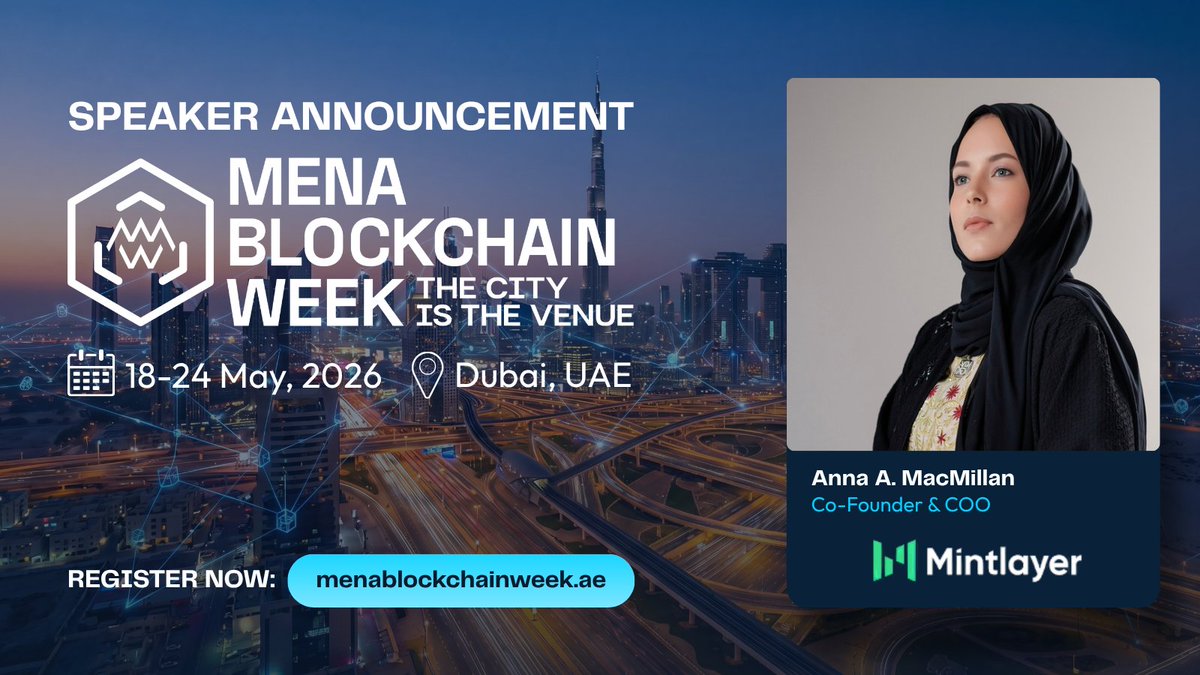
📌 Save the Dates!
Catch our Co-founder @annamacmillan this week at @MENABCW!
🟦 20th May 2026
Panel: The New Payment Stack
📍 luma.com/qe9hrfy3
🟦 21st May 2026
Panel: Built to Last: Security, Custody, and the Infrastructure Resilience Imperative
📍 luma.com/MENABCW04
🟦 22nd May 2026
Panel: Beyond the Buzz: Is There Real Institutional Demand for RWAs?
📍 luma.com/MENABCW05
See you there!
May 17

It’s MENA Blockchain Week!
Dubai is preparing for a week filled with high-impact events, networking sessions, private meetings, and industry conversations, while our Co-founder @annamacmillan takes the stage across multiple panels alongside renowned speakers discussing what’s next for Web3 in the region and beyond.
More to follow! But...
Are YOU coming?
11
19
93
3,340
Enrico Rubboli ⚡ retweeted
May 18
Join us at @MENABCW 🎤
May 18
📌 Save the Dates!
Catch our Co-founder @annamacmillan this week at @MENABCW!
🟦 20th May 2026
Panel: The New Payment Stack
📍 luma.com/qe9hrfy3
🟦 21st May 2026
Panel: Built to Last: Security, Custody, and the Infrastructure Resilience Imperative
📍 luma.com/MENABCW04
🟦 22nd May 2026
Panel: Beyond the Buzz: Is There Real Institutional Demand for RWAs?
📍 luma.com/MENABCW05
See you there!
1
5
22
439
May 1
Reading The Martian by @andyweirauthor and I gotta ask... how's Mark duct-taping rovers back together on Mars while I'm over here losing my mind over an IKEA bookshelf? what brand is that tape Andy?? asking for me and my wobbly KALLAX 😭
2
3
152
Apr 30
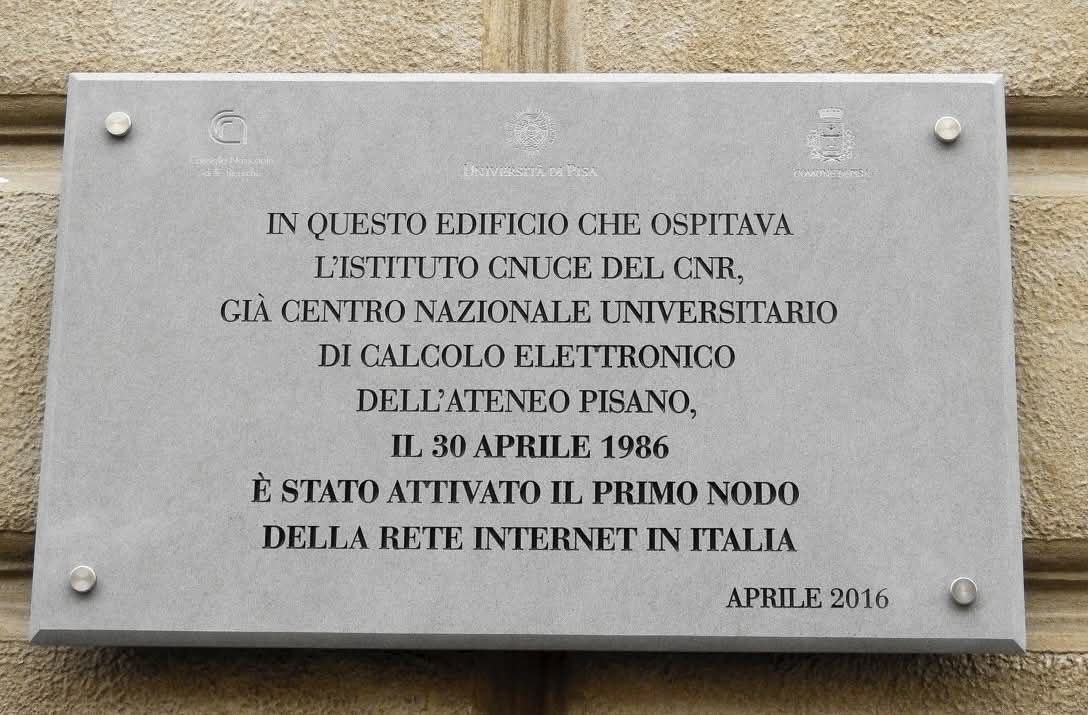
Today it's 40 years of Internet in Italy. Back then I was playing with the observatory BBS in Ravenna, the only way I had to connect my computer with something else on a dial-up phone line.
1
2
4
179
Enrico Rubboli ⚡ retweeted
Apr 28
Join our “Bitcoin in the Quantum Age” Masterclass happening tomorrow!
⚡️Join @dn2k and @muurshb from @SeiNetwork for a deep dive into how quantum tech could impact Bitcoin, what risks are real (and when), and how to actually protect your BTC.
🔗 Register now before it’s full 👇
luma.com/y6pdamzq
11
21
89
4,826
Enrico Rubboli ⚡ retweeted
Apr 24
I think we should talk. We have put together a project running on our @mintlayer blockchain, for Real World Identity. Linking pet owners, to their pets in a traceable manner, to facilitate law enforcement on pet abandonment.
At the same time, our project allows the unification of pets health records, facilitating transfers from one clinic to the other, cross country and cross border. Minimizing quarantine requirements and etc
We are happy to share more and have already shared with the relevant UAE authorities, as we are happy to provide this on complimentary basis on a national level integration
Apr 24

during the war i got active on X again. that's how i met @claireindubai, who works incredibly hard to re-home pets in the UAE.
she's always asking her audience for help where they can. last week she asked if anyone could build her an app. i stepped in as 'web administrator' to help make it happen.
the result: rescueme.ae, a platform for neglected and abandoned pets in the UAE to find loving homes.
it's now a joint effort with 5 groups across the UAE all working toward the same thing.
we're in v1 but if you live in the UAE, please share. if you know anyone looking to adopt a dog, cat, or rabbit, send them to rescueme.ae and support @claireindubai and her team.
RTS APPRECIATED 🫶
4
9
30
804

Apr 16
If you are building on @mintlayer using go, have a look at the new SDK github.com/mintlayer/go-sdk
2
7
179
Enrico Rubboli ⚡ retweeted
Apr 15
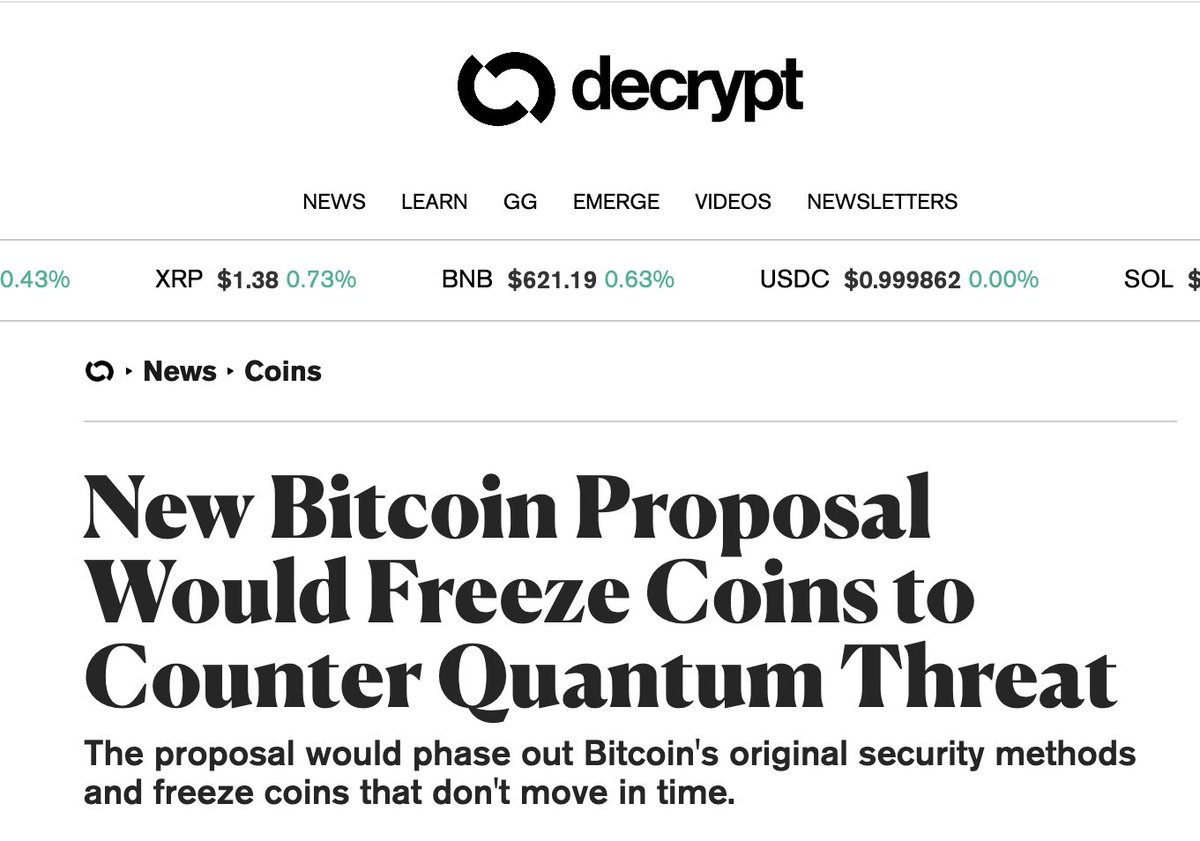
Big moment for Bitcoin 👀
@dn2k Enrico Rubboli shares his perspective in @DecryptMedia on a proposal to freeze coins against quantum threats.
🔗Read the full piece: decrypt.co/364450/new-bitcoi…
11
23
81
2,362
Enrico Rubboli ⚡ retweeted

Today is World Homeopathy Day.
In its honor, let’s remember that time The Amazing James Randi overdosed on homeopathy and lived to tell about it.
122
718
3,168
179,274