
Lithium-focused researcher decoding critical mineral extraction, battery production, storage, and recycling, while occasionally exploring EV op-eds.
Joined September 2008
- Tweets 9,998
- Following 329
- Followers 2,155
- Likes 11,793
2,287 Photos and videos

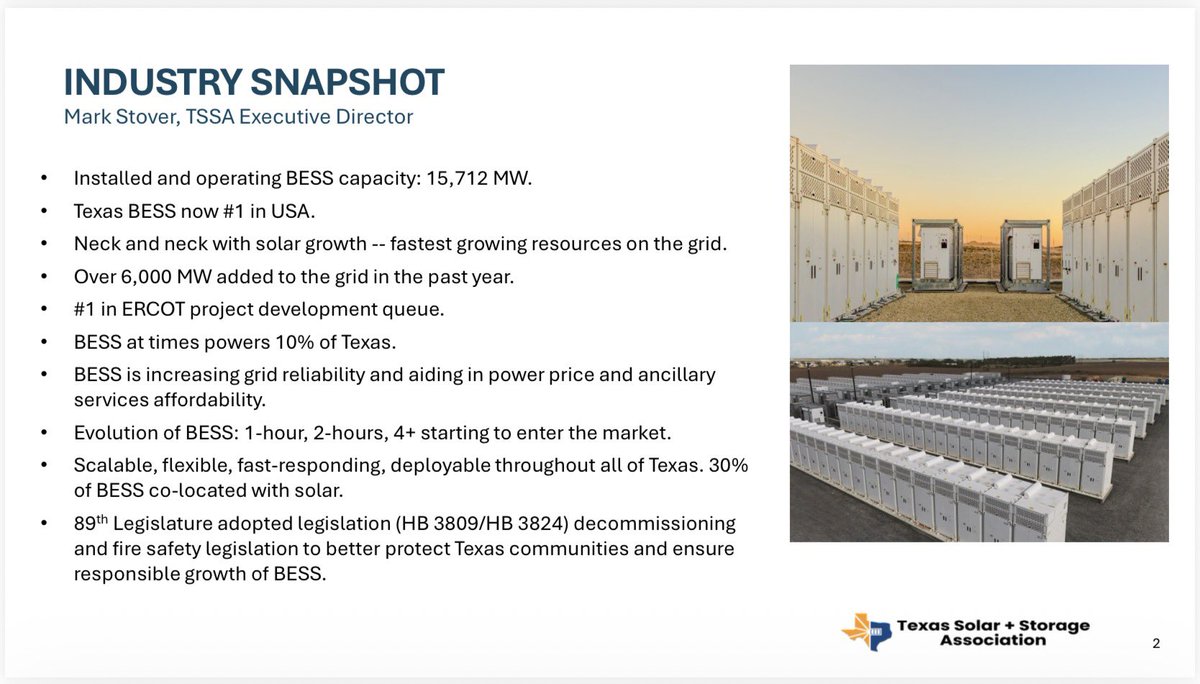
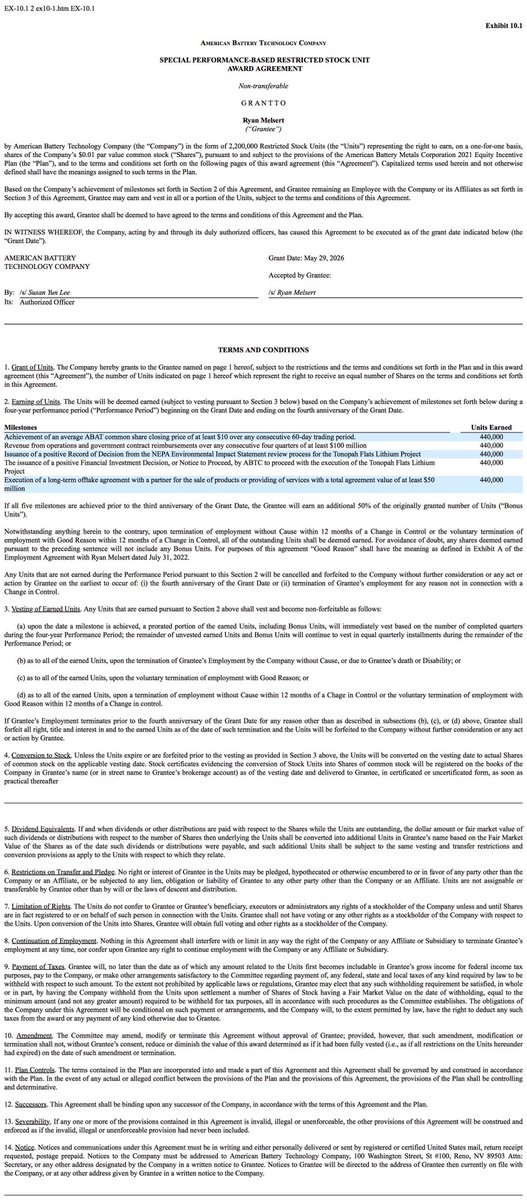


Last year, through a FOIA request, we were able to get American Battery Technology Company’s DOE grant application and follow-up documentation for their second lithium-ion recycling facility.
This week a second FOIA request for $ABAT documents was shared with me and it gives an interesting insight into the hurdles that @abt_company is facing when it comes to an industry that has no real established guidelines besides state by state interpretations of federal statutes.
2
3
24
2,802
Ryan Melsert CEO of $ABAT was invited to present at the Consulate General of India in New York on lithium and battery metals. This article includes the video and technical breakdowns of their projects.
criticalmb.com/p/the-ceo-of-…
1
3
52
1,539
Well on the way to a LFP production surplus in the United States, one that is going to be dependent on imports for production.
energy-storage.news/panasoni…
1
10
856
Mith retweeted

Jun 11
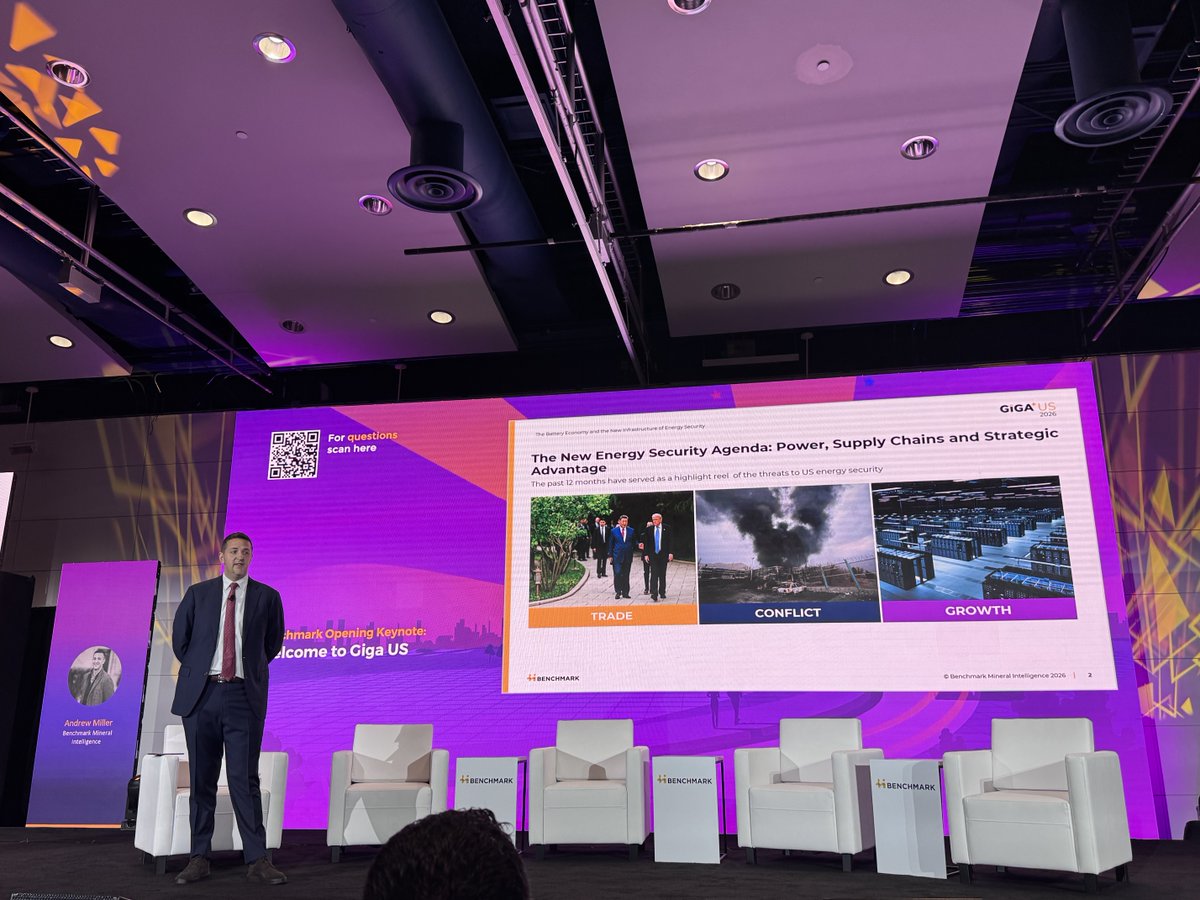
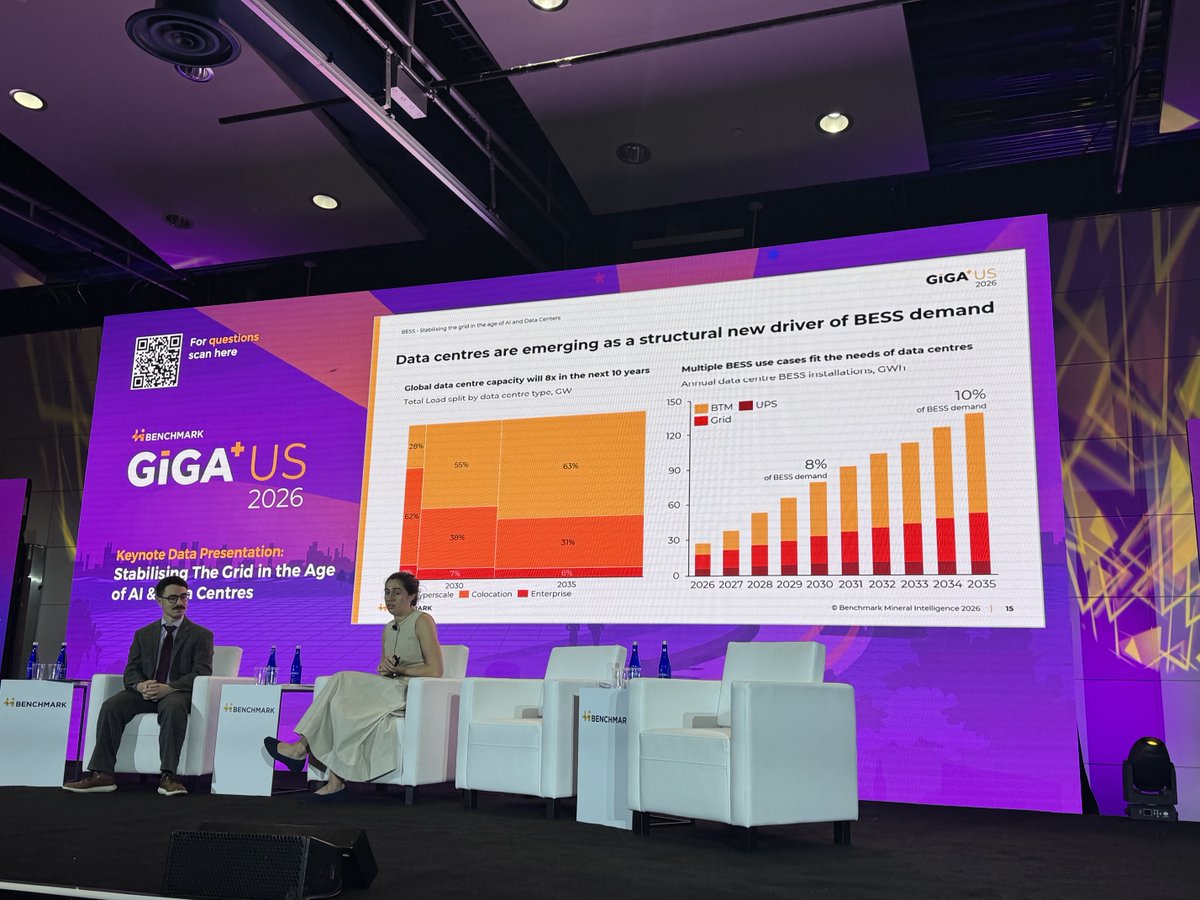
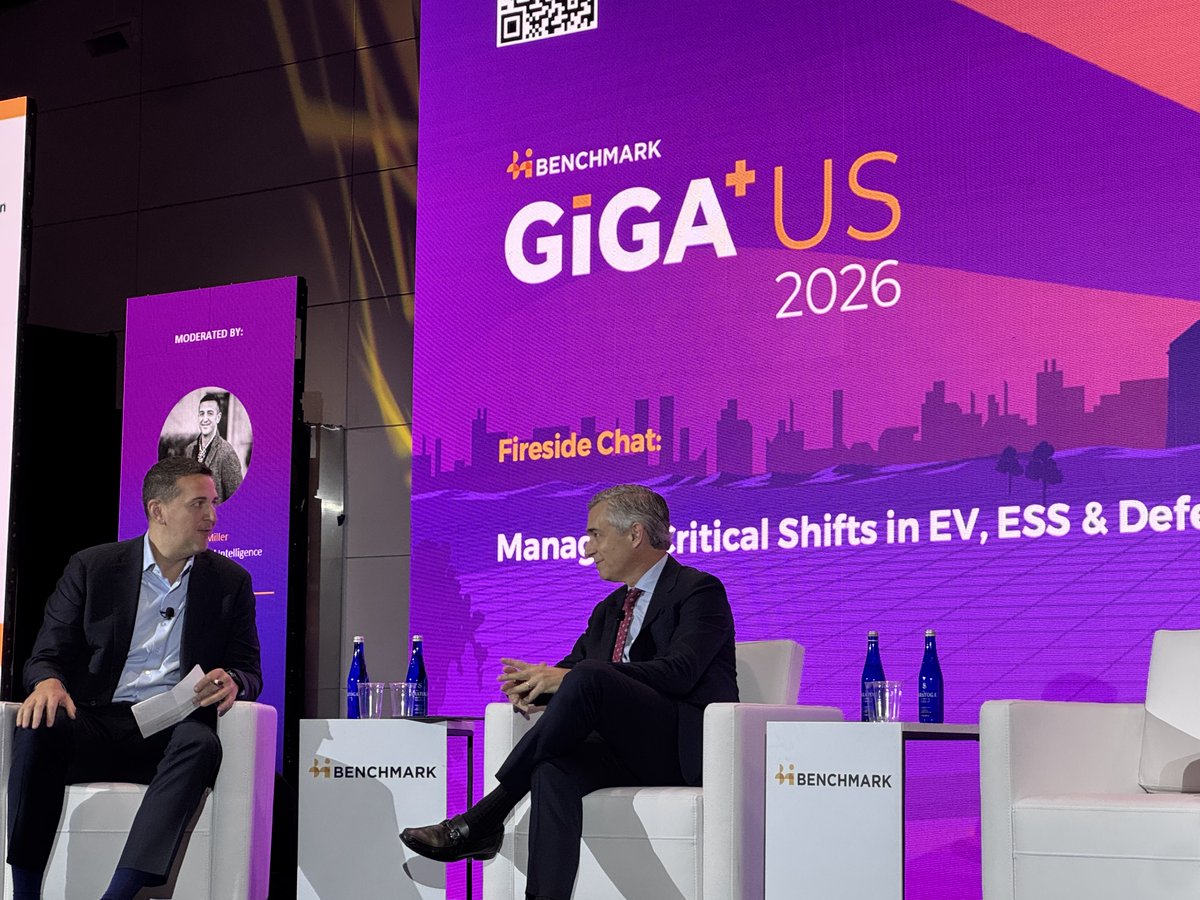
Thanks @benchmarkmin for another great GigaUSA conference in DC.
My takeaways and some interviews with $LAC $SLI and @rhomoiola available tomorrow on Rock Stock Channel…
4
21
1,165
This has to be one of my favorite traders here on X. Sometimes he loses, but most times he gets it right.
But when he hits big, it's exactly the celebration and optimism that makes this site so darn fun to watch.
Jun 10

I’d take this trade any day of the week. Even if it doesn’t work. All day
1
4
9
4,446
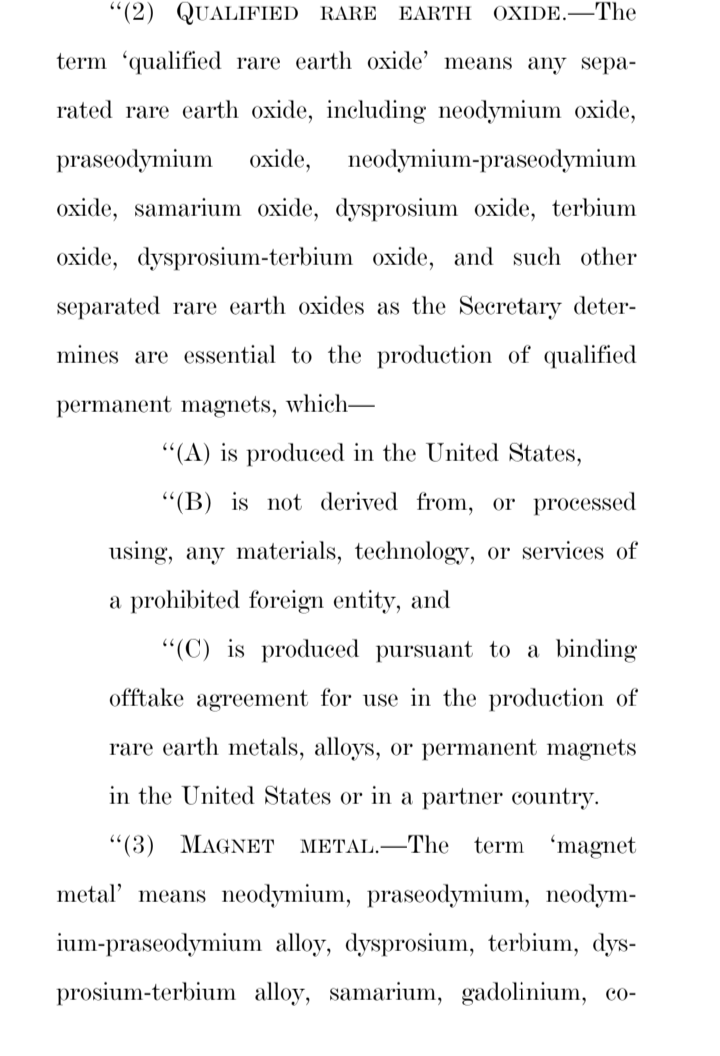
Reading the Magnets Value Chain Support Act of 2026, introduced by Rep. John Moolenaar (R-MI) and Rep. Ro Khanna (D-CA), it will establish a tiered U.S. tax credit for manufacturers of rare earth and non-rare earth magnets.
The goal is to help kick-start domestic production, and it is pretty straightforward about what qualifies. Companies that may operate and produce magnets or the base materials domestically are going to have to audit their technology.
6
565
Mith retweeted

Jun 10
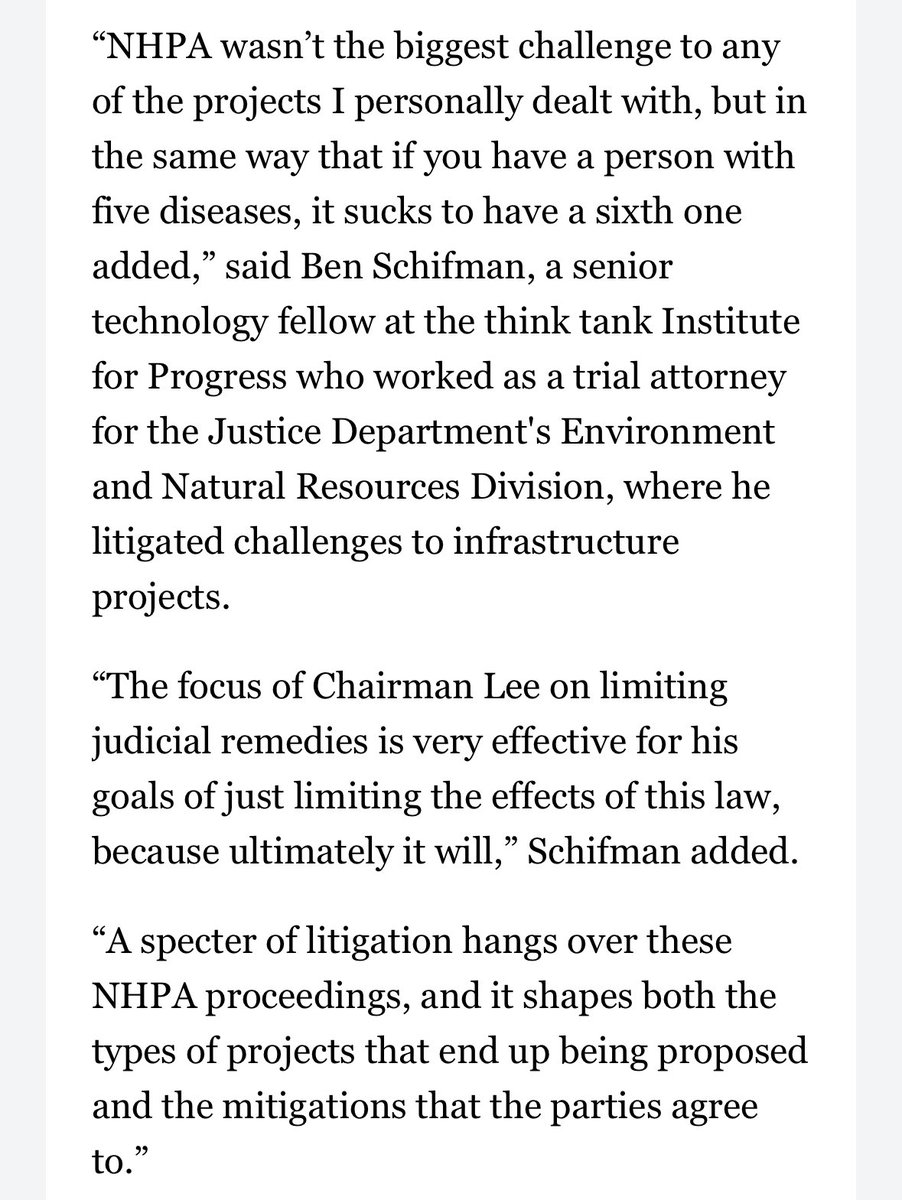
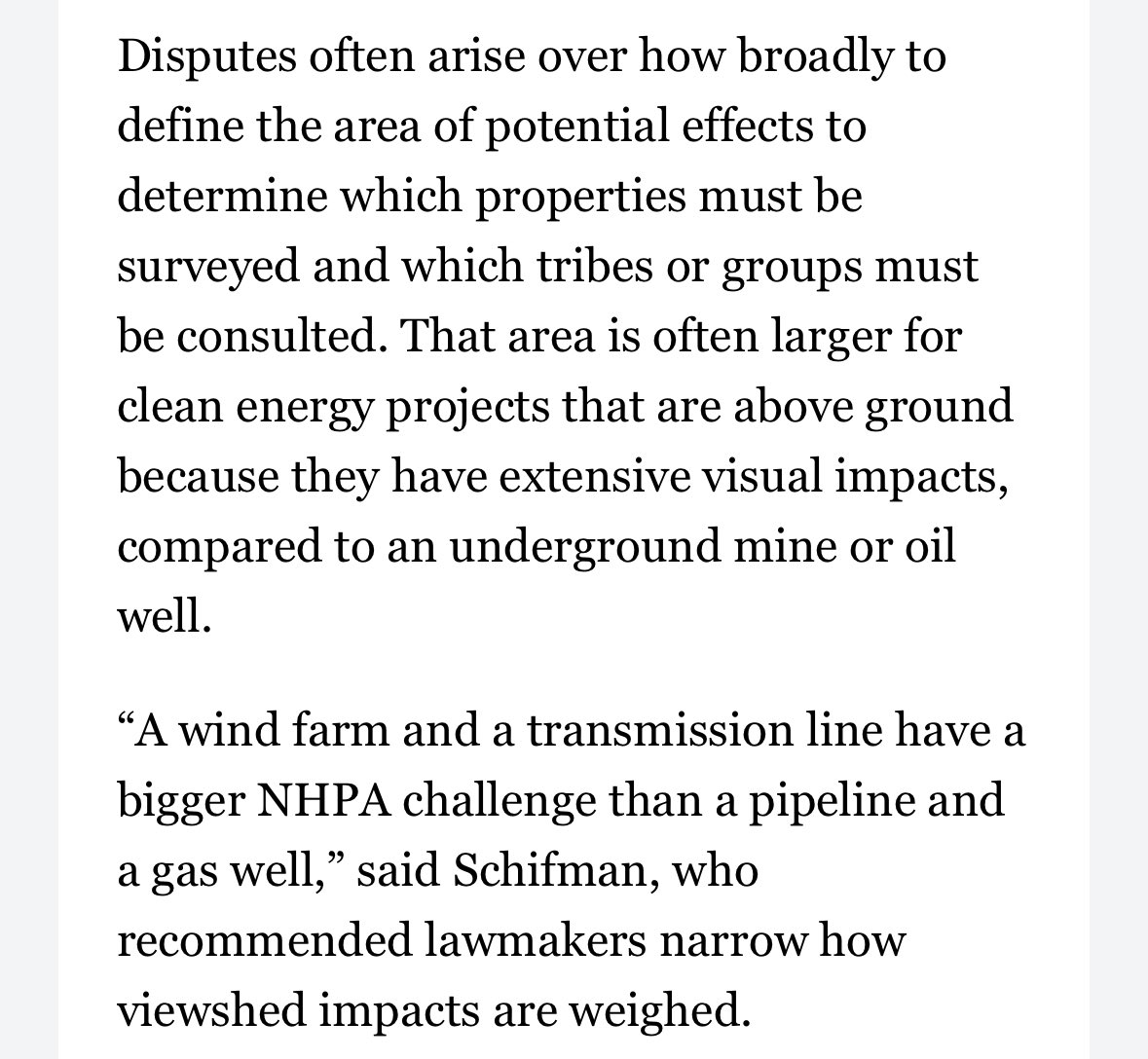
It was fun talking with @SiegelScribe about the National Historic Preservation Act (NHPA).
While at DOJ, I defended several major infrastructure projects from NHPA lawsuits & saw some ways the process could be improved.
I'm working on a long article about the Act & proposed reforms.
If you'd like a sneak peak, or if you have any ideas for how the Act could be improved, my DMs are open!

4
12
1,171
Now that silliness is over, next.
electrek.co/2026/06/08/donut…
1
328
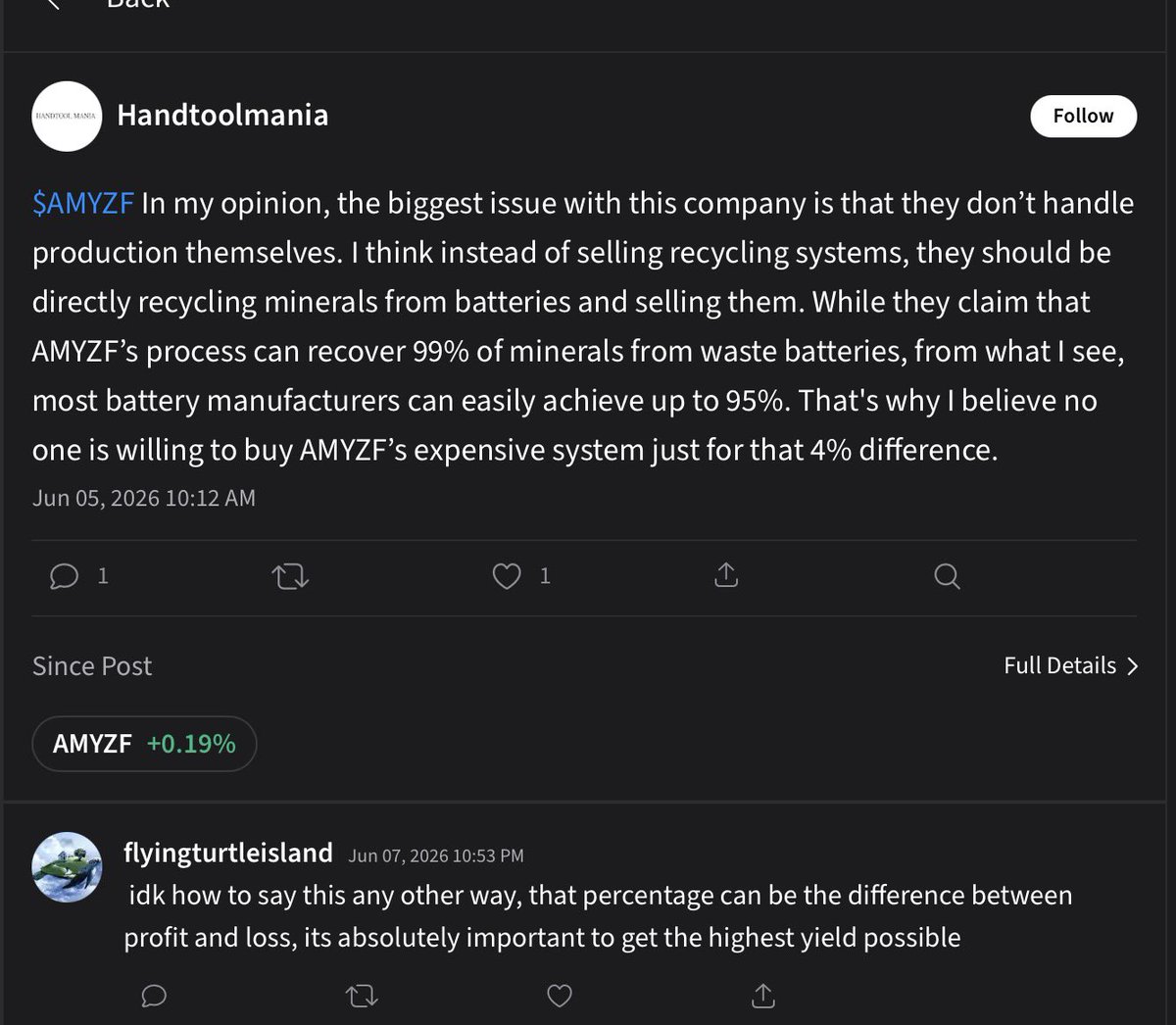
This is a very common misunderstanding. The 95% is total materials recovered, and the 99% is extraction from black mass. $AMYZF can extract 99% of the battery metals from black mass, but because they do not produce the black mass, their recovery rate would actually be the same as the company that they got the black mass from, which after you average the lithium with the transition metals is around 90-98%.
This is why offering hardware as a service makes more sense for their business model. They are not trying to be a cradle-to-gate recycler. Instead they are offering very specific components as a package to clients: the extraction and the precursor cathode active material (pCAM) components needed for a lithium-ion recycling platform.
1
424
Answering a common question I have gotten today about $ABAT, actually two questions.
No, the $57 million is not a loan, it is a cash match grant.
The cash match grant does not mean they have to have $57 million sitting ready to go. It is set up like a reimbursement program. As they incur eligible project costs, they submit invoices to the DOE and get reimbursed for those expenses as the project progresses. They are not on the hook for the full amount up front.
One of the benefits of how this is structured is that with 2P reserves now established, ABAT capitalizes the expenses at Tonopah. That means for every dollar they spend, they are actually increasing the value of the project by two dollars, one from their own spend and one from the DOE reimbursement.
As for dilution, I have no idea if or when they will need to raise capital beyond employee and officer share vesting. They are on the Nasdaq Capital Market for a reason. If you go in assuming at some point they will dilute, you will not be surprised when it happens.
1
1
19
1,708
Over the years I have written about the mistakes China has made with its lithium-ion recycling infrastructure, and the US is building itself into one of the same bottlenecks China is dealing with now. Recycling capacity gets geographically concentrated alongside cell manufacturers while the broader collection network gets ignored.
criticalmb.com/p/china-is-re…
1
3
370
Mith retweeted

Lil Rosie !!! Look at her go ! Mini jolly ball time!
#englishbulldog #sundayfunday
13
13
84
957
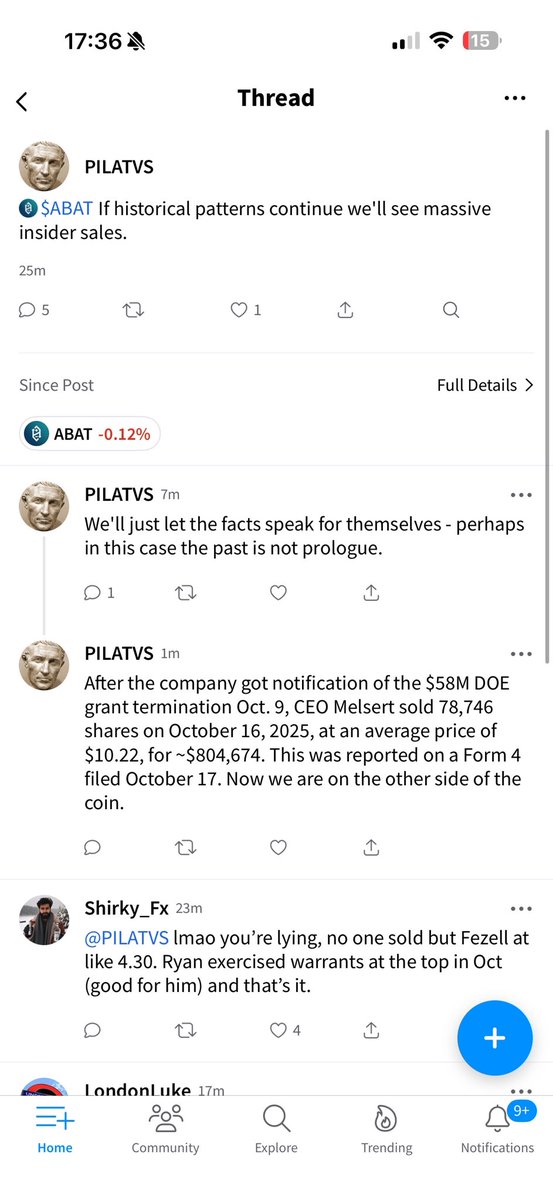
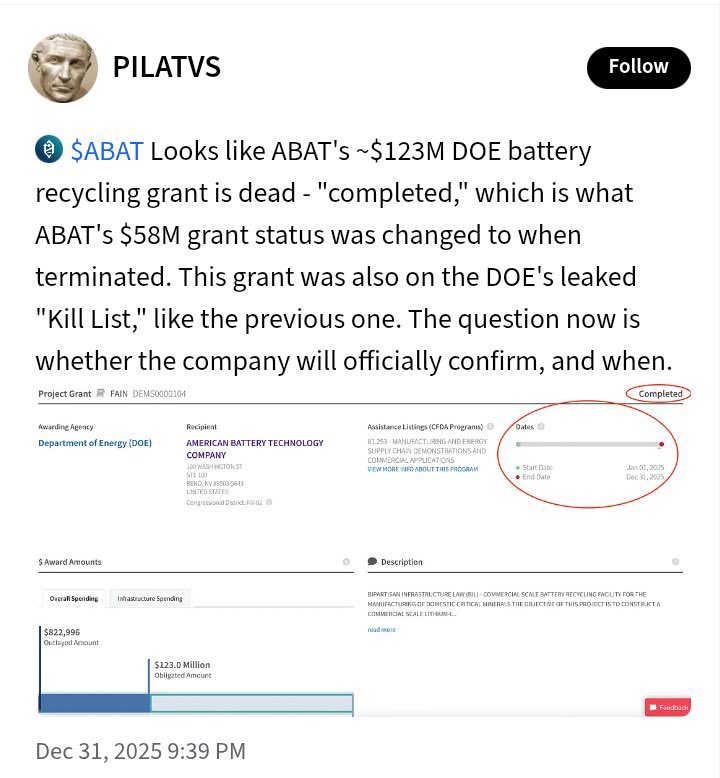
I swear I’m going to bed after this, but this $ABAT post from ST was in a chat I am in, and I’ve discussed this dillweed before. He insisted that the second recycling facility grant was also canceled because USASpending had completed at the top of the page for that grant.
Of course he was wrong, I am not sure he has posted anything that wasn’t BS or false, but I wrote a post explaining how performance periods work. I’ve included his post here for context; it’s the second screenshot. If you’re curious about performance periods work, just search my profile.
However, he’s back, and he’s once again clueless. The transaction he’s talking about was a cashless warrant exercise where Ryan essentially paid 78,746 shares to exercise the warrants for 781,240 shares.
From the filing he is referencing.
“The reporting person exercised warrants to purchase 781,240 shares of common stock with an exercise price of $1.03 per share on a cashless basis. This resulted in a withholding of 78,746 of the warrant shares to pay the exercise price and issuing to the reporting person the remaining 702,494 shares.”
This is another example of someone who posts on Stocktwits that should be mocked till they cancel their internet.
Oh and I yelled at the guy to charge his phone, I get cranky when I am sleepy.
1
13
1,179
Ok one last post about $ABAT, not kidding, on a pot of coffee and still just want to go back to bed.
One of the things I said was that the mistake Ryan made was trying to fit a mining project that requires pretty substantial environmental review into a DOE grant timeline. When it came to why the grant was terminated, the only thing the DOE spokesperson said that made even one bit of sense was missed milestones.
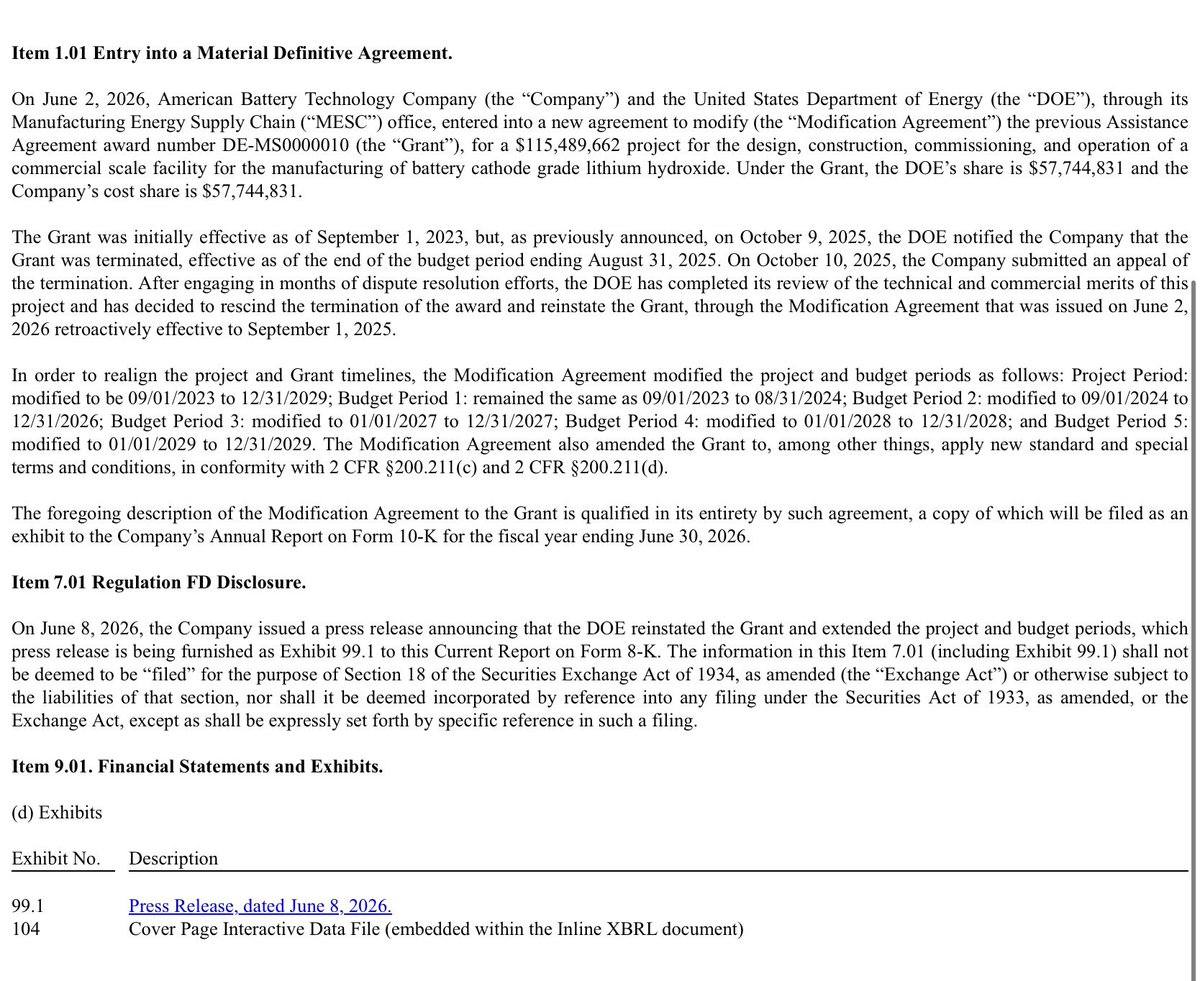
The new filing breaks down the new timeline.
In order to realign the project and Grant timelines, the Modification Agreement modified the project and budget periods as follows:
Project Period: modified to be 09/01/2023 to 12/31/2029
Budget Period 1: remained the same as 09/01/2023 to 08/31/2024;
Budget Period 2: modified to 09/01/2024 to 12/31/2026;
Budget Period 3: modified to 01/01/2027 to 12/31/2027;
Budget Period 4: modified to 01/01/2028 to 12/31/2028; and
Budget Period 5: modified to 01/01/2029 to 12/31/2029.
The Modification Agreement also amended the Grant to, among other things, apply new standard and special terms and conditions, in conformity with 2 CFR §200.211(c) and 2 CFR §200.211(d).
I know I have read those regulations, and I may go over what has changed based on the redacted documents I have and the new timelines and add context. If anybody wants me to dig into this just let me know, but for now Abe is snoring and he looks to be drooling on my pillow, and we cant have that.
2
23
1,854
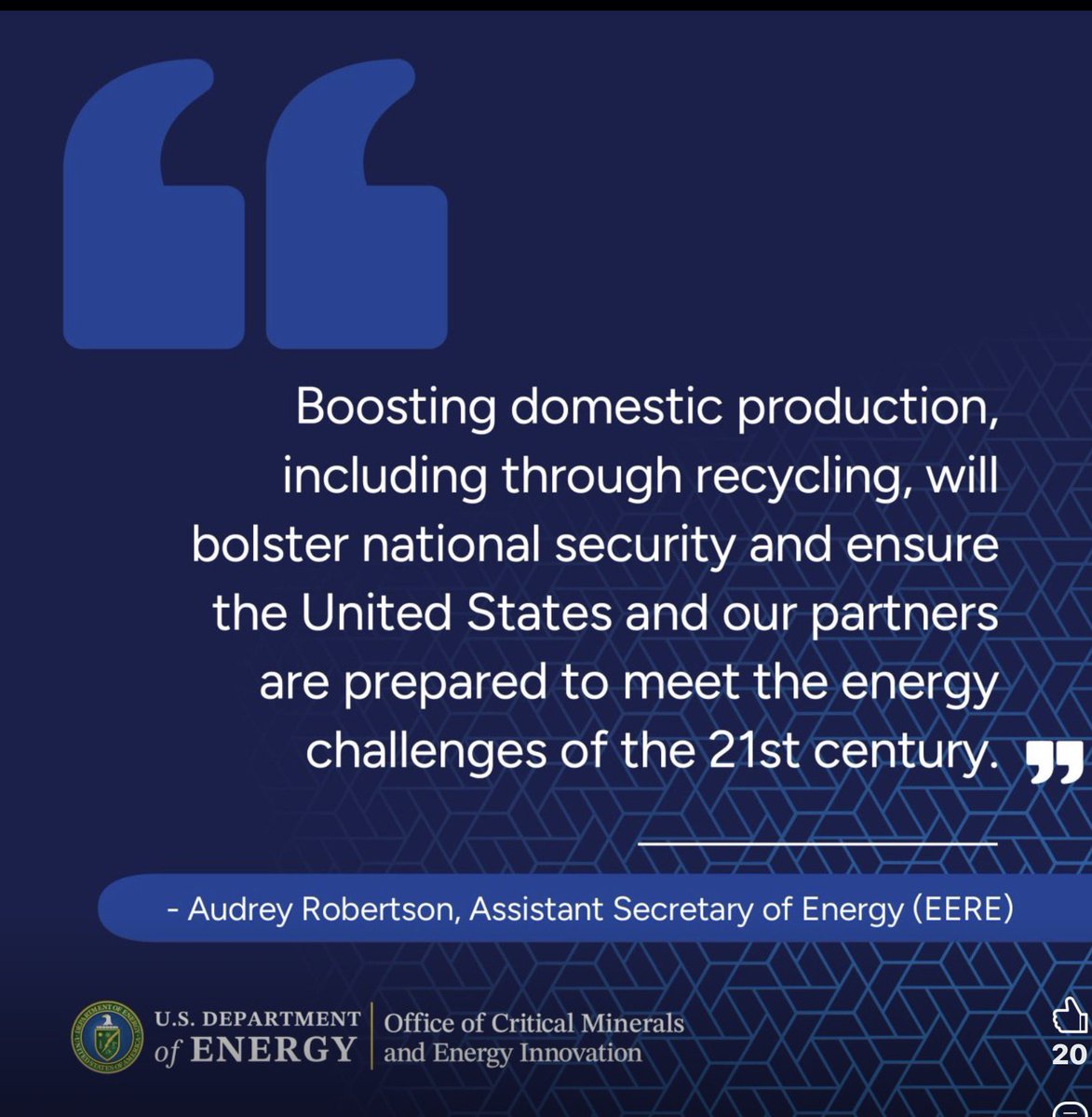
This post got me thinking about India’s role in the battery recycling sector, so I want to touch on something real quick.
India is looking to expand its lithium-ion recycling sector, not only to process domestic battery waste but also to import end-of-life material. They are limited by a few things, and have some policy issues that are setting them back. First, they are mostly locked out of imports from EU countries, which eliminates a significant feedstock source.
But they will be able to import from most of the rest of the world, and they could just focus on Southeast Asia and pick up more than they could handle. But that is where some of their policies conflict with this.
Companies are skirting export laws by mislabeling black mass under unrelated customs codes to ship it out of the country, while at the same time double dipping by collecting EPR compliance credits from domestic producers. They get paid on both ends while the material leaves the country.
This could be something the US will face. I am already seeing startups that will have the sole purpose of creating inert black mass to ship out of the country, ones with Asia related connections already in place.
Even though almost everything that happens at these events is kept from retail investors, and as such looks more like fluff than anything else, they are a much needed platform for those who are building the industry to meet with the people who will help regulate it, and those who will fund it.

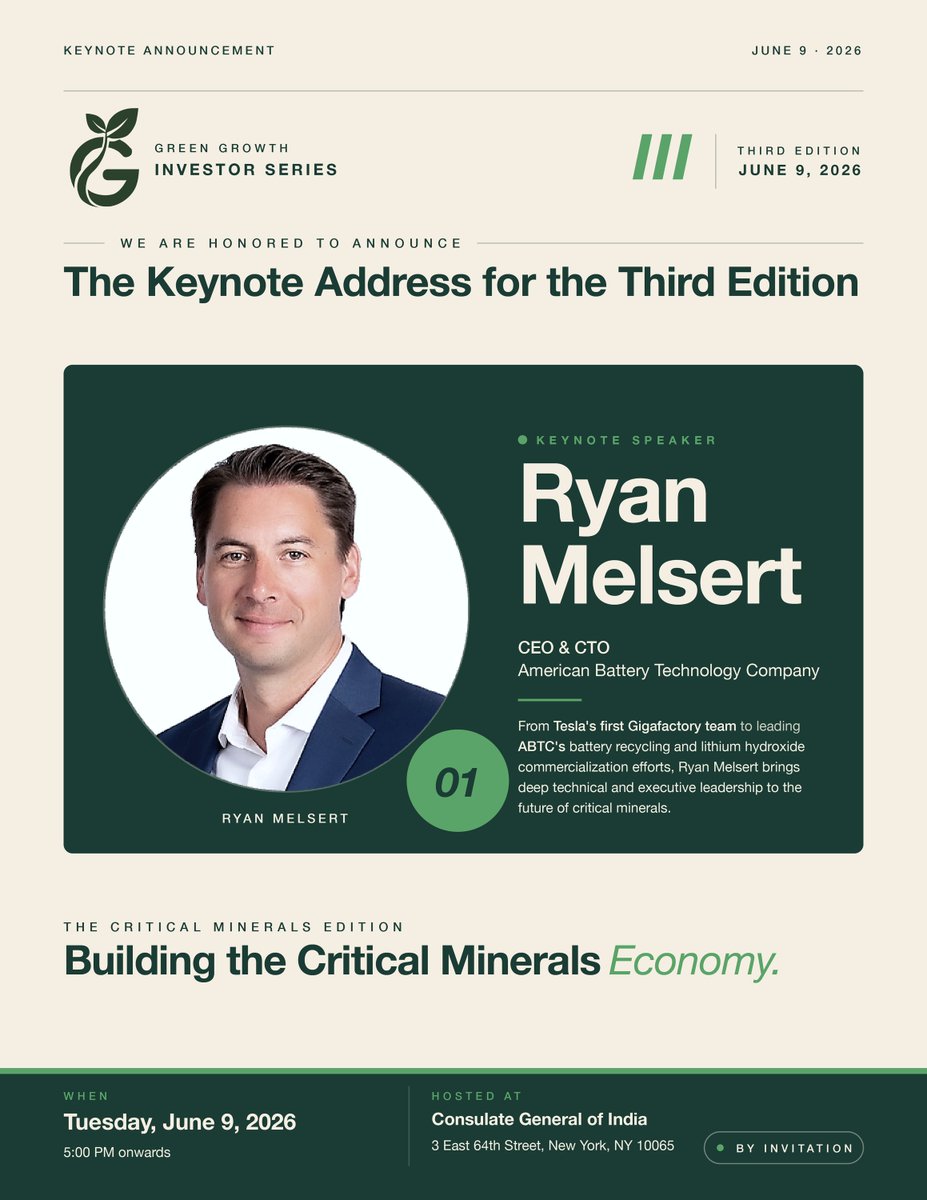
ABTC CEO Ryan Melsert is in New York City this week, by invitation of the Consulate General of India, to deliver a keynote address at the Third Edition of the Green Growth Investor Series, a mission-led platform that bridges policy, innovation, and investment across India, the United States, Israel, and the United Arab Emirates.
The Series convenes global investors, operators, and policymakers to advance scalable solutions in clean energy, the circular economy, and critical minerals. It represents a forum in which capital formation and commercialization strategy intersect with the infrastructure decisions that will define the energy transition.
We are pleased to highlight ABTC's progress in establishing a secure, circular supply chain for battery-grade critical minerals, commercializing next-generation recycling and primary resource technologies, and advancing the strategic partnerships necessary to accelerate growth across the critical minerals ecosystem. As well, Ryan will expand on not only how our work aligns with the Green Growth Investor Series but other global initiatives such as the recently announced U.S. State Department's Quad Critical Minerals Initiative Agreement with United States, Japan, Australia, and India to build secure, diverse supply chains for rare earth elements and critical minerals.
We are equally honored by the opportunity to connect with esteemed colleagues from around the world who are working to provide pathways for innovation innovation and drive the deployment of solutions that will shape the future of energy and materials independence. In addition to the keynote, Ryan, joined by Tiffiany Moehring, will meet with investors, strategic partners, financial media, and other industry leaders, engaging in discussions that remain central to ABTC's continued development and long-term capital strategy.
11
904
One of the problems with coverage of battery metals and critical materials is the focus on who raised money and the typical financial breakdowns.
I write the Critical Materials Bulletin. Its goal is to look past the surface, to dig into the technology these companies are developing and bringing to market. To look at how their projects are not only affected by regulations and environmental policy, but how they will also shape them.
What is so often overlooked in typical coverage is the underlying mechanics. The markets. The regulations. The factors that will decide if and how a project succeeds.
That is what my newsletter is about. If that is of interest to you, head over to my site, link in the comments, and subscribe. And if you want to help me expand my coverage, become a paid subscriber.
One of my goals is to relocate to South Carolina, which is not only the heart of the battery belt, but the fastest growing state when it comes to critical minerals. By becoming a subscriber you can help me get even closer to the companies involved and continue to produce unbiased coverage of the industry.
1
9
584
1
2
164
I am thinking of sneaking back to bed after this post. After Abe ate his breakfast, he went back to bed. He was up with me at O’Dark Thirty when my DMs went crazy about the $ABAT news.
But real quick, no, the $58 million is not for the entire processing plant (some call it the refinery). It will basically help build the base facility with some processing capabilities. The grant is for a commercial-scale demonstration plant. It was, I think, a rather clever way for Ryan to get funding for a commercial project but still keep it as an R&D project.
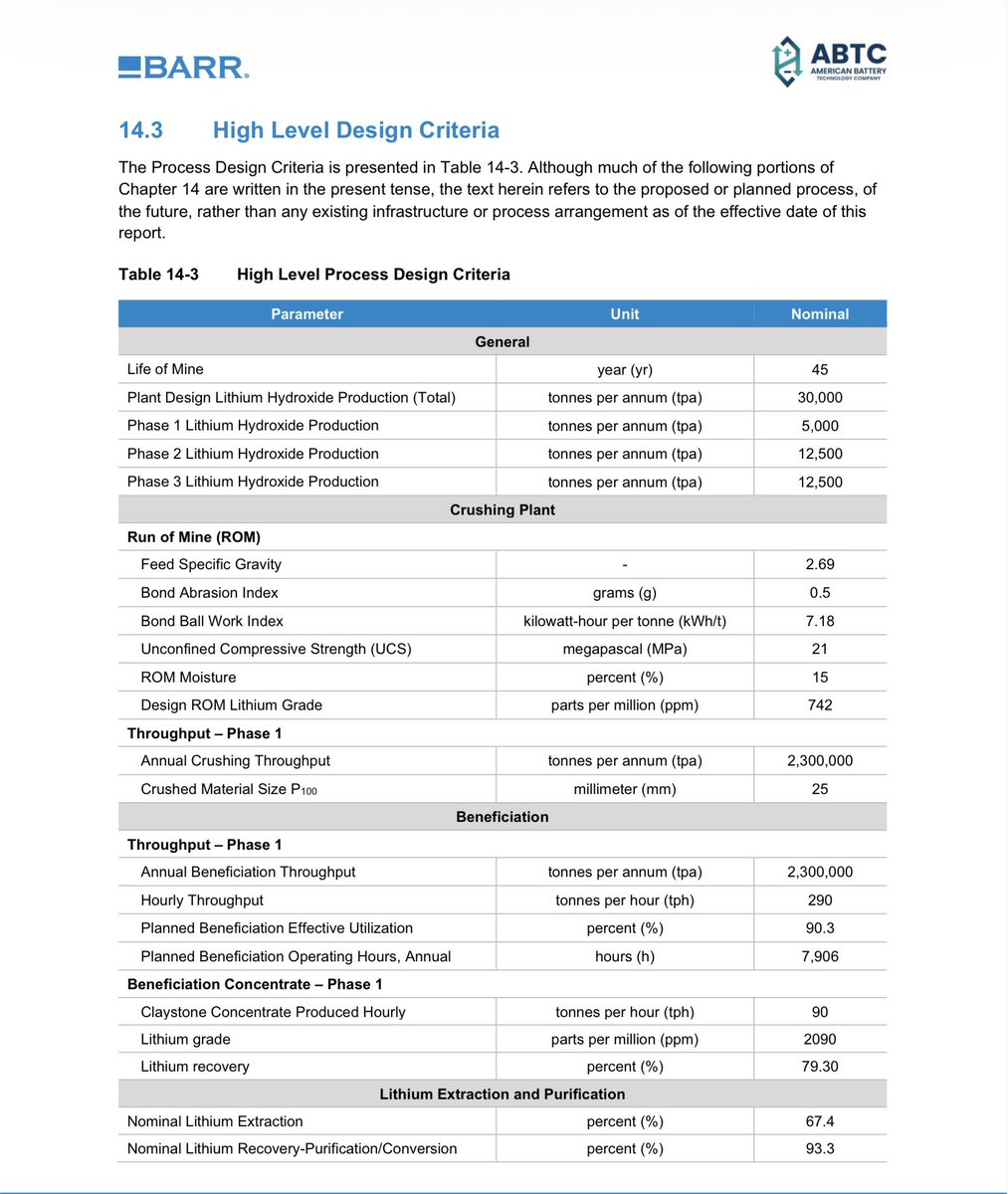
They have detailed in the PFS how they will go from this demonstration plant, which is now being referred to as Phase 1, which is 5,000tpa of lithium hydroxide monohydrate, to the planned initial capacity of 30,000tpa by having two more phases, each 12,500tpa.
The total amount of the project in the grant is $115 million, and that is just a drop in the bucket when you look at what will be the total cost of the mine. The plan was, however, to use the grant to get a head start. That is why I have said losing it caused a logistical challenge, not a financial one. With the grant back, things just got easier.
For context, 5,000tpa of LHM would be the very upper limit of the output of the second lithium-ion recycling facility with 100,000tpa of feedstock.
3
3
37
2,248
