
Joined April 2014
- Tweets 10,914
- Following 114
- Followers 5,321
- Likes 2,279
700 Photos and videos
Pinned Tweet

Jun 8
My top seven.
One thesis: the physical layer of embodied AI, the parts a robot or a datacenter cannot run without, where there is no easy second supplier.
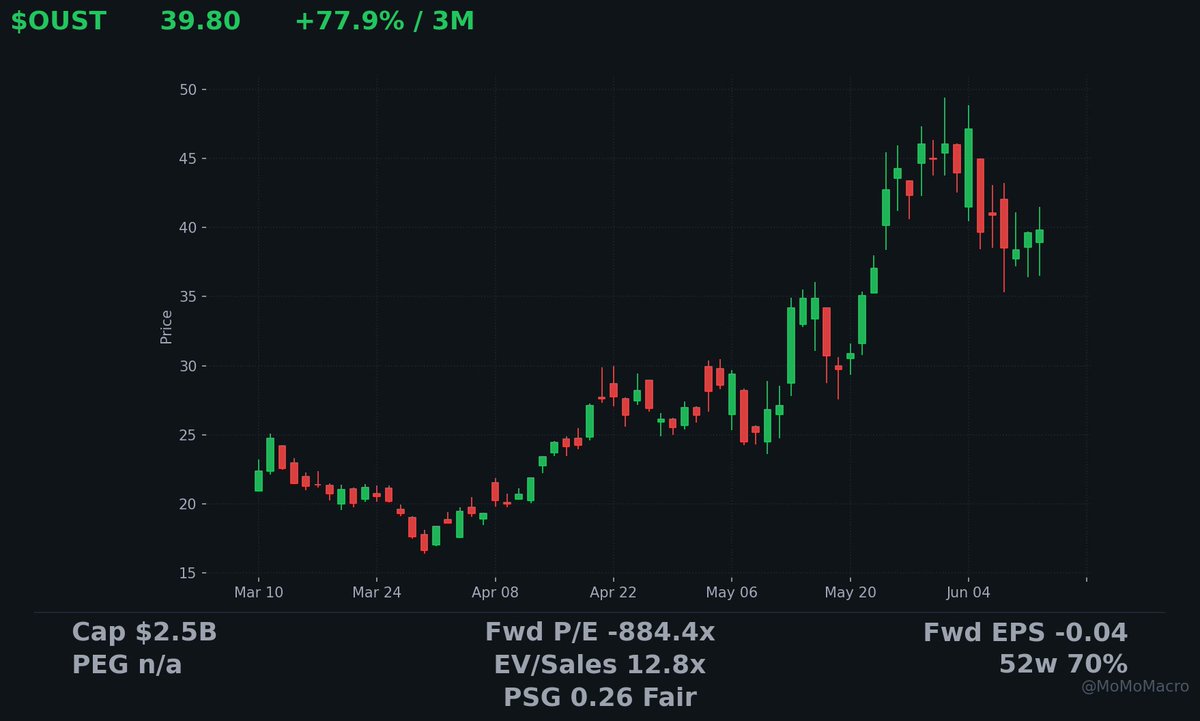
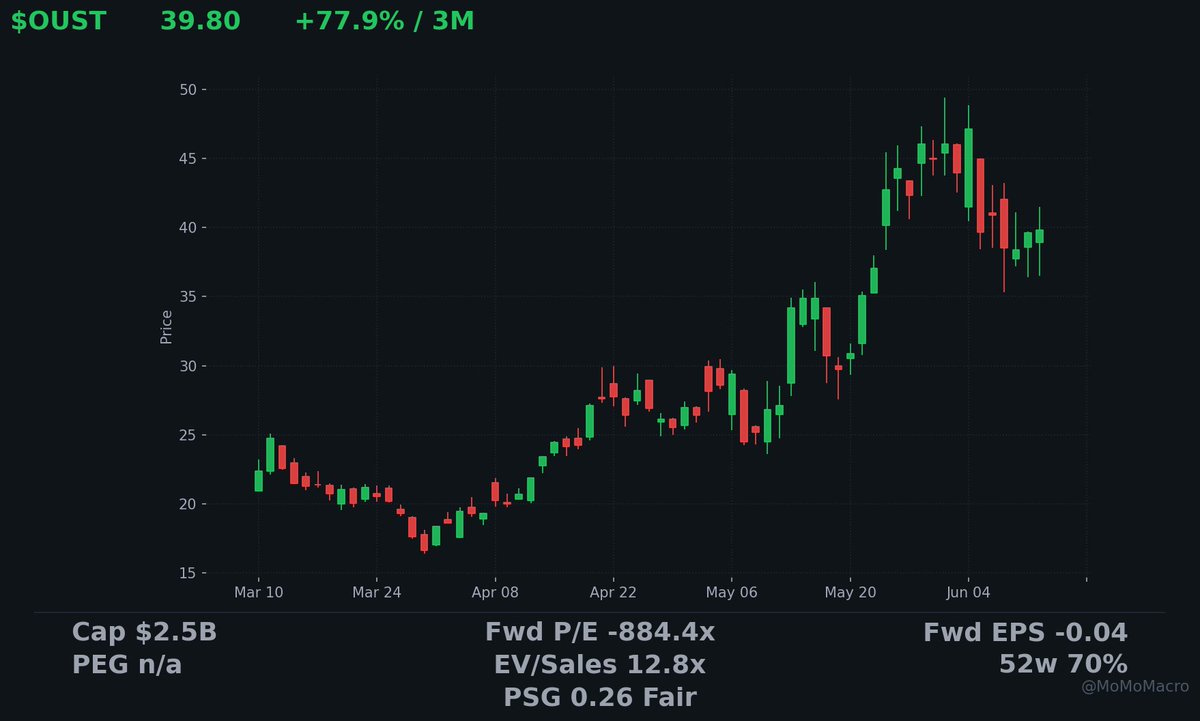
$OUST is the eyes.
Digital lidar plus the Stereolabs cameras it bought in February, now one perception platform on $NVDA DRIVE.
Revenue grew 49 percent last quarter, still losing money while it scales.
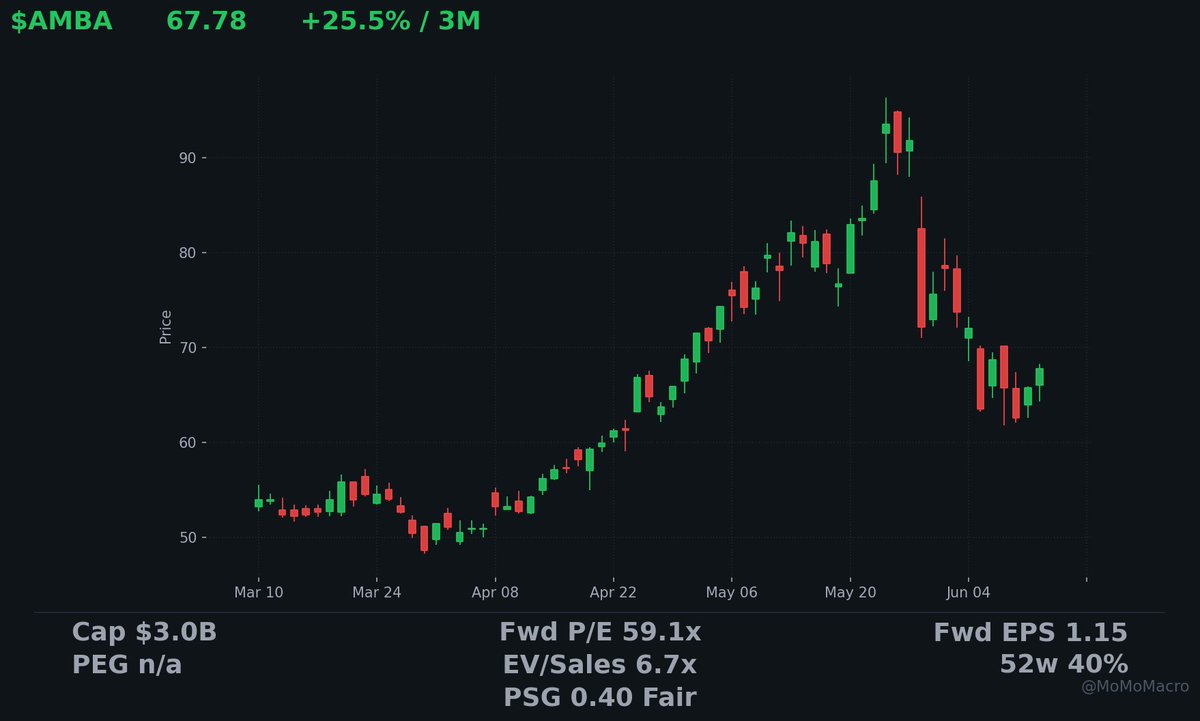
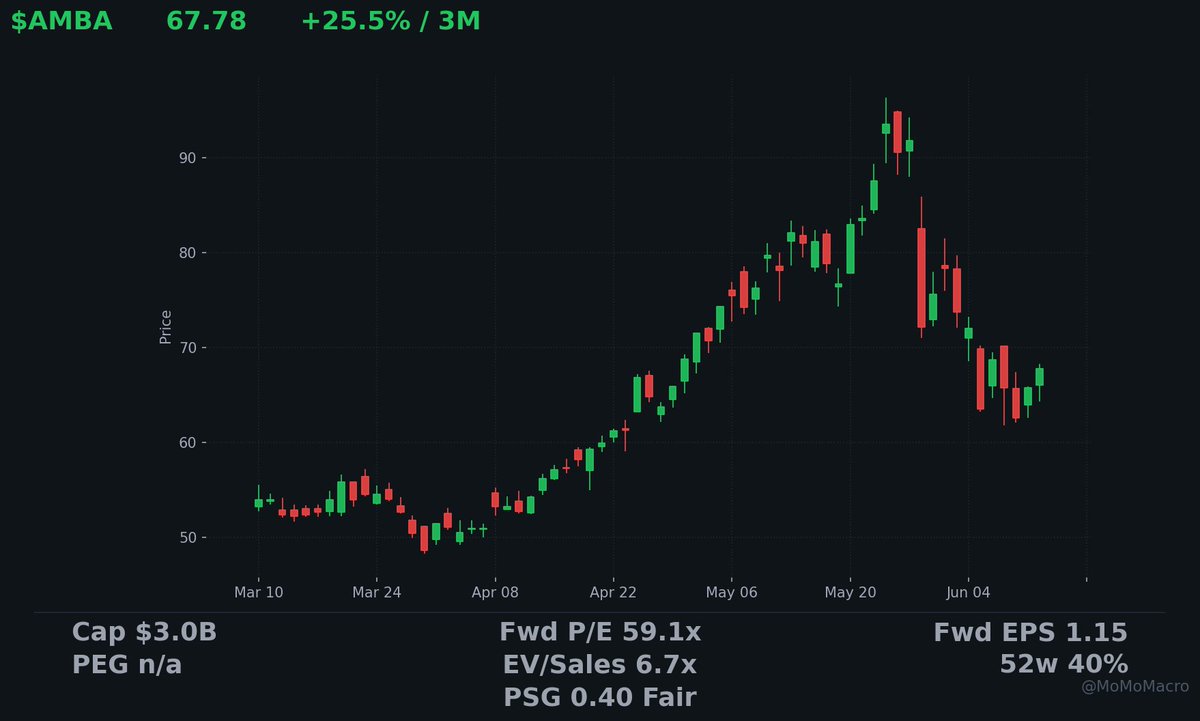
$AMBA is the edge brain.
Its new CV7 vision chip on Samsung 4nm reads a camera feed on-device at 20 percent less power, and is set to outgrow the auto-chip market this year.
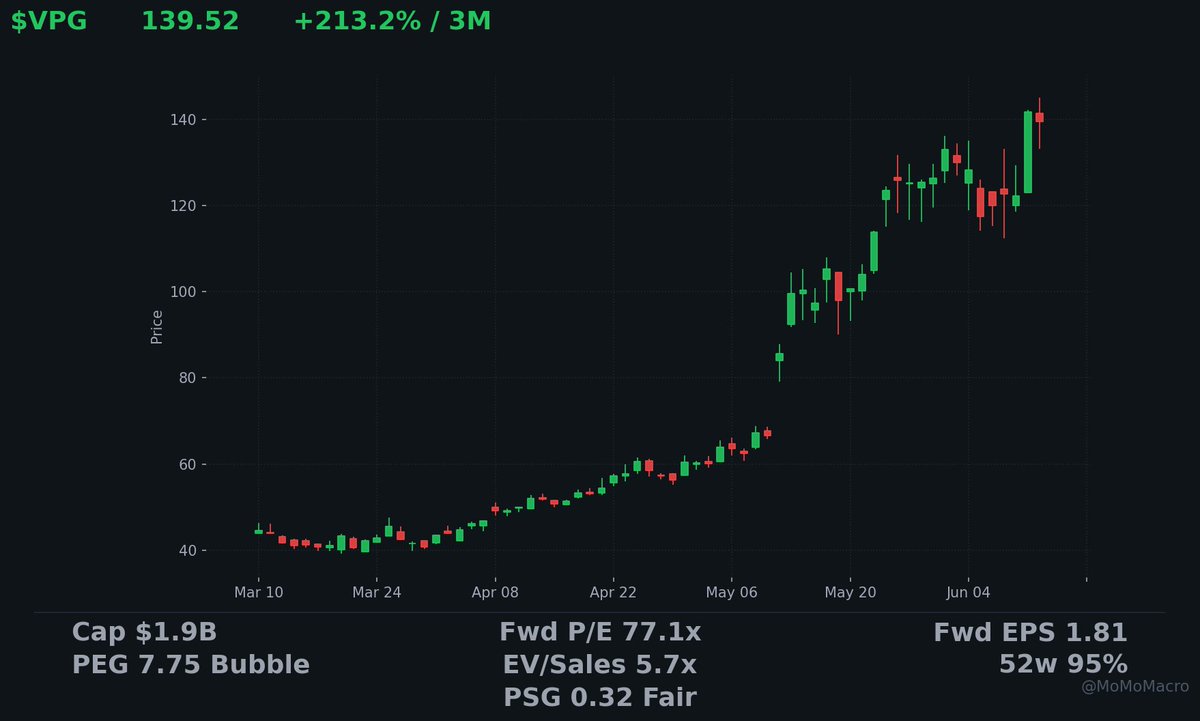
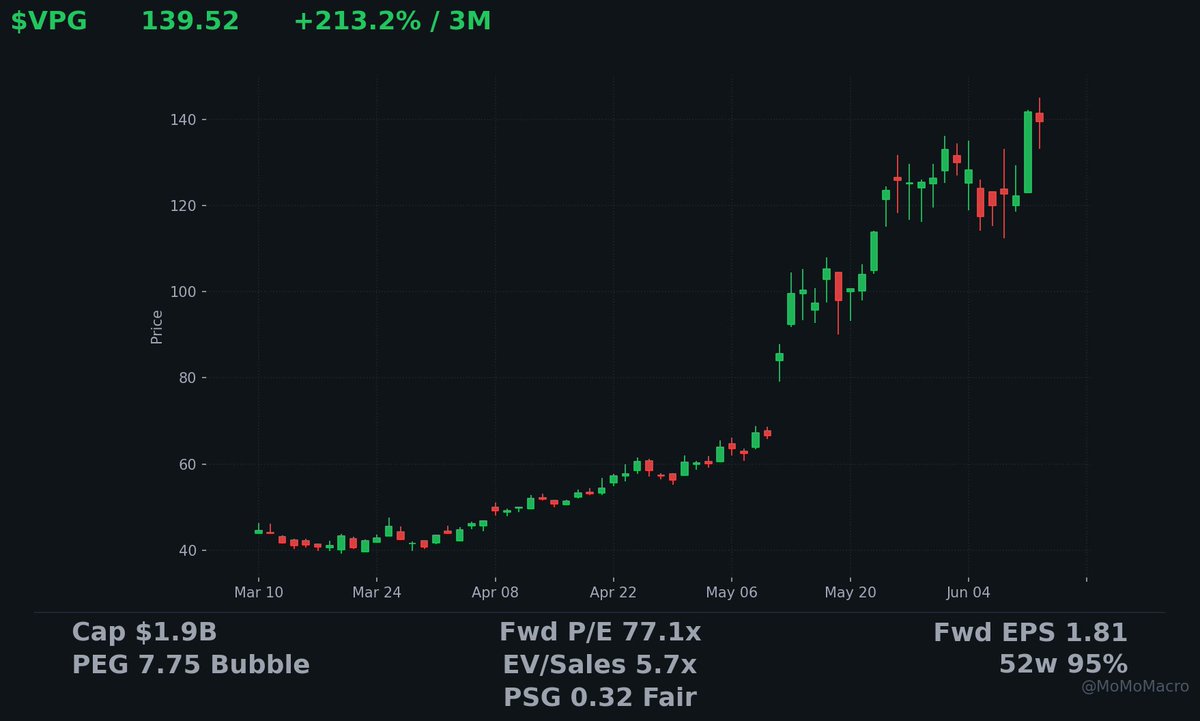
$VPG is the sense of touch.
Strain-gauge force sensors that let a robot grip without crushing.
Orders just topped 100 million, but near 280x earnings the growth is already in the price.
$CBRS is the training brain.
Its wafer-scale chip is roughly 57x a top GPU and just signed AWS.
But about 85 percent of revenue is one UAE customer (G42) and the stock is plainly overvalued near 25x sales, so I only want it far below here.
$LEU is the fuel.
The only US-licensed HALEU enricher for small reactors.
The DOE just extended its contract into Phase III.
Policy is the whole risk, and it is down on the month.
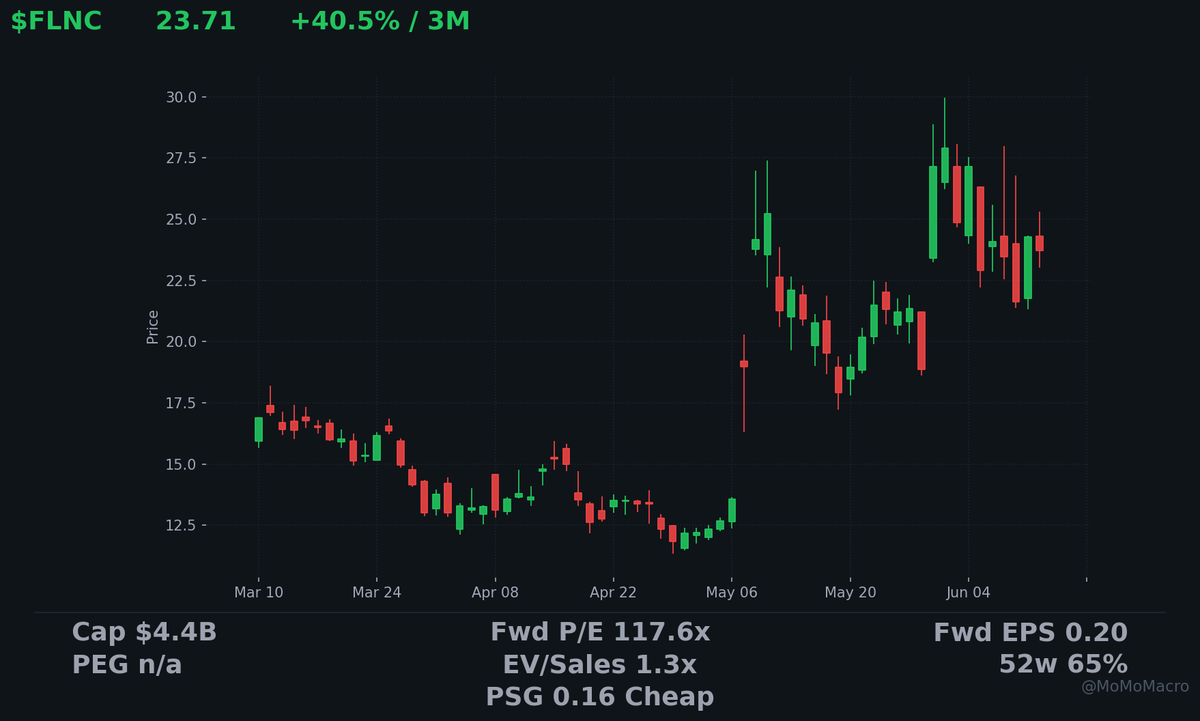
$FLNC is the power buffer.
Grid-scale batteries for datacenter load, revenue up 154 percent last quarter.
Margins fell under 5 percent and there is an active SEC investigation and securities class action, that is the live risk.
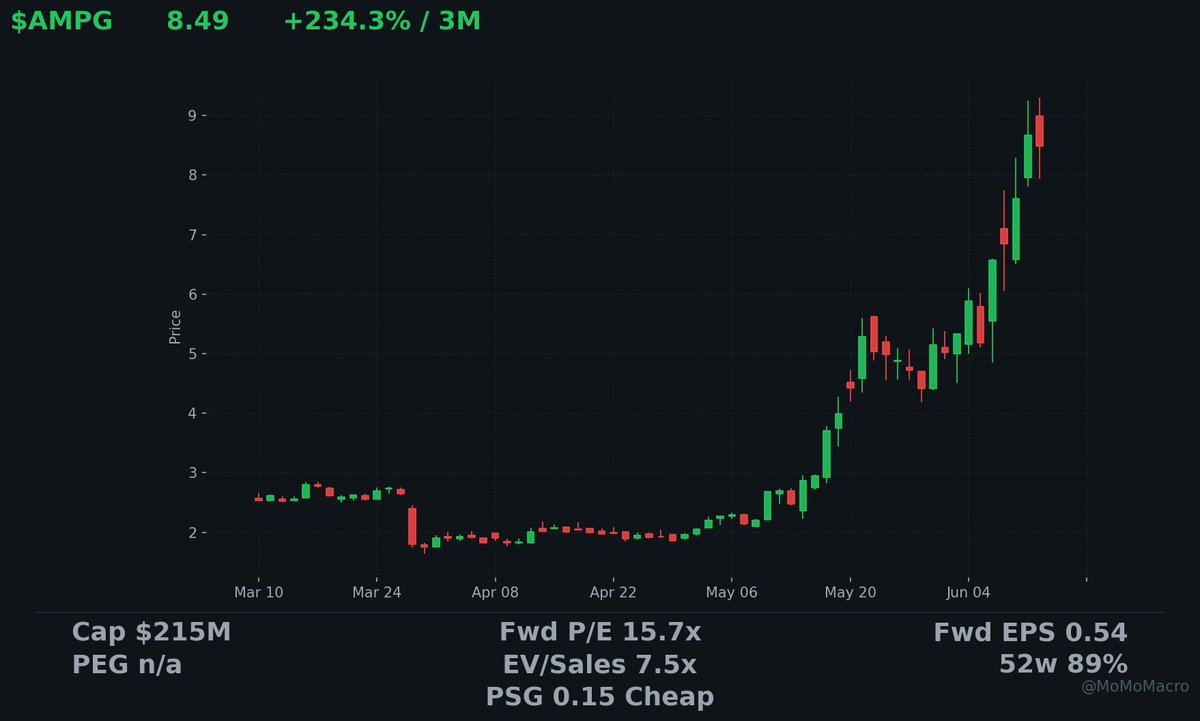
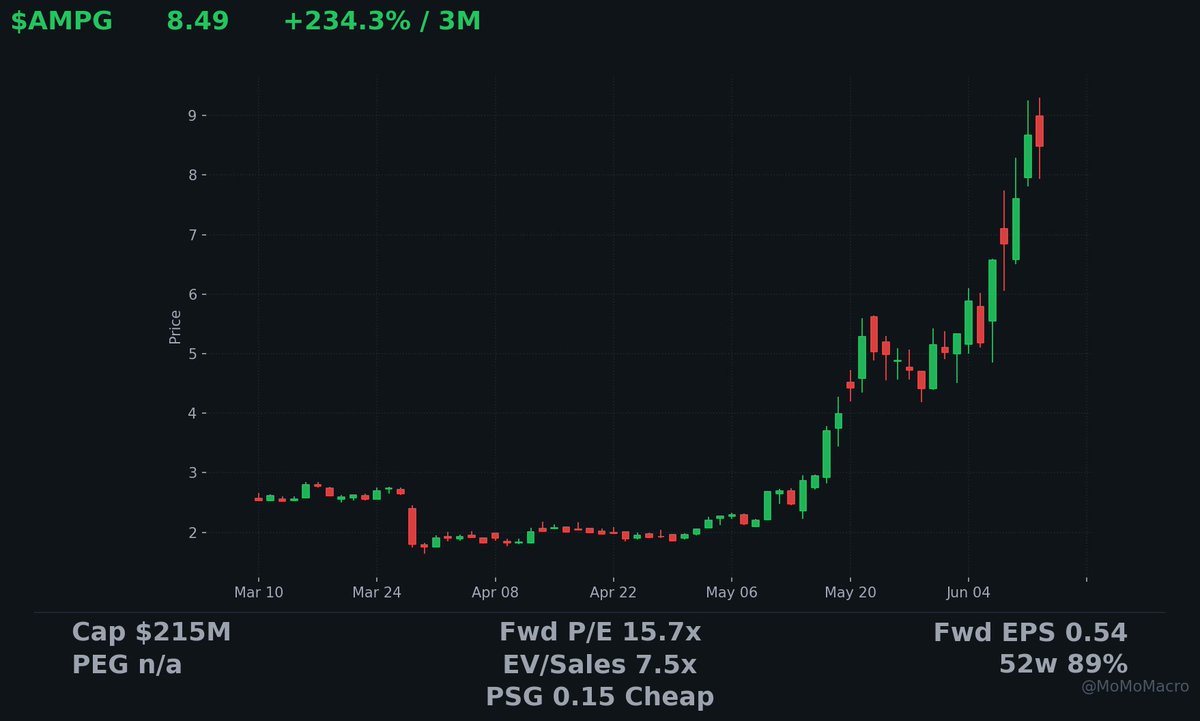
$AMPG is the signal front-end.
Cryogenic low-noise amplifiers for satcom and quantum readout.
Tiny and a loss-making micro-cap where dilution is the real danger.
1
12
2,063
A robot can't see on a data-center power budget.
Perception runs on-device, at watts, in real time, and that edge-inference socket is exactly where $AMBA's CVflow silicon lives.
Q1 printed $100M revenue, 16.9% YoY, with record auto, plus a Hanwha edge-AI deal worth $800M over a decade.
Yet it trades at 6.7x sales, PSG 0.40, with the market barely paying for the growth.
Be a bigger buyer near $56, where the multiple gets cheap.
The catch: trailing earnings are still negative at 59x forward, so a slipped auto ramp resets it fast.
Where it breaks: can $AMBA hold the edge-vision socket against merchant silicon from $NVDA and $QCOM?
318
Humanoid hands can't grasp without force-torque sensors, and few make them at robot spec.
$VPG logged its first $1.0M of humanoid orders inside record $102.1M Q1 bookings.
That's the fresh catalyst here, not the 243% chart.
$VPG is the obscure strain-gauge pure-play; $OUST, the crowded perception way in.
P/E 310, EV/Sales 5.7x, yet PSG 0.32 says growth still covers it.
I add near $100, the pre-run base.
Risk: humanoid orders stay a rounding error and it rerates to an industrial-sensor multiple.
Is force-torque really single-source, or can any strain-gauge shop hit humanoid spec?
3
513
Every robot and robotaxi needs a 3D perception layer it can't build in-house.
$OUST puts lidar on a single chip and just shipped the world's first in native color.
Fujifilm's color science is baked into the silicon.
Only a handful of names make this layer at spec.
Q1 did $48.6M, up 49% YoY, at 12.8x EV/Sales and a 0.28 PSG; the market's barely charging for the growth.
I add more near $32.
The catch: it's still pre-profit, and a vision-only winner could shrink the lidar TAM.
Tell me where 3D perception is genuinely optional for a robot that has to grasp, not just cheaper than cameras.
1
1
11
1,278
May 13: $AMPG posted Q1 revenue 48.6% YoY to $5.35M at a 48% gross margin.
The chokepoint: the ultra-low-noise and cryogenic RF amps that let satcom, 5G backhaul and qubit readout hear whisper-quiet signals come from a handful of shops, and barely anyone builds them at cryo spec.
$AMPG is the obscure pure-play; the big RF names are the crowded way in.
At $8.49, that's a $215M cap on 7.5x sales after a 240% run, not cheap.
I add more near $6.
What breaks it: a loss-making micro-cap with dilution and reverse-split history; one raise resets the thesis.
Who else ships qubit-readout amps at this cryo spec, and where does the supply map break?
2
1
9
1,259
10h
SMIC just put a 5nm-class node into volume production (Dec 18, confirmed on Huawei's Kirin 9030).
The detective detail: no EUV.
They're hitting 5nm by running DUV scanners through multiple patterning passes, exposing the same wafer over and over.
The "win" is also the trap.
Every extra pass multiplies defect odds, so yields stay low and capex per good die stays brutal.
They've proven they can do it.
The open question is whether they can ever do it cheaply.
2
438
12h
A 70B model generates tokens at roughly 24 a second on an H100, 57 on a B200.
The GPUs differ in raw compute by far more than that 2.3x.
The gap is memory bandwidth, because each token forces a full read of every weight out of HBM.
That is the quiet truth of inference: you are not compute-bound, you are bandwidth-bound.
We spent a decade optimizing FLOPs for a problem that is mostly about how fast you can move 140GB off a chip, over and over, once per word.
2
248
13h
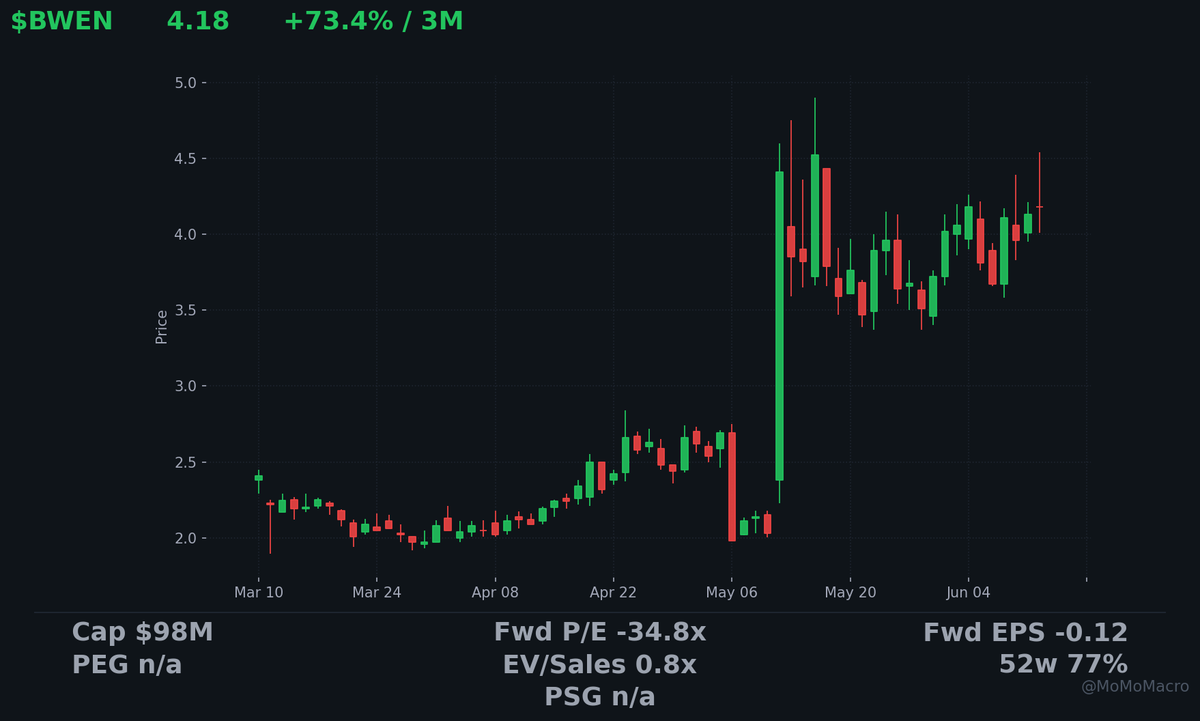
Forget the wind-turbine OEMs, $BWEN sold its Abilene plant and walked out of that fight.
The crowded blade names and banned Chinese gearmakers are shut out of US grid-fab; a megacap won't bother with a $98M shop.
What's left is Broadwind's precision gearing and heavy fabrications for domestic power-gen, reshoring-locked and hard to stand up overseas.
Q1 orders 23% y/y, book-to-bill 1.1, $99M backlog, 0.8x EV/Sales at $4.18.
I'd add more near $3.
The risk: a ~$98M micro-cap with TTM revenue sliding and lumpy wind-cycle orders; one soft quarter resets it.
Tell me which end-market is filling that gearing book if the AI-power link isn't in the filings.
1
329
13h
ESMFold2 just dropped an atlas of 1.1 billion predicted protein structures.
AlphaFold's database, the one that won a Nobel, holds 200 million.
We 5x'd the known protein universe in one model run.
But I keep my skepticism: it's still a preprint, and a bigger atlas isn't a better one.
Prediction scaled.
Validation didn't.
The wet lab is still the bottleneck, and silicon can't skip it yet.
3
305
14h
Spent the evening on $AMBA's May 28 print, and the record auto quarter is what stuck with me.
A car or robot can't send a camera feed to the cloud and wait.
Perception has to run on-device in milliseconds, and only a few shops make edge-inference silicon at that spec.
$AMBA's CVflow chips are the pure-play.
Revenue hit $100.4M, up 16.9% YoY, with Q2 guided to $105-111M.
The Hanwha deal is a decade-long >$800M pipeline, so demand is locked.
At 6.7x EV/sales it's barely pricing that growth, so I add more under $57.
Key risk: $NVDA or $QCOM aiming edge chips at the same robotaxi sockets compresses $AMBA's design-win lead fast.
Where does $AMBA's on-device moat hold once $NVDA's Jetson line chases the same auto sockets?
3
510
15h
A GPT scrapes a trillion tokens of text for free.
A robot hand has no internet of motor experience to download.
Every grasp, every slip, every gram of force has to be lived in the real world, in real time, one joint at a time.
$TSLA's Gen 3 hand: 22 degrees of freedom, part of 50 actuators per body.
The brain got cheap.
The body, and the data to move it, did not.
1
273
16h
Every humanoid hand needs a force-torque sensor to feel how hard it's pushing, and only a few makers hit robot spec.
$VPG builds the foil strain gauges at the heart of that loop, a layer rivals can't rush.
Q1 bookings hit $102.1M on $84.4M revenue, a 1.2 book-to-bill, but just $1.0M came from humanoid developers.
At $1.9Bn and 5.7x EV/Sales after a 243% run, the bottleneck is already consensus-priced.
Own it, don't chase it.
I add more near $105 where the multiple cools.
What kills it: humanoids are $1M of a $100M book, still hope and not revenue yet.
If force-torque is the real moat, what stops an Asian incumbent from undercutting $VPG at scale?
1
382
17h
ERCOT got 198 GW of large-load interconnection requests in Q1 alone.
That is more than double the entire grid's record peak demand.
Meanwhile a high-voltage transformer is an 18-36 month wait and a >200 MW project sits in the queue for 55 months.
We design the cluster in a quarter and wait half a decade for the copper to show up.
The chip was never the ceiling.
The interconnect queue is.
1
1
263
18h
$2.5Bn cap at 12.8x EV/sales reads rich, until you see revenue grew 49% last quarter to $48.6M, which puts PSG at 0.26, meaning the market's barely paying for the growth.
What that cheap multiple ignores: robots, robotaxis, and smart infra all need a 3D depth layer, and only a handful of public names make lidar at spec.
$OUST is the obscure pure-play on that perception socket; the OEM-bundled names are the crowded way in.
I add more near $32, back around 10x sales.
Where I'm wrong: it's pre-profit, and one slipped design win resets the story.
Does digital lidar own the perception socket, or do camera-only stacks make it optional?
1
374
19h
I size positions by what kills me, not what I hope to make.
My rule: any single name can go to zero tomorrow and I still wake up solvent and unbothered.
That caps most of my book at 4-6%, and the two or three I size to 10% are the ones where I've done the supply-chain plumbing myself and the downside is "I'm early," not "I'm wrong." Retail blows up backwards: they size by conviction, not by survival.
Conviction is free.
Ruin is permanent.
1
269
20h
Every qubit readout chain needs an ultra-low-noise cryogenic amplifier to hear the signal.
A qubit's whisper must be boosted near absolute zero before noise drowns it, and few shops keep amps that quiet from 50kHz to 44GHz.
$AMPG is the obscure pure-play here; the crowded alternative is the diversified defense-RF names.
Q1 revenue rose 48.6% to $5.35M at 48% margin, yet a ~$215M cap is ~8x sales after a 232% run, so it's not cheap.
I'd add nearer $5.
What kills it: a loss-making micro-cap with dilution and reverse-split history; one secondary guts the run.
Where does the cryo-LNA moat break?
Is anyone shipping sub-44GHz amps quiet enough for qubit readout, or is $AMPG single-source?
1
421
21h
SMIC announced 5nm-class volume production in December, and Huawei's Kirin 9030 confirms it.
But the quiet number is yield: 7nm still runs 20-40% on DUV multi-patterning, no EUV.
So more than half of every wafer is scrap.
This isn't a cost curve, it's a sovereignty subsidy, funded by Big Fund III.
The west optimizes for margin.
China is optimizing for not asking permission.
Different game, same silicon.
1
297
21h
$FLNC: 1.3x sales, $4.4B cap, PSG ~0.23, the cheapest growth-adjusted name in the AI-power trade.
AI load is breaking the grid, and storage is the only fix that ships in months, not the 130-week transformer wait.
Chinese OEMs are blocked by IRA/CFIUS, and $TSLA won't sell standalone, so $FLNC is the default #1 US storage independent, not the crowded gen large-caps.
Backlog hit a record $5.6B, and orders doubled to $2.0B on two hyperscaler deals.
SEC probe remains open (3/31 10-Q); the Abramov class action is pending.
I add near $18.
Where I'm wrong: the secondary and Qatar selldown signal smart money leaving, and a margin miss caps the re-rate.
Does $FLNC's #1-by-exclusion share hold if Chinese BESS gets back into the US, or is that the whole thesis?
1
5
760
22h
The B200's headline is "4x the FLOPs." The number that actually moves my cost per token is 8 TB/s of memory bandwidth versus the H100's 3.35.
On a 70B model, generation is one weight read after another, the math units sit idle waiting on HBM.
That is why B200 runs ~57 tok/s where an A100 does ~14, and why cost falls from $0.14 to $0.02 per million.
We are not compute-bound.
We are memory-bound, and almost nobody prices it that way.
307

Jun 13
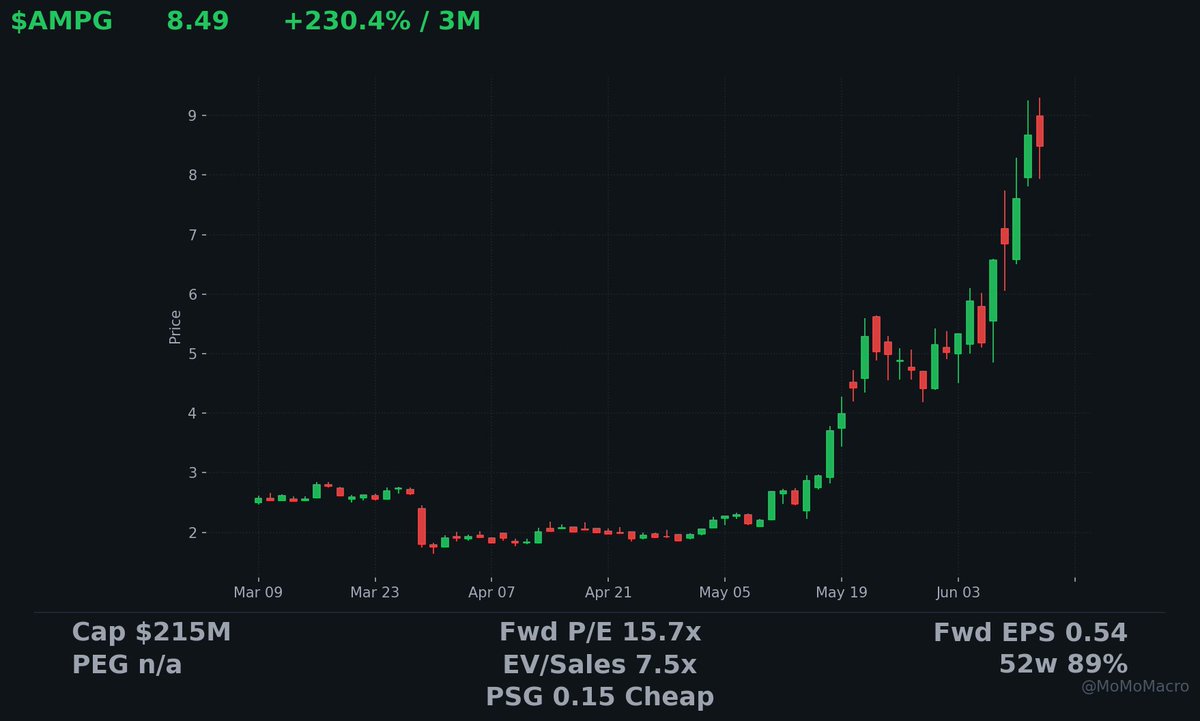
$215M cap, 7.5x EV/Sales, rich until you growth-adjust: 48.6% YoY revenue gains put the PSG at 0.15.
Q1 revenue was $5.35M with gross margin at 48%.
The multiple ignores the chokepoint: cryogenic low-noise amplifiers, the front-end for satcom, 5G backhaul and quantum qubit readout, with scant Western supply at this spec.
Proof lies in $2M follow-on MNO orders and fresh FCC/ISED 5G DAS certs.
That scarcity closes the gap for me; I add more near $6.50.
Where I'm wrong: the downside is a loss-making micro-cap with dilution and a reverse split in its past, and guidance is back-half weighted.
What flips first, the cryo LNA scarcity or the share count?
2
4
557