
Joined December 2021
- Tweets 37,526
- Following 5,852
- Followers 6,742
- Likes 15,121
35,372 Photos and videos









Pinned Tweet

12 Dec 2022
David Rockefeller recruited Henry Kissinger
Henry Kissinger recruited Klaus Schwab.
Bill Gates took over for David Rockefeller.
Bill Gates and Klaus Schwab are running the GREAT RESET
Gates runs THE BILLIONAIRES CLUB with Soros, Buffet, Bloomberg, and Turner
#StopTheWEFnow
70
400
573
We have a TYRANNICAL GOVERNMENT who uses TECHNOLOGY to MANIPULATE and CONTROL the MASSES!
In 1975, #SenatorFrankChurch gave this dire prediction of what would happen to America if entities within our own government turned technology meant for war, against "We The People".
The Military Industrial Complex and the UNDERCOVER MILITARY are a huge problem right now and most people are clueless as to the real issues with their covert operations. Snowden only exposed a few of their programs.
9
49
75
1,630
Yuval Noah Harari - Klaus Schwab’s WEF associate has your future mapped out.
..."COVID19 is critical to accept / legitimize total biometric surveillance!"
#WEFpuppet
1
3
4
218
The Rockefeller's and Rothschild's use their FRONT ORGANIZATIONS to INSTALL THEIR PEOPLE in key positions in their GOVERNMENTS to form a SHADOW GOVERNMENT that THEY CONTROL!
They have built a VIRTUAL ONE WORLD GOVERNMENT that they control.
2
4
192
"Alternatives to Monetary Disorder"
by Hirsch, Fred / Council on Foreign Relations
"A DEGREE OF CONTROLLED DISINTEGRATION IN THE WORLD ECONOMY IS A LEGITIMATE OBJECTIVE FOR THE 1980S AND MAY BE THE MOST REALISTIC ONE FOR A MODERATE INTERNATIONAL
ECONOMIC ORDER."
FREE on the Internet Archive: archive.org/details/alternat…

1
2
135
The Crisis of Democracy"
Report on the Governability of Democracies to the Trilateral Commission
Read the PDF for free here:
filosofiaenlaazotea.wordpres…

1
1
101
Mar 29
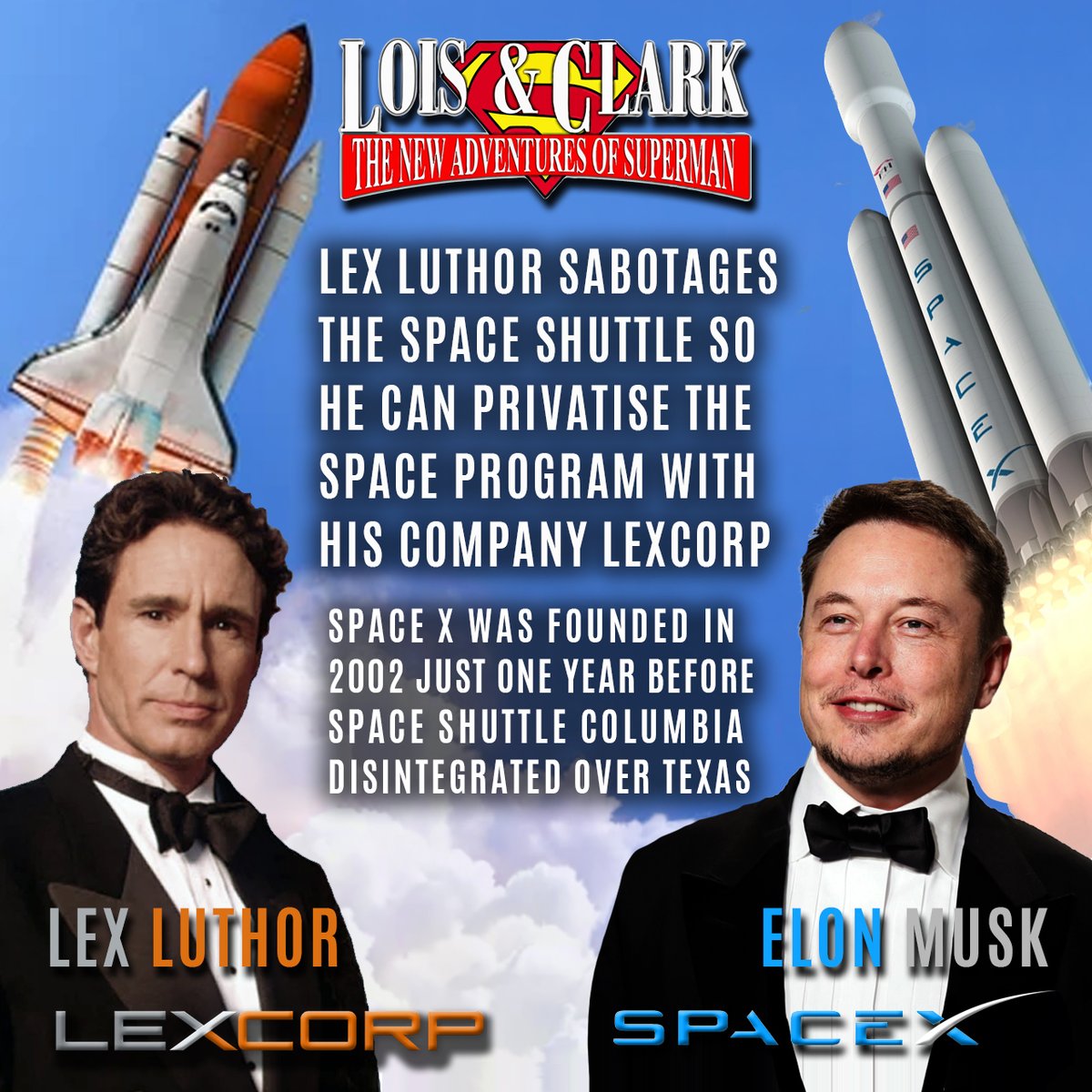
Lexcorp = SpaceX?
If we were looking for clues in the media we consume, the 1993 Lois & Clark pilot might just be a blueprint for our current space race. In that early-90s series opener, Lex Luthor—portrayed as a billionaire philanthropist and industrialist—runs a scheme to deliberately sabotage the public space shuttle program. His goal? To undermine government confidence, prove private enterprise is superior, and justify the construction of his own private orbital station. Is that scenario sounding uncomfortably familiar?
Consider the timing of SpaceX. Founded in 2002 by Elon Musk, a billionaire philanthropist/industrialist, it arrived on the scene less than a year before the 2003 Columbia shuttle disaster, which marked the beginning of the end for NASA's public shuttle program. SpaceX wasn't an instant success; in fact, the company was teetering on bankruptcy until it secured a last-minute government contract. But once the Space Shuttle program was officially scrapped, removing Lex Luthor's (and our own) competition, SpaceX literally took off, becoming the dominant player in the industry.
There's a pragmatic argument here. The existing shuttle program was designed for and restricted to Low Earth Orbit (LEO). If the goal was truly to establish human colonies on the Moon or Mars, an entirely new deep-space system had to be built from scratch. And to build that system 'fast enough' to meet a 'billionaire's timeline,' one might argue that the only solution is to bypass traditional government oversight and NASA’s 'slacker' bureaucractic bloat. A private company, operating without a 'brand' to protect, can fail 'fast and unbranded,' like an undercover spy.
But there is a twist: even though SpaceX is a private, company, the majority of its revenue doesn't come from market forces. It comes directly from the public sector—the Department of Defense and Space Force. This isn't 'pure capitalism'; this is the textbook Military-Industrial Complex funneling public tax dollars into a for-profit entity, creating a new, singular monopoly.
This is where the 'conspiracy' meets the 'launchpad.' The big difference here is the motive. Elon Musk is not just building rockets; he is simultaneously working on the '3 Alternatives for Humanity’s Survival.' These exact three options — sub-surface colonies, deep-space migration, and electric cars to lower carbon emissions — are precisely the directives that researcher Bill Cooper claims were set forth by the Majestic 12 shadow government back in the 1950s.
So, are we witnessing an inspirational, private-sector victory for the future of humanity? Or are we just watching a well-funded, military-contracted 'Maverick' play the role of Lex Luthor, executing the exact alternatives the architects of the deep state laid out decades ago?
1
8
9
202
Mar 27
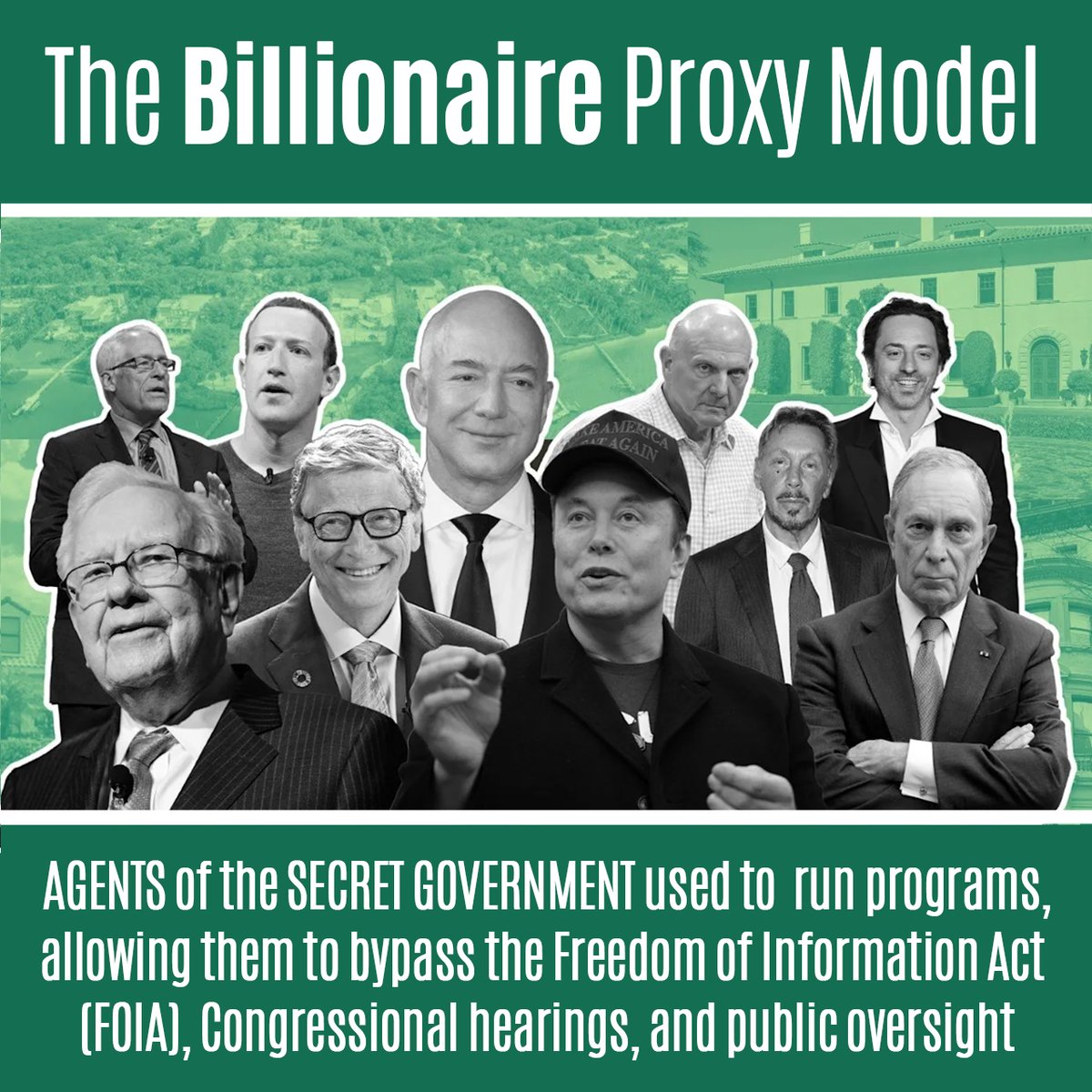
"The Billionaire Proxy Model"
The theory is that the "Secret Government" (or MJ-12 types) realized they couldn't operate as a public bureaucracy forever, so they shifted to a "Private Sector" strategy. They "create" or "subsidize" specific individuals to act as the face of these programs, allowing them to bypass the Freedom of Information Act (FOIA), Congressional hearings, and public oversight.
If you ever watched the TV series CHUCK. The NSA was going to set Chuck up as a Billionaire Industrialist in Rome to do this very thing as an NSA spy.
Look who has thrived during COVID and after.
7
8
185
Mar 26
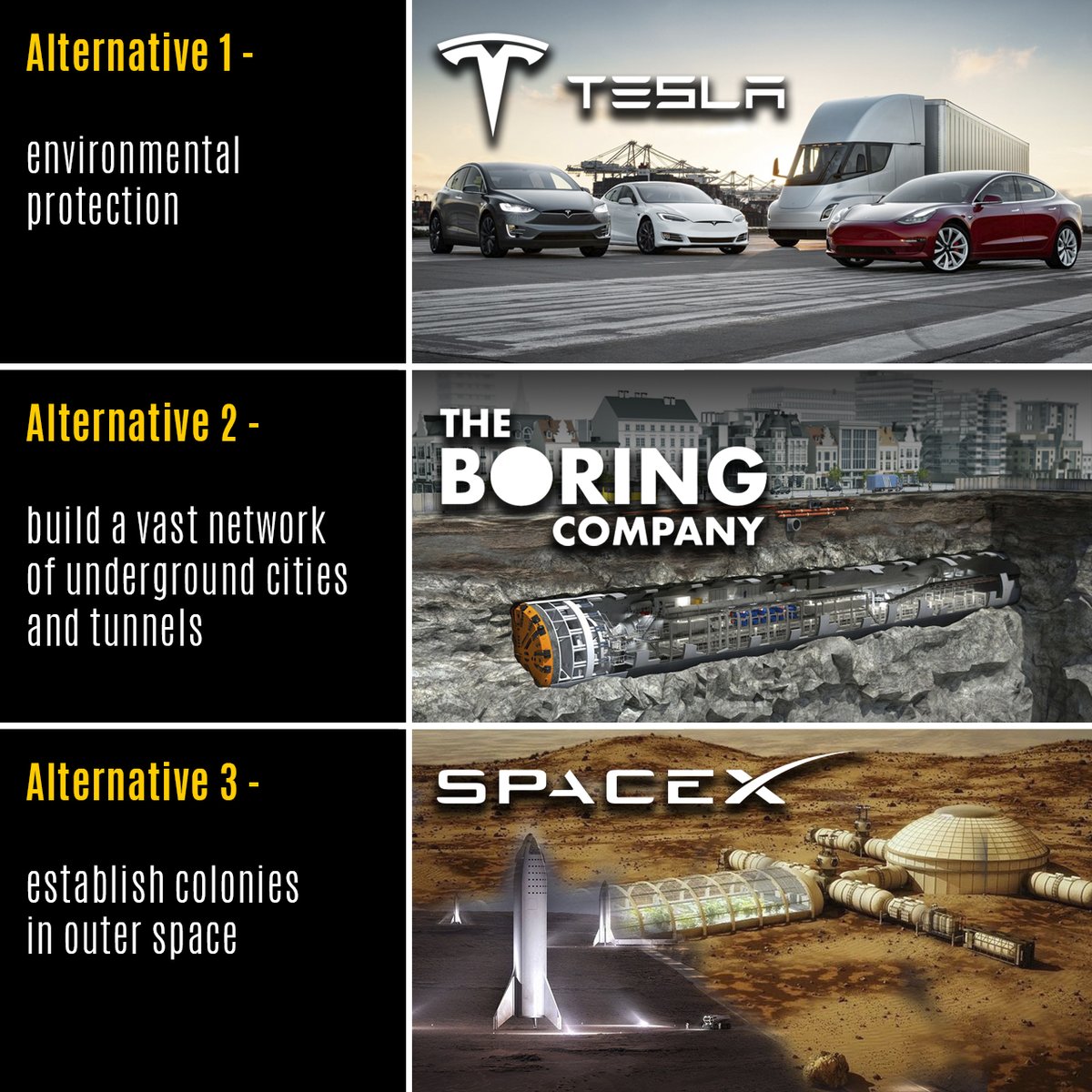
People can question Bill Cooper's claims but read this and tell me Elon Musk is not the one literally building ALL 3 ALTERNATIVES with Tesla, The Boring Company and SpaceX
MAJESTIC 12 AND THE SECRET GOVERNMENT By William Cooper
By secret Executive Order of President Eisenhower, the Jason Scholars were ordered to study this scenario and make recommendations called "Alternatives 1, 2, and 3".
"Alternative 1" was to use nuclear devices to blast holes in the Stratosphere from which the heat and pollution would escape into space. Change the human cultures from that of exploitation into cultures of environmental protection. Of the three this was decided to be the least likely to succeed due the inherent nature of man and the additional damage the nuclear explosions would themselves create.
"Alternative 2" was to build a vast network of underground cities and tunnels in which a select representation of all cultures and occupations would survive and carry on the human race.The rest of humanity would be left to fend for themselves on the surface of the planet.
"Alternative 3" was to exploit the alien and conventional technology in order for a select few to leave the earth and establish colonies in outer space.
Majestic 12 and the Secret Government
amazon.com/Majestic-Secret-G…
2
9
11
375
Mar 21
The Rockefellers "plan to use their economic power to gain political control of first America, and then the rest of the world"
"the shocking true story of the wealthiest,
most powerful family in America."
"The Rockefeller File" by Gary Allen
Free PDF: modpro.com/files
4
8
185
Mar 17
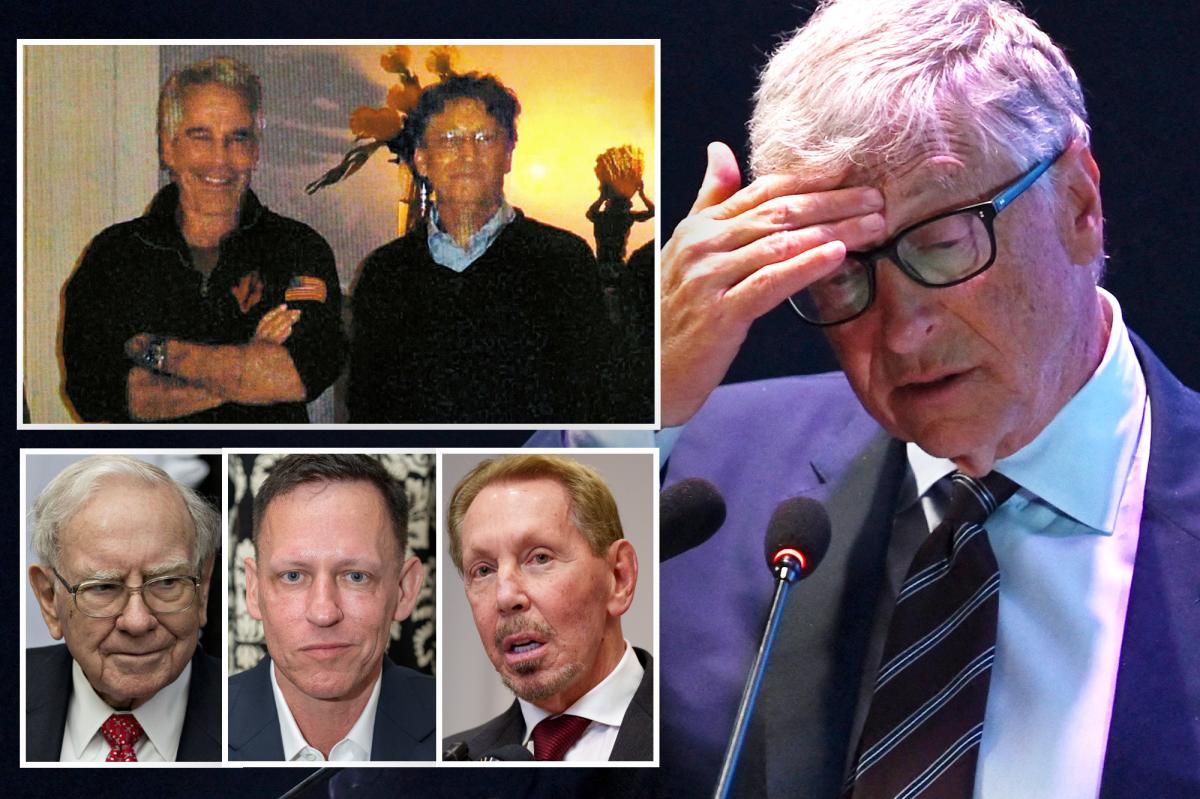
It's the Rockefeller's and Rothschild's network. They used Epstein to gather blackmail material on key people to get them to go along with their GREAT REST. COVID was the catalyst for the GREAT RESET and UN Agenda 2030.
We see Gates and Soros but the others in the club are working behind the scenes in other areas to push their GLOBALIST AGENDA.
Mar 16

Billionaires bolt from Bill Gates' scandal-scarred Giving Pledge as critics brand it 'Epstein-adjacent' trib.al/VpQV0jP
1
4
174
Mar 12
This kind of MANIPULATION and CONTROL over the news media is EXTREMELY DANGEROUS to our DEMOCRACY!
#OperationMockingbird
#CIA #Propaganda
5
8
207
Mar 12
THE SECRETS OF THE FEDERAL RESERVE
By Eustace Mullins
Read the E-BOOK for FREE
modpro.com/files/
4
7
293
Mar 12
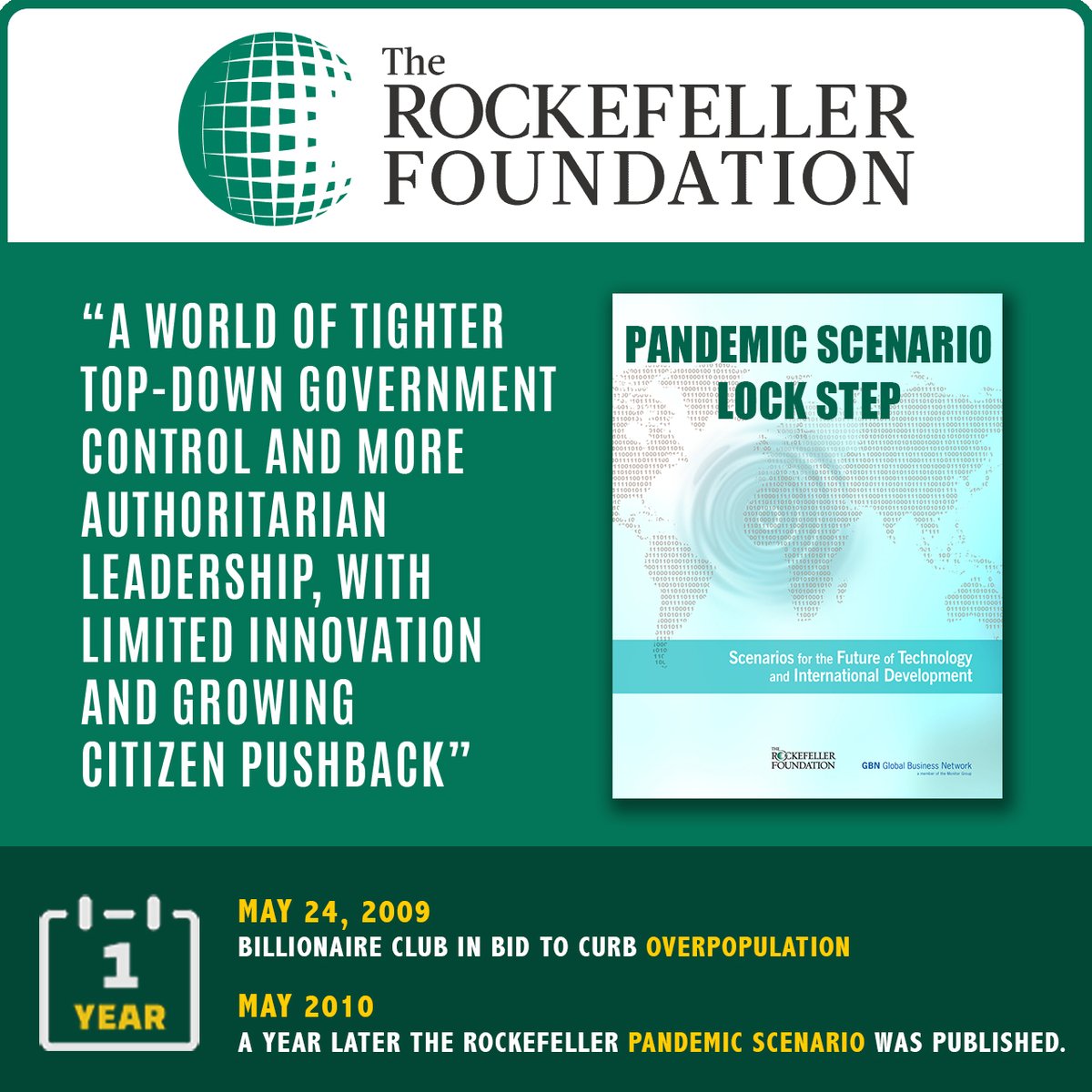
COVID, a cover for tyranny!
Rockefeller Foundation PANDEMIC Scenario.
Published a year after the Rockefeller's "Billionaire club" met to discuss overpopulation.
PDF: modpro.com/files
5
8
146
Eisenhower's farewell address:
"we must guard against the acquisition of unwarranted influence, whether sought or unsought, by the MILITARY INDUSTRIAL COMPLEX. The potential for the disastrous rise of misplaced power exists and will persist."
Full video: youtube.com/watch?v=OyBNmecV…
5
7
190
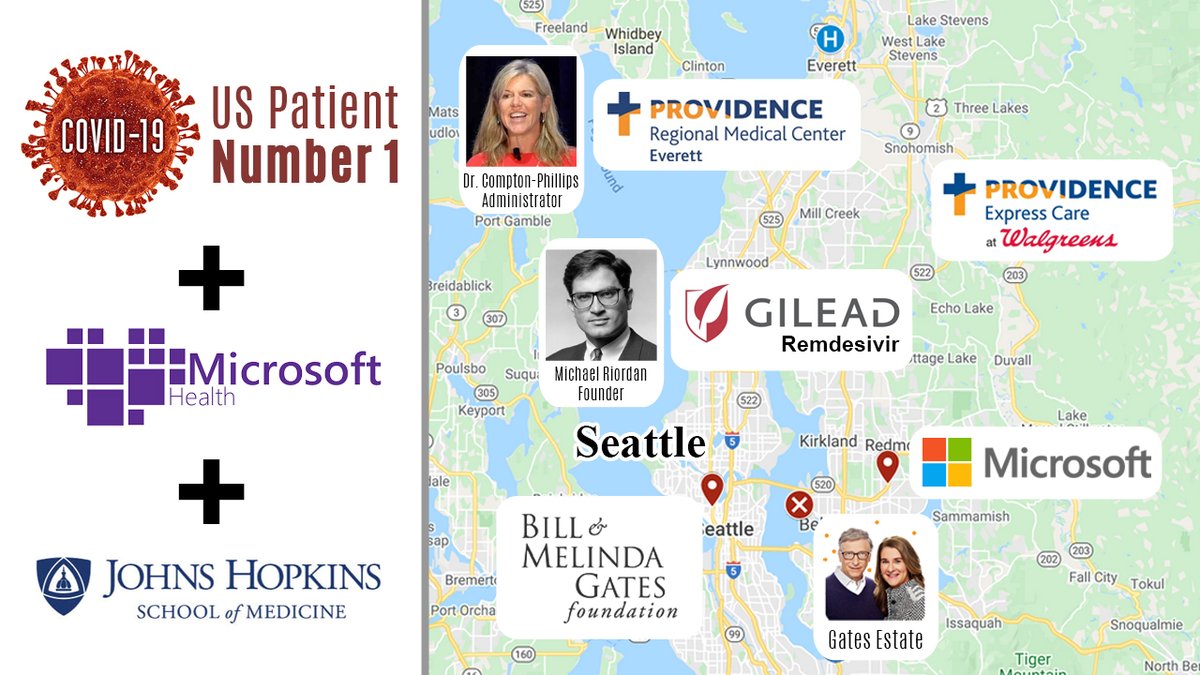
Everyone who was connected to US COVID-19 Patient #1, who traveled to Wuhan, China and back to Seattle, is part of the MICROSOFT HEALTHCARE program. Connect the dots.
BILL GATES is involved at EVERY LEVEL. He is the PROBLEM...NOT the SOLUTION!
Video Presentation from the doctor who oversaw treatment who describes the MICROSOFT connections: blog.providence.org/infectio…
#Event201 #COVID19 #GreatReset
1
4
6
205
Feb 28
Fauci talks about a "Surprise Outbreak" during TRUMPS 1st TERM in 2017.
He was foreshadowing COVID because he knew it was coming.
He had been working with BILL Gates for years. He got a huge raise after the Bill & Melinda Gates Foundation made a $200 Million Grant to the National Institutes of Health who Fauci worked for in 2003. After additional raises Fauci became the highest paid Federal Employee making more than the President at $417,608 (2019).
2
8
6
259
$200 Million Grant to Accelerate Research on "Grand Challenges" in Global Health
Tony Fauci gets a 68% pay increase after Gates Grant to NiH
gatesfoundation.org/ideas/me…
$200 Million Grant to Accelerate Research on "Grand Challenges" in Global Health
gatesfoundation.org 1
4
136
"Dr. Anthony Fauci Received Big Pay Increase To Prevent Pandemics" - Forbes (Oct 20, 2021)
forbes.com/sites/adamandrzej…
3
112
Bill Gates talks about a “Death Panel” to decide who lives and who dies
Bill Gates
July 8, 2010
Aspen Ideas Festival
Aspen, CO
full video: youtube.com/watch?v=03MZG9vK…
8
6
184