
MWP is an organization dedicated to providing free resources on the history of money and Bitcoin for teachers, libraries & circular economies around the world.
Joined October 2025
- Tweets 95
- Following 64
- Followers 52
- Likes 182
40 Photos and videos
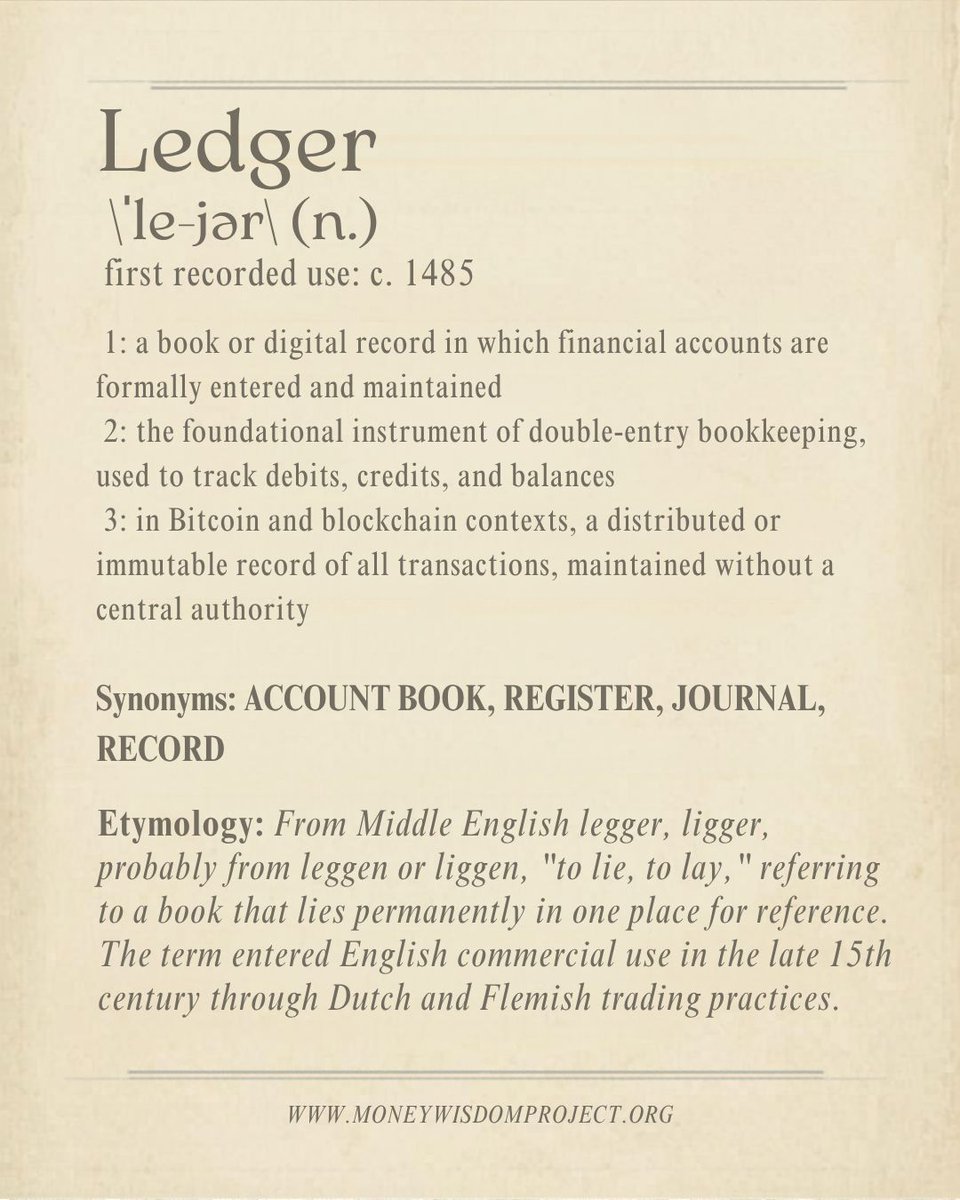

From clay tablets in Sumerian temples to the Bitcoin blockchain, the central technology of money has always been the same: a ledger. Today's lexicon word.
#MoneyWisdom #HistoryOfMoney
1
3
32
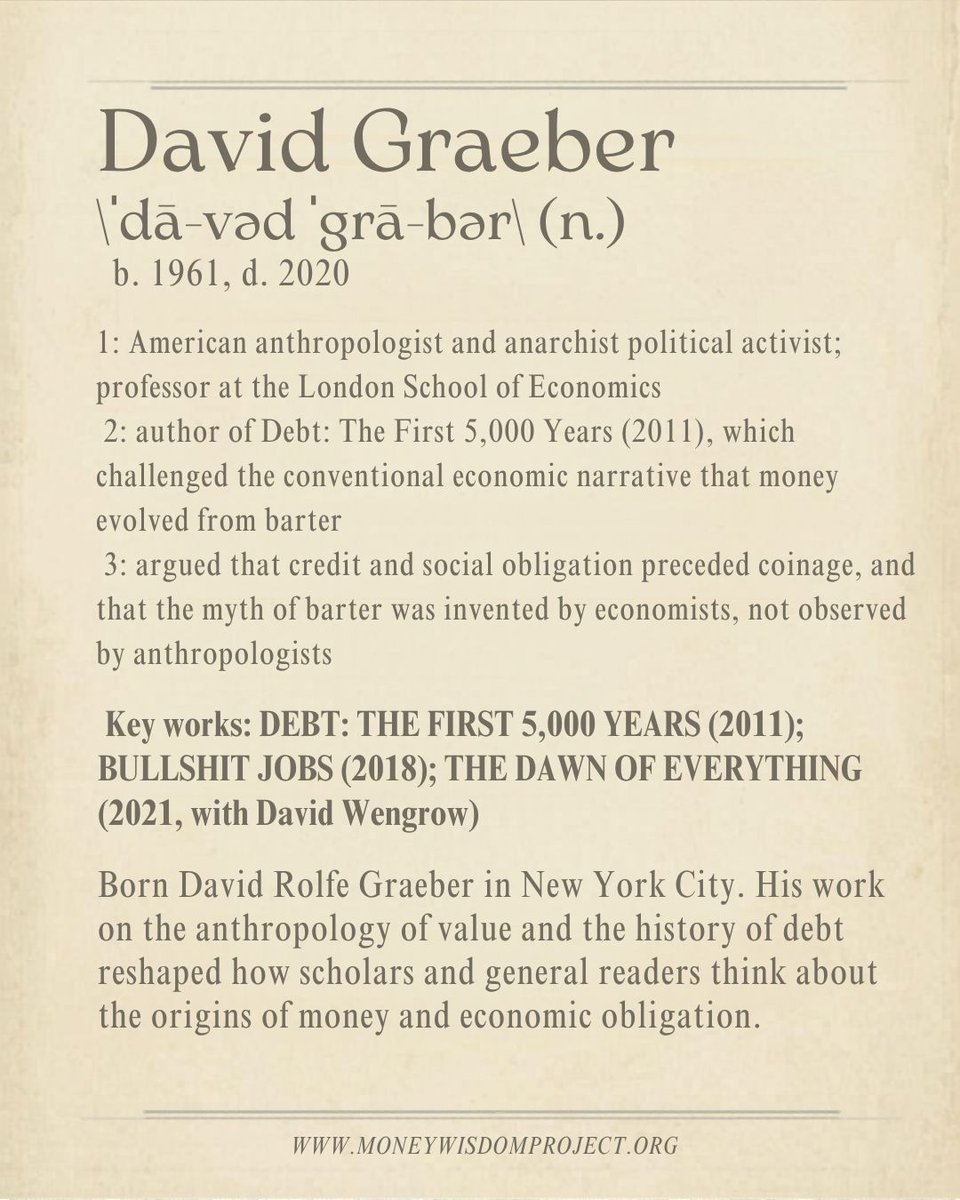
He spent his career arguing that the textbook story of money was wrong. Credit, he said, came first. Barter is a myth. Today's lexicon entry: anthropologist David Graeber.
#MoneyWisdom #HistoryOfMoney
1
4
25
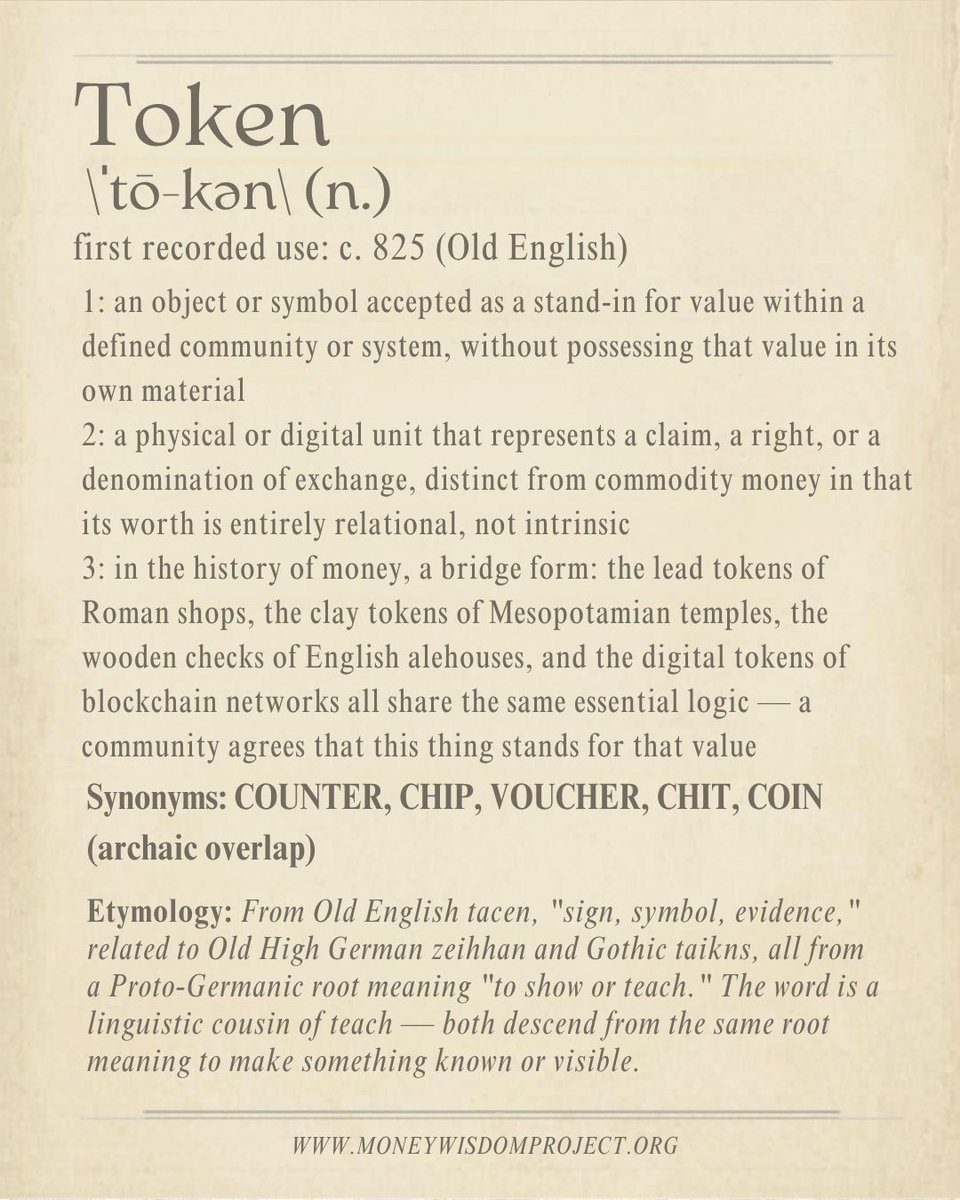
Roman shopkeepers used lead tokens. Medieval alehouses used wooden ones. We use digital ones. The technology changes. The idea is the same. Today's lexicon word: Token.
#MoneyWisdom #HistoryOfMoney
2
5
56
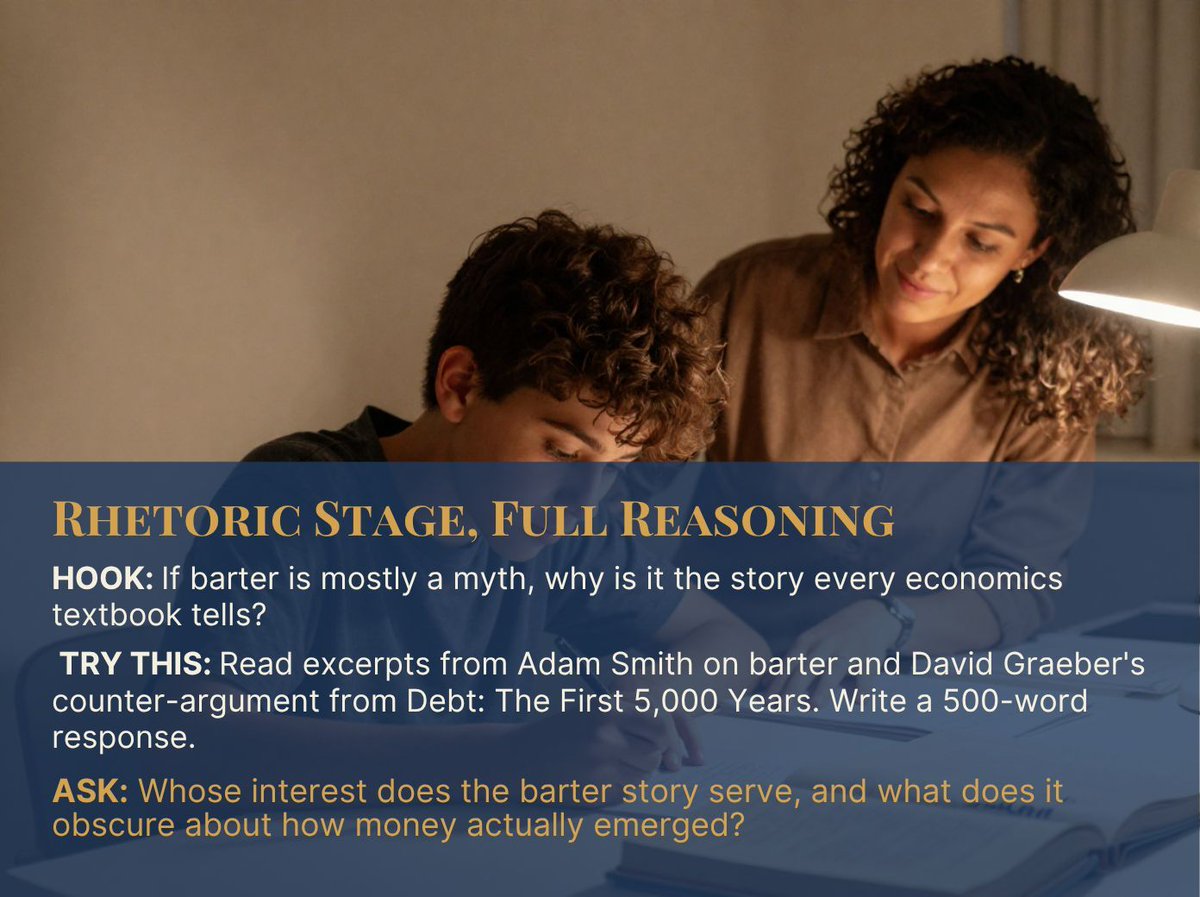
At the rhetoric stage, students are ready for full philosophical weight.
This week's prompt asks them to read Adam Smith on barter alongside Graeber's challenge. The point is not to resolve it. The point is to articulate.
#ClassicalEducation #RhetoricStage #MoneyHistory
1
2
28
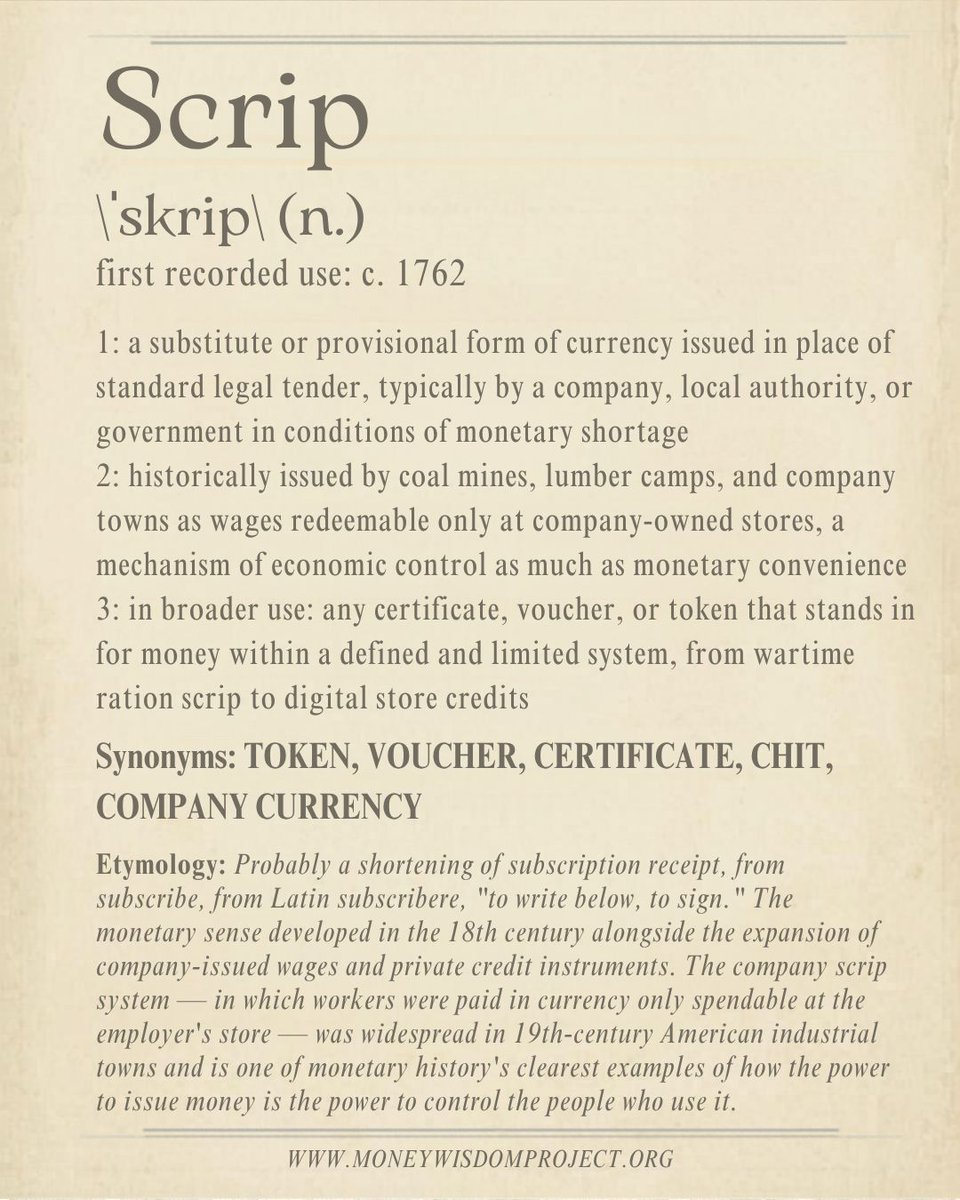
Did you know American coal miners were often paid in money they could only spend at the company store? It was called scrip. Whoever issues the money sets the rules. Today's lexicon word.
#MoneyWisdom #HistoryOfMoney
1
4
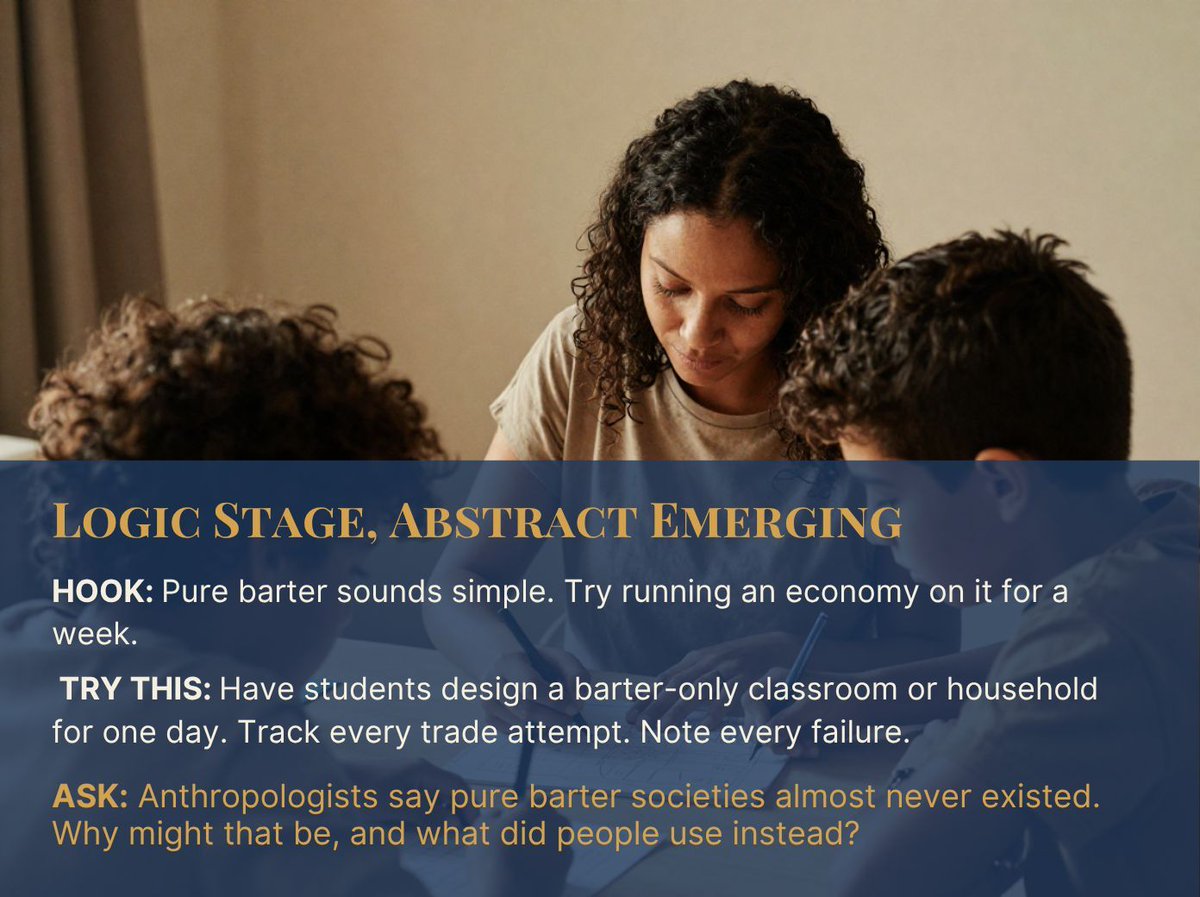
The logic stage is when abstract reasoning starts to flicker.
This week's prompt asks them to design a barter-only economy and discover, by running into walls, why it almost never existed in pure form. The lesson is in the failure.
#ClassicalEducation #LogicStage #MoneyWisdom
1
19
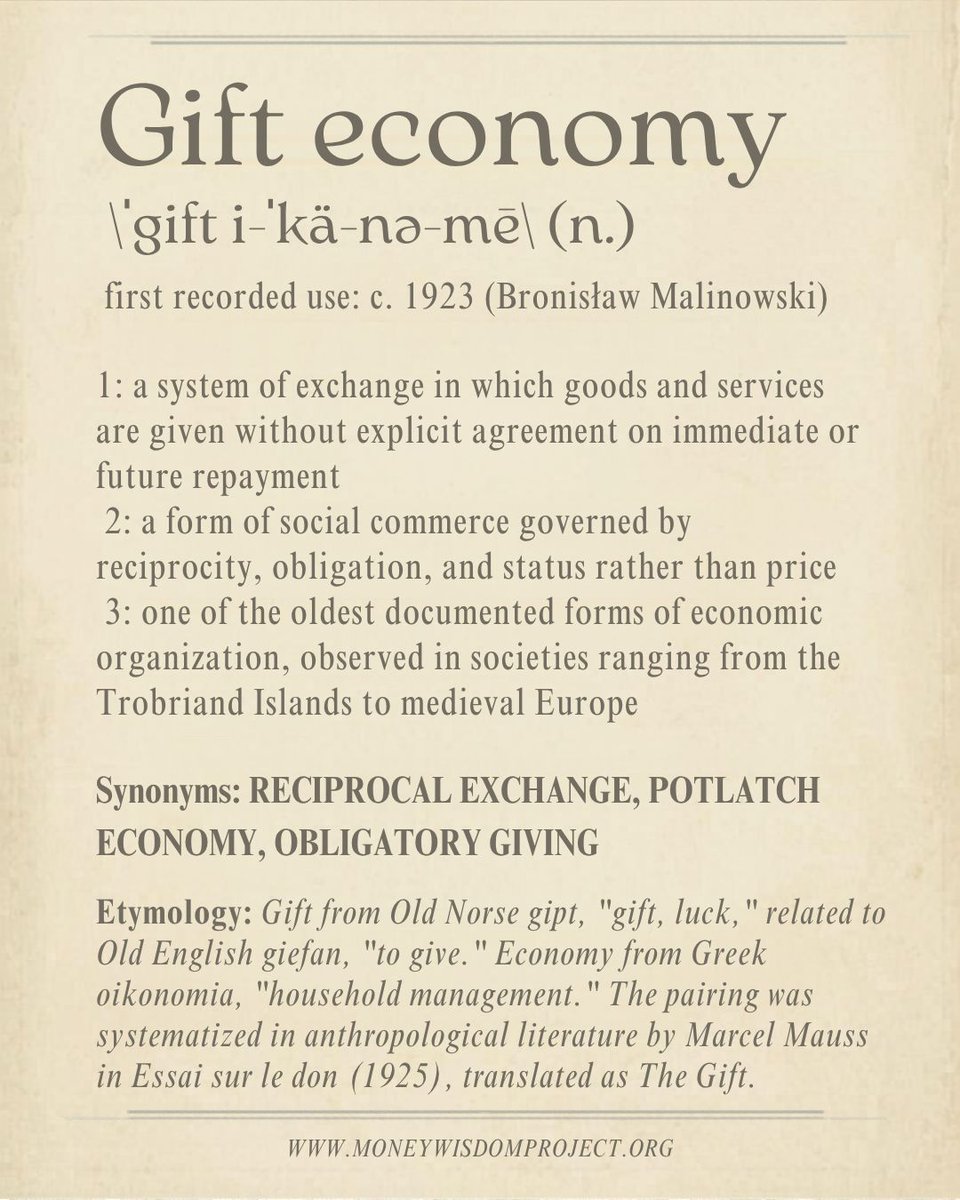
The Trobriand Islanders moved valuable goods across hundreds of miles by sea, with no money, no markets, and no contracts. They called it the Kula ring. Anthropologists call it a gift economy. Today's lexicon word.
#MoneyWisdom #HistoryOfMoney
1
4
22
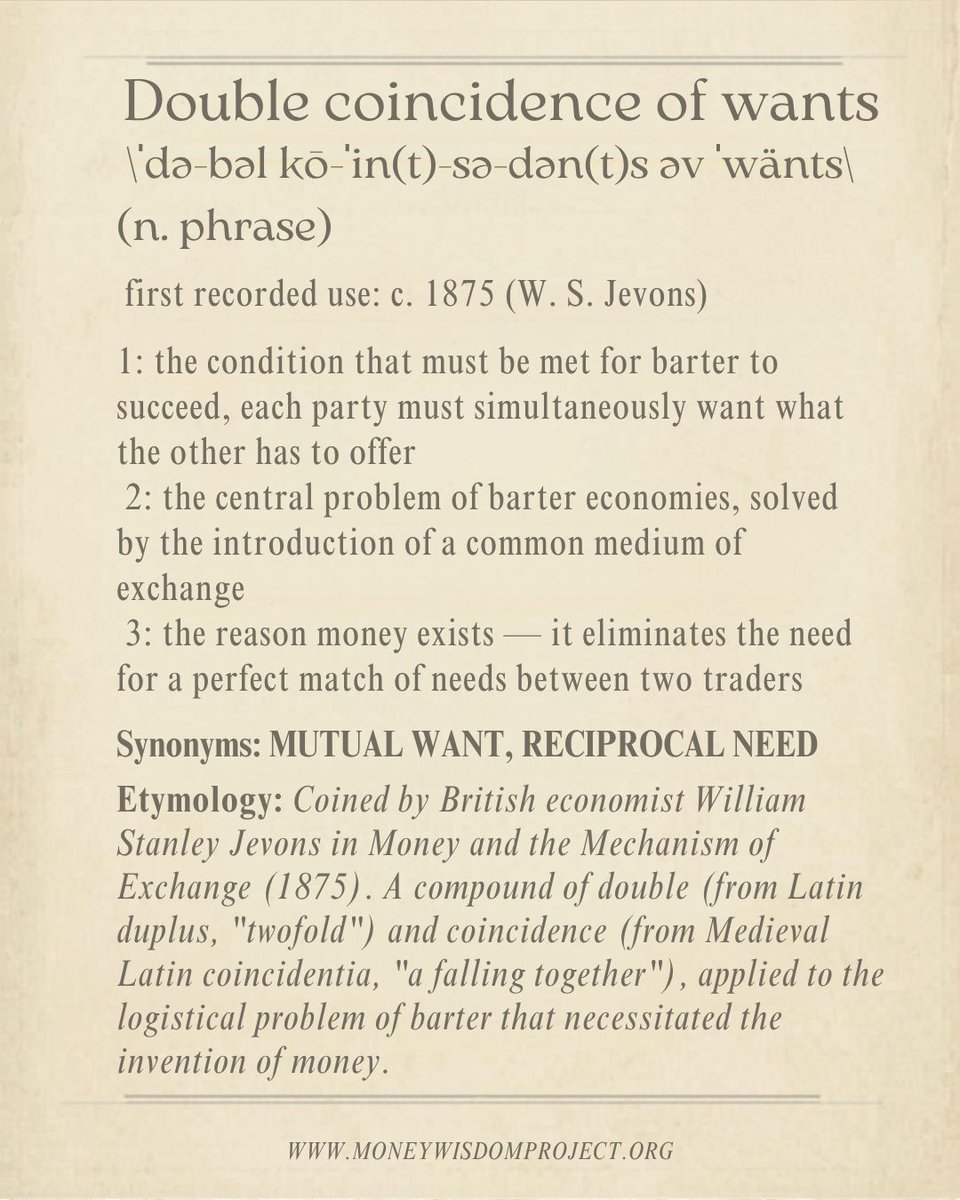
What has to happen for two people to trade without money? Each has to want exactly what the other has, at exactly the same moment. Economists call this the double coincidence of wants. It is the problem money was invented to solve. Today's word.
#MoneyWisdom #HistoryOfMoney
1
2
25
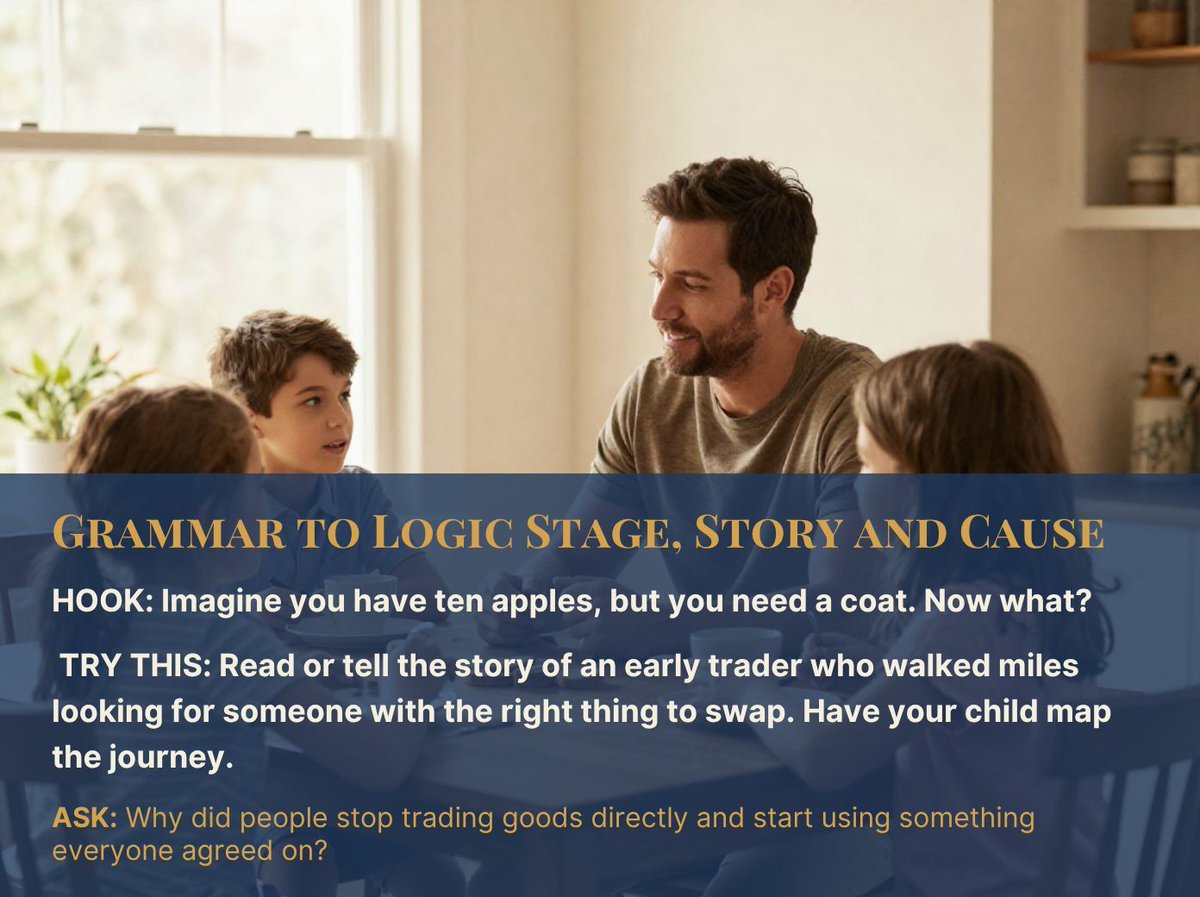
At this age, the story is everything. Children are ready to hear what happened and why, but not yet ready for abstract systems. This week, we tell of a trader walking miles to find someone with the right thing to swap.
#TeachKidsAboutMoney #ClassicalEducation #MoneyHistory
1
3
34
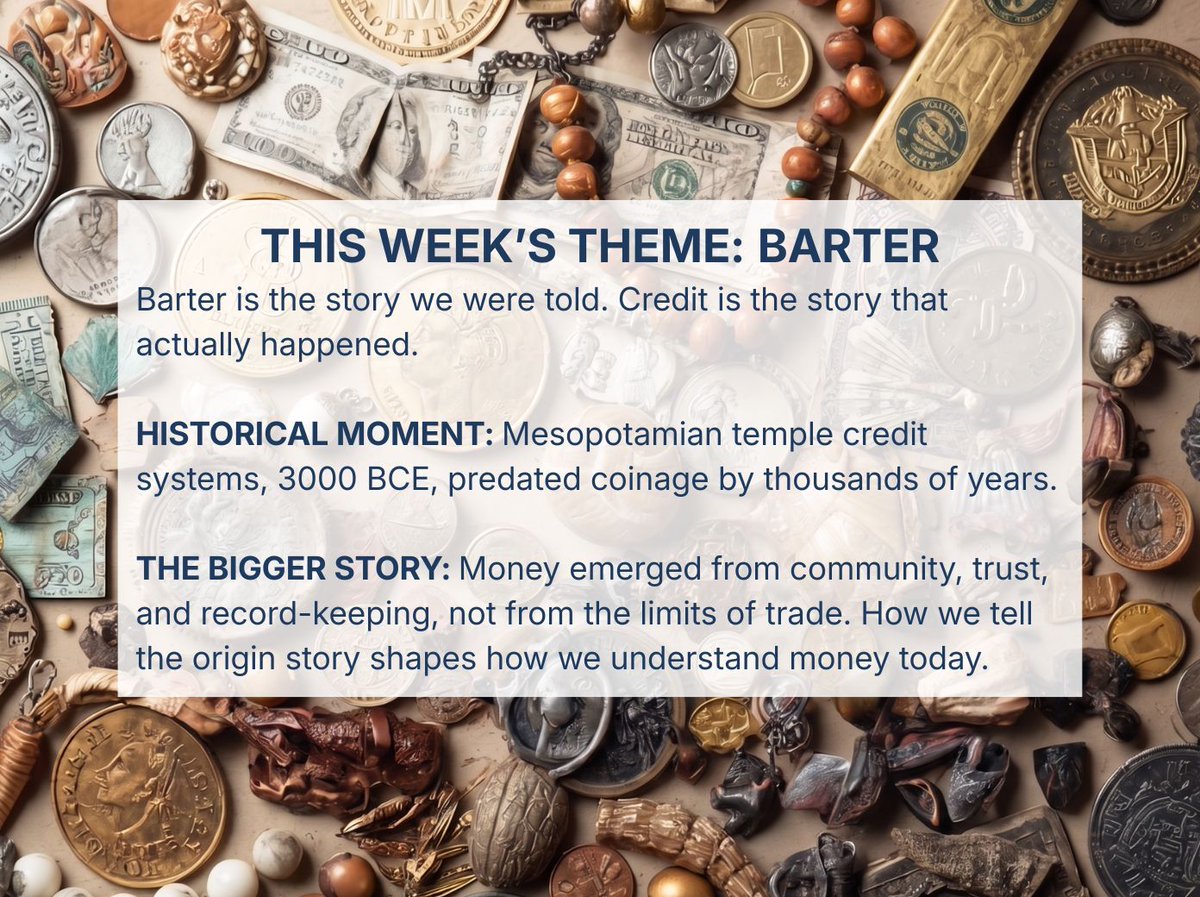
Most economics textbooks open with the same story: a hungry villager has wheat, wants a chicken, finds someone with a chicken who wants wheat, and the trade happens. Then money was invented to make this easier.
The story is tidy. But it is also mostly wrong.
#MoneyHistory
1
4
57

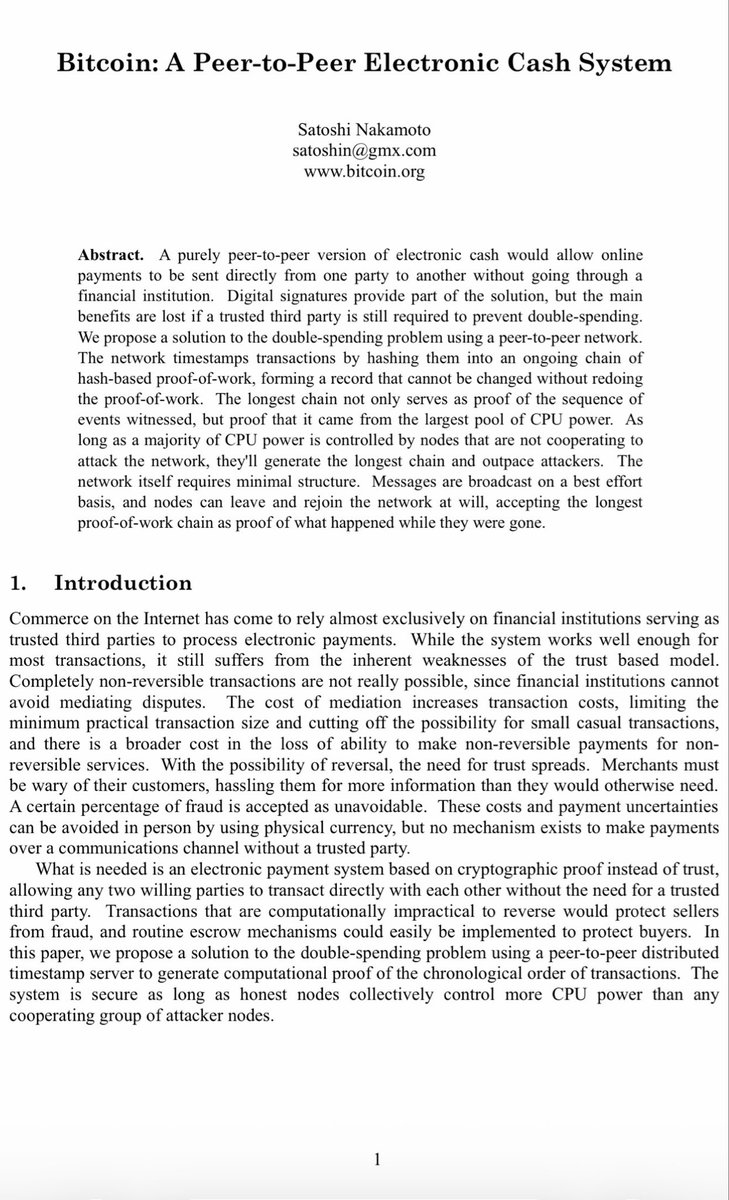
The abstract and intro of the Bitcoin Whitepaper focuses almost exclusively on Bitcoin's use as peer-to-peer money. Medium of Exchange or Store of Value is based on the users perspective.
The key is Peer-to-Peer. Hold your own Keys. Run your own Node. Ditch the 3rd Parties
5
3
28
1,414
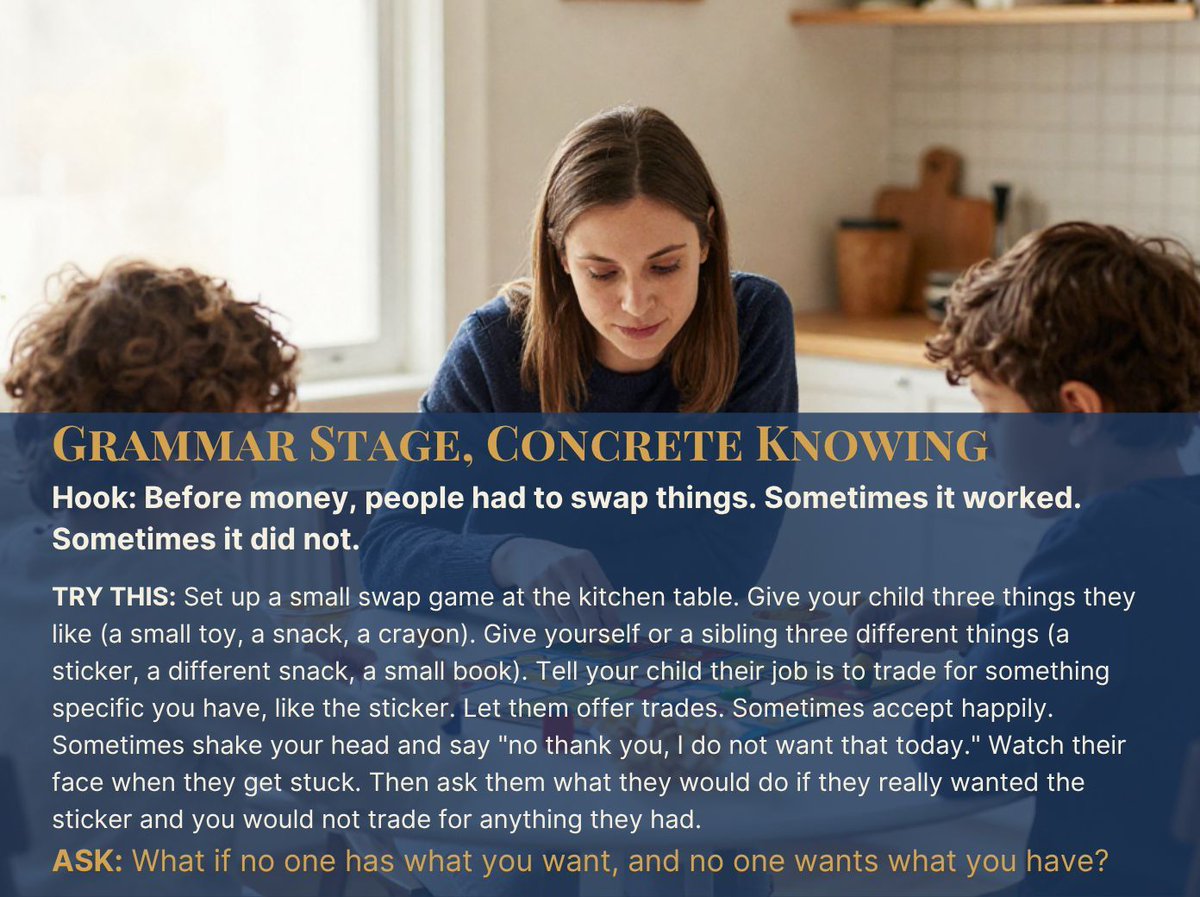
Teaching barter to a 4-year-old does not take a textbook.
It takes three toys, a snack, and a sibling.
Save this one for the kitchen table.
#TeachKidsAboutMoney #ClassicalEducation
14
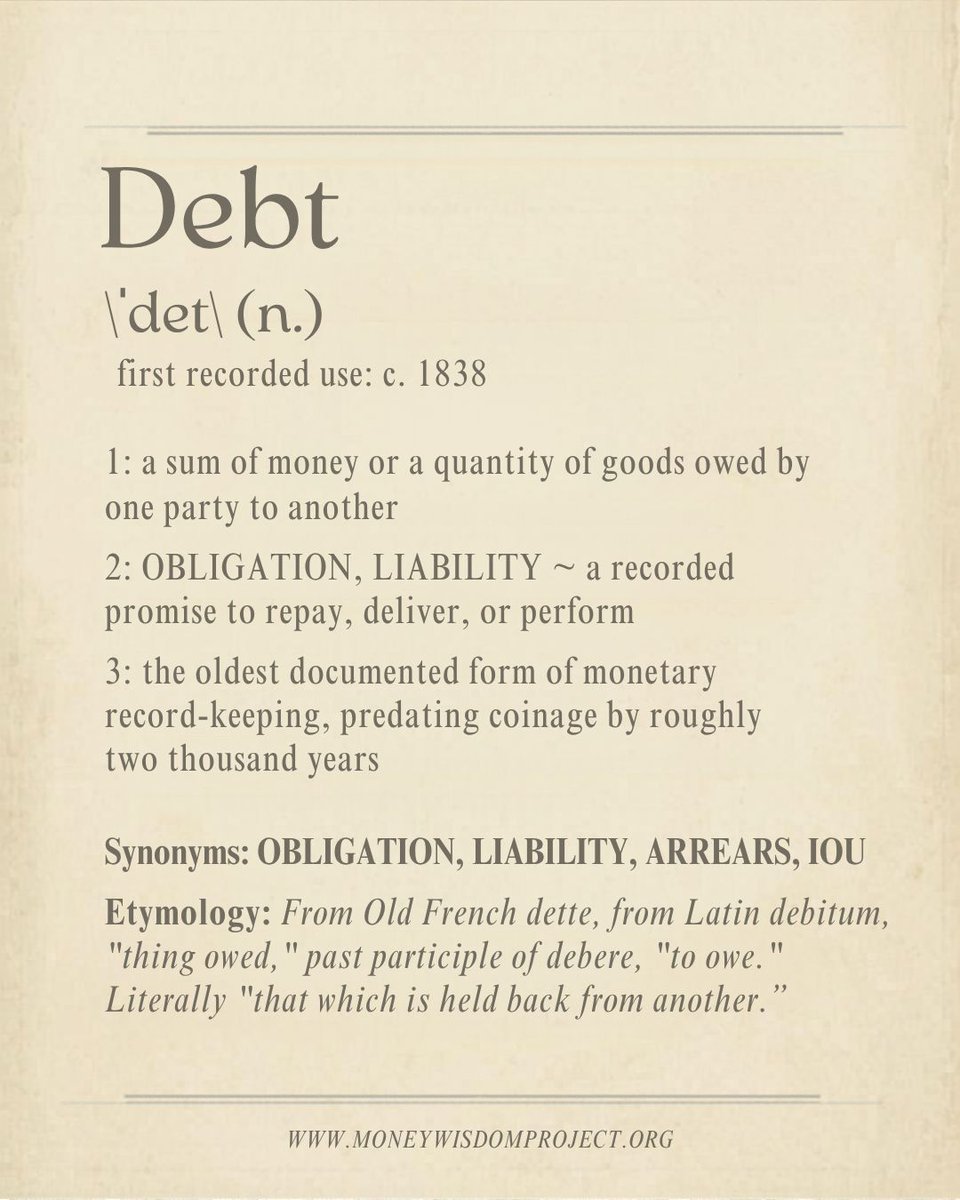
Before there was coinage, there was debt. Mesopotamian temples kept track of obligations on clay tablets two thousand years before the first coin was struck. Today's lexicon word: Debt.
#MoneyWisdom #HistoryOfMoney #Debt
1
12
Money Wisdom Project retweeted

Jun 6
@OsloFF was incredible, only
a few days left for @BTCPrague where we will attend the Bitcoin Unconference organized by @MyFirstBitcoin_ and the 2026 Hispanic Reunion planned by @karliatto and @lunaticoin
There is no bear market when it comes to connecting, learning and building with fellow Bitcoiners.
Check out all the events at @JoinSatlantis

Our local Educators from The Basin Francisco and Luli will be connecting with other educators from around the world.
What a representation we have!
2
3
10
515
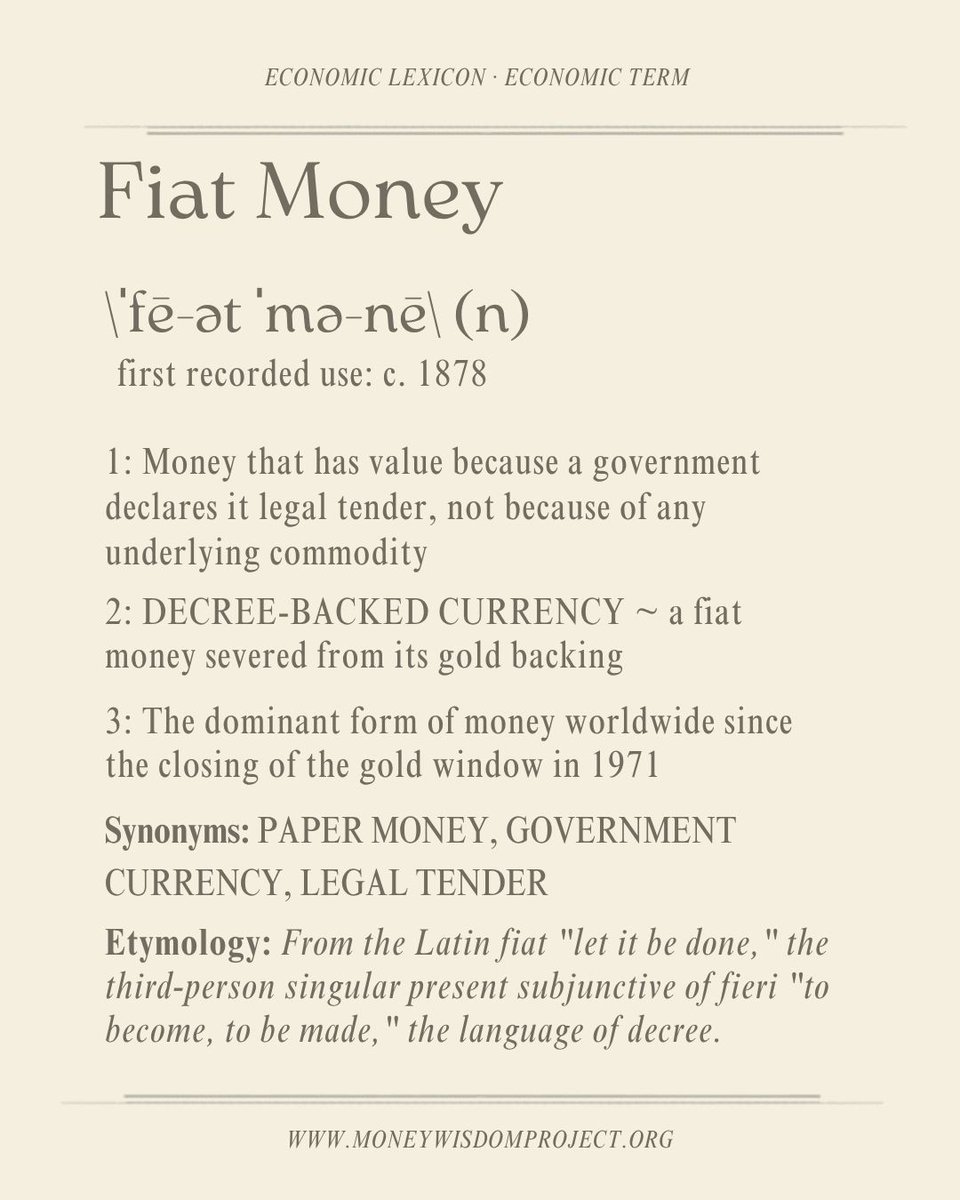
Fiat Money
\ˈfē-ət ˈmə-nē\ (n)
first recorded use: c. 1878
1: Money that has value because a government declares it legal tender, not because of any underlying commodity
2: DECREE-BACKED CURRENCY ~ a fiat money severed from its gold backing
1
1
4
56
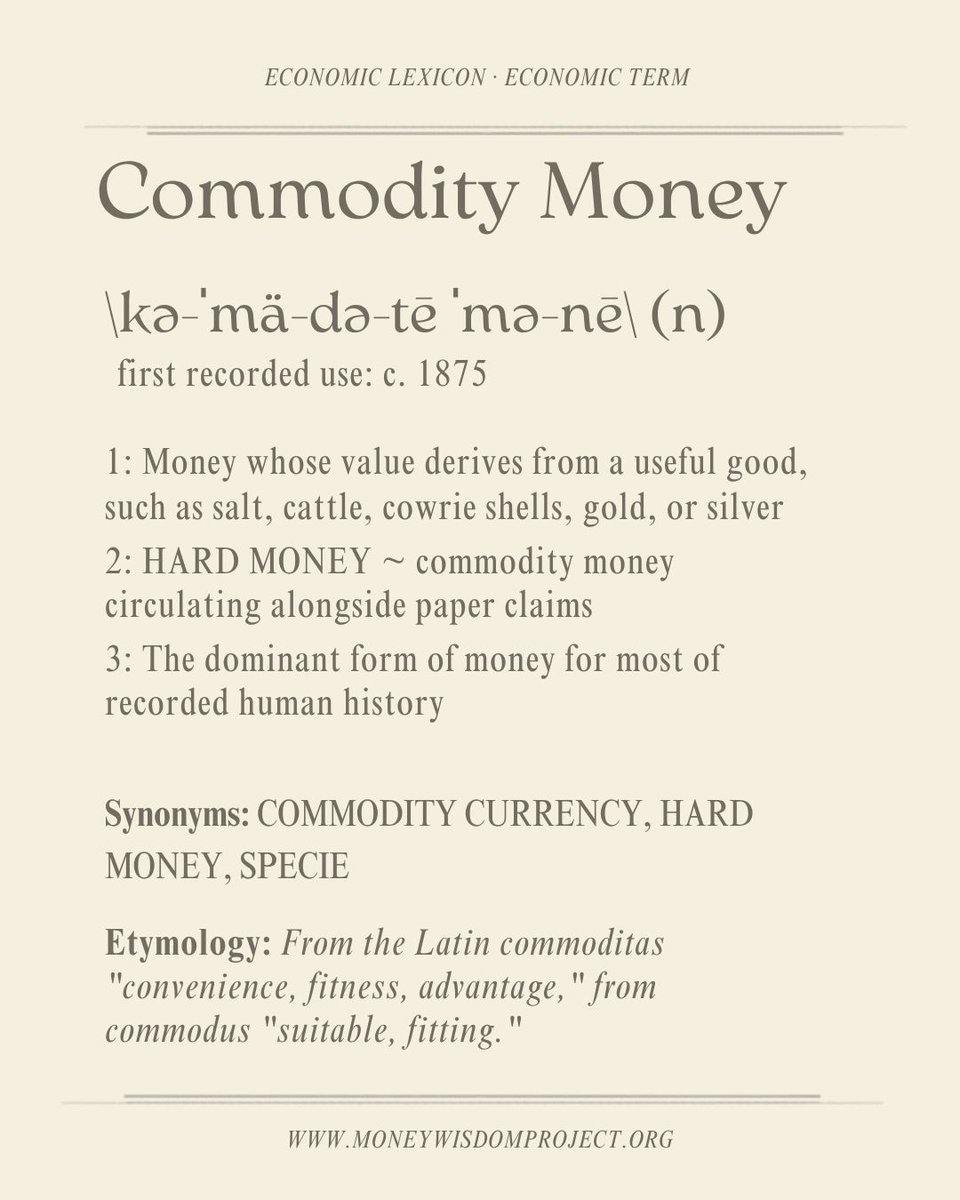
Commodity Money
\kə-ˈmä-də-tē ˈmə-nē\ (n)
first recorded use: c. 1875
1: Money whose value derives from a useful good, such as salt, cattle, cowrie shells, gold, or silver
2: HARD MONEY ~ commodity money circulating alongside paper claims
1
4
75
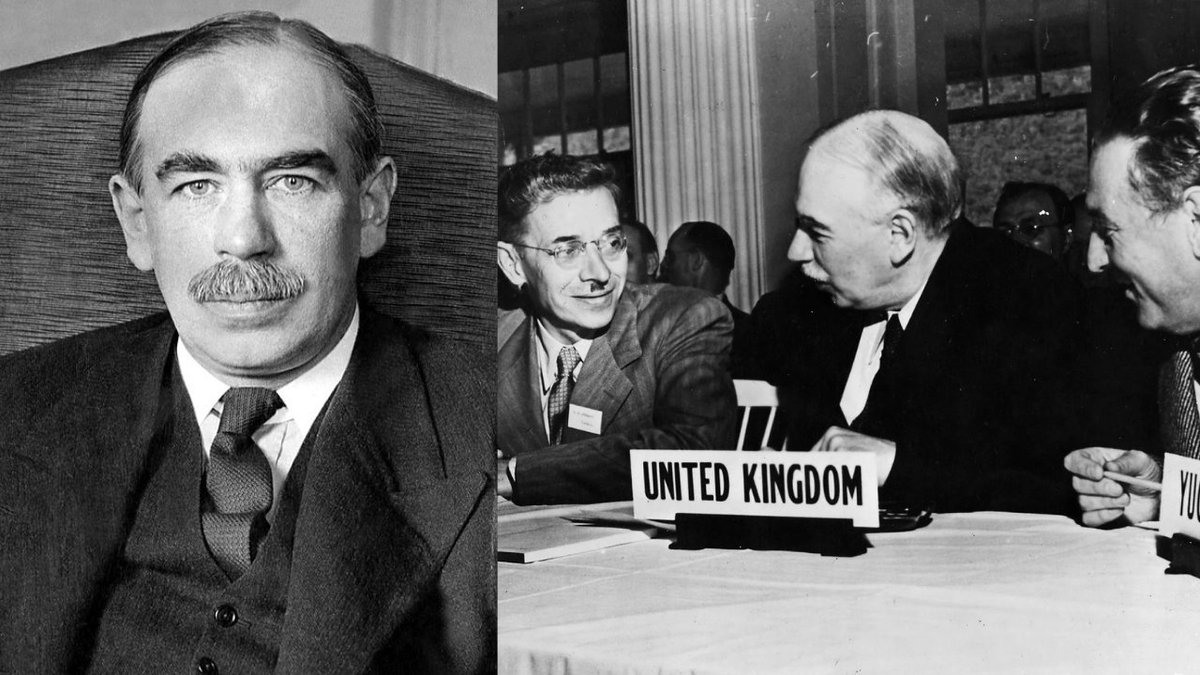
Check out the latest log-form blog to help you understand John Maynard Keynes on his 143rd birthday.
moneywisdomproject.org/the-b…
1
1
1
60
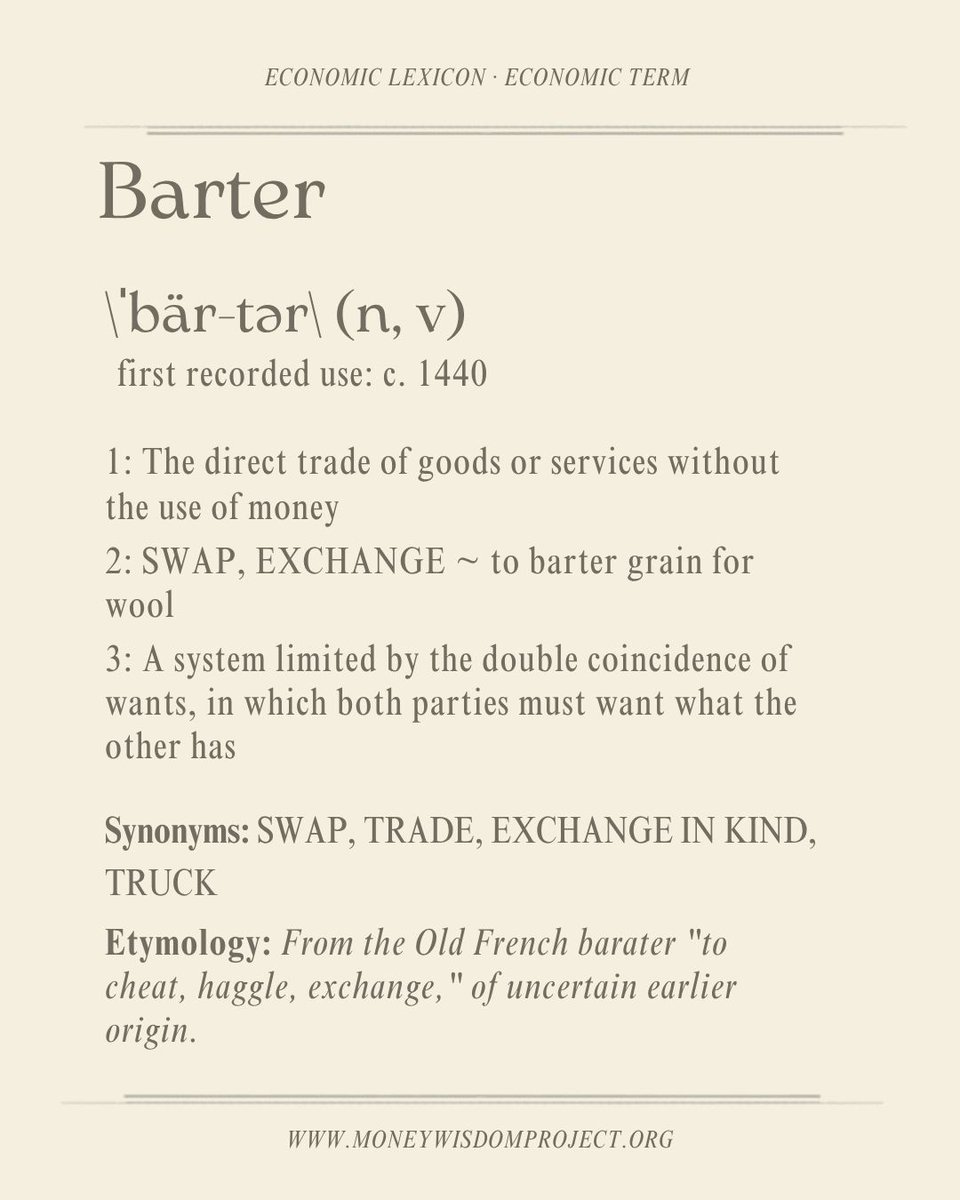
Barter
\ˈbär-tər\ (n, v)
first recorded use: c. 1440
1: The direct trade of goods or services without the use of money
2: SWAP, EXCHANGE ~ to barter grain for wool
3: A system limited by the double coincidence of wants, in which both parties must want what the other has
1
5
113
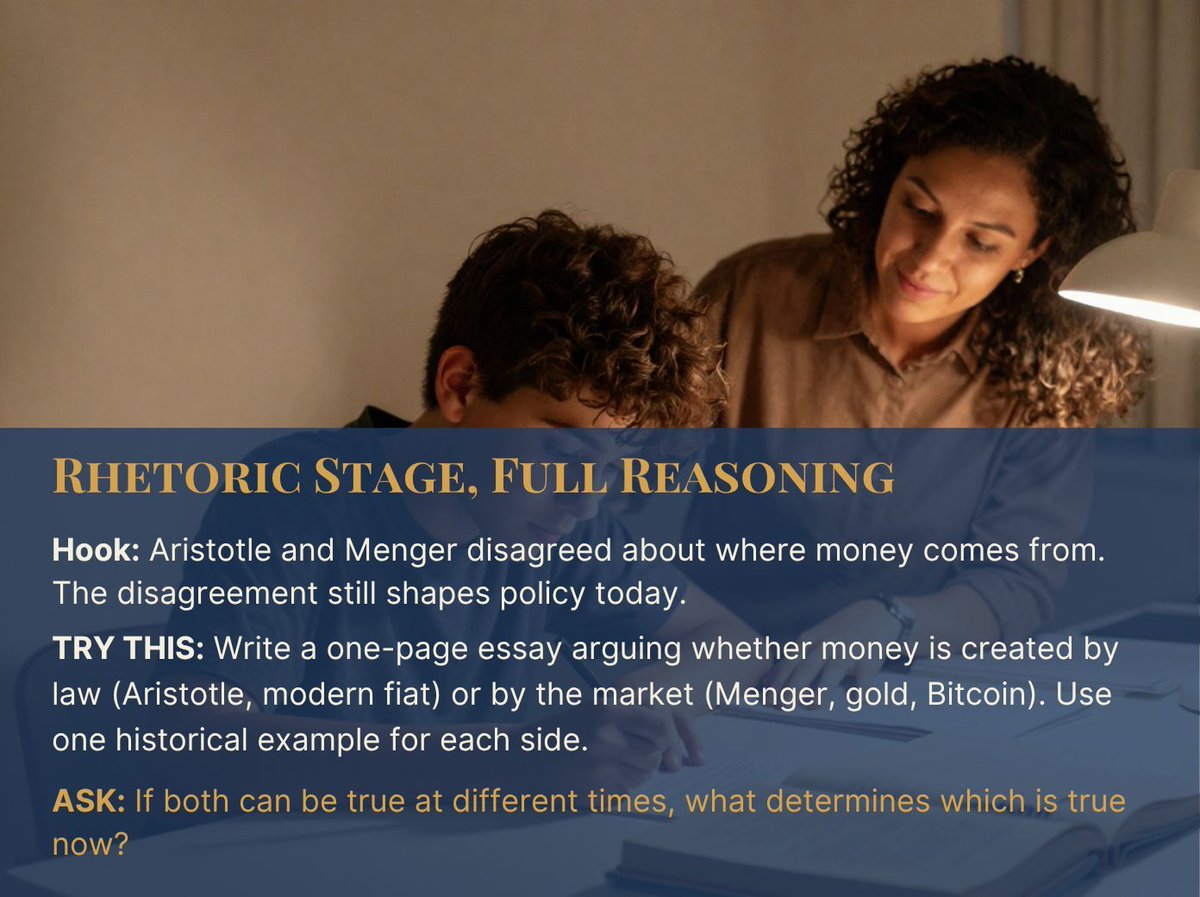
Ages 14 to 17 sit in the Rhetoric Stage of the trivium. Students at this age are ready to construct an argument, defend a thesis, and take a real intellectual disagreement seriously. The Aristotle-versus-Menger debate is an engaging writing prompt.
1
110
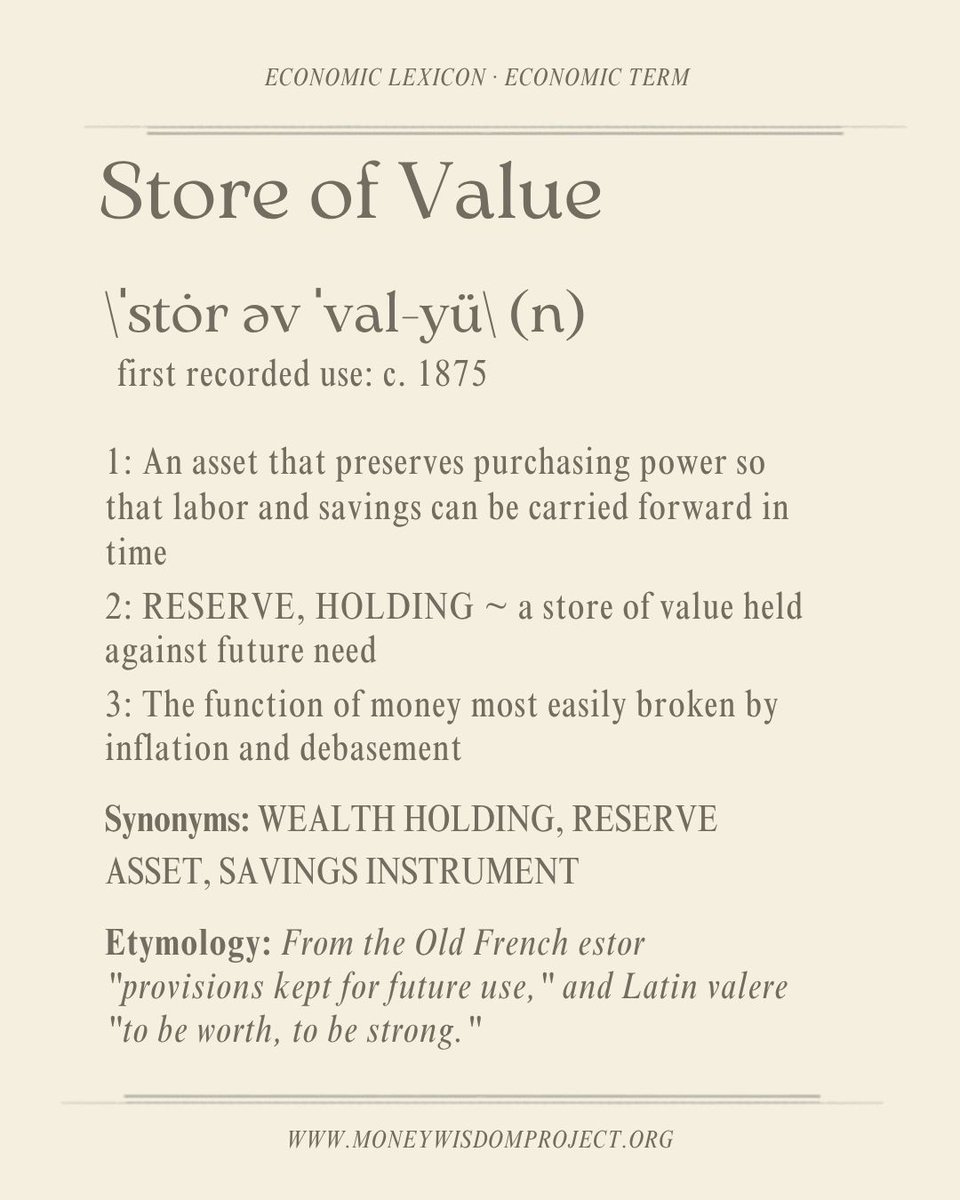
Store of Value
\ˈstȯr əv ˈval-yü\ (n)
first recorded use: c. 1875
1: An asset that preserves purchasing power so that labor and savings can be carried forward in time
2: RESERVE, HOLDING ~ a store of value held against future need
1
72