
Visionär
Joined September 2015
- Tweets 32,313
- Following 50
- Followers 150
- Likes 39,565
11,881 Photos and videos






Montag Morgan retweeted

Jun 15
🎂 On souhaite un joyeux 80e anniversaire à 𝗕𝗿𝗶𝗴𝗶𝘁𝘁𝗲 𝗙𝗼𝘀𝘀𝗲𝘆.
Souvenirs émus de sa première prestation, à l’âge de 5 ans, dans le très beau 𝗝𝗲𝘂𝘅 𝗜𝗻𝘁𝗲𝗿𝗱𝗶𝘁𝘀 (René Clément, 1952).
4
27
160
10,308
Montag Morgan retweeted

🇻🇦🌎 Message du Pape Léon XIV à l'occasion du dixième Sommet mondial sur l'environnement en Autriche

4
32
120
1,842

Vamos ha ver lo que va
a pasar en los dias que
anexos vedran?
Cuando el Pan y Circo
terminara dejando
el vulgo vacio.
La EU debera enviar
soldados a el frente
del marcial este.
Tolle lege it-magazine.ch
1
3
Montag Morgan retweeted

Jun 15
🇺🇦Брошенные своим командованием и страной боевики ВСУ, как отработанный материал, продолжают побираться и просить помощи у украинцев☠️
5
12
761
Montag Morgan retweeted

En pointe. Unmistakably Rockstud.
The Valentino Garavani Rockstud ballerinas reveal themselves.
#ValentinoPreFall2026
#ValentinoGaravani #Rockstud
2
25
102
4,953
Montag Morgan retweeted

My dear friend Sasha, it seems you've driven someone absolutely crazy. Don't worry, you're not alone on this path.🇷🇺😎💯

39
79
645
7,104
Montag Morgan retweeted

Alcanzamos la plenitud de nuestra fuerza cuando aprendemos a no dañar.
11
182
920
17,260
Todos saben lo que va
ha suceder en este
pequeña nación.
Masas de Expats vendran
abarrajando el Pais
con todo ardor.
Y los corruptos Paises
de la EU demandaran
mas extorsiones.
Tolle lege it-magazine.ch
1
3
Hoy cuando fui de compras
se viean los Expats todos
en su euforia.
Los indigenas Suizos
todos indignados y
de mala ostia.
Por haber perdido su
unica option propia
de su gran Pais.
Tolle lege it-magazine.ch
1
3
Montag Morgan retweeted
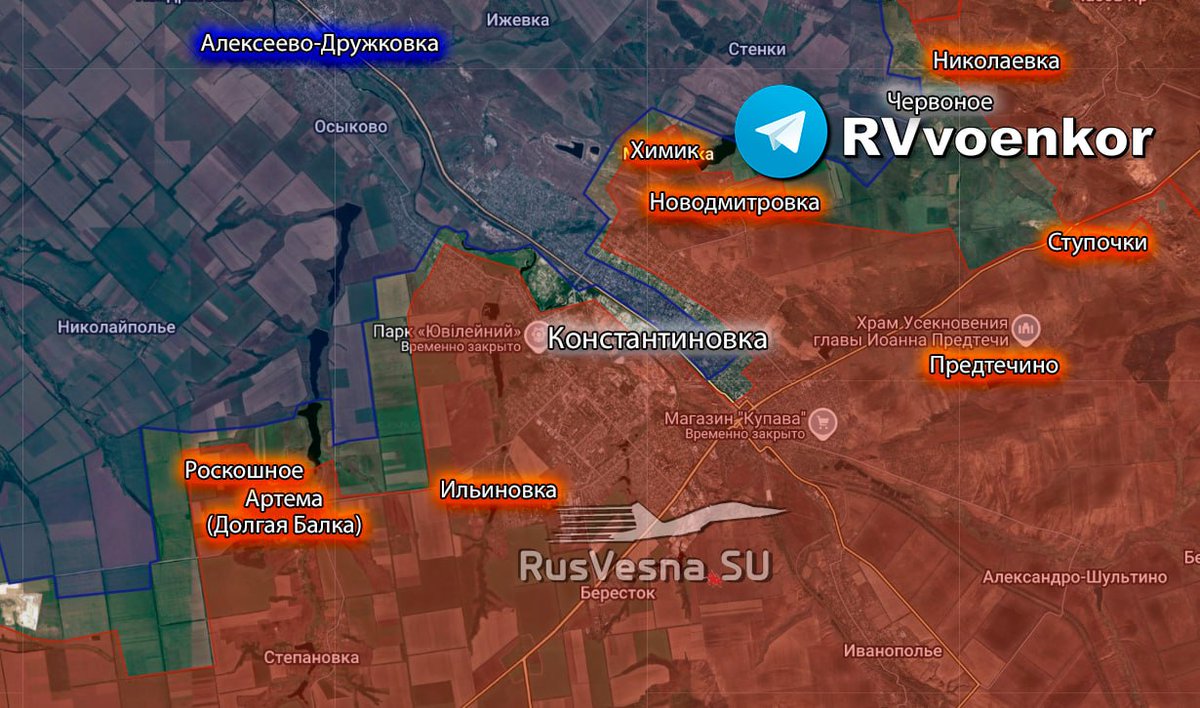
🚨120 buildings liberated in Konstantinovka in 24 hours, according to the Ministry of Defense.🇷🇺⚔️💯
▪️ In the southwestern part of the city, the destruction of encircled units of the 28th and 100th Ukrainian Mechanized Brigades continues.
▪️ Up to 100 Ukrainian Armed Forces militants were killed in Konstantinovka in 24 hours.
▪️ Also in Krasny Liman, assault aircraft continue to advance westward and destroy scattered Kiev regime formations. In the northwestern part of the city, fighters captured five strongholds and cleared 31 buildings, including the Church of the Iveron Icon of the Mother of God.
3
42
211
4,116
Se me paso la pena
que me pesaba tanto
del pasado dia.
Pensando analicé
lo que sucedió en
ese domingo.
Enque la EU y todos
sus viles lacayos en
furia lograron.
Tolle lege it-magazine.ch
1
4
Montag Morgan retweeted

Why did they ever stop making cartoons like this 😛🎬
1
29
154
28,011
Der einsame
Hauch des
Weltmeers
verfolgt
den Bart
der Distel.
EU_NATO_NO
1
2
Montag Morgan retweeted

They don’t make cartoons like this anymore
12
143
1,903
271,322
Welche in Wut
die Winde
der Mitternacht
den rauhen
Felsen entrissen.
EU_NATO_NO
1
3
Montag Morgan retweeted

The Exponential Function Learns To Wear Poles
This scene uses the classical Padé rational approximation of the exponential function. Instead of drawing arbitrary roots and poles, we start with
Rₙ(ζ) = Pₙ(ζ) / Pₙ(−ζ),
where Pₙ is the diagonal Padé numerator for eᶻ. The roots of Pₙ become the zeros of the rational function, and the roots of Pₙ(−ζ) become its poles.
Then the complex plane is gently warped by
ζ = λ(t)eⁱᶿ(t)(z c₂(t)z² c₃(t)z³ s(t))
The visible pellets are the actual preimages of the Padé zeros and poles under that map. The background comes from log|Rₙ(ζ)|, the ribbons come from arg(∂z log Rₙ), the moving mist rides
dz/dt = −1/(∂z log Rₙ),
and the faint aurora shows where the rational approximation is closest to eᶻ.
2
17
96
2,923