
Joined February 2021
- Tweets 5,214
- Following 418
- Followers 492
- Likes 1,706
777 Photos and videos




Pinned Tweet

Mar 5
Honestly $LMAO is looking phenomenal here.
We hit $2.2M last night and there is no stopping anytime soon.
I recommend checking out the community (link below) and the leader @slingoorio (track record of 2 $80M coins) and you'll immediately understand what's cooking and why is this the safest place you can park your money at.
At a slight retrace to $1.8M right now so good entry. Go grab a bag.
x.com/i/communities/19994917…
8
9
33
1,461
MoonDat 🚀 retweeted

May 2
these guys think this is “trading.”
when @jackduval posts about sol vs ETH traders and how he says they’re better than ETH traders is the dumbest shit anyone has ever heard and idk why yall don’t tell him.
but i will.
first of all, yall are playing airplane crash vs each other.
it’s no different than hitting toshi bets or whatever else and gambling a certain amount and getting out before your friends do.
this dopamine driven “trenching,” is not “trading.”
you guys are just scamming each other via transactions on the blockchain.
transfers from retards to another dumber retard is not trading.
you’re all fucking queers. x.com/rockygmi/status/205024…
31
10
121
6,525
MoonDat 🚀 retweeted

Apr 26
The Hidden Danger of Algorithm Bias
One of the most dangerous things about modern social media is that it does not simply show you the world.
It shows you a version of the world that has been shaped around your attention.
Most people understand the obvious signs of this. If you like a post, comment on it, share it, or follow an account, the platform learns from that behavior. But the more subtle version is even more dangerous. The algorithm is watching what you slow down for. What you pause on. What you read but do not click. What makes you angry enough to linger. What makes you curious enough to check the replies. What makes you feel validated enough to stay a few seconds longer.
You may never hit the like button.
You may never comment.
You may not even consciously agree with what you are seeing.
But if your attention slows down, the machine notices.
That is the entire game. Social media algorithms are not built to show you unbiased truth. They are built to maximize engagement. Fear is engagement. Rage is engagement. Tribal validation is engagement. Doom is engagement. Confirmation bias is engagement. The algorithm does not care if the content is making you wiser, calmer, or more accurate. It cares whether you lingered.
It's why I always raise an eyebrow when people mock Tik Tok as a bunch of teenage girls dancing. If that's what you're being served it actually says more about you than the platform itself.
Once it finds what you stay for, it starts feeding you more of it.
Slowly, your feed becomes less like a window and more like a mirror. Then the mirror becomes a funhouse mirror. It exaggerates certain ideas, hides others, and surrounds you with voices that seem to confirm what you already suspect. Before long, it starts to feel like “everyone knows this,” “everyone agrees,” or “everyone is seeing what I’m seeing.”
But they are not.
You are seeing what the machine has learned you are most likely to keep watching.
That distinction matters everywhere, but it becomes especially dangerous in crypto markets.
Trading is already one of the most psychologically hostile arenas on earth. You are dealing with fear, greed, ego, uncertainty, leverage, liquidity, narratives, and people with far better information and resources than you. Then you add an algorithmic information environment that constantly amplifies whichever emotional state keeps you most engaged.
Bullish when you are euphoric.
Bearish when you are scared.
Mocking when you are uncertain.
Certainty when the situation is actually ambiguous.
Suddenly, the feed does not just reflect market sentiment. It manufactures the feeling of consensus.
That is where social media traders get rekt.
A few viral posts can make it feel like “everyone is bullish,” so you become afraid of missing the move. A flood of bearish content can make it feel like “everyone knows it’s over,” so you sell into fear. A confident thread from someone with a chart, a large following, and the right tone can feel like evidence, even when it is just another person narrating their own bias.
Crowd-think is dangerous because it rarely feels like crowd-think from the inside.
It feels like clarity.
It feels like confirmation.
It feels like finally seeing the obvious.
But often, it is just your own emotionally-based bias being reflected through the confidence of strangers.
This is why building your own conviction is not optional.
Real conviction is not stubbornness. It is not marrying a thesis after the facts change. It is not ignoring new information because your ego needs to be right. Real conviction is earned. It comes from doing the work, identifying the variables that actually matter, understanding where you might be wrong, and knowing what would invalidate your view.
Noise tells you what some people are feeling.
Signal helps you understand what is actually happening.
Noise is the timeline screaming.
Signal is liquidity, positioning, incentives, structure, flows, catalysts, supply, demand, and who benefits from the next move.
Noise wants urgency.
Signal rewards patience.
Noise wants you emotional.
Signal requires you to stay cold.
The most dangerous trader is not the one who reads opposing views. The most dangerous trader is the one who cannot tell when his feed has become a prison.
You should absolutely listen to smart people. You should study different perspectives. You should challenge your own assumptions constantly. But you cannot outsource conviction to the crowd, especially when the crowd you are seeing may not even be real consensus. It may just be a personalized algorithmic hallucination built from your own attention patterns.
The feed is not the market.
The loudest voices are not always the smartest.
The most repeated thesis is not automatically the correct one.
And “everyone thinks this way” is usually the exact moment you should stop and ask: do they actually, or has my algo just convinced me they do?
In trading, the goal is not to be contrarian for the sake of being contrarian. That is just another trap. The goal is to be independent. To separate what you know from what you feel. To separate what the data shows from what the timeline rewards. To separate your thesis from the emotional current being piped into your brain every time you scroll.
The algorithm wants your attention.
The market wants your money.
Neither one cares about your PnL.
🫡 From the depths —
The White Whale 🐋

35
37
274
14,594
Apr 4
$BURNIE
CA: CGEDT9QZDvvH5GmVkWJH2BXiMJqMJySC9ihWyr7Spump
This is the fresh Solana coin that turns Bernie Sanders into the “Soviet sleeper agent” Toly has joked about for years.
It launched yesterday with a simple funny story: proud communist who still thinks the plan works perfectly.
No big promises, just pure satire that fits right into Solana meme culture.
Here’s why it’s moving so fast: Solana co-founder Toly started interacting with the project, and that kind of attention from him is rare.
It brought big buys right away.
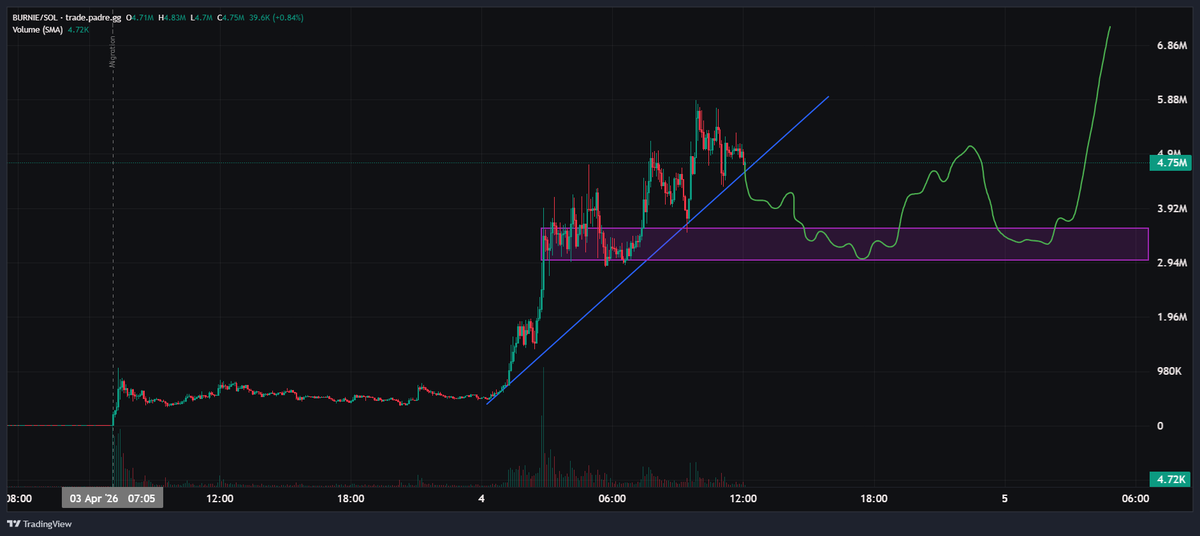
In the last 24 hours the coin saw $7.2 million in trading volume, and the price climbed steadily from under $200K all the way to $5.5M. And there are now over 6,100 holders.
These are solid numbers for a brand-new token.
Leading the charge is the official @BurnieSendersX account, with Toly as the main story driver.
Market was due for a main runner and we got it. Hopefully it brings back some liquidity and gets us out of the miserable state we were in in the past couple of weeks.
Thoughts on price action and potential entries below:
The price of the token shot up incredibly fast with only minimal pullbacks which means that people are bullish, but this can't go on forever and buyers will get exhausted at some point. That's when entry opportunity presents itself.
I'm looking for a dip and consolidation around $3M. $2.8M-$3.2M will be my monitoring range. I'll look out for big dips if they come and get in if the sentiment is still bullish.
Drop your take below, I’m curious what everyone thinks.
Follow me for more content like this.
1
1
271
MoonDat 🚀 retweeted

Apr 4
Why did $BURNIE pump ?
This is a textbook case of Attention Narrative Timing aligning perfectly
1. Founder Attention > KOL Attention
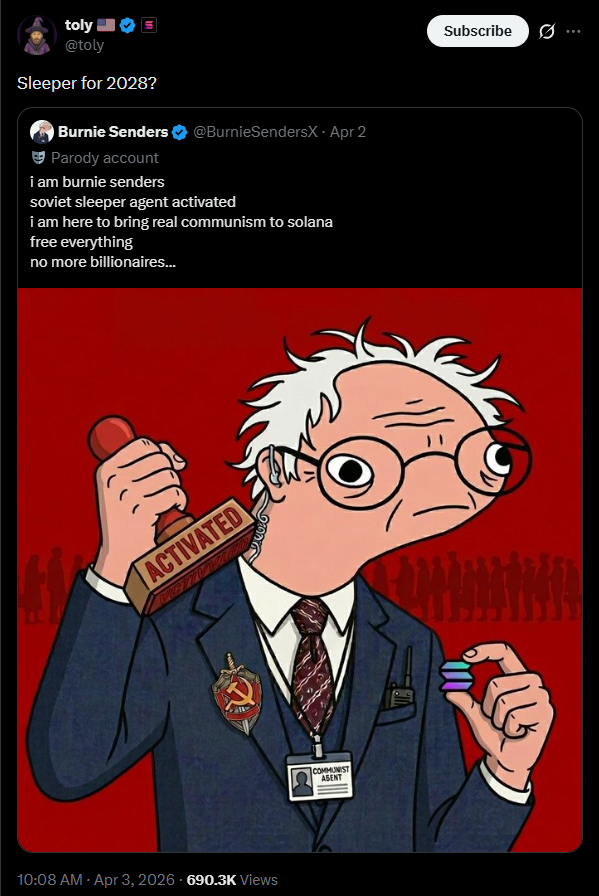
In the Solana ecosystem, KOLs can only create short-term spikes. But when Anatoly Yakovenko (Toly) directly interacts, it becomes an ecosystem-level signal
No need to call “buy”. A single action is enough for the market to understand. KOLs bring fragmented attention, while founders bring concentrated attention.
When a founder “touches” something, it gets upgraded from random to intentional.
2. Narrative : Zero-friction, highly viral
$BURNIE = Bernie Soviet Agent
This is a narrative that requires no explanation. You see it, you get it, you laugh, and you ape
“Free everything on Solana” is both funny and ironic, perfectly aligned with Crypto Twitter culture
The simpler the narrative, the faster it spreads. The easier it is to spam, the more it dominates the timeline
3. Timing : The market was hungry
Right now there is no new liquidity, memecoins die fast, and the meta is pure PVP
In that environment, all it takes is one clear play for capital to converge.
$BURNIE showed up with founder attention, a clear narrative, and a strong signal
Liquidity instantly concentrated into one play.
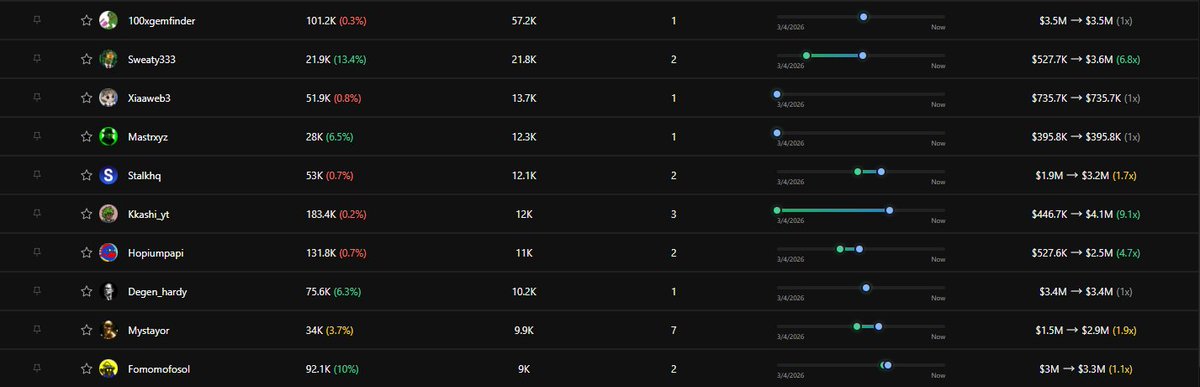
4. On chain : Smart money was early
Wallet distribution shows whales were in early
This is not random. The narrative was identified or built before retail caught on
Retail does not create trends. Retail pushes trends to the top
5. Structure : Not a typical pump and dump
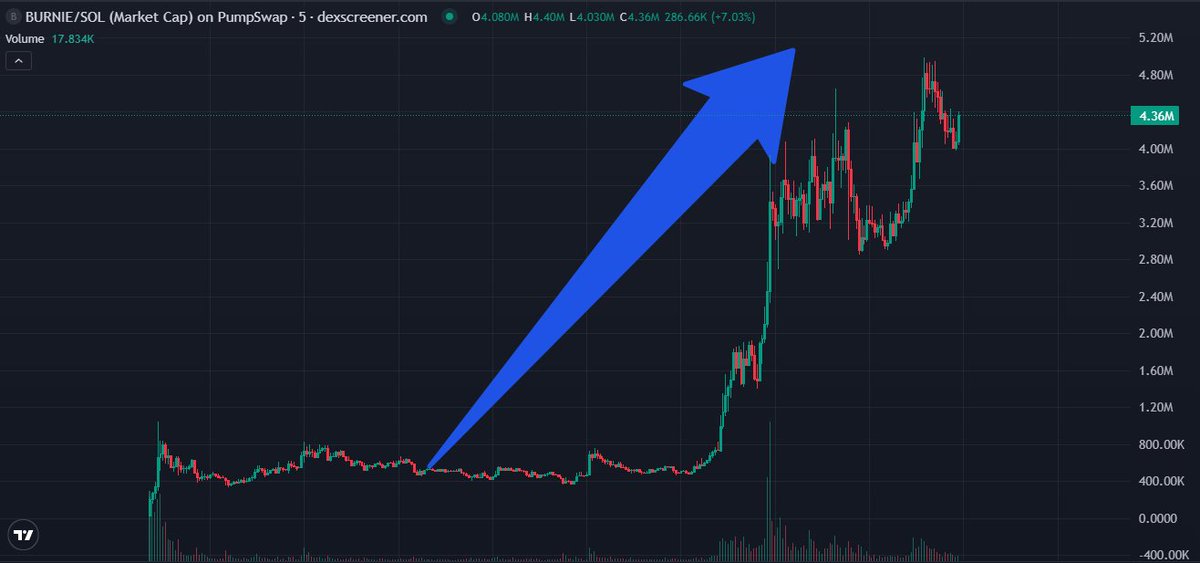
After the initial pump, price held a base around 3 – 4M market cap instead of collapsing
This suggests active structure control and price support
It helps maintain confidence and sets expectations for the next leg
6. Distribution and liquidity expansion
Beyond narrative and attention, distribution matters
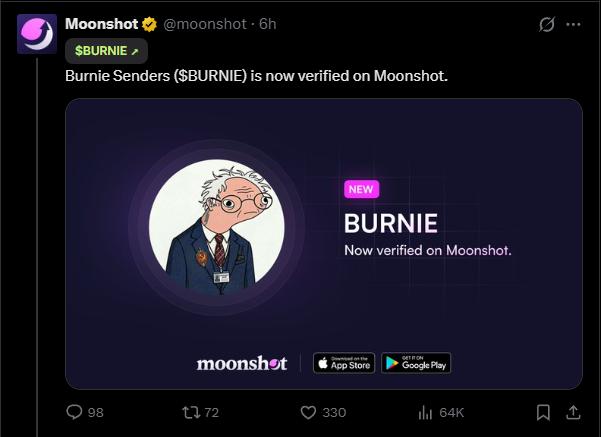
When a token gets exposure through moonshot style listings, tracking tools, or broader distribution channels, it becomes easier to access and reaches more people
Easier access brings more participants. More participants create deeper liquidity
This is how a play moves from a niche Crypto Twitter narrative to a broader market trade
7. Flood timeline effect
When founder attention, narrative, chart, and distribution all align, smaller KOLs begin amplifying aggressively
When Burnie is everywhere on your timeline, that is when attention peaks and FOMO spreads
8. My Conclusion
$BURNIE did not pump because of fundamentals.
It pumped because it had the right source of attention, a highly viral narrative, expanded distribution, and perfect timing.
In the memecoin meta, attention is liquidity
And $BURNIE is simply where all that attention converged at the right time, with the right people and the right story
CGEDT9QZDvvH5GmVkWJH2BXiMJqMJySC9ihWyr7Spump
56
24
159
26,697

sometimes it’s hard having a smaller account
feels like you’re screaming into the void trying to get eyes on something you actually believe in
i’m putting in real effort every day trying to drive engagement and exposure for $LMAO because i genuinely think it deserves it
and yeah…it gets frustrating
seeing FUD, negative posts, and people taking shots at sling or the team when they have no idea what’s actually going on behind the scenes
if you’re not in the chats, you don’t get it
the work, the consistency, the commitment…it’s different
this isn’t just people chasing a quick flip
this is a group trying to build something real together
of course we all want individual wins
but the mindset here has always been bigger than that
and yeah, things like vamps or fud campaigns get in the way sometimes
but honestly? that’s also why we win
because we don’t fold
we work harder
shoutout to the bigger accounts that have shown love and helped give me some traction, it doesn’t go unnoticed
i’m gonna keep showing up regardless
keep posting
keep pushing
keep building
$LMAO to 100M is not a dream to me
it’s inevitable

8
12
43
1,078
Apr 2
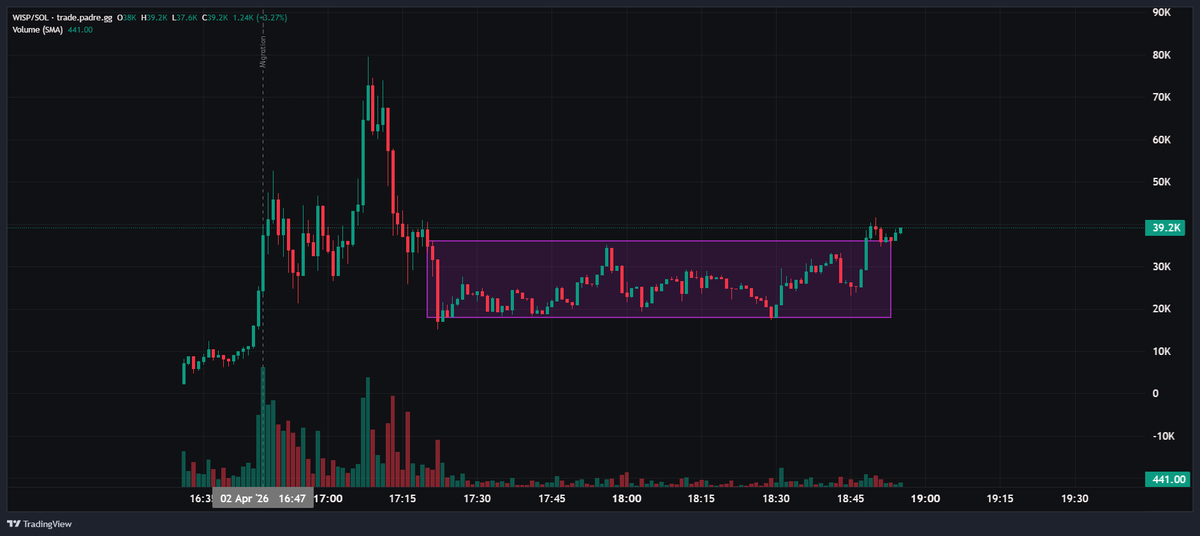
$WISP - follow up call
CA: Hdxv1MpXKVsJPoJ1AiocFX58Ry18yk2ybWZXtYJMpump
This is holding quite well for now. Hope it catches eyes and flies.
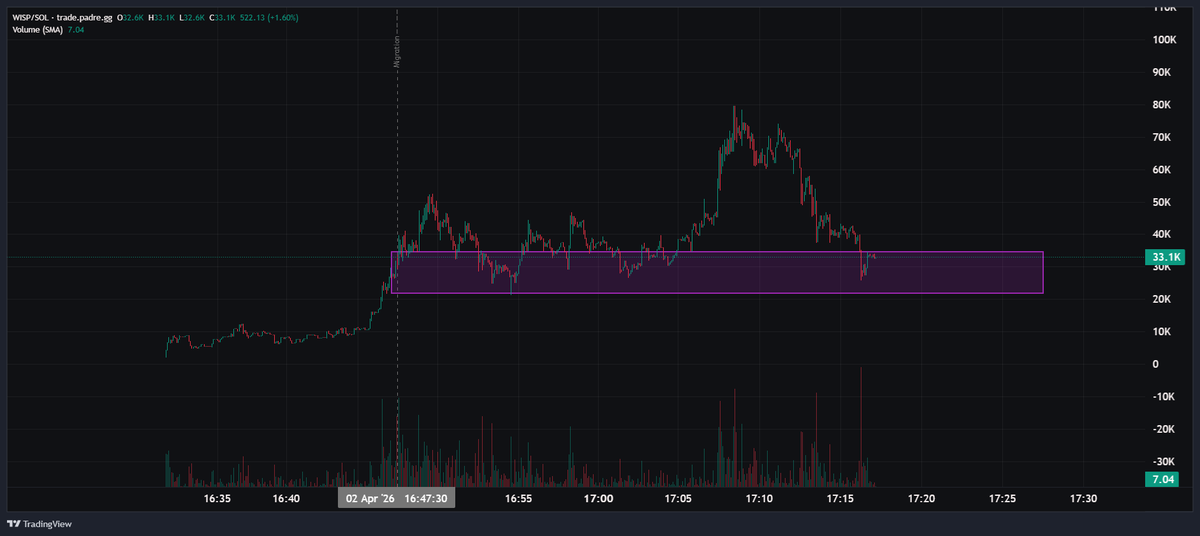
Great entry if you managed to scoop the $20k bottom.
Apr 2

$WISP
CA: Hdxv1MpXKVsJPoJ1AiocFX58Ry18yk2ybWZXtYJMpump
Fresh launch with some good volume. High risk so DYOR.
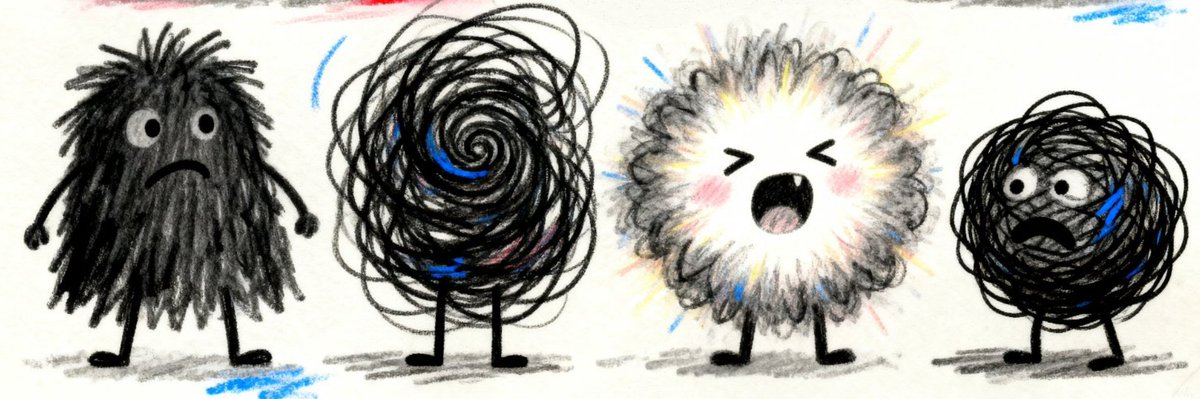
- This is the official token for Wisp @wispagent , an experimental AI project that actually tries to understand human emotions (not just classify them, but feel the real texture and depth). They call it “the AI that goes where words can’t.”
- 4% supply locked, dev supply locked, open source on GitHub and creator fees directed to there.
- Super fresh launch with real tech adorable mascot. This one feels different. Community is below.
x.com/i/communities/20392160…
Pumped to $70k now on a retrace to $30k. Monitor for strength and entries.
149
Apr 2
$WISP
CA: Hdxv1MpXKVsJPoJ1AiocFX58Ry18yk2ybWZXtYJMpump
Fresh launch with some good volume. High risk so DYOR.
- This is the official token for Wisp @wispagent , an experimental AI project that actually tries to understand human emotions (not just classify them, but feel the real texture and depth). They call it “the AI that goes where words can’t.”
- 4% supply locked, dev supply locked, open source on GitHub and creator fees directed to there.
- Super fresh launch with real tech adorable mascot. This one feels different. Community is below.
x.com/i/communities/20392160…
Pumped to $70k now on a retrace to $30k. Monitor for strength and entries.
332
Apr 2
Hit this up fam and share it around!
x.com/Mooon_Dat12/status/203…
Apr 2
$Hanz
CA: Gq7omnMJMhKxn3mng45f2AiKE5zC5nHP8icg8w8Spump
Today I'll post about a fresh coin that feels to me like it has a potential to grow and form a cult like movement.
However, it comes with a high risk so DYOR.
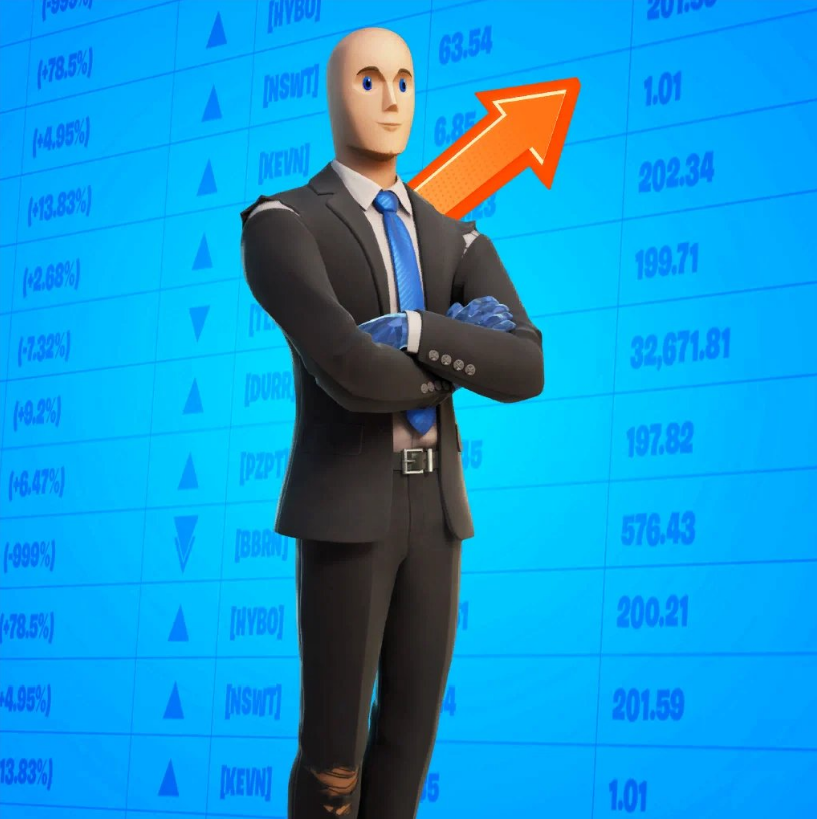
- This is Diamond Hanz — Is the mememan in a suit who saw the chart go to zero… and thought it was a buy signal.
- Peak diamond hands degeneracy. It represents the culture of not knowing how to sell, just holding through everything like a true degen king. I think this is a perfect movement for the current market where the average hold time of traders is in milliseconds.
- The Fortnite skin just dropped in the “To The Moon” set — nice little crossover boost.
fortnite.fandom.com/wiki/Dia…
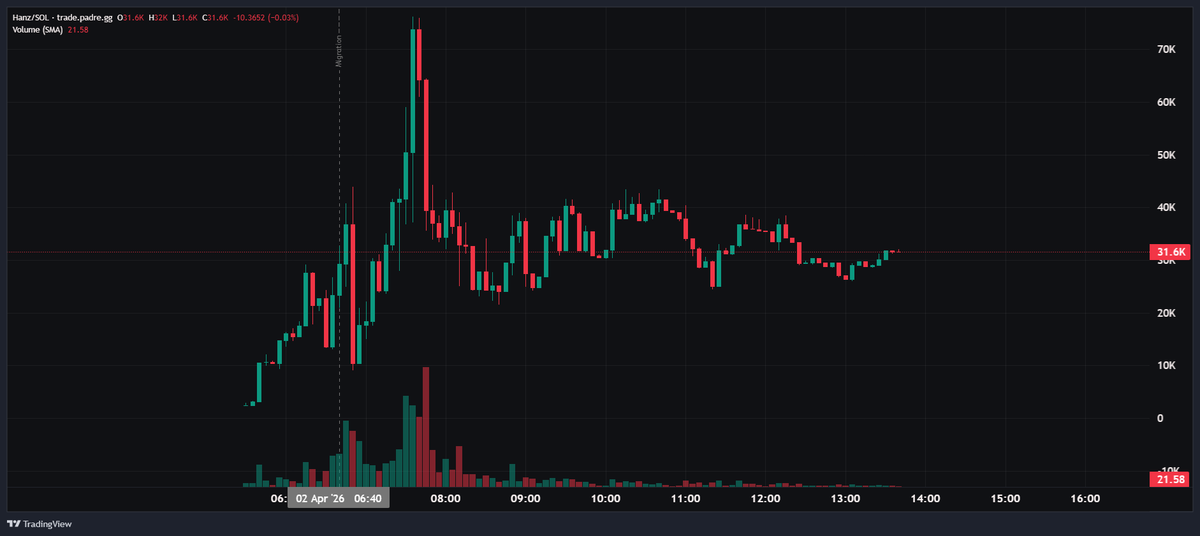
- Super fresh (launched literally hours ago), sitting around $30K MC. Feels like a community is building and shaping up. If it sticks around and people catch up on it and adopt it, it has all the ingredients to be a mooner. @bagworkr is admin and leading thecommunity
x.com/i/communities/20366819…
Imagine everyone adopting the coin and diamond handing movement and changing their pfps to Diamond Hanz!
I'm dropping a daily coin update. Follow me for more coverage on daily Solana memecoins.
381
Apr 2
$Hanz
CA: Gq7omnMJMhKxn3mng45f2AiKE5zC5nHP8icg8w8Spump
Today I'll post about a fresh coin that feels to me like it has a potential to grow and form a cult like movement.
However, it comes with a high risk so DYOR.
- This is Diamond Hanz — Is the mememan in a suit who saw the chart go to zero… and thought it was a buy signal.
- Peak diamond hands degeneracy. It represents the culture of not knowing how to sell, just holding through everything like a true degen king. I think this is a perfect movement for the current market where the average hold time of traders is in milliseconds.
- The Fortnite skin just dropped in the “To The Moon” set — nice little crossover boost.
fortnite.fandom.com/wiki/Dia…
- Super fresh (launched literally hours ago), sitting around $30K MC. Feels like a community is building and shaping up. If it sticks around and people catch up on it and adopt it, it has all the ingredients to be a mooner. @bagworkr is admin and leading thecommunity
x.com/i/communities/20366819…
Imagine everyone adopting the coin and diamond handing movement and changing their pfps to Diamond Hanz!
I'm dropping a daily coin update. Follow me for more coverage on daily Solana memecoins.
2
561
Apr 1
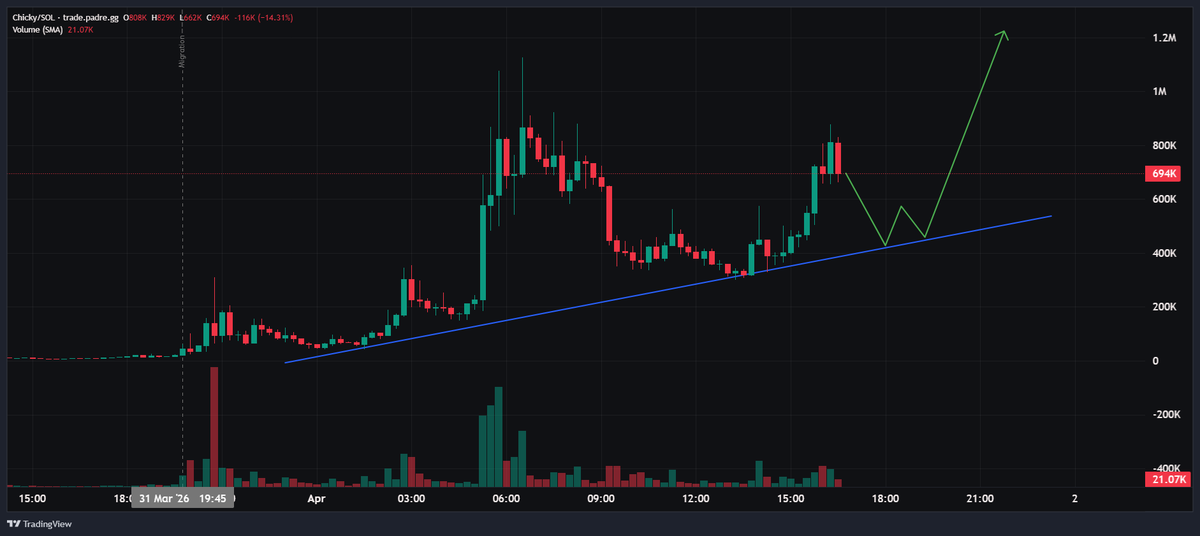
$Chicky
CA: 2ecWqqjWZ5hkYLHzCn9TEn2DtpVdNvMicLf3RzfLpump
- This is the official memecoin for the viral red dancing dog from TikTok. Millions of views already, cute but edgy as hell.
You’ve seen the clips — salsa, hammer dance, milkshake challenges, durag “naughty” version, all with that graffiti cap and middle-finger energy.
- Biggest green flag? The creator @CHICKY_MOVES is 100% in. Fees go straight to him, he’s modded in the group, and he even posted the CA himself on X bio and TikTok.
- Still mostly organic with not so many KOLs talking about it so far, which actually feels like an opportunity!2ecWqqjWZ5hkYLHzCn9TEn2DtpVdNvMicLf3RzfLpump
I'm a bit late to be positioning in this but this one feels way cleaner than most fresh dog plays — real character, real content machine, real creator backing.
I’m loading the dips.
It hit $1M twice and retraced to $350k and is currently retracing from a second bounce to around $900k. Now at $700k but I will be looking for dips to ape and hopefully see some consolidation around $400k-$600k range.
Share your feedback on what you think about $Chicky and follow me for more daily coverage of Solana memecoins.
1
2
1,558
MoonDat 🚀 retweeted

Apr 1
randomly sending me $100,000 for april fools would go so hard twin
34
6
88
4,215
Apr 1
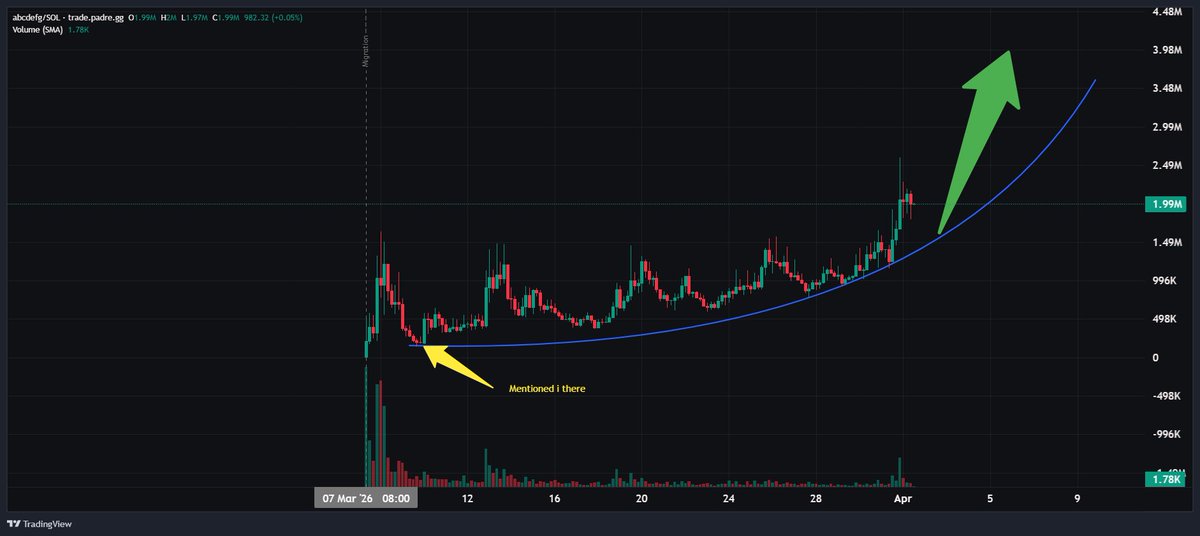
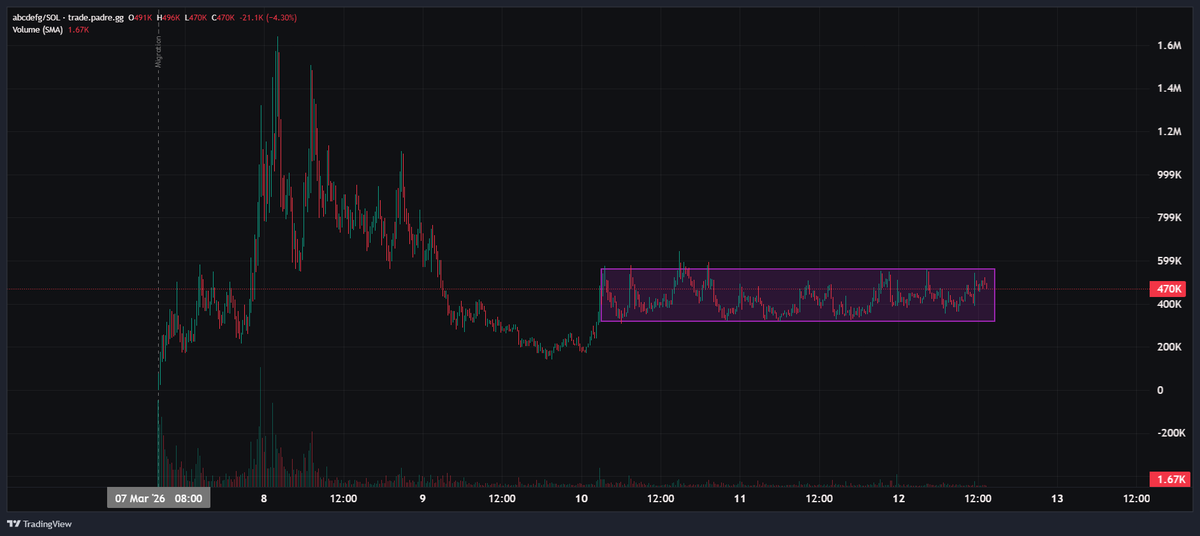
A follow up post on $abcdefg.
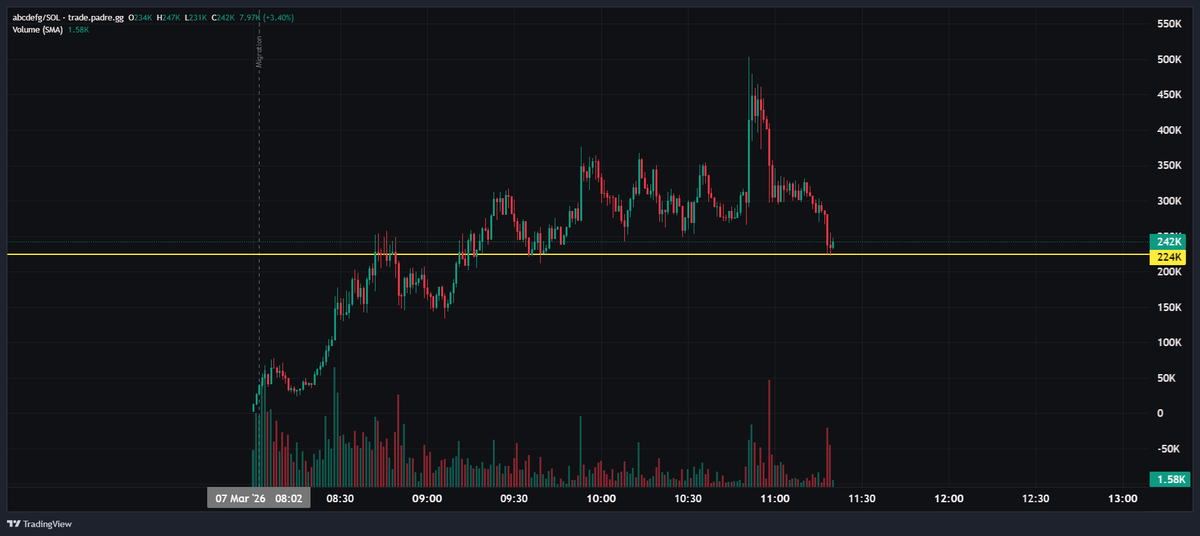
Simply amazing price action. It hit $2.5M yesterday and is safe to say that is a cult movement already.
One of the most well executed projects in the current market. GGs to all who held
CA: 89S7oVB4hui8ceJqhHreWB7fcxdthfvoB7z2pfJtpump
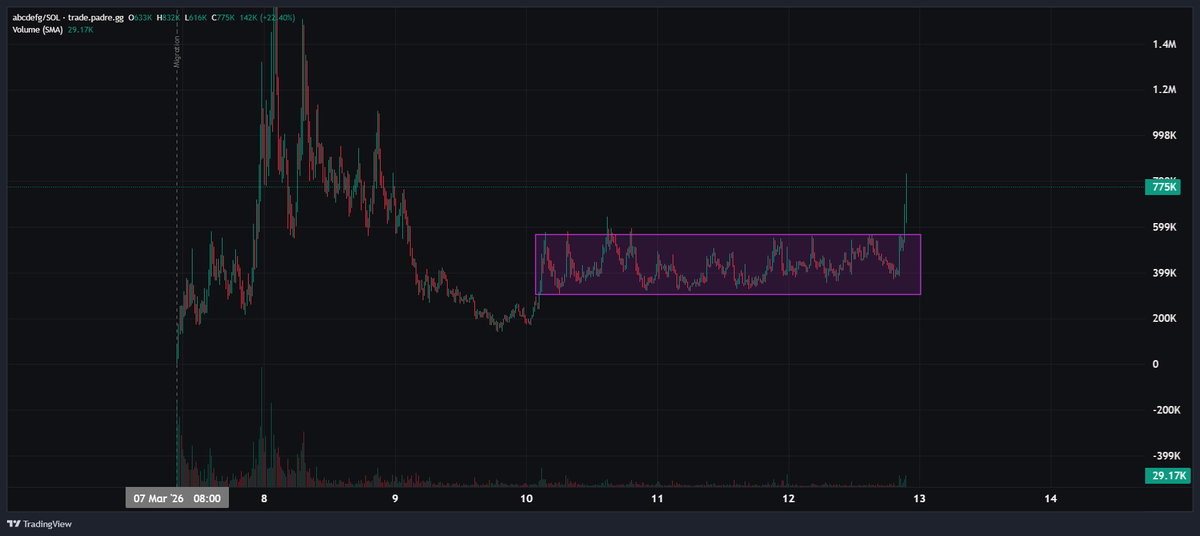
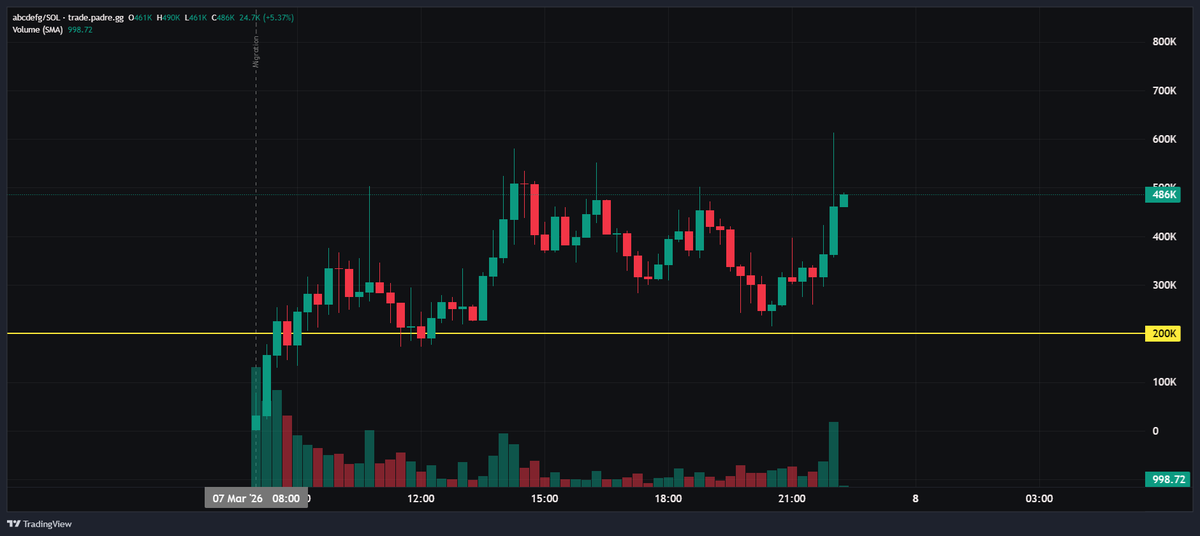
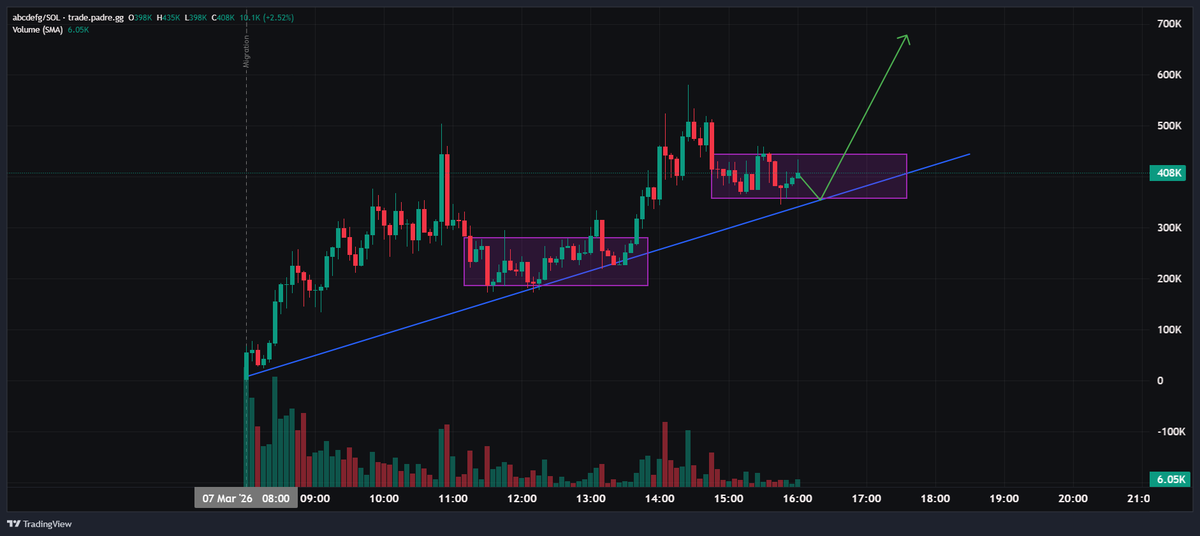
Mar 7
$abcdefg looking decent tbh. It had a nice pump to $470k and is on a retrace to $230k now. Watching it closely to see if the floor holds and I will bid if so.
CA: 89S7oVB4hui8ceJqhHreWB7fcxdthfvoB7z2pfJtpump
4
205
Apr 1
gm!
Just got back from a well spent 2 weeks vacation. Time to lock in.
5
MoonDat 🚀 retweeted

Mar 29
insider trading from the current US leadership has gotten so bad that Iran is the voice of reason…
lmao

Heads-up: Pre-market so-called “news” or “Truth” is often just a setup for profit-taking. Basically, it’s a reverse indicator.
Do the opposite: If they pump it, short it. If they dump it, go long.
See something tomorrow? You know the drill.
19
7
123
16,400
MoonDat 🚀 retweeted

Mar 13
I often refer to myself as a gambler
not because I don't have edge but because after you trade for a long time you accept how little control you have
The only thing you control is positional management
At the end of the day, you can take the best setup of your life and have it not work out
People can lose a hand with pocket aces
8
14
179
12,145
Mar 12
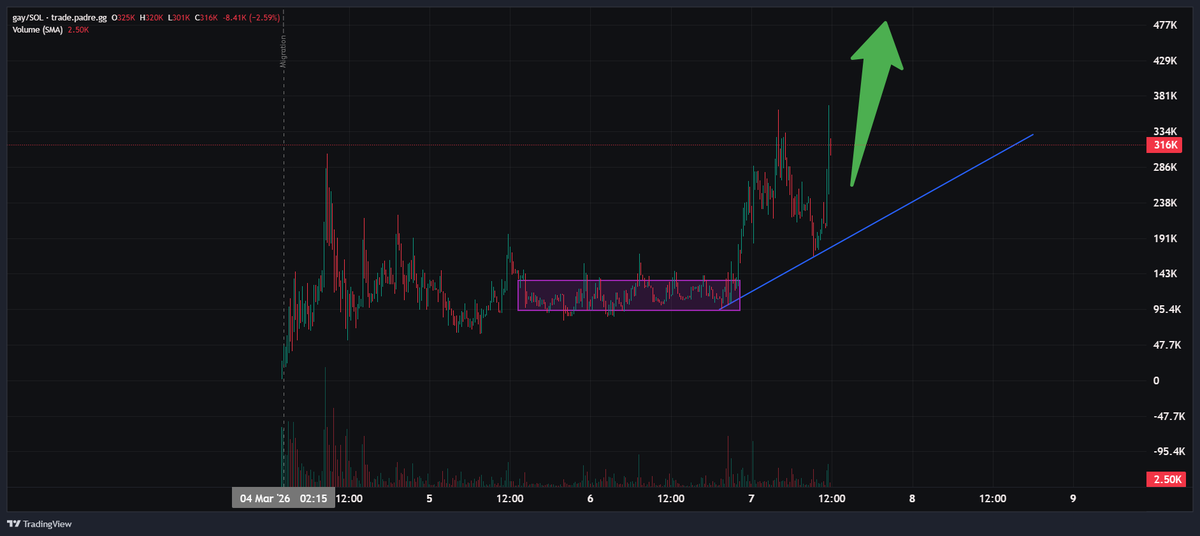
$gay hit $450k LFG!!!
CA: HmonqRwasZWGbcpgVLmEGf9TXeypynuLCepV2GPpump
Mar 7
$gay is at $300k now after accumulation at $100k-$150k. LFG!!
@Chairman_DN and @slingoorio are both in and pushing.
It's the perfect ticker for CT ngl
CA: HmonqRwasZWGbcpgVLmEGf9TXeypynuLCepV2GPpump
132
MoonDat 🚀 retweeted
Mar 12
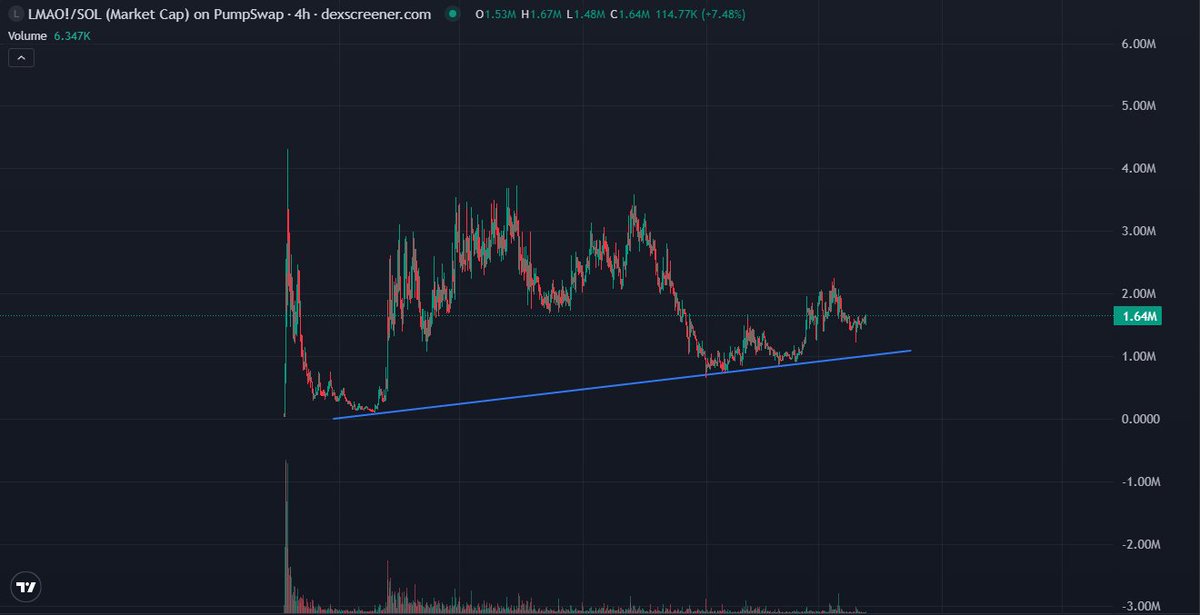
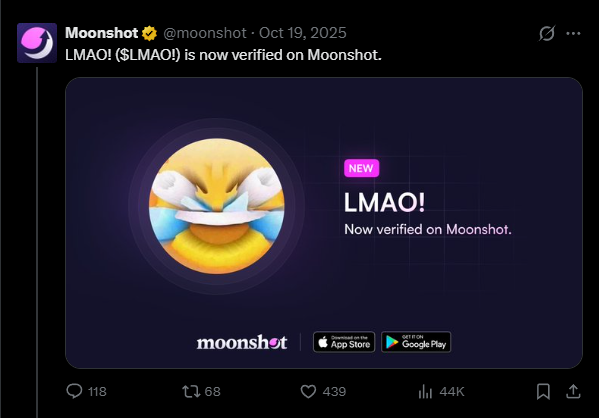
A memecoin that can survive for more than 4 months and still maintain around a $1M market cap in this market is always worth paying attention to
That’s what made me start digging deeper into $LMAO, and here are a few of my personal thoughts on its narrative and the potential of this token
1. A narrative that is extremely simple but effective :
“LMAO” is one of the most widely used phrases on the internet
Almost anyone who has spent time online has seen it or used it at some point.
Because of that, this meme barely needs any explanation , people immediately understand it
In memecoins, narratives that are simple, familiar, and instantly recognizable often have the highest potential to spread quickly
2. It represents pure internet culture :
$LMAO is not trying to attach itself to a complicated story
No AI narrative
No forced utility
It simply tokenizes laughter on the internet
Meme culture has always been one of the strongest forces driving attention on Crypto Twitter, and LMAO sits perfectly within that culture
3. Content potential is almost unlimited :
A meme like LMAO has virtually endless content potential
From :
- reaction memes
- AI memes
- shitposts
- meme templates
all of these can easily revolve around the same narrative
For memecoins, attention and content are the main fuel, and LMAO provides nearly unlimited material for that
4. It’s starting to get attention on CT :
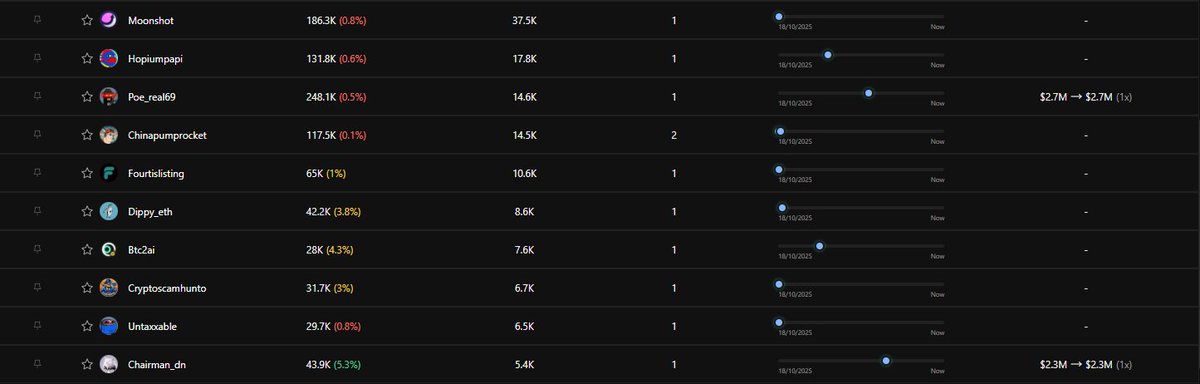
I’ve also noticed several top KOLs beginning to mention this token
Usually, when a narrative starts appearing repeatedly across timelines, it’s a sign that attention is forming and could spread much faster over time
5. A very “internet-native” meme :
Memes that are deeply tied to long-standing internet culture tend to have stronger staying power compared to newly created ones
LMAO is not a new meme
It’s a reaction that has existed across the internet for many years
That familiarity makes it very easy for communities to connect with it
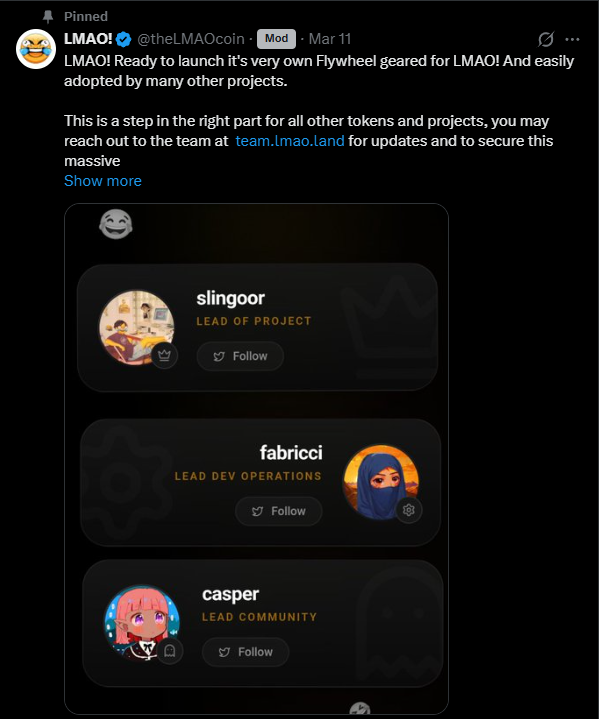
6. The team appears active and is building :
After looking a bit deeper, I noticed the team is preparing to launch a Flywheel tool for LMAO
If this tool gets adopted by developers and trenchers, it could create a flywheel effect within the ecosystem, where activity and attention continuously feed back into the token
What’s interesting is that this tool is not limited to LMAO but is also intended to be used by other projects
- Conclusion
My personal view is that :
$LMAO is a meme that feels very natural, easy to understand, and perfectly aligned with Crypto Twitter culture, while the team is also attempting to build additional elements around the ecosystem
In memecoins, sometimes the simplest narratives are the ones that spread the fastest
$LMAO
Sometimes the market doesn’t need anything complicated
Sometimes the market just wants to laugh
H74CYmXgMkYHYuSRsZt6RJb4NYp2u72Vw8BS5huApump
33
8
35
11,875