
PostDoc @uzh_ikmz. Formerly @ClemsonHub & @UW. Technology & democracy, political misinformation, African politics, and LFC.
Joined February 2020
- Tweets 115
- Following 1,596
- Followers 431
- Likes 2,381
4 Photos and videos
Pinned Tweet

Apr 7
🧵Excited to share a new preprint (summary below)
"Fact-Checks Can Help Inoculate LLMs Against Disinformation"
w/Eva-Maria Vogel, @christianpipal, & @plwarre
osf.io/preprints/socarxiv/nr… 👇
1
5
109
Morgan Wack retweeted

Today is the opening day of the #World #Cup.⚽️We're excited to announce our paper "Football Empires: Simulating the Effects of Colonialism on the 2026 World Cup" (with Thomas Schincariol and
@MorganWack)!
Check it out here: doi.org/10.31235/osf.io/awy9…
(see more info👇)
1
1
1
216
Morgan Wack retweeted

Apr 7
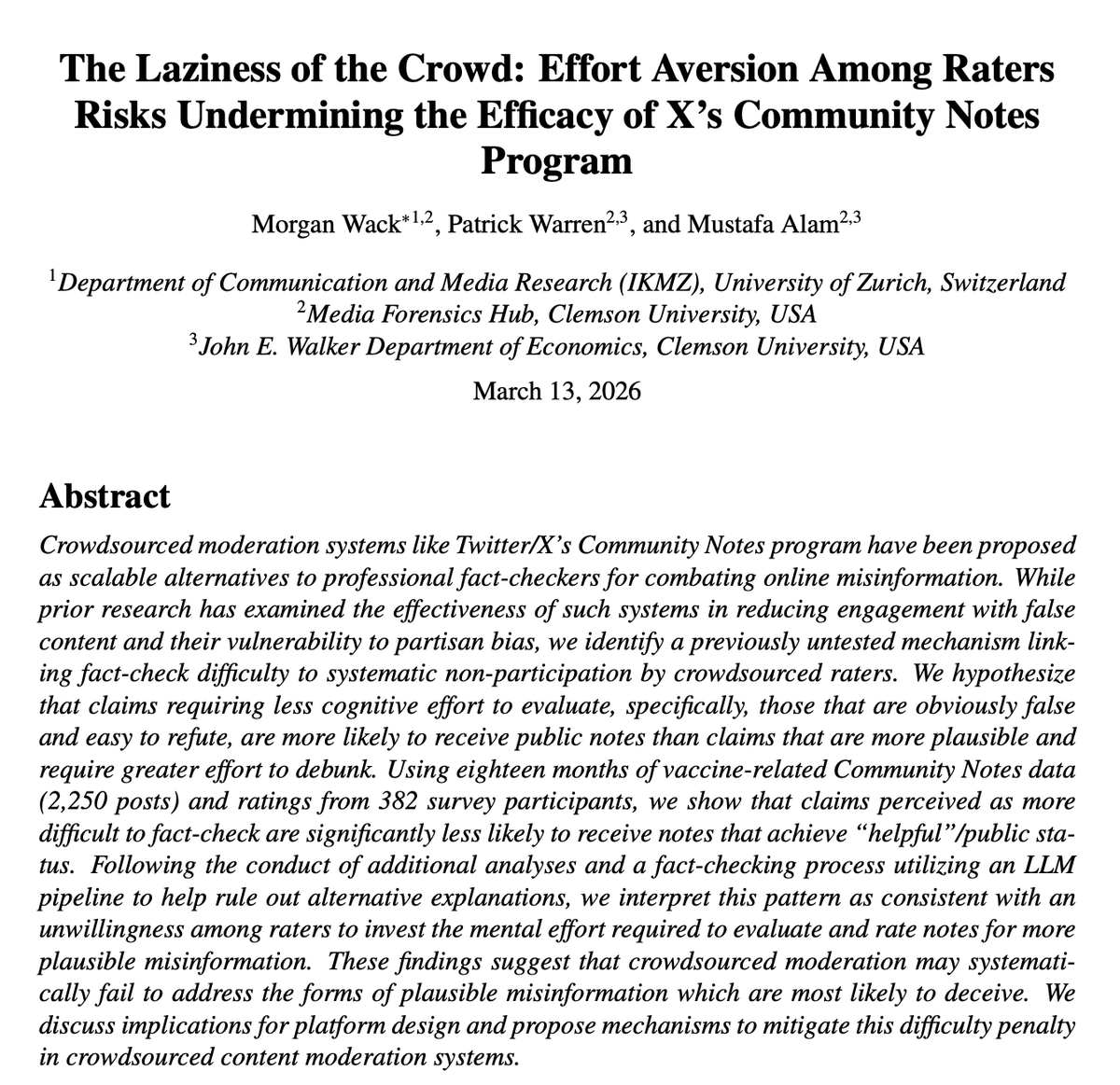
As one would expect, a weak point in Community Notes is that the crowd is more likely to flag claims that are easy to debunk, and less likely to act on plausible misinformation that takes real work to check.
This systematically biases what is corrected.
arxiv.org/abs/2603.11120
5
7
383
Apr 7
🧵Excited to share a new preprint (summary below)
"Fact-Checks Can Help Inoculate LLMs Against Disinformation"
w/Eva-Maria Vogel, @christianpipal, & @plwarre
osf.io/preprints/socarxiv/nr… 👇
1
5
109
Apr 7
🧩 Fact-checkers have long struggled with reach. Our findings suggest they have an unrecognized second audience. A correction that enters a model's training data shapes the response delivered to every user who queries that topic.
1
1
4
701
Morgan Wack retweeted

2 Sep 2025
Check out Spot the Troll 2.0, out today from our team at @ClemsonHub.
Our updated quiz tests if you can spot fake social media accounts . . . of if you get trolled.
Many thanks for their work on this, but especially @interactiveknow and @knightfdn
spotthetroll.org/
4
11
19
9,169
17 Jul 2025
🔎 Want to know more about how policies can influence the spread of election narratives?
My new article interrogating this topic, written alongside an talented team from the CIP, is out now at @PSJ_Editor! Access via the link ⬇️
16 Jul 2025

EARLY VIEW ALERT
Ballot processing delays = more misinformation? Dive into this PSJ Early View article showing how restrictions on ballot processing fueled false narratives on X/Twitter after the 2020 U.S. election.
Read here: onlinelibrary.wiley.com/doi/…
#PSJ #PolicyStudiesJournal
2
132
Morgan Wack retweeted
26 May 2025
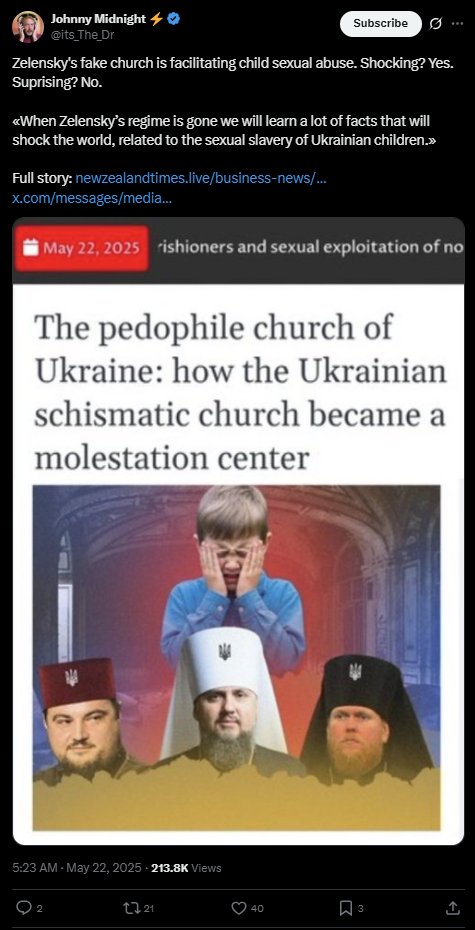
The Russian propaganda account @its_The_Dr recently posted a fascinating story about "the pedophile church of Ukraine," citing a website called the New Zealand Times.
You won't be surprised to hear the website is a fake. It doesn't even have any news from New Zealand!
1/3
2
15
34
6,099
Morgan Wack retweeted

16 Apr 2025
A pro-Kremlin influence campaign used AI to boost disinformation output without undermining credibility, according to new research. dlvr.it/TKBz5B
6
4
1,329
Morgan Wack retweeted

7 Apr 2025
A study of a Russian-backed propaganda outlet finds that AI is already being used to enhance messaging and expand disinformation campaigns, raising concerns about its growing impact on global influence operations.
In @Physorg_com: ow.ly/VM6y50VvJEu
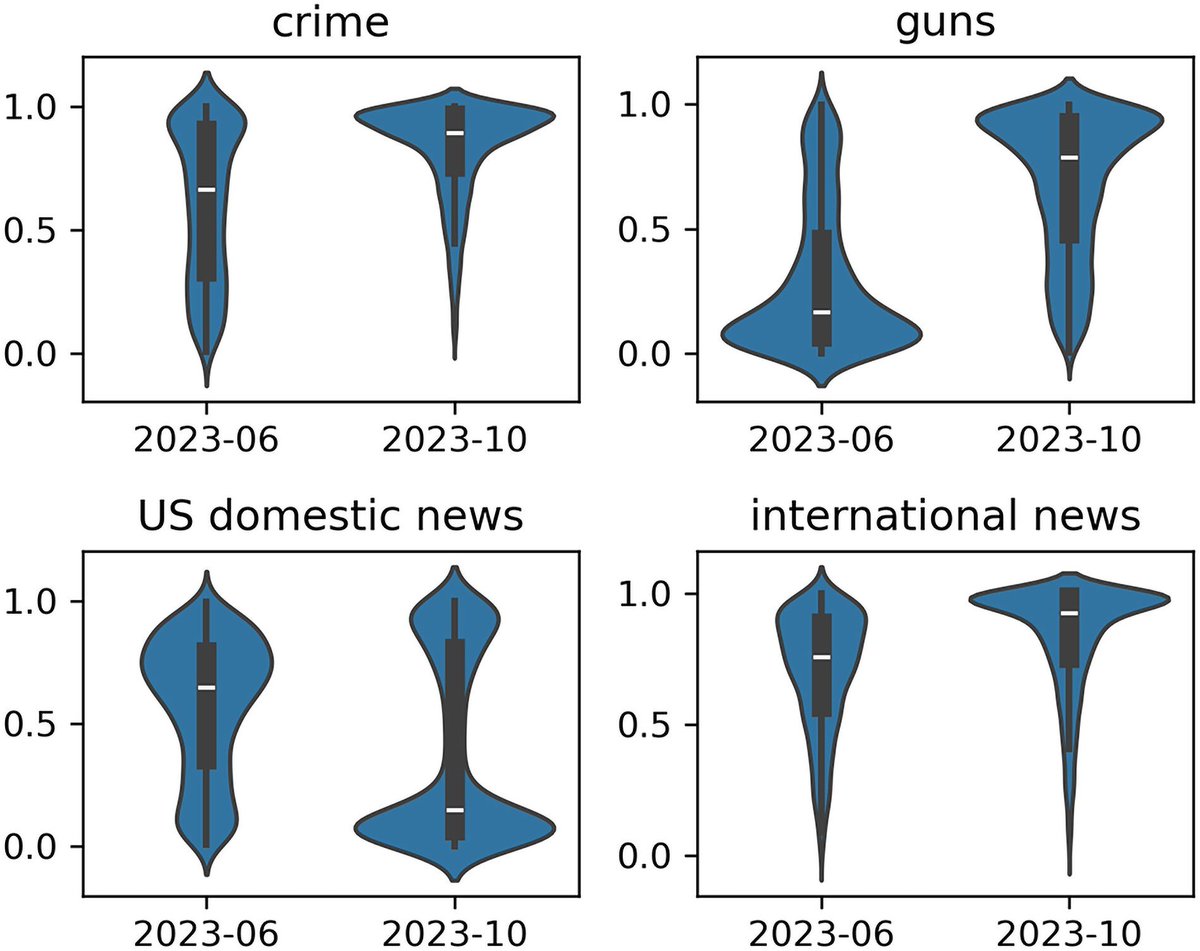
ALT Violin plot of NLI-derived topic scores for June (prior to AI adoption) and October (after AI adoption) of 2023
2
15
33
3,380
Morgan Wack retweeted
4 Apr 2025
A study of a propaganda site with ties to Russia shows that using AI allows propagandists to dial up the volume of their content without sacrificing persuasiveness. The authors call for action to combat the threat. In PNAS Nexus: ow.ly/GfXL50VuISx

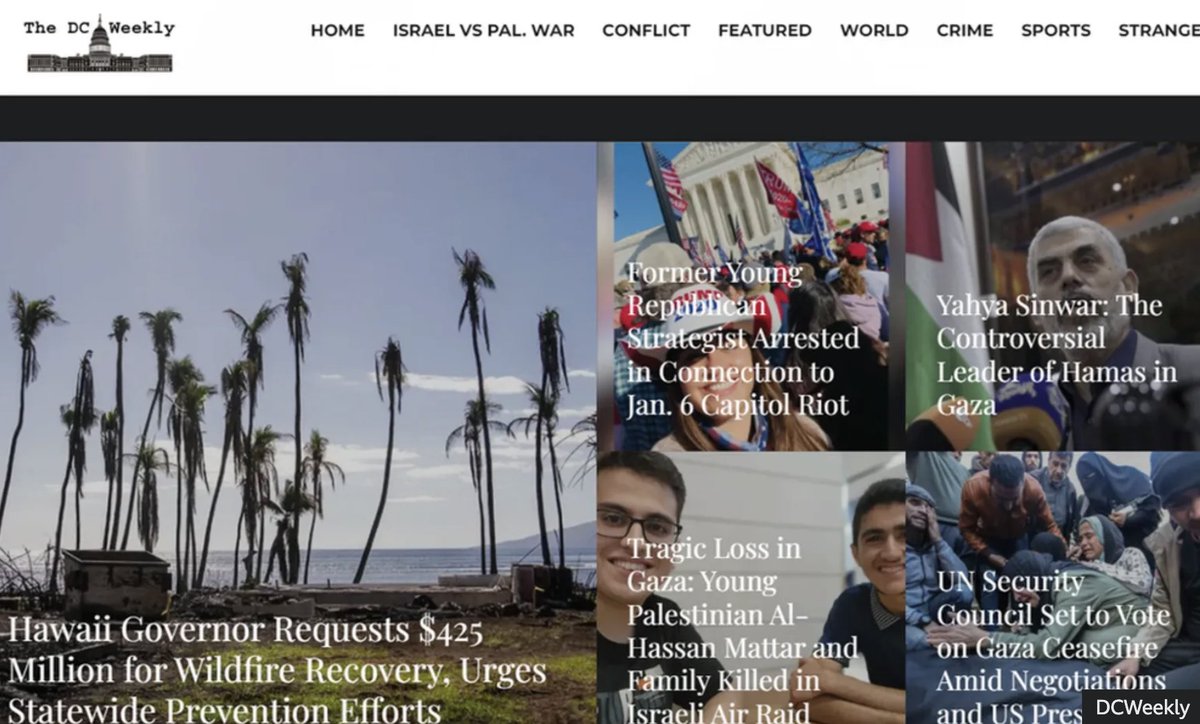
ALT Screenshot from DCWeekly in October 2023, accessed through the Internet Archive.
1
1
3
306
1 Apr 2025
Finding One 📝: AI use significantly increased the quantity of disinformation. This aligns with the idea that generative models reduce the cost/time of writing, editing, and curating. Once the site adopted LLM tools, weekly post counts soared. 4/
1
1
105
1 Apr 2025
Finding Three 📝: Even with the shift to AI, the persuasive potential and credibility of the articles persisted. This finding suggests that even in rapid scaling article production the website did not need to sacrifice its perceived authenticity or potential impact. 6/
1
1
90
1 Apr 2025
Here is the link to the full (open source) paper! 🔗
academic.oup.com/pnasnexus/a…
We welcome feedback & potential collaboration focused on how to counter emerging AI-driven disinformation campaigns!
2
82
1 Apr 2025
📢 Excited to see our new paper out at @PNASNexus w/@plwarre, @DarrenLinvill, & Carl Ehrett!
Using data from a Russia-backed influence operation running puppet website DCWeekly, we show how LLMs are being used to scale global disinfo campaigns: 1/ 🧵
academic.oup.com/pnasnexus/a…
5
4
12
3,104
1 Apr 2025
We focus on a site identified by @ClemsonHub that presented itself as a genuine U.S. news outlet but which was actually part of a Russian-affiliated influence operation. By pinpointing a transition away from human-editing to LLM-edited content, we show: 3/
1
86
1 Apr 2025
There have been growing concerns about the use of large language models (LLMs) in the production of disinformation, but real-world evidence has been difficult to track. Our paper provides a direct look at a Russian-linked campaign which used AI tools to target Americans. 2/
1
95