Betsy Yates Long. Chatham HS Bio Teacher. Proud to have taught #newarkvo #Beechcroft & #WNHS. Colgate '02 (BA), Otterbein '11, PSU '15 (MEd). Go Cougars!
- Tweets 2,206
- Following 405
- Followers 236
- Likes 1,728























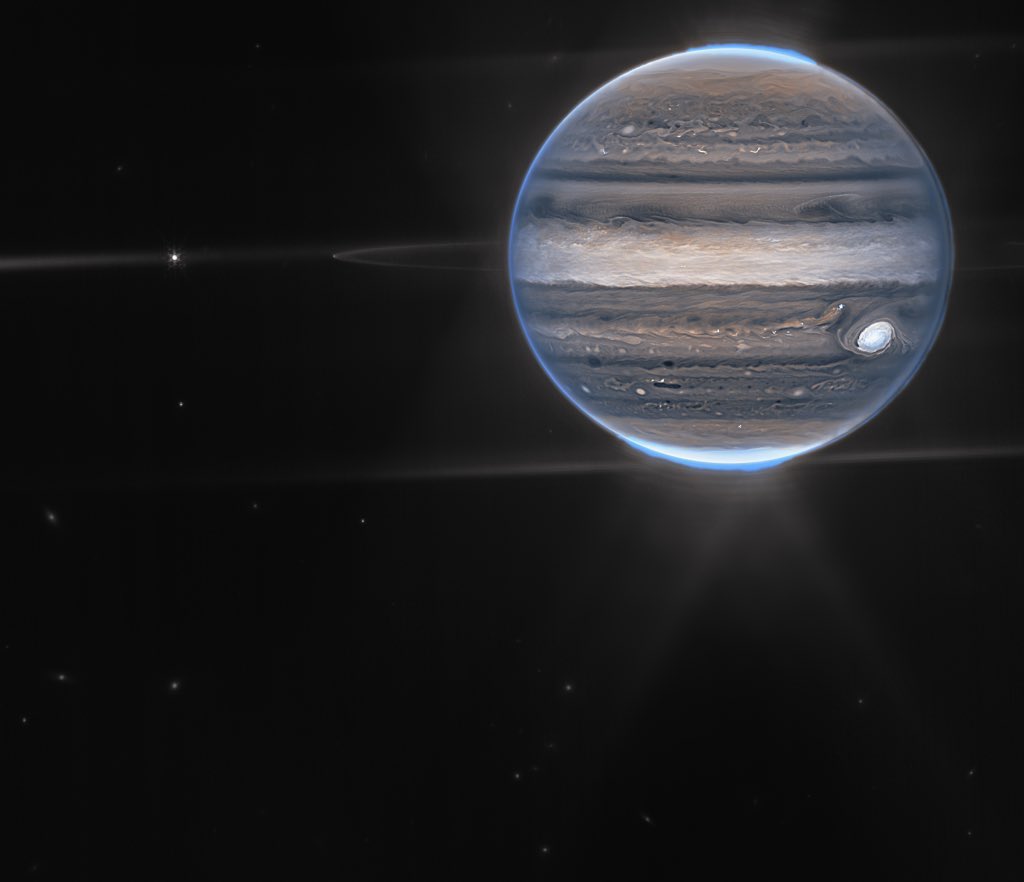
ALT A wide field view showcases Jupiter in the upper right quadrant. The planet’s swirling horizontal stripes are rendered in blues, browns, and cream. Electric blue auroras glow above Jupiter’s north and south poles. A white glow emanates out from the auroras. Along the planet’s equator, rings glow in a faint white. These rings are one million times fainter than the planet itself! At the far left edge of the rings, a moon appears as a tiny white dot. This moon is only about 12 miles (20 km) across. Slightly further to the left, another moon, about 100 miles (150 km) across, glows with tiny white diffraction spikes. The rest of the image is the blackness of space, with faintly glowing white galaxies in the distance.
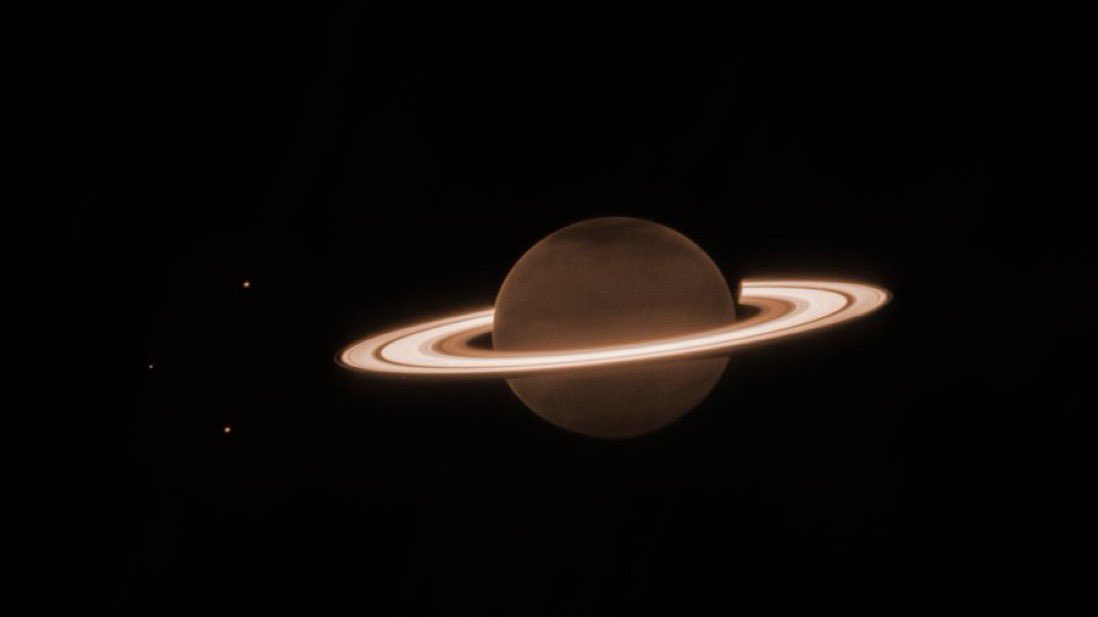
ALT The background is mostly dark. At the center is a dark orange-brown circle, surrounded by several blazing bright, thick, horizontal whiteish rings. This is Saturn and its rings. There are three tiny dots in the image—one to the upper left of the planet, one to the direct left of the planet, and the lower left of the planet. These are three of Saturn’s moons: Dione, Enceladus, and Tethys, respectively. There is a slightly darker tint at the northern and southern poles of the planet. The rings surrounding Saturn are mostly broad, with a few singular narrow gaps between the broader rings. There is an innermost, thicker ring, and next to that is a brighter, wider ring. Traveling farther outward, there is a small dark gap before another thicker ring. In the thicker ring, there is a narrow faint band. There is then an outermost, faintest, thinnest ring.
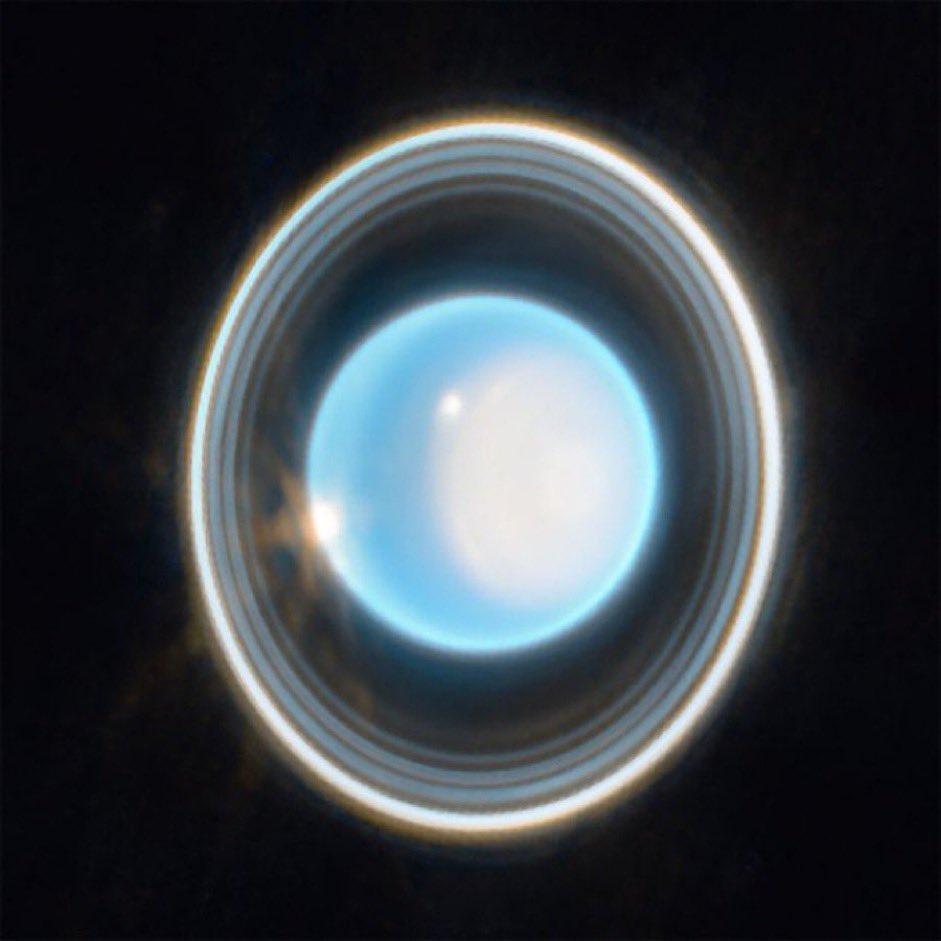
ALT The planet Uranus on a black background. The planet appears light blue with a large, white patch on the right side. On the edge of that patch at the upper left is a bright white spot. Another white spot is located on the left side of the planet at the 9 o’clock position. Around the planet is a system of nested rings. The outermost ring is the brightest while the innermost ring is the faintest. Unlike Saturn’s horizontal rings, the rings of Uranus are vertical and so they appear to surround the planet.
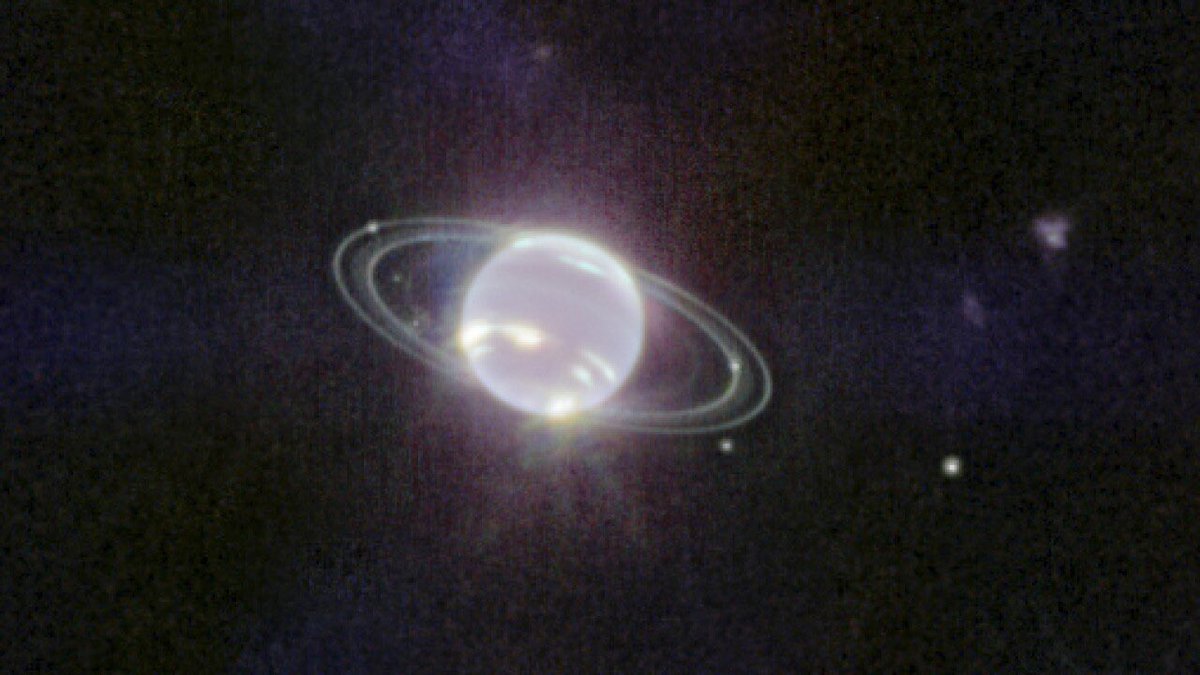
ALT In this Webb image, Neptune resembles a pearl with rings that look like ethereal concentric ovals around it. There are 2 thinner, crisper rings and 2 broader, fainter rings. A few extremely bright patches on the lower half of Neptune represent methane ice clouds. Six tiny white dots, which are six of Neptune’s 14 moons, are scattered among the rings. The background of the image is black.