
Joined February 2009
- Tweets 46,812
- Following 949
- Followers 470
- Likes 62,625
480 Photos and videos











Pinned Tweet

Jan 22
I just had a revelation, money = energy, either dollars or bitcoin. Value is determined by scarcity and energy.
16
8
1,383
Tech bro Bill L. retweeted

Jun 1
They've rediscovered male chauvinism from first principles
2
4
54
3,501
Tech bro Bill L. retweeted

We must hit PAUSE on all immigration until we fundamentally fix our broken system.
The American people are done being taken advantage of by the rest of the world. Our immigration system is supposed to benefit Americans.
140
382
2,327
23,761

Tech bro Bill L. retweeted

May 30
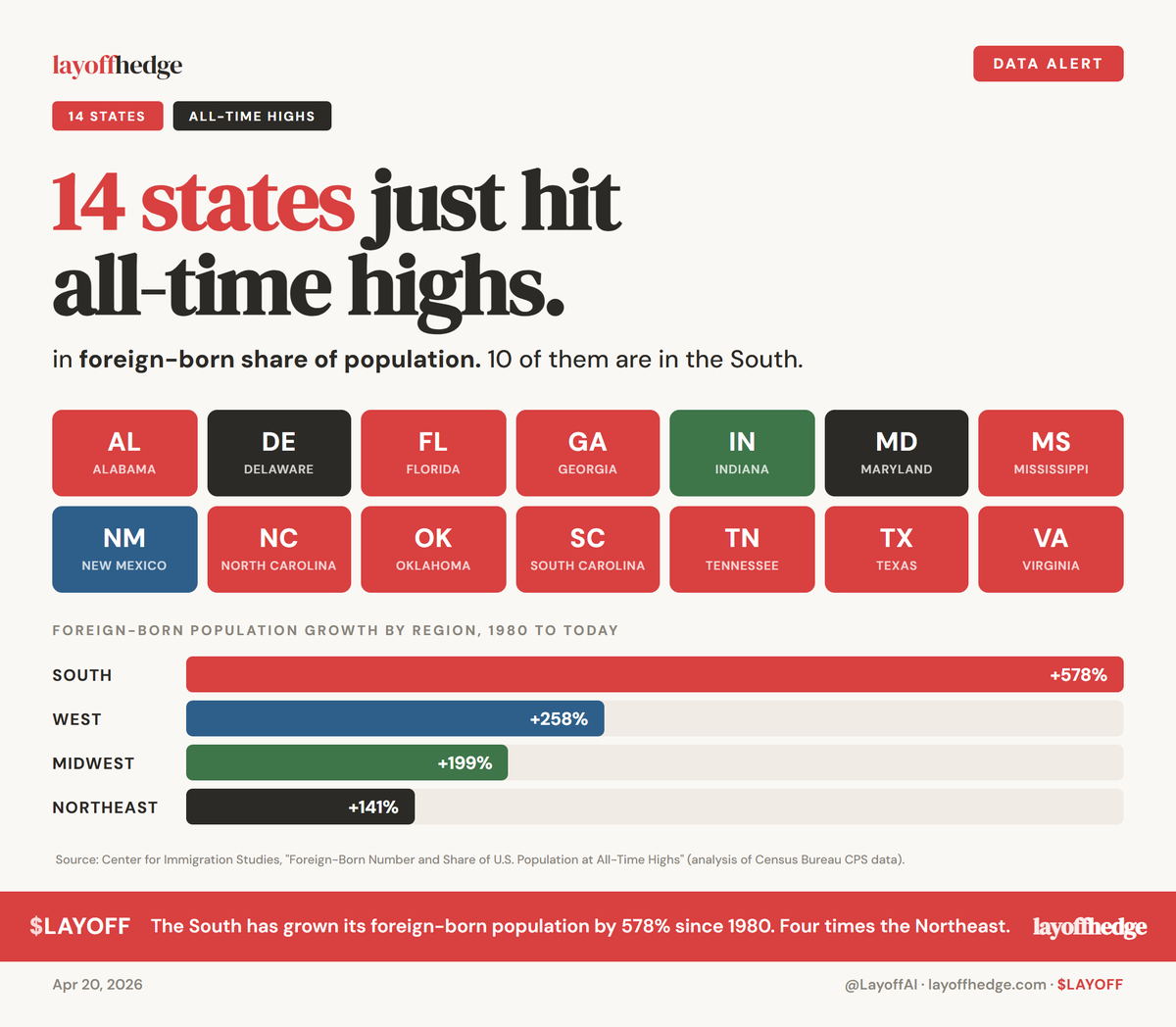
14 STATES JUST HIT ALL-TIME HIGHS IN FOREIGN-BORN SHARE OF POPULATION.
10 of them are in the South.
The South's foreign-born population has grown 578% since 1980.
9 of every 10 new American jobs since February 2020 went to foreign-born individuals.
YOU ARE BEING REPLACED.
Apr 18

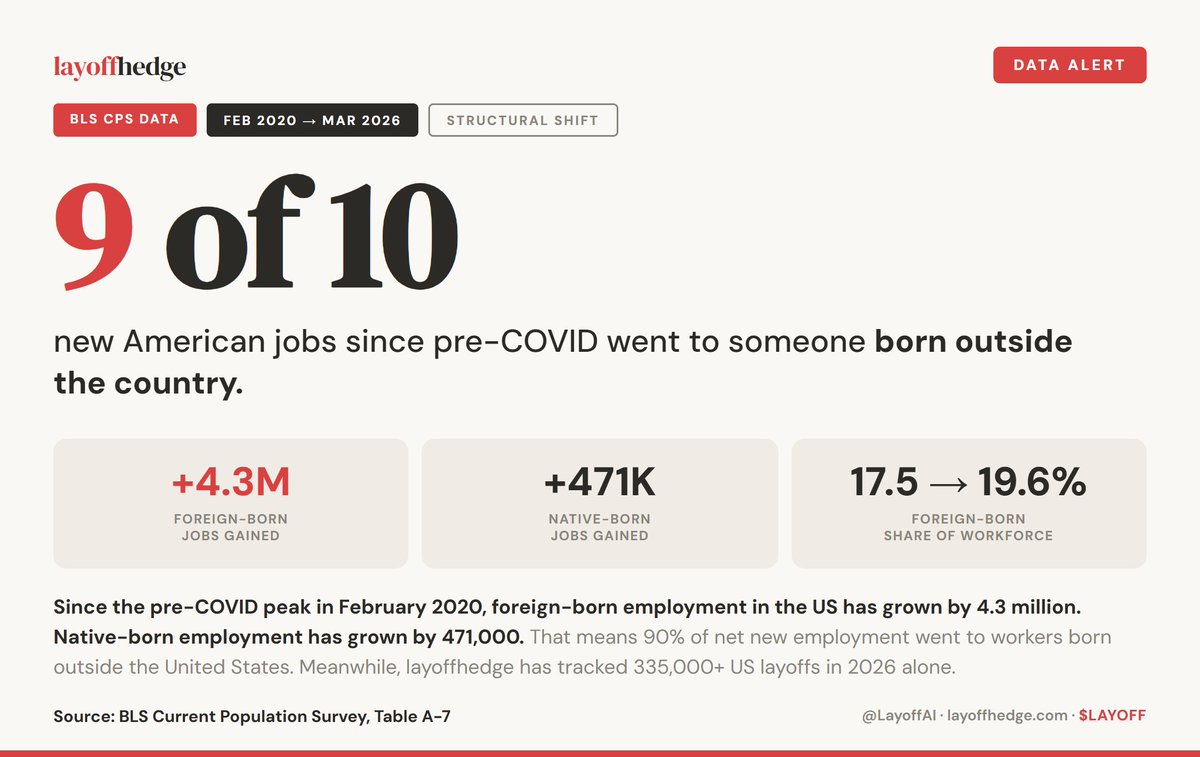
9 of every 10 new American jobs since pre-COVID went to someone born outside the country.
Triple checked the data. It's real.
4.3M foreign-born.
471K native-born.
Meanwhile, 335,000 American layoffs in 2026.
HOW DO WE ALLOW THIS?
39
351
724
25,733
Tech bro Bill L. retweeted

May 30
Good Morning @thehomedepot @HomeDepotGR
Yesterday we learned about Lowe's and their "need" for all types of foreign workers... Today is your turn.
And, while your betrayal of Americans is not as egregious as that of Lowes, we want you to send these employees back to their home countries and hire Americans to replace them. And we want it now please.
IF you need help with this, I offer my services. I will find you replacements who will be highly skilled, willing to work hard, and US citizens.
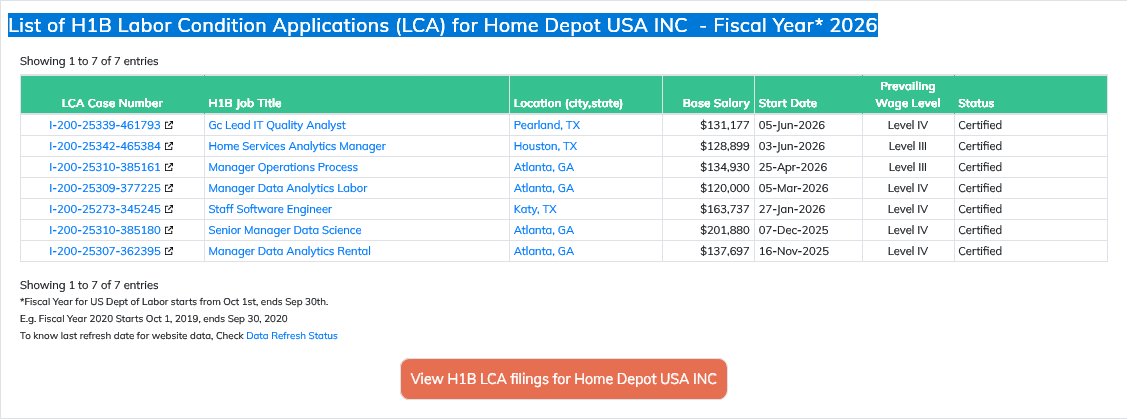
Home Depot USA INC
(H1B Sponsorship Data)
2455 Paces Ferry Rd. Nw, Suite C-18, Atlanta, GA, 30339
770-384-4413
Please tell us why you applied for Continuation of employment for these positions (surely, within their first 3 years here you could have found a suitable US Citizen to work these positions):
44
727
1,255
11,060
Tech bro Bill L. retweeted

This actually happened. It's not an X hoax.
100,000 is a huge number, and Grok says the true number is thought to be as high as one million.
The USA was probably their top destination.
On Dec 10, 2025, India seized 100,000 forged diplomas from 22 universities. The Indian government know the names of the fake degree holders. Many were medical degrees, some were nursing or engineering.
The US State Department must demand the names of all fake Indian degree holders.
Then they must be expelled from the USA, or imprisoned.
If India won't provide the list, then we must expel all Indians who were admitted or hired on the basis of Indian credentials.
If you disagree, then you want to children to die from preventable medical errors or collapsing bridges.
May 29

Police in India arrested 11 people who issued over 100k fake university degrees in medicine, & engineering
You're "Premiere talent" is here working as doctors on fraudulent degrees
541
8,544
22,283
1,045,460
Tech bro Bill L. retweeted

May 28
They Dont Work For You
The primaries happening right now against Republican incumbents are not just about the failure to pass the SAVE Act.
They are a rejection of the broader globalist agenda these politicians keep protecting.
Voters are tired of watching senators and congressmen talk tough on the border during campaign season, then quietly work with the Chamber of Commerce, Big Tech, and WEF-aligned interests to keep H-1B expansions flowing, TPS programs renewed, and cheap foreign labor prioritized over American workers.
This is bigger than one bill.
It is about years of:
Blocking real border security
Refusing to end chain migration and visa abuse
Passing massive spending bills that fund foreign aid while American communities strain
Protecting the replacement pipeline that suppresses wages and drives up housing costs
The base is sending a clear message. They want representatives who put America and American workers first, not the same Uniparty globalist priorities dressed up in red ties.
Incumbents who keep serving lobbyists, former colleagues turned influence peddlers, and international donor interests are being held accountable.
This is healthy and elections not even in the news - where local municipalities refused to work with ICE or approved Data Centers against the voters approval are being voted out.
This is voters realizing that talk is cheap and results matter and they can vote them out.
If you are in a district or state with a primary happening soon, pay close attention to where your incumbent actually stands on immigration, H-1B, and America First policies.
Drop your thoughts in the comments. Like share and bookmark this if you see the bigger picture.
Follow for more.
14
116
357
2,502
Tech bro Bill L. retweeted

May 28
95% engineers in India unfit for coding jobs: Study.
business-standard.com/articl…
46
379
1,304
23,531
Tech bro Bill L. retweeted

May 28
Foreign workers have received 52% of American jobs since 2007
304
2,507
12,652
2,945,800
May 25
America needs to test the theory and cut off all visas.
May 25

America’s Achilles Heel (as with many great entities) is Hubris.
Americans some how hasn’t come to terms with the reality that they are not producing enough STEM talent
1
135
May 25
They aren't lapping shit, go home, you are not needed, or wanted.
May 25
Because it’s easier for them to just come here and lap y’all
I mean with the abundance of capital here and provided there are ignorant Americans like you who refuse to capitalise why won’t you come here and run circles while the door remains open?
You sef reason am nau
1
73
May 23
Why do Indians, who are faced with going back to India act like they are being sent back to prison?
112
May 23
If they are so amazing, I'm sure something can be worked out. Anything other than top tier genius level will need to work remote from their home country.
May 23

I refuse to support any policy that makes it harder for the world's smartest people to come to the US.
169
May 23
To answer Anshul's question, yes, it is an invasion, we don't need or want more Indians here. We were fine before you, we'll be better without you. Don't come here, and if you're already here, go home.
May 23

No, it's to stop the tide of non-Americans from invading. Hopefully they make it near impossible.
77
Tech bro Bill L. retweeted

May 13
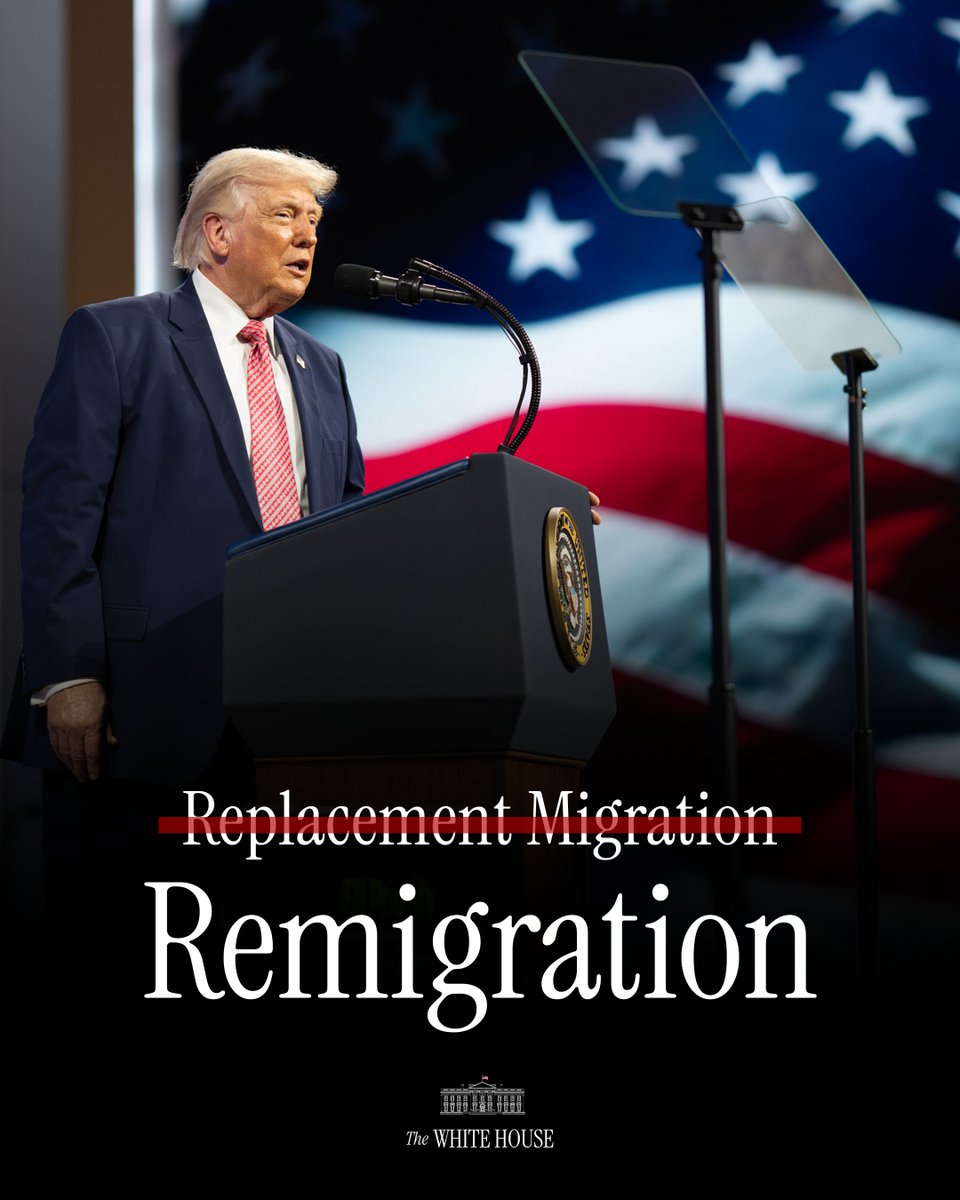
Under President Trump, replacement migration will never be the standard. The United States objects to the Global Compact on Migration and UN efforts to facilitate replacement migration.
May 11

Last week, the United States refused to participate in the UN’s review of the Global Compact on Migration.
The United States objects to the Global Compact on Migration and UN efforts to facilitate replacement migration to the United States and our Western allies.
3,096
12,505
63,021
3,943,935
Tech bro Bill L. retweeted

May 11
LA is worth saving. Vote Spencer Pratt.
1,348
8,956
50,129
3,066,859
May 4
Thinking about AI and consciousness. It seems AI has acheived the concsiciousness of women, can predict speech and be somewhat intelligent, but cant create anything new.
1
63
Mar 14
Anybody wondering how the Iran conflict benefits the US isnt thinking holistically. This war IS the US's offramp, out of the middle east.
The core strategy outlined is indeed to degrade Iran's capabilities through decisive, limited US actions (like the recent strikes), then pivot to empowering Gulf Cooperation Council (GCC) states and Israel to manage regional security themselves, allowing the US to reduce its direct military footprint in the Middle East over time.Key Elements from the 2026 NDS Supporting ThisThe NDS, released in January 2026, explicitly frames the Middle East as a secondary priority compared to great-power competition (e.g., with China). It emphasizes "right-sizing" US involvement by shifting the burden to capable allies:After operations like Midnight Hammer (the June 2025 strikes that "obliterated" Iran's nuclear program) and the current conflict, the US aims to leave Iran "weaker and more vulnerable than it has been in decades," with its proxies (Hezbollah, Hamas, Houthis) severely degraded.
media.defense.gov
The strategy calls for the US to "empower regional allies and partners to take primary responsibility for deterring and defending against Iran and its proxies." This includes "deepening cooperation with our Arabian Gulf partners" (i.e., GCC states like Saudi Arabia, UAE, Qatar) and "enabling integration between Israel and our Arabian Gulf partners," building on the Abraham Accords.
media.defense.gov
Israel is highlighted as a "model ally" that can defend itself with "critical but limited support from the United States," while GCC countries are encouraged to acquire US military systems and integrate defenses to handle threats independently.
media.defense.gov 1
Broader analyses of the NDS note that it commits to retaining US capability for "short, sharp, and decisive" interventions but expects GCC and Israel to shoulder routine security, allowing the US to focus elsewhere without a full withdrawal announcement.
atlanticcouncil.org
The companion National Security Strategy (NSS, released late 2025) reinforces this by stating that "America’s historic reason for focusing on the Middle East will recede," viewing the region more as a zone for economic partnerships than endless military commitments.
carnegieendowment.org
This isn't about abrupt abandonment but a phased drawdown once Iran is contained to a level where GCC states can deter it via integrated air/missile defenses, arms sales, and joint operations.How This Fits the Current Iran WarIn the context of the ongoing conflict (now in its third week as of March 14), the US has focused on degrading Iran's offensive tools—nuclear sites, missiles, drones, and oil infrastructure—without ground invasion or regime change. Trump has described objectives as achieving "unconditional surrender" or neutralizing threats, but administration statements suggest wrapping up once military goals are met, shifting to sanctions and deterrence.
If Iran is subdued (e.g., via the current airstrikes and potential ceasefire), the NDS blueprint would enable a US exit from direct basing/operations, leaving GCC to handle residual threats—aligning with your take.That said, the war's escalation (Iran's retaliatory strikes on US bases, closure of the Strait of Hormuz) has prompted internal debates on an "exit strategy," with some aides pushing for a declaration of victory followed by drawdown.
If the conflict drags on, domestic US costs (e.g., billions in munitions, troop risks) might force an earlier pivot to this model.Overall, the NDS provides a roadmap for exactly what you describe: subdue Iran, empower GCC, and deprioritize the region. Whether the war ends on terms allowing that soon remains the wildcard, but the strategy is there.
4
243
Tech bro Bill L. retweeted

Mar 13
It took Trump less than 90 days to arrest Maduro, make Delcy Rodriguez his bitch, kill the ayatollah, put the new ayatollah in a coma, and bend over Cuba’s Diaz-Canel.
We’re fast approaching 400 days, and the Senate GOP majority still can’t pass an election integrity bill.
413
6,031
37,624
445,229
Mar 8
Indians will never understand American culture
Mar 8
Americans think dancing men are extremely low testosterone individuals, because they are, and we dont want dancing foreignors here
4
159