
The research group led by Alison E. Murray utilizes an integrative, science and technology-driven approach to advance knowledge of the natural microbial world.
Joined June 2020
- Tweets 15
- Following 19
- Followers 36
- Likes 1
Photos and videos
murray_lab retweeted

29 May 2023
How to make an entrance when giving a keynote lecture x.com/MichaelWarbur17/status…
3
3
19
2,829


Dear all, we are happy to announce that the official publication of the #SeqCode is now live. Please circulate this paper among your colleagues, and let's open together a new chapter in the prokaryotic nomenclature...
nature.com/articles/s41564-0…
2
84
128

20 Sep 2022
Microbiologists propose new DNA-based naming system for microbes science.org/content/article/…
1

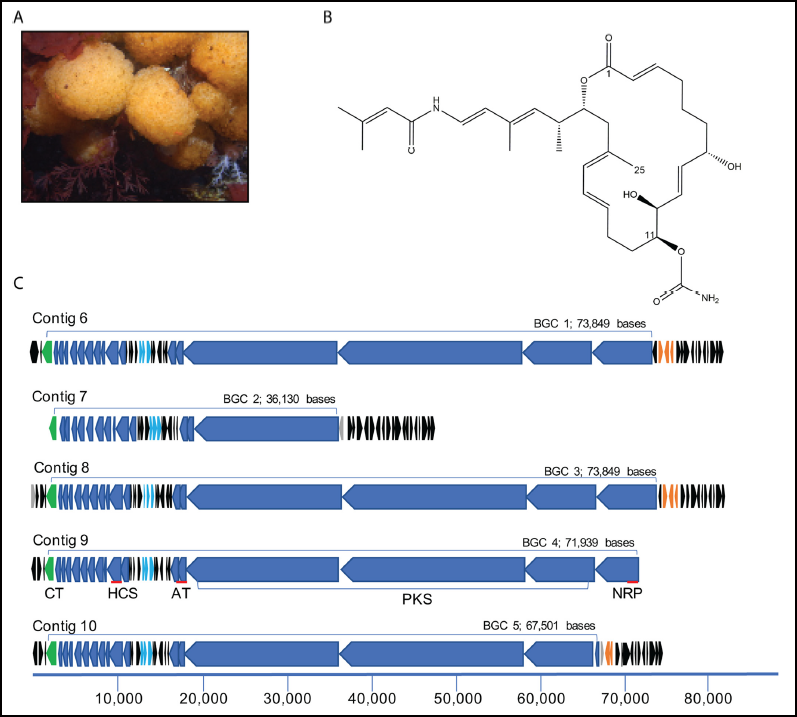
#Metagenome-encoded biosynthetic gene clusters responsible for the ascidian-associated antimelanoma macrolide, palmerolide, found to be associated with a novel genus in the #Verrucomicrobia phylum. @Murraylab1 journals.asm.org/doi/10.1128… @ASMicrobiology #mSphere
1
1
1 Dec 2021
Discovery of an Antarctic Ascidian-Associated Uncultivated Verrucomicrobia with Antimelanoma Palmerolide Biosynthetic Potential | mSphere journals.asm.org/doi/10.1128…
1
1
1 Dec 2021
Metagenomic effort to find the biosynthetic gene cluster of a known bioactive hybrid PKS-NRPS reveals a metagenome assembled genome (representing novel genus in the Opitutaceae family of Verrucomicrobia phylum) with five highly related copies of the gene cluster.
10 Sep 2021
Check out our publication reporting on a new nanomotion device which detects and records the molecular motion of living microorganisms - that my lab worked on with Giovanni Dietler and Sandor Kasas' team at the EPFL in Lausanne Switzerland. authors.elsevier.com/sd/arti…
murray_lab retweeted

25 Jun 2020
More incredible discoveries from #NevadaResearchers and their collaborators around the globe. Today's news findings from @MurrayLab1, working with @CASatUSF @eveillard @LaboLS2N, could be the first step toward a treatment for #Melanoma. dri.edu/new-study-reveals-ke…
1
3
5
murray_lab retweeted

Roadmap for naming uncultivated #Archaea and #Bacteria – @NatureMicrobiol by many scientists, incl MPI-Director Rudolf Amann
"We need consistent rules for nomenclature of uncultivated taxa for clarity, stability, and effective communication of diversity."
nature.com/articles/s41564-0…
1
2
8 Jun 2020
Our Consensus Statement is just out today in Nature Microbiology @NatureMicrobiol entitled "Roadmap for naming uncultivated Archaea and Bacteria" addresses a critical need in microbial ecology and touches all across the field of microbial sciences. See x.com/DRIScience/status/1270…
8 Jun 2020

What if a scientist discovers a new species but doesn't have the ability to tell any other scientists about it? In an article published today, DRI's Alison Murray, Ph.D., and her collaborators present the rationale for updating the regulations for naming new species of bacteria
1
3