Building the actor-driven forecasting layer for Polymarket and Kalshi. Multi-agent swarms, scenario marketplace, accuracy as north star. Pre-TGE.
Joined May 2024
- Tweets 84
- Following 311
- Followers 3,612
- Likes 127
32 Photos and videos
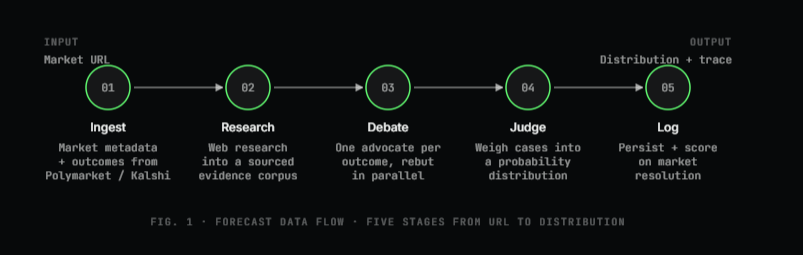
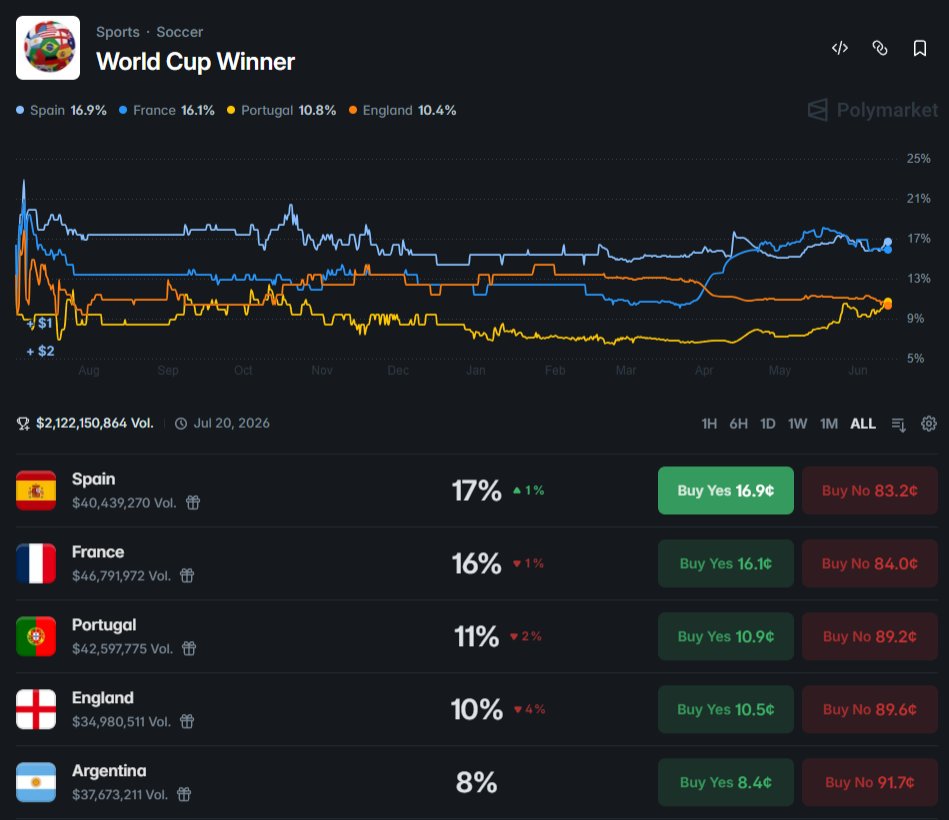
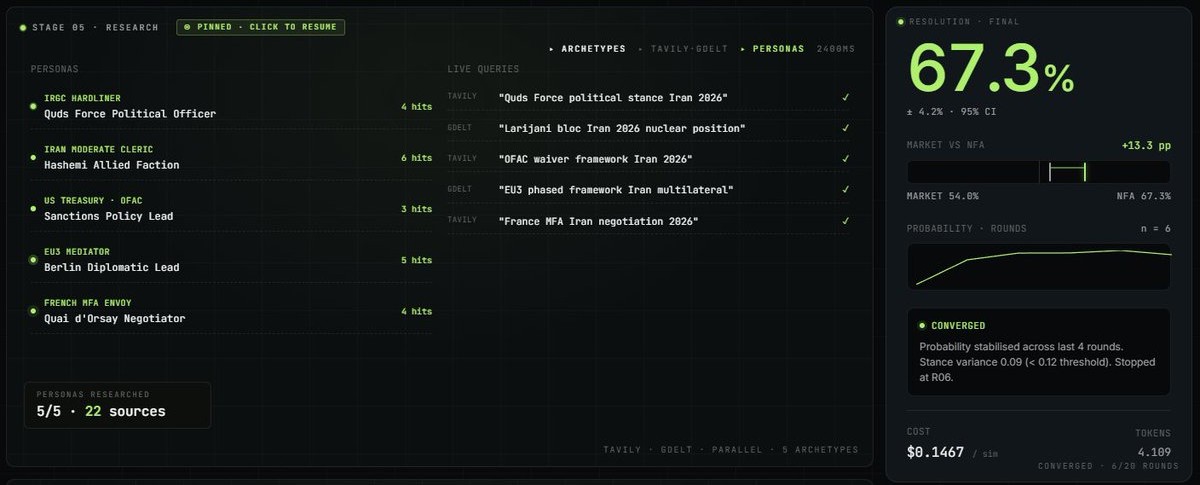
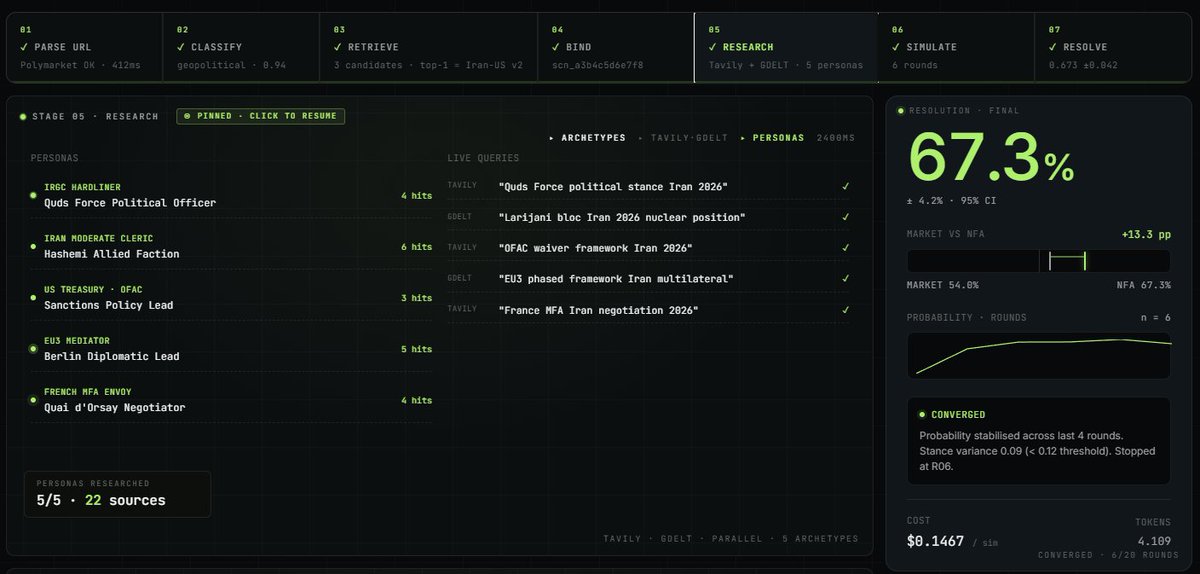








A single model drifts toward the obvious answer. So NFA doesn't use one. The engine generates a dedicated advocate to argue every outcome, then has a judge tear the cases apart.
Given a market, the engine first researches it into a sourced evidence corpus: the actors, the timeline, the established facts, the open questions.
Then the debate. One AI advocate is instantiated for each possible outcome. Each argues the strongest evidence-based case for its side, and they rebut each other across rounds. Every claim gets checked against the evidence before it counts.
Then the judge. An impartial model weighs the competing cases against the corpus and returns a calibrated probability distribution across the outcomes.
The judge never sees the market price. It forecasts from the evidence alone. So what you get is an independent estimate, not an echo of the crowd, and the gap between the two is the signal to trade.
The engine is general-purpose. It doesn't hard-code any market. It researches what it's given and argues what outcomes that market defines. Scenario templates tune how a class of market is researched and judged, but the same research-debate-judge loop runs on everything.
Whitepaper: nfa.club/pages/whitepaper
2
22
NFA will reach users through three surfaces:
Web frontend at nfa.club. Retail traders paste market URLs, run simulations, browse scenarios, publish their own. The primary consumer surface.
MCP server. Machine-facing API. Trading agents, algorithmic desks, and AI assistants like Claude, Hermes, Openclaw consume NFA programmatically. Early positioning in public registries is a durable distribution advantage.
Authoring interface. Where scenarios are built. Includes an AI copilot that helps non-expert users build structured scenarios by suggesting dynamics, action spaces, and resolution mappings appropriate to the kind of situation being modeled.
1
2
88
Scenario Marketplace Structure
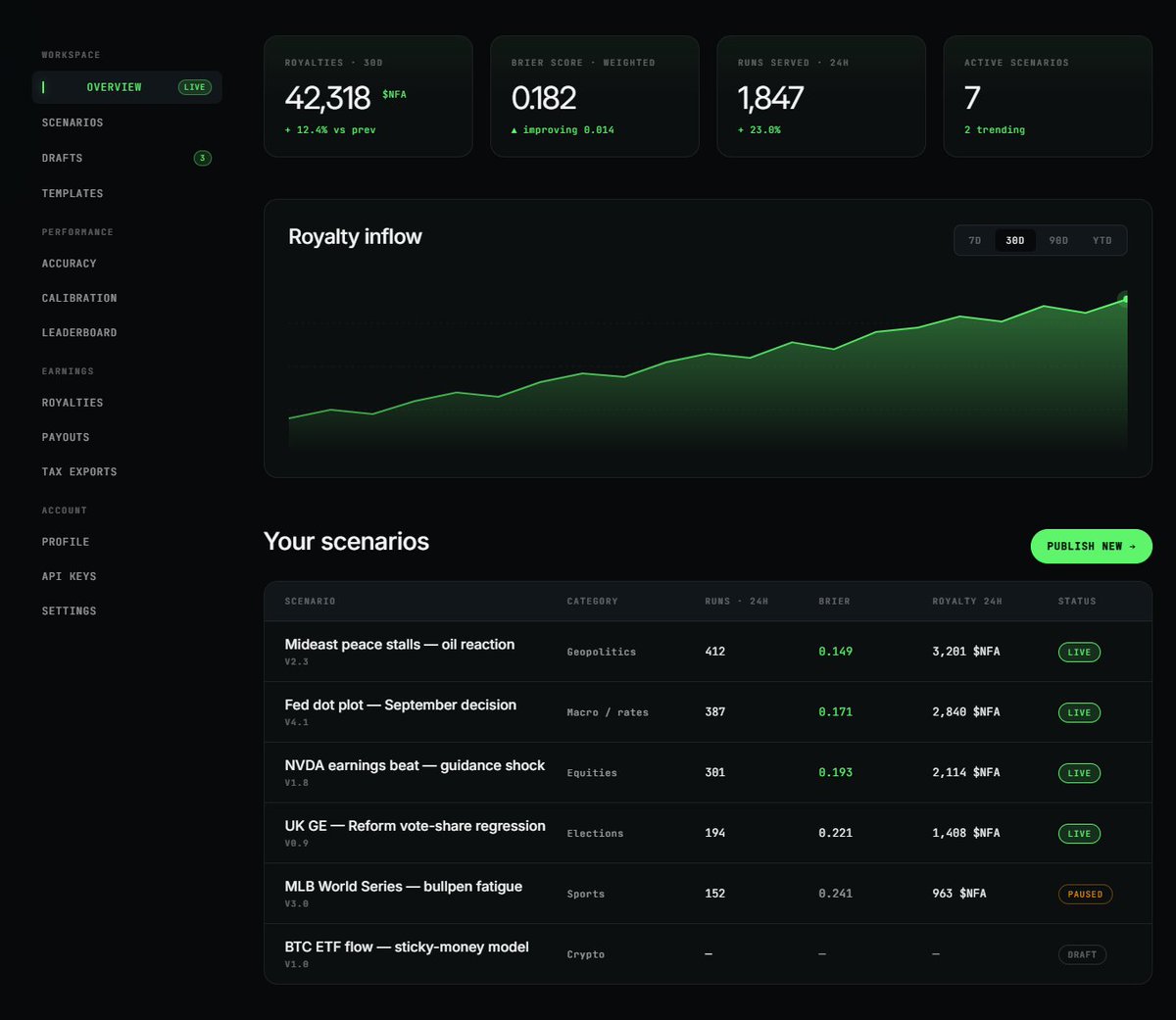
The scenario marketplace is open to any author. Publishing a scenario costs a flat $10 in $NFA, paid in token and burned on publication, a deliberate anti-spam floor that keeps the marketplace free of throwaway listings without gatekeeping who may contribute.
Once published, a scenario earns on every run it serves, priced by its measured forecasting skill on resolved markets.
This creates a structural property: supply of scenarios grows automatically with trader activity. Every active user is a potential contributor.
The best scenarios, judged transparently on accuracy, rise to the top of recommendations. Poor scenarios stay in the long tail, available but rarely surfaced. Quality emerges through competition rather than through central curation.
1
56
Traders in these markets know that quantitative tools built for statistical or microstructure markets don't apply. They need a different class of tool entirely.
That tool is NFA.
nfa.club
1
52
NFA runs on credits. Credits buy simulations.
Every simulation a payment goes directly to the scenario author, weighted by their accuracy on resolved markets.
Bad forecasts earn nothing. Good ones compound.
nfa.club
4
78
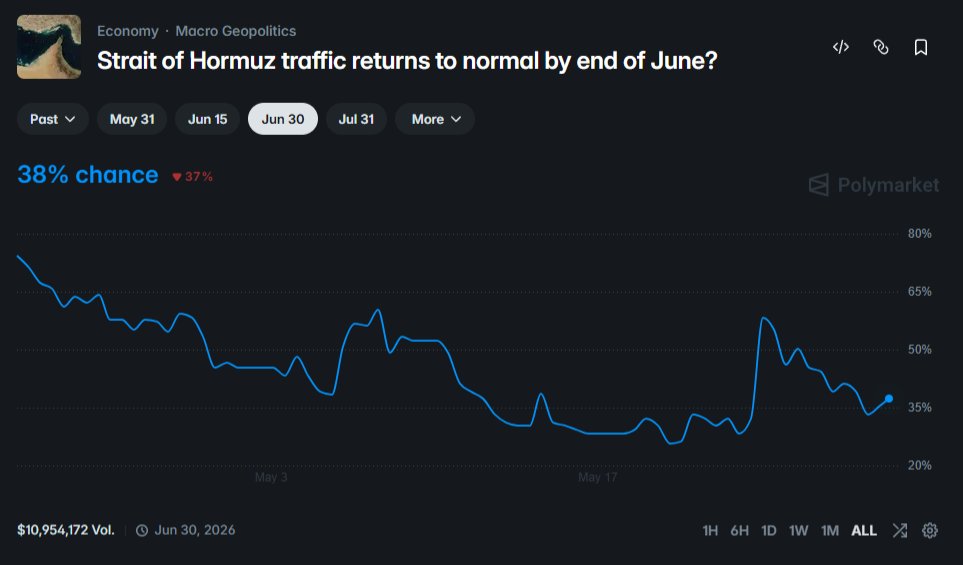
Strait of Hormuz traffic back to normal by June 30.
38% chance, $11M in volume.
Look at that price chart. Every spike and drop is a news cycle. The market is reacting, not modeling.
Whether Hormuz reopens doesn't depend on shipping data. It depends on specific people making specific decisions under specific pressure.
No price chart tells you that.
nfa.club
3
93
Most forecasting tools model central bank decisions with generic archetypes.
Dove. Hawk. Centrist.
The problem: Jerome Powell is not a generic dove. Christopher Waller is not a generic hawk.
The actual people in the room have histories, track records, and pressure points that archetypes can't capture.
🧵
1
4
117
5/ The scenarios that perform aren't the most sophisticated ones.
They're the ones that correctly identify the few dynamics that actually drive the outcome and ignore everything else.
Same discipline good traders already have. Write what actually matters. Leave out the rest.
1
1
56
6/ Every resolved market adds an accuracy data point to the scenario.
A framework written today will run on markets that don't exist yet, building a track record that reflects the actual quality of the thinking behind it.
Domain expertise, priced by accuracy.
nfa.club
1
49