National Institute for Theoretical and Computational Sciences
Joined July 2013
- Tweets 4,793
- Following 832
- Followers 1,147
- Likes 817
3,197 Photos and videos
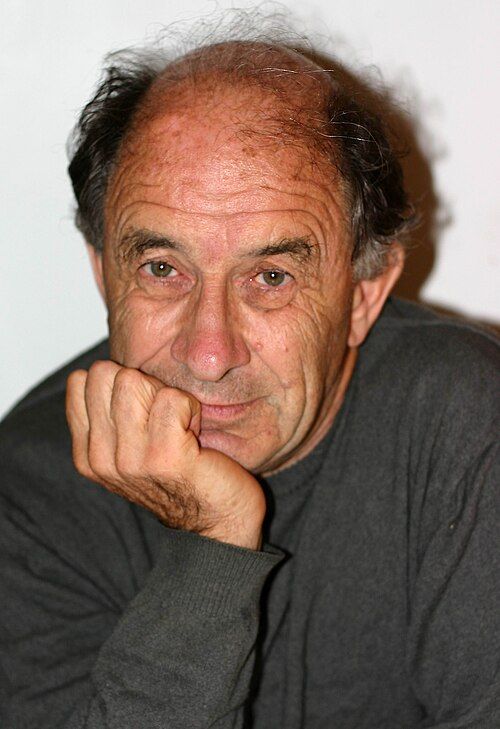
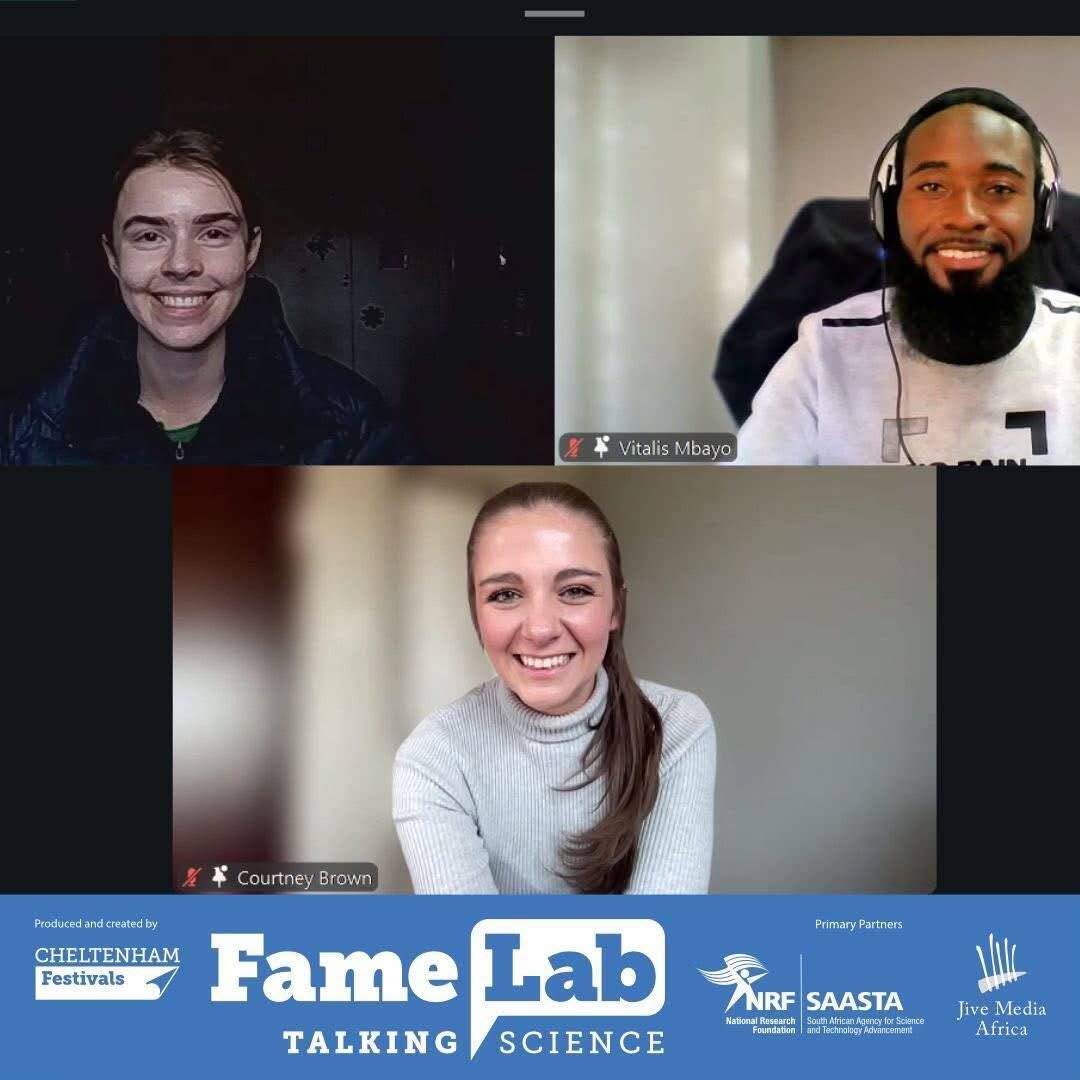
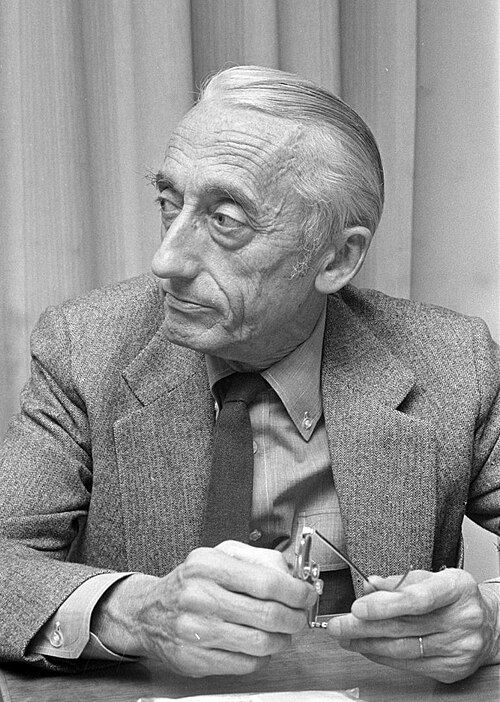

2026 NITheCS FameLab SA Heat Winners
Winner: Kaela Kokkas
First Runner-Up: Vitalis Mbayo
Third Runner-Up: Courtney Brown
NITheCS congratulates the winners on their outstanding performances and celebrates their role in making science clear, engaging, and accessible.
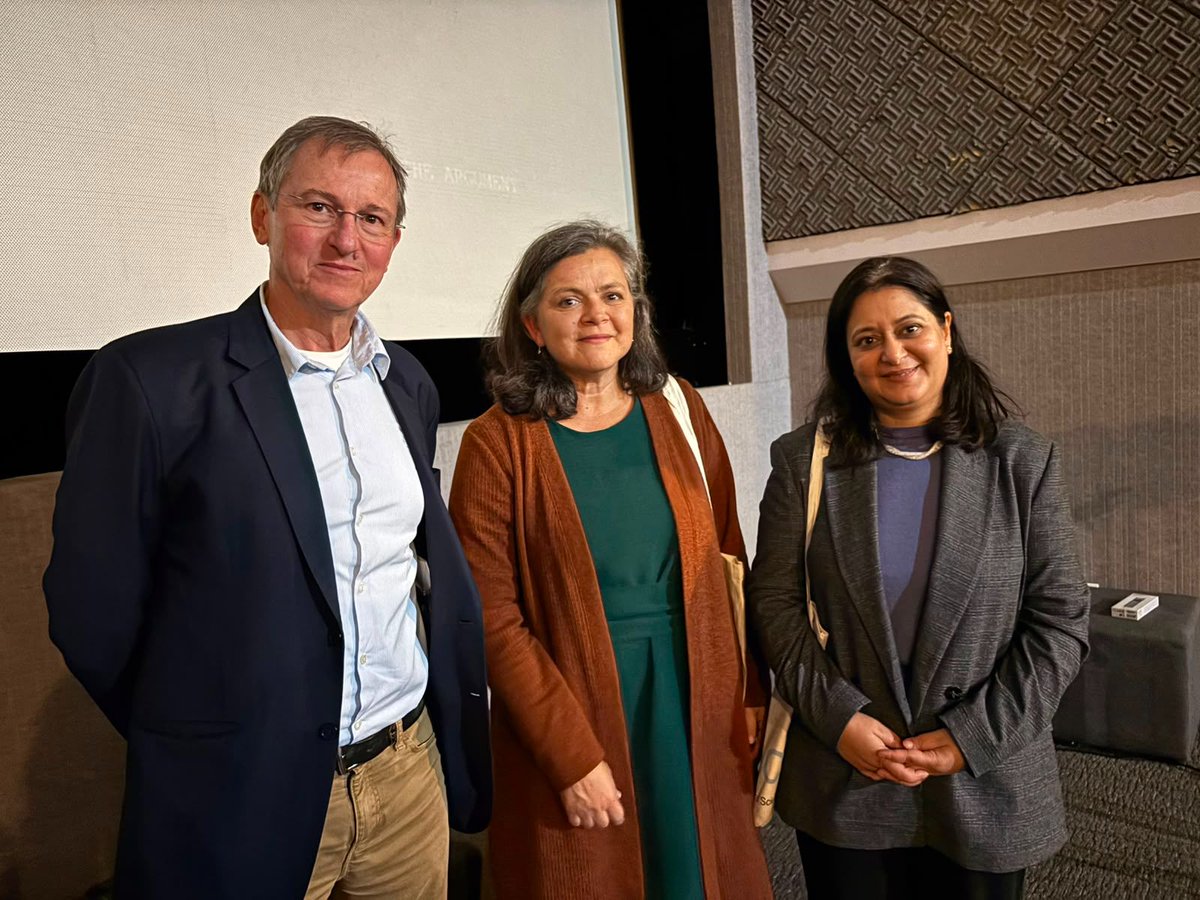
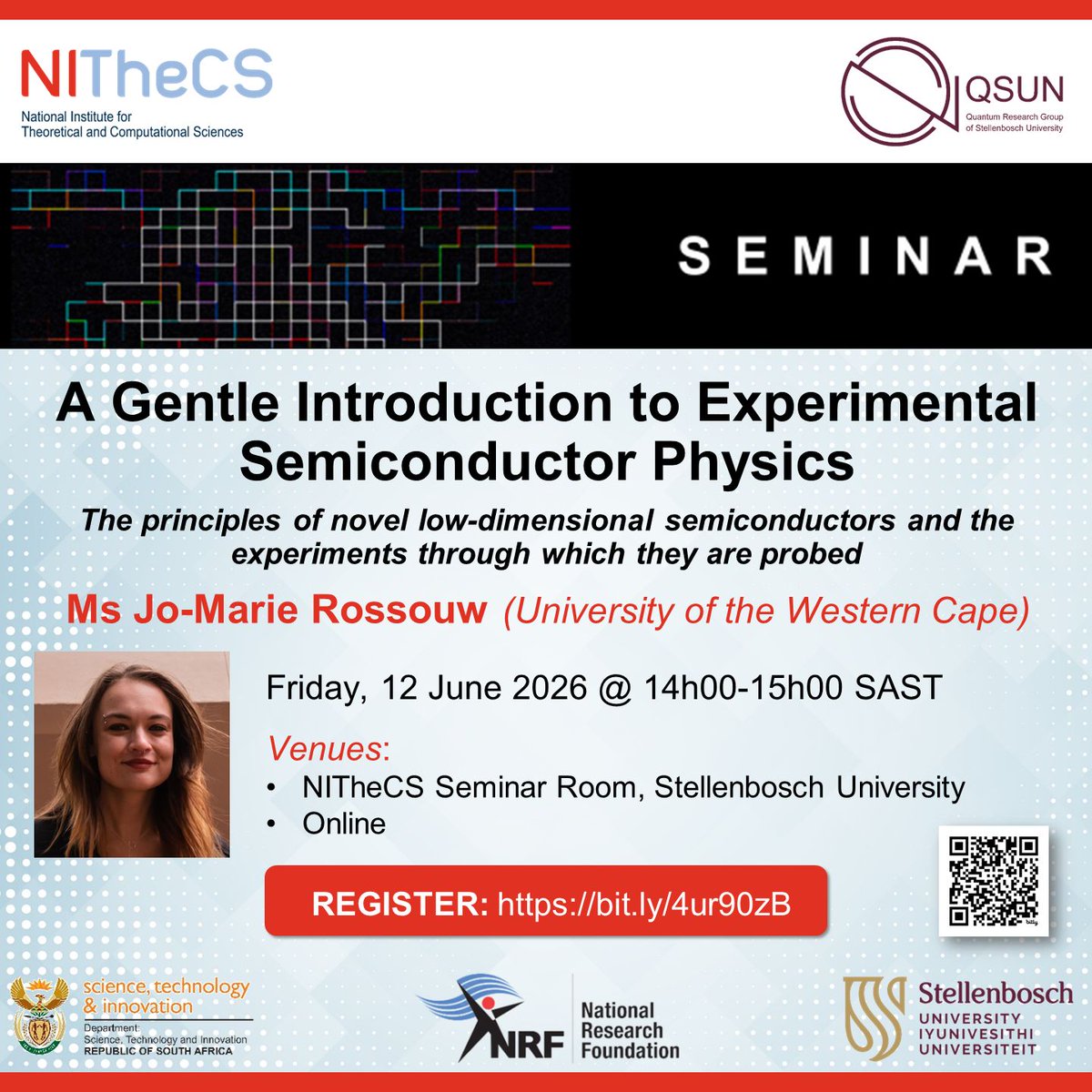
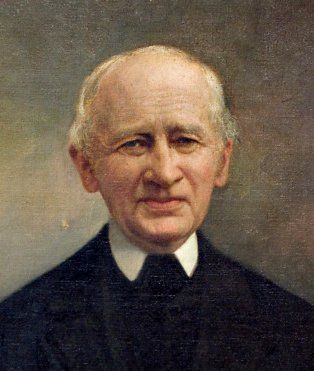
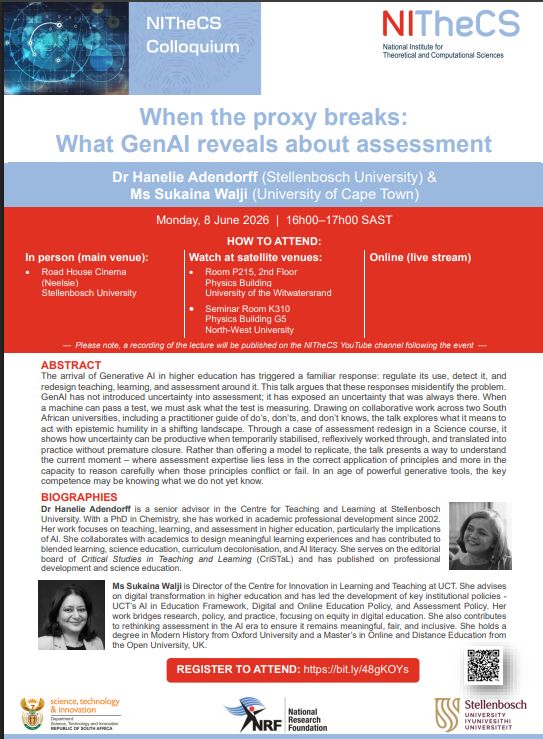
ALT Pictured above are the top three participants in the 2026 NITheCS FameLab SA Heat: winner Kaela Kokkas (top left), first runner-up Vitalis Mbayo (top right), and third runner-up Courtney Brown (bottom).
1
1
49
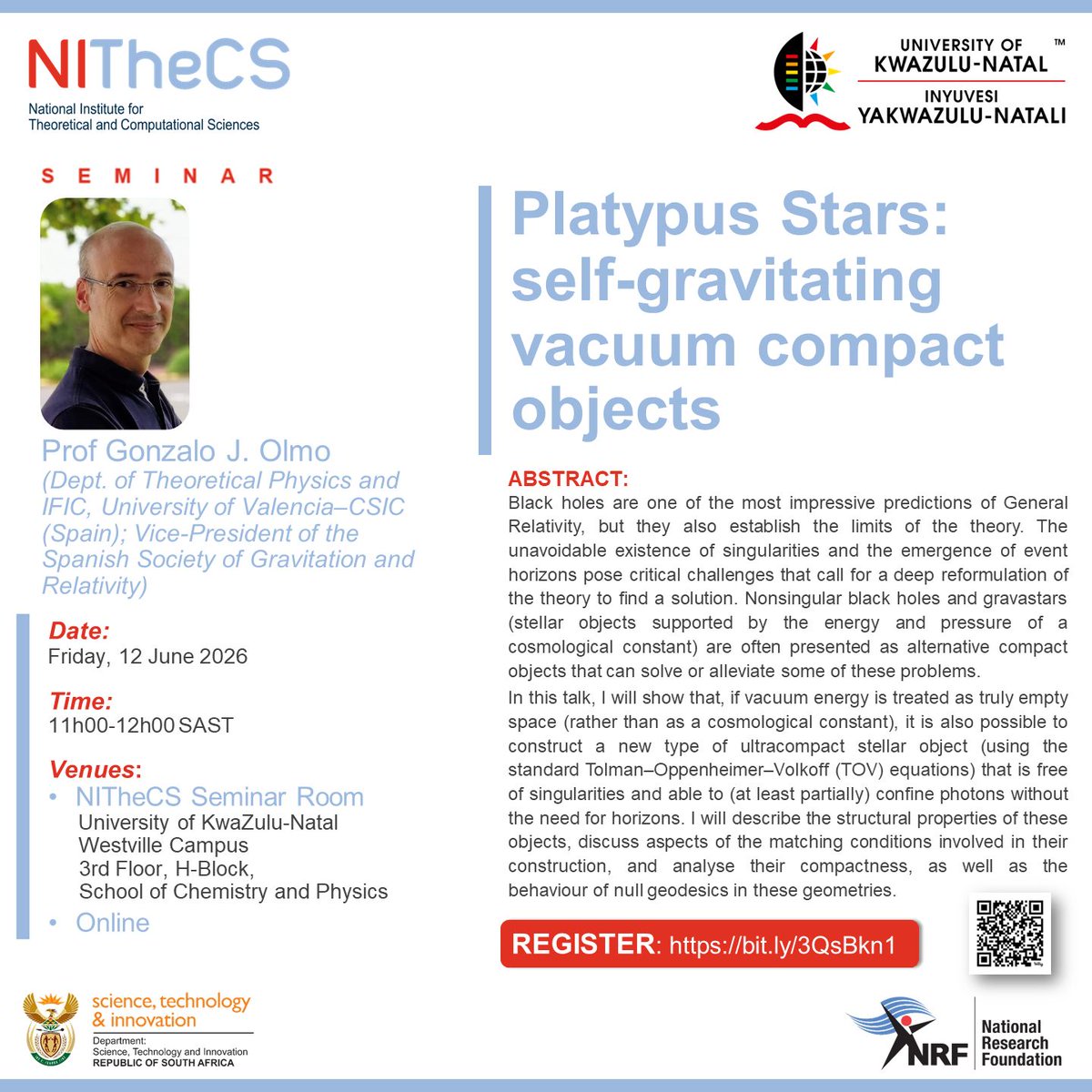
NITheCS & UKZN Seminar: ‘Platypus Stars: Self-Gravitating Vacuum Compact Objects’ by Prof Gonzalo J. Olmo.
📅 Fri, 12 Jun
🕚 11:00 SAST
📍 Attend in person or online
buff.ly/pP3H1rM
#PlatypusStars #TheoreticalPhysics #GeneralRelativity #BlackHole #AstrophysicsResearch
20
Join us for a NITheCS & QSUN Seminar:
‘A Gentle Introduction to Experimental Semiconductor Physics’
🎙️ Jo-Marie Rossouw (UWC)
📅 Fri, 12 Jun @ 14h00
📍 Attend in person or online
buff.ly/Ci1hqqj
#SemiconductorPhysics #QuantumMaterials #CondensedMatterPhysics #Nanoscience
55
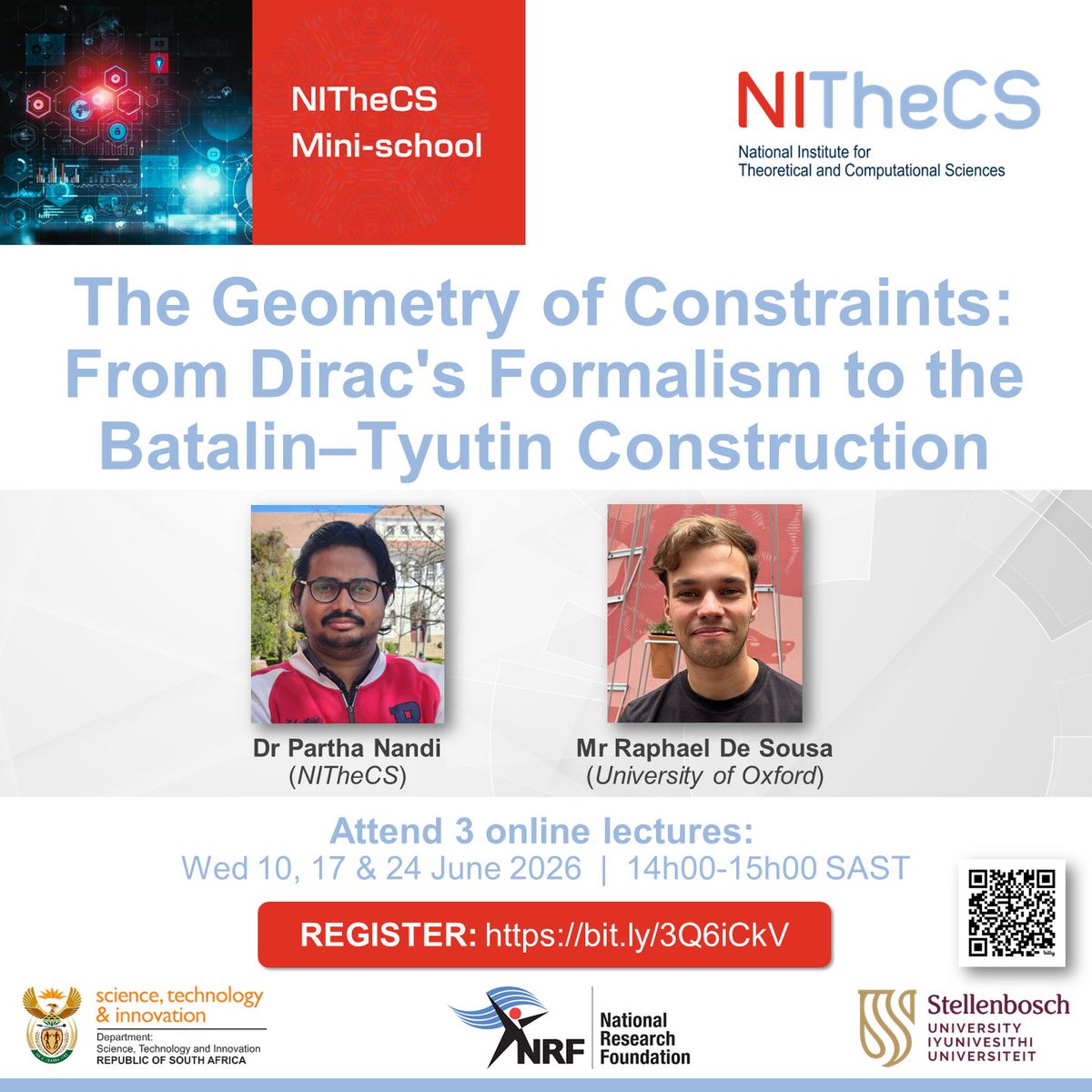
NITheCS Mini-school:
‘The Geometry of Constraints: From Dirac’s Formalism to the Batalin–Tyutin Construction’, by Partha Nandi & Raphael De Sousa
3 online lectures:
📅 Wed, 10, 17 & 24 Jun
⏰ 14h00 SAST
buff.ly/c0VX3nh
#TheoreticalPhysics #MathematicalPhysics #GaugeTheory
1
30
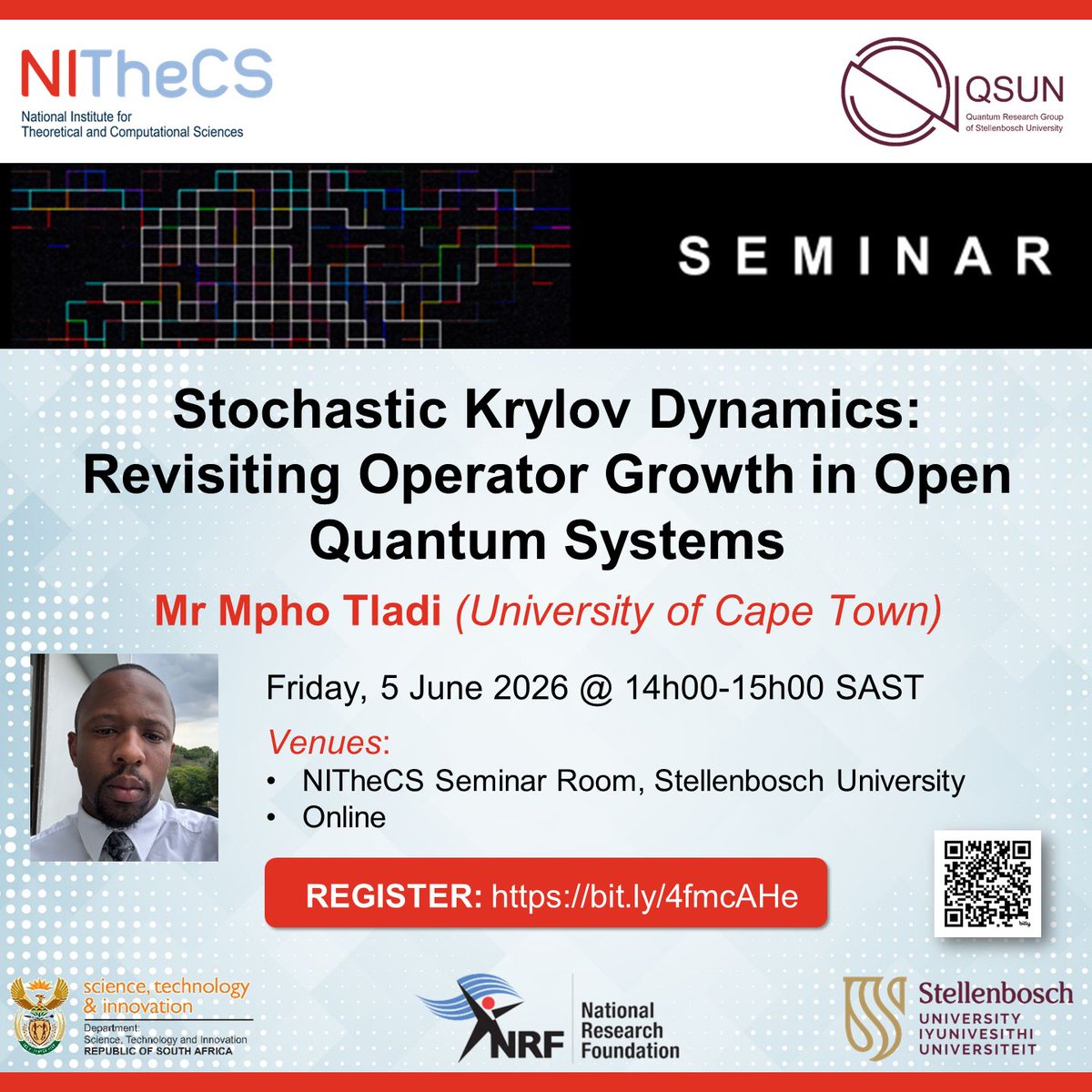
NITheCS & QSUN Seminar:
‘Stochastic Krylov Dynamics: Revisiting Operator Growth in Open Quantum Systems’
🎙️ Mr Mpho Tladi
📅 Fri, 5 Jun @ 14h00 SAST
📍 Attend in person or online
buff.ly/mdPbfvO
#QuantumPhysics #OpenQuantumSystems #QuantumComplexity #TheoreticalPhysics
1
1
46
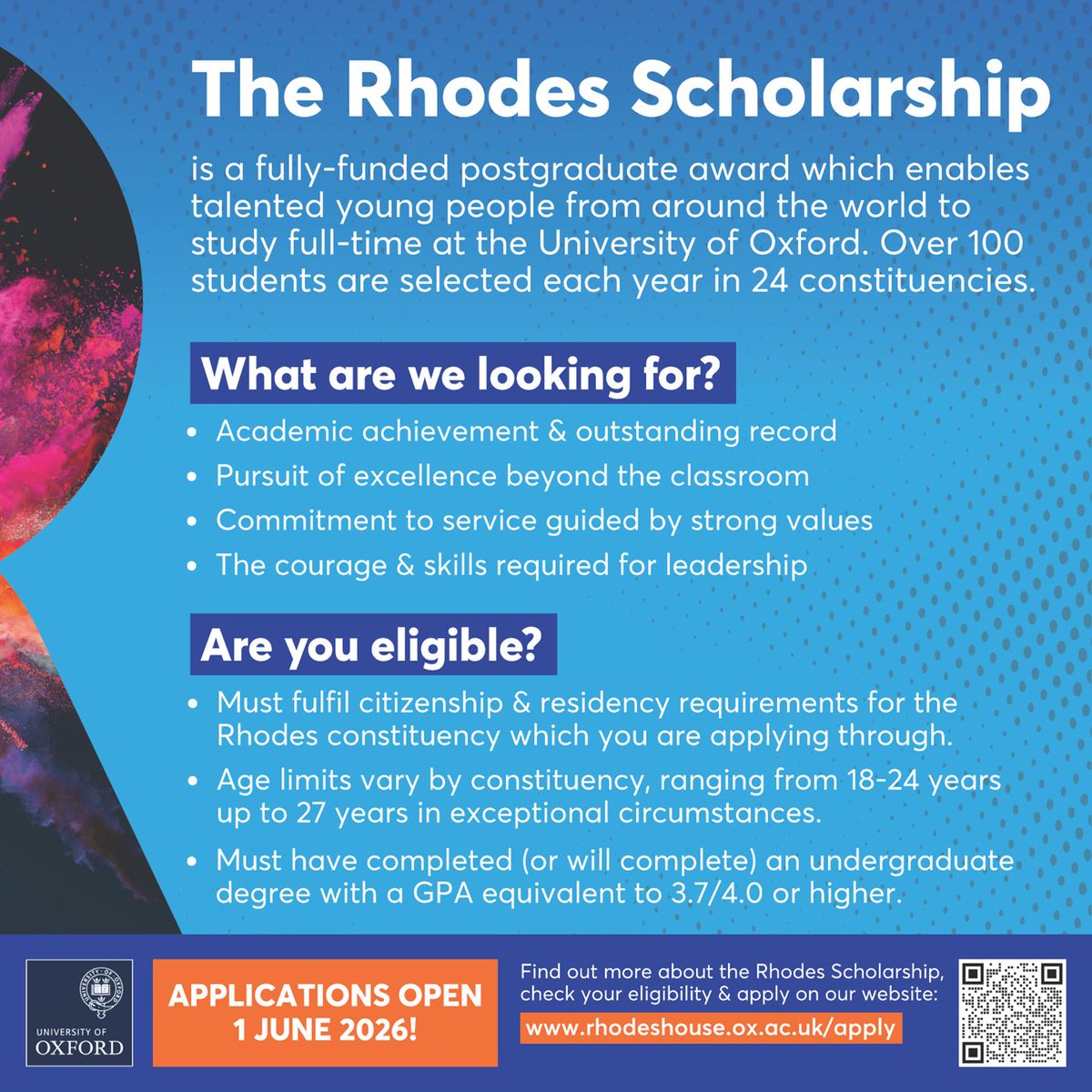
Apply for a 2026 Rhodes Scholarship to pursue your postgraduate studies at the University of Oxford, UK. You need an outstanding academic record, leadership potential and a commitment to service.
🔗 buff.ly/bLFqYeL
#RhodesScholarship #OxfordUniversity #PostgraduateFunding
51
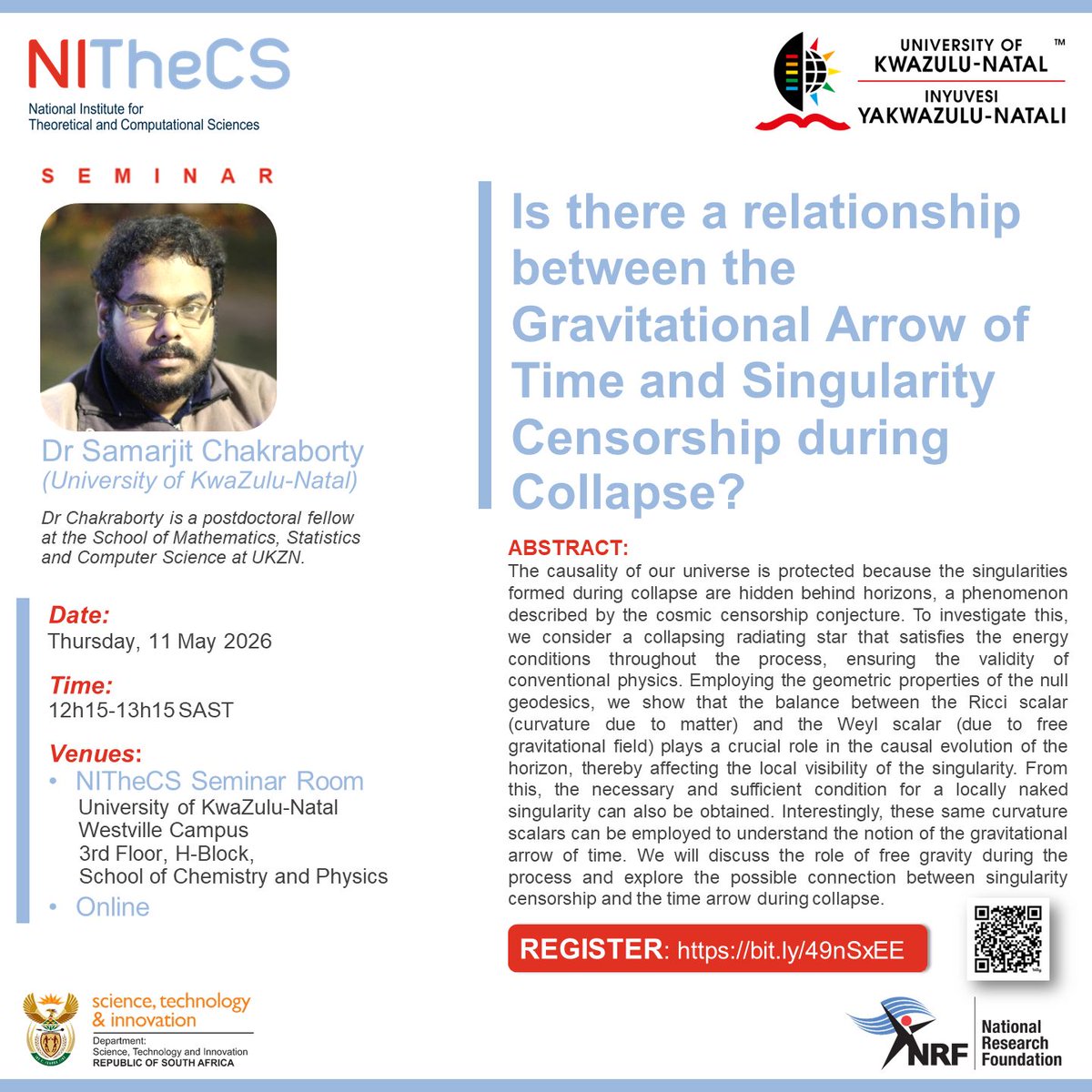
NITheCS & UKZN Seminar: ‘Is there a relationship between Gravitational Arrow of Time & Singularity Censorship during Collapse?’
👨🔬 Dr Samarjit Chakraborty
📅 Thurs, 11 June
🕛 12h15
📍 Attend in person or online
buff.ly/1WQg8d0
#GravitationalArrowOfTime #CosmicCensorship
39