
Explorer | Philosophy | Blockchain | Decentralised Finance | Technology | dream chaser | Founder | Compliance | Banking | gym |
Joined February 2011
- Tweets 11,538
- Following 521
- Followers 48
- Likes 4,679
Photos and videos
Pinned Tweet

19 Feb 2025
The only person you can lose from is yourself. Stay patience and chose your own values on your path through life. Keep working to the dreams and reach the destination once. It's very hard, but on one day you will make it or die trying.
16 Jan 2012

He who shuns the dust of the arena, shall not sit in the shade of the olive tree. Fight! or live in the shadow of one's own cowardice. Fail
1
7
839
NovaQuantix retweeted

Gisteren werd het awkward bij de VVD toen het over Box 3 ging.
88
174
710
32,208

A few years ago, during my investment banking days, I had a client who would often remind me that he was an early investor in Apple, Amazon and Microsoft.
I remember thinking at the time: part of that was conviction, but part of it was also access. He had access to markets that most people around the world simply did not.
That is what @OndoFinance is changing.
And with @ZIGChain, we are focused on the next barrier: making that access simple enough for anyone to actually use 🤝

ZIGChain integrates @OndoFinance tokenized stocks & ETFs to expand onchain access to global equities and other real-world financial products, bringing them within reach of everyday investors across emerging markets through the ZIGChain ecosystem.
Ondo pioneered the tokenization of global stocks, ETFs, and institutional-grade financial products. ZIGChain provides infrastructure through which their reach now extends to a new generation of investors.
Because the world's best financial products don't need reinventing. They just need to be made accessible.
11
10
85
4,817
NovaQuantix retweeted

Jun 8
Ondo Finance has done something genuinely difficult: taking US stocks and ETFs and making them available as programmable, onchain products. That work matters most when it reaches the widest possible audience.
ZIGChain is now integrating Ondo tokenized stocks and ETFs to bring that reach to users across the GCC and beyond.
Our founding premise has always been the same: the best financial products in the world have not been exclusive because the underlying assets required it. They have been exclusive because the infrastructure around them was built that way. Investors in the Gulf, across Southeast Asia, and across emerging markets have had the capital and the mandate but not the access, because access has historically depended on geography and intermediary relationships rather than on anything fundamental.
Onchain infrastructure changes that default. And bringing Ondo's tokenized products to ZIGChain is exactly what change looks like in practice.
ZIGChain integrates @OndoFinance tokenized stocks & ETFs to expand onchain access to global equities and other real-world financial products, bringing them within reach of everyday investors across emerging markets through the ZIGChain ecosystem.
Ondo pioneered the tokenization of global stocks, ETFs, and institutional-grade financial products. ZIGChain provides infrastructure through which their reach now extends to a new generation of investors.
Because the world's best financial products don't need reinventing. They just need to be made accessible.
3
4
56
2,560
NovaQuantix retweeted

Excited to announce @ZIGChain partnership with @OndoFinance.
Together, we’re expanding access to tokenized stocks, ETFs, and real-world financial assets to over 1 billion people in emerging markets and beyond.
More assets onchain means more users on ZIGChain and increase in network activity which translates to more value through buybacks to ethereum:0xb2617246d0c6c0087f18703d576831899ca94f01
The future of finance is being built now.
ZIGChain integrates @OndoFinance tokenized stocks & ETFs to expand onchain access to global equities and other real-world financial products, bringing them within reach of everyday investors across emerging markets through the ZIGChain ecosystem.
Ondo pioneered the tokenization of global stocks, ETFs, and institutional-grade financial products. ZIGChain provides infrastructure through which their reach now extends to a new generation of investors.
Because the world's best financial products don't need reinventing. They just need to be made accessible.
93
71
387
60,912
NovaQuantix retweeted

Jun 5
They would both still be alive.
Jun 5


78
1,949
14,683
150,955
NovaQuantix retweeted

Geen verkiezingswinst. Formatie mislukt. En dus grijpt #D66 naar de bekende vluchtroute: demoniseren.
Wie geen argumenten meer heeft, gaat framen. Wie haar zin niet krijgt, gaat moraliseren. Een gevaarlijke én polariserende ontwikkeling.
Lees het hier hartvoordenhaag.nl/gevaarlij…

166
1,026
4,016
39,378
NovaQuantix retweeted
The biggest lesson from the Zcash vulnerability isn’t about Zcash, it’s about AI.
If AI can help find a bug that survived years of review, imagine what happens when every attacker has access to even better tools.
This is why I’ve become increasingly convinced that the end state of finance looks different than many people expect.
The rails will be onchain, the assets won’t necessarily live there.
Institutions want the speed, transparency and programmability of DeFi. They also want custody, accountability and protection mechanisms that don’t disappear when a smart contract fails.
The future isn’t decentralizing everything, it’s putting the right things onchain and the right things under institutional safeguards.
The winners will be the ones that can bridge both worlds. 🤝

20
19
125
21,016
NovaQuantix retweeted

Jun 2
Daar gaan we weer!
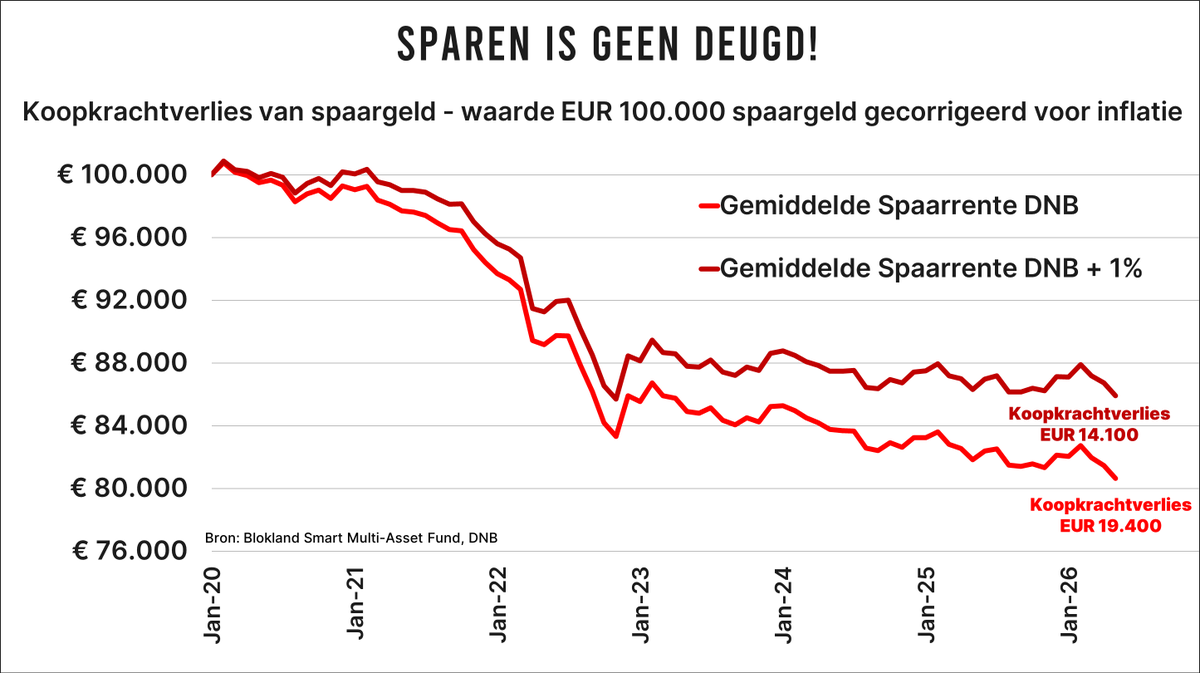
De Nederlandse inflatie kwam in april uit op 3,5%, het hoogste niveau in een jaar.
Ondertussen staat er nog steeds ruim 600 miljard euro op Nederlandse spaarrekeningen weg te kwijnen.
Op elke €100.000 spaargeld zijn Nederlanders sinds 2020 zo'n €20.000 aan koopkracht verloren.
Twintigduizend euro. Gewoon weg.
En toch blijven we sparen. Nederland heeft een spaarverslaving.
Beste politici: maak beleggen en investeren aantrekkelijker, verlaag de belastingen en gooi box 3 direct in de prullenbak.
Beste spaarders: zet je overtollige spaargeld aan het werk voordat inflatie het verder opeet.
Tot het volgende inflatiecijfer. Met exact dezelfde boodschap.
May 21

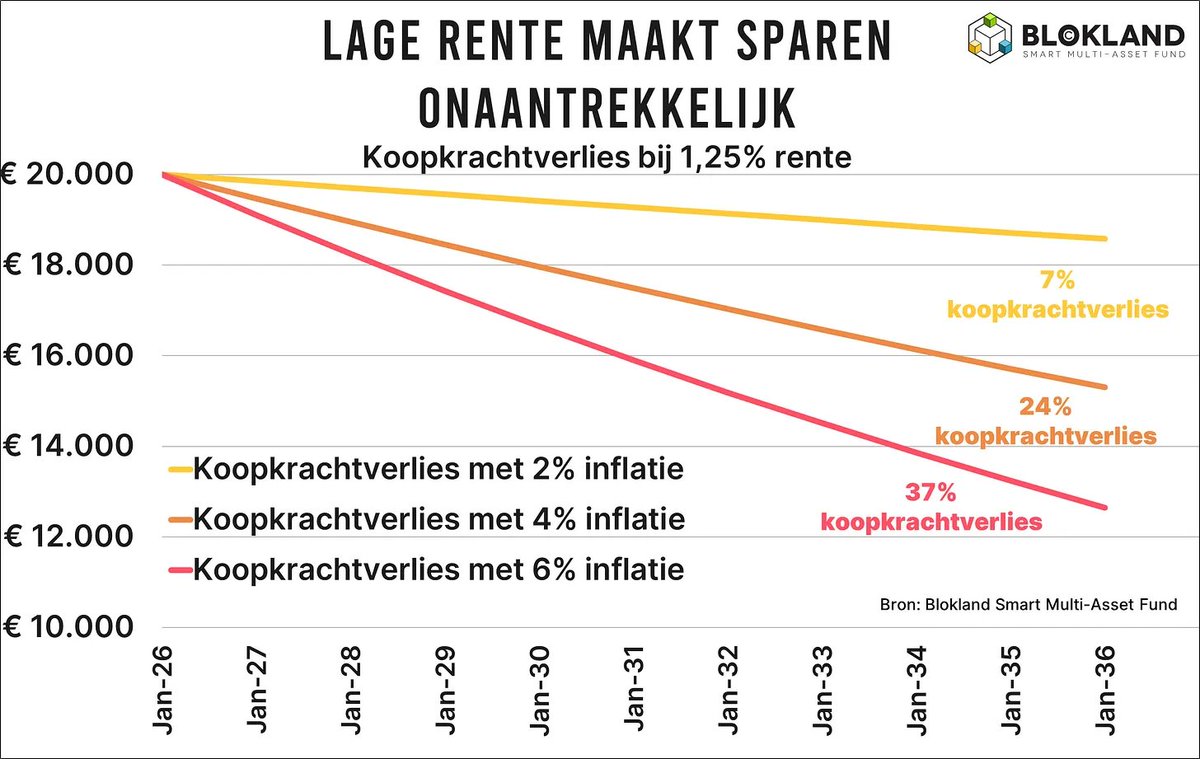
Mijn vorige posts laten overduidelijk zien: Nederlanders voelen steeds meer druk van hogere belastingen, stijgende kosten en spaargeld dat steeds minder waard wordt.
En toch staat er nog altijd meer dan 600 miljard euro op Nederlandse spaarrekeningen weg te kwijnen.
Dat móét anders. Hoe?
De nieuwste editie van de Blokland Smart Multi-Asset Fund nieuwsbrief is nu uit 👇
bloklandfund.substack.com/p/…
Let op! Schrijf je meteen in, want op 5 juni verloten we onder onze nieuwsbrieflezers 15 kaarten voor de IEX Beleggersdag 2026, waar wij op 19 juni de presentatie geven:
“Beleggen in Schaarste: Waarom Uw Portefeuille Radicaal Moet Veranderen.”
29
99
371
41,334
NovaQuantix retweeted
Jun 1
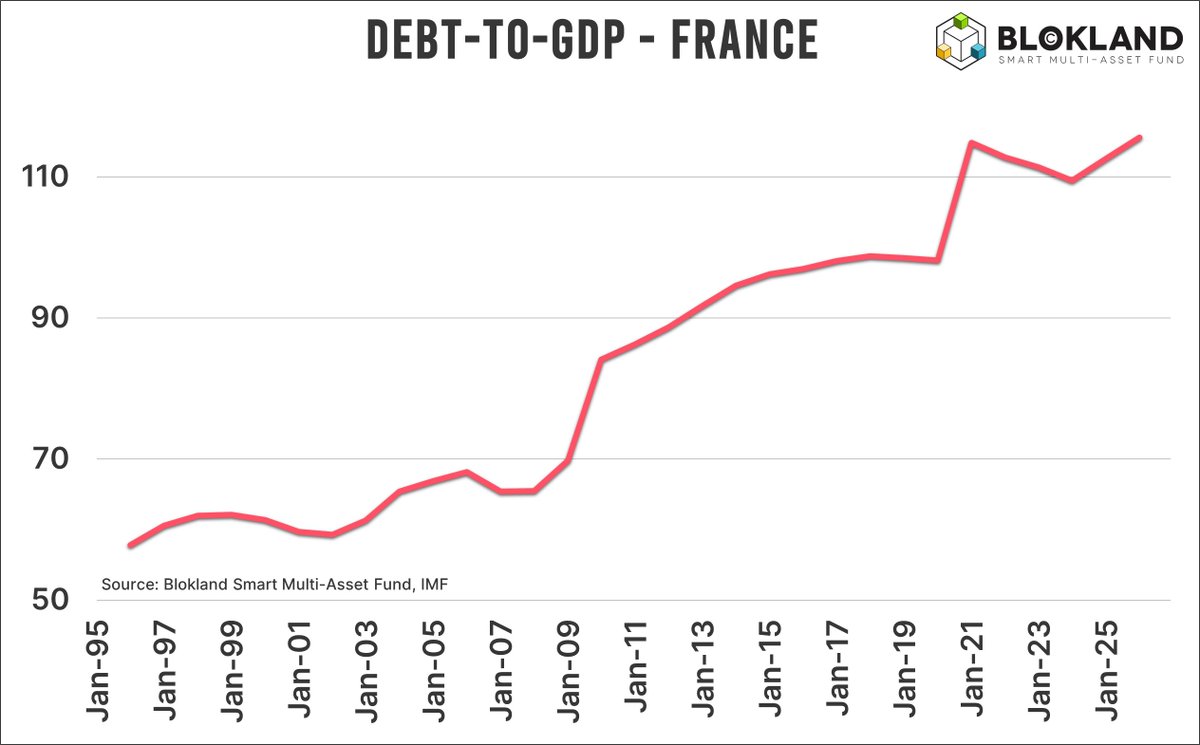
France is a mess.
The Bank of France is preparing to cut its 2026 GDP growth forecast after the economy unexpectedly contracted in the first quarter. This year's growth is now expected to come in at just 0.6% to 0.7%.
Meanwhile:
- Debt-to-GDP stands at 116% and is still rising.
- France runs a structural budget deficit of 5% of GDP or more.
- Social welfare costs are a whopping 30% of GDP.
- Interest expenses are exploding as years of ultra-low rates are replaced by much higher borrowing costs.
- Political instability has become the norm. France has gone through ten prime ministers in ten years.
- Societal polarization continues to intensify, driven in part by large-scale immigration and the growing costs associated with it.
It has come to the point where, when a French football club wins the Champions League, large parts of the country descend into riots and destruction.
Yet the French retirement age remains effectively 62, while the standard work week is still 35 hours.
And you wonder why some countries are against eurobonds?
May 29
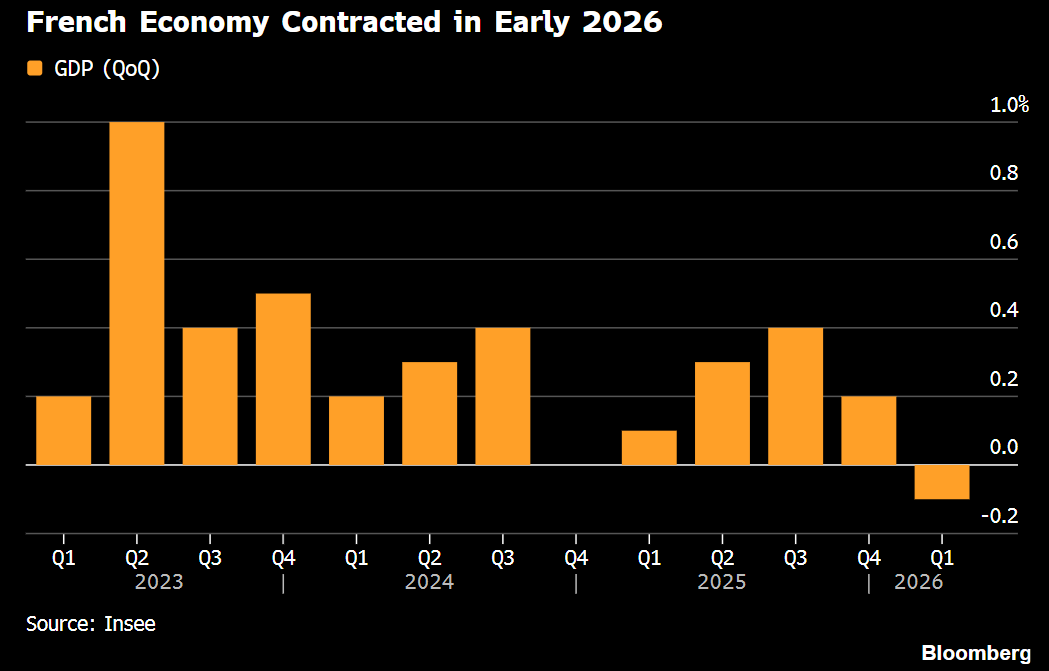
Inflation in France spiked to 2.8% in May.
The ECB is considering hiking rates to fight what?
Meanwhile, also in France:
GDP Growth turned negative.
France's debt-to-GDP ratio is near 120%
France's budget deficit is over 5% of GDP
France's interest expenses will spike to 5% of GDP
France's political instability is growing.
Sure, let's hike rates to fight an oil-price-led spike in inflation that we cannot control, and that is already hurting consumer confidence and spending.
12
25
100
15,759
NovaQuantix retweeted

May 18
“Economen” weten het zeker. Ja, eentje ja NRC. Alle andere economen, het Nederlandse en buitenlandse bedrijfsleven, alle ondernemers, familiebedrijven, beleggers, startups, scale-ups en de middenklasse denken dat dit box3 voorstel economische zelfmoord is. nrc.nl/nieuws/2026/05/18/eco…
54
188
881
77,880


Some of you have been here since 2018.
You watched the team build through the endless cycle of hype, collapse, and rebuilding that made most people give up on web3 entirely.
but YOU showed up every time.
Today we took a step we've been working toward for a long time. Real institutional revenue deployed to buy back 500 million ethereum:0xb2617246d0c6c0087f18703d576831899ca94f01 from the market.
None of this happens without you...
Nothing compounds alone 💙
May 14

We are buying 500,000,000 ethereum:0xb2617246d0c6c0087f18703d576831899ca94f01 directly from the market.
Funded by real revenue generated through AI-infrastructure powering institutional onchain finance.
For years, crypto talked about utility. Now it’s time for ecosystems to return real value back to their tokens.
ethereum:0xb2617246d0c6c0087f18703d576831899ca94f01 is becoming the meta asset of onchain finance.
11
2
47
1,755
NovaQuantix retweeted

May 7
Mannen en vrouwen zijn niet hetzelfde, en maken gemiddeld genomen ook verschillende keuzes. Dat is niet erg, dat moeten we juist koesteren.
129
388
1,999
32,207

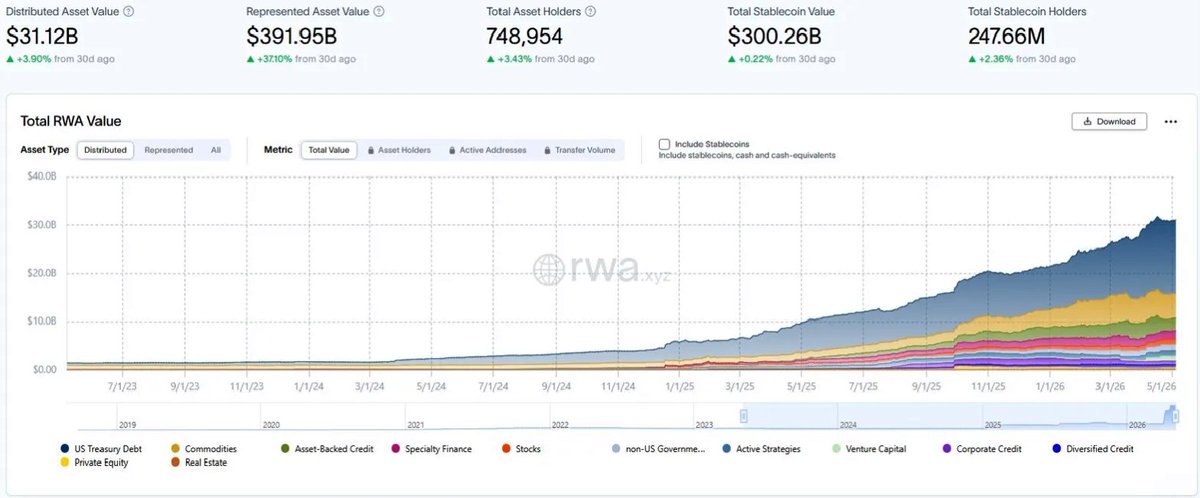
Tokenized RWAs just crossed $30 billion onchain.
It sounds big, right? But it's really not. Private credit, real estate, commodities, asset-backed securities. The asset classes behind that number represent hundreds of trillions globally. Less than 0.1% is onchain today.
We're not just tokenizing these assets, we're distributing them, turning them into yield-generating instruments, and opening them to a global audience.
0.1% in. 99.9% still to come.
19
17
123
5,154
NovaQuantix retweeted

May 6
Today, Mastercard, @OndoFinance, Kinexys by @JPMorgan, and @Ripple successfully completed a landmark transaction connecting a public blockchain with interbank settlement rails.
Together, we’re laying the groundwork for 24/7 global markets that never close.
492
3,745
14,644
1,365,231
NovaQuantix retweeted
May 6
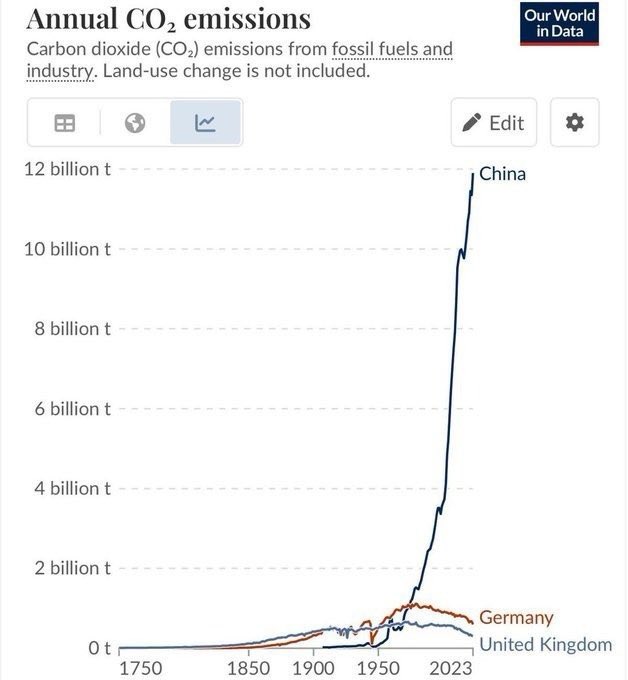
More recent data show a (shallow) decline in China's CO2 emissions. Great! But the amount of CO2 output on its own is not really the point.
China is doing a lot to reduce CO2 emissions. Great! I totally agree and would argue that China is doing things way more realistically and less harmfully. But China’s effort is not really the point.
Why always against Europe, which has done its fair share? Well, if you read my post correctly, I believe Europe did way too much! But that is not really the point.
Why not look at emissions per capita? First, an overused and lame argument that also doesn't hold, since CO2 emissions do not stick to a capita. But that’s really not the point.
The point is that it is overwhelmingly Western European activists who choose drastic, unrealistic measures, hoping (it’s little more than that most of the time) to reduce emissions further, even though countries will go bankrupt economically and socially, while other parts of the world, where emissions are much higher, are left alone.
May 6
This is one of the most intriguing charts in the world right now.
Not necessarily because China’s annual CO2 emissions are on another planet, we all know that already, but because climate ideology remains almost entirely centered in Western Europe.
If you truly believe that frustrating housing development, blocking roads, gluing yourself to buildings, or throwing soup at priceless art is the way to make the world better, why are you not doing it where it has the biggest impact?
If you believe in catastrophic climate projections, including the extreme scenarios that even the United Nations is now moving away from, and if you believe that destroying things and severely disrupting people’s lives is the way to reduce CO2 emissions, then at least focus on where the biggest reductions can actually be achieved.
Instead, after years of societal damage, activists keep demanding more idiotic measures in countries that have already cut emissions and are nowhere near China’s levels.
In Europe, climate ideology has produced massive imbalances: housing shortages, energy insecurity, loss of competitiveness, industrial decline, wealth destruction, and rising polarization.
All without anything close to a meaningful global reduction in CO2 emissions.
5
4
27
5,807
NovaQuantix retweeted
May 6
This is one of the most intriguing charts in the world right now.
Not necessarily because China’s annual CO2 emissions are on another planet, we all know that already, but because climate ideology remains almost entirely centered in Western Europe.
If you truly believe that frustrating housing development, blocking roads, gluing yourself to buildings, or throwing soup at priceless art is the way to make the world better, why are you not doing it where it has the biggest impact?
If you believe in catastrophic climate projections, including the extreme scenarios that even the United Nations is now moving away from, and if you believe that destroying things and severely disrupting people’s lives is the way to reduce CO2 emissions, then at least focus on where the biggest reductions can actually be achieved.
Instead, after years of societal damage, activists keep demanding more idiotic measures in countries that have already cut emissions and are nowhere near China’s levels.
In Europe, climate ideology has produced massive imbalances: housing shortages, energy insecurity, loss of competitiveness, industrial decline, wealth destruction, and rising polarization.
All without anything close to a meaningful global reduction in CO2 emissions.
129
515
1,555
60,607
NovaQuantix retweeted

May 4
I’m sad Amsterdam, the city I was born in just became the capital of woke. My country decided to tax unrealized capital gains. More news will follow soon on our response. Enough is enough

139
171
1,872
1,350,956