599 Photos and videos
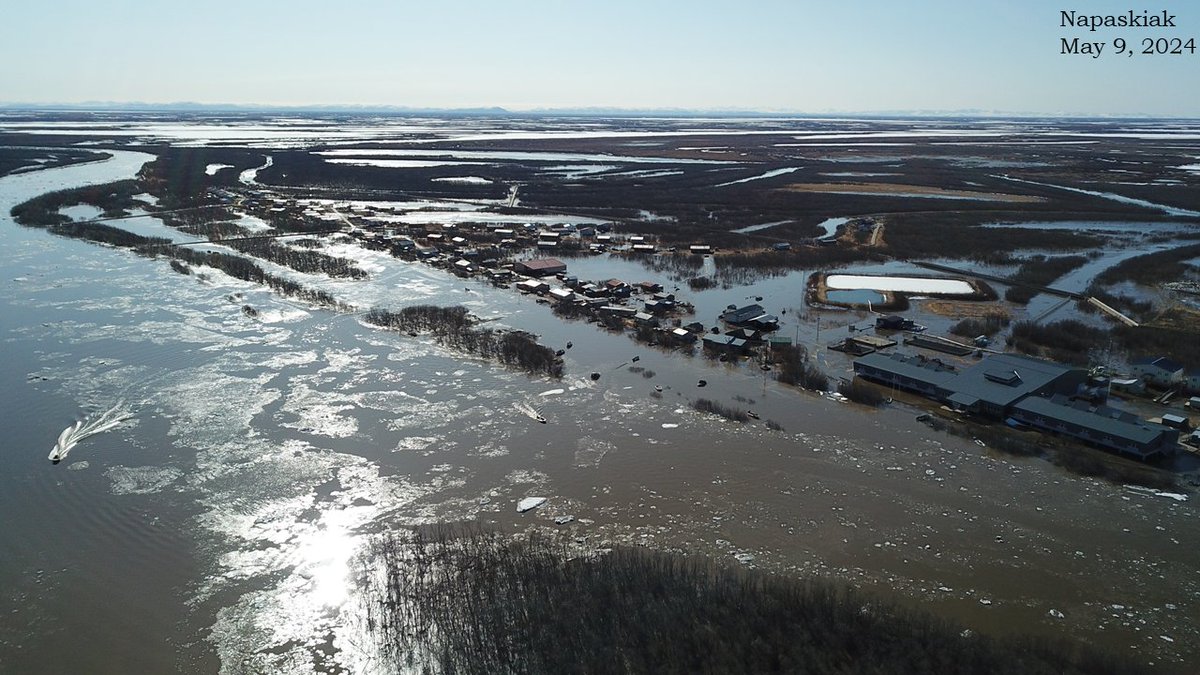
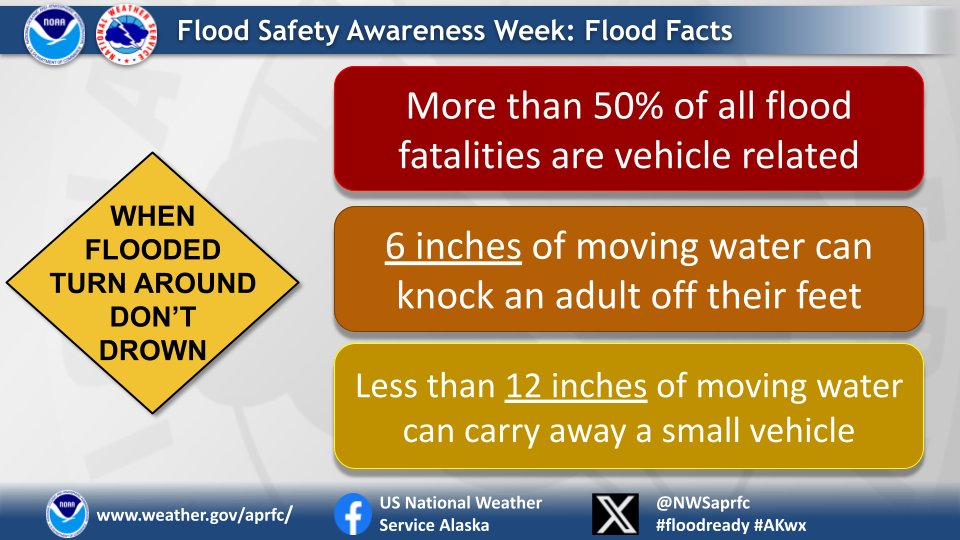
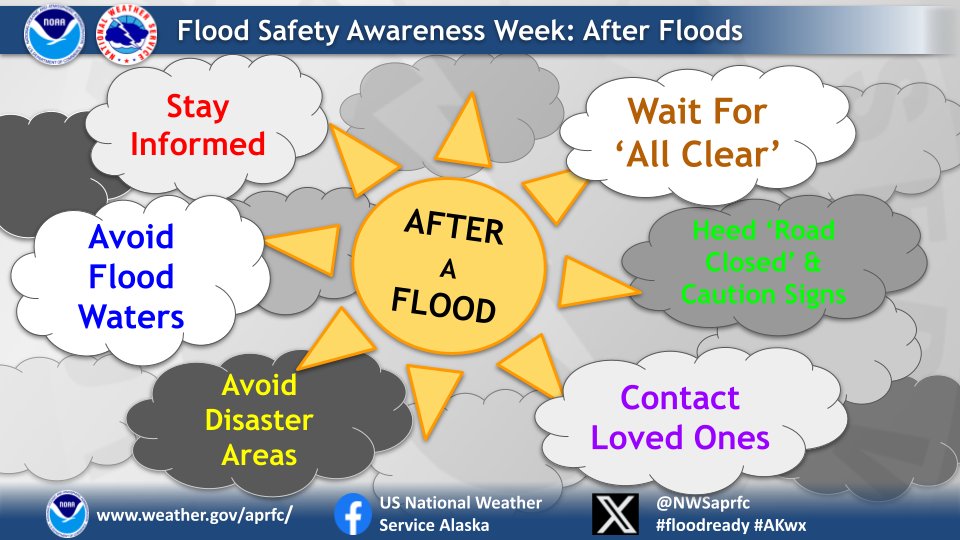
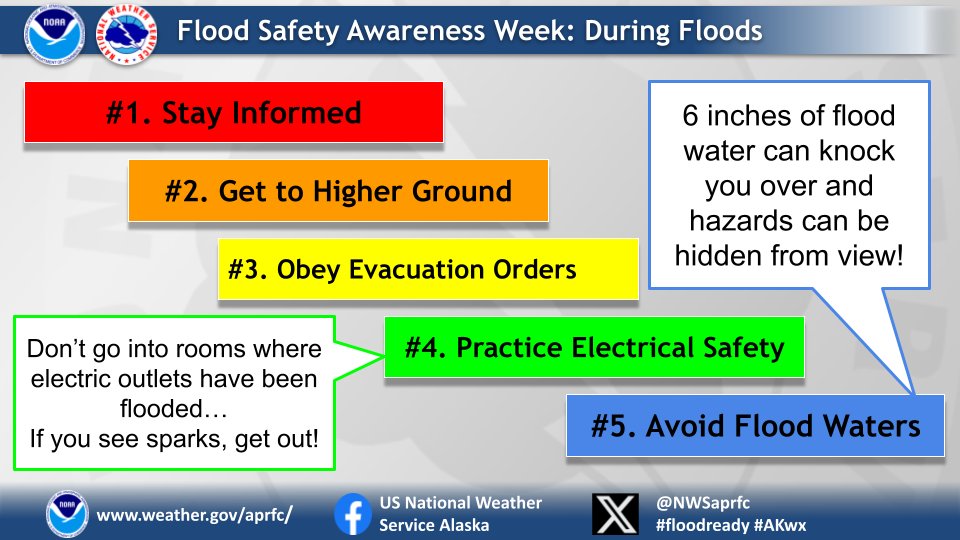
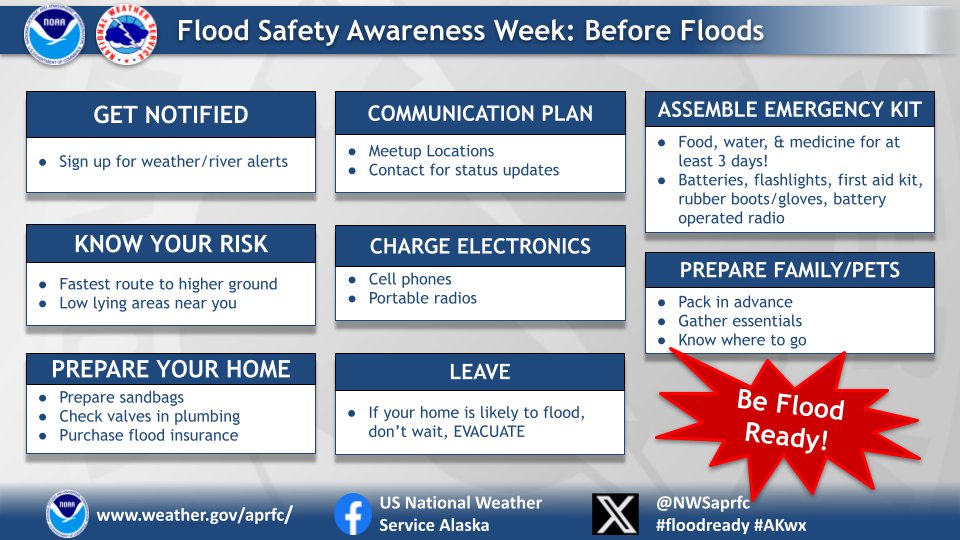

Thanks for joining us during flood week, for all the up to date information and to track conditions statewide, check out the APRFC’s website:
weather.gov/aprfc
And for all of NOAA’s flood safety tips & resources:
weather.gov/safety/flood
Stay safe Alaska!
#akwx #floodready
1
189
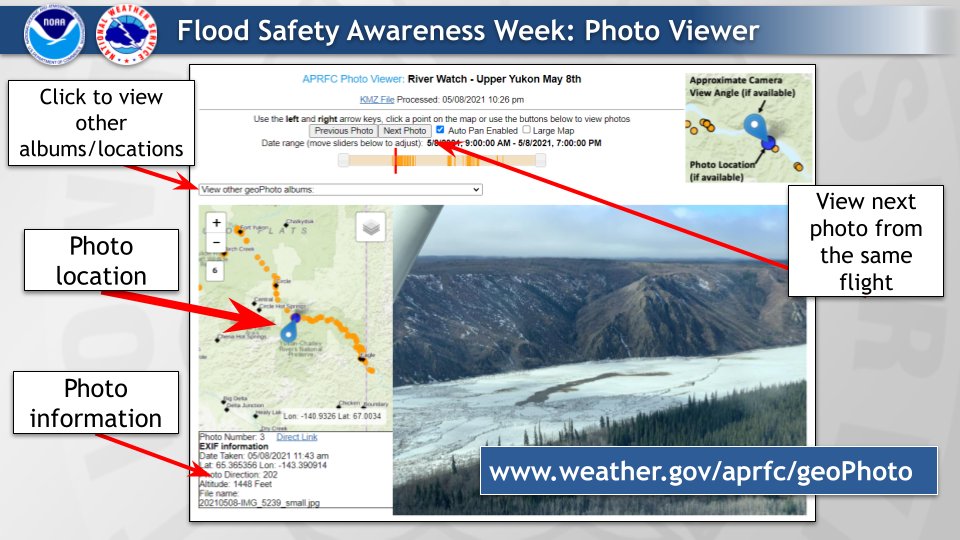
The APRFC and partners fly the Yukon and Kuskokwim rivers during breakup season. See a birds eye view of the rivers here:
weather.gov/aprfc/geoPhoto
Photos are uploaded right after flights, so stay tuned for new photos coming at the end of April!
#akwx #floodready
139
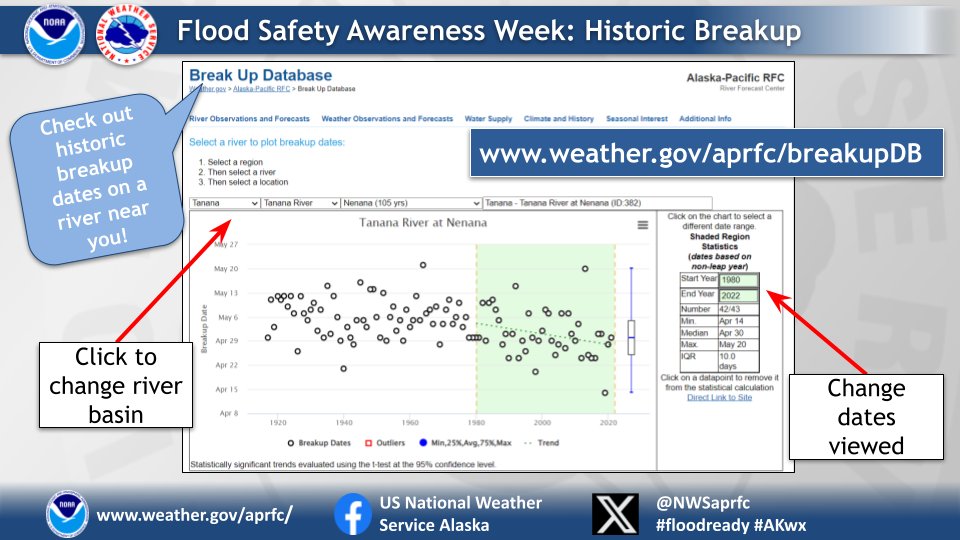
When do rivers normally breakup? Find all past recorded breakup dates here:
weather.gov/aprfc/breakupDB
#akwx #floodready
86
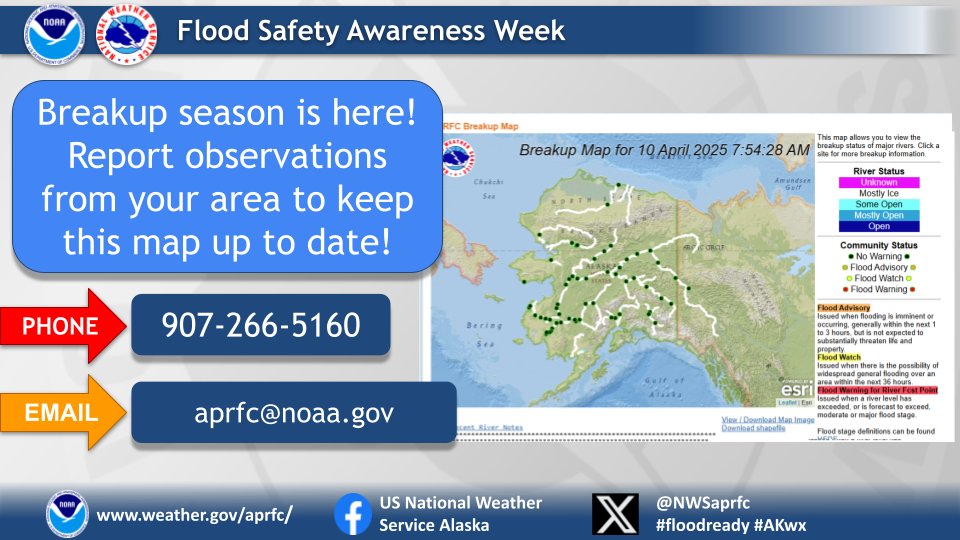
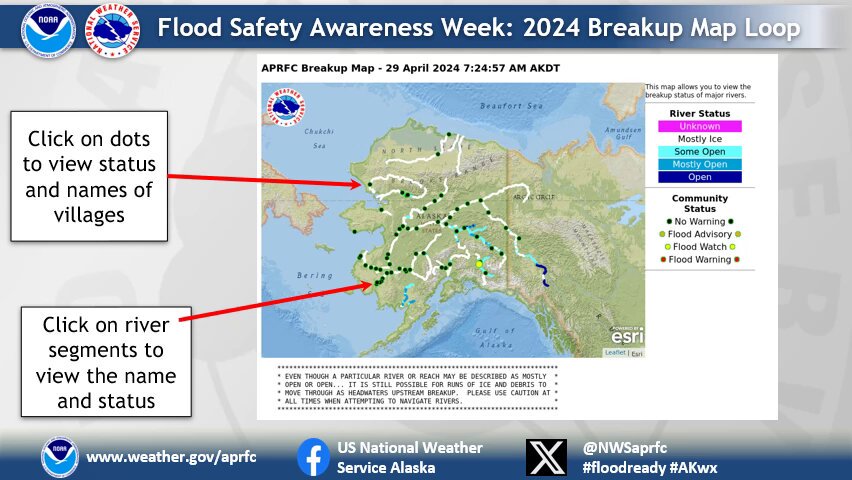
The APRFC uses webcams, satellites, observer reports to keep our breakup map as up to date as possible. Help us share what happens in 2025-Submit observations by phone or email:
aprfc@noaa.gov
907-266-5160
Keep up to date with breakup:
weather.gov/aprfc/breakupMap
#akwx #floodready
1
88
The 2025 Breakup Podcast is now live! Jen Wallace (SEOC) and Kyle Van Peursem (NWS) give you the latest on what to expect this breakup season in this DHS&EM Podcast! open.spotify.com/episode/624…... or podcasts.apple.com/.../dhs-e…
#akwx #FloodReady
2
5
849
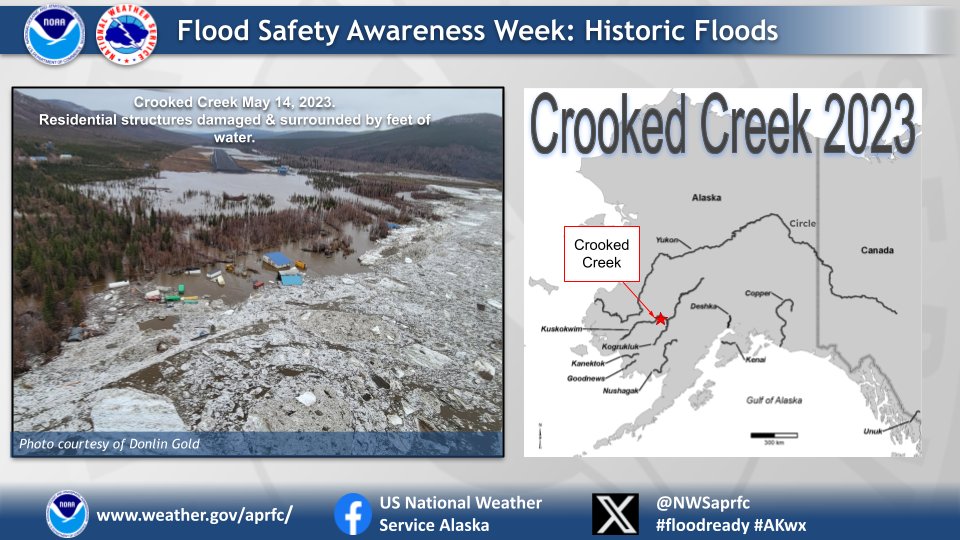
On May 13th, an ice jam formed just downstream of Crooked Creek, triggering a rapid rise in water levels—up to 16 feet within hours. The event led to the worst flooding ever recorded in Crooked Creek.
#akwx #floodready
1
75
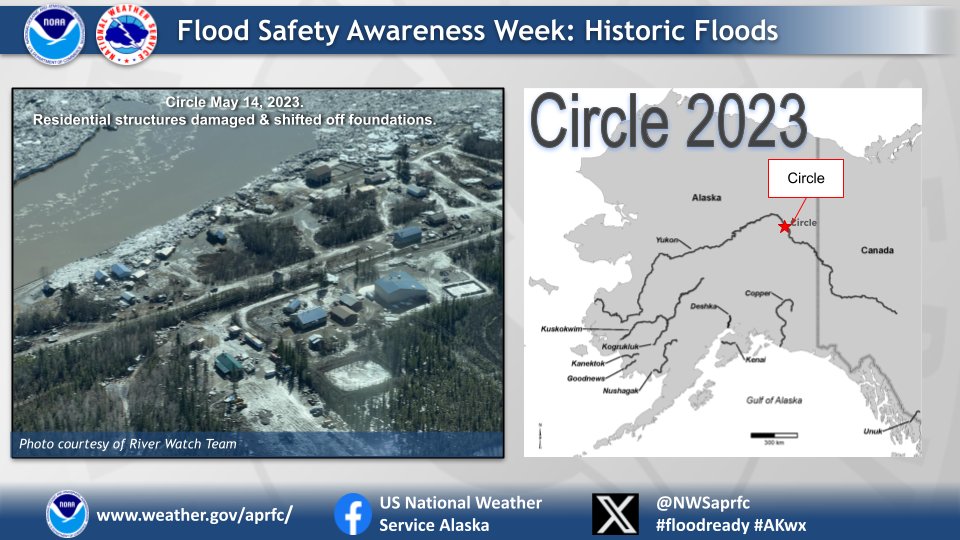
Above average snow in the Yukon coupled with cold April temps led to a mechanical breakup. On May 14, a 90-mile breakup front jammed downstream and caused water to backup into Circle. The river quickly rose and caused the worst flooding in Circle’s history!
#akwx #floodready
70
NWS APRFC retweeted

18 Apr 2025
🌊 Breakup season is coming to Alaska! Stay alert to rising waters from ice jams and snowmelt flooding.
Get the latest outlook from the Alaska-Pacific River Forecast Center:
🎥 youtu.be/WdirmaH8za4?si=phOH…
#FloodPreparednessWeek2025 #FloodSafety #FloodReady #TurnAroundDontDrown #AKwx
3
3
1,430
1
90
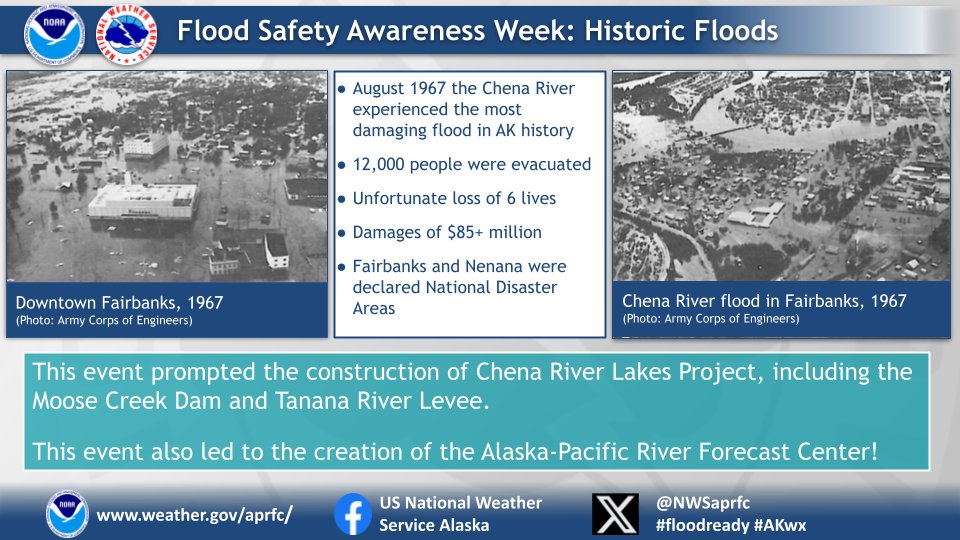
In August 1967, within an 8 day span, Fairbanks had experienced half of its average annual precipitation during an already wet summer.
For more information about the Chena River Flood visit:
weather.gov/aprfc/Fairbanks1…
#akwx #floodready
66
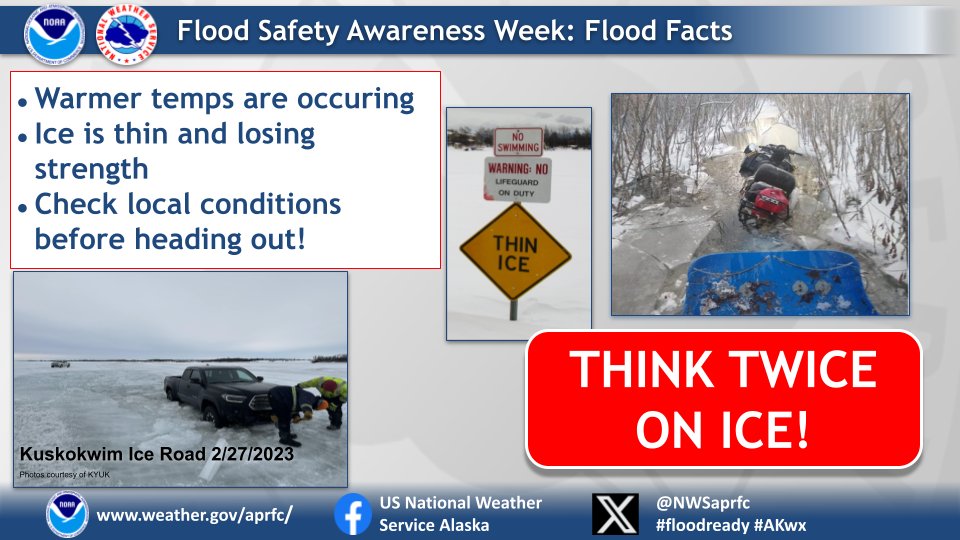
Dangerous river and lake ice conditions will develop as the deterioration of the ice continues over the next couple of weeks.
Ice thickness:
weather.gov/aprfc/IceThickne…
River Conditions:
weather.gov/aprfc/riverCondi…
UAF Fresh Eyes Cameras:
fresheyesonice.org/realtime-…
#akwx #floodready
52
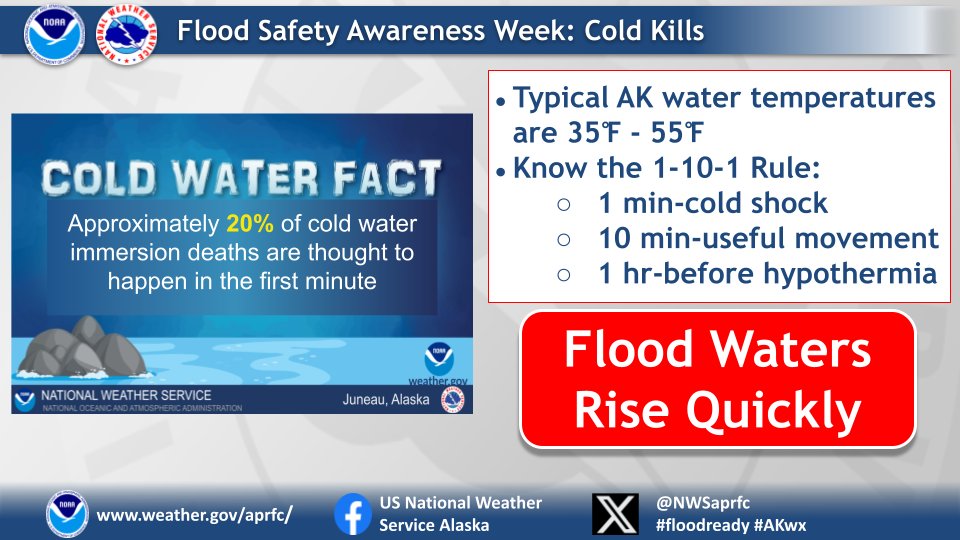
Cold water kills: ~20% of those who perish in cold water do so in the first minute of immersion.
When you fall in:
1 Min: Cold shock – catch your breath.
10 Min: Useful movement – get to safety or stay afloat.
1 Hr: Before hypothermia causes unconsciousness.
#akwx #floodready
63
For more safety information:
weather.gov/safety/flood-tur…
Turn Around, Don’t Drown PSA by Matt Hawk:
weather.gov/safety/tadd-musi…
#akwx #floodready
60
Many dangers are still present, even after flood waters have receded. Stay alert for danger!
More info here:
weather.gov/safety/flood-aft…
#akwx #floodready
61
During floods, water levels and flow rate can change quickly during flooding. Avoid flood waters at all costs!
Find out more:
weather.gov/safety/flood-dur…
#akwx #floodready
59
What is the best way to stay safe during a flood? Be prepared! Check out AK’s Emergency Plan ready.alaska.gov/Documents/O…
More resources here:
weather.gov/safety/flood-bef…
Report a flood to the River Forecast Center here:
weather.gov/aprfc/submit?sit…
#akwx #floodready
53
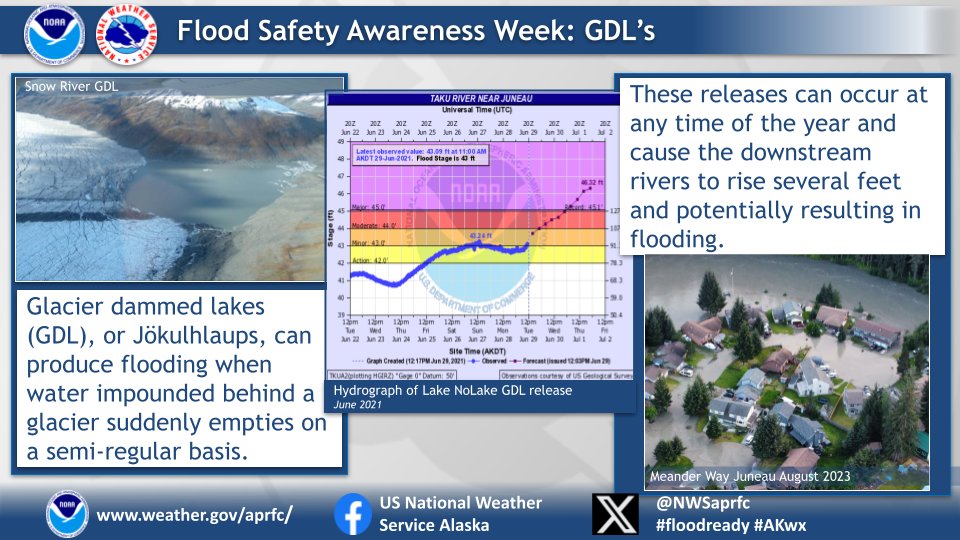
Glacier dammed lakes (GDL), or Jökulhlaups, are unique flood hazards in Alaska that can produce flooding anytime!
For more information and a map of know GDLs around Alaska:
weather.gov/aprfc/gdlMain
#akwx #floodready
92
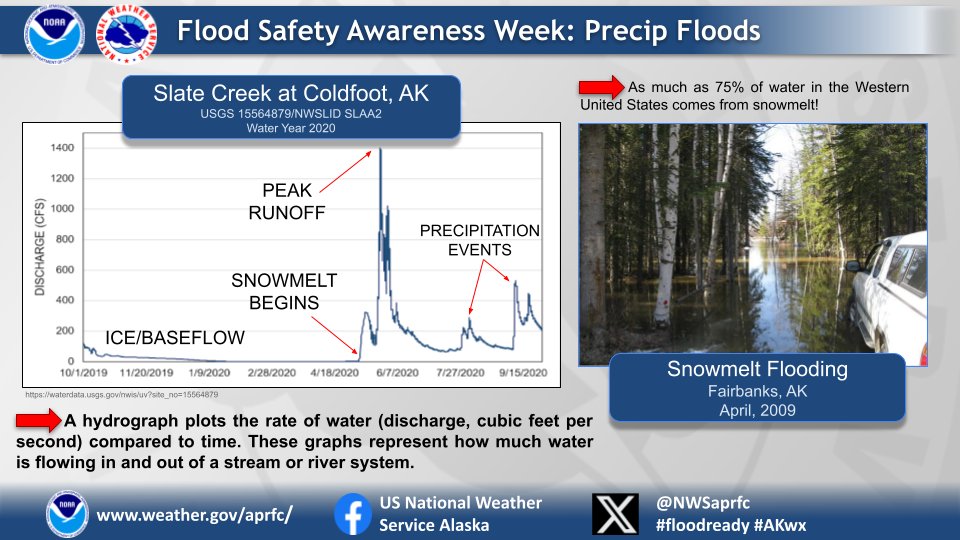
During the spring, frozen ground reduces the amount of water from melting snow or rainfall that can seep into the ground. A rapid warming can cause excessive melt water from the snowpack that can overflow streams, rivers and lakes.
weather.gov/aprfc/floodpoten…
64
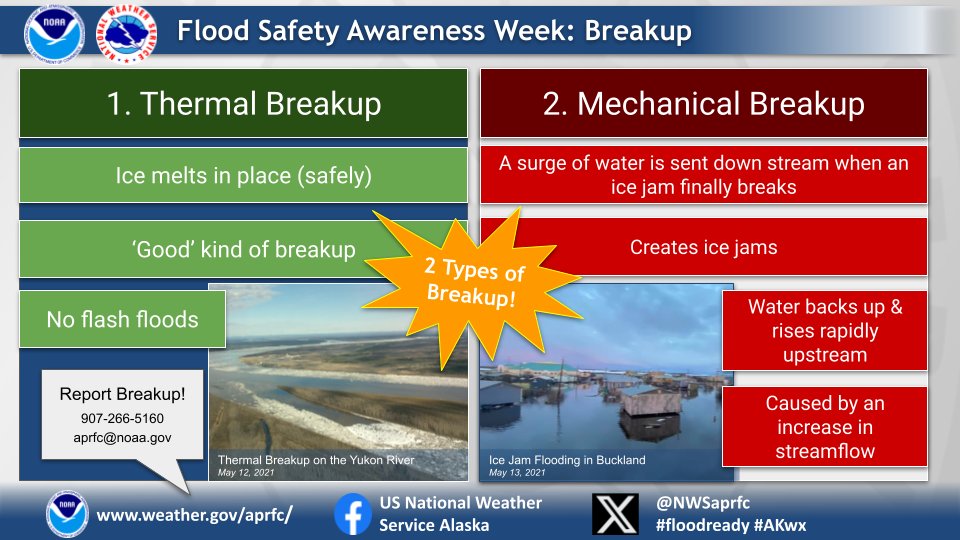
There are 2 types of breakup, mechanical and thermal. Mechanical breakup can create dangerous ice jams. Ice jams are a serious hazard to Alaskans.
To report breakup near you, submit this form to our River Forecast Center:
docs.google.com/forms/d/e/1F…
#akwx #floodready
3
2
773
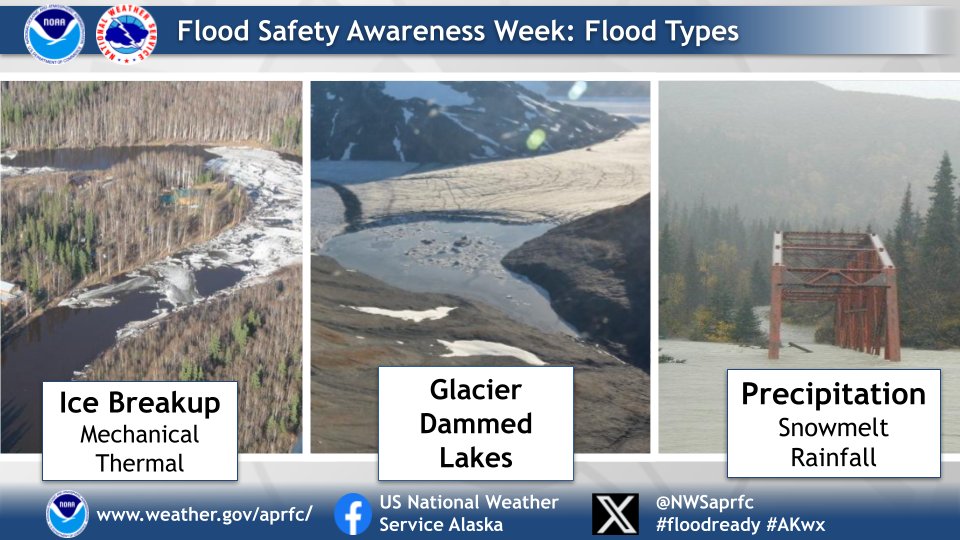
Alaska is a unique state for many reasons, one of which is the several types of potential floods. Throughout the day, we will highlight 3 main types of floods to be aware of here in Alaska.
weather.gov/safety/flood-sta…
#akwx #floodready
7
6
932