
Católico. Lo demás es secundario.
Joined September 2020
- Tweets 5,186
- Following 285
- Followers 141
- Likes 132,687
38 Photos and videos




Ignacio retweeted

I would consider Islam a kind of heretical Christianity before I would expand the name so far as to include Mormons. They don't believe in God!
5
8
127
4,067
Ignacio retweeted

You start to realize how philosophically retarded some people are when you read the tweets of someone who supports abortion. Billions must return to pre-modern philosophy.
6
9
151
3,095
Ignacio retweeted

May 30
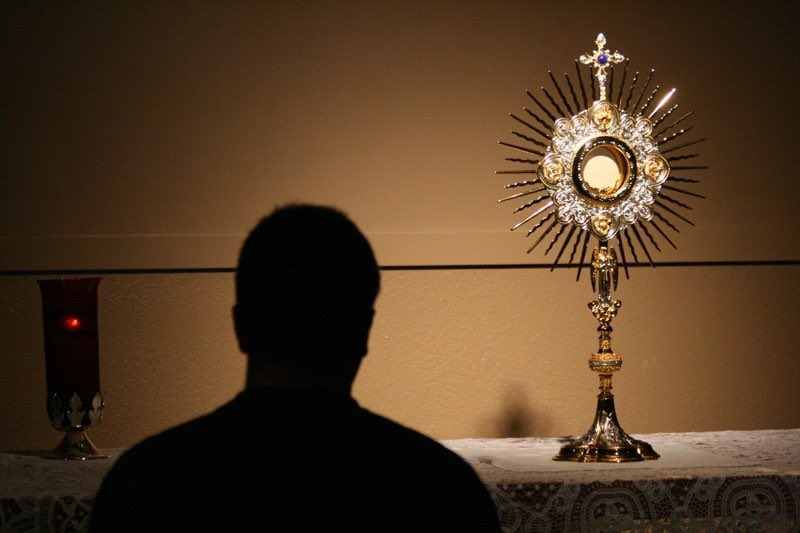
“So, could you not watch with me one hour?” (Matthew 26:40)
12
121
1,666
14,837
Ignacio retweeted

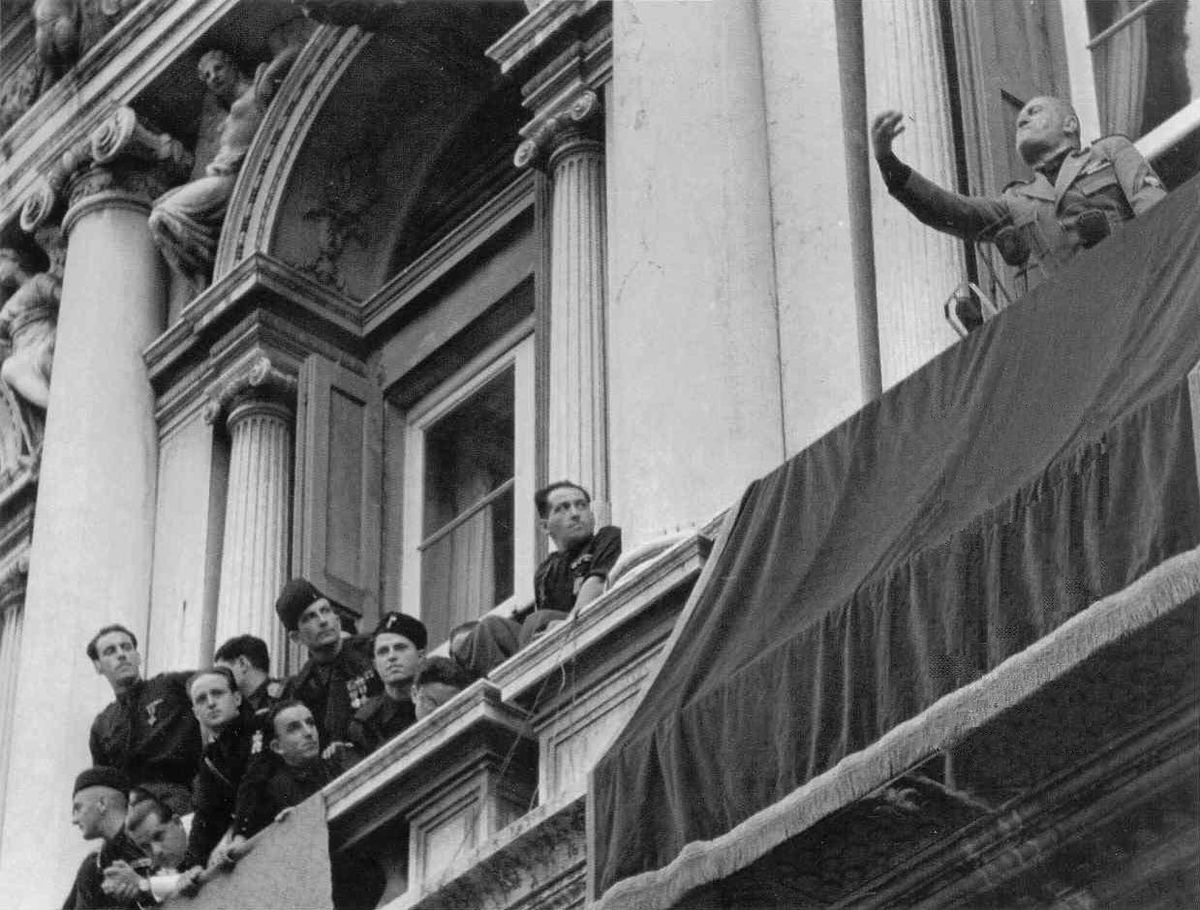
"The Nordicists should explain to us why the Nords have not created in their places of origin any civilization on the level of Greece, Rome or the Spanish Empire."
- Benito Mussolini, 1934
149
247
2,287
132,588

Ignacio retweeted

May 25
For as much as people want to claim that the Catholic Church is “irrelevant” or a relic from a medieval past, notice how when the Church speaks on faith and morals, the world stops. Even if the world doesn’t faithfully follow the Church’s directives, the Church is still a “main character”. The Church is still a target of the world’s fluctuating emotions: anger and rage, awe and reverence, curiosity and inquiry.
Patriarch Bartholomew, the woman in Canterbury, the Mormon prophet—none captures the global attention. There isn’t 24/7 news coverage on the election of the president of the Southern Baptist Convention. No one ever hears about the Dalai Lama anymore.
Anthropic wouldn’t waste its time joining a Methodist convention on AI. Major news outlets and journalists wouldn’t flock to Geneva to hear what Lutherans have to say about artificial intelligence. When Islamic imams issue a fatwa, very rarely does anyone blink an eye. These religions and denominations don’t ever come off as having a moral authority beyond that of their own people.
But when the Catholic Church and the pope speaks, the world stops. Maybe the vast majority of people will argue and rant against its teaching (Humanae Vitae, 1968). Maybe what is taught will win favor among world leaders (Laudato Si, 2015). But the fact remains that the Church is seen as a major player on the world’s stage.
As I sit down to read Pope Leo XIV’s “Magnifica Humanitas” (Encyclical Letter on Safeguarding the Human Person in the Time of Artificial Intelligence), I realize that, like Catholics across millennia, I belong to not only a church, but the Church. I am a member of a supernatural society, one that continues the mission of Christ today, through His Spirit.
Whether it is mocked or praised, the Church has “main character energy”, because it simply is the main character of history. And when the main character speaks, you stop for a moment to listen. Or in this case, to read a 42,300-word encyclical.
31
246
1,541
75,304
Ignacio retweeted

May 21
Católicos normies: "Santo Afonso é um rigorista moral. Desde então a Igreja evoluiu e tem uma compreensão mais plena da teologia moral".
Papa Leão:
vaticannews.va/en/pope/news/…
11
45
2,793
Ignacio retweeted

In defense of “Righteous Indignation”
by using an example taken from my life, but it relates to the lives of many like me.
I recommend reading if you relate to what I’m quote tweeting and have childhood trauma or if you don't understand the two words together.
Because they are my favorite two words together oat.
“but in virtue of a judgment of the reason: and thus without doubt lack of anger is a sin.”
- Saint Thomas Aquinas, Doctor of the Church, in his Summa Theologiae, Question 158. Anger, Whether there is a vice opposed to anger resulting from lack of anger? Answer
“Therefore to be angry is not always an evil. ….
But if one is angry in accordance with right reason, one's anger is deserving of praise.” - Saint Thomas Aquinas, Article 1. Whether it is lawful to be angry?
Bc I was raised in the way I am quote tweeting, prevented from being with my father, which, according to natural law, I am owed to be raised by him and to be raised to love God, and I am to obey my father-
I have just cause to be angry. Always, in regard to thinking about my unnatural childhood.
What is my God-given right that was taken from me, so I can be angry.
It would be unnatural if I was fine with my childhood and felt peace thinking about the fact that I was being prevented from seeing my father, and unnatural If I didnt get angry when my mother talked badly about my father.
“The irascible power in man is naturally subject to his reason, wherefore its act is natural to man, in so far as it is in accord with reason, and in so far as it is against reason, it is contrary to man's nature.” - Saint Thomas Aquinas, reply to objection 4, Whether anger is a sin?
So while I can forgive my mom, I find that it would be very hard for me or people like me to not be angry at -at least- our general circumstances.
And to the extent I am not angry about it- that is unnatural.
“Consequently lack of the passion of anger is also a vice” - Saint Thomas Aquinas, Article 8, Answer
So it is a supernatural gift from God, that I would ever feel “peace” when thinking about my childhood.
Therefore I conclude, children with single mothers are a prime example of people with Righteous Indignation. I will link below the section of the Summa where you can read Saint Thomas Aquinas on this, in case anyone doesn’t believe me.

Yes. However it’s important to know that the likelihood of the father being abusive isn’t higher than the likelihood of a single mother being abusive.
My mother went on to put me through abuse.
She eventually tried to kick me out anyway and I had to move out at 18 to live with her brother, my gay Uncle.
He (a single gay man in California) was a better alternative to live with than her.
My father helped me to revert to Catholicism later in life along with him. He was always good to me. I missed him, and would cry bc I wanted to be with him, and my mom would talk badly about him. I was a bad kid because I didn’t have him in the home.
7
3
22
1,616
Ignacio retweeted

May 17
As a rational animal, a human being is neither angel nor ape but something that combines into a unity a little of both. Our rational powers transcend matter and make it possible for a residue of a human being to survive death, reduced to just a disembodied intellect. But that is not our normal condition, and what makes the human mind distinct from that of an angel is its deep dependence on embodiment for its normal operation and the molding of its character over time.
There are two families of opposite extreme errors concerning human nature, those that exaggerate our dependence on matter and those that exaggerate our independence of matter. The first family of errors include materialist philosophical theories that try to reduce thought to physiological processes, and psychological theories that blur the distinction between human cognition and language on the one hand and that of non-human animals on the other. The second family of errors include the Cartesian dualist thesis that mind and body are two radically independent substances, and transhumanist theories according to which we might radically alter our bodily nature as we wish, or even transcend it altogether by uploading our minds into a virtual reality.
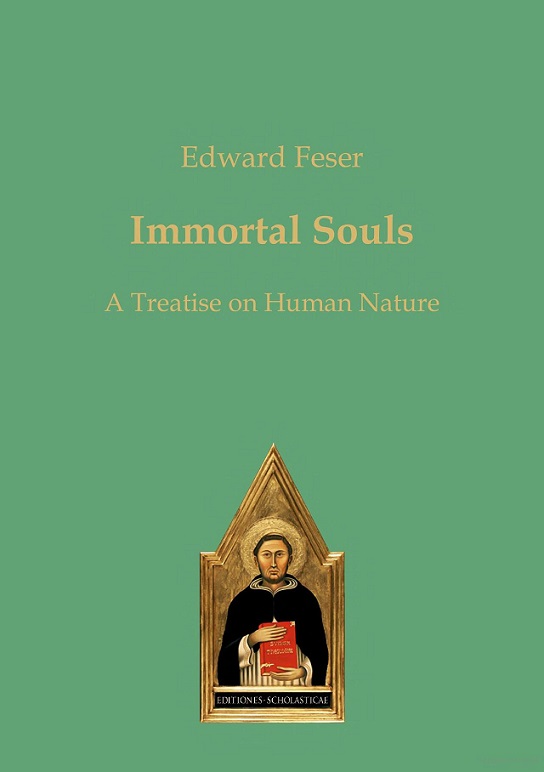
My book Immortal Souls: A Treatise on Human Nature is a sustained, rigorous refutation of both families of errors. It is available from Amazon: a.co/d/6b6QW7Q and Barnes and Noble: barnesandnoble.com/w/immorta…
Here are the back cover copy, endorsements, and table of contents:
Immortal Souls provides as ambitious and complete a defense of Aristotelian-Thomistic philosophical anthropology as is currently in print. Among the many topics covered are the reality and unity of the self, the immateriality of the intellect, the freedom of the will, the immortality of the soul, the critique of artificial intelligence, and the refutation of both Cartesian and materialist conceptions of human nature. Along the way, the main rival positions in contemporary philosophy and science are thoroughly engaged with and rebutted.
“Edward Feser's book is a Summa of the nature of the human person: it is, therefore, both a rather long – but brilliant – monograph, and a valuable work for consultation. Each of the human faculties discussed is treated comprehensively, with a broad range of theories considered for and against, and, although Feser's conclusions are firmly Thomistic, one can derive great benefit from his discussions even if one is not a convinced hylomorphist. Every philosopher of mind would benefit from having this book within easy reach.” Howard Robinson, Professor Emeritus of Philosophy, Central European University
“Feser defends the Aristotelian and Thomistic system, effectively bringing it into dialogue with recent debates and drawing on some of the best of both analytic (Kripke, Searle, BonJour, Fodor) and phenomenological (Heidegger, Merleau-Ponty, Dreyfus) philosophy. He deftly rebuts objections to Thomism, both ancient and modern. Anyone working today on personal identity, the unity of the self, the semantics of cognition, free will, or qualia will need to engage with the analysis and arguments presented here.” Robert C. Koons, Professor of Philosophy, University of Texas at Austin
CONTENTS
Preface
Part I: What is Mind?
1. The Short Answer
2. The Self
3. The Intellect
4. The Will
Part II: What is Body?
5. Matter
6. Animality
Part III: What is a Human Being?
7. Against Cartesianism
8. Against Materialism
9. Neither Computers nor Brains
Part IV: What is the Soul?
10. Immortality
11. The Form of the Body
Index
40
81
473
18,911
Ignacio retweeted

May 15
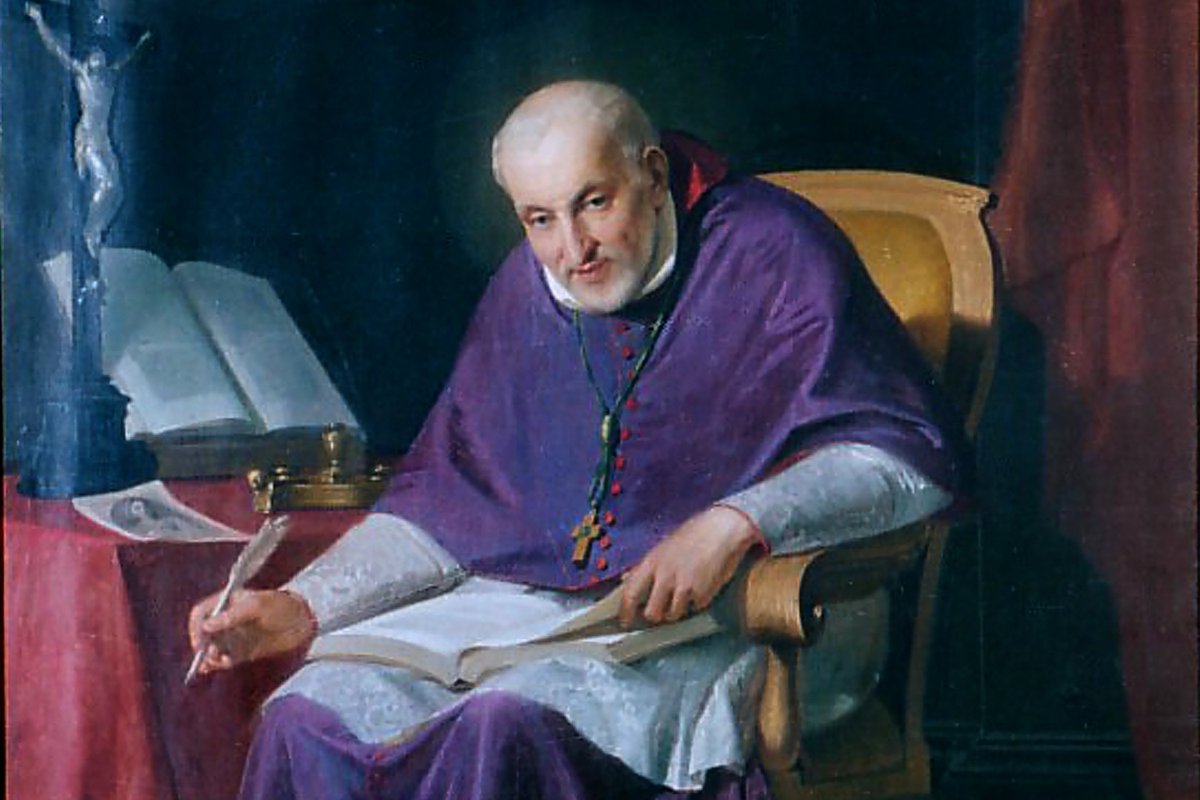
Tomasprobabilismo, seguir la opinión de Santo Tomás aunque la contraria sea más probable

“If I, a less learned man, were to follow the opinion of St. Thomas against a reason which seemed to me more probable; who would deny that I would act more prudently if, suspending my own opinion, I deferred to so great an authority?”
St. Alphonsus, Dissertatio scholastico-moralis, c. 4, n. 114.
2
3
31
2,585
Ignacio retweeted

Okay, so let me explain Gaza to someone with HOI4. Imagine that you go to war with a country in HOI4, and you just strat bomb it and occasionally attack a few tiles, but never cap it. You are obviously trying to just maximize casualties while carrying the war on for as long as possible.
2
7
276
Ignacio retweeted
May 11
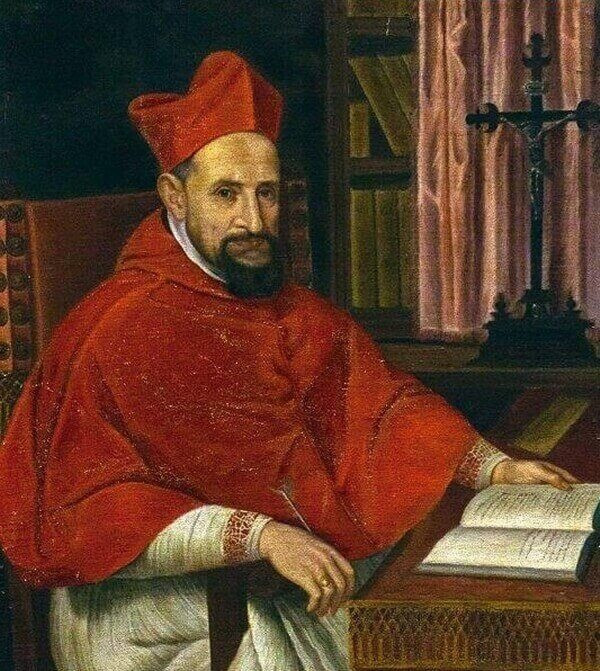
“"É provável, e pode ser piedosamente crido, que o Sumo Pontífice não somente não possa errar enquanto Pontífice, mas também que, como pessoa particular, não possa ser herege, crendo obstinadamente em algo falso contrário à fé."
Isso se prova, antes de tudo, porque a suave disposição da providência divina parece requerê-lo. Pois o Pontífice não apenas não deve, mas nem pode pregar heresia; ao contrário, deve sempre ensinar a verdade, e sem dúvida o fará, já que o Senhor lhe ordenou confirmar os seus irmãos, e por isso acrescentou: ‘Eu roguei por ti, para que tua fé não desfaleça’, isto é, para que ao menos a pregação da verdadeira fé em tua cátedra não venha a faltar.
E como, pergunto eu, um Pontífice herege confirmará os irmãos na fé e sempre pregará a verdadeira fé? Certamente Deus pode arrancar de um coração herético a profissão da verdadeira fé, assim como outrora colocou palavras na boca da jumenta de Balaão; mas isso seria algo violento, e não corresponde à norma ordinária da providência divina, que dispõe todas as coisas suavemente.
Em segundo lugar, prova-se pelo que aconteceu no passado. Pois, até agora, nenhum Pontífice foi herege, ou ao menos não se pode provar acerca de qualquer Pontífice que tenha sido herege. Portanto, isto é um sinal de que tal coisa não pode acontecer.” - São Roberto Belarmino, De Controversiis, Livro IV, Capítulo VI
3
4
22
721
Ignacio retweeted

Santos produzidos pelos jesuítas: uma legião, inclusive dois Doutores da Igreja.
Santos produzidos pelos jansenistas: zero, já que jansenista não entra no céu.
1
29
1,191

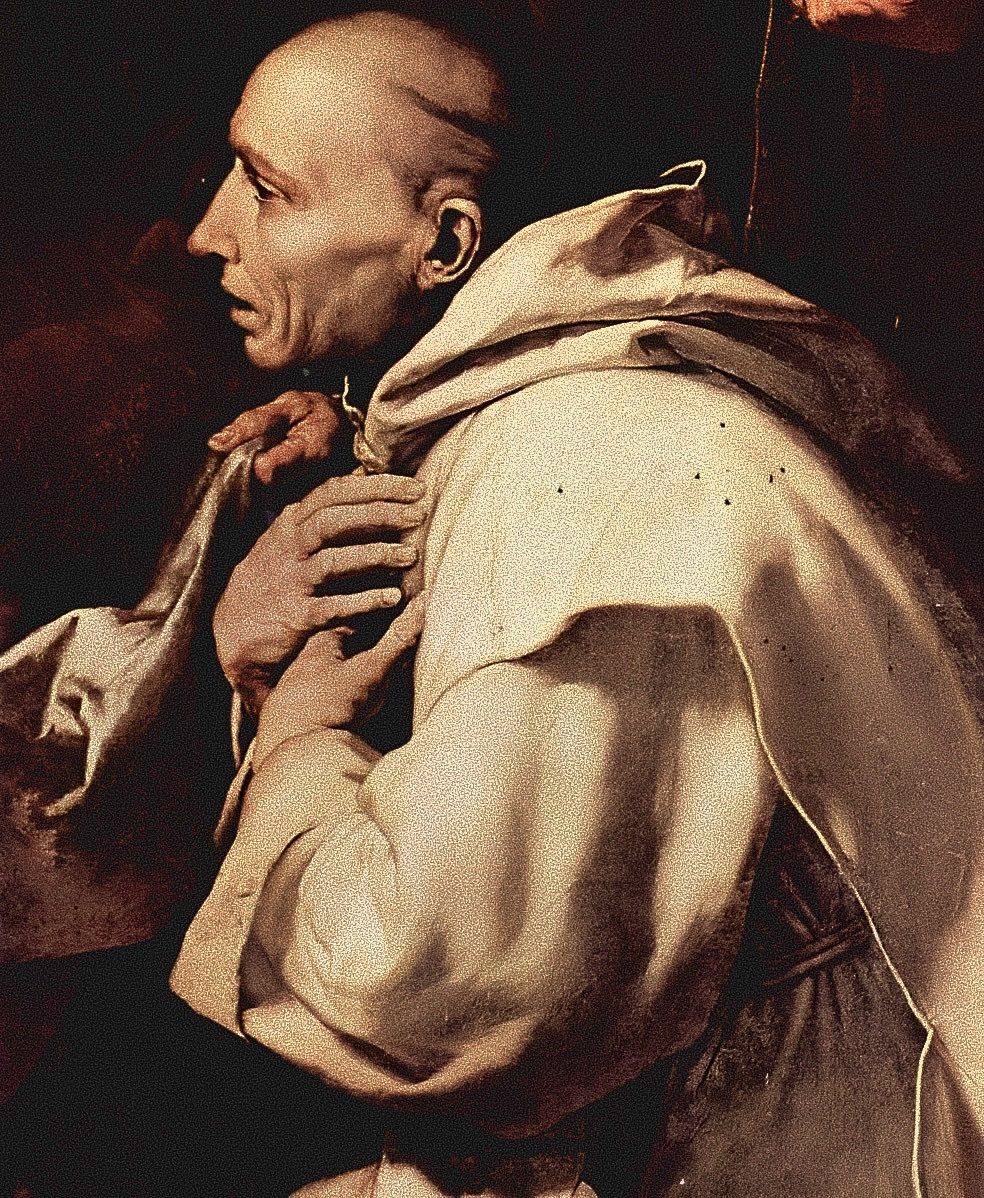
“Portanto, não devemos recear de estar sem a graça de Deus pelo fato de sermos tentados; pelo contrário, então devemos esperar ser mais amados por Deus. É engano do demônio o fazer certas almas fracas acreditarem que as tentações são pecados que mancham a alma. Não são os maus pensamentos que fazem perder a Deus, mas sim os maus consentimentos. Por fortes que sejam as tentações do demônio, por mais vivas que sejam as imaginações impuras assaltando o nosso espírito, se nós não a queremos, não mancham a alma, mas a tornam mais pura, mais forte e mais querida por Deus.
Diz São Bernardo que todas as vezes que vencemos as tentações, ganhamos um novo mérito: ‘Quantas vezes vencemos, tantas vezes somos coroados’. Não nos espantemos com o mau pensamento que não sai da nossa cabeça e continua a nos atormentar; basta que o detestemos e procuremos afastá-lo.”
— Santo Afonso Maria de Ligório. A Prática do Amor a Jesus Cristo. Cap. XVII.
2
55
293
4,347
Ignacio retweeted

May 5
Aquinas is more precise than that in II-II Q.150. Drunkenness is a mortal sin when a man knowingly and intentionally drinks to the point of losing the use of reason and would not abstain even knowing the effect. If a man becomes drunk through ignorance of the strength of what he consumed the sin is venial. If he drinks moderately and becomes drunk due to weakness of constitution without intending it there may be no sin at all. The gravity tracks the knowledge and the intention. The principle is that deliberately destroying the use of reason is gravely disordered because reason is what orders man to his final end. The nuance matters because without it the teaching sounds like a blanket condemnation of anyone who has ever had too much at a wedding.
2
12
420
Ignacio retweeted

Apr 15
Dios les dio el acento y la comida para compensarlos por su sistema político y de medios.
19
105
1,137
35,428
Ignacio retweeted

Apr 13
Actually the pope should say that civil communion is impossible between Christians and Muslims and that we should not strive for peace so that they get persecuted even more in a Muslim majority country.
12
9
189
5,781
Ignacio retweeted
I believe that there is a miracle involved with the holy fire, the miracle of how a flame can both be a cause of light in the senses and a cause of darkness in the intellect of the Orthodox.
3
6
35
1,195
Ignacio retweeted

Arguably worse because it's the most literal form of rent-seeking behavior
1
5
230
