
Postdoc Scholar @Stanford BASE, Genetics | Building AI agent systems for the life sciences and biomedicine (PantheonOS: pantheonos.stanford.edu)
Joined August 2015
- Tweets 88
- Following 1,036
- Followers 258
- Likes 693
27 Photos and videos




Weize Xu retweeted

May 7
i only recently came across pantheon-os, which is an awesome multi-agent framework for doing genomics research from @Xiaojie_Qiu and his team of collaborators.
what struck me most is that unlike most other multi agent frameworks or ai scientists that i have come across, pantheon-os displays a serious effort in building a thoughtful software which other researchers can use.
some of the features that i found fascinating were:
> there is a marketplace where users can discover and share reusable biomedical ai building blocks such as agents, tools and skills.
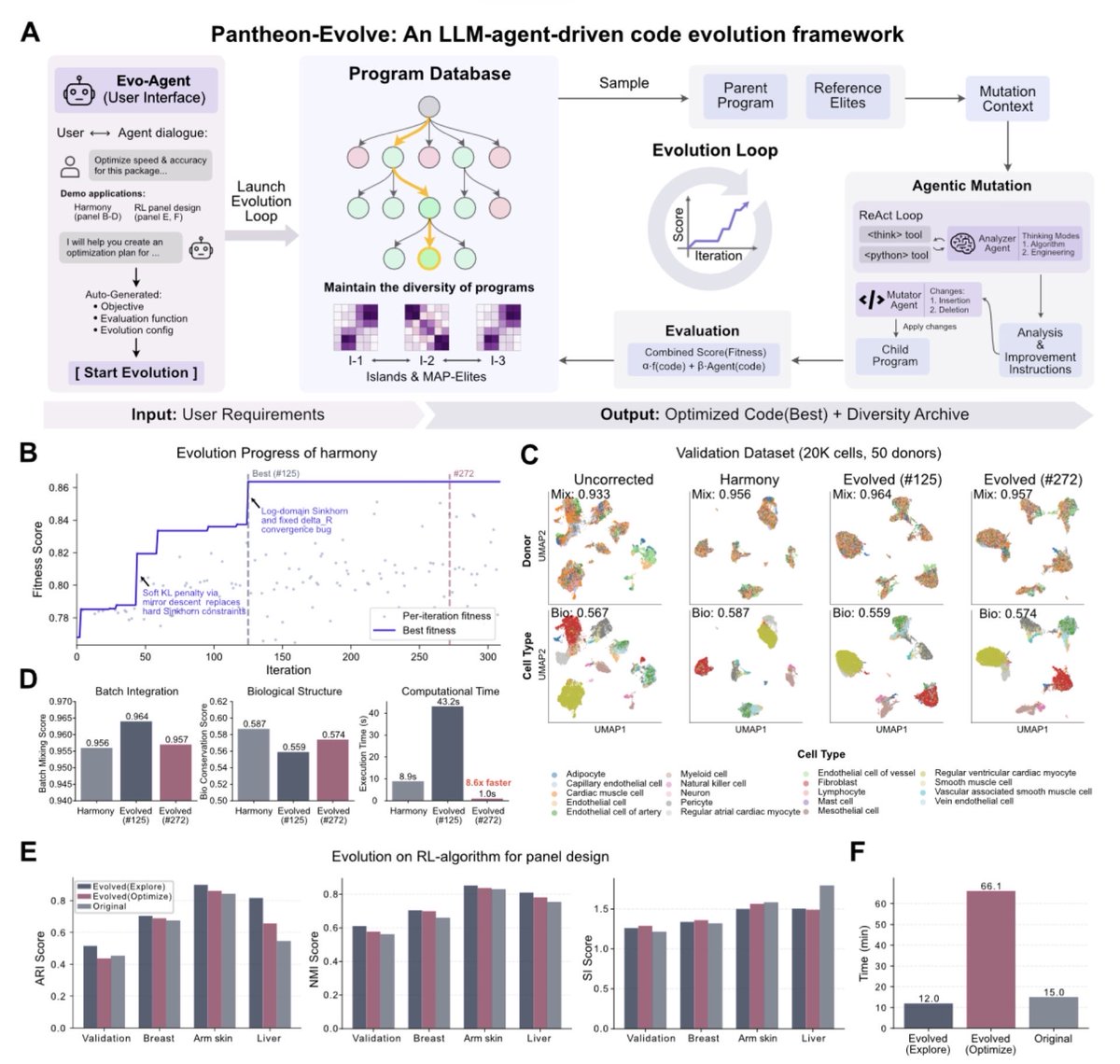
> employs evolutionary search to iteratively improve (aka autoresearch) algorithms that are used for batch correction in rna-sequencing and it used the map-elites style algorithm (conceptually similar to what has been used for idea exploration in alphaevolve from @GoogleDeepMind).
> what xiaojie showed us is that one can use pantheon-os to build detailed research reports/papers end to end starting from given input genomics samples, images, etc., with minimal to no human intervention and the finally analysis happens to be fully reproducible.
> comes in cli, desktop app and web ui and it is fully open source.
> supports multiple multi-agent architecture such as mixture-of-agents (llm council style), sequential agents (assembly line style), coordinator-agent (one agent delegating tasks to other agent), etc.
> privacy-preserving in the sense that the underlying data such as genomics data doesn't have to be uploaded to cloud but can be in local server, etc.
xiaojie and his team of collaborators has done extraordinary work in building this.
May 7

PantheonOS allows any biologist to perform complex data analyses of emerging single cell, multi-omics and spatial transcriptomics datasets end to end through AI agent and human collaboration. We are releasing six replays of use cases trajectories. Each "trajectory" is a complete end-to-end run, from prompt to analysis, to figures, and finally to report, and in fully inspectable and reproducible manner.
See the six user cases in our PantheonOS Gallery:
1. 3D mouse embryo analysis: Tangram deconvolution and PyVista-based 3D visualization of E6 mouse embryo spatial transcriptomics data
2. 3D human fetal heart analysis: Spatial mapping of heart disease gene patterns using MERFISH data
3. Multi-omics spatial integration: Single cell multi-omics-to-spatial mapping with MOSCOT optimal transport
4. Gene panel design: 1000-plex immune-oncology MERFISH gene panel optimization
5. Cell segmentation benchmarking: Comparative evaluation of Cellpose-SAM, InstanSeg, StarDist, and other tools
6. Spatial disease biology: Ligand–receptor analysis of disease-associated tissue microenvironments
We would love to hear how you can use PantheonOS for your research! Got an interesting agent run of your own and want to share? In the Pantheon UI, click Export Bundle (top-right of any chat) to package the full trajectory — chat history, code, figures, report — then submit it here:
3
5
17
4,800
Weize Xu retweeted

May 7
PantheonOS allows any biologist to perform complex data analyses of emerging single cell, multi-omics and spatial transcriptomics datasets end to end through AI agent and human collaboration. We are releasing six replays of use cases trajectories. Each "trajectory" is a complete end-to-end run, from prompt to analysis, to figures, and finally to report, and in fully inspectable and reproducible manner.
See the six user cases in our PantheonOS Gallery:
1. 3D mouse embryo analysis: Tangram deconvolution and PyVista-based 3D visualization of E6 mouse embryo spatial transcriptomics data
2. 3D human fetal heart analysis: Spatial mapping of heart disease gene patterns using MERFISH data
3. Multi-omics spatial integration: Single cell multi-omics-to-spatial mapping with MOSCOT optimal transport
4. Gene panel design: 1000-plex immune-oncology MERFISH gene panel optimization
5. Cell segmentation benchmarking: Comparative evaluation of Cellpose-SAM, InstanSeg, StarDist, and other tools
6. Spatial disease biology: Ligand–receptor analysis of disease-associated tissue microenvironments
We would love to hear how you can use PantheonOS for your research! Got an interesting agent run of your own and want to share? In the Pantheon UI, click Export Bundle (top-right of any chat) to package the full trajectory — chat history, code, figures, report — then submit it here:
3
25
77
13,080
Weize Xu retweeted
Apr 22
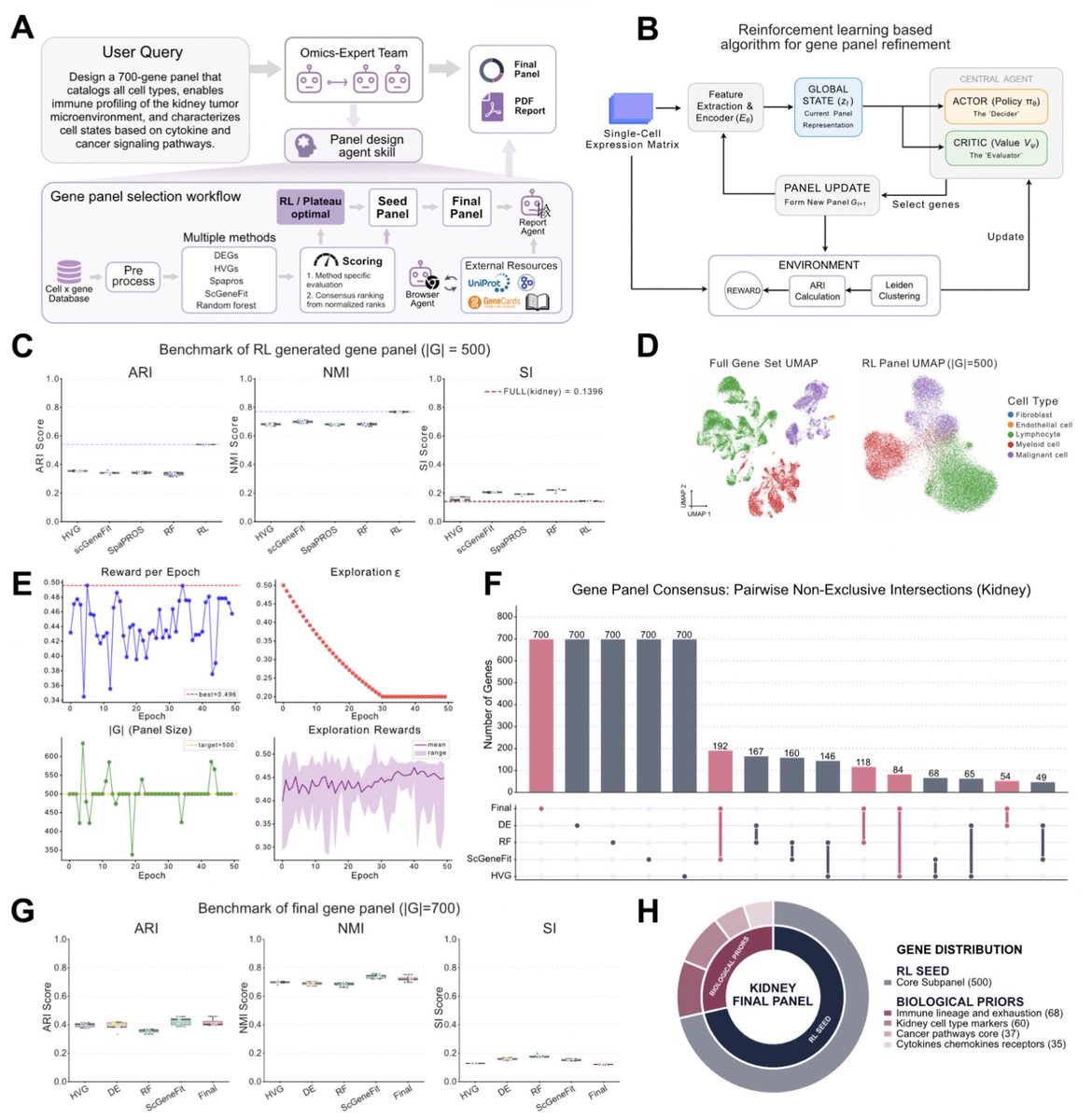
PantheonOS Now Tackles Gene Panel Design
Gene panel selection represents a critical bottleneck in spatial and single-cell genomics, where suboptimal choices compromise cell-type resolution and experimental validity.
Pantheon automates this end-to-end via multi-agent workflow orchestration. A leader agent orchestrates the full pipeline, delegating to specialized analyzers that dynamically route tools and benchmark strategies in real time — enabling long-horizon, autonomous discovery.
What can Pantheon do?
🧬 Multi-strategy gene selection — orchestrating parallel selection strategies to synthesize a single optimized panel.
📊 Clustering-aware optimization and biological grounding — directly maximizing ARI/NMI metrics while grounding decisions in domain knowledge, for panels that are both statistically and biologically meaningful.
📄 Self-documenting, reproducible runs — generating live notebooks, agent traces, and automated PDF reports with zero manual intervention. Unless you want to interact with it!
Benchmarked on pan-cancer immuno-oncology with @Vizgen, PantheonOS achieves superior overlap with expert-curated panels while outperforming classical baselines on clustering metrics.
Built on PantheonOS — the first evolvable, multi-agent operating system for biological discovery. Genomics is the beginning; the architecture goes beyond, and PantheonOS is fine-tunable for domain-specific scientific research.
📄 Preprint: biorxiv.org/content/10.64898…
🌐 Website: pantheonos.stanford.edu
Thank you to Erwin and @Nanguage for this incredible opportunity, and to @JiangHe_PhD , Lorenz Rongioni and the entire Vizgen @vizgen_inc team for the amazing collaboration. More to come soon!
3
11
1,739

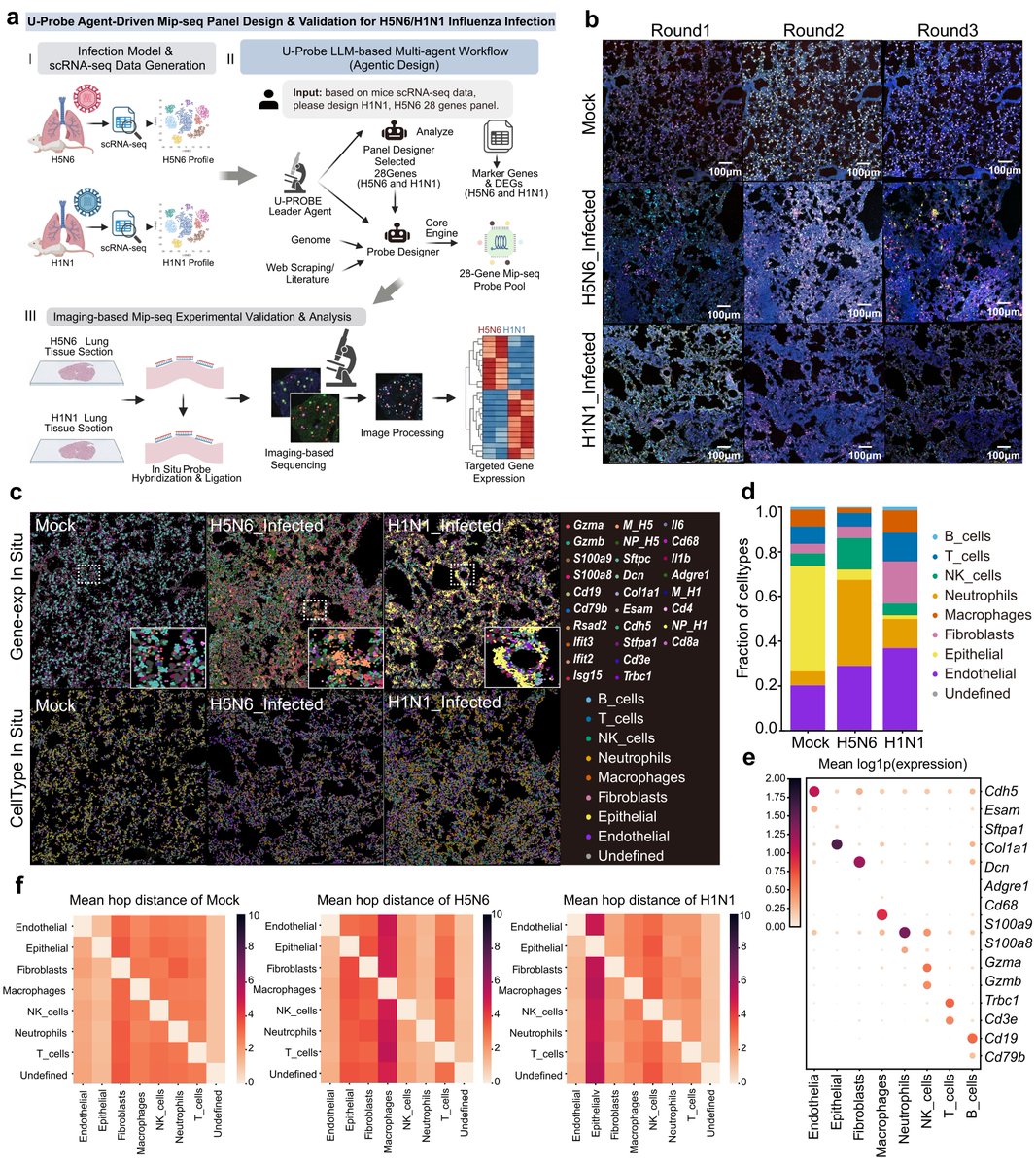
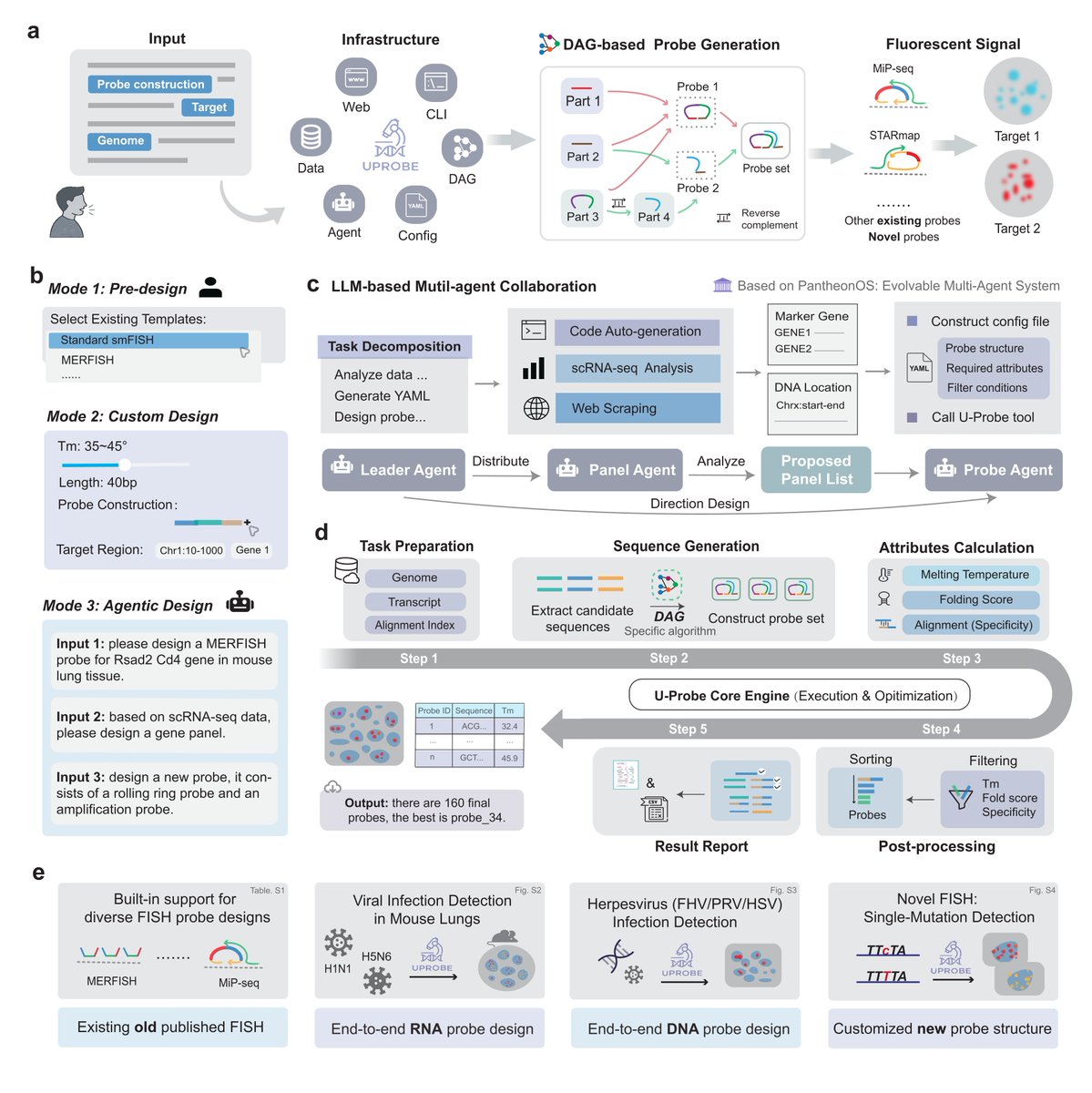
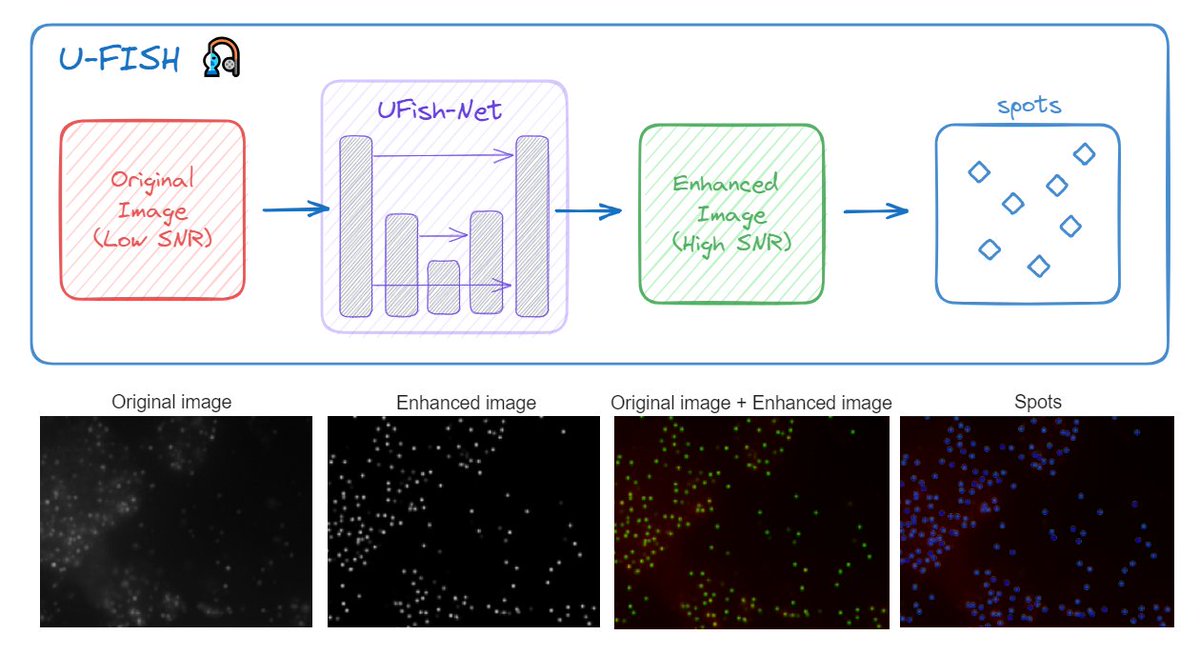
Introducing U-Probe — the first agent-assisted platform for FISH probe design. 🧬
Probe design today is still fragmented and expert-heavy: different tools for different protocols, manual parameter tuning, and limited support for new probe designs.
U-Probe addresses this by:
• Supporting diverse protocols (MERFISH, seqFISH, DNA-FISH, etc.)
• Enabling custom probe architectures via a programmable framework
• Using AI agents to assist with panel design and parameter selection
⚙️ Built on the @PantheonOS evolvable multi-agent framework
→ from experimental goal to synthesis-ready probes
1
5
20
3,462
U-Probe is available as an open source software:
• Web interface for interactive design
• CLI for batch workflows
• Agent interface for assisted design
It supports the full workflow from
design specification → probe generation → export.
Resources:
📄 Preprint: biorxiv.org/content/10.64898…
🌍 Website: u-probe.org/
💻 GitHub: github.com/UFISH-Team/U-Prob…
Feedback and use cases are very welcome!
1
2
202
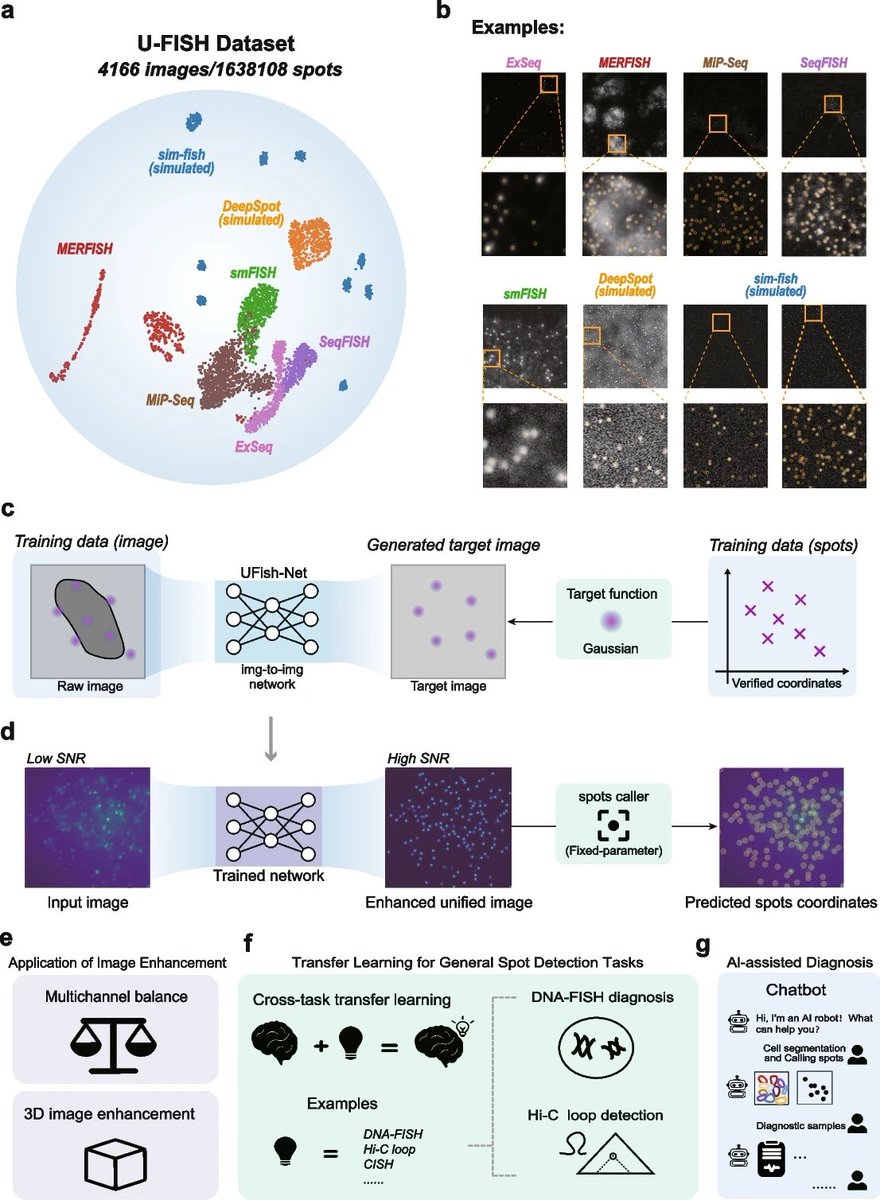
Thanks to Qian Zhang (@QianZhang12138), Huaiyuan Cai (@hycai_wikk), and the team for their contributions. Qian Zhang is currently seeking a PhD position. She has strong engineering skills and a deep understanding of biological image processing and FISH probe design. If interested, please feel free to get in touch.
1
2
209
Weize Xu retweeted

U-Probe: universal agentic probe design for imaging-based spatial-omics biorxiv.org/content/10.64898… #biorxiv_bioinfo
6
7
816
Weize Xu retweeted

Apr 9
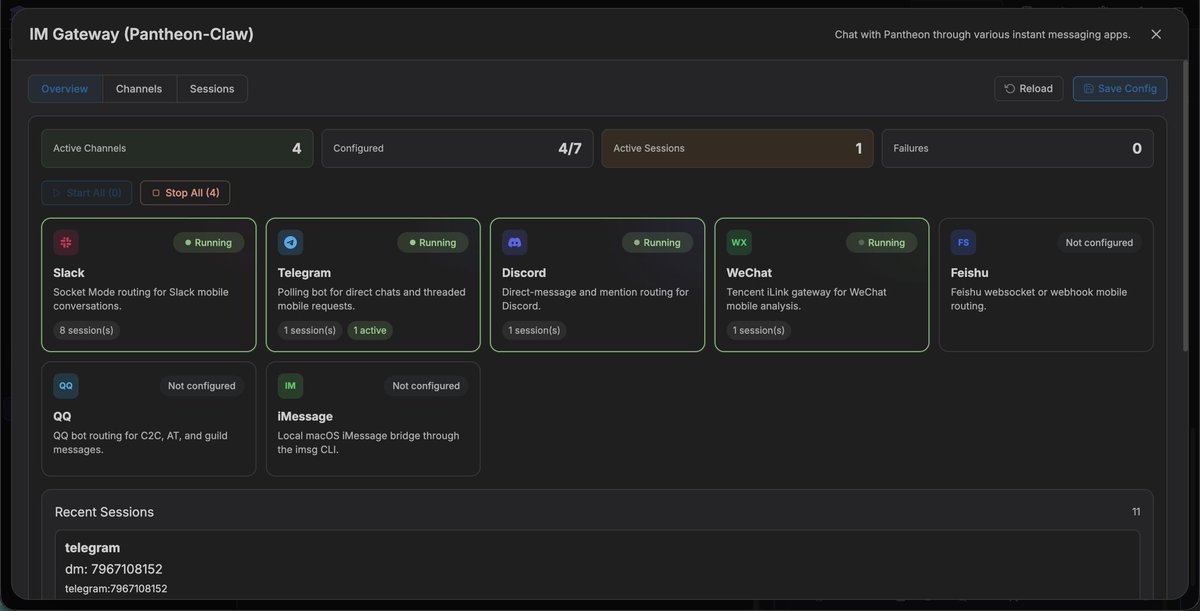
PantheonOS v0.5.1 is out.
Highlights:
• PantheonClaw gateway integration
• Free OAuth via Codex CLI & Gemini CLI
• LiteLLM removed → native SDK adapters
• Intelligent context optimization autocompact
Release notes: pantheonos.stanford.edu/blog…
#AI #Agents #OpenSource
2
4
537
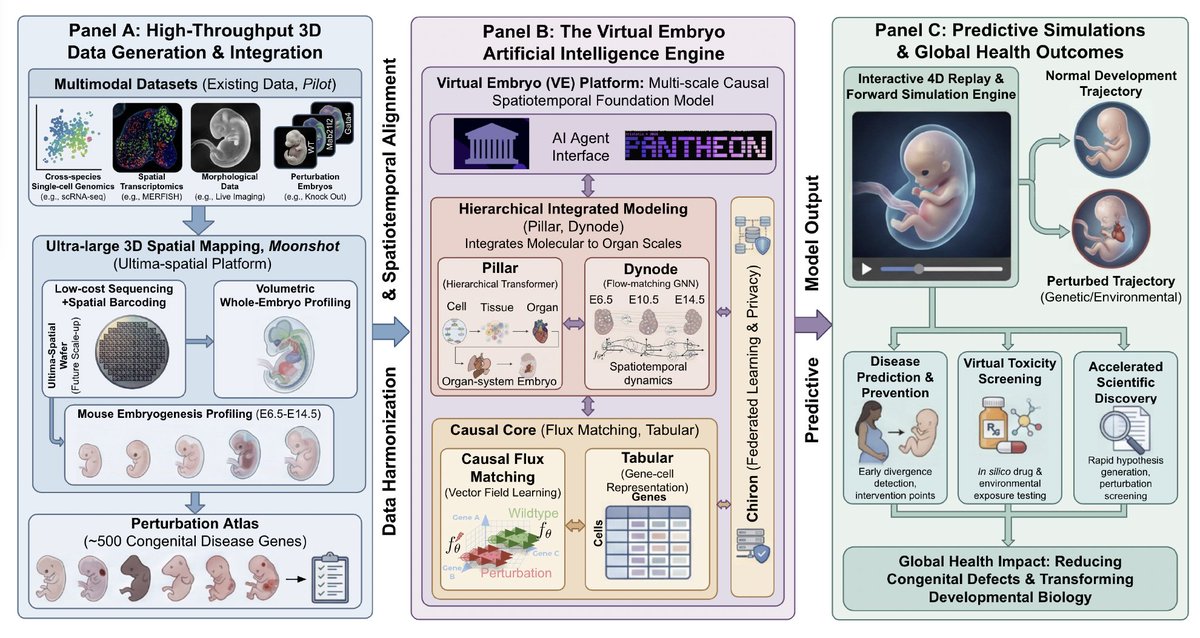
Huge congratulations to @Xiaojie_Qiu and the team on winning the Laude Institute Moonshots Seed Grant for the Virtual Embryo project.
@PantheonOS will serve as the agent interface layer in this effort, helping connect AI agents with predictive model and large-scale multimodal embryogenesis data.
Excited to be part of this vision: building a digital twin of mammalian embryogenesis and advancing the future of developmental biology and human health. 🚀🧬
Apr 15
Big news: Our Virtual Embryo project has been selected as a Laude Institute Moonshots Seed Grant winner — chosen from 125 proposals evaluated by 600 leading researchers.
I’m deeply honored to be recognized alongside a remarkable community that includes Fields Medalists like Terence Tao, Nobel laureates like Michael Kremer, Turing Award winners like Raj Reddy, and creators of transformative tools such as Jupyter Notebook.
We are now building (1) the largest time-resolved organism-level 3D perturbation atlas of mouse embryogenesis; (2) what could become the first digital twin of mammalian embryogenesis — a predictive model of development designed to uncover the mechanisms of congenital disease and ultimately help ensure that every newborn has the healthiest possible start in life.
If this vision excites you, come build with us — alongside Emily Fox, James Zou (@james_y_zou), and Marinka Zitnik (@marinkazitnik).
Thank you to @LaudeInstitute for believing in this vision. We also welcome industrial and philanthropic partners who want to help shape the future of developmental biology and human health.
4
2,388
Weize Xu retweeted

Apr 15
Advancing Healthcare track: Research that supports medical practitioners in diagnosis, treatment, and patient care.
🧬The Virtual Embryo Moonshot, @Stanford
One in 33 newborns is affected by congenital defects. This team is building the first predictive digital twin of human embryonic development to help change that.
@Xiaojie_Qiu Emily Fox @marinkazitnik @james_y_zou
⚕️JupyterHealth, @UCJointCPH @UCBerkeley @UCSF
Project Jupyter became the shared infrastructure of modern science. This team is doing the same thing for healthcare.
@Idasim @_ahmedmalaa @irenetrampoline @DrMayaPetersen Fernando Pérez
2
3
20
3,558
Weize Xu retweeted
Apr 15
Big news: Our Virtual Embryo project has been selected as a Laude Institute Moonshots Seed Grant winner — chosen from 125 proposals evaluated by 600 leading researchers.
I’m deeply honored to be recognized alongside a remarkable community that includes Fields Medalists like Terence Tao, Nobel laureates like Michael Kremer, Turing Award winners like Raj Reddy, and creators of transformative tools such as Jupyter Notebook.
We are now building (1) the largest time-resolved organism-level 3D perturbation atlas of mouse embryogenesis; (2) what could become the first digital twin of mammalian embryogenesis — a predictive model of development designed to uncover the mechanisms of congenital disease and ultimately help ensure that every newborn has the healthiest possible start in life.
If this vision excites you, come build with us — alongside Emily Fox, James Zou (@james_y_zou), and Marinka Zitnik (@marinkazitnik).
Thank you to @LaudeInstitute for believing in this vision. We also welcome industrial and philanthropic partners who want to help shape the future of developmental biology and human health.
5
31
161
20,407
Weize Xu retweeted
Apr 9
We're excited to release Pantheon-Claw: a multi-channel IM gateway that brings PantheonOS's agentic AI capabilities to the messaging apps you use every day.
Supported Channels (7): Telegram · Discord · Slack · WeChat · Feishu · QQ · iMessage
What can you do?
📱 Chat from your phone: Send tasks to your AI agent while on the go. Ask it to download data, run analyses, generate plots — all from a text message.
🖼️ Rich media support: Send files and images to the agent, receive generated plots and reports back.
👥 Group collaboration: Mention @PantheonClaw in Slack or Discord. The agent identifies speakers and maintains shared context across the team.
🔧 Easy setup: Built-in step-by-step configuration guides for each platform. Collapsible instructions cover bot creation, permissions, and token setup — no extra docs needed.
Built on PantheonOS, our fully open-source agentic platform for computational biology and beyond.
1
7
28
4,783
An open-source biomedical analysis agent for everyone, running right on your desktop! 😉
Mar 26
Introducing PantheonOS-Desktop — the easiest way to accelerate biomedical discovery via local AI agent platform.
No pip. No conda. No CLI.
Just install → open → load data → start analyzing → gain biological insights → export notebooks, reports and more!
But this isn’t just about simplicity, PantheonOS:
🔐 Privacy-first — your data never leaves your machine
⚡ Zero environment setup — no dependency headaches
🧠 Built-in Agents 1300 bio-AI skills out of the box
🧪 Designed for automatic, interactive, and evolvable data science discoveries
From raw data → biological insight → organized reports in minutes.
Fully open-source. Fully local.
1
2
7
675
Download it here: pantheonos.stanford.edu/proj…
GitHub repo: github.com/aristoteleo/Panth…
Manuscript: biorxiv.org/content/10.64898…
135
Weize Xu retweeted
Mar 26
Introducing PantheonOS-Desktop — the easiest way to accelerate biomedical discovery via local AI agent platform.
No pip. No conda. No CLI.
Just install → open → load data → start analyzing → gain biological insights → export notebooks, reports and more!
But this isn’t just about simplicity, PantheonOS:
🔐 Privacy-first — your data never leaves your machine
⚡ Zero environment setup — no dependency headaches
🧠 Built-in Agents 1300 bio-AI skills out of the box
🧪 Designed for automatic, interactive, and evolvable data science discoveries
From raw data → biological insight → organized reports in minutes.
Fully open-source. Fully local.
4
12
35
5,839
I believe this is an important update, and I hope to build Pantheon-Store into a vibrant Biomedical AI community!🔥
Mar 12
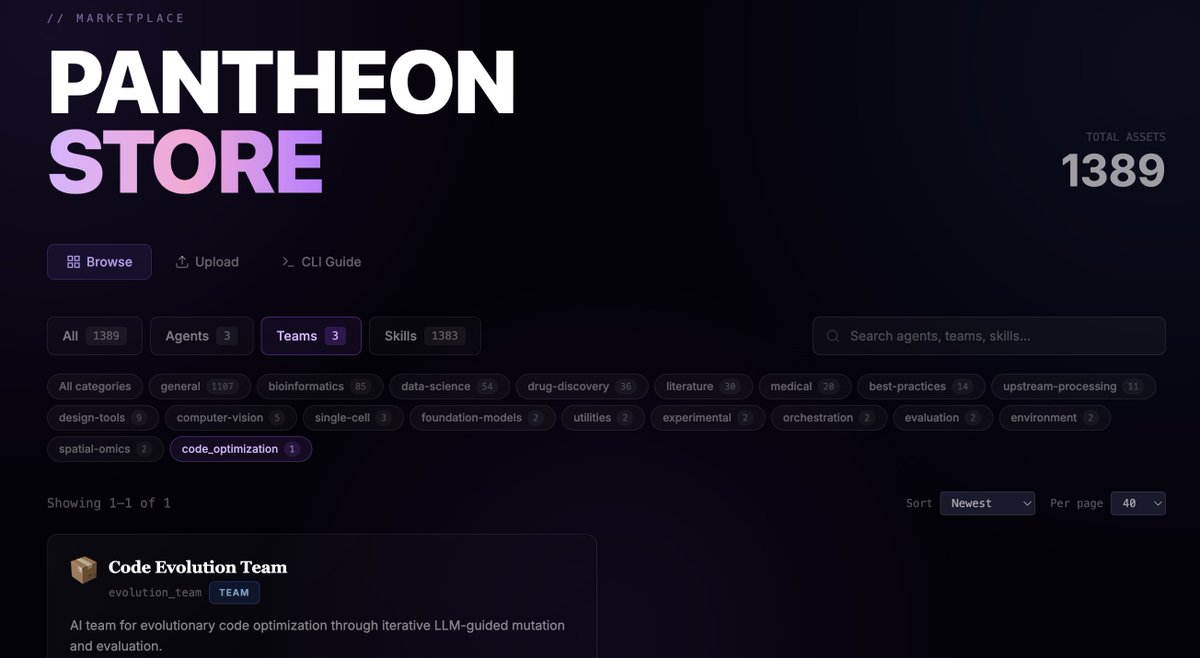
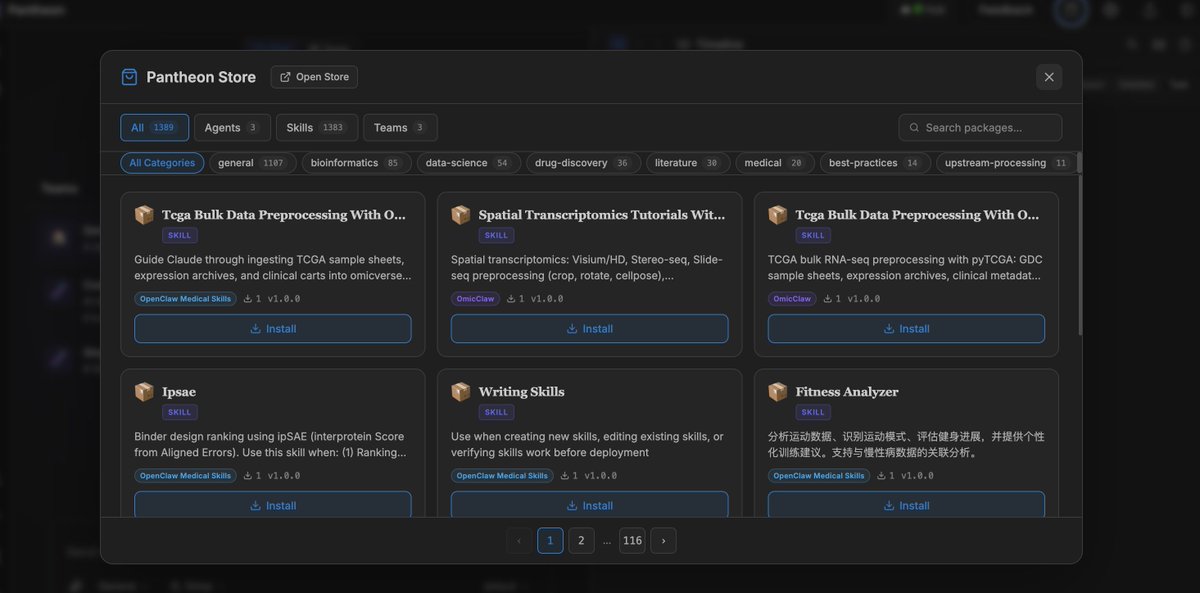
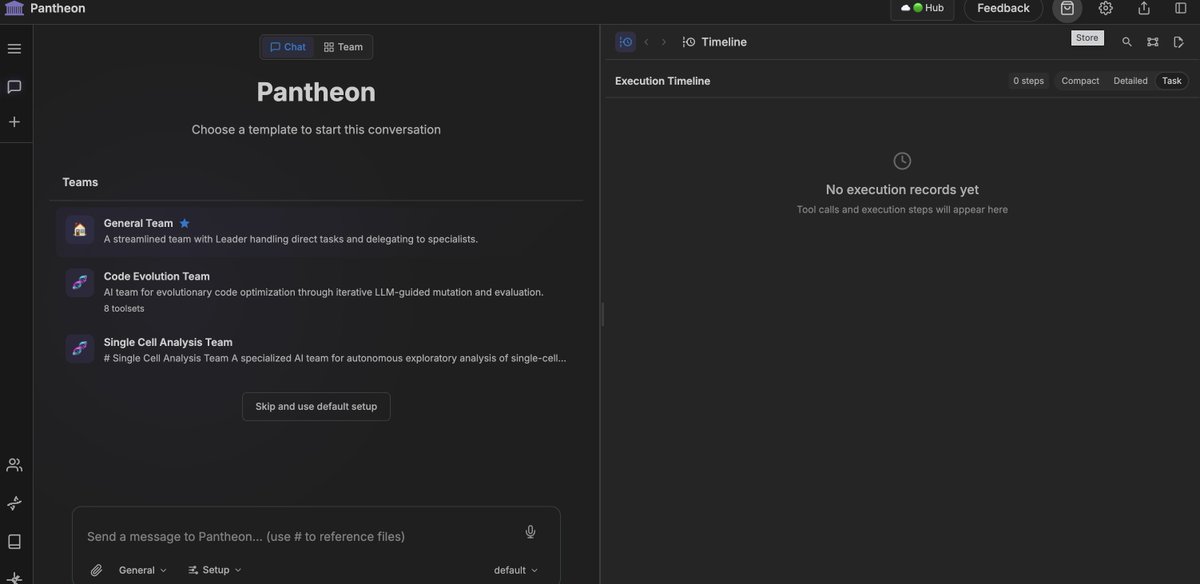
Pantheon AI Agent Store is now live with 1300 biomedical Skills and more!
Pantheon Store is a new marketplace for biomedical AI Agents, Teams, and Skills. We launch the Store with 1300 curated bio/medical AI capabilities, built by the incredible builders behind Claude Scientific Skills, ClawBio, OpenClaw Medical Skills, LabClaw, and PantheonOS ecosystem.
You can install instantly in PantheonOS (UI or CLI) and build powerful scientific workflows right now.
What you can do with Pantheon Store? It can:
• Discover Agents, Teams, and Skills for genomics (especially single-cell and spatial genomics), pharmacology, medicine, and bioinformatics
• Install Skills seamlessly into your existing workflows
• Share your own Agents, Teams, and Skills with the community
Thus, Pantheon-Store turns PantheonOS into a living ecosystem for scientific AI tools.
We welcome you join the community! Upload your own components. Build together. Accelerate biomedical discovery!
2
2
10
1,448
Explore our store here: app.pantheonos.stanford.edu/…
And also the manuscript and platform:
🔗 biorxiv.org/content/10.64898…
🔗 pantheonos.stanford.edu/
118
Weize Xu retweeted

Feb 28
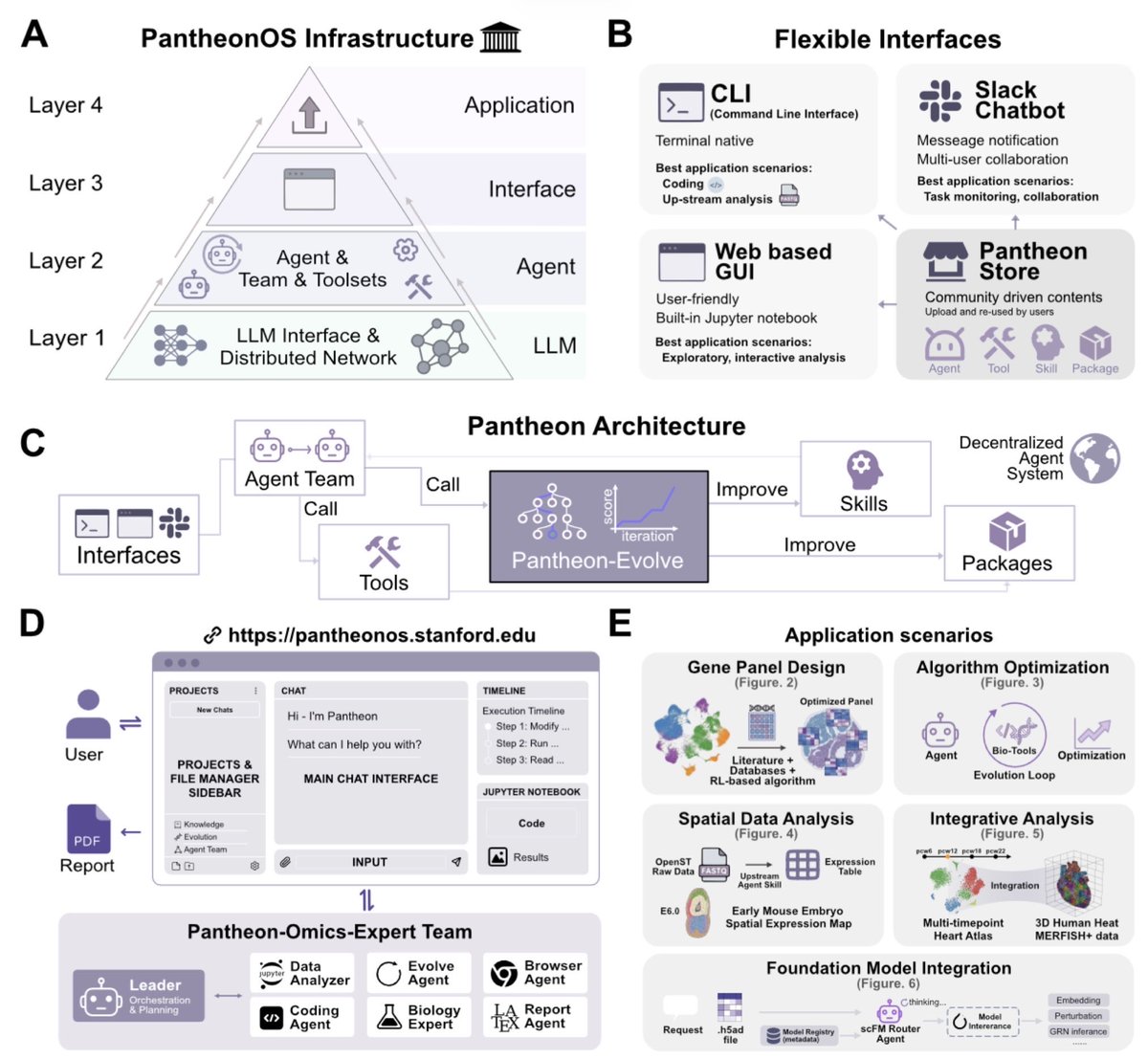
PantheonOS: An Evolvable Multi-Agent Framework for Automatic Genomics Discovery biorxiv.org/content/10.64898…
4
57
193
15,182
Weize Xu retweeted
Mar 2
We are thrilled to share our preprint (tinyurl.com/3mtbtcwu) on PantheonOS, the first evolvable, privacy-preserving multi-agent operating system for automatic genomics discovery.
📄 Preprint: tinyurl.com/3mtbtcwu
🤖 Open-source App (free to all users): app.pantheonos.stanford.edu
🌐 More: pantheonos.stanford.edu
PantheonOS unites LLM-powered agents, reinforcement learning, and agentic code evolution to push beyond routine analysis — evolving state-of-the-art algorithms to super-human performance.
🧬 Evolved batch correction (Harmony, Scanorama, BBKNN) and Reinforcement learning or RL agumented algorithms
🧠 RL–augmented gene panel design
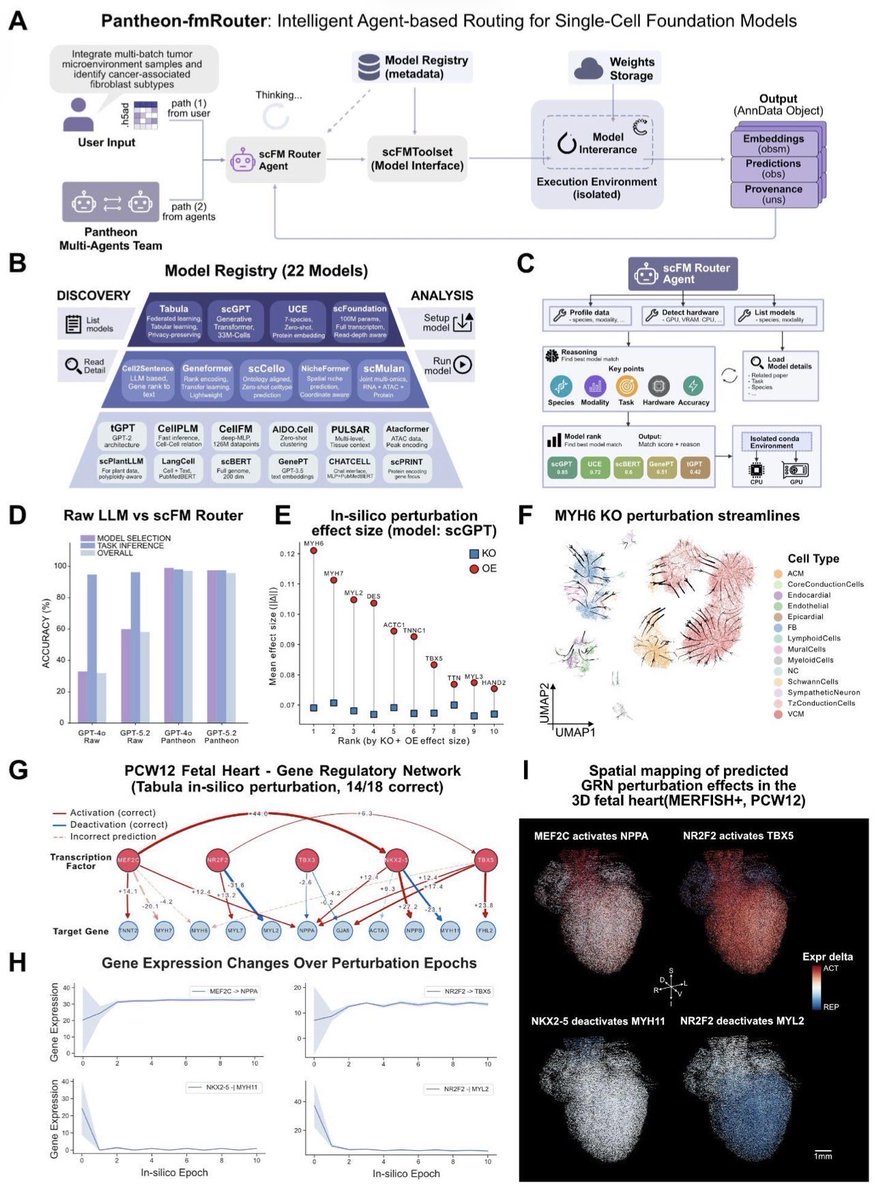
🧭 Intelligent routing across 22 virtual cell foundation models
🧫 Autonomous discovery from newly generated 3D early mouse embryo data
🫀 Integrated human fetal heart multi-omics with 3D whole-heart spatial data
From uncovering asymmetric Cer1–Nodal inhibition in early mouse embryos to mapping spatial disease programs in the human heart, PantheonOS demonstrates a future where AI agents don’t just analyze biology — they drive discovery.
This is a step toward self-evolving AI systems that accelerate science itself and push human civilization toward the singularity.
This work is built over 2 years by an incredible team (Weize @Nanguage who led this project, and also to Erwin, Zhongquan @BAKEZQ, Chris @chriswzou , Zehua @starlitnightly, Yifan @YifanLu2024 , Xuehai, Zhongquan, and Miao, Cinlong's wetlab support and the entire Qiu lab. We are grateful for all our funders and industrial collaborators: @Lenovo @vizgen_inc
We are excited to scale this work further and welcome philanthropic, industrial, and venture support. We invite the community (pantheonos.stanford.edu/ecos…) to contribute, extend, and collectively reimagine the future of automated biological discovery.
🌐 More details below:
4
19
77
8,398