
Ship on NEAR. Docs, tools, and support for builders. Ask us anything.
Joined November 2022
- Tweets 3,162
- Following 60
- Followers 5,090
- Likes 2,752
1,203 Photos and videos







Pinned Tweet

15 Sep 2025
Why is NEAR the place to build?
Let's make it simple 👇
11
14
86
7,769
Jun 13
NEAR Infrastructure Committee is continuing to collect ecosystem feedback on infrastructure gaps, blockers, and opportunities.
If something keeps coming up, submit it here: nearn.io/infra-committee/8/
1
12
238

Jun 12
Jun 10

Builders, Devs & AI folks - IronClaw Hackathon is coming!
June 12-20 | Hybrid Format (Barcelona Remote)
Build privacy-first secure agents. Remote participants get full access to workshops, mentorship, and live demo showcase on June 18.
Ship the future of secure AI Agents. ↓

4
17
244
Jun 11
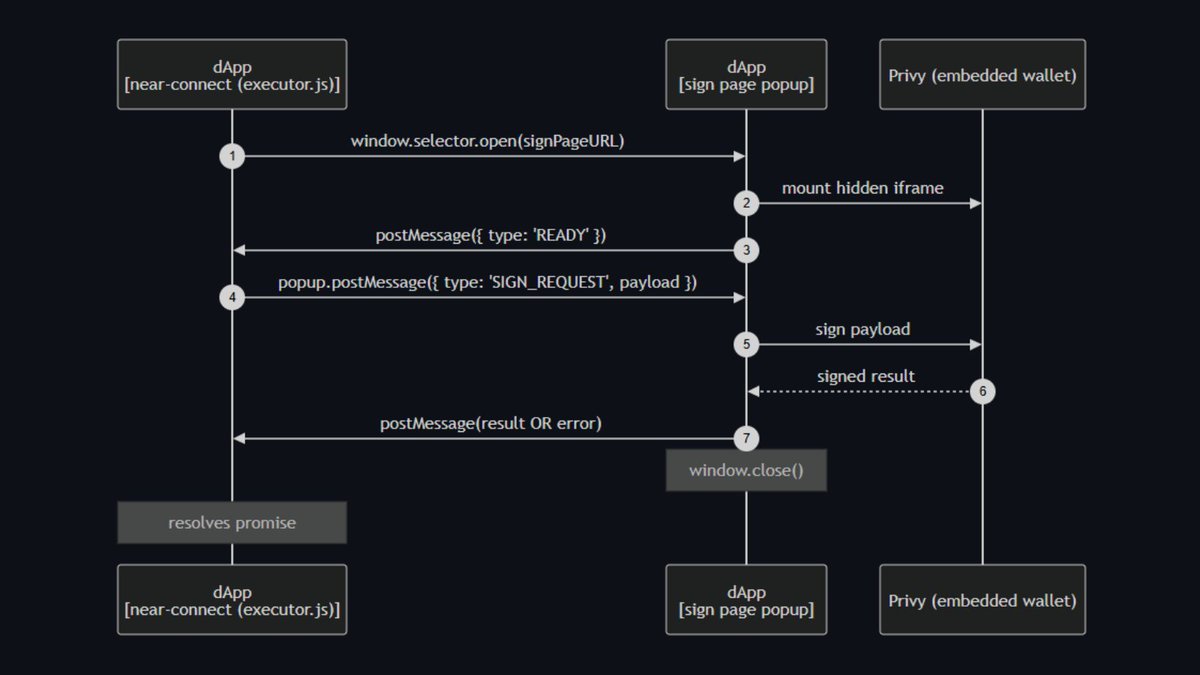
Ship Email Login for NEAR Without Building Wallet Infrastructure Privy Near Connect Walkthrough
Everything you need to understand privy-near-connect from both sides: the builder setup and the user signing experience.
Worth reading/watching together 💯
Jun 10

We just made something we built out of necessity free for any developer to use.
Building Peerfolio required giving users secure control of a blockchain account via their email address. Our users aren't crypto natives, they expect to sign up with an email, not install a browser extension or connect an existing wallet. So we built a library to make that possible, and published the code as open-source so any developer can use, adapt, and build on it.
privy-near-connect is a @privy wallet adapter for @NEARProtocol that enables developers to add email-secured NEAR accounts to their app in three steps.
Across the NEAR ecosystem, wallet infrastructure was consistently one of the most cited developer pain points. privy-near-connect helps fill that gap.
If you're building consumer-facing apps that connect to decentralized exchanges, or thinking about what it takes to onboard mainstream users into Web3, the post linked in comments walks through exactly how we approached it.

2
1
13
296
Jun 11
Thanks to @openwebeconomy for the walkthrough.
Video: youtu.be/sGv71rv3sv0?si=Jw_W…
Write-up: blog.peerfolio.app/ship-emai…
4
144
Jun 10
Nothing to see here. NEAR AI already handled it
Jun 10

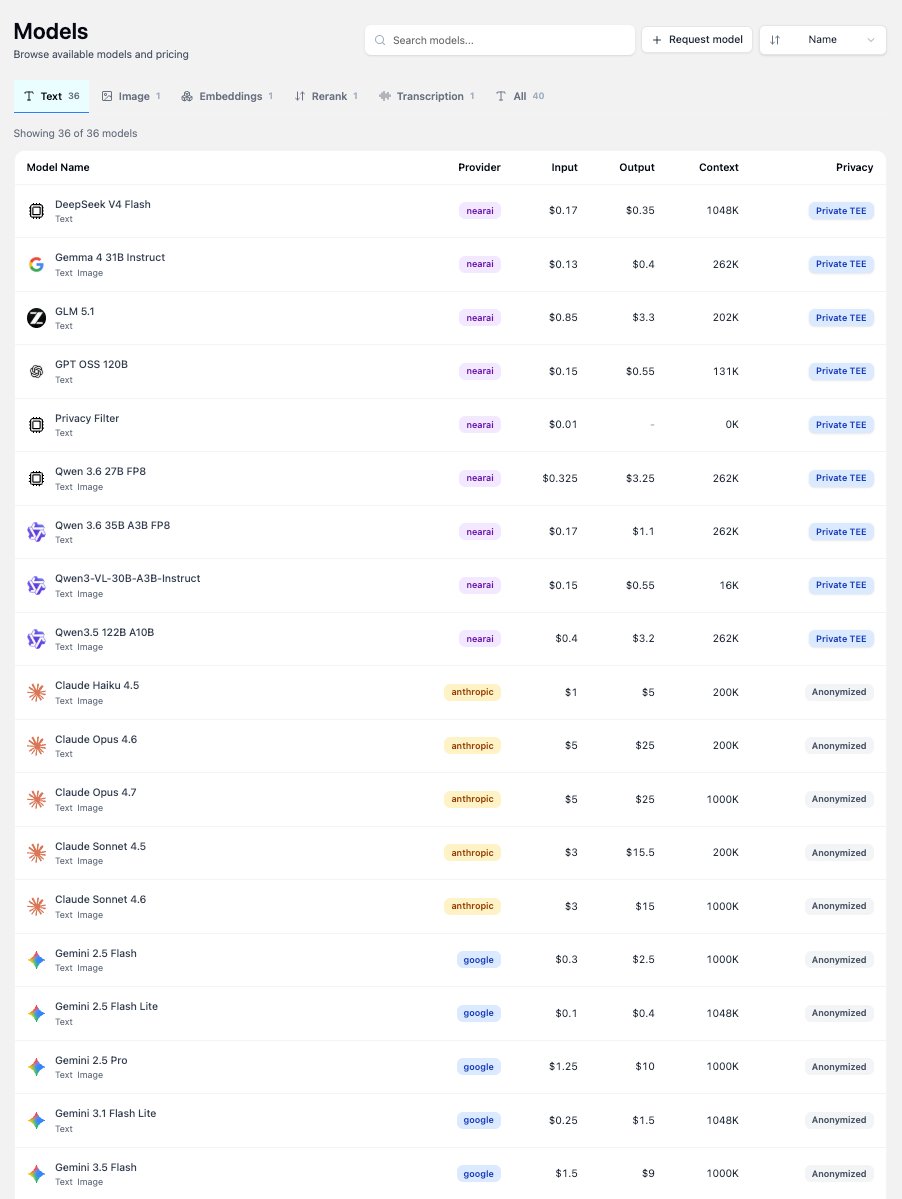
Using AI shouldn’t require giving up privacy.
NEAR AI now automatically detects and anonymizes sensitive information before it leaves your device. You can use popular frontier models without handing them passwords, API keys, and other sensitive info.
1
3
14
339
Jun 10
> We had some good times together
< Yeah
Jun 9

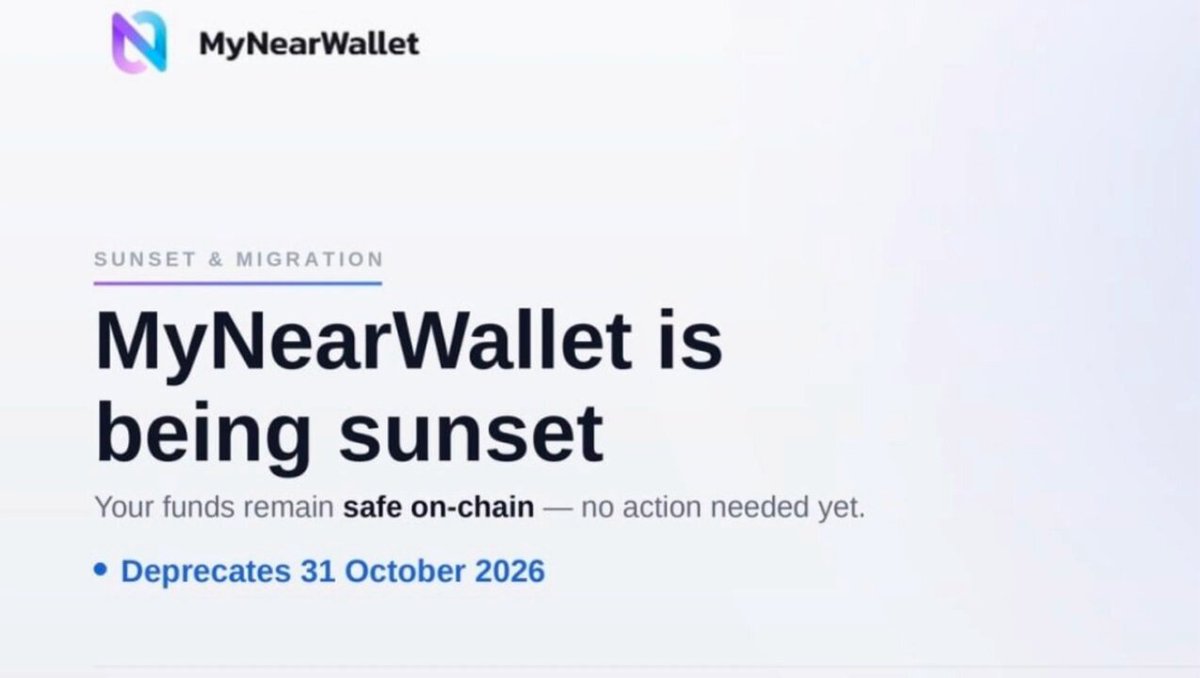
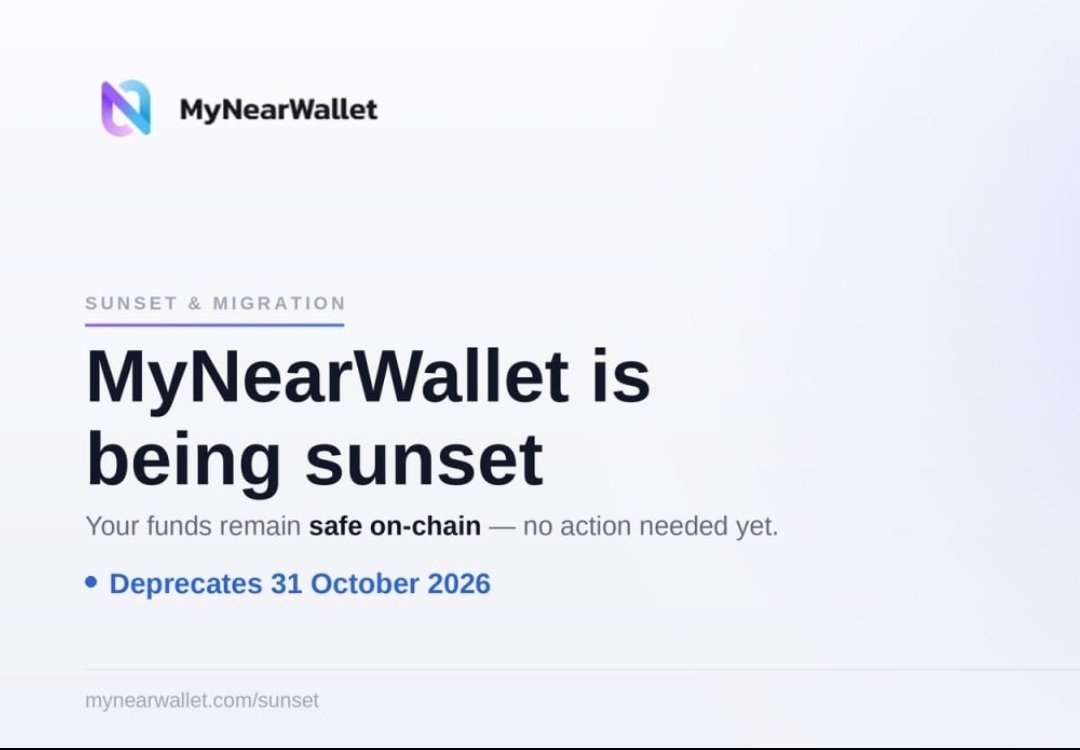
As part of the NEAR ecosystem's long-term strategy, MyNearWallet (MNW) is planned to be deprecated on 31 October 2026.
This process will happen gradually and in phases to ensure users have ample time to prepare and migrate to supported NEAR wallets.
✅ Your funds remain safe
✅ No immediate action is required
✅ Guided migration tools and instructions will be provided over the coming months
You can learn more about the timeline, migration approach, and frequently asked questions here:
🔗 mynearwallet.com/sunset
⚠️ Security Reminder
Never share your seed phrase, recovery phrase, or private key with anyone.
MyNearWallet, Meteor Wallet, the NEAR Foundation, and support staff will never ask for this information.
4
16
465
Jun 9
Tomorrow
Jun 4

nearcore 2.12.0 has been released
Protocol v84 voting starts on June 10.
Once the upgrade activates, NEAR contracts should no longer be stuck around Rust 1.86, with early Rust 1.93 comparisons showing ~10-15% smaller Wasm output.
Full release notes: github.com/near/nearcore/rel…
2
14
325
Jun 8
The best privacy UX is when users do not need a tutorial to find it
near(.)com made privacy a toggle
1
1
8
229
NEAR DevHub retweeted
Jun 5
We need to talk about how we manage Full Access Keys for smart contract accounts on @NEARProtocol
If you run a critical account like intents.near, your upgrade path usually comes down to two uncomfortable choices. You either keep a Full Access Key sitting on someone’s hardware wallet, which is just a human-shaped single point of failure, or build custom upgrade logic into the contract and pray a bad state migration never bricks it.
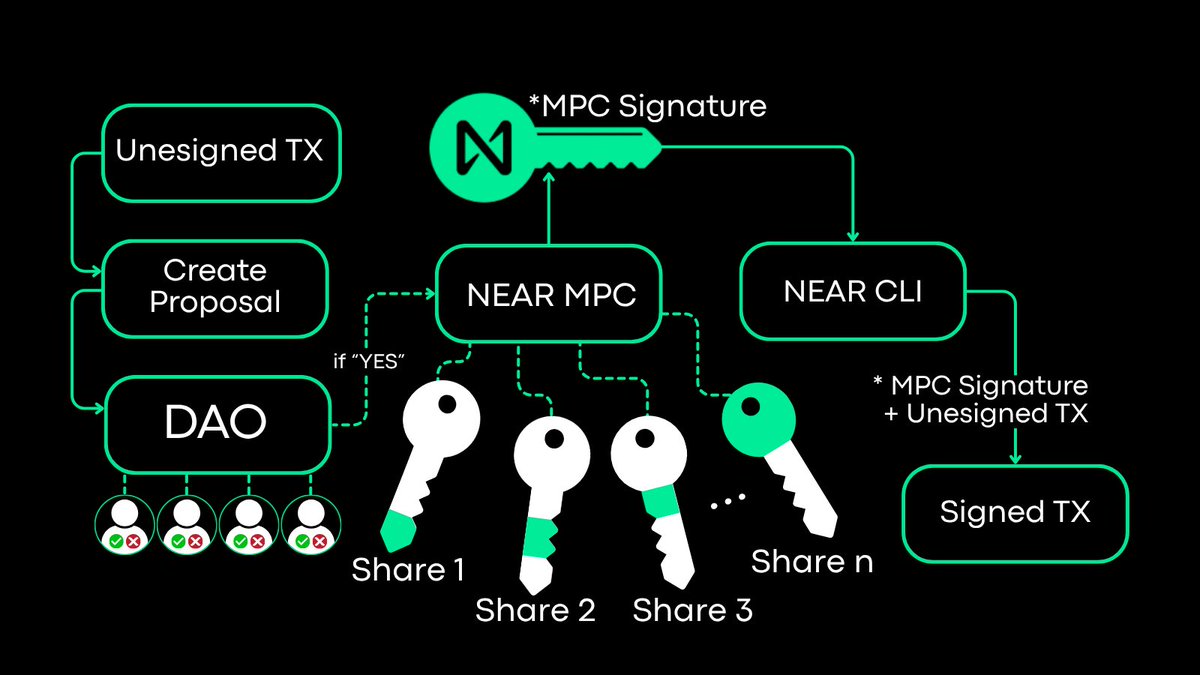
The fix isn't hiding the seed phrase better. @Freol wrote about a clean setup for this a while ago using SputnikDAO and NEAR MPC.
Instead of a single person holding a god key, an MPC public key is derived for the DAO account and attached as a Full Access Key to the contract account.
When you need to push a patch:
✦ Generate the raw, unsigned DeployContract transaction payload for the contract account
✦ Request the multisig to sign the transaction with MPC
✦ If the multisig proposal is approved by the voting members, the multisig calls the MPC contract to sign it
✦ NEAR CLI combines the unsigned transaction with the resulting signature and submits it to the network
The full private key never exists in one place, and no one holds it.
Governance approves. MPC signs. The network executes.
4
9
29
2,672
Key management is the core of security.
It is a fine art to balance between maximum security (no keys - immutable objects), ability to patch vulnerabilities (mutate the object when it is absolutely needed), and bus factor (something happen to you or your key storage and you are doomed)
Jun 5
We need to talk about how we manage Full Access Keys for smart contract accounts on @NEARProtocol
If you run a critical account like intents.near, your upgrade path usually comes down to two uncomfortable choices. You either keep a Full Access Key sitting on someone’s hardware wallet, which is just a human-shaped single point of failure, or build custom upgrade logic into the contract and pray a bad state migration never bricks it.
The fix isn't hiding the seed phrase better. @Freol wrote about a clean setup for this a while ago using SputnikDAO and NEAR MPC.
Instead of a single person holding a god key, an MPC public key is derived for the DAO account and attached as a Full Access Key to the contract account.
When you need to push a patch:
✦ Generate the raw, unsigned DeployContract transaction payload for the contract account
✦ Request the multisig to sign the transaction with MPC
✦ If the multisig proposal is approved by the voting members, the multisig calls the MPC contract to sign it
✦ NEAR CLI combines the unsigned transaction with the resulting signature and submits it to the network
The full private key never exists in one place, and no one holds it.
Governance approves. MPC signs. The network executes.
2
20
729
NEAR DevHub retweeted
Jun 4
nearcore 2.12.0 has been released
Protocol v84 voting starts on June 10.
Once the upgrade activates, NEAR contracts should no longer be stuck around Rust 1.86, with early Rust 1.93 comparisons showing ~10-15% smaller Wasm output.
Full release notes: github.com/near/nearcore/rel…
8
30
1,211
Jun 5
We need to talk about how we manage Full Access Keys for smart contract accounts on @NEARProtocol
If you run a critical account like intents.near, your upgrade path usually comes down to two uncomfortable choices. You either keep a Full Access Key sitting on someone’s hardware wallet, which is just a human-shaped single point of failure, or build custom upgrade logic into the contract and pray a bad state migration never bricks it.
The fix isn't hiding the seed phrase better. @Freol wrote about a clean setup for this a while ago using SputnikDAO and NEAR MPC.
Instead of a single person holding a god key, an MPC public key is derived for the DAO account and attached as a Full Access Key to the contract account.
When you need to push a patch:
✦ Generate the raw, unsigned DeployContract transaction payload for the contract account
✦ Request the multisig to sign the transaction with MPC
✦ If the multisig proposal is approved by the voting members, the multisig calls the MPC contract to sign it
✦ NEAR CLI combines the unsigned transaction with the resulting signature and submits it to the network
The full private key never exists in one place, and no one holds it.
Governance approves. MPC signs. The network executes.
4
9
29
2,672
Jun 5
Full breakdown here:

Also, there is a much bigger elephant in the room for power users - signing with MPC. And even bigger elephant in the room - signing with MPC using SputnikDAO proposal.
Imagine you have a critical contract under management (intents.near), and you want to be able to upgrade it in the future.
Your first option is to have the full access key to the intents.near account and store it securely, so you can sign a DEPLOY_CONTRACT transaction in the future - nice, but really scary - you lose the key and your contract won't ever be upgraded.
Second option is to implement the function inside the contract that will allow attaching the new code and initiate DEPLOY_CONTRACT from the contract itself. But if you ever deploy a broken contract or the contract without the upgrade method, you are out of luck.
And here we come to the third option, follow me:
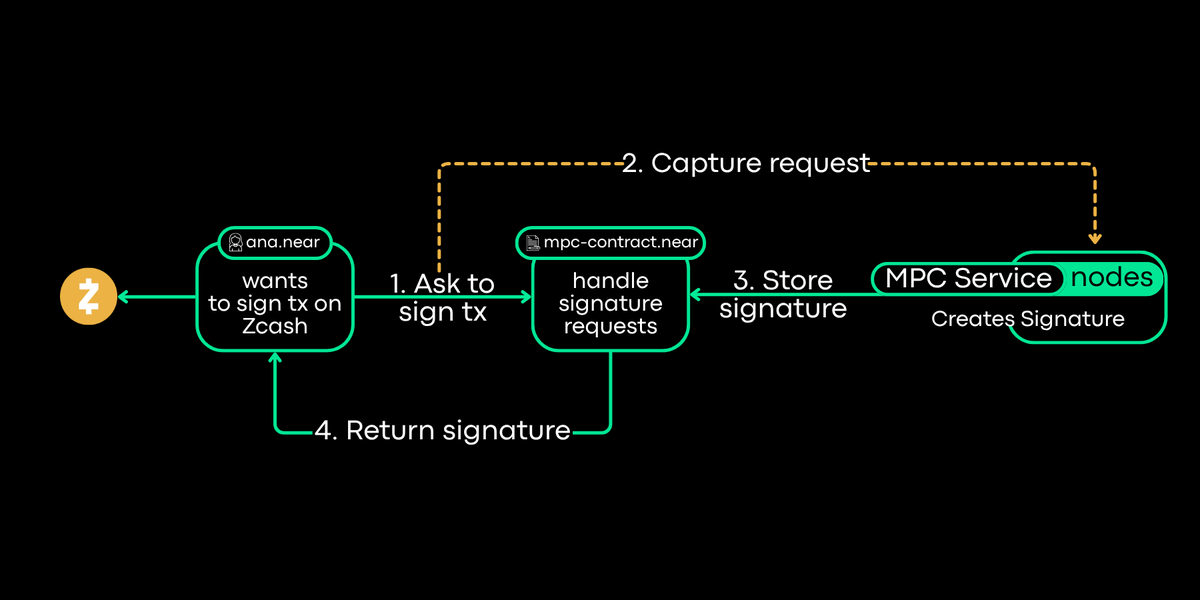
Note: With NEAR MPC you can sing any payload (including NEAR transaction) and the key is derived uniquely for the NEAR account.
So let's create a SputnikDAO contract and generate a new public key on NEAR MPC derived for the SputnikDAO account id (e.g. devhub.sputnik-dao.near), and add that key as the full access key to my contract (intents.near).
Now, I can prepare a transaction (e.g. with DEPLOY_CONTRACT action) with a signer account id set as intents.near and submit a DAO proposal to my DAO (devhub.sputnik-dao.near) to call MPC to sign the prepared transaction hash. Once the proposal is voted for, it will make an on-chain call to MPC and will get the signature. NEAR CLI then combines the unsigned transaction with the signature and submit that signed transaction to the chain! Isn't it clever? Thanks to @ilblackdragon for pitching that idea and github.com/vsavchyn-dev for implementing it!
Did you follow it till the end? Congrats, you now have a degree in NEAR Accounts Model and Chain Abstraction!
4
180

Privacy is not optional in finance.
A salary agreement is private. Vendor terms are confidential. Strategic timing belongs to the team making the move.
On a public blockchain, none of that exists.
Confidential Treasuries are changing that default.
2
6
29
1,480
Jun 3
every time Chain Signatures come up, I have the same reaction:
> wait, a NEAR account can sign native txs for other chains without those chains needing to change anything?
that still feels insane 💯
Jun 3
With Chain Signatures, NEAR became the only protocol capable of deterministically triggering native transactions on both Bitcoin and Ethereum through threshold cryptography.
No contracts required on destination chains.
That expanded the addressable liquidity universe overnight.
5
33
1,221