
Rust and NEAR Protocol, NEAR AI, IronClaw technical evangelist building @TrezuApp
Joined October 2009
- Tweets 4,580
- Following 231
- Followers 1,845
- Likes 19,058
252 Photos and videos
frol.near retweeted

Every restriction reminds us of the same thing:
If access can be taken away at an instant, it was never truly yours.
The future of AI needs open networks, open infrastructure, and user-owned agents.
NEAR has been building for sovereignty from day 1.
Jun 13

The US government, citing national security authorities, has issued an export control directive to suspend all access to Fable 5 and Mythos 5 by any foreign national, whether inside or outside the United States, including foreign national Anthropic employees.
The net effect of this order is that we must abruptly disable Fable 5 and Mythos 5 for all our customers to ensure compliance.
Access to all other Claude models is not affected.
We apologize for this disruption to our customers. We believe this is a misunderstanding and are working to restore access as soon as possible.
Read our full statement: anthropic.com/news/fable-myt…
18
48
415
87,876

Here we go. Gov control is starting. This is exactly what we want to avoid with decentralized design at @near_ai
Jun 13
The US government, citing national security authorities, has issued an export control directive to suspend all access to Fable 5 and Mythos 5 by any foreign national, whether inside or outside the United States, including foreign national Anthropic employees.
The net effect of this order is that we must abruptly disable Fable 5 and Mythos 5 for all our customers to ensure compliance.
Access to all other Claude models is not affected.
We apologize for this disruption to our customers. We believe this is a misunderstanding and are working to restore access as soon as possible.
Read our full statement: anthropic.com/news/fable-myt…
1
14
534
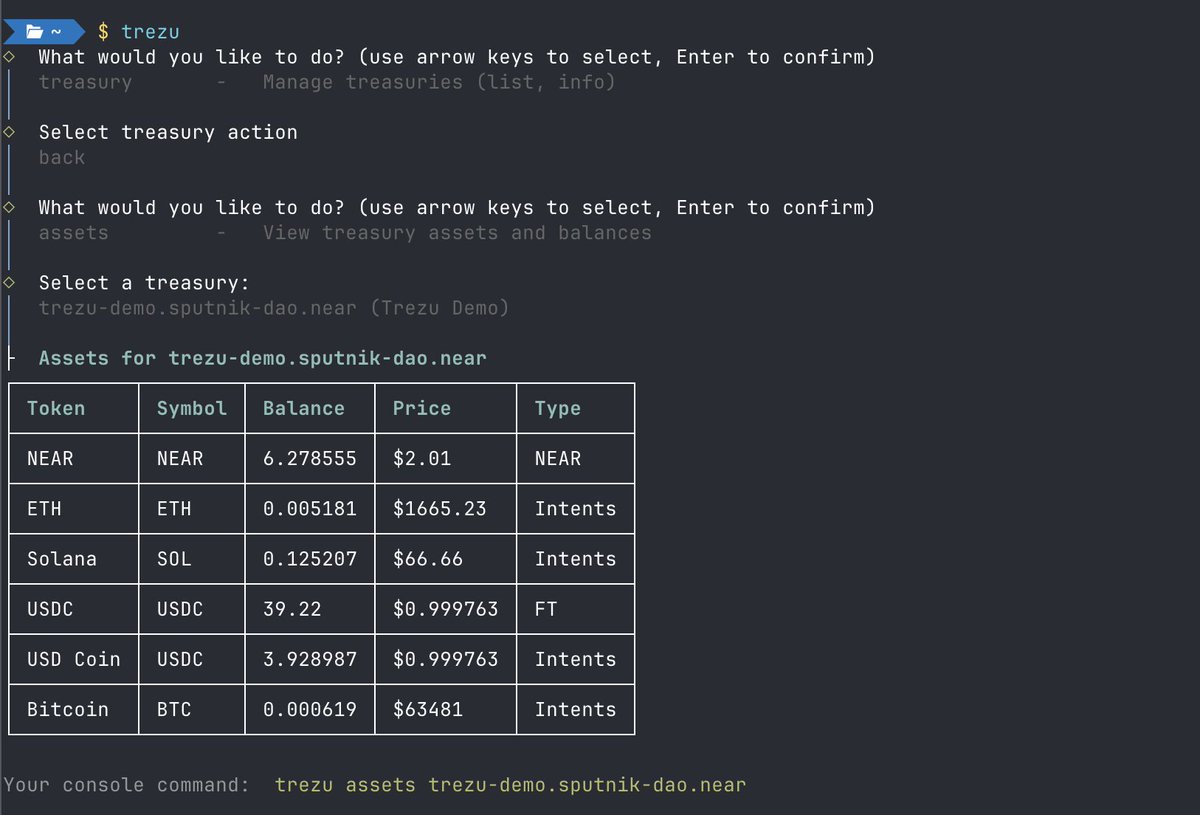
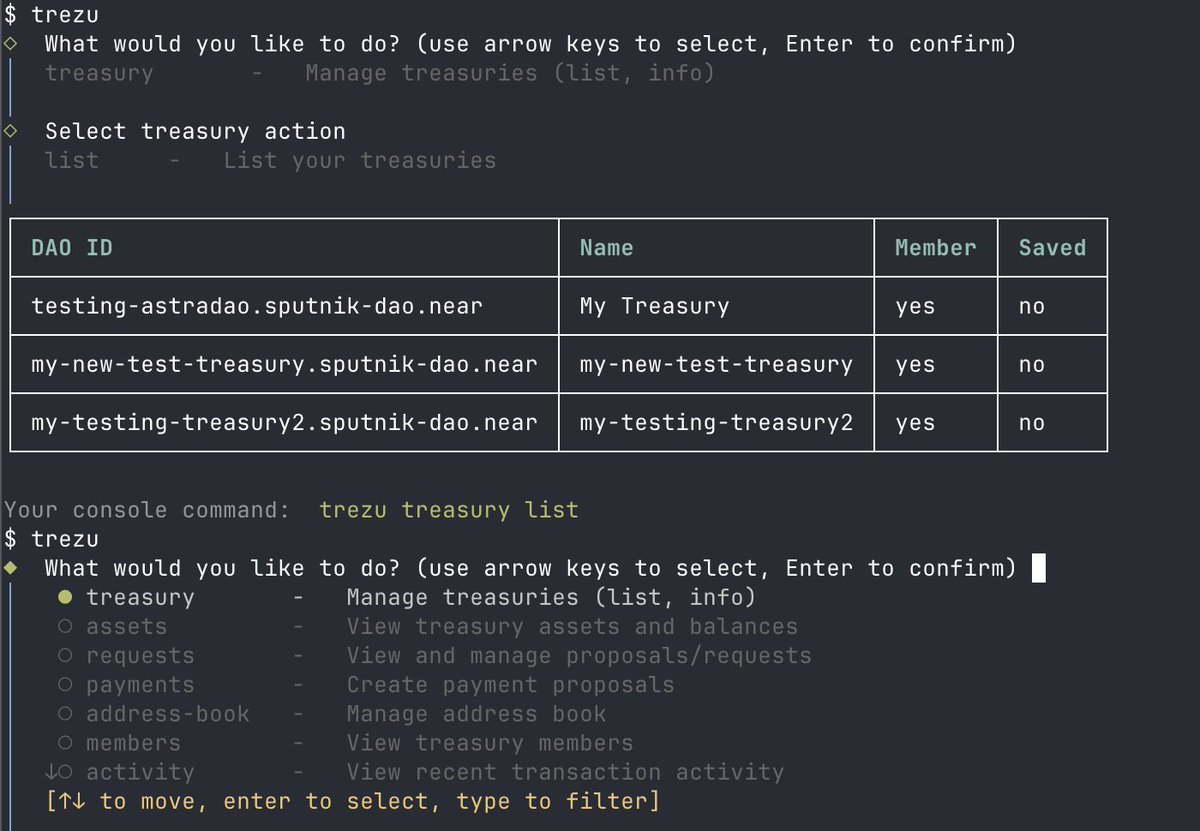
Install it with one command and let `trezu` command guide you interactively!
github.com/NEAR-DevHub/trezu…
3
68
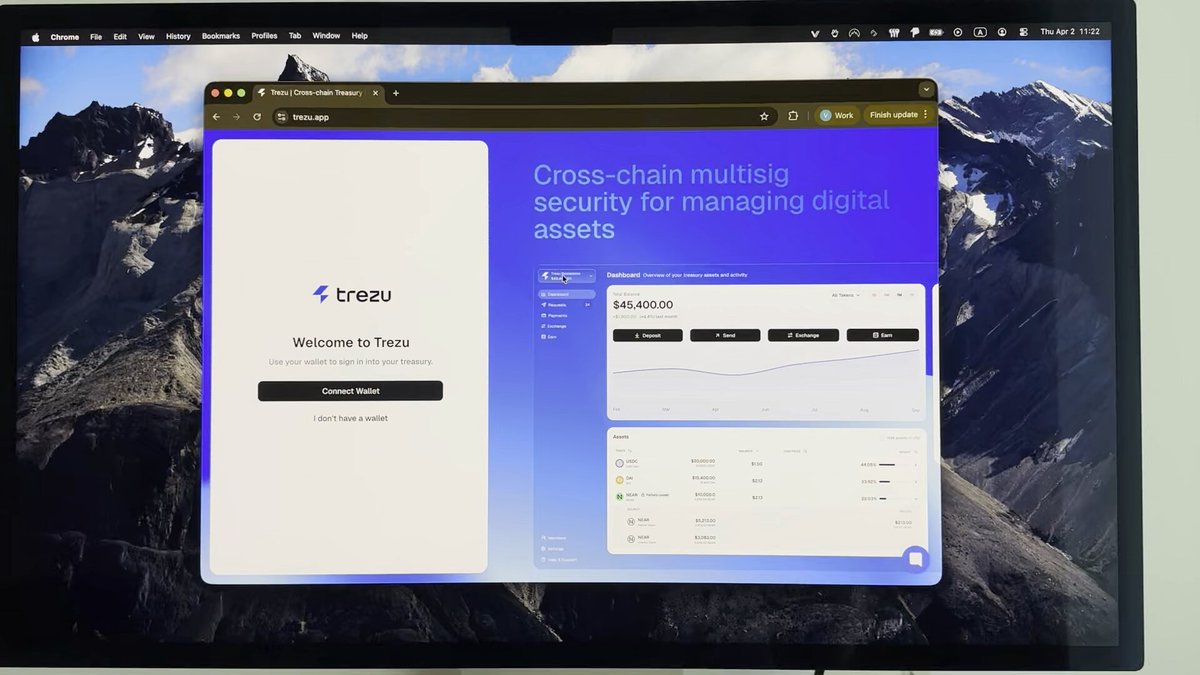
More people are asking me why I don't post more about @TrezuApp... My problem is that I prefer to have a dialog with a person to understand what are the best words I could use to explain what we build. It is impossible to do it over here.
Trezu is open-source and decentralized. Some of you care about that.
Trezu is a product. Others care about that.
Trezu is an easy interface to complex things.
Trezu helps people to manage their crypto funds as a team, or as a family, or as a solo user with a need for multifactor approvals.
Global payments are expensive, clunky, slow, risky, and NEAR Protocol tech has the technical solution for that since 2020, but humans are not machines to consume technical solutions. I believe that Trezu is the missing UX component to the solution for global payments that don't suck and cost you precisely $0 (most of the fees are covered by Trezu since they are so small)
I invite you to try Trezu and have the dialog here, so I can try to explain it to you in your language
5
4
26
1,827
TL;DR: Deposit $100 worth of tokens to your confidential account on near.com and get rewards.
What is even better? Use your referral link near.com/login?ref=s1zsucgs to collect more rewards together with your friends
Jun 11

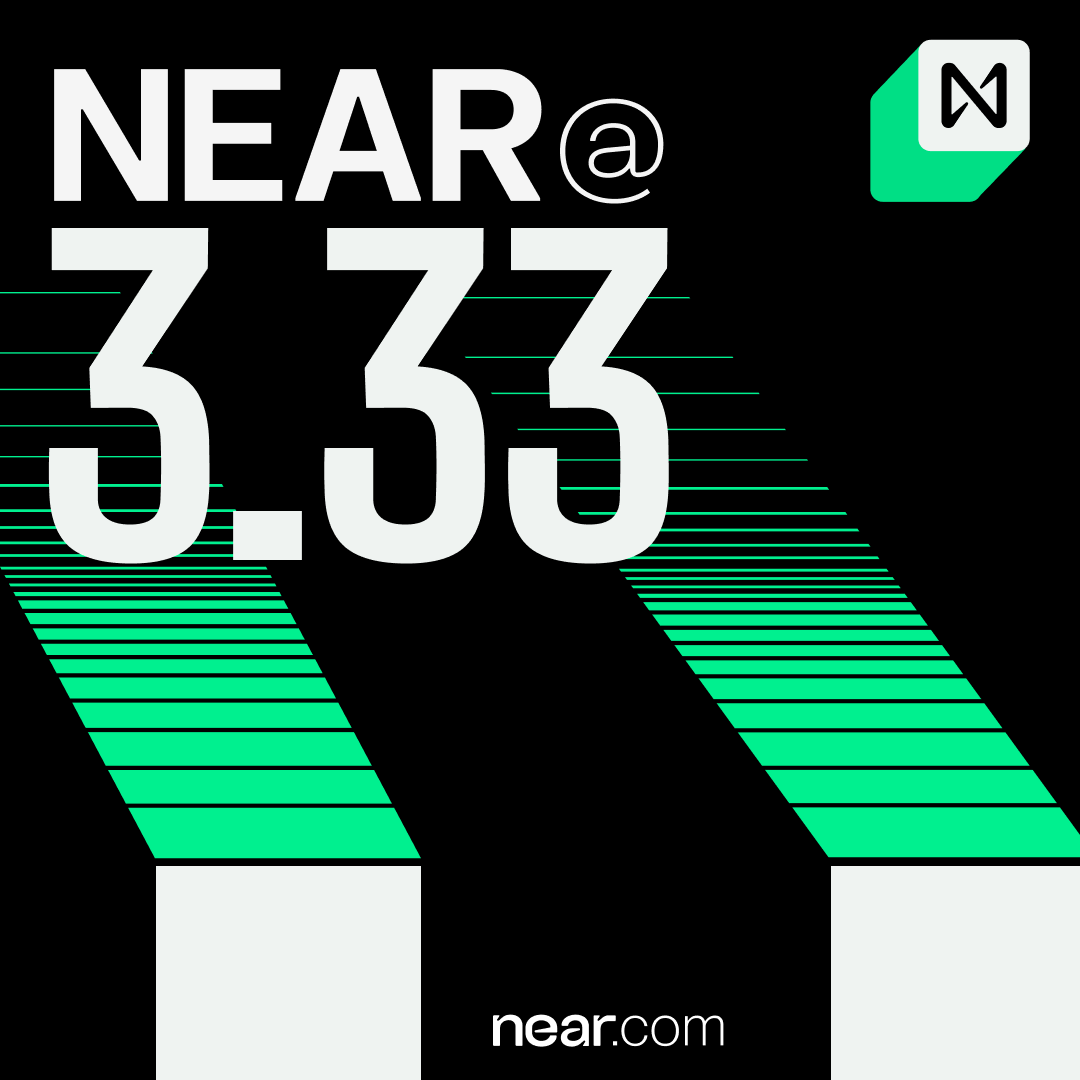
Near@3.33 is live: an incentive milestone program for people using Confidential Intents on near.com.
If you've been swapping confidentially, you're already in for Drop 1.
1
14
491
The first wallet app on NEAR has served us so long, but it is time to move on to the multichain and confidential crypto world united by @near_intents
Jun 9

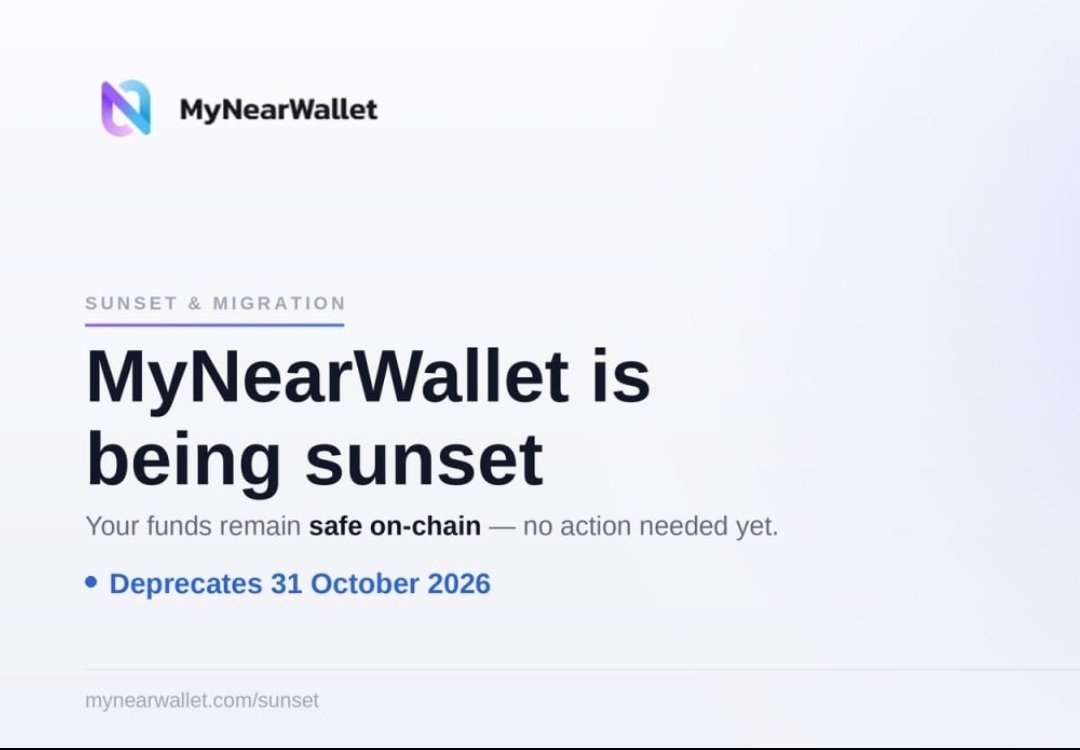
As part of the NEAR ecosystem's long-term strategy, MyNearWallet (MNW) is planned to be deprecated on 31 October 2026.
This process will happen gradually and in phases to ensure users have ample time to prepare and migrate to supported NEAR wallets.
✅ Your funds remain safe
✅ No immediate action is required
✅ Guided migration tools and instructions will be provided over the coming months
You can learn more about the timeline, migration approach, and frequently asked questions here:
🔗 mynearwallet.com/sunset
⚠️ Security Reminder
Never share your seed phrase, recovery phrase, or private key with anyone.
MyNearWallet, Meteor Wallet, the NEAR Foundation, and support staff will never ask for this information.
2
30
1,181
I love seeing more web3 apps and wallets focusing on the user experience for normal people! Kudos to @NEARMobile_app team!

⚡️ NEAR Mobile v3.10.0 is preparing a smoother login experience with auth.near.org
Google, Apple, Email, or Passkey — designed to help users recover access and use the same wallet across ecosystem dapps.
It also adds more BUY options with your local currency.
1
3
21
1,044
frol.near retweeted

Jun 5
Andy asks Illia if Arthur Hayes dumping Near bothered him. Illia's answer says everything about his conviction:
"Traders gonna trade. People have very different approaches. I'm here for the long run."
"Since 2018. Three bear markets. Born in bear, raised in bear. We've seen investors buy and sell through all of it."
"Building revenue streams. Buying back tokens. Working toward deflationary Near. Stack Near, less Near on the market. Clear plan."
10
22
182
54,854
Key management is the core of security.
It is a fine art to balance between maximum security (no keys - immutable objects), ability to patch vulnerabilities (mutate the object when it is absolutely needed), and bus factor (something happen to you or your key storage and you are doomed)
Jun 5

We need to talk about how we manage Full Access Keys for smart contract accounts on @NEARProtocol
If you run a critical account like intents.near, your upgrade path usually comes down to two uncomfortable choices. You either keep a Full Access Key sitting on someone’s hardware wallet, which is just a human-shaped single point of failure, or build custom upgrade logic into the contract and pray a bad state migration never bricks it.
The fix isn't hiding the seed phrase better. @Freol wrote about a clean setup for this a while ago using SputnikDAO and NEAR MPC.
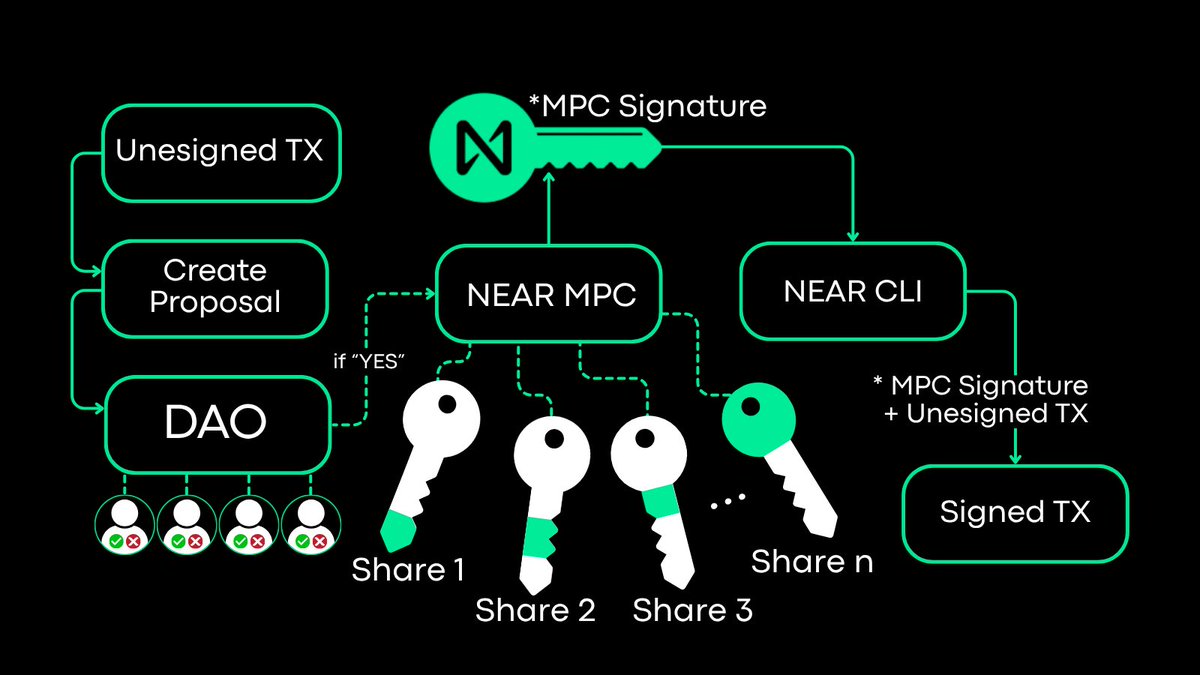
Instead of a single person holding a god key, an MPC public key is derived for the DAO account and attached as a Full Access Key to the contract account.
When you need to push a patch:
✦ Generate the raw, unsigned DeployContract transaction payload for the contract account
✦ Request the multisig to sign the transaction with MPC
✦ If the multisig proposal is approved by the voting members, the multisig calls the MPC contract to sign it
✦ NEAR CLI combines the unsigned transaction with the resulting signature and submits it to the network
The full private key never exists in one place, and no one holds it.
Governance approves. MPC signs. The network executes.
2
20
729
Sharding is like shelves in the library, where books starting with A-D are known to be on the first shelf, and so you don’t need to scan the whole library.
If you haven’t designed the shelves from the day one, your library will never be efficient.
This is exactly how NEAR is different from any other chain
Jun 2

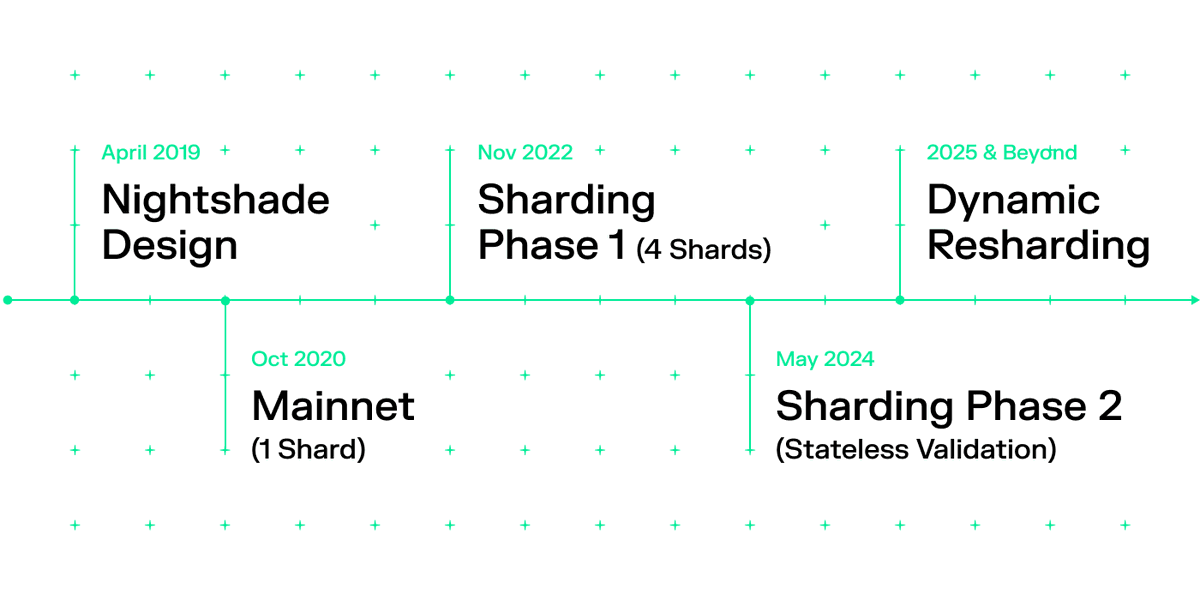
Nice to see people loving NEAR's dynamic resharding. But I want to flag what it actually is: not a 2026 feature, but the payoff of a bet NEAR placed on day one, to shard the chain.
Sharding splits the chain into parallel lanes so no single lane jams. But there's a catch. To check a lane, a validator (a machine that verifies the chain) normally has to store everything in it, so the number of lanes is capped by what one machine can hold, and adding a lane meant a slow, coordinated, network-wide upgrade. Real sharding needs validators that can verify a lane without storing it. That was the missing piece for years.
NEAR shipped it in 2024, and that's the actual breakthrough: stateless validation. A validator now checks a lane from a small proof package, a slice of data plus a cryptographic receipt that it's correct, and never stores the lane. The correctness of a split is proven inside that package. So lanes stop being capped by one machine, and a lane can even split while the traffic is still moving. Dynamic resharding is that capability put on autopilot.
This is why almost nobody else has it. Solana, Sui, Aptos, Monad never sharded, so they never needed it: one big machine does everything. That has a cost, though. A single machine has a ceiling, so the harder you push it the more brutal the hardware gets and the fewer people can run a node, and a big enough spike can stall the whole chain. Ethereum does need sharding's relief, but its original data structures make those proof packages huge, so getting there means migrating its entire live state to a new design, a multi-year job they keep redesigning, and once Ethereum pushed scaling onto L2s the urgency drained out. NEAR is the rare chain where sharding was the whole thesis, so solving this was do-or-die.
And the bet keeps compounding. NEAR adds capacity by adding lanes while staying one road, one shared state, no bridges. Ethereum scaled by splitting into 20 separate roads (its L2s), and this March it had to launch a whole project just to glue them back so they can talk instantly again. NEAR never split the road.
So enjoy dynamic resharding. Whether the agent traffic it's built for actually shows up is a separate question. The engineering under it is a years-old bet finally cashing out.
1
12
447
$20B
Jun 3
All-time volume on NEAR Intents just crossed $20 billion.
This milestone is the result of a series of technical breakthroughs that removed some of the biggest constraints in cross-chain execution.
A deep dive on Intents' rapid momentum 🧵
1
1
22
527

Privacy is not optional in finance.
A salary agreement is private. Vendor terms are confidential. Strategic timing belongs to the team making the move.
On a public blockchain, none of that exists.
Confidential Treasuries are changing that default.
2
6
29
1,480
GOAT

Most crypto teams get hacked not because of bad tech. But because someone had access they should not have had.
Setting up roles and permissions correctly is the difference between a team that operates cleanly and one that is one compromised wallet away from losing everything.
Three roles. One clear separation.
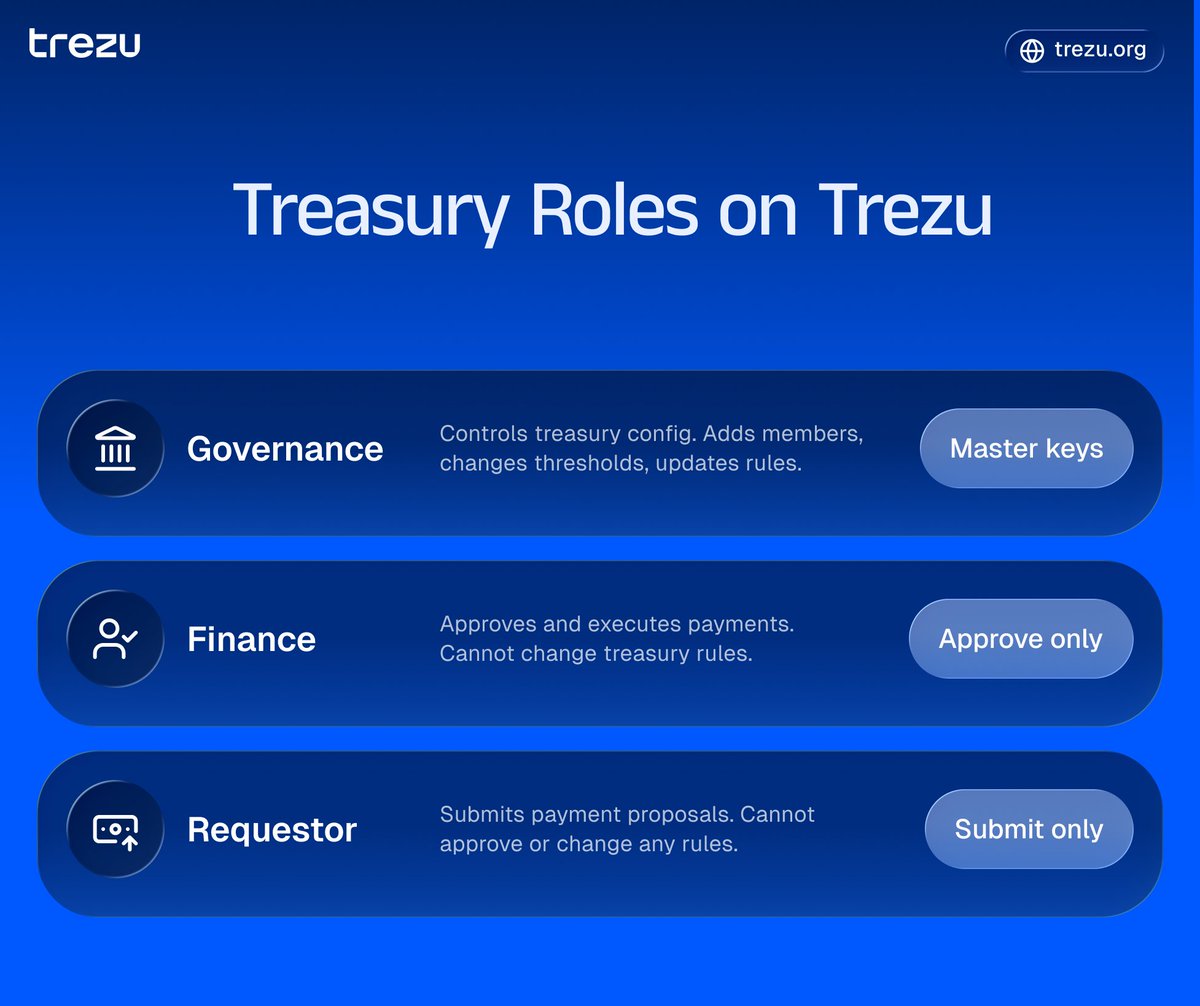
Trezu gives you three roles: Requestor, Finance, and Governance.
Requestors submit payment proposals. They cannot approve them. Finance members approve and execute payments. They cannot change the rules. Governance controls the treasury configuration. Adding members, changing thresholds, updating rules.
If one person holds all three, you do not have a multisig. You have a single point of failure with extra steps.
Thresholds matter as much as roles.
A 3-of-3 setup sounds secure until one wallet is lost and the entire treasury is frozen permanently. A 1-of-1 means anyone on the Finance role can move funds alone.
The sweet spot for most teams is 2-of-3. Enough redundancy to survive a lost key. Enough friction to prevent unilateral action.
What this looks like at different stages.
Early stage: Finance at 1-of-2 on everyday wallets. Governance at 2-of-3 on hardware wallets only.
Growing startup: Finance at 2-of-3 held by Finance Lead, Ops Manager, and CEO. Governance at 3-of-5 with founders and board.
Active DAO: Finance at 3-of-5 for your ops working group. Governance at 4-of-7 to prevent hostile takeovers.
When to update your setup?
New hire in a financial role. Someone leaving. A new funding round. A promotion to leadership.
Any of these should trigger a review. Your treasury should grow with your team.
Getting this right from day one costs nothing. Getting it wrong can cost everything.
15
440
Bitcoin tried to normalize public balances, but it never sounded sane to majority of people, so confidential crypto is rapidly taking off
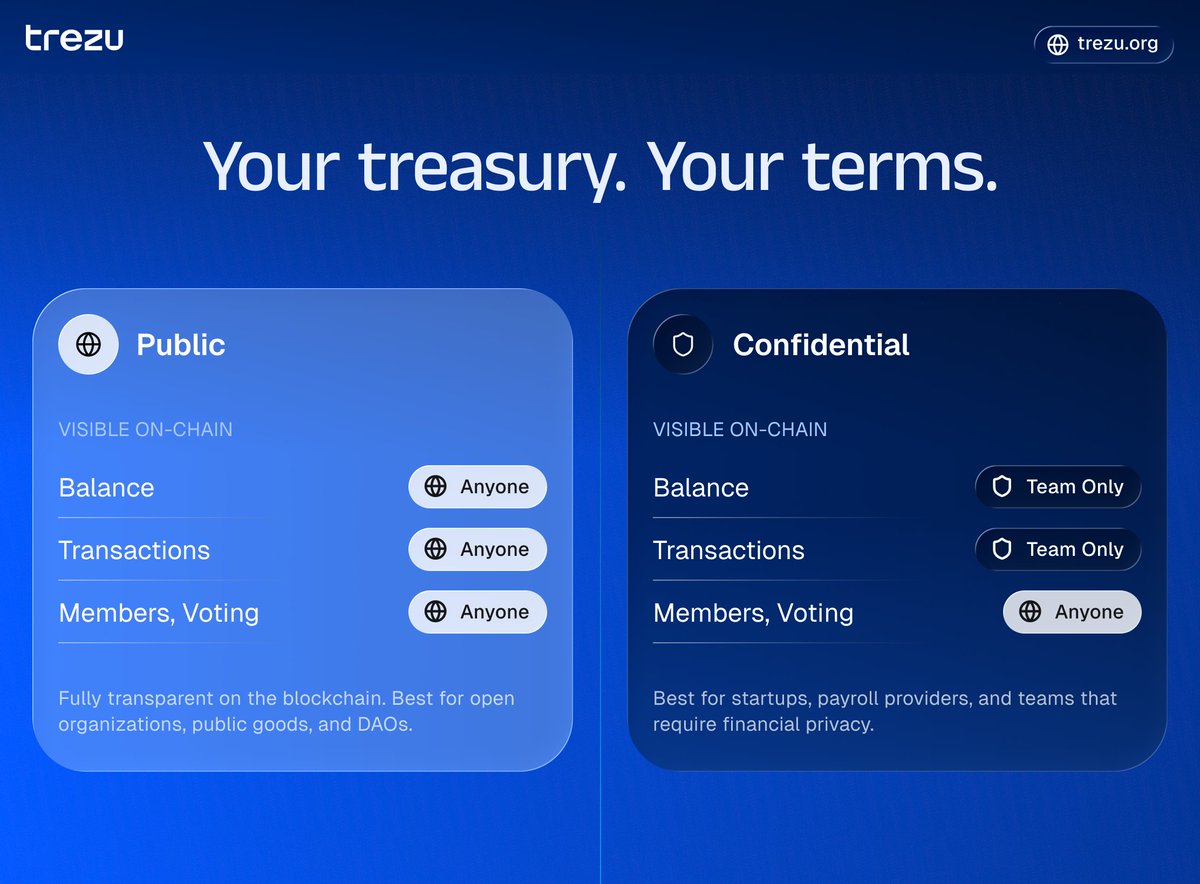
Running payroll on a public multisig means every salary is public.
Every vendor payment. Every trade size.
Not every team signed up for that level of transparency. Trezu lets you choose.
Public treasury for open governance. Confidential treasury for everything else.
2
1
18
518
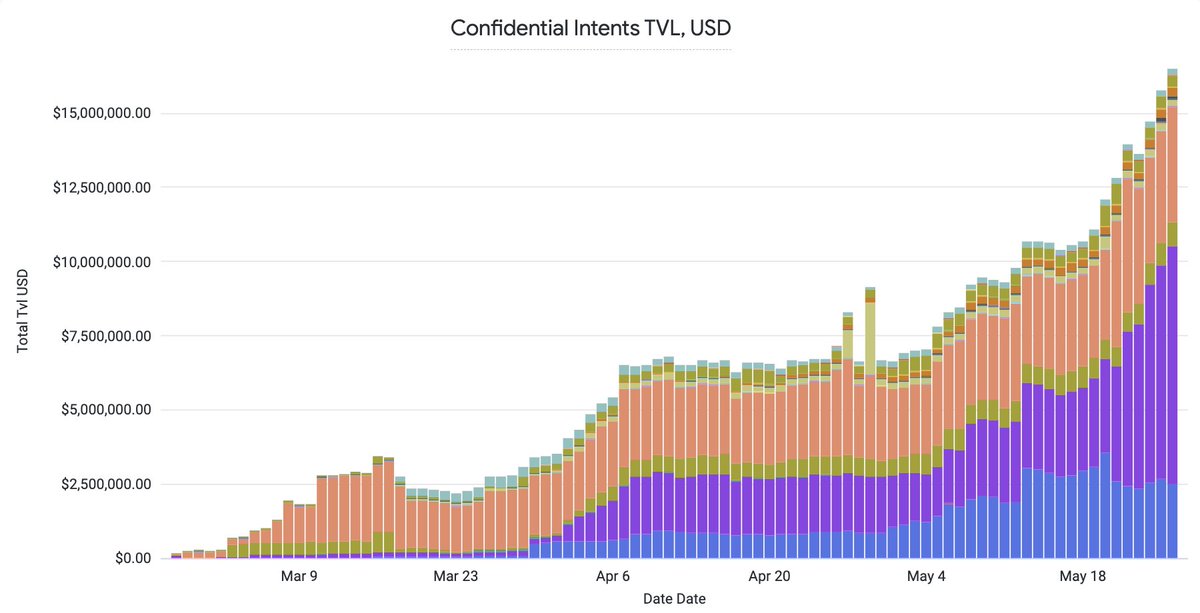
The chart that speaks for itself
May 26

3 months ago we shipped Confidential Intents on NEAR.
This chart is the single most important metric for Confidential Intents. 🧵
1
2
30
1,024
Crypto adoption is NEAR
May 26
3 months ago we shipped Confidential Intents on NEAR.
This chart is the single most important metric for Confidential Intents. 🧵
37
1,114
1-of-3 multisig significantly increases the risks for the funds!
The main reason I hear people doing it is how slow the governance is otherwise. And that is mostly due to terrible UX users have to deal with unless they know about @TrezuApp

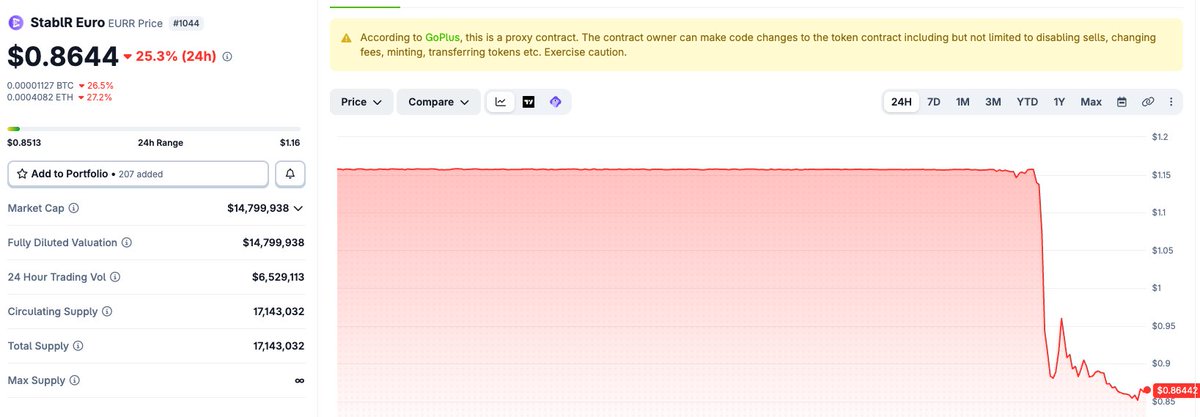
Stablecoins from @StablREuro (EURR and USDR) got exploited for ~$10M.
Both have depegged by over 20%, with the attack reportedly still ongoing.
Another key compromise attack, this time a 1-of-3 minting multisig.
Seems like no weekend this year without a hack...
1
1
12
842
frol.near retweeted

Try near(.)com for holding, paying and trading confidentially 150 assets
Doesn't need to be hard.
2
12
112
1,664
Confidential Multisig leads the market up!
May 22

This is damn cool! near:native
1
13
1,133