Joined March 2024
- Tweets 6,282
- Following 47
- Followers 80
- Likes 16,791
869 Photos and videos

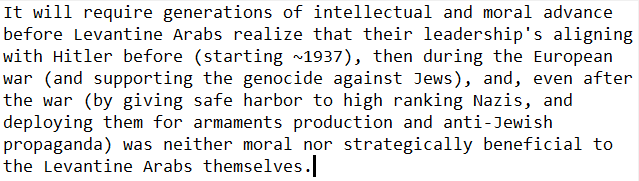



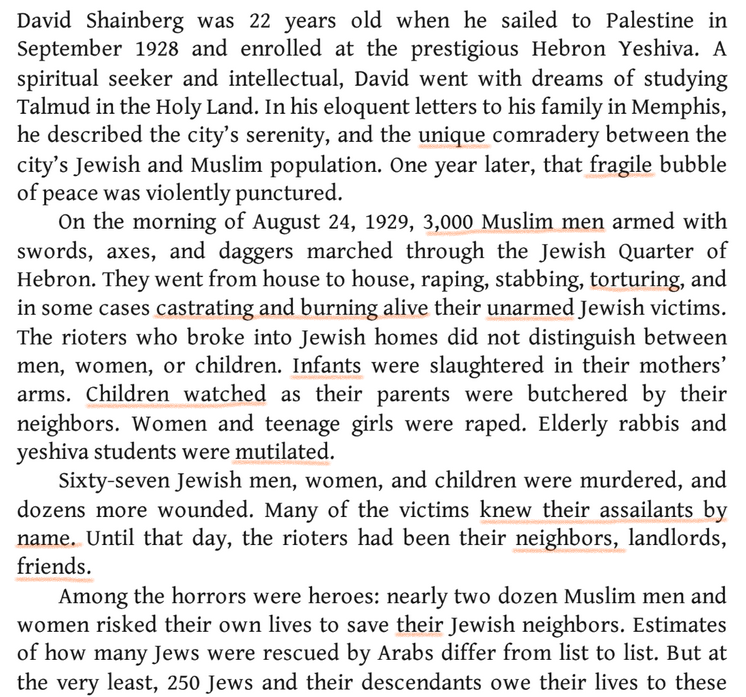
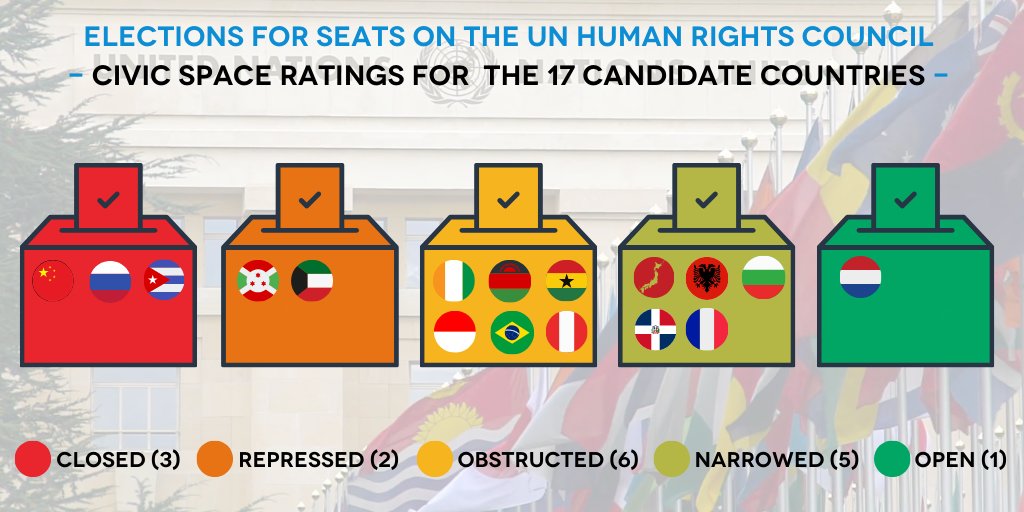
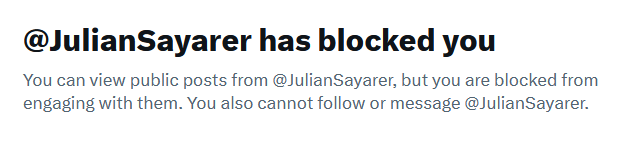
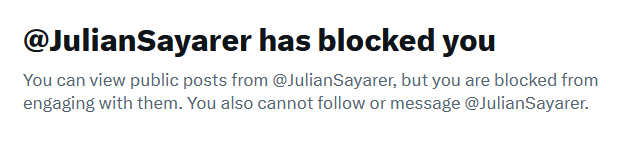

They block when they are confronted with informed critique which they interpret (& dismiss) as "hate" and "racism". They are raised with extreme narrowness so that they may enable reckless warlords. Warlords invite devastation.
@WaWilliams66 @_Anouar123
x.com/NeilSchipperWpg/status…

Arab Muslims are highly prone to fanaticism, blood-feuds and conquest; they don't (yet) have the mental habits necessary for constructing and sustaining legitimate, stable citizen government. They're learning at their own rate. Israel is the teacher.
1
42
Leftists and Islamists will always decorate their agenda with appeals to high-minded principles and liberation narratives. What happens to basic freedoms (speech, assembly, press) when either gang gets actual power? Thinking people know. There have been many experiments.
1
27
Neil Schipper retweeted

People believe that because 700,000 Palestinians were displaced in an Arab war 80 years ago that today they're entitled to wage massacres, bomb busses, hijack planes, and recruit activists for a global intifada.
People also believe that because 9 million Jews were displaced in WW2 and 6 million of them were exterminated and nearly another million were ethnically cleansed by Arabs, that they're entitled to no self defense or sovereignty and that “their victim card expired."
This is the confluence of the racism of low expectations and raw antisemitism.
352
1,778
9,131
270,515
This deserves more attention. (It's been up since Sep 2017 and has 396 views.)
The Gallery Mike Keller Mike Flannigan Frosty Smith youtu.be/q2ASoyZedxA?si=lXbI… via @YouTube
1
141
Neil Schipper retweeted

May 23
Not long ago, I wrote about one of the great narrative advantages antizionists have secured for themselves: they position Zionism as the disruptive event, the thing that enters history and must justify itself to the world.
Once that move is accepted, everything else becomes easier. Arab and Palestinian politics can slip out the back door. Jewish self-determination is dislodged from the ordinary language of nations, peoples, borders, refugees, war, defeat, compromise, and statecraft. It is marked instead as an alien politics, a permanent intrusion, a problem whose existence must be explained before anything else can even be discussed.
To see how extreme this is, imagine the same narrative machinery being used against Palestinians.
Imagine a world in which Palestinian celebrities, writers, professors, business owners, and artists were routinely targeted across countries. The crudest people would call them “baby killers.” The more respectable class would ask whether Palestinians had finally produced a realistic solution to the conflict their nationalism helped create.
People assumed to be Arab would be stopped in public and asked whether they supported a State of Palestine that depends on violence, ethnic exclusion, and the permanent denial of Jewish self-determination. In the entertainment industry, actors and musicians would be pressured to denounce Palestine before being allowed to keep their reputations. Lists would circulate of pro-Palestine donors, professionals, students, and public figures.
People with barely a passing interest in the conflict would somehow know the names of the most brutal or embarrassing figures associated with Palestinian history, and only those figures. They would know the massacres, the rejectionism, the authoritarian leaders, the corruption, the ideological maximalists, the factions that murdered civilians, the schools and media systems that glorified “martyrs,” the diplomats who rejected partition, the movements that turned refugeehood into a permanent political weapon.
And then, after years of this, when most ordinary people had grown exhausted by it, the people still doing it would insist that they were merely asking questions. They would call it critique. They would call it anti-nationalism. They would call it concern for human rights. They would deny that any of this had anything to do with Arabs or Palestinians as people, even while Arabs and Palestinians bore the social consequences of the obsession.
Meanwhile, political candidates across the democratic world would begin making “criticism of Palestine” and “criticism of Palestinian ideology” central to their campaigns. Campus movements would demand that universities cut ties with Palestinian institutions. Public figures would be asked, again and again, whether they condemn Palestinian self-determination. The entire subject would be organized around the presumption that Palestine is the thing that must answer for itself.
This hypothetical is almost impossible to imagine because it is so distant from political reality. Sometimes Zionist propaganda can come close in quality, but microscopic in quantity. That is the achievement of antizionist narrative politics. It constructs Jewish national self-determination as the exceptional case, the suspect case, the one nationalism that must stand before the world and prove that it has a right to exist at all. And once that burden is assigned, everything else follows.
To note here at the end, the response to this shouldn’t be imitation. It should be exposure. This kind of politics is disguising and should be rooted out of society. Today it is used against Zionists and Jews generally, but it didn’t begin there and it won’t stop there. It will need to be stopped by people who can see it for what it is and make what it is clear to those who still can’t see it well.
13
75
305
35,122
The exclamation marks, smileys and snarkasm, taken together, strongly suggest that @JulianSayarer considers it contemptible that he was blocked for expressing a contrary view.x.com/JulianSayarer/status/2…
1
3
113
For those unaware, the quoted tweet is made invisible by x due to the account's block on me. You need to click on it to view.
2
2
89
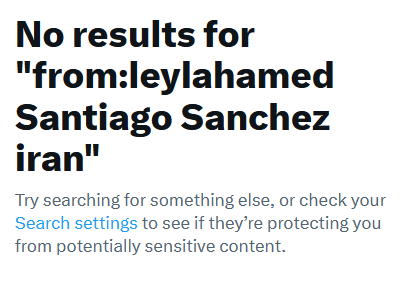
I expose Spanish-Moroccan sports journalist @leylahamed abusing her high profile to claim concern for human rights. She, like so many of her culture, has no concept of universal human rights. Only primitive blood-feuding.
"sustained attention"
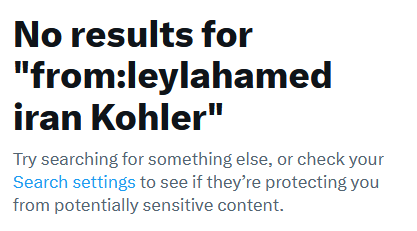
Google "spanish citizen detained iran". Repeat using word 1 = "european".
Read about: Santiago Sanchez, Kohler & Paris, Floderus, Foreman, Taghavi, Sharmahd
For each of these, search x using "from:leylahamed iran Kohler", etc.
Not one post.
So primitive.
1
1
283
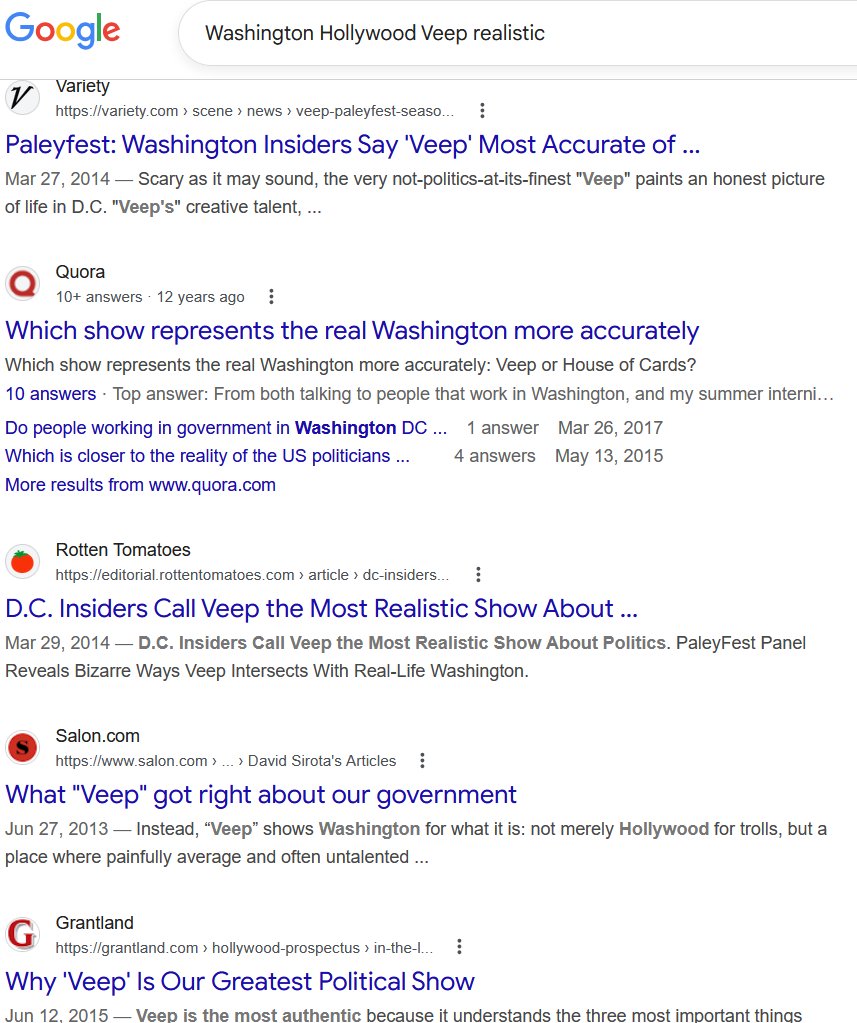
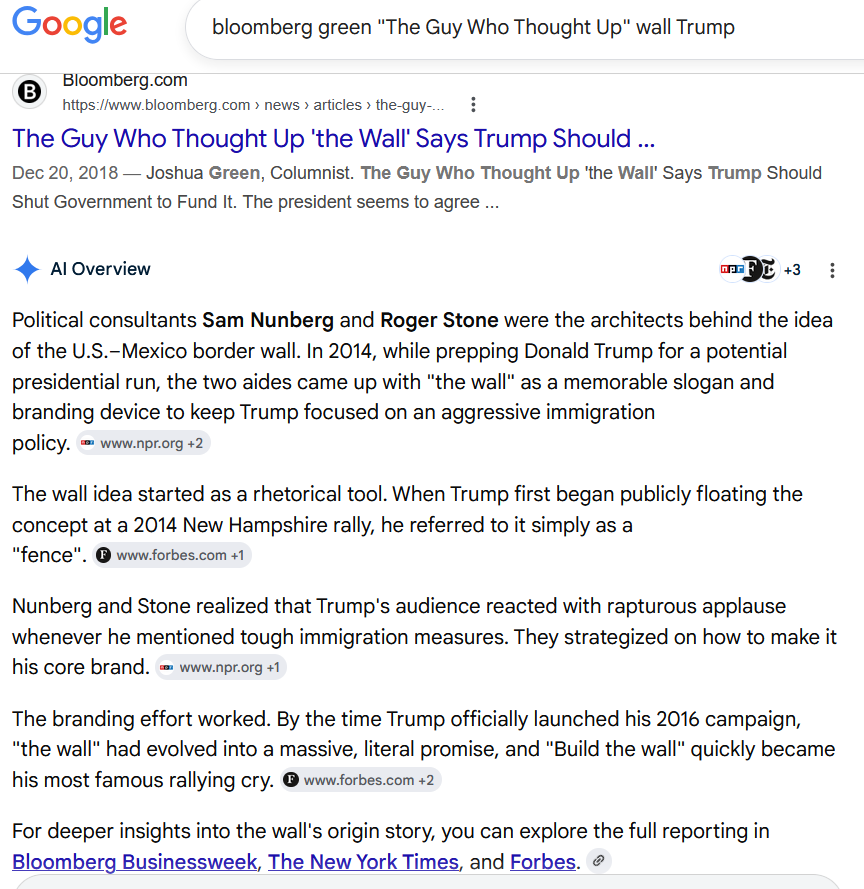
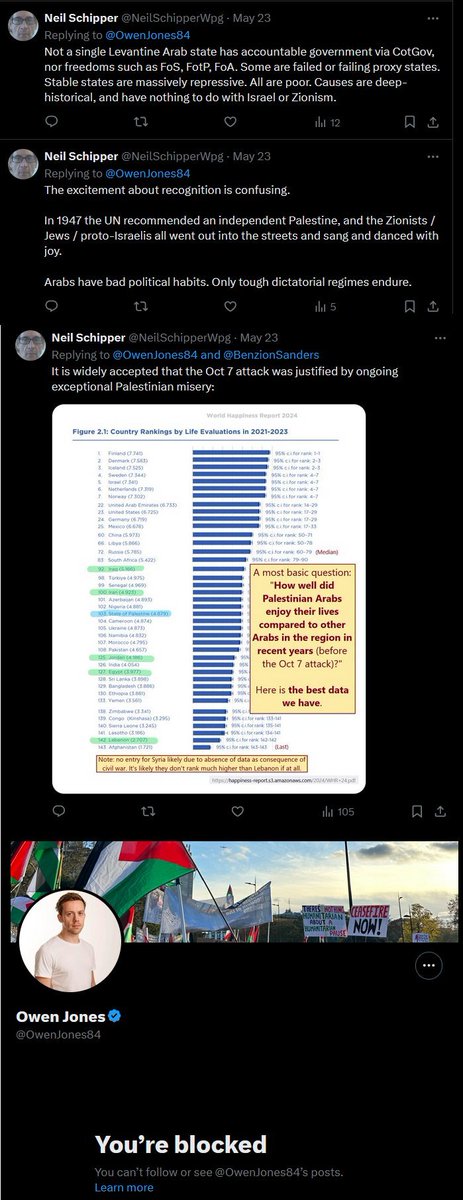
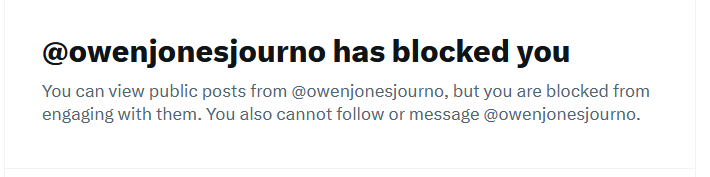
Here @owenjonesjourno uses having been blocked as a triumph, but he blocked me (on both old & new accounts) for challenging his claims in an informed, non-incendiary manner. (1st image legible in new tab, enlarged.)x.com/owenjonesjourno/status…
1
2
64
This link provides all comments of mine that engaged with his newer account (most from before his block). Again, no trash-talk or obscenities but rather robust, informed challenges:x.com/search?q=owenjonesjour…
1
43
Pres DJT, PM Netanyahu, 🇺🇸, 🇮🇱: you have total air superiority. You have options. Time to make some history.x.com/NeilSchipperWpg/status…
Total air superiority.. no territory seized.. Action: pick tiny region remote from key regime assets; drop leaflets instructing families to☮️fully camp near PoliceStn/GovBldgs; choppers bring 🪖& expats, seize key gov buildings; gather public, declare breakaway. Have escape plan.
1,745
Neil Schipper retweeted
Impatient for GENIUS moves by 🇺🇸&🇮🇱: Airdrops of well thought out instructions to citizens in targeted nayb'hoods w/anti-regime sentiments advising low risk activities, voice/data sat phones. Local anti-regime cells merging with non-IRGC army declaring breakaway provinces/cities.
1
525
In fact, it's "Stop threatening international shipping in the Strait of Hormuz or I'm blockading YOUR maritime shipping".
It shouldn't be so easy to:
- manipulate large numbers of people
- deploy paid influence campaigns to promote narratives

131
Short assertions of inciting agitation are very popular, and seem to be effective at reaching the low-information and poorly educated.
Meanwhile, Israel is teaching the backwards, fanatical, aggressive societies of MENA to control their primitive impulses to terrorize civilians.
Apr 9

Israel hates life and humanity
1
1
90
Thinking people aren't impressed by inflammatory but insubstantial proclamations. And thinking people are badly outnumbered by unthinking people.x.com/jacksonhinklle/status/…
Apr 10

REMINDER: Israel is a terrorist state.
1
57
How come Jordan and Egypt aren't afraid of Israel bombing them and stealing land?
Jordan and Egypt elites learned how to suppress fanatical Islamists, which backwards Arab Muslim societies reliably produce in large numbers.

The whole world chooses peace, Israel chooses war and destruction.
1
71
What if it's correct that Israel committed genocide, according to progressive new-fangled interpretations of technical definitions, definitions which are silent about the xenophobia, bloodlust and passion for conquest by primitive peoples?x.com/NeilSchipperWpg/status…
5 Oct 2025
We Zionists like to perpetrate genocides and mass murders and indiscriminate bombings and man-made famines and holocausts.. with non-combatant survival rates of around 98%.
98%.
It's how we like to do it.
1
1
348
If Israel formally renamed itself "The Jewish, Genocidal, Apartheid State of Israel", then by virtue of being more legitimate and more humane than at least 3/4 of the nations on the planet, and 100% of those in its vicinity, it would still deserve to exist, and defensibly.
2
1
97
Progressives see the world in very stark terms. There's good & evil. There's oppressor & oppressed. Suggestions to tolerate nuance, to explore and represent appropriate context, are violations of that binary.

You could be a little more curious, and honest, about the norms in West Asia for when conflict arises between agents of state security and assertive elements of religious minorities. But then you'd be less able to preen.
1
110
Their modus operand is to block accounts who push against their preferred narratives, particularly when the pushback is calm, reasoned and evidence-based.

Less Iranians killed in weeks of bombardment by 🇺🇸 & 🇮🇱 than in a few days last January by IRI enforcers. The regime should fall, and its Western apologists should pay a price.
1
2
67