Physicist interested in Astrophysics & Particle Physics| Research in Math & Science Edu| Math & Science Writer| Teacher & Teacher Trainer| WomenInSTEM
- Tweets 64,040
- Following 77
- Followers 7,851
- Likes 229,181
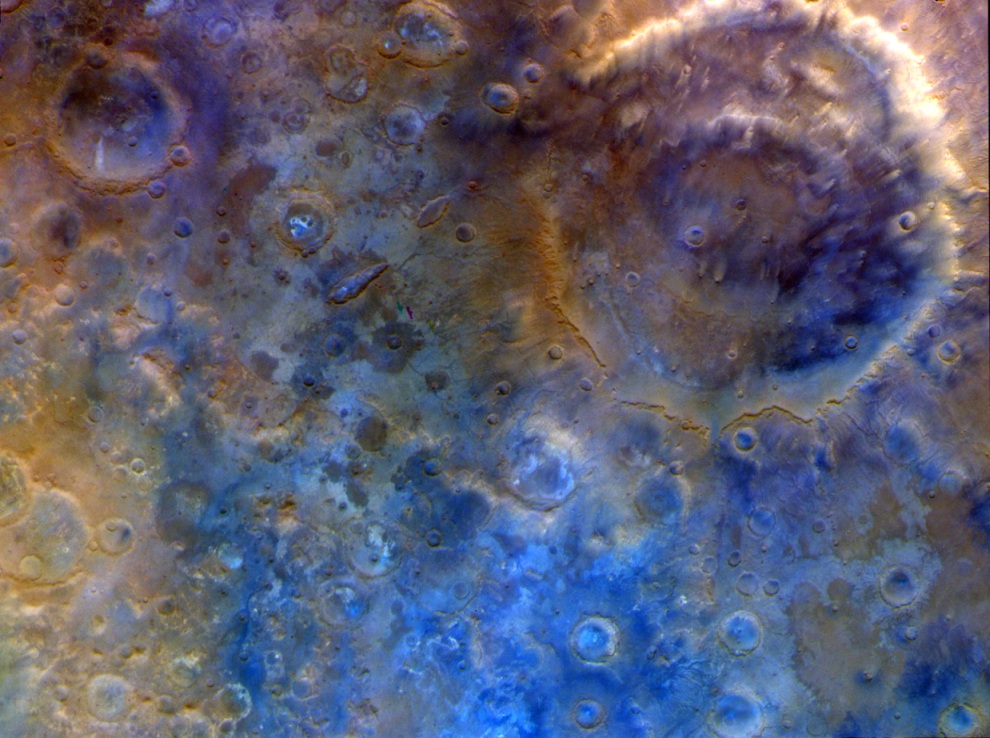


ALT Enhanced-color image of Mars showing a vast, ancient landscape. In the upper right you can see the large double-ring Huygens Crater, a prominent circular formation about 470 kilometers wide with a clear inner ring. Around it, the southern highlands are covered with lots of smaller craters. The whole area shows warm tones of red/orange and brown, with hints of blue and purple that highlight differences in dust, sand, and rock across the rough, ancient surface.
ALT Artemis III crew in orange suits, left to right: Andre Douglas (standing left, holding helmet), Luca Parmitano (seated), Randy Bresnik (seated), and Frank Rubio (standing right, holding helmet). Official NASA portrait.
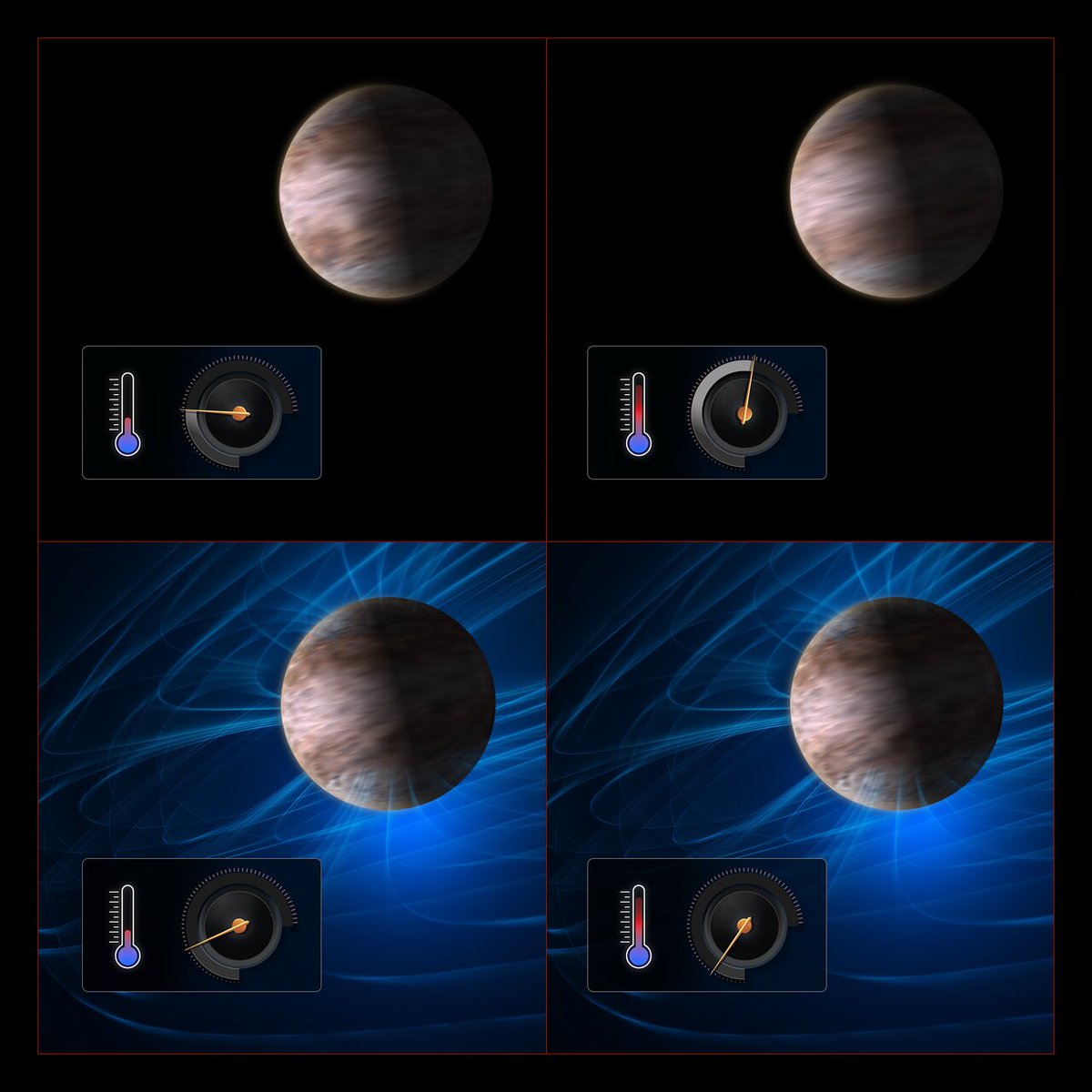
ALT Four-panel illustration explaining how magnetic fields influence winds on tidally locked hot gas giant exoplanets. Top row shows two planets without magnetic fields: the hotter one on the right has faster, more streaked winds compared to the cooler one on the left. Bottom row shows the same planets with magnetic fields active: the hotter planet now has noticeably slower winds because of magnetic drag. Each panel includes a thermometer for temperature and a speedometer for wind speed. The diagram illustrates well how magnetic fields act as a brake, slowing winds more strongly on hotter planets. Credit: ESO/M. Kornmesser, L. Calçada

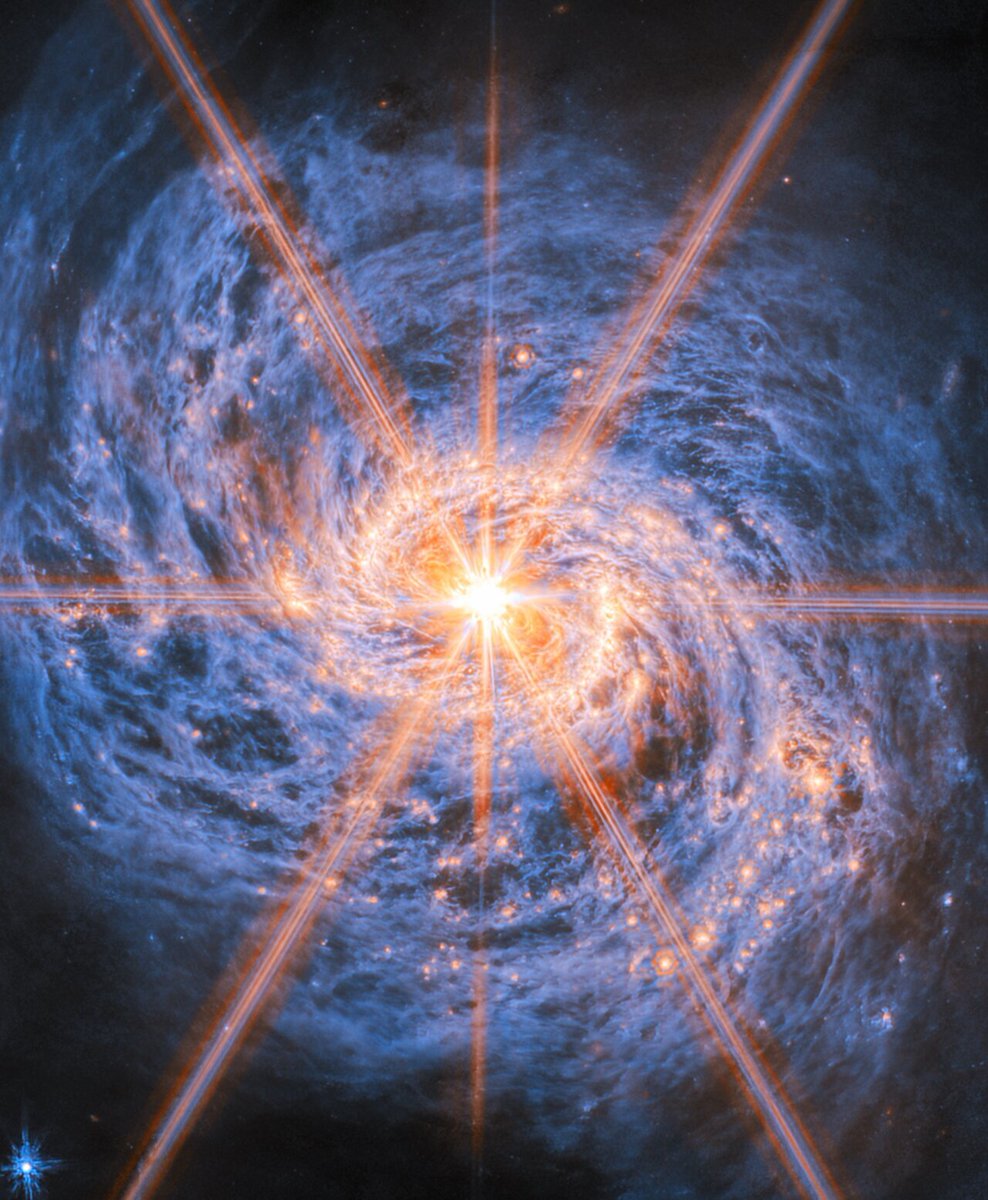
ALT A detailed mid-infrared view of the spiral galaxy Messier 77. The image is dominated by an intensely bright central core, from which six long and two shorter bright rays extend outward like a starburst pattern — these are diffraction spikes caused by the telescope’s optics. Two prominent spiral arms curve outward from the center, marked by glowing orange bubbles of newly formed star clusters. The rest of the galaxy consists of swirling, smoky blue clouds of dust that form intricate filaments and dark cavities throughout the disk.
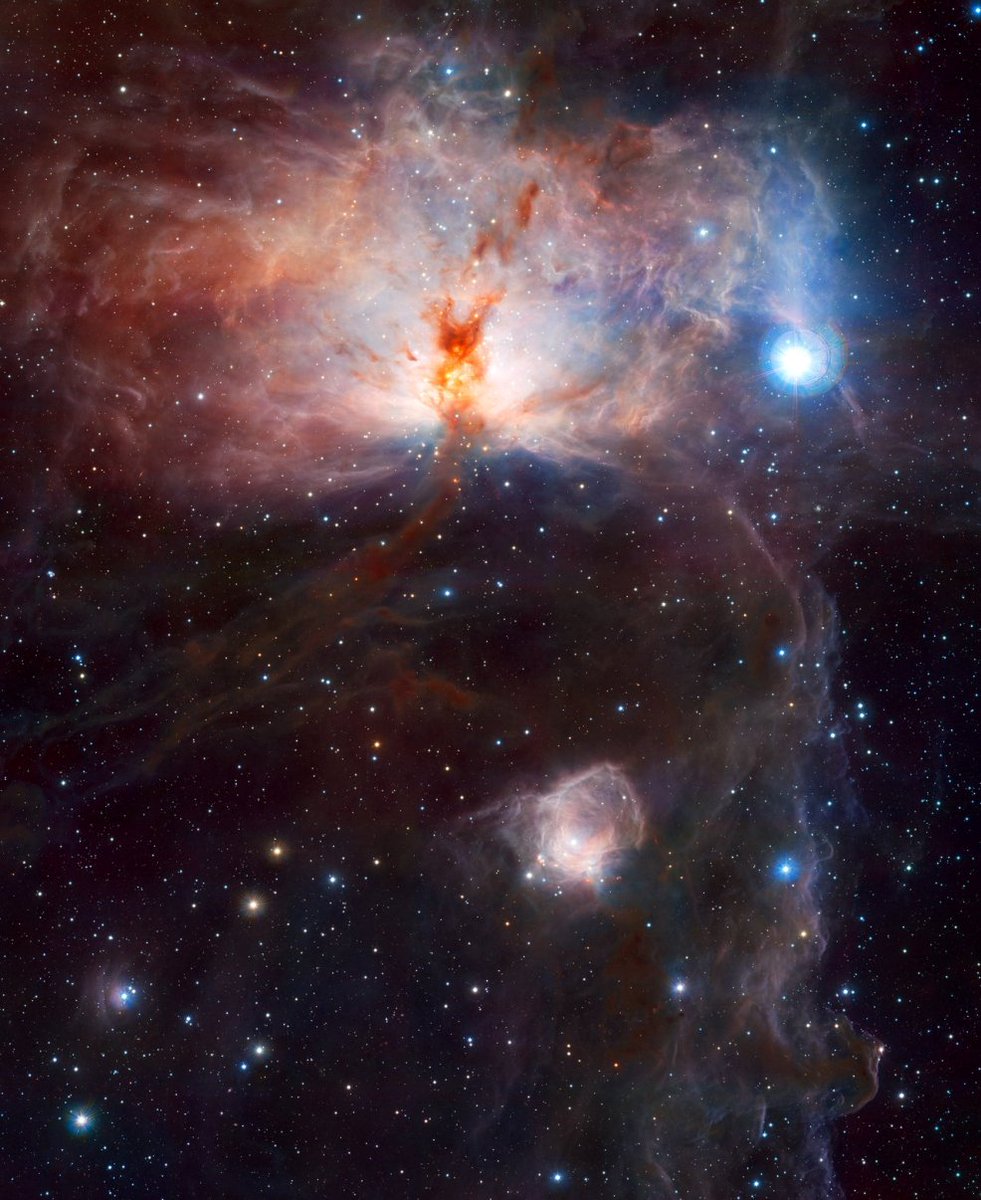
ALT This infrared image shows the Flame Nebula, NGC 2024, in Orion from VISTA. In the middle there’s a tight group of young stars that you can’t normally see because they’re hidden behind thick dust in ordinary light. Lower down there’s a faint hazy spot called NGC 2023. Down in the bottom right you can see the dark outline of the Horsehead Nebula. On the right you see a bright blue star from Orion’s Belt. Credit: ESO/J. Emerson/VISTA.
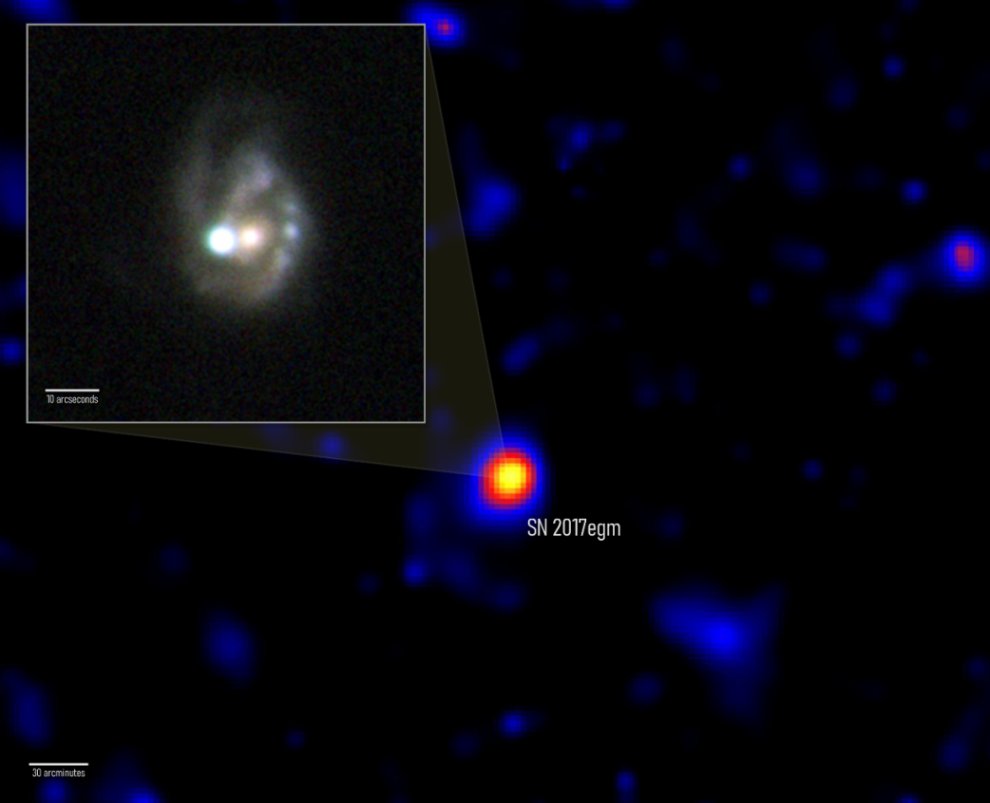
ALT This is a combo image of the supernova SN 2017egm. In the little inset you see the regular light photo from July 1st 2017 — the supernova is the super bright dot in its galaxy. The background is the gamma ray map made with Fermi showing a large area of the sky surrounding the supernova’s position. It covers the period from early July to late October 2017. The brighter bits are the spots where they think the gamma rays are tied to the supernova.
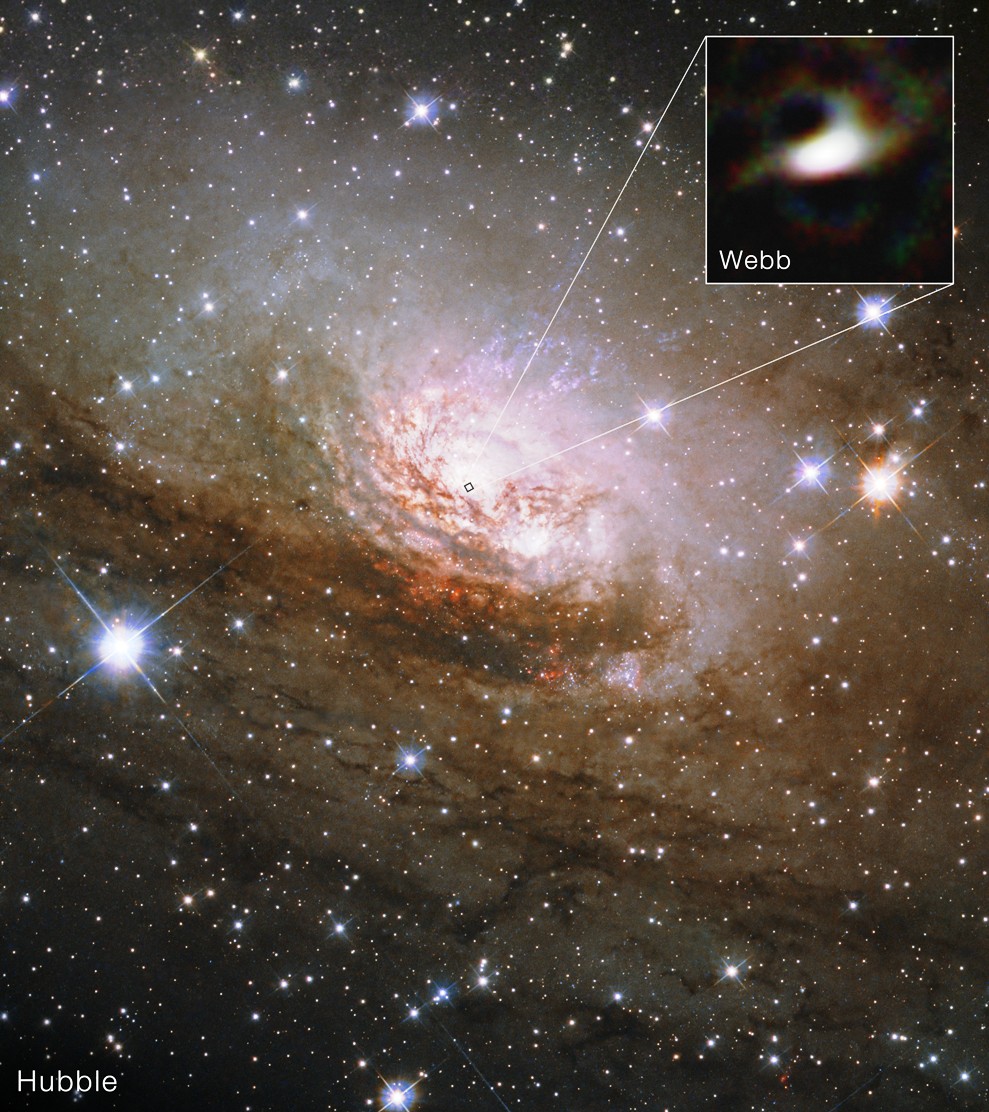
ALT Hubble image of the Circinus galaxy, a spiral galaxy 13 million light-years away, with a JWST close-up inset of its center. The JWST view, using special interferometry mode, shows the glowing inner edge of the dusty ring feeding the supermassive black hole. Darker patches are the thicker outer parts of the ring.
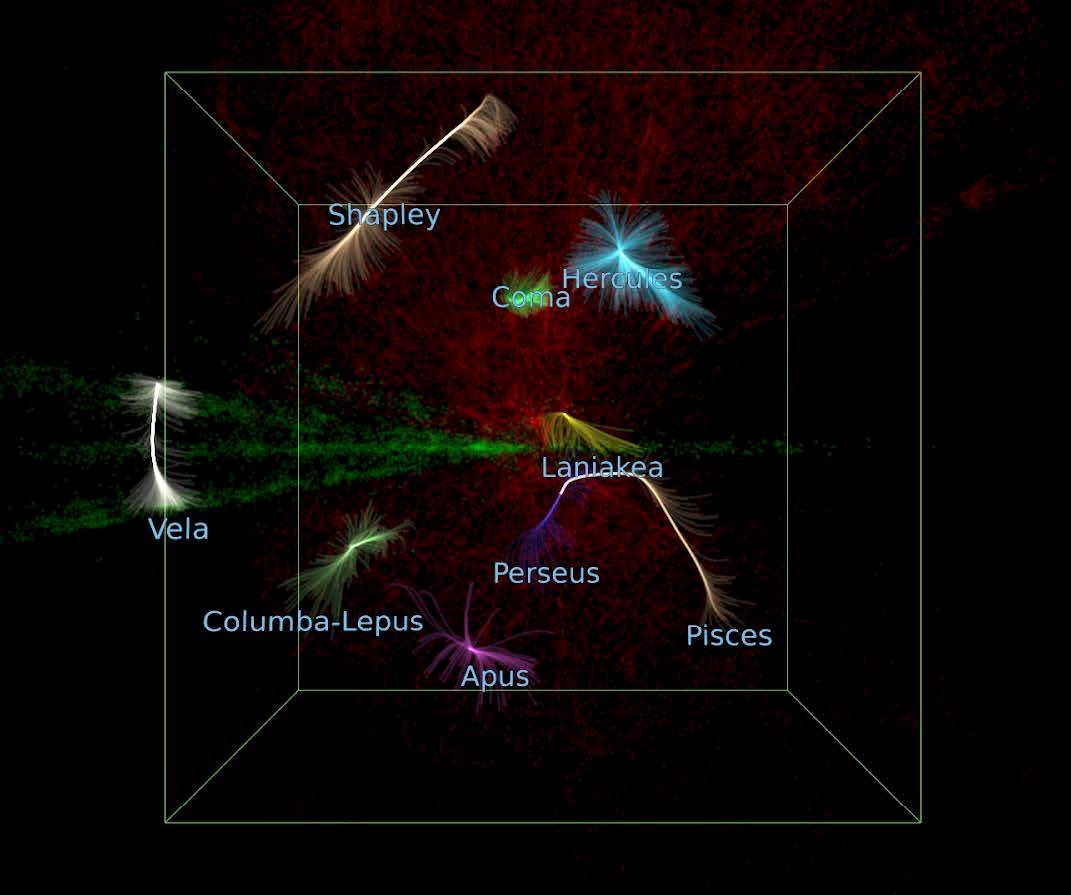
ALT The map shows the main superclusters in the nearby Universe: Shapley, Coma, Hercules, Laniakea, Perseus, Columba-Lepus, Apus and Pisces. Vela, the newly revealed giant, stands out clearly on the left, with galaxy flow lines and large cosmic basins visible. Image credit: Dr Jérôme Léca, RSA Cosmos, St Etienne, France.
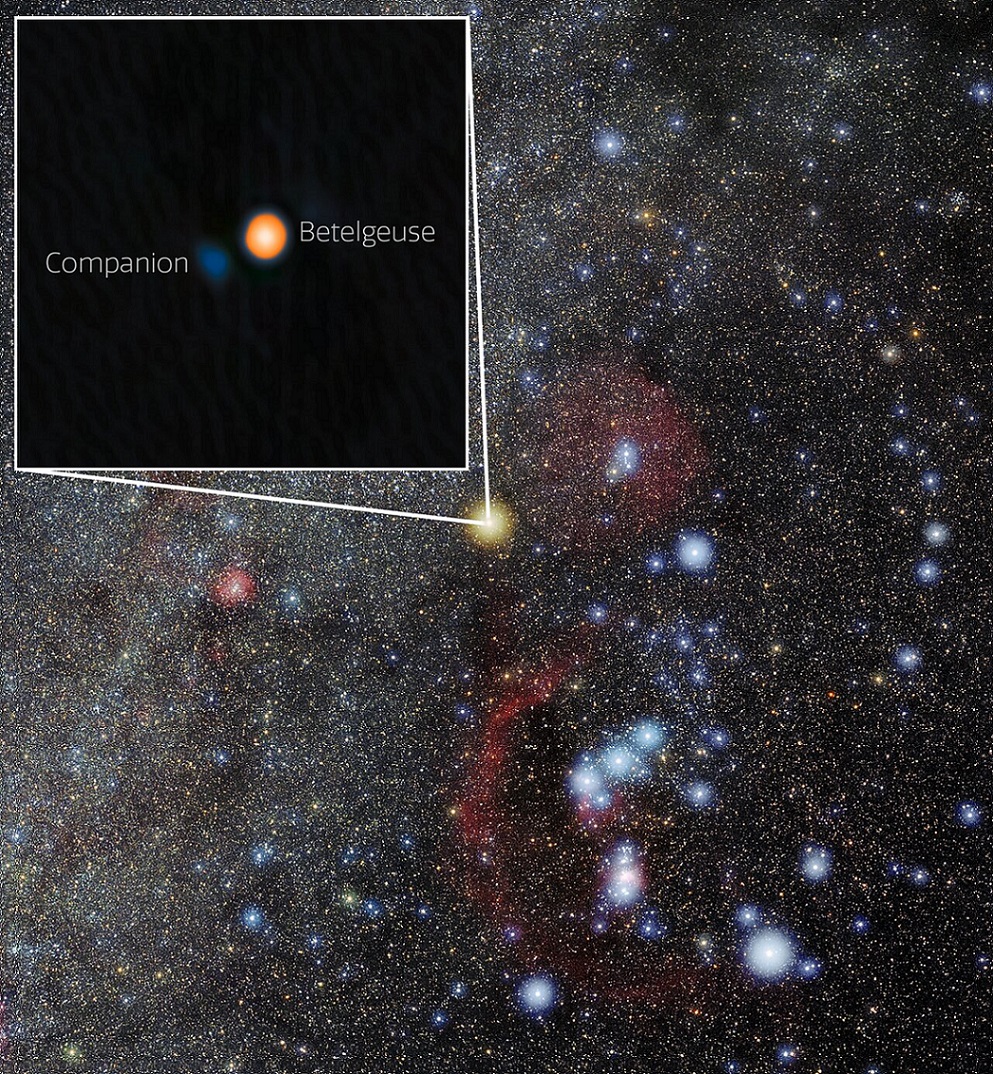
ALT The image shows a vast star field with a faint yellow-orange star, Betelgeuse, at its center. Two white segments radiate from it, converging toward a black box at the upper left. In the box, Betelgeuse appears as a bright orange, almost circular disk, next to its companion, a smaller, less well-defined, dark blue star located slightly to the lower left of Betelgeuse. The companion, detected with the 'Alopeke instrument on the Gemini North telescope, is a hot, young star. This discovery explains Betelgeuse's brightness variability every six years.
ALT Enhanced-color image of Mars showing a vast, ancient landscape. In the upper right you can see the large double-ring Huygens Crater, a prominent circular formation about 470 kilometers wide with a clear inner ring. Around it, the southern highlands are covered with lots of smaller craters. The whole area shows warm tones of red/orange and brown, with hints of blue and purple that highlight differences in dust, sand, and rock across the rough, ancient surface.