
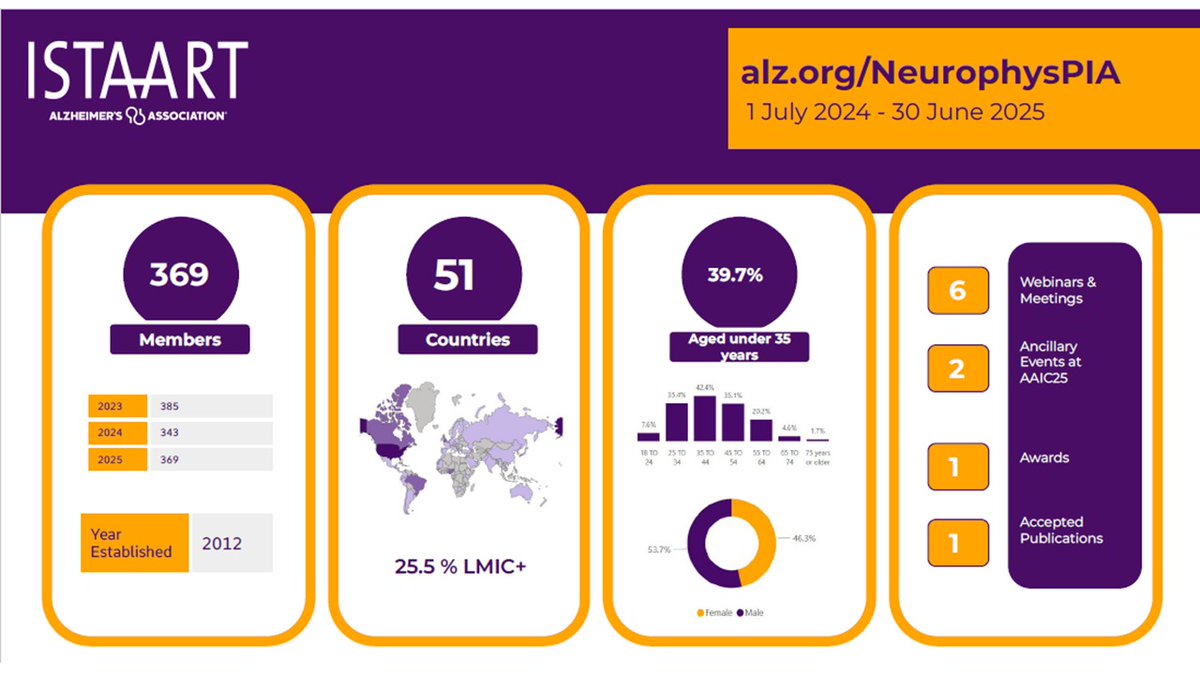
The @ISTAART Neurophysiology Professional Interest Area (PIA) is a group of researchers whose research focuses on neural synchronization and connectivity.
Joined July 2022
- Tweets 163
- Following 46
- Followers 179
- Likes 5
40 Photos and videos
Don't miss this opportunity to hear from an incredible expert in the field of Alzheimer's disease neurophysiology research!!

📢📢📢Neurophysiology PIA Neuroscience Mentoring Club
Speaker: Vesna Jelic
Session Champions: Hakim Al-Ezzi, Ilayda Kiyi-Atilla
Moderators: Xianghong Arakaki, Fernando Maestú
🗓️Jun 11, 2026 11:00 AM Central Time
Register at: alz-org.zoom.us/meeting/regi…
23
Dr. Vesna Jelic reviews her professional and scientific trajectory in the neurophysiology of dementia, from the early days to today, and shares her perspective on the next steps.
An outstanding testimonial to witness and a great opportunity, especially for young researchers!
📢📢📢Neurophysiology PIA Neuroscience Mentoring Club
Speaker: Vesna Jelic
Session Champions: Hakim Al-Ezzi, Ilayda Kiyi-Atilla
Moderators: Xianghong Arakaki, Fernando Maestú
🗓️Jun 11, 2026 11:00 AM Central Time
Register at: alz-org.zoom.us/meeting/regi…
41
📢📢📢Neurophysiology PIA Neuroscience Mentoring Club
Speaker: Vesna Jelic
Session Champions: Hakim Al-Ezzi, Ilayda Kiyi-Atilla
Moderators: Xianghong Arakaki, Fernando Maestú
🗓️Jun 11, 2026 11:00 AM Central Time
Register at: alz-org.zoom.us/meeting/regi…
110
We are thrilled to inform you that ISTAART has opened voting for the Publication of the Year Award to PIA members for the first time!!!
Contribute your vote at istaart.alz.org/publications…
1
1
32
Moderators: Pierfilippo De Sanctis, Görsev Yener
Blaine E. Weiss, Christopher M. Norris
Abdulhakim Al-Ezz, Xianghong Arakaki
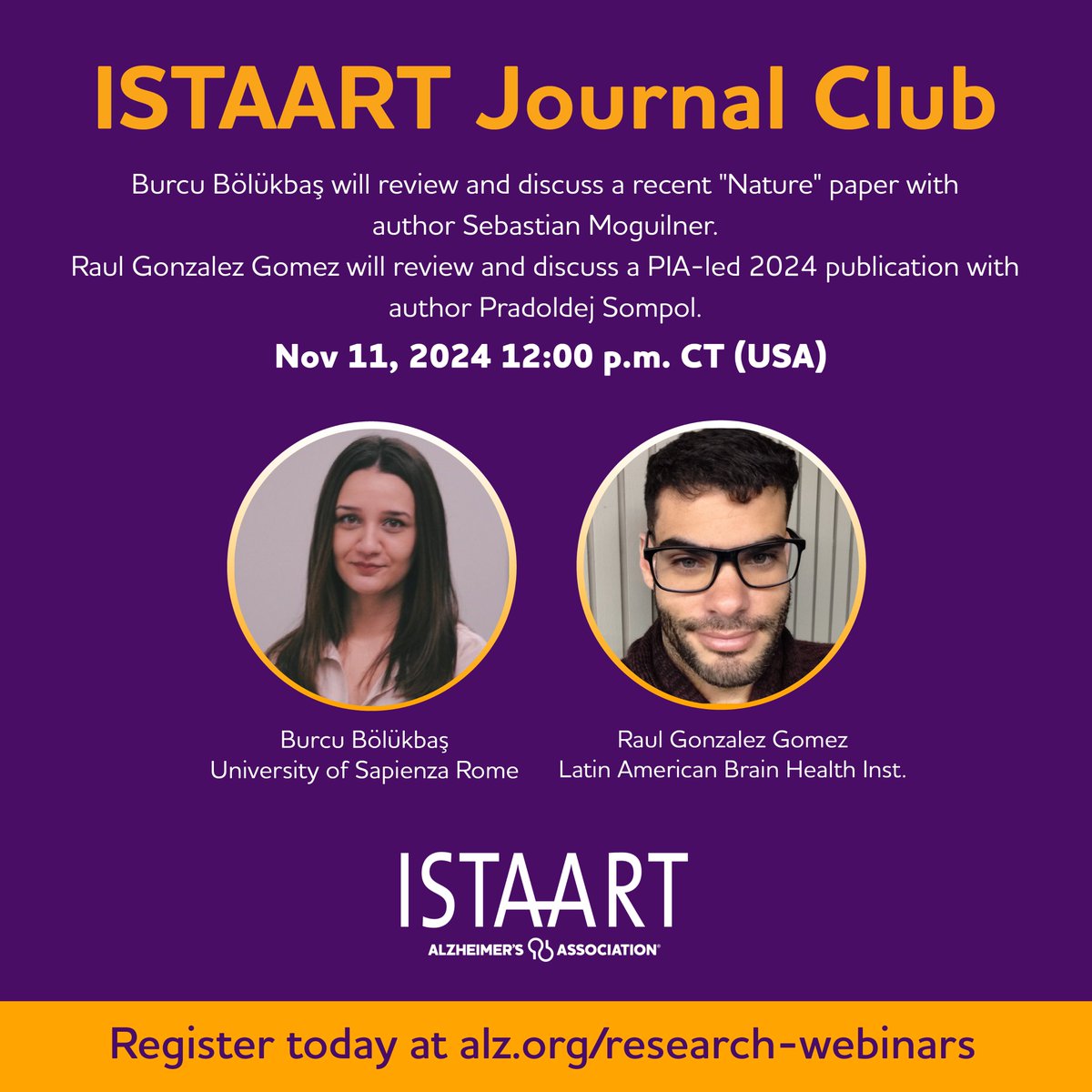
Neurophysiology PIA: ISTAART Journal Club - Meet the Author
We will highlight recent developments across calcium and functional connectivity disruption in AD, and will include studies with pre-symptomatic AD experimental model.
🗓️April 29 2026, 9 am EST
alz-org.zoom.us/webinar/regi…
1
1
73
Neurophysiology PIA: ISTAART Journal Club - Meet the Author
We will highlight recent developments across calcium and functional connectivity disruption in AD, and will include studies with pre-symptomatic AD experimental model.
🗓️April 29 2026, 9 am EST
alz-org.zoom.us/webinar/regi…
1
104
Neurophysiology PIA retweeted
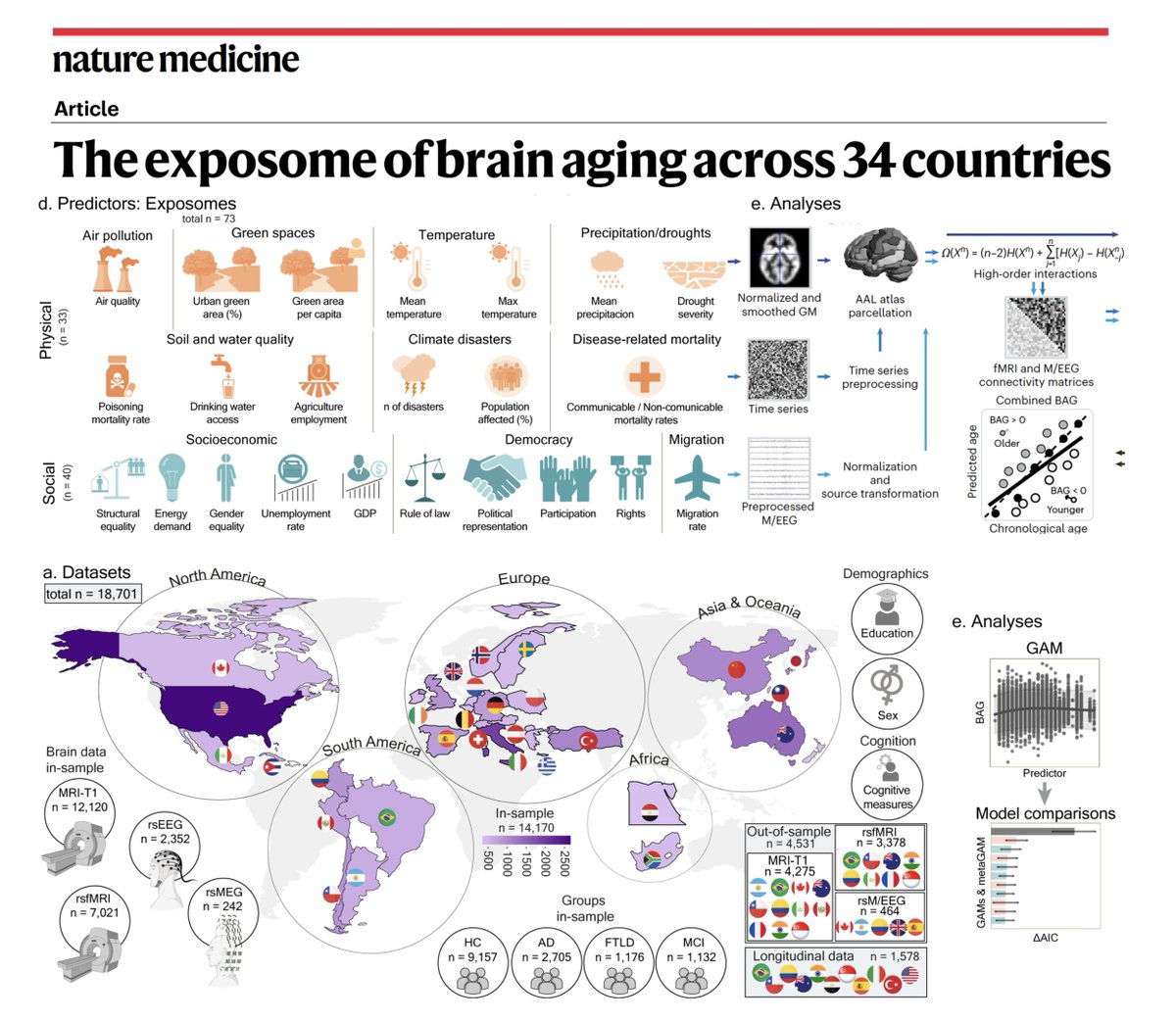
Aging clocks may be shaped by neurosyndemics, multiple interacting physical and social real-world environments jointly influencing brain health. Out in Nature Medicine (nature.com/articles/s41591-0…), we assessed 18,701 participants from 34 countries, showing that the combined aggregate-level exposome (73 physical, social, and political factors measured at country-level) predicts multimodal brain aging far better than isolated exposures (up to 15-fold more variance). Moving beyond single risks, we provide evidence that synergistic, nonlinear exposome burden accelerates brain clocks across health and disease, with physical exposures linking more strongly to structural brain aging and social exposures to functional brain aging. Exposome burden increased the risk of accelerated brain aging by 3.3–9.1-fold, in some cases exceeding the effects associated with dementia, and these findings held in out-of-sample, longitudinal, individual-level variation, and sensitivity analyses. Thus, the pace at which the brain ages may be shaped by syndemic environmental and societal conditions, calling for much more intersectoral policies. Congrats @AgustinaLegaz Sebastian Moguilner @HernHdezL & all coauthors. 1/5👇 @GBHI_Fellows
8
116
285
25,117
Neurophysiology PIA retweeted
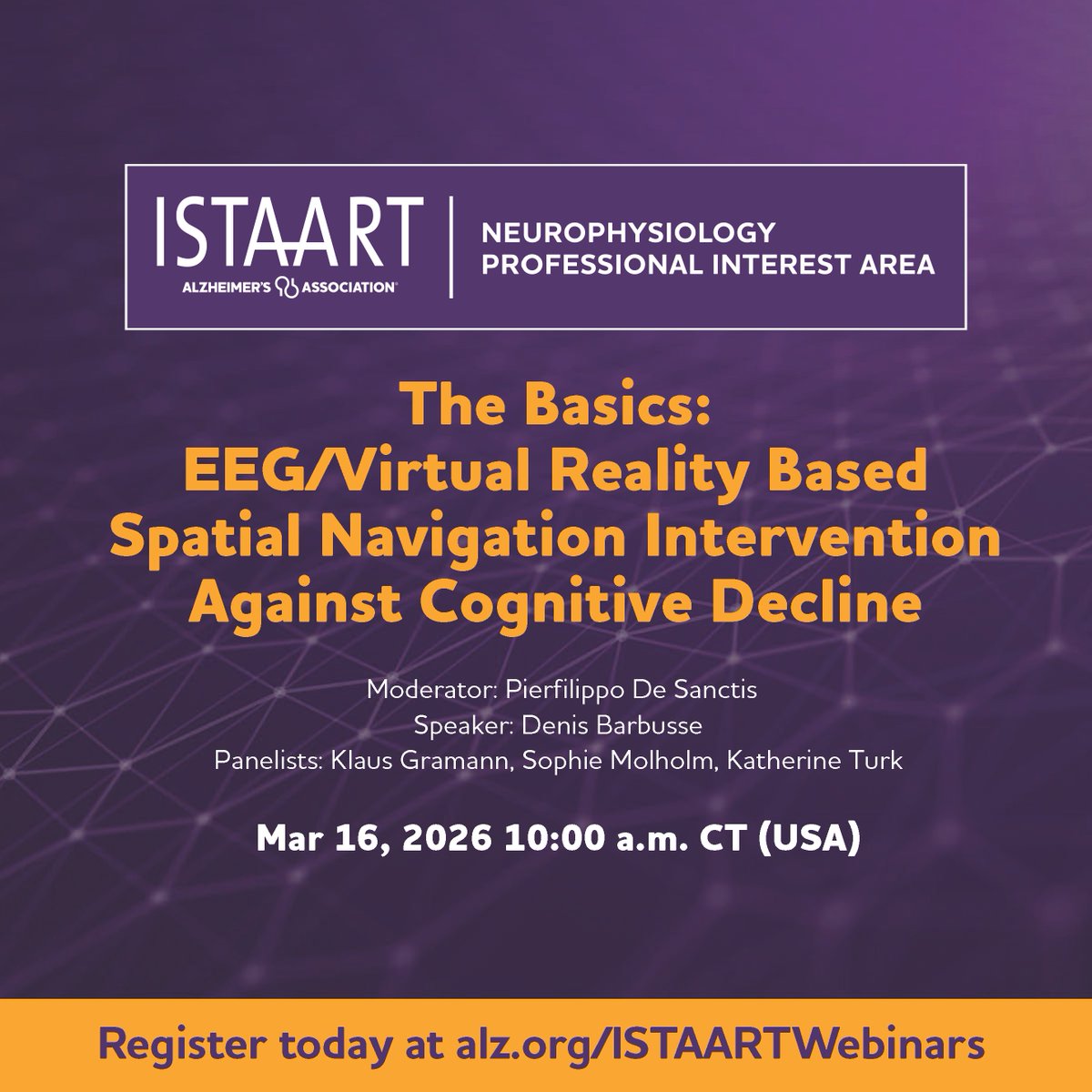
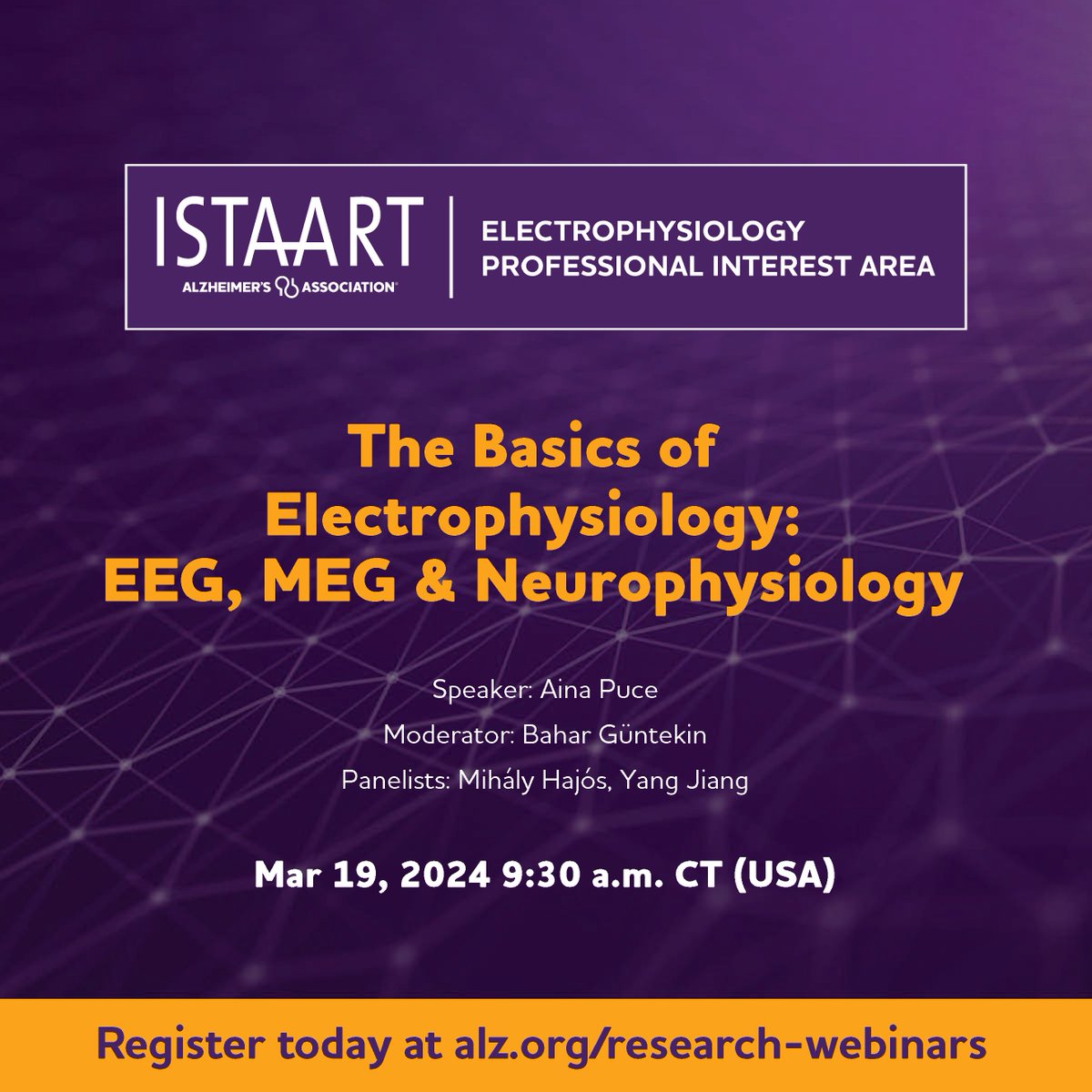
📢📆Please register for the Neurophysiology PIA's webinar set for March 16 at 10.00 am (CT)!
"The Basics: EEG/Virtual Reality Based Spatial Navigation Intervention Against Cognitive Decline"
Please register at Zoom registration link: alz-org.zoom.us/webinar/regi…
2
1
53
📢📆Please register for the Neurophysiology PIA's webinar set for March 16 at 10.00 am (CT)!
"The Basics: EEG/Virtual Reality Based Spatial Navigation Intervention Against Cognitive Decline"
Please register at Zoom registration link: alz-org.zoom.us/webinar/regi…
1
1
97
The Inge Grundke-Iqbal Award for Alzheimer's Research is presented to the senior author of the most impactful study published in Alzheimer's research over the preceding two years. @ISTAART members, make your nominations by February 5. bit.ly/44vgjw0 #AAIC26
24
📢📢📢Calling all @ISTAART members: Nominations are open for the Bill Thies Award for Distinguished Service to ISTAART. Submit your recommendation by February 5. Learn more: bit.ly/4aoInVy #AAIC26
14
🏆Lifetime Achievement:
Submit a nomination today for the AAIC Lifetime Achievement Awards to help us recognize distinguished leaders in the field during #AAIC26. Nominations are due February 5. bit.ly/4pPTQSX
17
Abstract submissions are open for #Tau2026. This global conference from @alzassociation, @RCFNeuro and @curepsp brings together interdisciplinary researchers and perspectives to move tau research forward. Submit your abstract by Feb. 18: alz.org/Tau
31
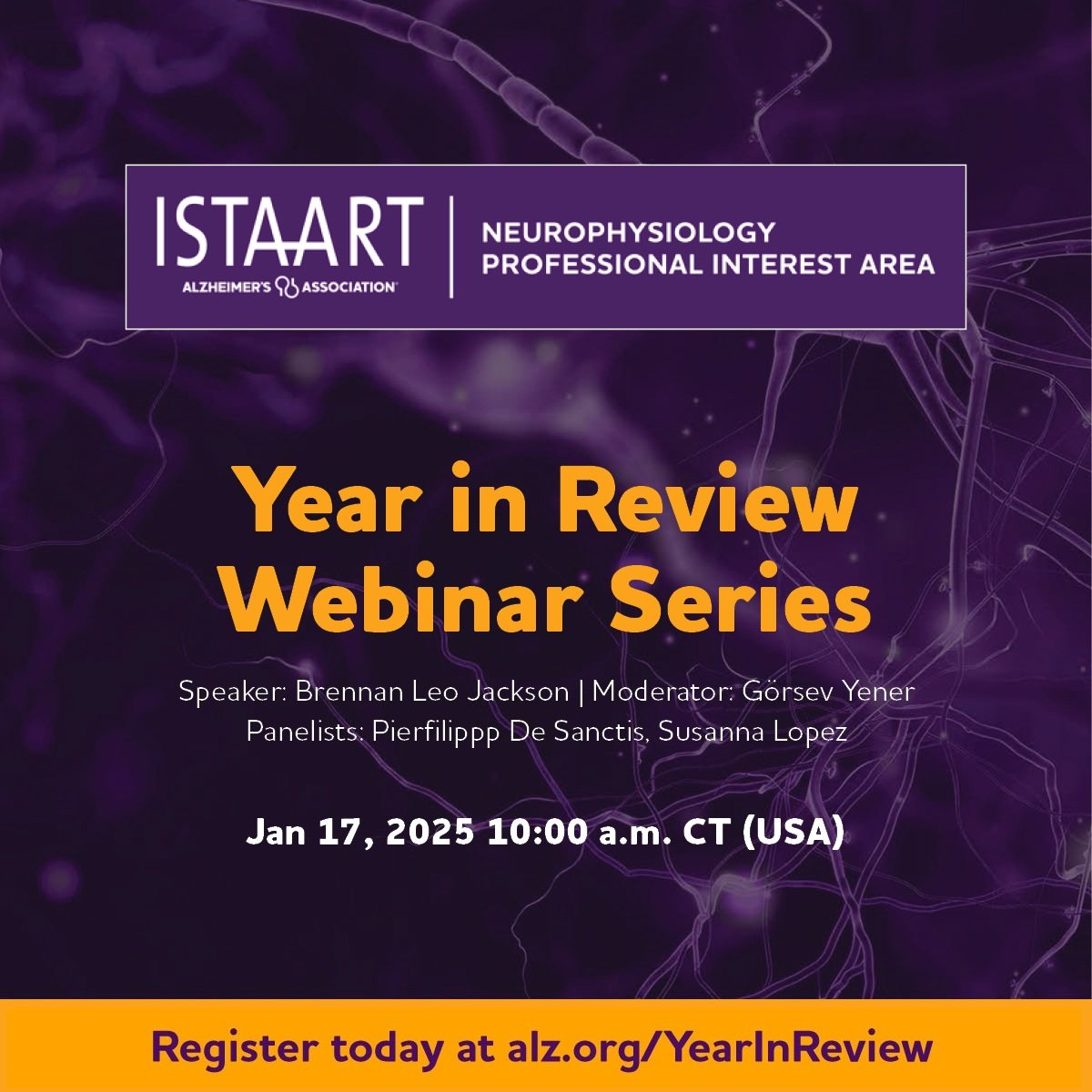
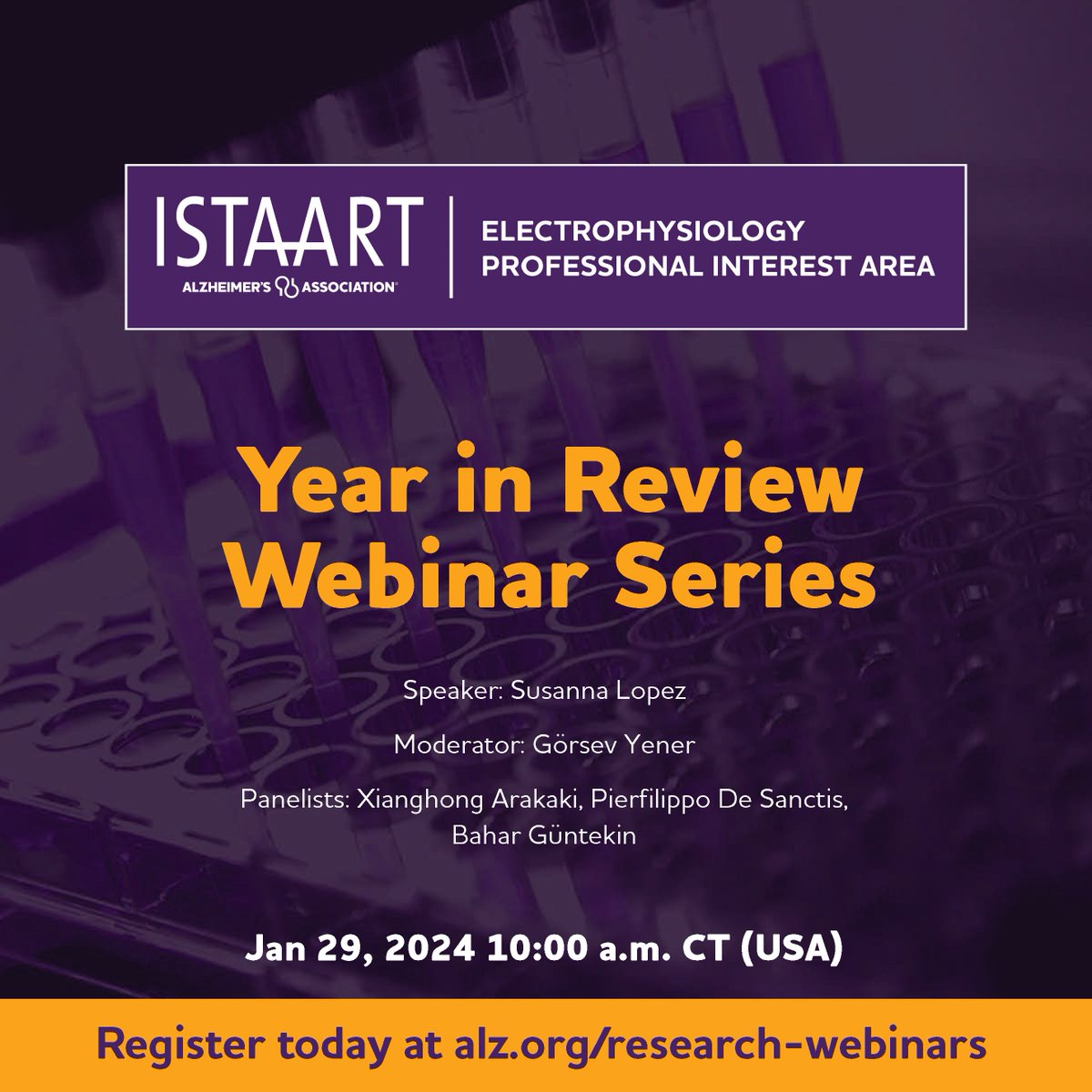
🚀 From 2025 discoveries to 2026 predictions in Neurophysiology
Don’t miss @ISTAART’s free Year in Review webinar series.
🗓️ Friday January 30th, 2026 9:00am CST | 🔗istaart.alz.org/events/item/…
Don't miss this opportunity to keep up to date with the most recent and exciting findings!
istaart.alz.org/events/item/…
Moderator: Fernando Maestu Unturbe, Ph.D.
Speaker: Alejandra García-Colomo, Ph.D.c
Panelist: Yang Jiang, Ph.D
Panelist: Valentine Ucheagwu, Ph.D.
19
This year’s #AAICSatellite Symposium will bring together the dementia research, care and public health community to discuss emerging trends, tackle challenges and foster innovation within the Mediterranean region. Submit your abstracts by Feb. 2: alz.org/satellite-symposium.
2
13
Join the @alzassociation & @GBHI_Fellows for the #AAICSatellite Symposium. The event brings together leaders in dementia research, care & public health to tackle challenges within the region.
📅: April 30-May 1
🌐: Istanbul, Turkey & online
Learn more: alz.org/satellite-symposium
15
Don't miss this opportunity to keep up to date with the most recent and exciting findings!
istaart.alz.org/events/item/…
Moderator: Fernando Maestu Unturbe, Ph.D.
Speaker: Alejandra García-Colomo, Ph.D.c
Panelist: Yang Jiang, Ph.D
Panelist: Valentine Ucheagwu, Ph.D.
Jan 13

Register
alz-org.zoom.us/webinar/regi…
62

30 Dec 2025
📢🗓️ Learn about advancements in Neurophysiology in 2025 and the predictions for 2026 during @ISTAART’s free Year in Review webinar series.
Register for our webinar on Fri January 30th, 2026, and see all available webinars in the January series at alz.org/YearInReview.
43
Neurophysiology PIA retweeted

12 Dec 2025
Neuroscience should improve the real-world, embodied characterization of health & disease.
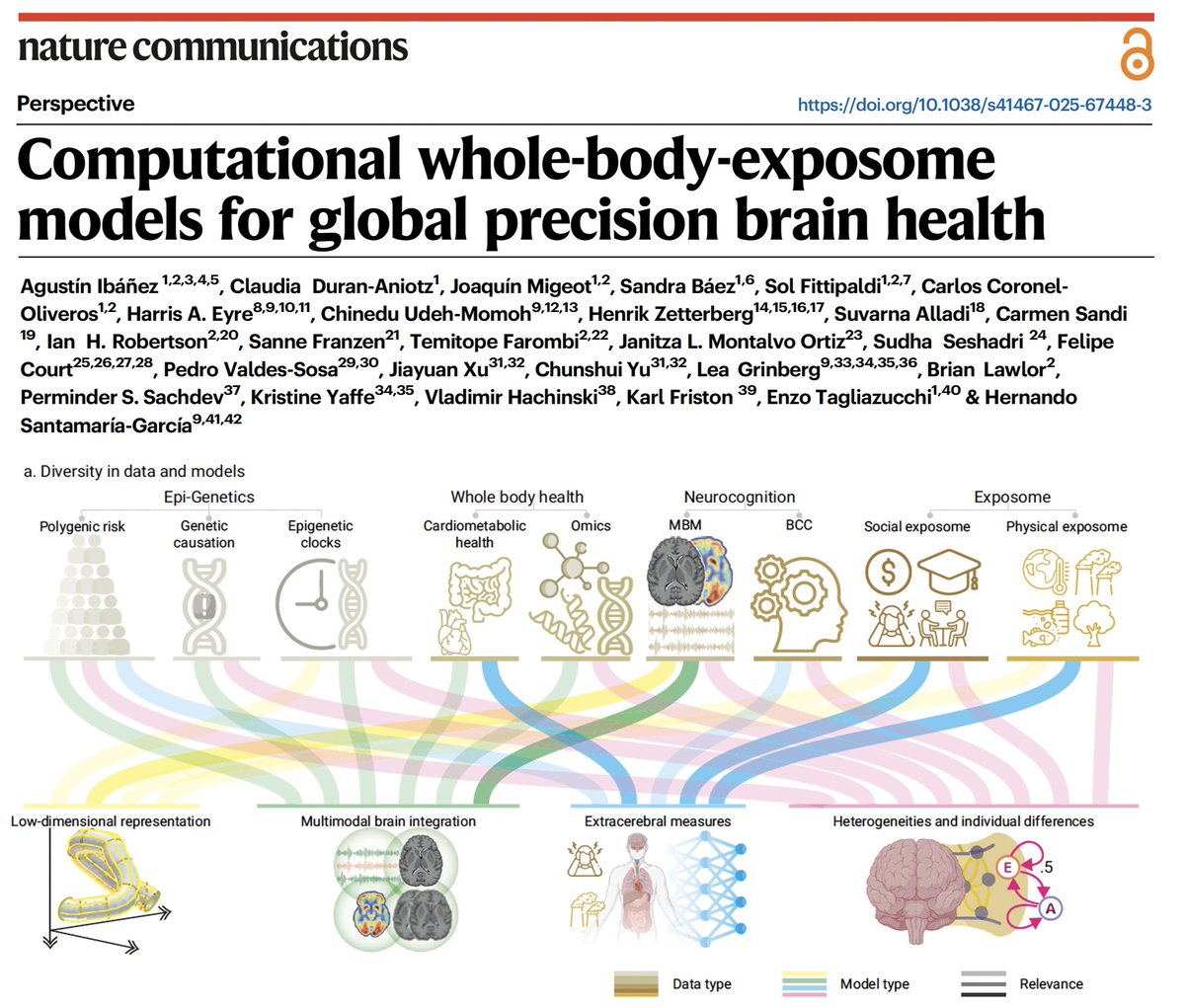
We present a computational whole-body exposome framework that integrates multilevel brain activity (via generative biophysical models) with extracerebral information (multi-omics, organ clocks, cardiometabolic pathways, and lifelong physical and social exposomes). These components can be integrated within computational architectures designed to handle heterogeneity, multimodal integration, and individual trajectories. The framework outlines future pathways to capture nonlinear brain–body–environment neurosyndemics, enabling individualized predictions for precision brain health across populations.
doi.org/10.1038/s41467-025-6…
At @NatureComms with a dream team: @durananiotz @joaquin_migeot @SandraBez9 @SolFittipaldi @carlosmig_12 @HarrisAEyre @MomohChi Henrik Zetterberg @alladi_suvarna @carmensandi10 @ihrobertson @SanneFranzen @DrTFarombi @JanitzaMontalvo @sudha_md @felipecourtg @sosa_valdes Jiayuan Xu Chunshui Yu @grinberg_t @ProfLawlor @sachdevps @KristineYaffe Vladimir Hachinski Karl Friston @ETagliazucchi @nanosanta 🧵 (1/5) @GBHI_Fellows @atlanticfellows
9
134
569
38,360