
fractional marketer (not CMO). 56K on LinkedIn, now here. I post what I see inside B2B teams: broken ops, wasted budgets, and what actually builds pipeline.
Joined April 2010
- Tweets 14,435
- Following 2,585
- Followers 4,322
- Likes 28,359
1,366 Photos and videos





Pinned Tweet

Apr 25
the fractional CMO thing drives me crazy. most teams don't need someone to build a strategy deck. they need someone who can run campaigns, fix the ops, and actually ship. but "fractional CMO" sounds better on a LinkedIn post so here we are.
3
1
14
791
the MQL is the worst thing to happen to B2B marketing.
i watched a company celebrate hitting 500 MQLs last quarter. champagne in the slack channel. marketing high fives. meanwhile sales had converted exactly 4 of those 500 into meetings. and 1 into a deal.
an MQL means someone downloaded a PDF. maybe they were curious. maybe they were bored on a tuesday. maybe a bot filled out the form. the marketing team counts it the same either way.
the companies i work with that actually build pipeline? they retired the MQL 18 months ago. they track accounts showing real engagement patterns across multiple channels. they care about meetings that turn into pipeline, pipeline that turns into revenue. the whole chain.
if your marketing team is still celebrating MQL targets in 2026, ask them one question: how many of those turned into money?
1
1
87
i onboarded a new client in march. series A SaaS company. 12 person team. they had fired two agencies in the last year and were about to hire a full time head of marketing.
i asked them to give me 90 days instead. no title, no equity, no benefits package to negotiate.
first month i audited everything. their email sequences were getting a 1.4% reply rate. their webinars had 300 registrants and zero closed deals. their blog was 60 posts of SEO filler that ranked for nothing.
second month we rebuilt the outbound from scratch, rewrote the webinar format, killed the blog and replaced it with 4 case studies from actual customers.
third month pipeline was up 3x. they asked me to stay on as a retainer.
that head of marketing role they were about to fill? still open. because they realized they didn't need a full time person. they needed someone who had done this before and could move fast without a 6 month ramp.
1
1
85
got brought into an ABM program last fall where the team had 500 target accounts. five hundred. i asked how they picked them. the answer was a firmographic filter in ZoomInfo. industry, headcount, revenue range. that was it.
no intent signals. no engagement history. no input from sales on which accounts they actually had relationships with. just a spreadsheet that looked impressive in a board deck.
six months in, pipeline from the ABM list was nearly zero. they had spent over $40K on direct mail, display ads, and a dedicated BDR. all pointed at accounts that had never heard of them and had no reason to care.
here's what we changed. we cut the list to 30 accounts. not a typo. thirty. every single one had at least two of these signals: visited the website in the last 90 days, engaged with content on linkedin, or had an existing relationship with someone on the sales team.
then we stopped running "campaigns" at them and started doing actual outreach. personalized video from the AE. a relevant case study from their vertical. an invite to a small dinner event, not a mass webinar.
30 accounts. 11 moved to pipeline in one quarter. their previous 500 account list produced 3 opps in six months.
most ABM programs fail because they start with a list instead of starting with a signal. the technology works. the strategy behind it usually doesn't.
2
1
4
224
UTMs are great at telling you what happened in one session.
but deals don't close in one session.
someone clicks your linkedin ad on tuesday. opens six tabs. forgets about you. three weeks later they google your company directly and book a demo.
your CRM says that's an organic lead. your ad manager says nobody converted. your CFO wants to cut the budget that actually started the conversation.
i use UTMs on every link i touch. they're still useful. but they measure the click, not the relationship. and the relationship is what closes.
1
1
2
88
Jun 14
my 8 year old asked me why i don't go to an office. told her i get to pick who i work with and when i work. she said "that's what summer is." she's not wrong.
2
1
4
221
Jun 14
every new client engagement starts the same way. i open their Google Analytics and find three tracking codes, two from agencies that got fired, and one nobody can explain. half this job is archaeology.
1
1
6
136
Jun 14
my 8 year old asked me to watch her do a cartwheel for the 30th time yesterday. i watched all 30. that's the whole point of working for yourself.
1
1
2
192
Jun 13
the weirdest part of working for yourself is grocery shopping on a Wednesday at 10am. you feel like you're getting away with something. then you check your phone and there are 4 client emails. you're not getting away with anything.
2
117
Jun 13
talked to a VP of marketing last year who quit after 14 months. asked what happened.
"they hired me to build a brand. then told me to fix the pipeline in Q1. then asked why awareness was down in Q2. then restructured my team in Q3. then asked me to present a 3-year plan in Q4."
she said the job description had 11 bullet points. the actual job had 40. and the 40 changed every quarter.
that's not a VP of marketing role. that's a rotating crisis manager with a marketing title.
1
5
383
Jun 13
I close my laptop at 4pm every day. my daughter won't remember my Q3 pipeline. she'll remember that I was in the pool.
2
5
178
Jun 12
in your 20s you chase the title. in your 30s you chase the freedom. somewhere around 37 you realize freedom was the title the whole time.
1
3
164
Jun 12
i see this take a lot and i get the appeal. but i've walked into three startups this year that went all in on AI content tools before hiring anyone with strategy experience.
one had 200 blog posts live. zero ranking. no keyword strategy behind any of it.
another was running automated linkedin outreach to a list they bought. 15,000 messages sent. 2 replies. both were people asking to be removed.
the third had a full AI content engine pumping out emails, social posts, landing pages. beautiful stuff. pipeline? zero. because nobody had mapped the content to how their buyers actually make decisions.
software is cheap. that's the whole reason founders reach for it first. i get it. but software without someone who knows what to build is just expensive noise.
the first marketing hire should be a person. specifically, someone who's built the system before. a fractional marketer who can walk in, audit what you have, build the strategy, set up the motions, and then decide which parts AI should run.
you don't automate a system that doesn't exist yet.
3
4
2,079
Jun 12
the official definition of a marketing qualified lead:
someone who opened an email from an apple privacy proxy
clicked unsubscribe (counted as engagement)
visited the pricing page for 0.3 seconds while looking for the blog
scanned a badge at a conference booth because they wanted a free yeti cooler
scored a 85. sales is thrilled.
1
81
Jun 11
every B2B company wants a "content engine" but nobody wants to talk to customers first. you can't write content about problems you've never heard someone describe in their own words.
2
3
485
Jun 11
marketing QBR: 8 slides. 20 minutes of questions about attribution methodology. a debate over whether MQLs are real pipeline. someone asks to "see it by channel." you leave with homework.
sales QBR: one slide. "we closed $4.2M this quarter." budget approved in 8 minutes. everyone's at lunch by noon.
same company. same quarter. completely different energy.
2
179
Jun 11
i turned down a VP Marketing offer last year. would've been the biggest title of my career.
instead i kept my three clients, closed my laptop at 4pm, and picked up my daughters from school.
i made more last quarter than the role was offering. and yesterday i watched their soccer game on a tuesday afternoon while a former colleague texted me from a board prep meeting.
i don't think about that offer anymore.
1
12
1,139
Jun 10
spent years trying to align marketing and sales. weekly syncs. shared slack channels. pipeline reviews. feedback loops nobody closed.
none of it worked.
then I realized: we were aligned on process but not on consequences. marketing was measured on MQLs. sales was measured on revenue. same meetings, different game.
everything changed when we tied both teams to the same number. same pipeline target. same bonus. same pain when the quarter missed.
marketing suddenly cared about deal quality. sales stopped calling every lead garbage. the finger-pointing disappeared because there was nobody left to blame.
alignment isn't a communication problem. it's an incentive problem.
2
70
Jun 10
read "obviously awesome" by april dunford last year. one line in chapter 3 made me rethink how i scope every new client engagement. i've referenced that book in probably 30 conversations since. changed my whole intake process. one book did what two years of trial and error couldn't.
1
1
67
Jun 10
I block 4pm to 6pm every day. no calls, no slack, no exceptions. my kids don't care about my client roster. they care that dad is there when they get home. two hours. that's the non-negotiable.
2
62
Jun 9
most companies say they run integrated campaigns. what they actually run: the same message across five channels that never talk to each other.
that's not integration. that's parallel execution.
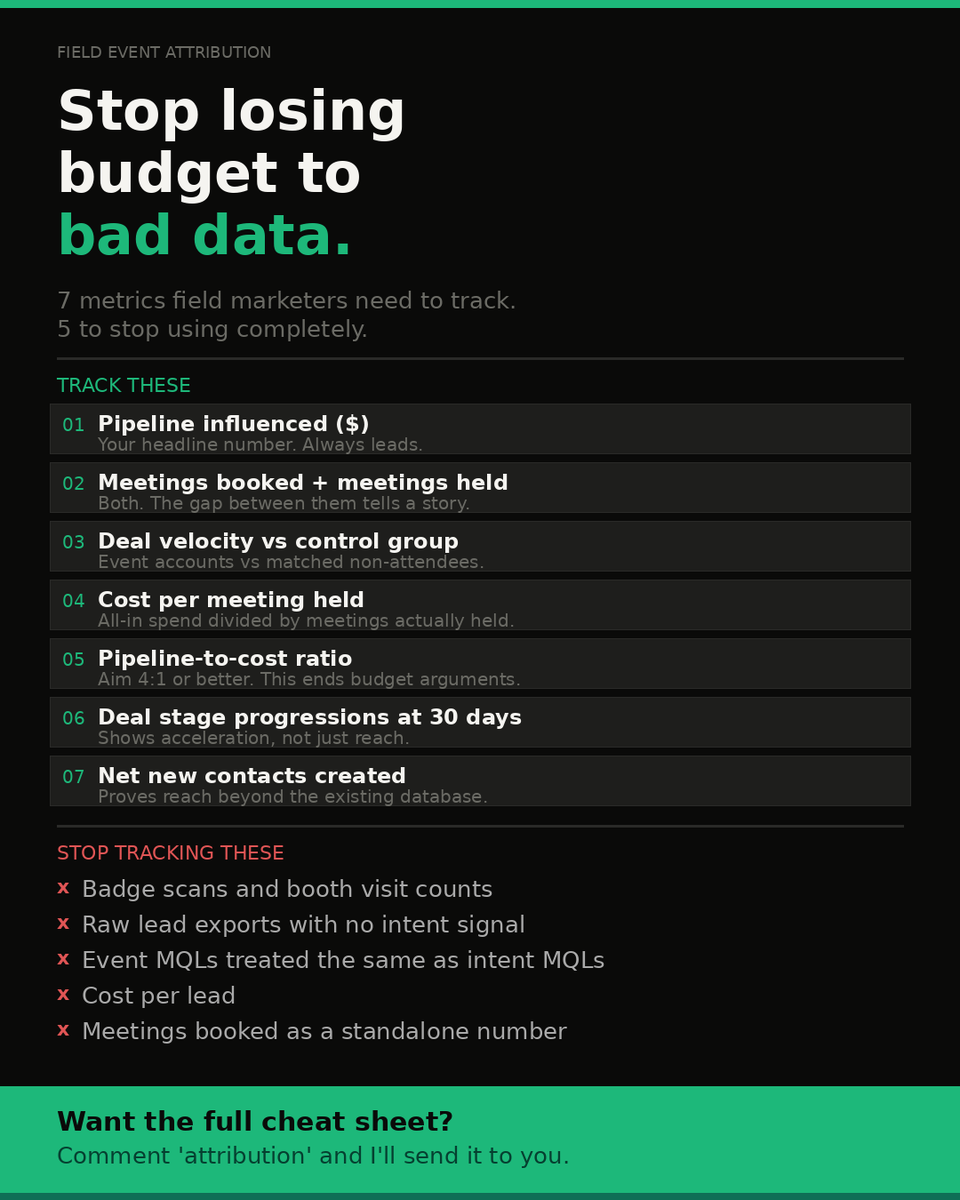
had a client running a webinar series, an ABM program, paid ads, and email nurture. all going at the same time. none of them connected. the webinar team was chasing MQLs. the ABM team was tracking engaged accounts. the events team was counting badge scans.
three teams. three metrics. one shared slack channel. zero shared outcomes.
integration isn't running more channels. it's making every channel build the same outcome.
46