Joined March 2026
- Tweets 286
- Following 35
- Followers 383
- Likes 210
36 Photos and videos

Pinned Tweet

May 18
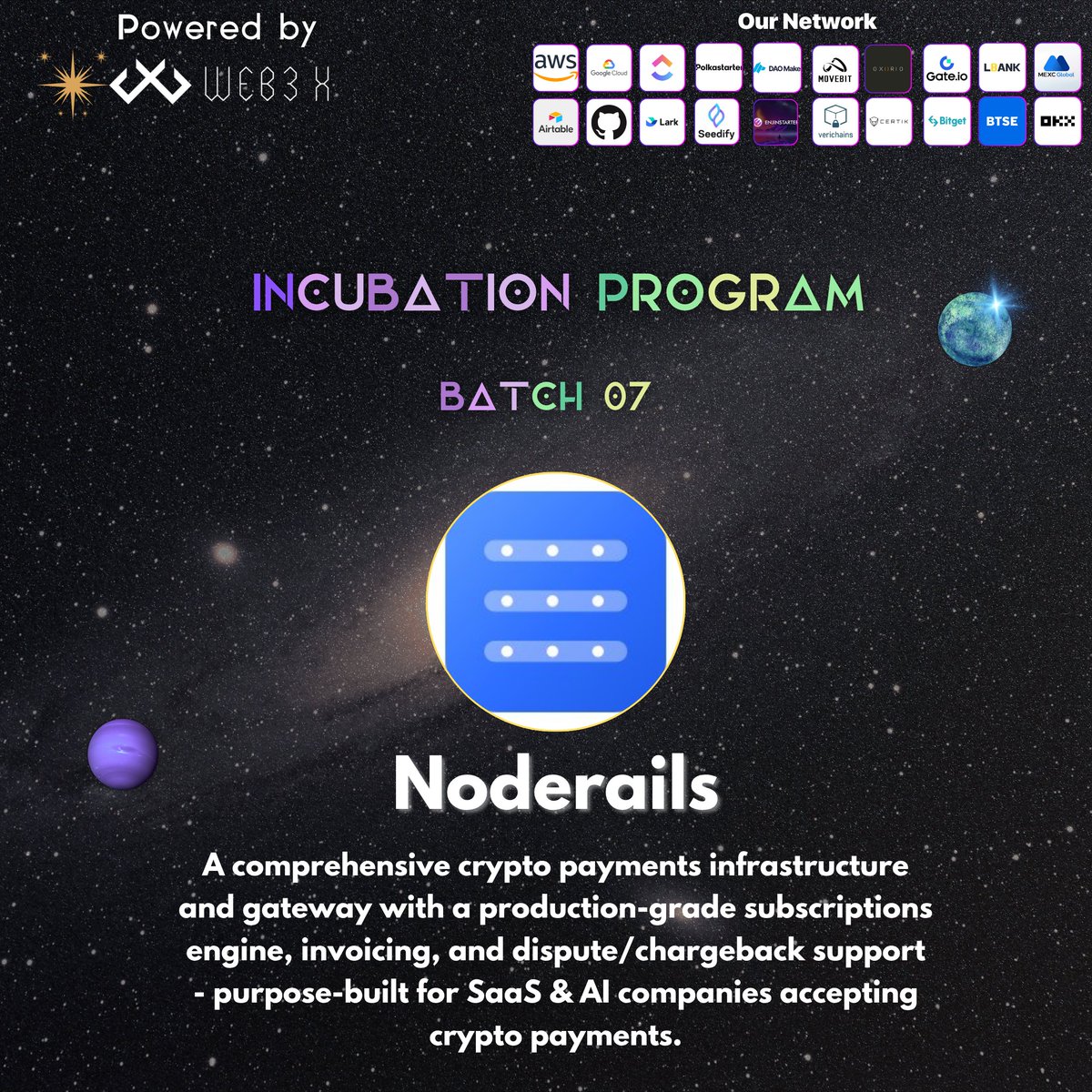
🔥 Proud to announce that NodeRails has been selected for the @W3X_NW Network Incubation Program, Batch 07!
At NodeRails, we’re building the comprehensive crypto payments infrastructure and financial rails powering humans, AI agents and global scale Web3 applications.
We’re honored to join an incredible cohort of founders, builders, and innovators across Web3, Blockchain, and AI. Looking forward to learning from experienced advisors, connecting with talented teams, and accelerating our vision together.
Big thanks to the W3X team for this opportunity. Excited for what’s ahead 🚀
#incubation #web3x #w3x #web3 #AI
15
13
49
11,960
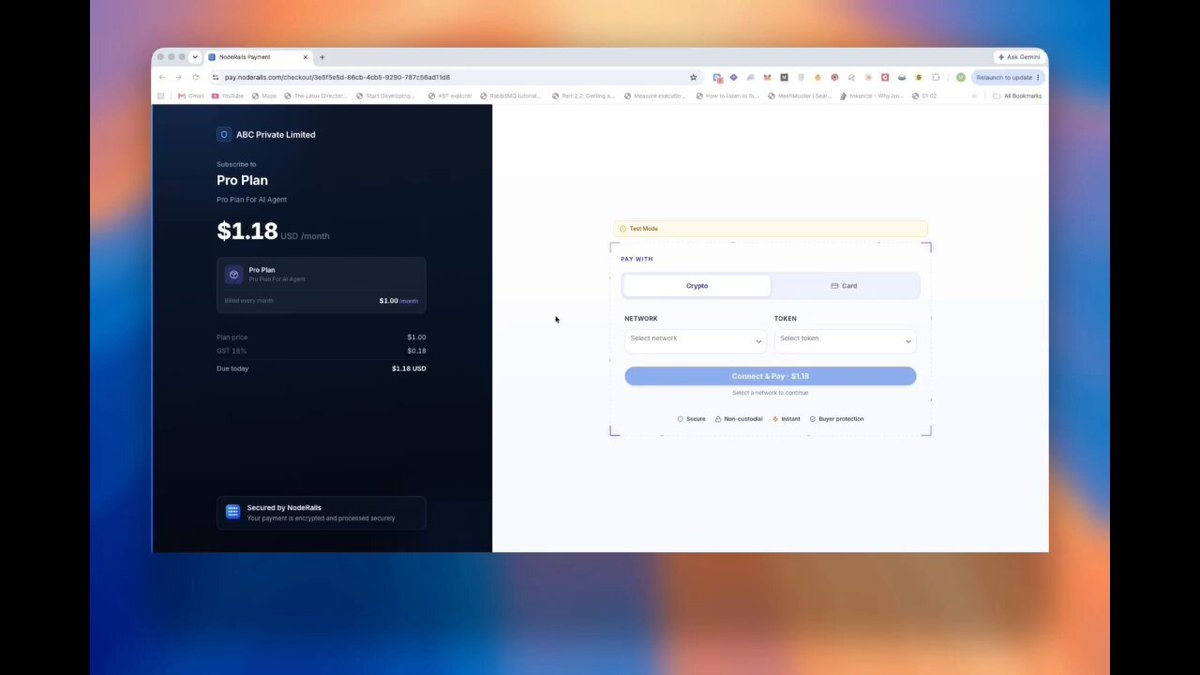
Have you checked out our new crypto checkout experience? Faster, cleaner, and smoother than ever.
#bestinclass #noderails #cryptopayments #nrl #stablecoins
5
10
20
702

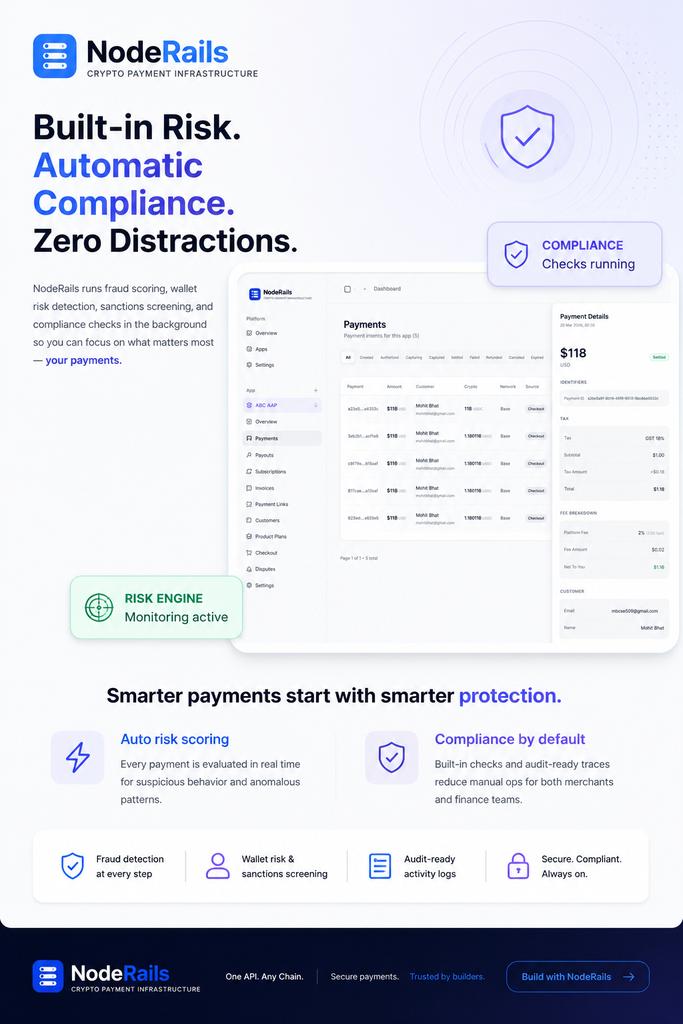
ACCEPTING CRYPTO PAYMENTS IS SOLVED, OPERATING THEM ISN'T
@noderails is making a bold bet on the future of crypto payments and the transaction is only the beginning.
- Subscriptions
- Invoicing
- Payouts
- Settlement tracking
- Reporting
- Fraud detection
- Dispute resolution
- Customer support tooling
- Compliance infrastructure
NodeRails is building the infrastructure layer that comes after the transaction, not just crypto payments.

8
14
42
2,521
Jun 9
A crypto wallet your mom can actually use.
Loading the future of wallets…
6
9
24
1,322
NodeRails Payments retweeted

Jun 4
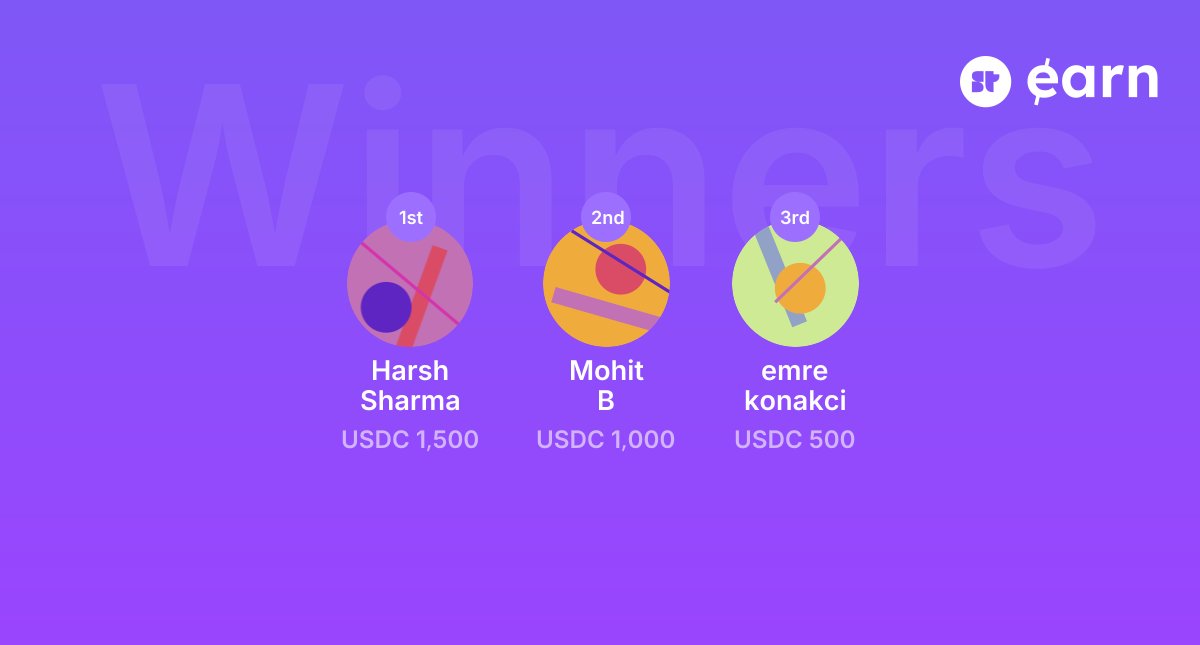
30/ Covalent Track
🥇 @harsh_sharmaa9 - Corine
No-code DeFi agents on Solana.
🥈 @chiefmohitbhat - Noderails
Crypto payment infrastructure for businesses.
🥉 Emre Konakci - Sentry402
Wallet-risk firewall for AI agents.
5
7
18
1,443
NodeRails Payments retweeted
May 29
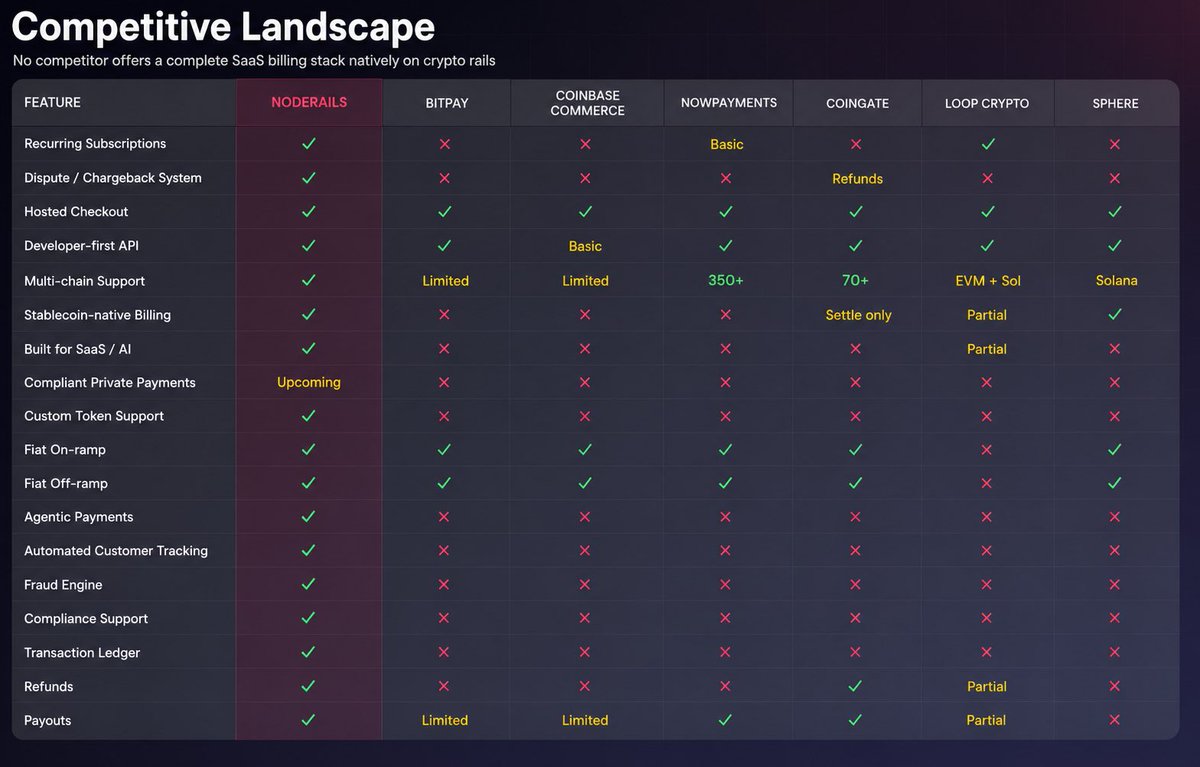
NodeRails is the complete crypto payments infrastructure for anyone accepting crypto and stablecoin payments.
Instead of stitching together multiple providers for subscriptions, billing, payouts, ledgers, customer tracking, fraud detection, and agentic payments, we provide a single robust stack built from the ground up for modern internet businesses.
Check out how we compare against other platforms and why we’re building the most complete crypto-native payments infrastructure.
#noderailsisbestcryptopaymentsinfra
#noderails
#nrl
7
17
47
2,464
NodeRails Payments retweeted
Jun 3
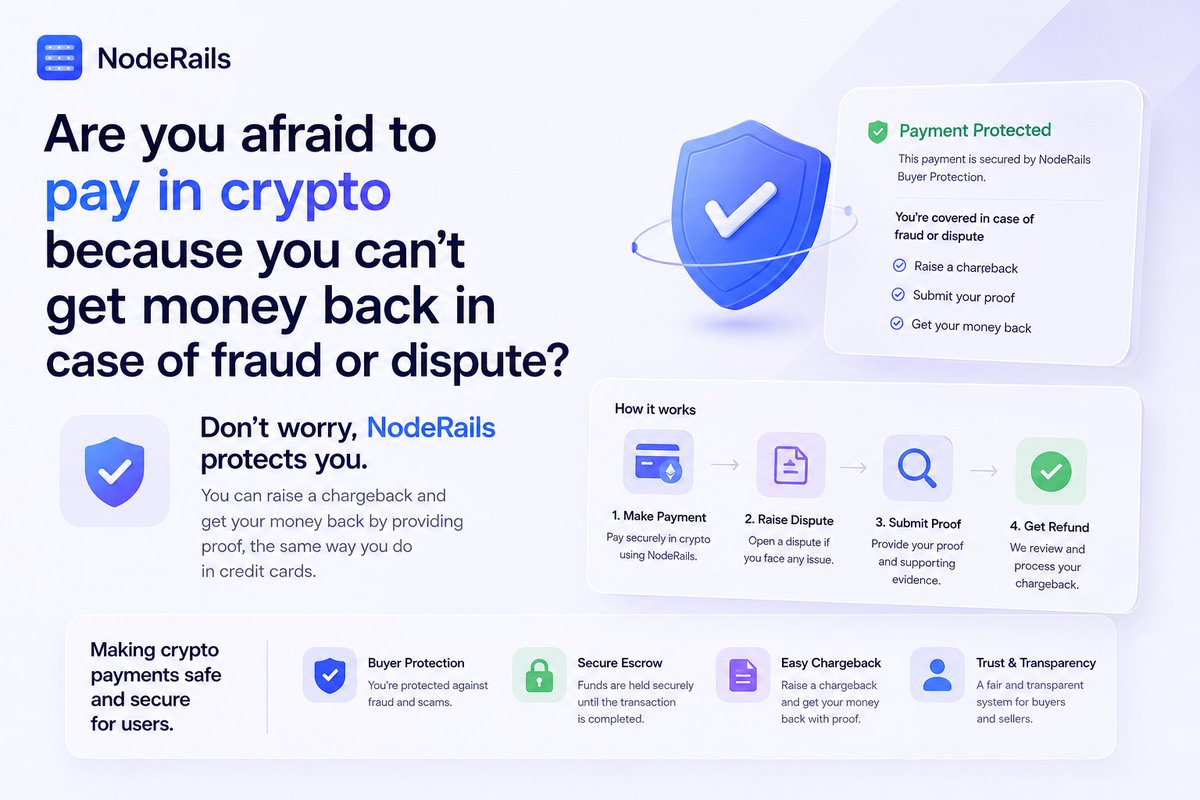
See how easy it is to create payment links on NodeRails, handle chargebacks, and issue refunds, all from one dashboard.
Start accepting crypto payments in minutes.
Try it now at noderails.com
#CryptoPayments #Web3 #Fintech #stablecoins #payments $NRL
12
16
38
2,116
NodeRails Payments retweeted
Jun 1
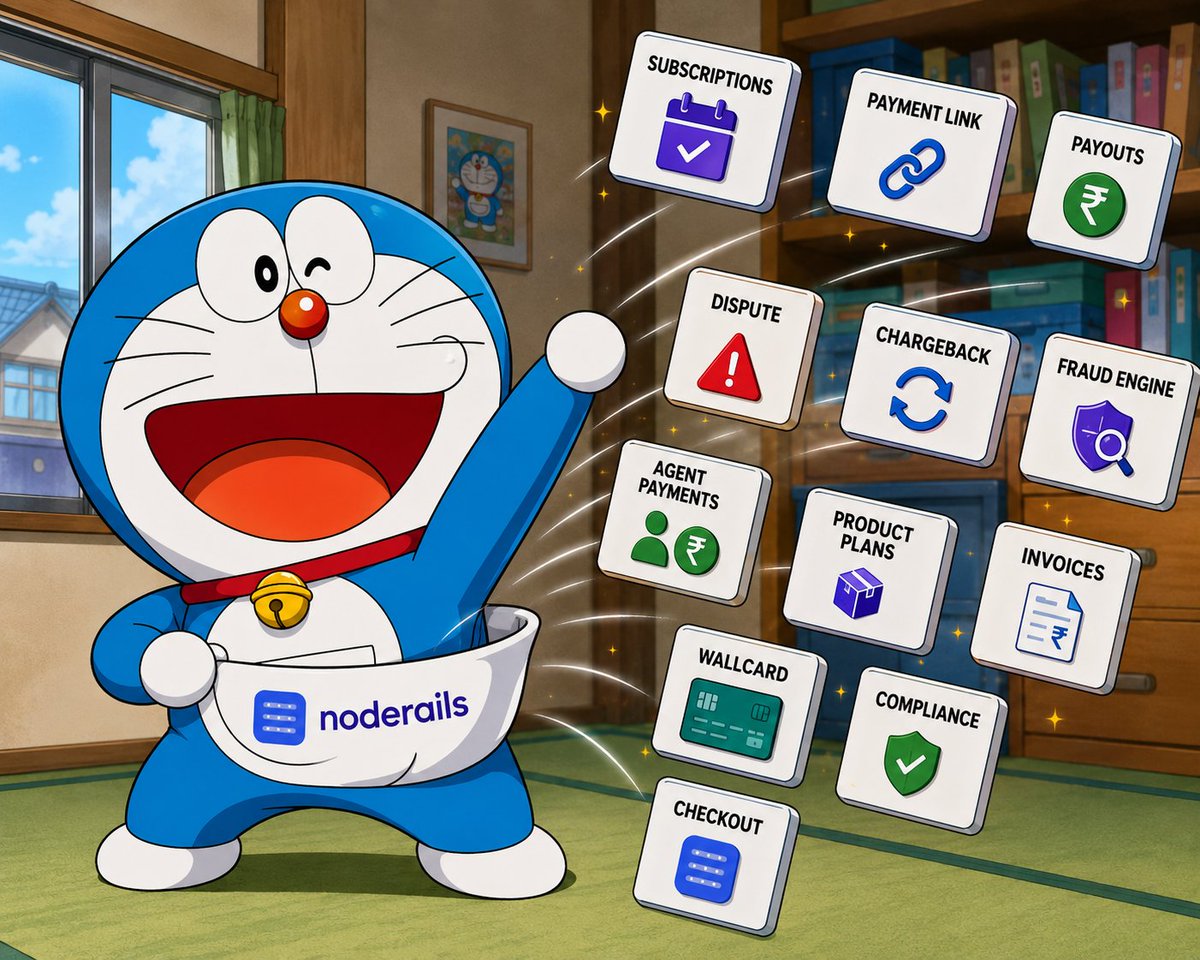
Don't you think crypto billing cycle is broken for recurring revenue models.
But, @noderails is a full stack platform provides all these functionality in a single platform.
Calling @NodeRails a Doraemon pocket isn't entirely wrong 😎
Go and checkout at - noderails.com
#Noderails #StableCoin #Payments #BestInTheIndustry
11
13
39
5,363
Jun 1
Really nice breakdown of what we do 👏👏👏 Amazing🔥

I was waiting for a good entry to drop my thesis for easy accumulation for those who haven't gotten the opportunity to buy into $NRL yet.
Ca: HpdcTaSdG2asTWStE3kgMRUkY9gF8KstAzVd7VQUBAGS
Before diving into the thesis is have written for @noderails it is important to highlight the achievements they have made so far.
Incubator Program:
x.com/noderails/status/20562…
Hackathon Win:
x.com/goldrushdev/status/205…
Offerings/BNN Shoutout:
x.com/BNNBags/status/2060415…
Now for the thesis below:
What @noderails actually is:
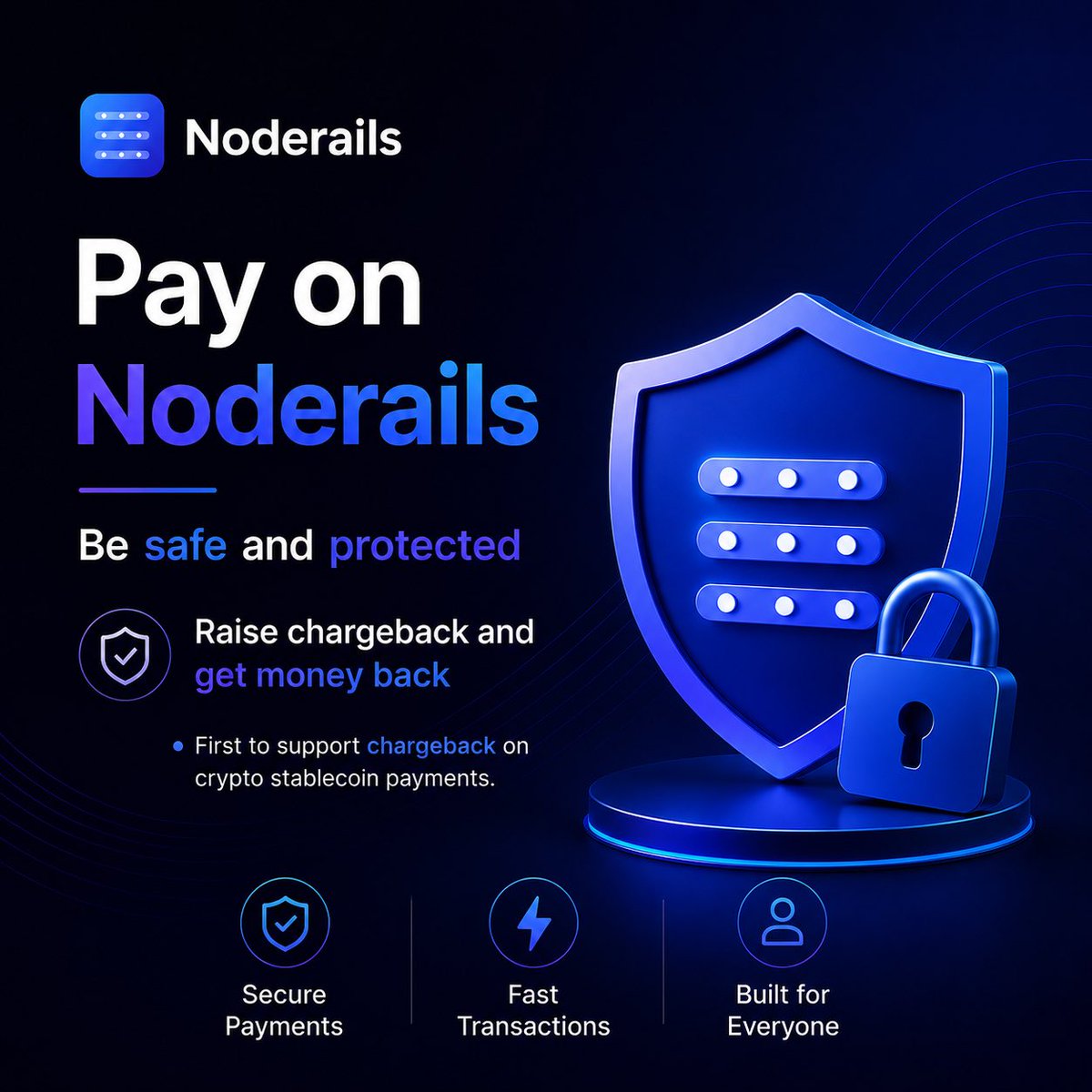
The Stripe of crypto payments. But that comparison undersells the most important thing they built. $NRL is the first crypto payment infrastructure that gives buyers the same protection they expect from credit cards — chargebacks, disputes, refunds — without any of the traditional centralized custody that makes that possible in fiat.
The escrow architecture is the core innovation and it's done correctly. When a customer pays, funds lock into an onchain smart contract — not NodeRails' wallet, not the merchant's wallet, not anyone's personal custody. The contract enforces one of two outcomes: merchant receives funds after the dispute window closes, or customer receives refund if dispute resolves in their favor.
The product depth is serious. Checkout sessions, payment intents, subscriptions with automatic renewal, invoices with line items and tax, payment links, batch payouts to 1000 recipients simultaneously, webhooks with HMAC signature verification, idempotency keys for safe retries. This is a complete payment stack not a prototype. The TypeScript SDK reads like it was written by someone who has used Stripe's SDK and decided to match that developer experience exactly.
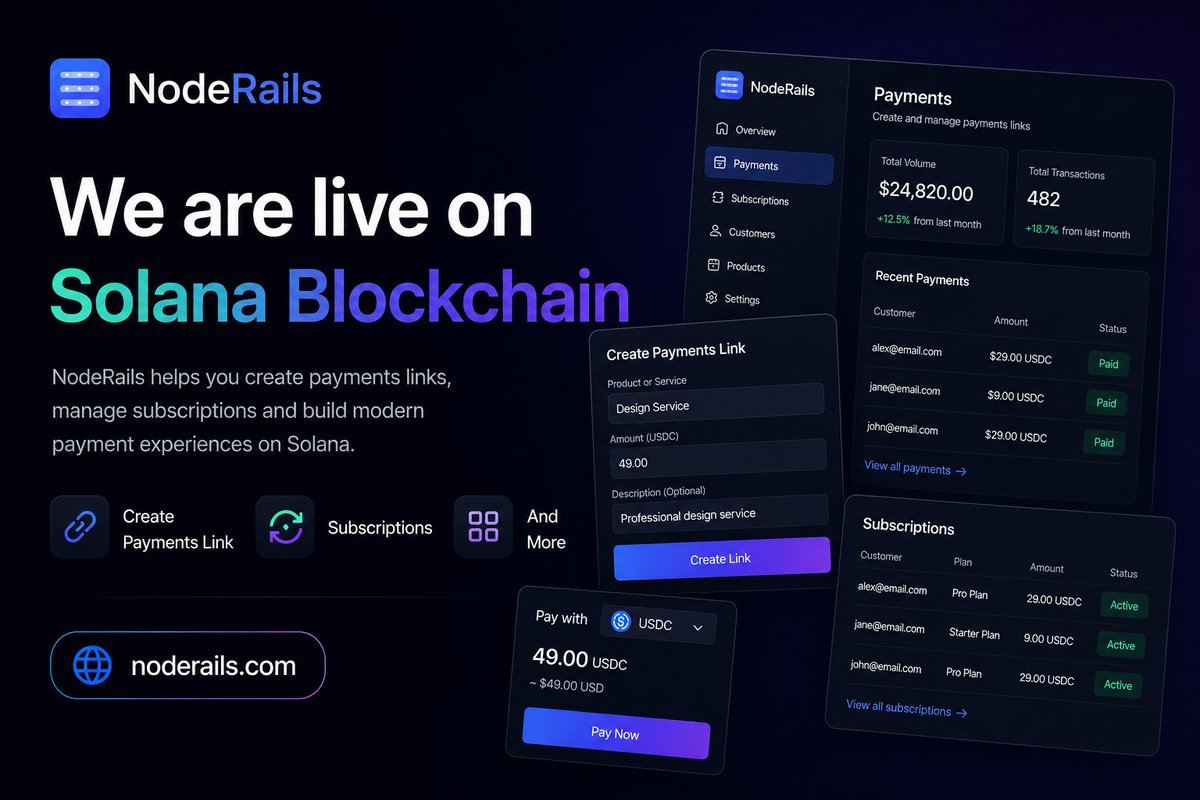
Multi-chain from day one. @base, @ethereum, @0xPolygon, @arbitrum, @Optimism, @solana — seven production chains with a 24-hour SLA for adding new ones. $USDC, $USDT, $ETH, $SOL, native tokens across all of them. the token key system — $USDC-8453 for @base, $USDC-103 for @solana — is clean engineering that eliminates ambiguity.
The WallCard product is the most underrated thing in their stack. A virtual crypto card with a PAN, CVV, PIN, and OTP that handles Solana and EVM signing behind a familiar card interface. No seed phrase. No browser extension. No "install another wallet." customers see a card number at checkout.
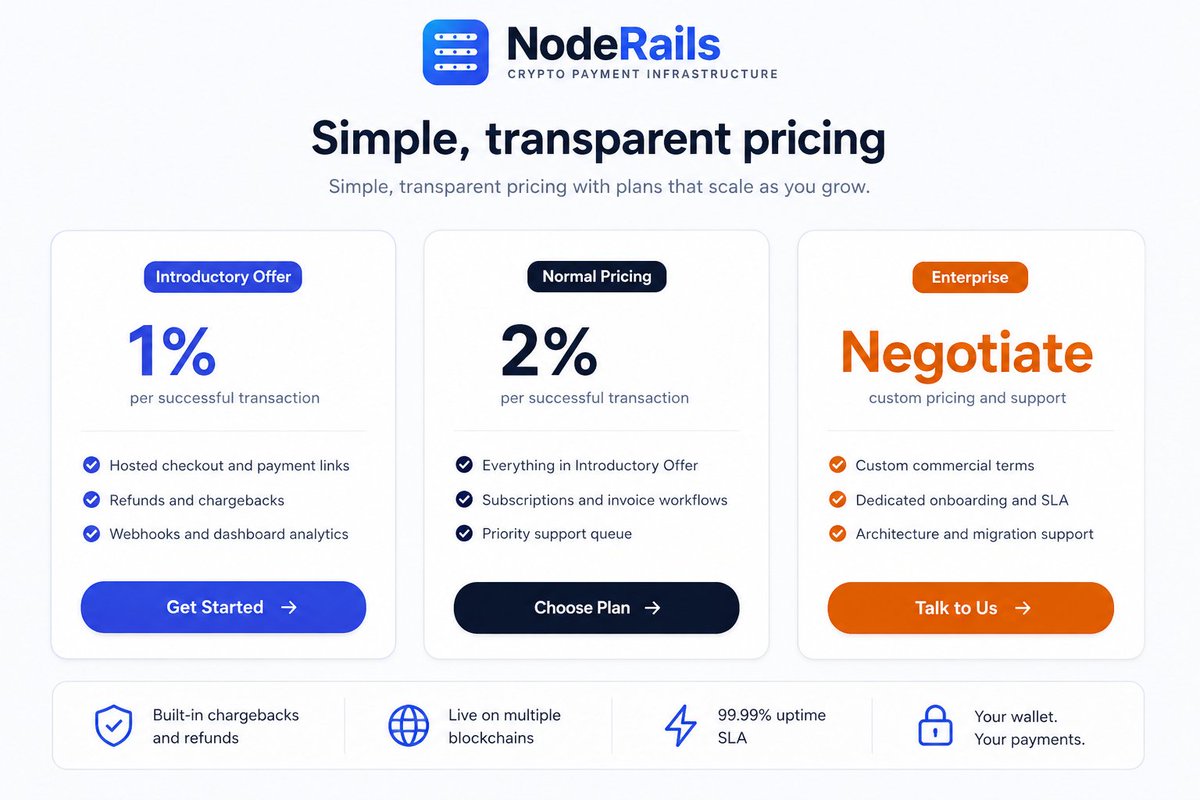
1% introductory fee scaling to 2% is genuinely competitive. Stripe charges 2.9% plus 30 cents. NodeRails charges 2% with no per-transaction fixed fee. at scale the math is dramatically better for high-volume merchants.
Crypto has been trying to replace card payments for fifteen years. It has failed every time for the same two reasons.
First: irreversibility. If you pay with crypto and the merchant doesn't deliver, the money is gone. no chargeback. no recourse. No dispute. That's not a product people trust with real purchases.
second: complexity. Connecting a wallet, selecting a chain, approving a transaction, managing gas — it's a ten-step process that loses 80% of users before payment completes.
@noderails solved both in one architecture.
The escrow system makes crypto payments reversible without making them custodial. The dispute window gives buyers the same confidence they have with credit cards. The WallCard interface makes the entire flow feel like entering a card number. The merchant never knows or cares which chain settled the payment.
@finnbags
@BagsApp
This deserves recognition from all az well
4
14
38
2,507
NodeRails Payments retweeted
May 29
Which is your favourite blockchain?
10
4
20
2,099
May 27
We’ve been continuously building and shipping for the past 4 weeks.
Something awesome is dropping soon 👀
#noderailscardnetwork #noderails
13
15
47
6,093
NodeRails Payments retweeted
May 26
Building. Shipping. Winning.
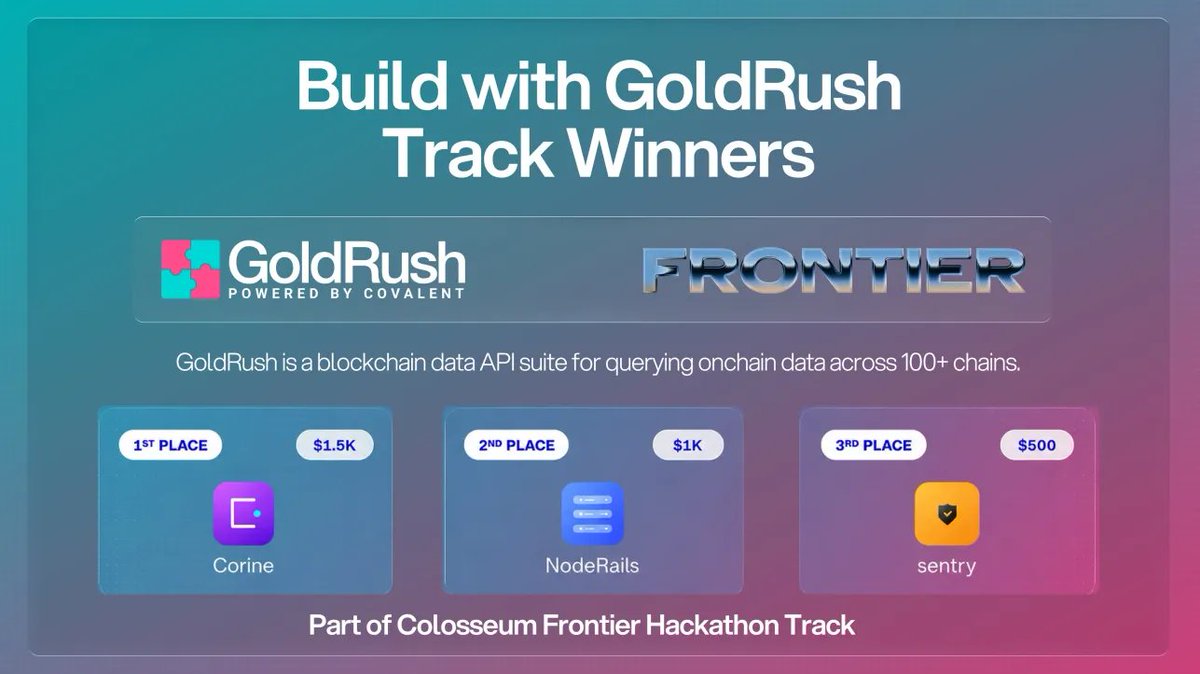
Proud to see Noderails secure 2nd place at the Frontier Hackathon 🏆
Thanks @goldrushdev @superteam

The winners of the Build with GoldRush track at the @colosseum Frontier hackathon are in.
🥇 1st: @corinedotin by @harsh_sharmaa9 ($1.5K $3.5K credits)
🥈 2nd: @noderails by @chiefmohitbhat ($1K $2K credits)
🥉 3rd: @sentry402 by @genki_sudo132 ($500 $1.5K credits)
Winners also get mentorship from us to keep building.
Congrats to the winners. DM us to claim your prizes.
12
14
39
6,284