
USMC Veteran | Cybersecurity Consultant | Ethical Hacking Advocate | Passionate Knowledge Sharer
Joined July 2024
- Tweets 116
- Following 134
- Followers 194
- Likes 262
19 Photos and videos











Jun 11
If it pleases the crown may I please scan my repo for vulnerabilities. 😒
Jun 10

Our Anthropic overlords deciding which prompts the peasants are allowed to use.

24
Foster Nethercott retweeted
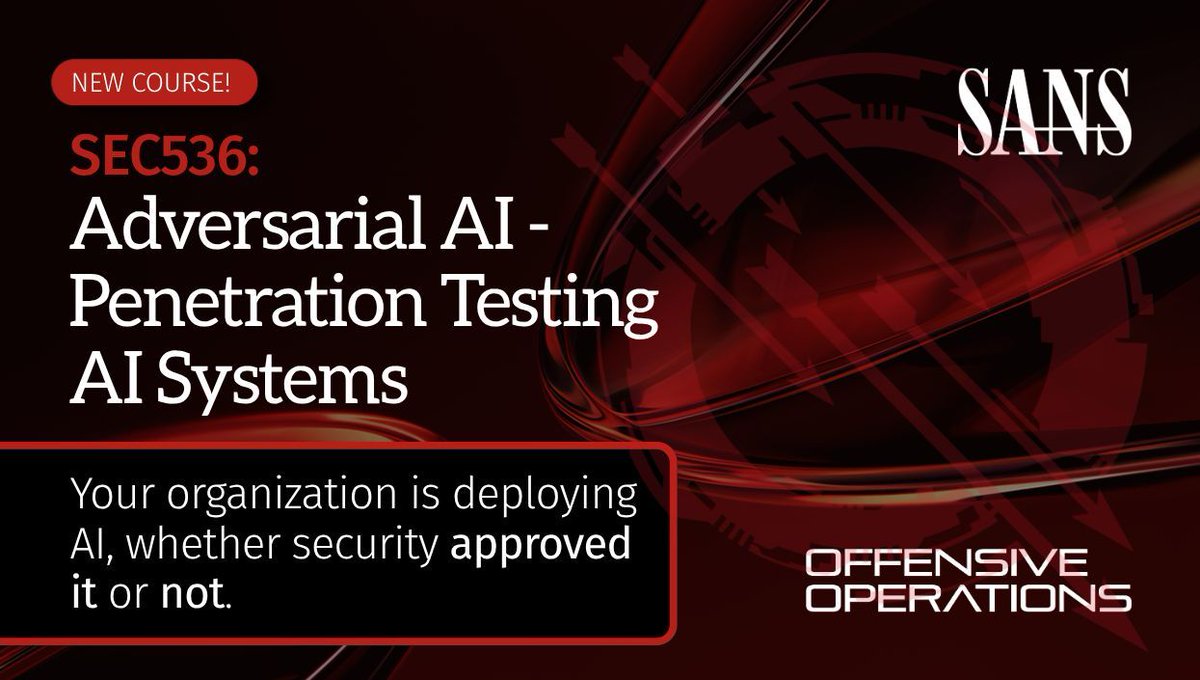
🚨 New course alert! #Pentest enterprise AI systems from an adversary perspective. Abuse agents, steal weights, and more.
#SEC536 Adversarial AI - Penetration Testing AI Systems makes its Beta debut at #SANSFIRE.
Join @OSTact13 in person or virtually!
👉 buff.ly/e0QRYj4
1
9
25
2,641
Foster Nethercott retweeted

Jun 5
Introducing a new side project called Model Regression. It tests daily Claude, GPT, and Grok on various benchmark statistics to determine how well its performing and to identify model degrades over time.
@edskoudis had an idea for model testing before they conducted offensive testing to ensure the model was performing as expected, and @BlasikRandy pushed me down this road with actually going and doing it.
The main intent here is the frontier models will experience outages, issues, bugs, intentional/unintentional nerfing of the models without notice. You can't typically trust day to day activities in these models for stability, so leveraging this on your daily routine to see how well the model is performing for that day is something I'll be using everyday.
Runs every morning in my DGX sparks environment and automatically updates with how well its performing.
Enjoy!
modelregression.com/
Also open-sourced the project, can run on your own server as well and look at the benchmarks and how they are calculated:
github.com/HackingDave/model…
30
76
321
20,129
Foster Nethercott retweeted

May 14
I'm looking forward to sitting the alpha run of the new SEC536 course on Adversarial AI this coming Monday and Tuesday! Congratulations to the authors @bettersafetynet and @OSTact13!
sans.org/cyber-security-cour…
2
12
62
5,904
Foster Nethercott retweeted

Apr 1
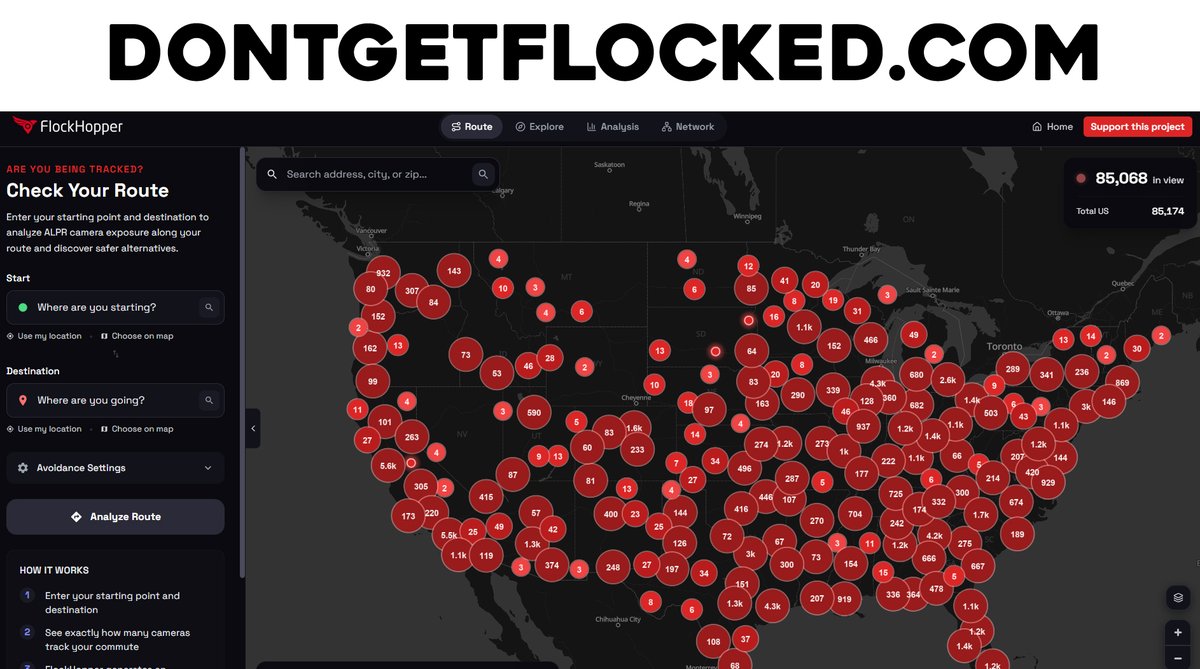
🚨 NEW WEBSITE HELPS YOU AVOID FLOCK CAMERAS
DontGetFlocked.com lets you plug in your start and end points, then maps how many ALPR/Flock cameras you’d hit and shows alternate routes that keep you off their surveillance grid.
Because privacy shouldn’t require permission.
190
2,685
8,021
225,117
Foster Nethercott retweeted

Apr 1
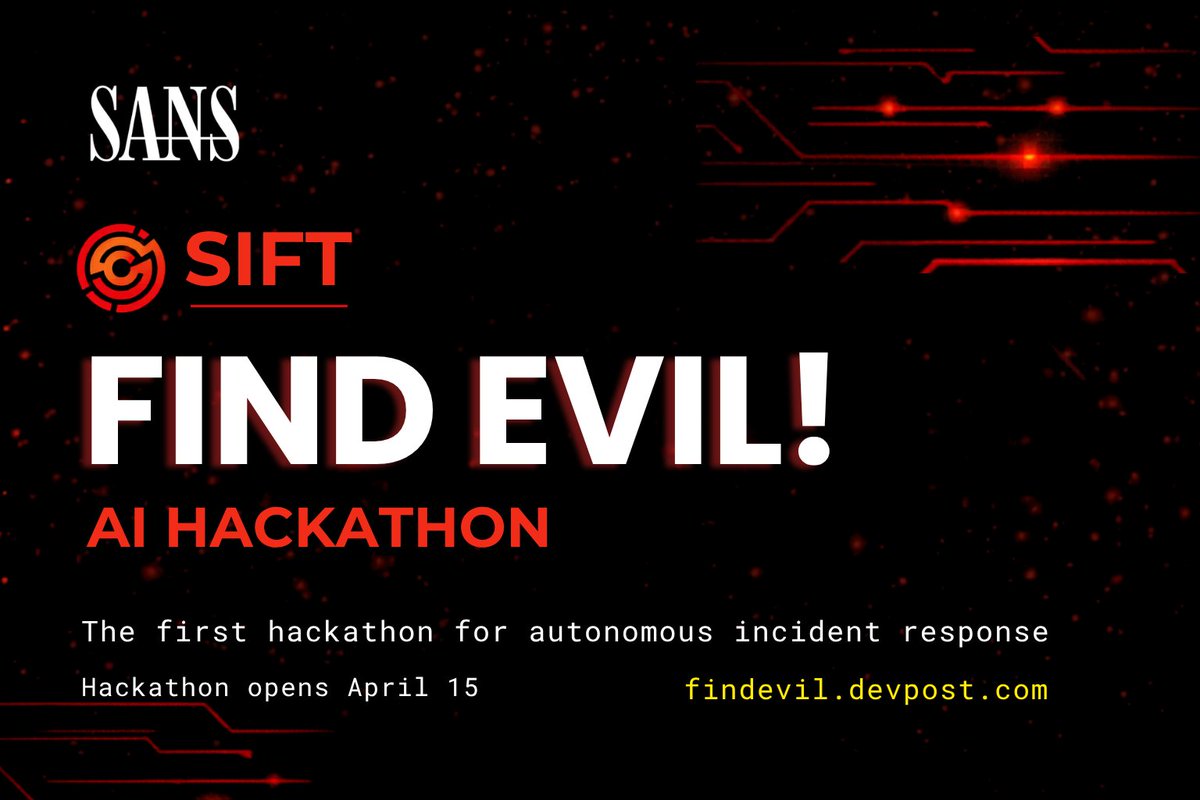
Registration is OPEN for Find Evil! the first hackathon for autonomous AI incident response. Built by the community, for the community. $22K in prizes.
Mission: Make Protocol SIFT, the framework connecting AI agents to the SIFT Workstation's full toolset, into a fully autonomous incident response agent.
SIFT Workstation is a beat to shreds, open-source incident response platform with 200 tools. 19 years of community development. 60K downloads annually.
No incident response background required. New to AI? Good. Get your hands on the tools and learn with us.
Registration open April 1. Hackathon starts April 15. Submissions due June 15.
Register: findevil.devpost.com
Read more: robtlee73.substack.com/p/reg…
Sponsored by @SANSInstitute
3
49
120
23,963
Foster Nethercott retweeted

Mar 31
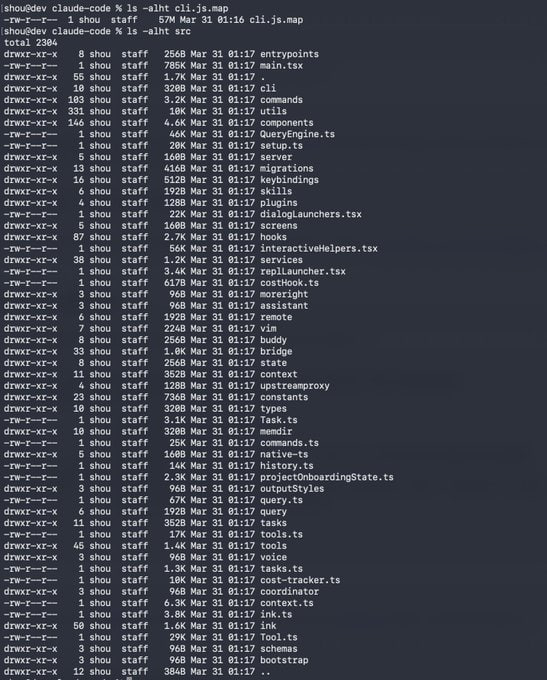
Anthropic accidentally leaked their entire source code yesterday. What happened next is one of the most insane stories in tech history.
> Anthropic pushed a software update for Claude Code at 4AM.
> A debugging file was accidentally bundled inside it.
> That file contained 512,000 lines of their proprietary source code.
> A researcher named Chaofan Shou spotted it within minutes and posted the download link on X.
> 21 million people have seen the thread.
> The entire codebase was downloaded, copied and mirrored across GitHub before Anthropic's team had even woken up.
> Anthropic pulled the package and started firing DMCA takedowns at every repo hosting it.
> That's when a Korean developer named Sigrid Jin woke up at 4AM to his phone blowing up.
> He is the most active Claude Code user in the world with the Wall Street Journal reporting he personally used 25 billion tokens last year.
> His girlfriend was worried he'd get sued just for having the code on his machine.
> So he did what any engineer would do.
> He rewrote the entire thing in Python from scratch before sunrise.
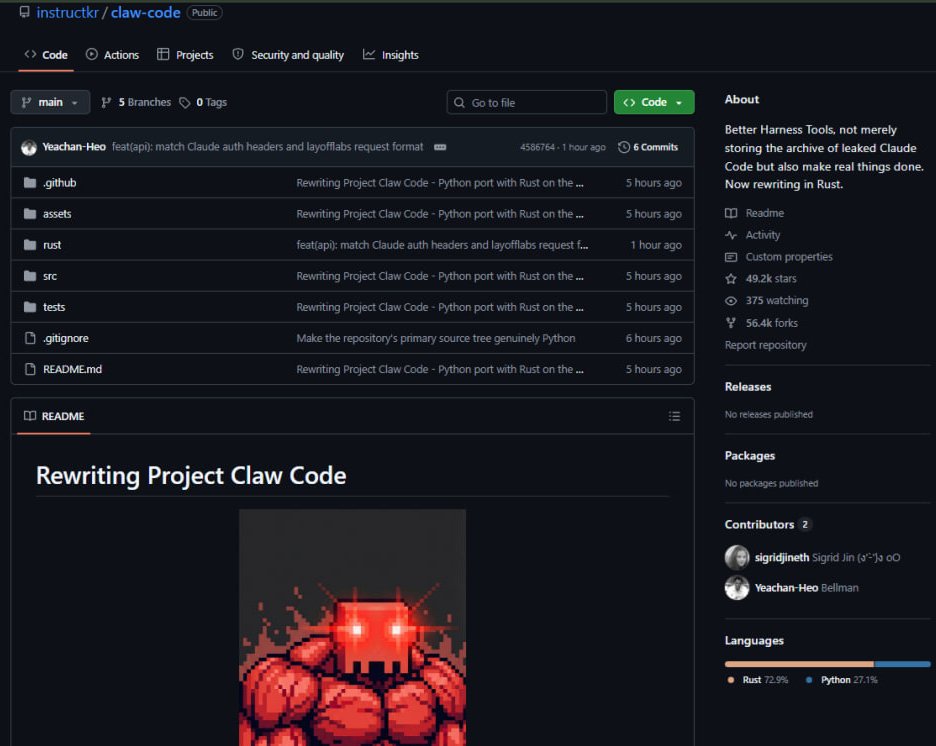
> Called it claw-code and Pushed it to GitHub.
> A Python rewrite is a new creative work. DMCA can't touch it.
> The repo hit 30,000 stars faster than any repository in GitHub history.
> He wasn't satisfied. He started rewriting it again in Rust.
> It now has 49,000 stars and 56,000 forks.
> Someone mirrored the original to a decentralised platform with one message, "will never be taken down."
> The code is now permanent. Anthropic cannot get it back.
Anthropic built a system called Undercover Mode specifically to stop Claude from leaking internal secrets. Then they leaked their own source code themselves. You cannot make this up.
1,467
8,380
53,052
3,832,421
Foster Nethercott retweeted

Mar 31
There is a project on GitHub called Axios.
Axios is extremely popular. It is used by millions upon millions of applications.
Axios is a programming library that helps your JavaScript code make HTTP/S requests (communicate with websites).
In simple terms, if you're a programmer doing something with JavaScript, and want to do stuff that communicates with a website in literally any capacity, people heavily recommend using Axios due to its simplicity. Using Axios you don't have to reinvent the wheel and do a bunch of work. All you need to do is import Axios into your code and you're off to the races.
Someone (currently unknown) compromised Axios (currently unknown how) to deliver malware to people. When someone updates or installs Axios, Axios itself contains malware.
What the malware does is (currently) unknown, but it is being reversed engineered by probably every malware analyst on the planet at this moment. In a few hours more details will emerge. Information is being exchanged in real time on social media and private communication platforms as I write this.
Due to the size and popularity of Axios, it is unknown how many are impacted, it could be millions, it could be thousands, or if we're lucky, only hundreds of people or organizations will be impacted.
If this is absolute worst case scenario, millions of organizations across the planet have been infected with malware which (currently) we do not understand. However, the likelihood of this is low. It appears Axios being compromised was detected quickly, potentially within minutes (or hours) of it being compromised to deliver malware. Additionally, the likelihood of every single Axios user updating Axios as soon as it was compromised to deliver malware is astronomically low. It is basically zero.
The impact from Axios being compromised is devastating, the fallout from this will be a massive headache. This is unironically a malware nuclear missile and will likely be studied in the future.
105
816
7,668
587,352
Foster Nethercott retweeted

🚨 CFP OPEN 🚨
HTH 2026 | June 3–5 | Columbus, OH
Theme: Spaceballs.
Ludicrous speed engaged. 🛸
Technical. Hands-on. No vendor fluff.
Got scar tissue to share? Submit it.
🗓️ Deadline: March 6
👉 Proposal link: hthackers.com/cfp
7
9
1,043


Foster Nethercott retweeted

30 Oct 2025
Titanus already getting weaponized. Won't be long before more red teams realize this is a coffloader level release.
29 Oct 2025

Tools such as PsExec.py from Impacket are usually flagged for lateral movement due to the pre-built service executable that is dropped on the remote system. However, some vendors also flag Impacket based on its behaviour.
With RustPack, you can easily create service executables that won't be detected by signatures or behaviour-based detection. 😎
In this demo video, an unsigned service executable is generated. This will only fire the payload on a system with the hostname 'Win11' — environmental keying will prevent the payload from showing up in a sandbox or cloud analysis.
To avoid Impacket detection, we drop and execute the binary via the recently released Titanis protocol library from @TrustedSec:
github.com/trustedsec/Titani….
The result is an Adaptix C2 connection in the SYSTEM context. 🫡
#Pentest #RedTeam #Malware #OST
1
37
251
35,481
Foster Nethercott retweeted

14 Oct 2025
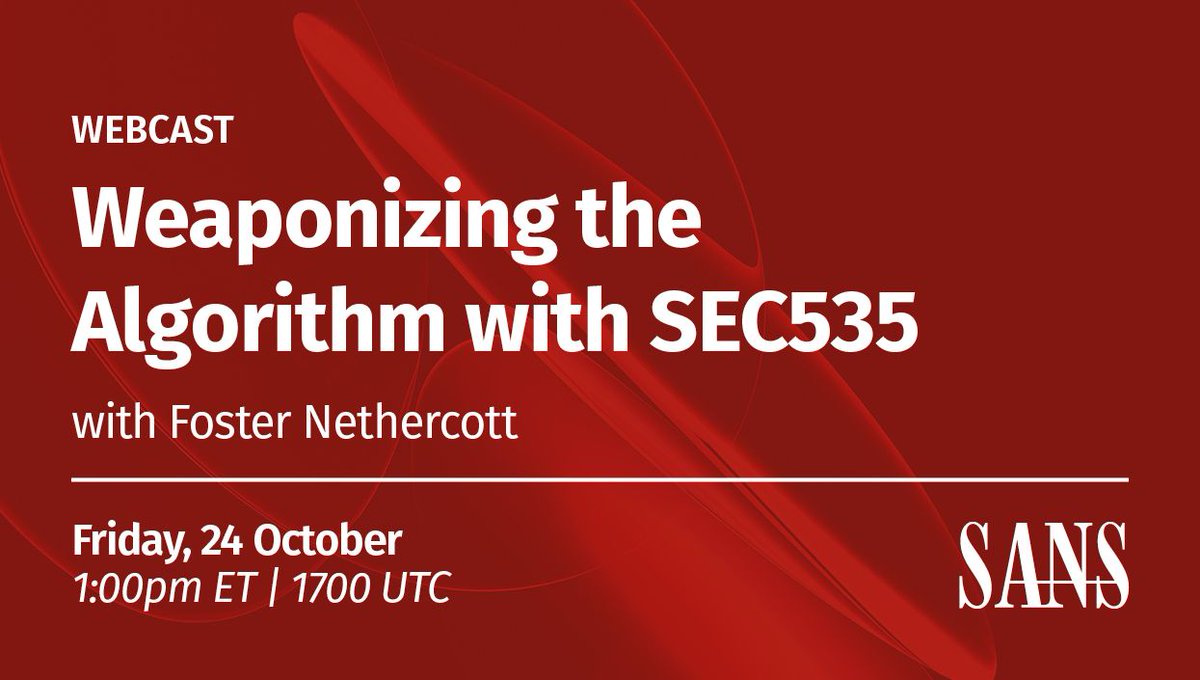
Oct 24, learn how SEC535 teaches red teamers to integrate AI without losing judgment with recon, phishing, malware & more.
🔗 sans.org/u/1CVK
#AI #RedTeam #SEC535 #SecurityAutomation
4
2
807
Foster Nethercott retweeted

3 Oct 2025
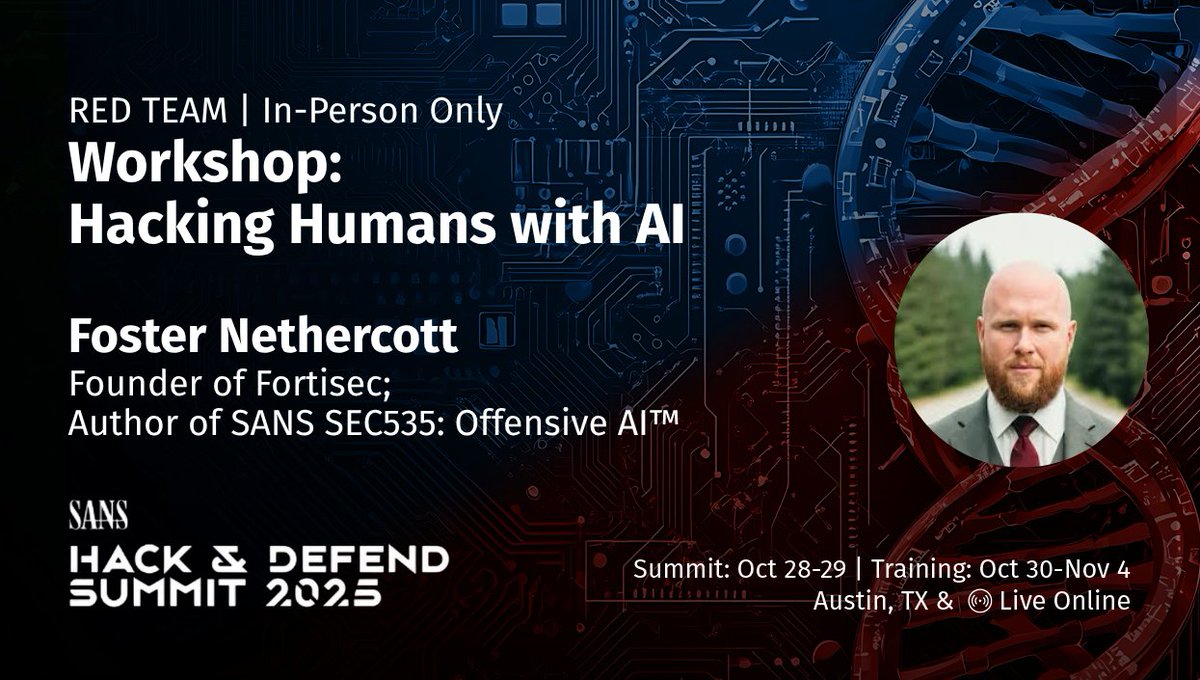
Join us at SANS Hack & Defend Summit in Austin when @OSTact13 leads a hands-on workshop on how attackers use AI to craft convincing lures — & how you can defend against them.
🗓️ Oct 28–29 | Austin, TX
🔗 Save Your Spot: sans.org/u/1AWG
1
1
385
Foster Nethercott retweeted
7 Oct 2025
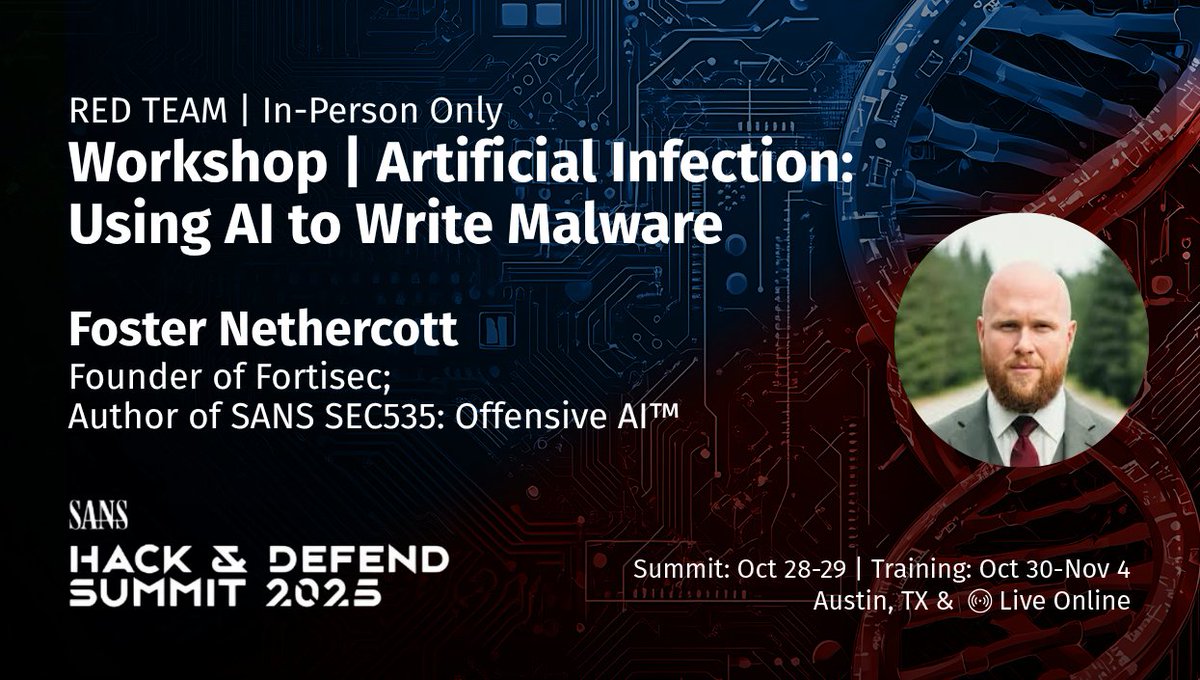
Join us at Hack & Defend Summit in Austin when @OSTact13 leads a hands-on workshop on building a functional keylogger with AI — adding advanced features & defenses along the way.
🗓️ Summit: Oct 28–29 | Austin, TX
Save Your Spot: sans.org/u/1AWB
1
4
842
20 Aug 2025
It honestly doesn't even feel like diminishing returns, it feels like decaying returns.
1
43
19 Aug 2025
Anyone that has talked to me about AI knows that I've been ranting about this for a couple of years now.
The future is highly specialized models that are far more resource efficient, not in massive models that can do everything.

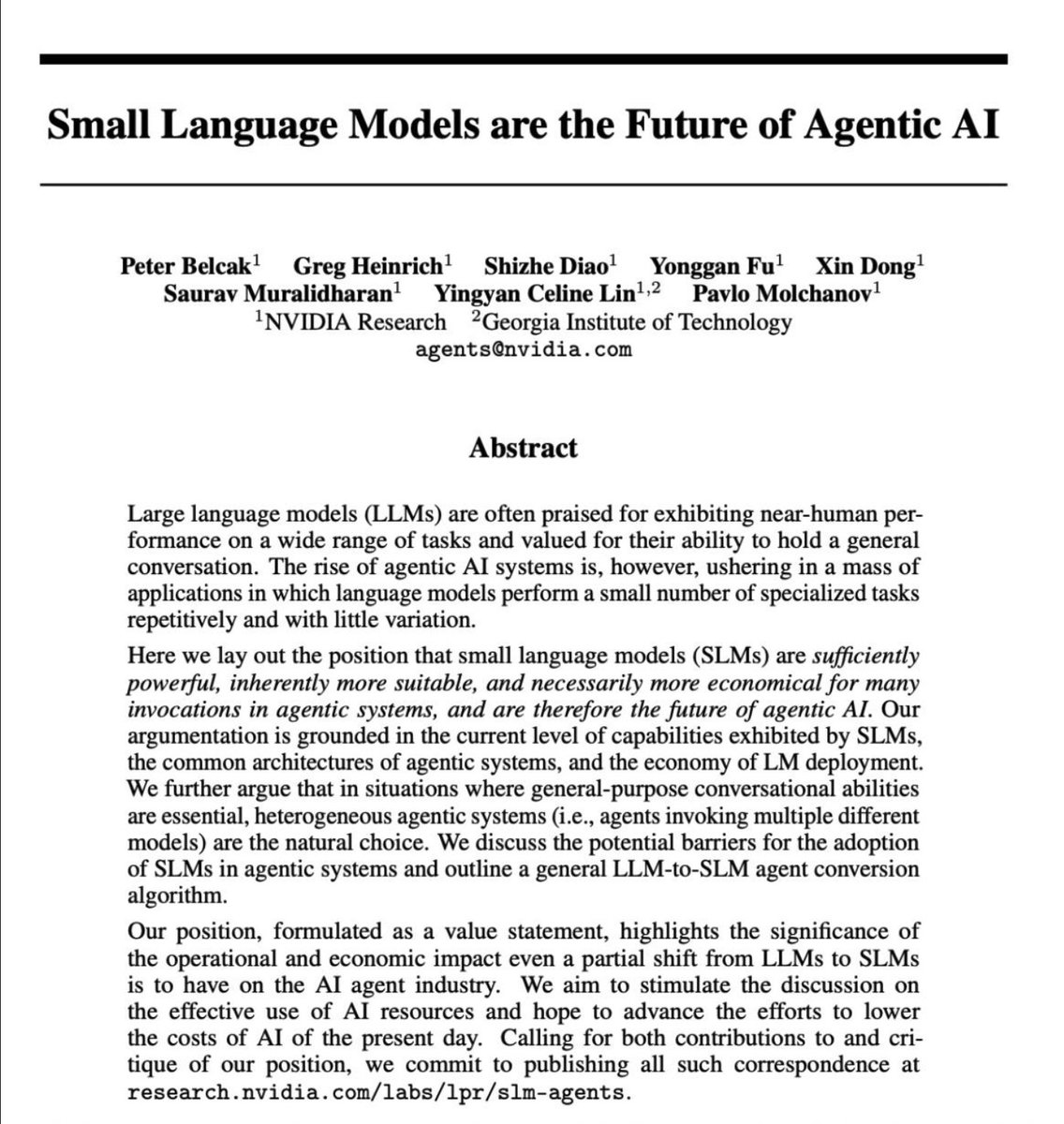
NVIDIA's recent paper presents a compelling blueprint for agentic AI, challenging the dominance of Large Language Models (LLMs) by advocating for Small Language Models (SLMs) in most tasks. Current AI agents often route every operation through resource-intensive LLMs like GPT-4 or Claude, which is inefficient for repetitive, scoped activities such as summarizing documents or calling tools.
SLMs, with millions to tens of millions of parameters, run on consumer hardware with low latency, making them faster, cheaper (10-30x more efficient), and just as effective for specialized tasks. Models like Phi-3 and Nemotron-H already outperform older LLMs in reasoning and tool use, while being easier to fine-tune with techniques like LoRA for domain-specific expertise.
This shift toward modular agents—defaulting to SLMs and escalating to LLMs only when necessary—promises greater control, affordability, and debuggability. Real-world examples show 40-70% of LLM calls can be replaced without performance loss, though industry inertia from heavy LLM investments and biased benchmarks delays adoption. As SLMs gain traction, the future of AI lies in smarter architectures over bigger models, enabling more accessible and sustainable agentic systems.
what are your thoughts on integrating SLMs into your workflows? In my day-to-day job, I’ve already identified some use cases, and currently leaning toward involving SLMs more, it’s just just make more sense.
I might post some real applications on this
Nvidia paper : arxiv.org/abs/2506.02153v1
2
76
19 Aug 2025
It's incredible how far we've come as a species.
Just a few short years ago we used to put our symptoms into WebMD so it could misdiagnose us.
Now we put it into GPT 5 so it can misdiagnose us.
52
13 Aug 2025
Sure GPT-5 is a steaming pile of garbage, but at least now we know that the AGI AI overlord by 2027 claims are laughably unrealistic.
1
2
992
21 May 2025
If you're interested in how you can use AI to generate an undetectable keylogger and also want a sneak peek of the lab content in the new SEC535: Offensive AI course, this is your chance. Grab a seat while they're available.
21 May 2025

🎯 Want to understand modern malware?
Write it. With AI @OSTact13 @SANSOffensive
💻 Build a GenAI-powered keylogger
🔥 Add trojanization & safety features
HTH2025 Con June 4-6.
🎟️ HTH ticket required add-on
👉 zurl.co/83zoq
#HTH #AI #Cybersecurity
1
5
779