
NE of England office of the UK’s leading interactive VR creators for business, accessibility and education Ocean3D.co.uk
Joined September 2024
- Tweets 354
- Following 77
- Followers 17
- Likes 349
32 Photos and videos




Ocean3D NE retweeted

Jun 11
SERIOUS CHUFFEDNESS!
Just heard some News and it’s rather lovely!
Ocean 3D has been named as a finalist in the AbilityNet Tech4Good Awards 2026, in the ‘Inclusive Education’ category.
We’ve been finalists once before and 100% credit to Paul Barker of @Ocean3dNe
who wrote our entry this year. This one is very much down to him.
When we created our first school virtual tour back in 2018, the aim was simple:
Help children feel more confident before stepping into a new environment.
Since then, the work has grown across education, healthcare, transport, heritage and public-facing services, with our most recent education clients being Charlton Park Academy and @CENMAC in South London, but the principle has stayed the same:
Unfamiliar places can be a real barrier.
For some people, knowing where they’re going, what to expect, where the entrances are, what the rooms look like, how the journey flows and what support is available can make a huge difference.
It’s not just about showing a building.
It’s about helping people feel more prepared before they arrive.
Recent peer reviewed research has also strengthened this point, showing that virtual school tours can reduce school avoidance, increase school liking and improve cooperative participation.
So yes, we’re very seriously chuffed to be a finalist.
Chris Wood
Ocean3D.co.uk
Ocean 3D - North East
Finalists page:
tech4goodawards.com/
#Tech4GoodAwards #InclusiveEducation #Accessibility #SEND #Neurodiversity #EdTech #Ocean3D
3
3
123

Jun 10
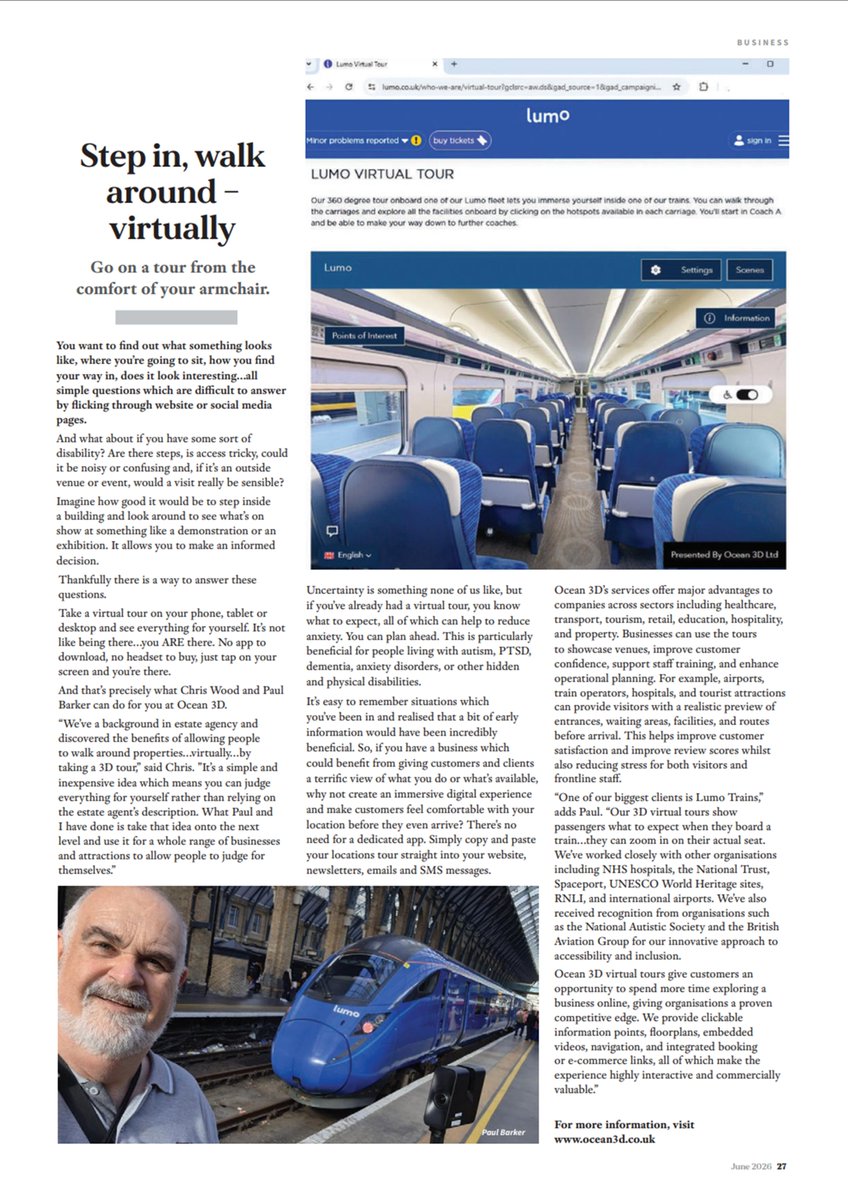
Our first print editorial, in this month's @NInsightmag! @ChrisWoodPZ and I speaking about all things accessibility & how digital familiarisation tours open doors and remove barriers caused by anxiety, uncertainty, disability or hidden conditions.
1
1
49
Ocean3D NE retweeted
Jun 2
It’s annoying that we know from speaking to many families with neurodivergent children, that going on holiday to a new location can be a nightmare if not impossible, due to fear of the unknown or new. That’s why we find it disappointing that @Airbnb and @bookingcom don’t allow WCAG compliant virtual tours on their sites to help individuals and families plan and then enjoy a holiday. E.g like this tour created for bryntinholidays.co.uk
We’ve written to both companies previously but received no reply, but would welcome a dialogue with them.
3
3
3
563
Ocean3D NE retweeted
May 23
I had one of those rare and genuine EUREKA! moments this morning.
No, I wasn’t on the bath; I was sipping tea, in bed, researching a potential new client’s accessibility options and their booking process. And THAT’S when it hit me!
Not a new product idea.
Not a new piece of technology.
It was a realisation that EVERY website or physical location I’ve ever visited separates access information from the main experience:
Here is the normal page.
Here is the booking page.
Here is the visitor information.
Here is the customer journey.
And then, somewhere else, there is usually an accessibility page.
Often created with good intentions.
But still separate.
Still ‘other’.
Still asking disabled people, older people, anxious people, neurodivergent people, parents, carers, patients, passengers and families to go looking somewhere else for the information they need to feel confident.
That doesn’t feel right to me.
Because access needs are human needs.
Some are permanent.
Some are temporary.
Some are visible.
Some are hidden.
Some arrive suddenly, through illness, injury, surgery, age, anxiety or circumstance.
And at some point, directly or indirectly, almost all of us will need better access information.
A broken ankle.
A child in a pushchair.
An elderly parent.
A medical appointment after bad news.
A first visit to an unfamiliar school.
A railway journey with anxiety.
A hospital visit with dementia.
A theatre trip with sensory concerns.
A hotel stay after surgery.
A day out with someone who cannot stand for long.
None of that makes someone “other”.
It makes them human.
So why do we still design information journeys as if there are two groups?
The normal visitor.
And the accessible visitor.
The normal customer.
And the disabled customer.
The normal journey.
And the accessible journey.
What if that is the wrong starting point?
What if the better answer is one clear, inclusive process for everyone?
The booking information includes access information.
The visitor information includes access information.
The journey planning includes access information.
The images, maps, videos, virtual familiarisation, written descriptions, parking, entrances, toilets, seating, quiet spaces, lifts, gradients, distances and what-to-expect information are simply part of how the organisation explains itself.
Not hidden away.
Not bolted on.
Not treated as someone else’s page.
Because the goal should not be to send people away to find the “accessibility bit”.
The goal should be to help everyone understand whether they can confidently get there, get in, move around, take part, stay, leave and come back again.
That is the real point.
At Ocean 3D, our aim is to ‘help people know before they go.’
Not because some people are different.
Because all of us are human.
And human needs change all the time.
Chris
Ocean3D.co.uk
2
1
68
Ocean3D NE retweeted

May 18
Off-the-planet level of chuffed-ness here!
May 18

Our modest SME from West Cornwall has suddenly and unexpectedly found itself up against a very tight deadline, having been asked to submit an RFP to a major PLC, focused on improving customer accessibility, safety and overall customer experience.
Still slightly reeling from being asked, if I’m honest, but seriously chuffed, as I know we can deliver what’s been asked of us.
Right then. Deep breath. Fix swords. Time to get the job done.
1
1
109
Ocean3D NE retweeted
May 12
Sometimes, you don’t need to spend ages writing a post that you hope people will find interesting whilst also getting your point across.
Sometimes, you get an email that says it all for you ❤️ (permission for reproduction in full, sought and given).
“As an autistic person, I sometimes find new experiences and environments overwhelming, but Padstow Lifeboat virtual tour from Ocean3D was absolutely brilliant from start to finish.
The tour was engaging, informative and easy to follow, and you could genuinely see the passion and respect they have for the RNLI . The way everything was presented made me feel comfortable, included and able to enjoy the experience without feeling overloaded.
The detail within the tour was amazing. It felt like being there in person and provided such a real insight into the work of the Padstow team.
I especially appreciated how accessible and immersive the experience was. It allowed me to explore something I may otherwise have struggled to experience comfortably in person.
Thank you both for creating such a thoughtful, interesting and inclusive experience. I would highly recommend Ocean3D to anyone interested in the RNLI, lifeboats or immersive virtual tours
Lucy”
Thank you Lucy (and your sister too)
Chris
Ocean3D.co.uk
Helping people feel comfortable with a location before they arrive
#autism #accessibility #familiarisation #inclusion #solutions #equality
2
3
122
Ocean3D NE retweeted
May 1
⭐️⭐️⭐️⭐️⭐️
Virtual tours don’t just showcase your business, create SM engagement and aid accessibility, they’re brilliant at helping manage customer expectations too…leading to more good reviews.
👍👍👍👍👍

bryntinholidays.co.uk
Looking for a dog friendly place to holiday in W Cornwall?
One night, or a few weeks?We’ve got it covered! Visit our website and take a virtual tour* before you book.
Bryntins’ customer reviews in ‘26
@vrbo - 10/10
@bookingcom - 9/10
@Airbnb - 5/5
2
2
65
Apr 30
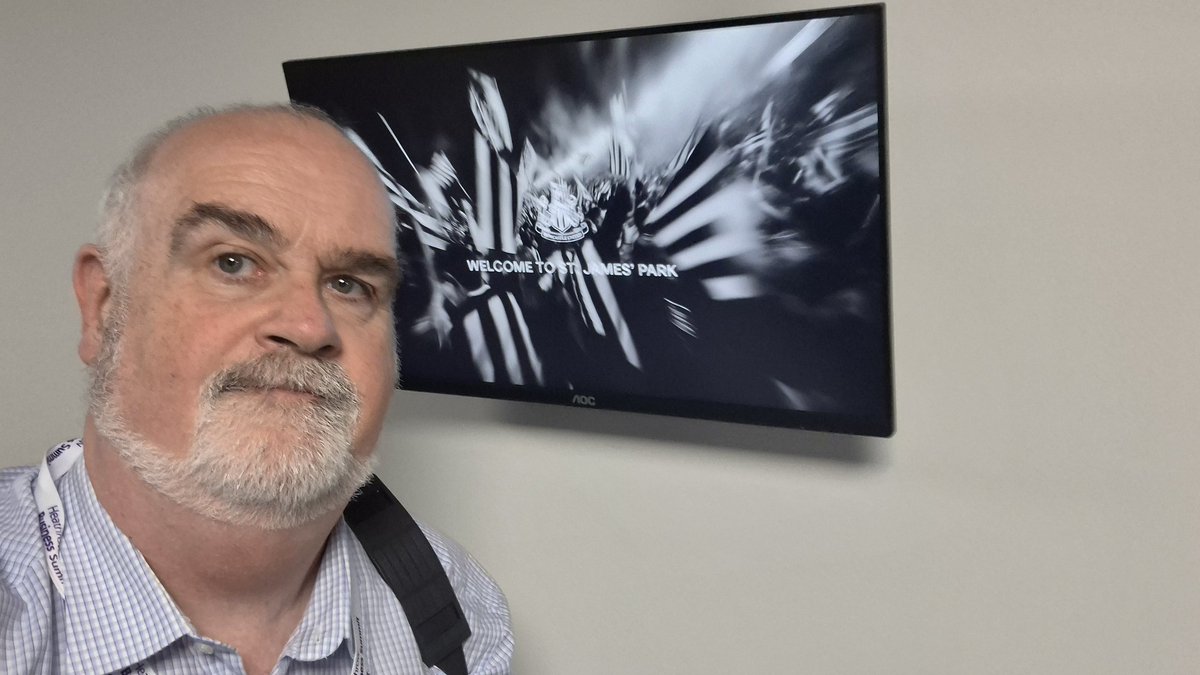
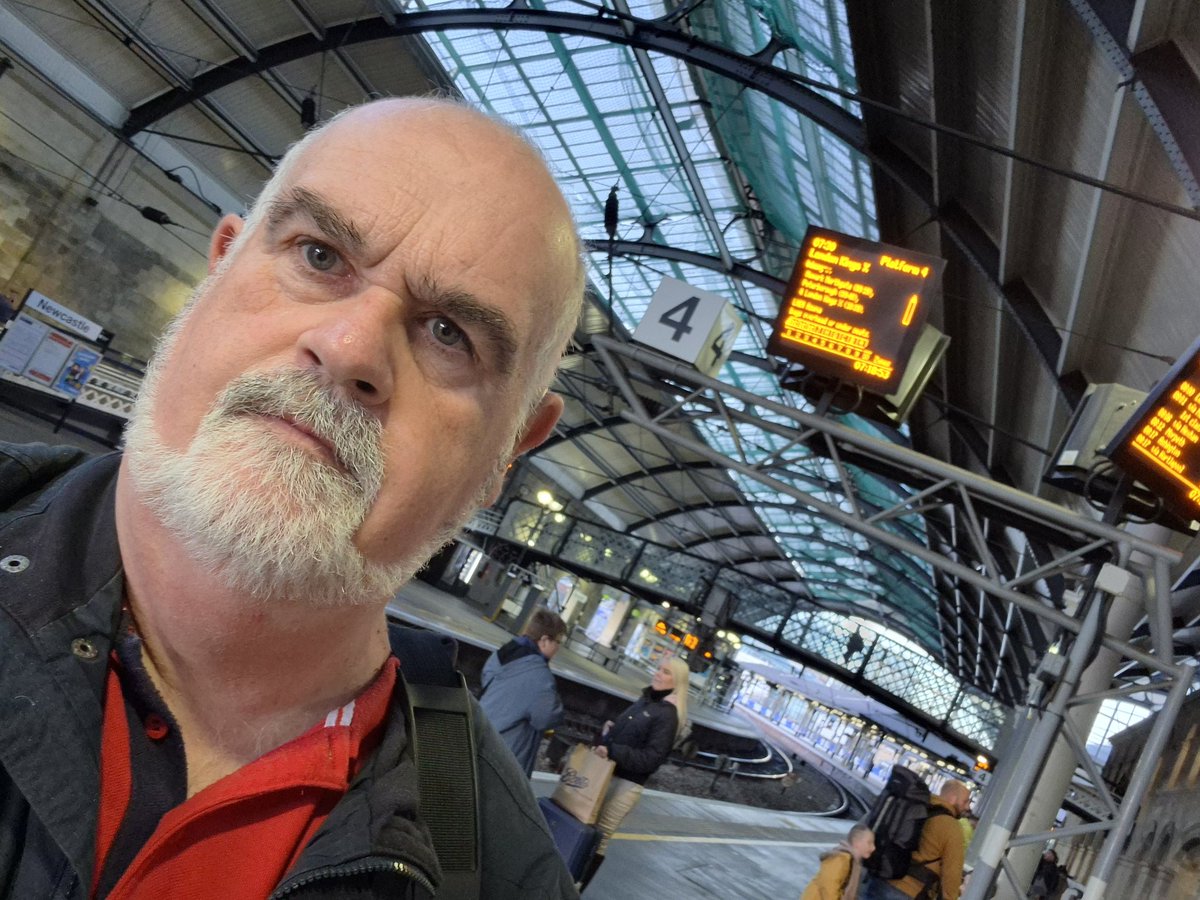
How good can a day be? Here in Newcastle's "third cathedral" attending the @HeathrowAirport Business Summit.
Thanks @nechamber for publicising the event.
11
Ocean3D NE retweeted
Apr 29
A couple of weeks ago, we were approached by ND360 Hub to write an article for their Neurodiversity blog on the topic of accessibility in education.
You can read it here nd360hub.co.uk/blog/
3
2
52
Ocean3D NE retweeted
Apr 24
New, peer-reviewed evidence shows interactive virtual school tours can reduce school avoidance by 39.6%.
Advance familiarisation is not a gimmick. It matters.
linkedin.com/posts/chris-woo…
3
2
50
Ocean3D NE retweeted

Feb 3
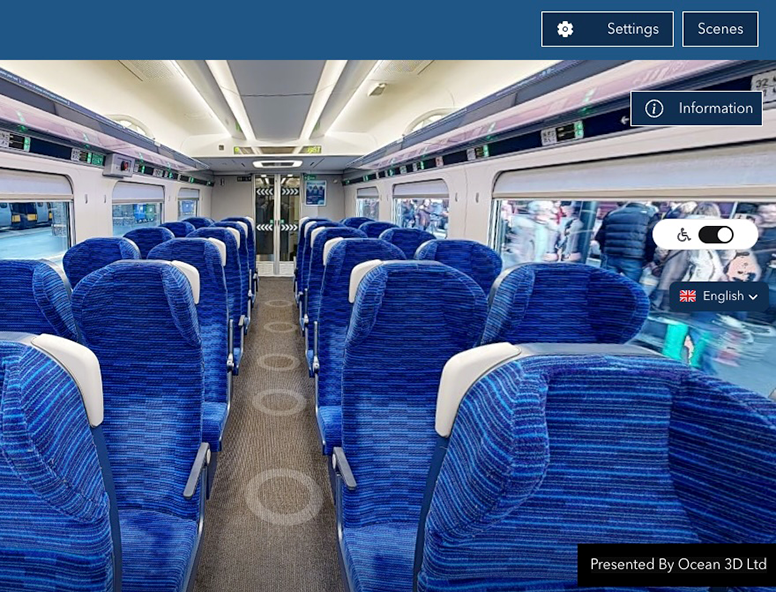
Fancy taking a look round our trains before you travel? 🚄
We've enhanced the 3D virtual tour on our website for you to do just that!📱
Working with our partners Ocean 3D, the tour allows our customers who live with autism, those that experience anxiety and those with additional accessibility requirements, to explore all areas of the train providing a comprehensive view of what to expect when travelling with Lumo.
Check it out: lumo.co.uk/who-we-are/virtua…
Read more: lumo.co.uk/who-we-are/lumone…
3
4
711
Ocean3D NE retweeted
Apr 21
In a study of 359 children, those who were shown a short interactive virtual tour before starting school settled in better than those who were not.
In simple terms, they were:
👍less likely to avoid school
👍more likely to feel positive about it, and
👍better able to join in.
Read the full article and link to paper: linkedin.com/posts/chris-woo…
3
2
47
Ocean3D NE retweeted
Apr 6
Chuffed.
❤️What a lovely message to receive today from a guest on their checkout ❤️
“Morning Chris, we left and the keys are in the safe. We had an amazing time, kids very happy, thank you for your hospitality. (…….) made us smile.”
bryntinholidays.co.uk
1
1
93
Ocean3D NE retweeted
Apr 7
@Law_Commission review into transport accessibility for disabled people.
The Law Commission has announced a new review into the accessibility of transport for disabled people across England and Wales, examining whether current laws provide effective, enforceable and practical protection. Our thoughts: ocean3d.co.uk/law-commission…
2
2
41
Ocean3D NE retweeted
Apr 7
There is now a @Law_Commission review into transport accessibility for disabled people.
The Law Commission has announced a new review into the accessibility of transport for disabled people across England and Wales, examining whether current laws provide effective, enforceable and practical protection. Our take (link in comments)
1
3
2
67
Ocean3D NE retweeted
Apr 2
3
2
49
Ocean3D NE retweeted
Mar 26
My cheesy grin to start your day with.
What more could anyone ask for?
1
1
68