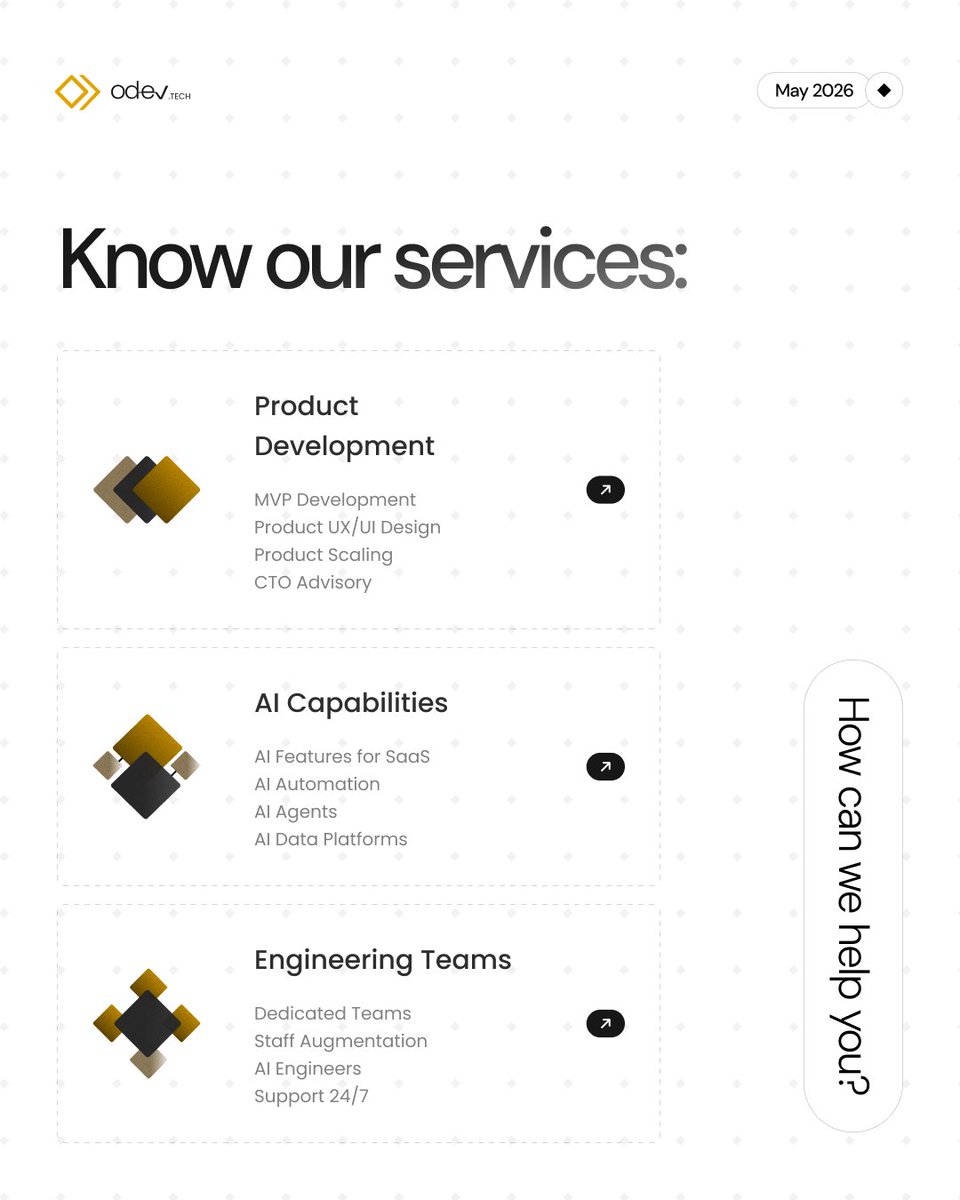
We provide US and UK startups and companies with product development expertise to build world-class software nearshore.
Joined April 2022
- Tweets 167
- Following 170
- Followers 36
- Likes 18
149 Photos and videos
Pinned Tweet

Feb 26
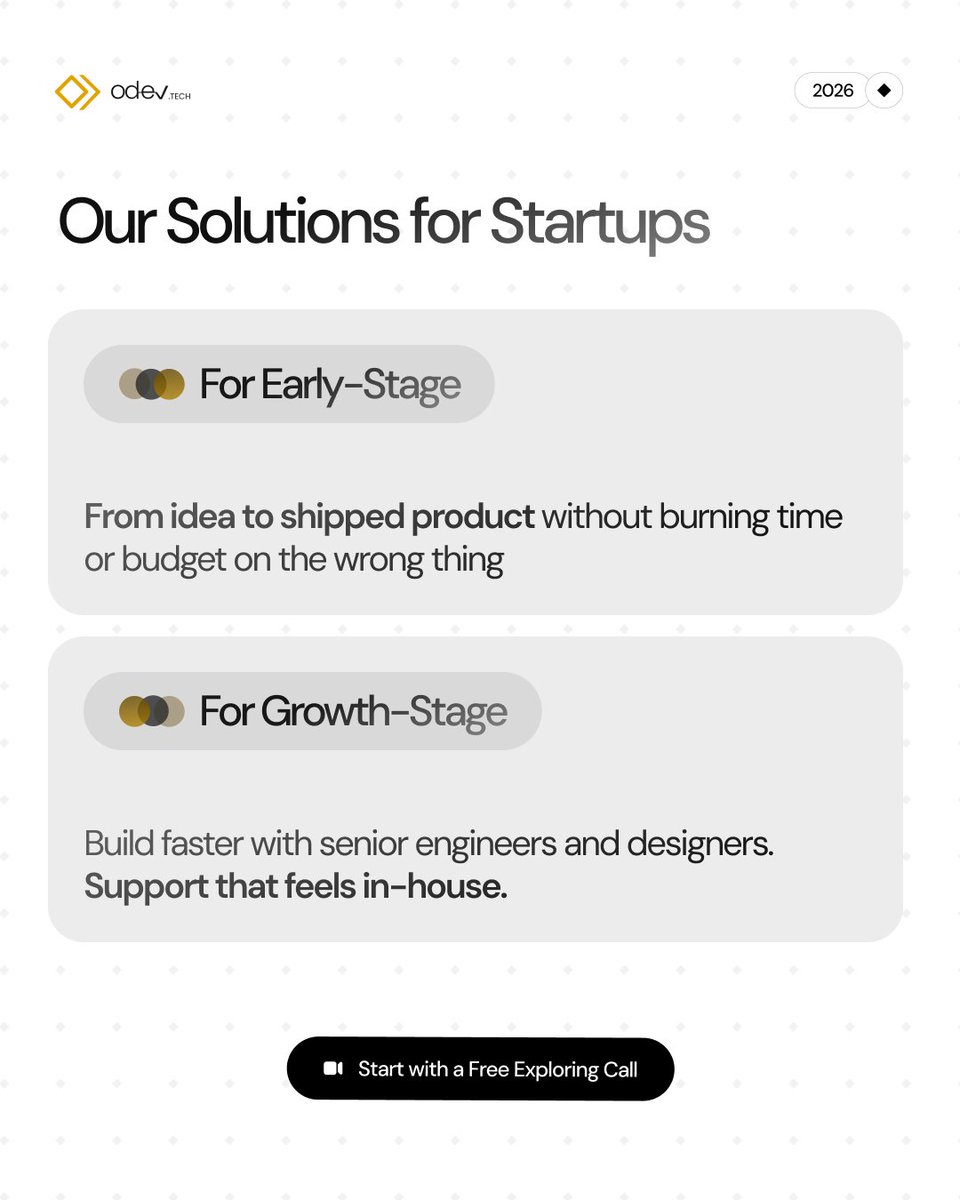
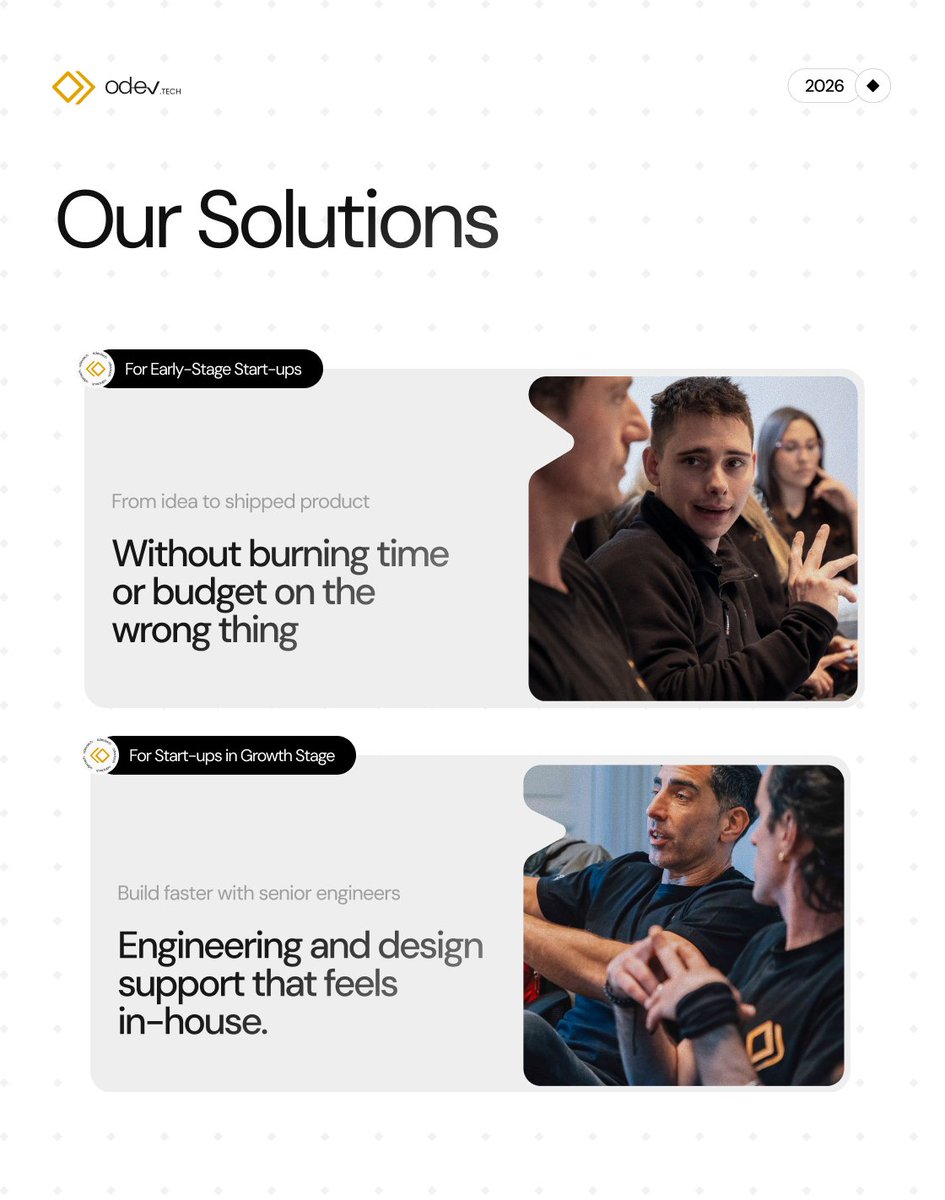
Same goal. Different stage. Different support. 🎯
Early stage needs one thing most:
Go from idea to shipped product without burning time or budget on the wrong thing.
Growth stage needs something else:
Engineering and design support that feels in house, so the roadmap keeps moving while the company scales.
Different problems. Same promise:
Build the right product. Build it right.
If you tell me your stage, I’ll tell you what I’d focus on first.
#StartupJourney #ProductDevelopment #SoftwareTeams #UXUI #TechLeadership #Founders #Scale
1
1
1
37
Jun 12
AI features inside SaaS products.
Most founders who want to "add AI" to their SaaS end up with a button that calls GPT and returns text.
That's not a feature. That's a demo.
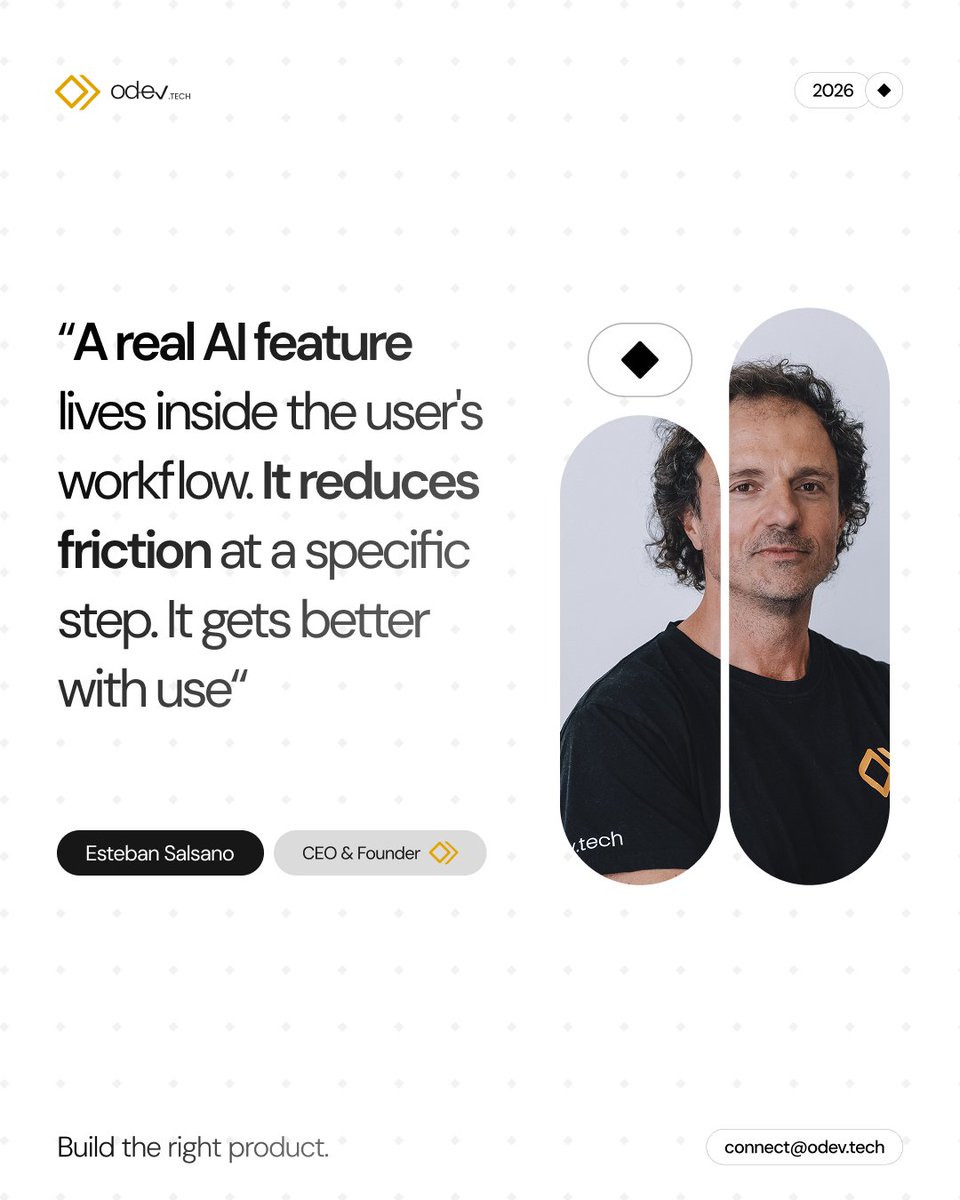
A real AI feature lives inside the user's workflow. It reduces friction at a specific step. It gets better with use. And it doesn't break everything when the model changes.
The difference between the two versions is usually who designed the integration.
23
Jun 10
Same goal. Different stage. Different support. 🎯
Early stage needs one thing most:
Go from idea to shipped product without burning time or budget on the wrong thing.
Growth stage needs something else:
Engineering and design support that feels in house, so the roadmap keeps moving while the company scales.
Different problems. Same promise:
Build the right product. Build it right.
If you tell me your stage, I’ll tell you what I’d focus on first.
Jun 5
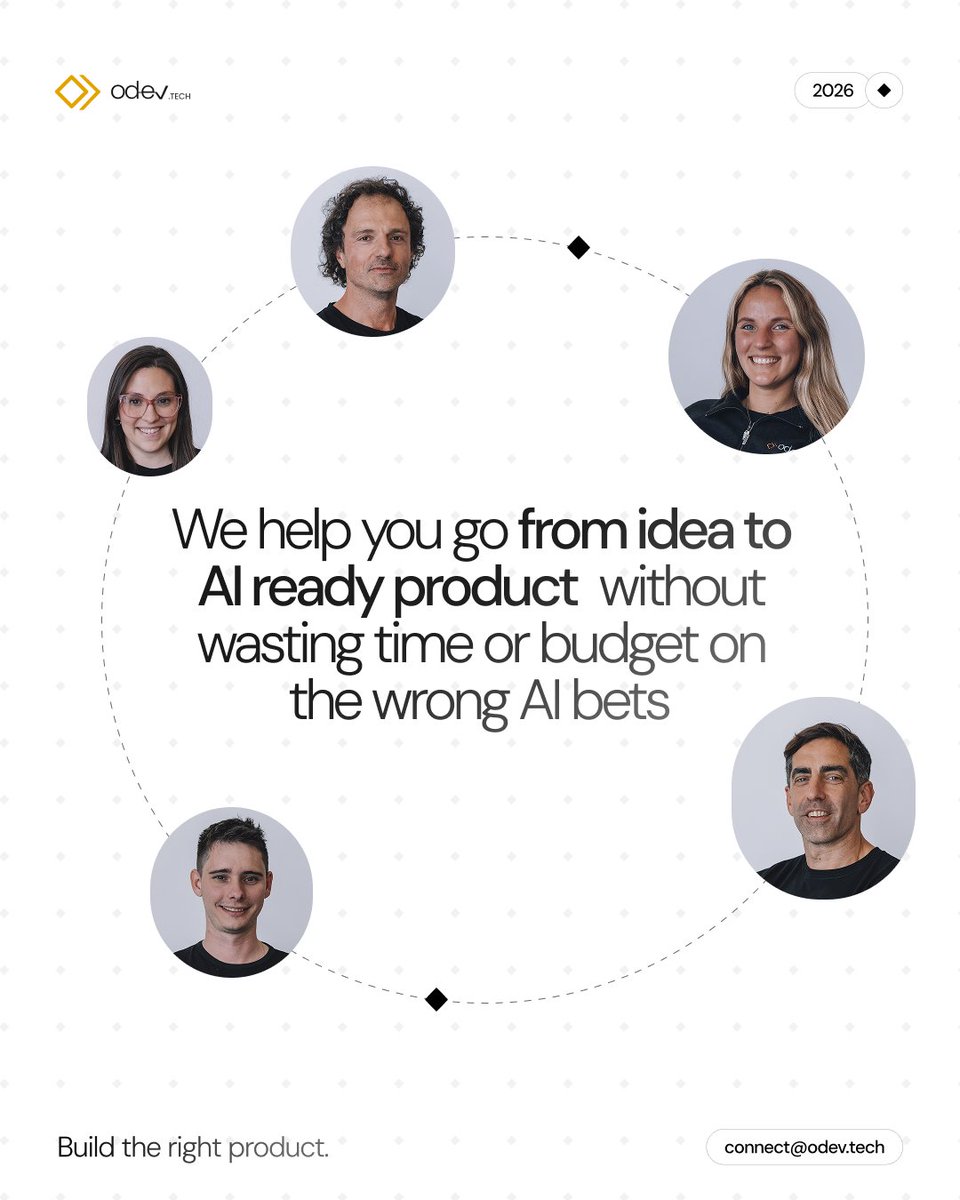
From idea to AI ready product.
We help founders and product leaders validate what to build, where AI actually adds value, and how to launch with the right technical foundation. From early exploration to production-ready AI features, we work alongside your team to turn ideas into real, scalable products.
5
Jun 3
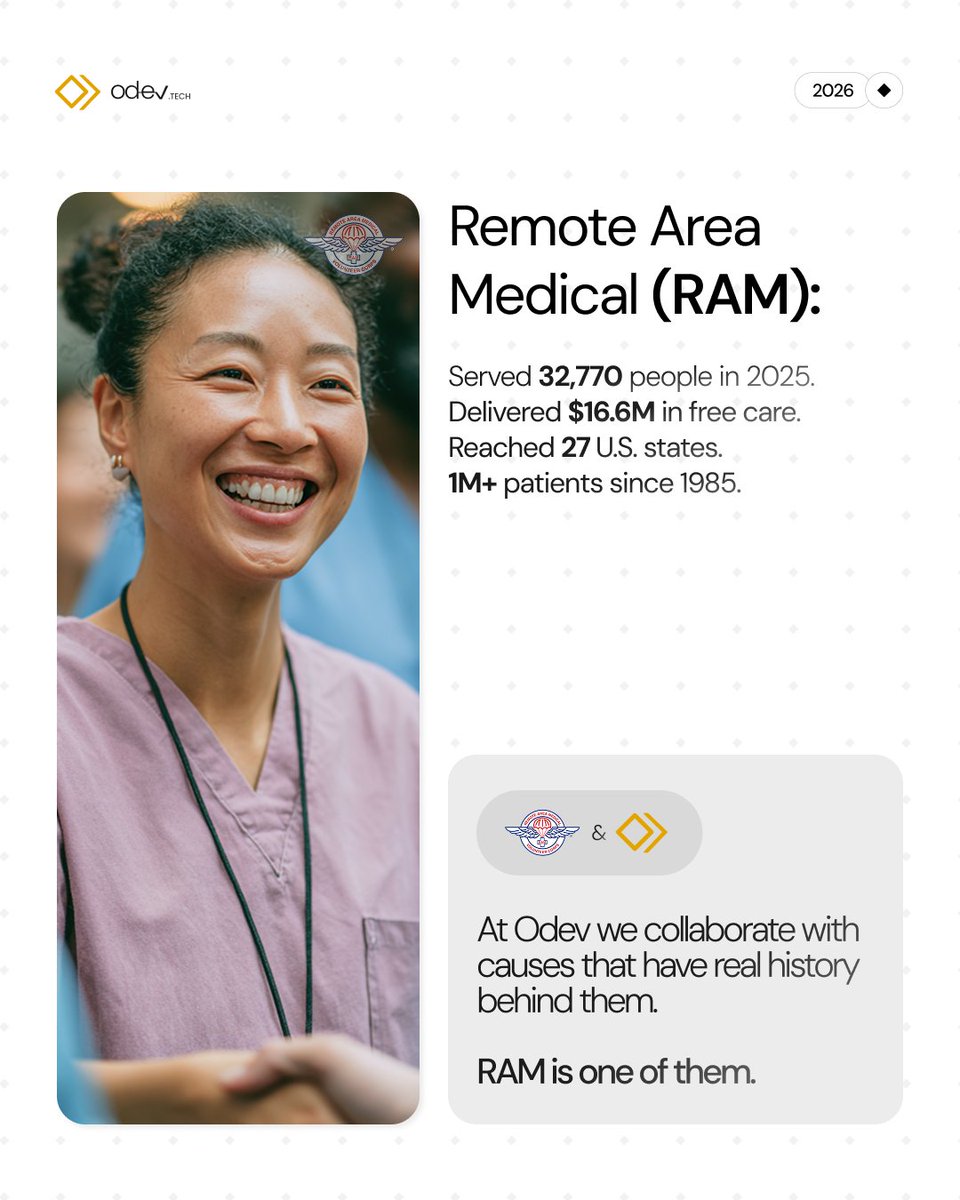
32,770 people treated in 2025.
$16.6M in free care delivered.
27 U.S. states reached.
Remote Area Medical has been organizing free pop-up clinics for communities without real access to healthcare for 40 years. Dental, vision, and general medicine. No insurance, no appointment, no cost.
This year we started collaborating with them. Not much else to add. The numbers speak for themselves.
ramusa.org
1
Jun 1
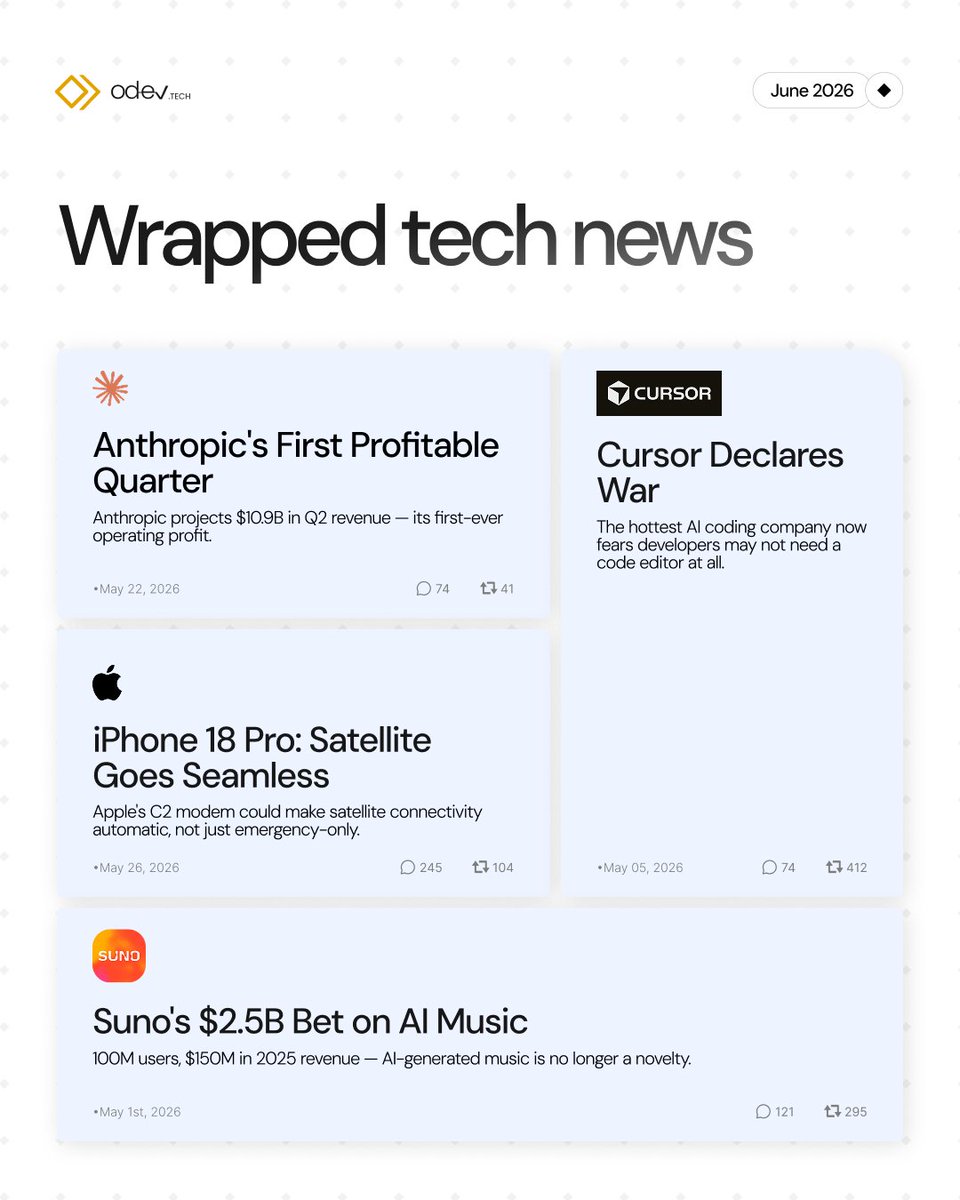
The AI gold rush isn't slowing down. It's accelerating.
Four stories from the last few months that tell you where things are heading:
Anthropic is about to turn a profit. The company projects $10.9B in Q2 2026 revenue — up 130% from Q1 — with an expected operating profit of $559M. That's a company that looked nowhere near profitable just a year ago. Enterprise adoption of Claude is the engine.
Cursor went on war footing. Employees returned from the holidays to an all-hands titled "War Time." The hottest, fastest-growing AI coding company is now confronting a new reality: developers may no longer need a code editor at all. When your own success threatens your business model, you know the pace of change is real.
Suno is betting $2.5B that AI-made music is permanent. The platform has 100 million users, 2 million paid subscribers, and generated $150M in revenue in 2025 — despite ongoing lawsuits from major labels. The industry is fighting it while quietly partnering with it.
Apple is making satellite connectivity invisible. The iPhone 18 Pro is rumored to include a C2 modem with 5G NR-NTN support, which could enable automatic fallback to satellite when cell coverage drops — no manual pointing required. Emergency feature becoming everyday infrastructure.
The pattern across all four: tools that started as "interesting experiments" are now core infrastructure. That window between "early" and "mainstream" keeps getting shorter.
2
May 28
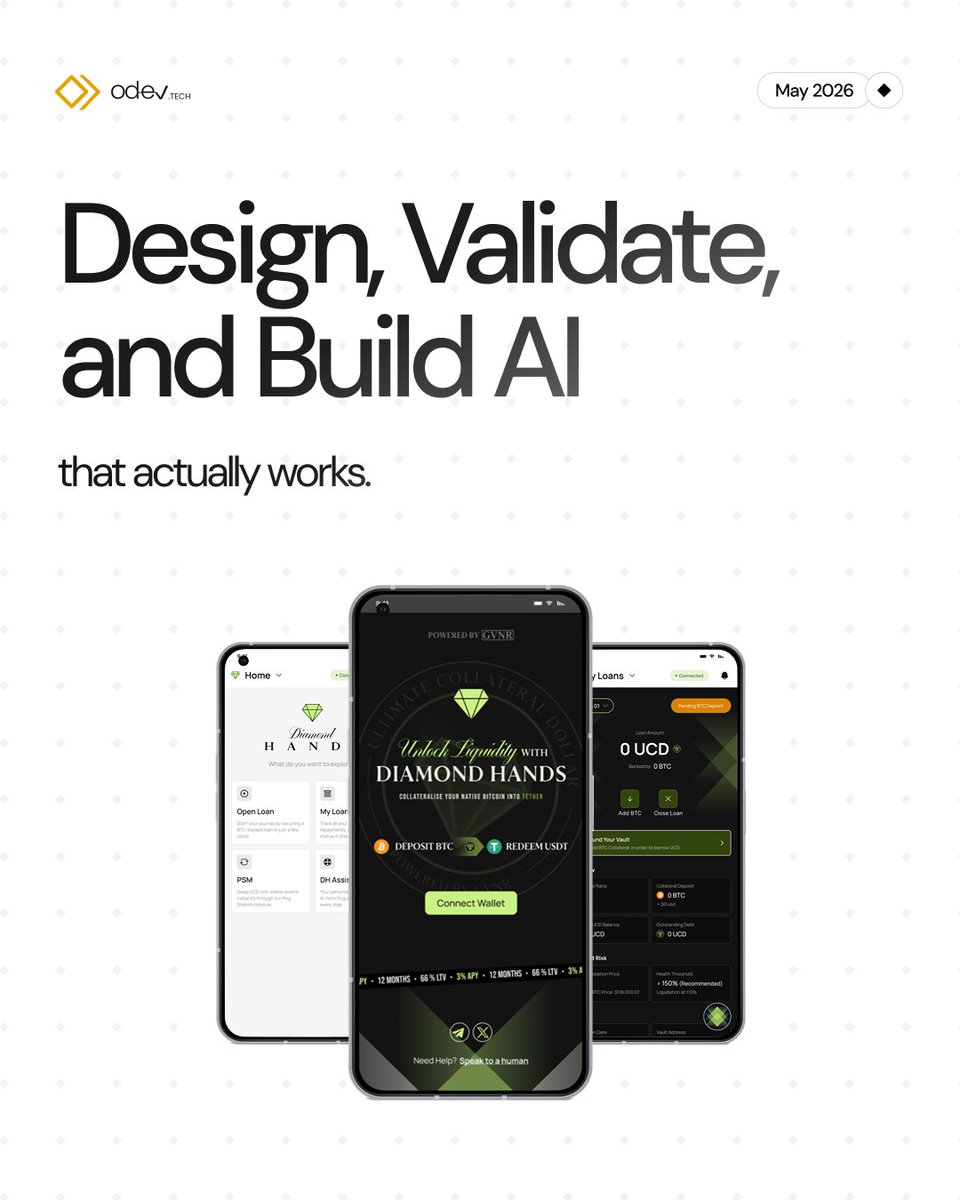
Design and code used to be separate. With AI, they're inseparable.
The teams shipping the fastest have figured something out:
Product design, engineering decisions, and AI capabilities need to move together from day one.
You don't design the UX, throw it to developers, and hope they figure out how AI fits. That's how you end up with beautiful screens and a confusing experience.
Instead, designers, engineers, and AI strategists sit in the same room (or Slack thread) making decisions together.
What should the AI do? What should the user do? How do we explain uncertainty? What happens when it fails?
Those conversations happen during design, not during code review.
The output is a product that feels intentional. Not a brilliant design with bolted-on AI. A coherent experience where AI is just part of how things work.
Building your next product? Start with a conversation about how AI, design, and engineering work together.
11
May 21
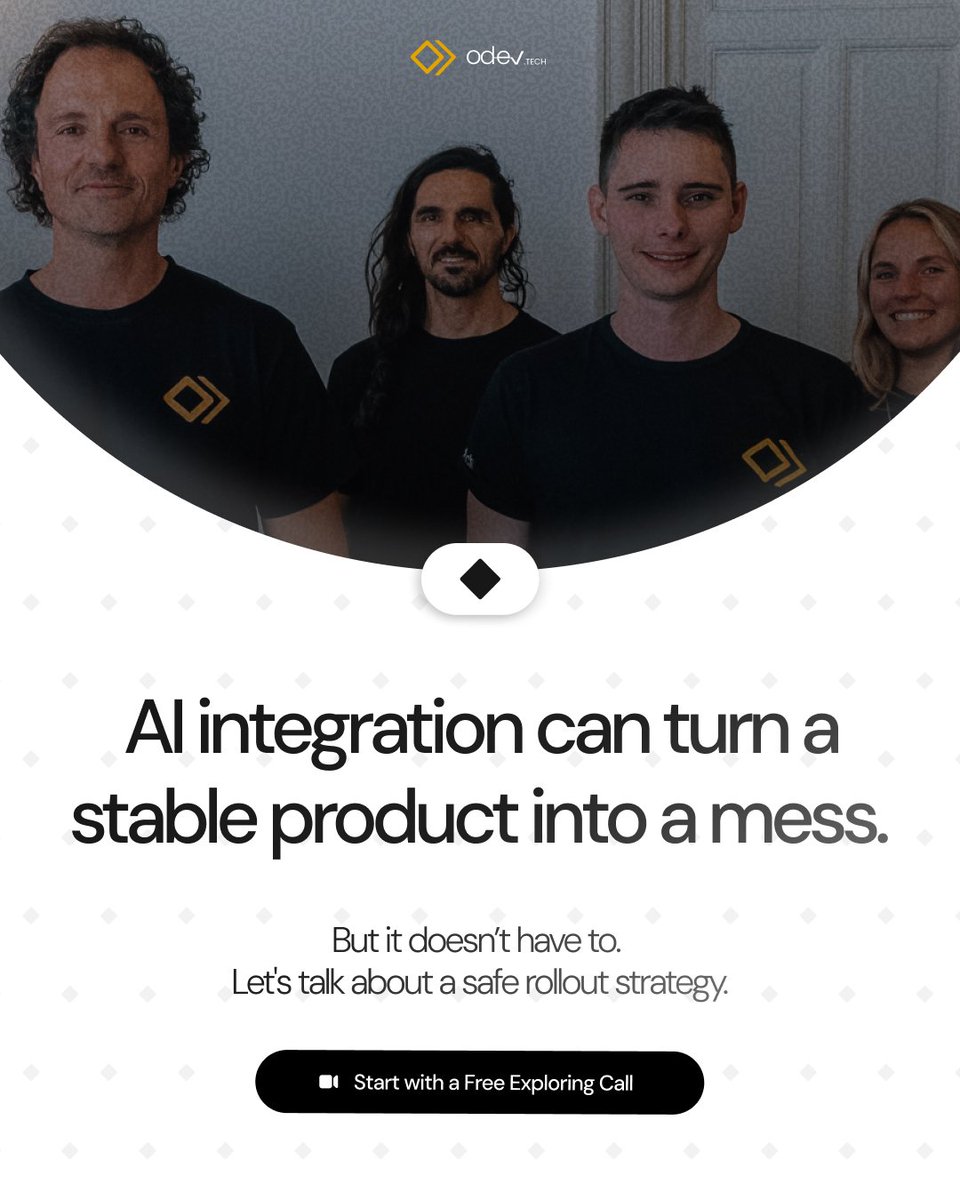
AI integration can turn a stable product into a mess. But it doesn't have to.
Adding AI to an existing product feels risky because it is.
New dependencies. New failure modes. New things that can confuse users. Most teams don't plan for that until it's already broken.
Here's what a clean AI integration actually looks like:
You test it in a contained pilot, not across the whole product. That means less blast radius when something fails.
You monitor it closely. Real-time metrics on how often it works, how often it breaks, user sentiment. Not just "it's live."
You have a clear rollback plan. If something goes wrong, you can turn it off fast without affecting the core product.
And you keep your team in the loop. Nobody ships AI to production without buy-in from the people who'll support it.
That's how you move fast without creating debt.
Already have AI in your roadmap? Let's talk about a safe rollout strategy.
2
May 21
Moving fast means nothing if you're moving in the wrong direction.
Most startup failures don't happen because teams lack talent. They happen because decisions were made too early, before enough clarity existed. Then months later, the team is rebuilding what they thought they wanted.
Building the right product means:
You spend the first week or two on discovery. Real conversations with potential users. Not guessing.
You prototype before you architect. Test the UX, the flows, the actual value. Then build.
You ship in small releases so you can adapt. Not big bang launches that hide risk.
And you have one person who actually owns the product decisions. Not death by committee.
That's it. Nothing fancy. Just a process that protects your budget and your timeline.
If you're in the "idea" phase right now, what's the scariest part, picking what to build, or knowing what not to build?
5
May 18
Most teams have no idea how to add AI without breaking everything. We have a map.
AI doesn't fit in a standard dev pipeline. If you try to bolt it in like another feature, you get chaos.
Here's how we structure it:
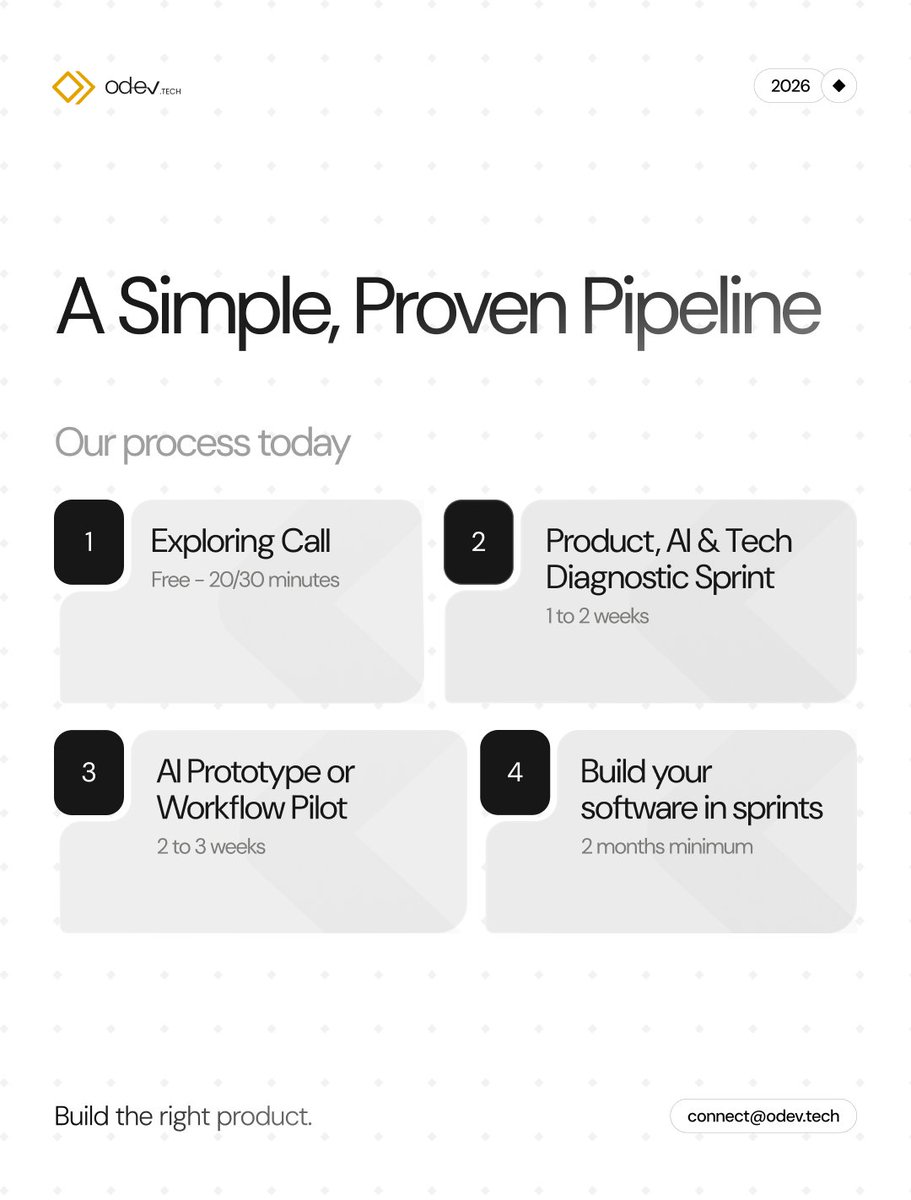
Week 1: Discovery Call. Where does AI actually help? Not where it's cool, but where it moves the needle on revenue, time saved, or user friction.
Week 2-3: Fast Pilot. Run a small test with real data. See if it works before you commit.
Week 4 : Real Integration. Build it into the product with the right safeguards, monitoring, and handoff.
The goal isn't fancy AI. It's AI that works, that your team can maintain, and that your users actually benefit from.
DM me "AI PILOT" and tell me one thing your product doesn't do that AI could help with.
11
May 14
Founders don't pick their dev partner based on credentials. They pick based on who actually delivers.
These are the reasons founders we work with keep coming back:
We don't disappear after launch. Many of your earliest customers work with us for years as their products grow.
We make the hard calls. When scope is creeping and deadlines are real, a good partner doesn't say yes to everything. We protect your roadmap.
Our team has built real products. That's not resume padding. That means they anticipate problems before they blow up. And when things change (and they always do), we adapt without drama. No rework cycles, no surprises on the bill.
That's what trust actually looks like.
Talk to one of our clients. I'll send you a couple introductions.
2
May 11
AI isn't a feature you bolt on later. It's a product decision you make early.
Most startups think about AI backwards.
They build the product first, then try to figure out where AI fits. That means expensive rework and decisions made under pressure.
Here's what actually works:
During product planning, ask:
Where does AI unlock real value?
Not buzzword value. Real business or user value.
Then design the product around it. That's how you ship with AI baked in, not slapped on.
Your prototype tests the AI angle. Your first release proves it works. Everything compounds from there.
The difference? Months saved and way less chaos.
Is your next build an AI product? Let's talk about the right questions to ask first.
12
May 7
Not all dev shops are built the same.
We do three things when you work with Odev.
You get a team that understands your product goals, not just your technical requirements. That means the code you ship actually solves the problem.
You get senior people making decisions, not juniors pushing work. No "we'll figure it out later", just clear tradeoffs and direction.
And you get to move fast without gambling the company. Small releases, weekly checkpoints, real ownership.
Most teams want all three. Few find it together.
5
May 1
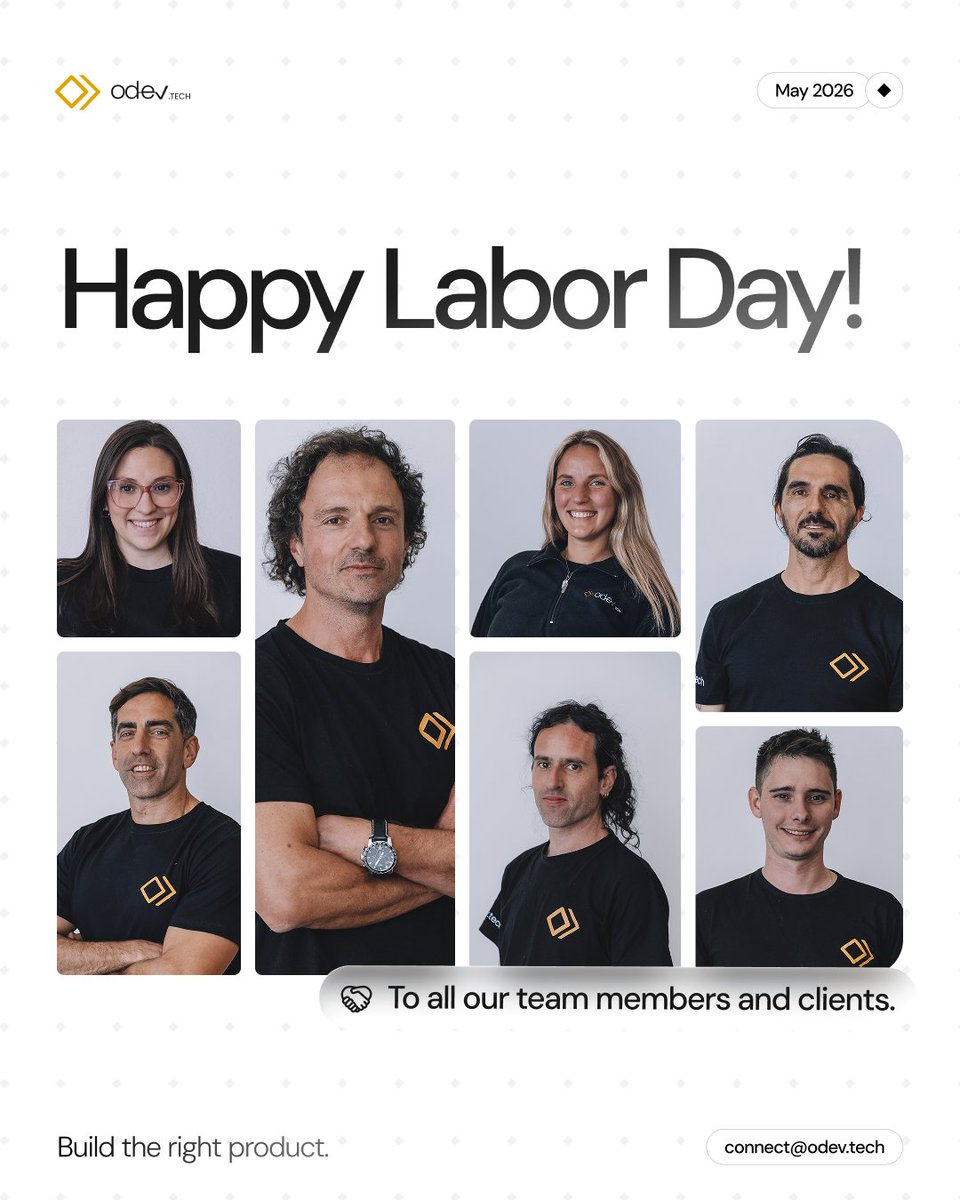
Happy Labor Day to all our team members and clients!
Labor Day is a good moment to say thanks to our team.
Building products is hard. It requires people who actually care about the work they do.
At Odev, we have that: devs who ship clean code, designers who understand users, people who flag problems early instead of after something breaks.
We work with teams across the US, UK, and LATAM. The ones that move fastest aren't necessarily the ones with the biggest budgets. They're the ones where the product person listens when an engineer spots a risk, where the designer asks the hard questions before launch, where someone actually owns the outcome.
That's the kind of culture we built here, and we're grateful for the people who help make it real.
If you're building something and you need a team that thinks like that, you know where to find us.
8
Apr 30
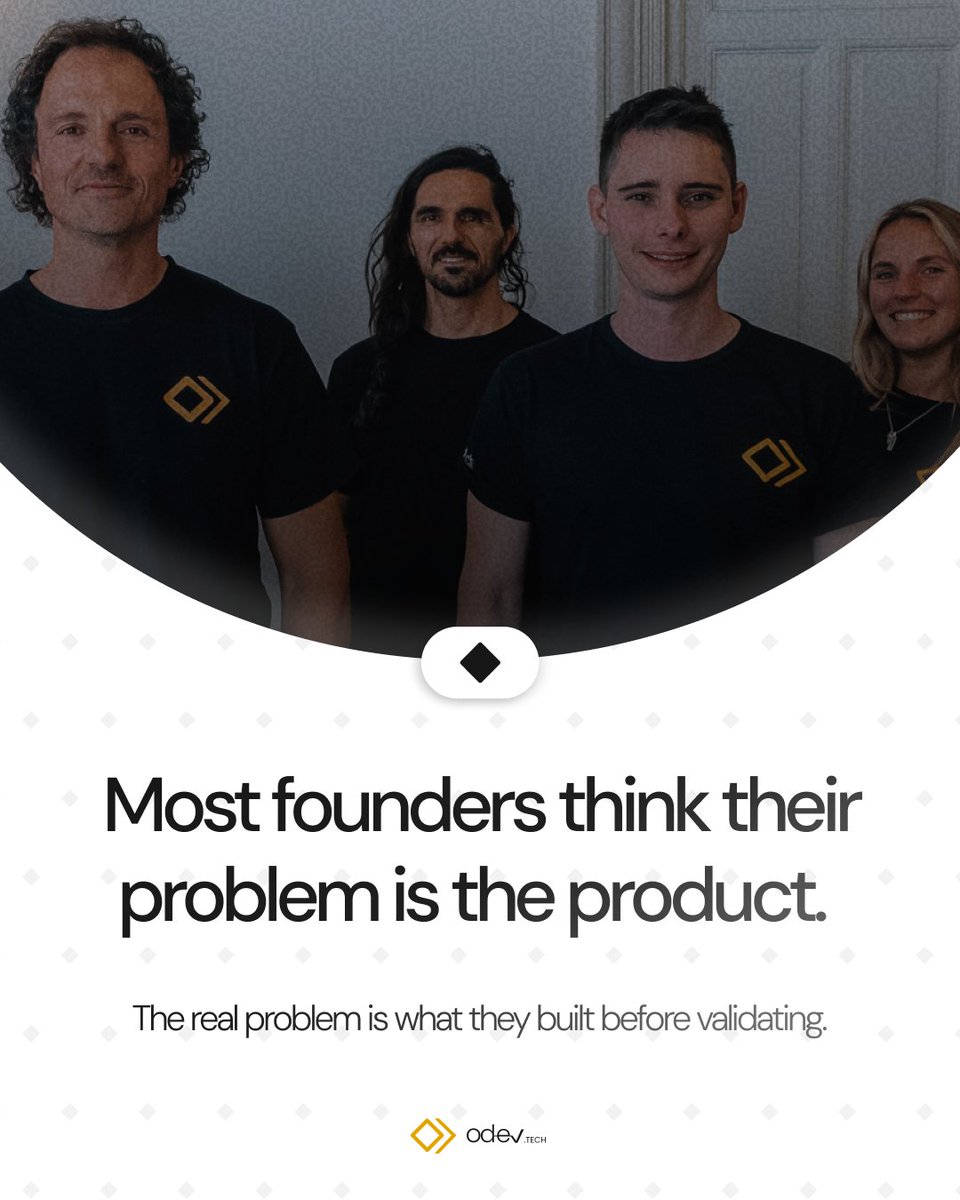
Most founders think their problem is the product. The real problem is what they built before validating.
We’ve worked with dozens of early-stage startups. And the pattern almost always repeats.
The founder has the vision. The team starts building. And 4 months later, the MVP doesn’t reflect what the user actually needs.
Why?
Because building fast and building well are not the same thing.
Building fast gets you to market quickly.
Building well keeps you there.
Speed matters. But the architecture of what you build matters more in the long run.
If you’re in the growth stage, you already know this. Technical debt doesn’t accumulate on its own — it accumulates decision by decision.
When was the last time you audited the foundation of your product?
5
Apr 27
If you're an early-stage startup, you don’t need an AI team.
You need the right first AI use case.
Hiring 3 engineers won’t solve this.
Using GPT APIs won’t solve this either.
The real question is:
👉 Where does AI actually improve your product or workflow?
That’s why we work in 3 steps:
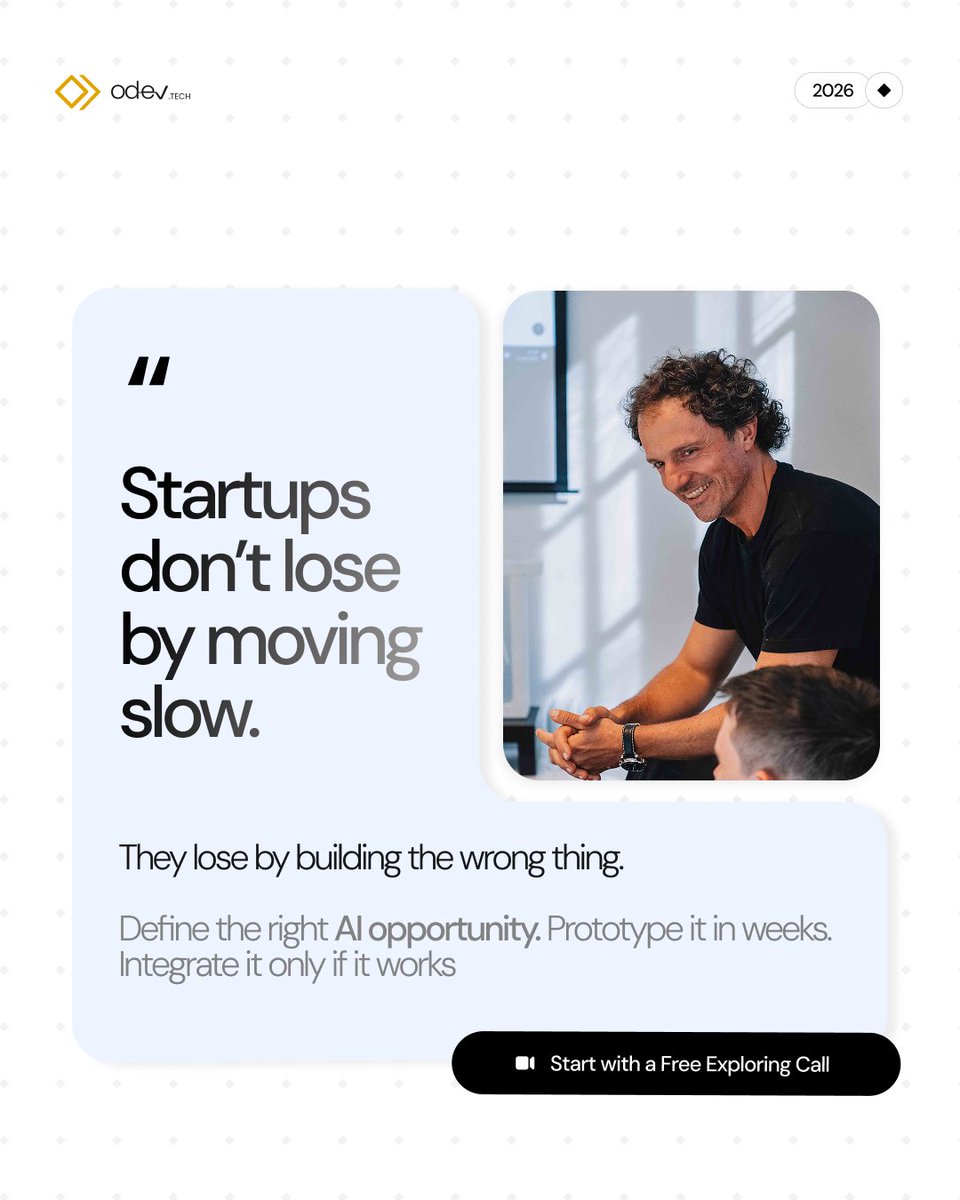
Define the right AI opportunity
Prototype it in weeks
Integrate it only if it works
No hype. No overbuilding.
Startups don’t lose by moving slow.
They lose by building the wrong thing.
Start with a free Exploring Call.
23
Apr 23
⚠️ Before You Hire a Tech Team… Read This!
We’ve helped dozens of startups build, launch, and scale. But we’ve also seen some common mistakes along the way.
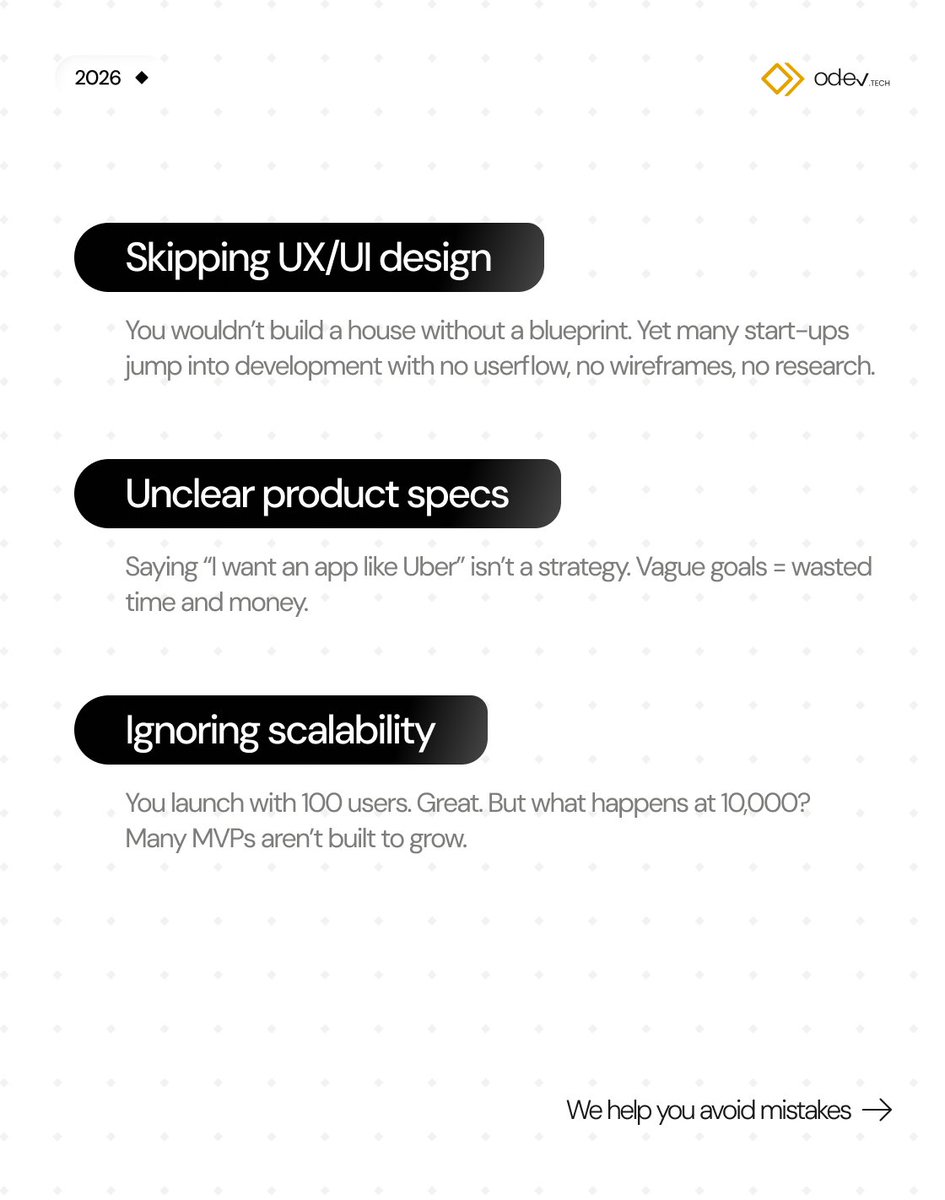
Here are 3 things startups often get wrong about tech, and how to avoid them 👇
❌ 1. Skipping UX/UI design
You wouldn’t build a house without a blueprint.
Yet many startups jump into development with no user flow, no wireframes, no research.
✅ Solution:
Start with UX. Understand your user’s journey before writing a single line of code.
❌ 2. Unclear product specs
Saying “I want an app like Uber” isn’t a strategy.
Vague goals = wasted time and money.
✅ Solution:
Define clear features, user stories, and goals. A good tech partner will help you translate ideas into requirements.
❌ 3. Ignoring scalability
You launch with 100 users. Great. But what happens at 10,000?
Many MVPs aren’t built to grow.
✅ Solution:
Think long-term. Choose flexible architecture and plan for growth from the start.
❌ 4. Building the wrong MVP
MVP ≠ cheapest version.
It’s the smartest way to test your value proposition.
✅ Solution:
Build just enough to validate — but don’t skip on polish where it matters (onboarding, UX, performance).
❌ 5. Choosing the cheapest team over the right one
You get what you pay for.
Cheap devs can cost more in fixes, delays, and rebuilds.
✅ Solution:
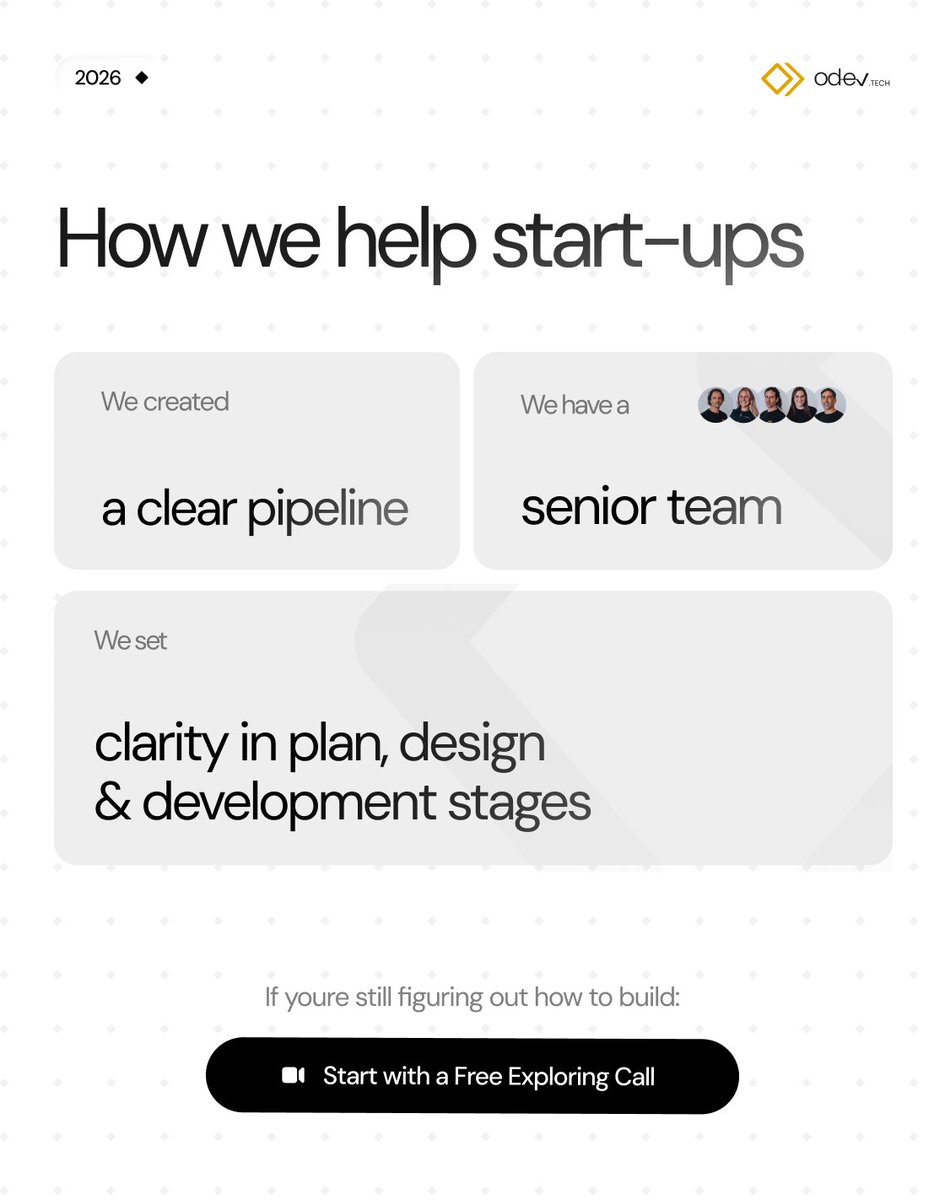
Work with a team that understands startups, not just code. 🚀 Need help avoiding these mistakes?
We’ve helped 50 startups launch smart, scalable products.
5
Apr 20
Building an AI product without testing it first is the fastest way to waste money.
We’ve seen founders spend months building:
AI copilots
Chat interfaces
Recommendation systems
Without knowing if users even need them.
Our approach:
👉 Prototype before you build
In 2–3 weeks:
Test 1 use case
Validate user interaction
Define real technical scope
Only then:
You decide if it’s worth scaling.
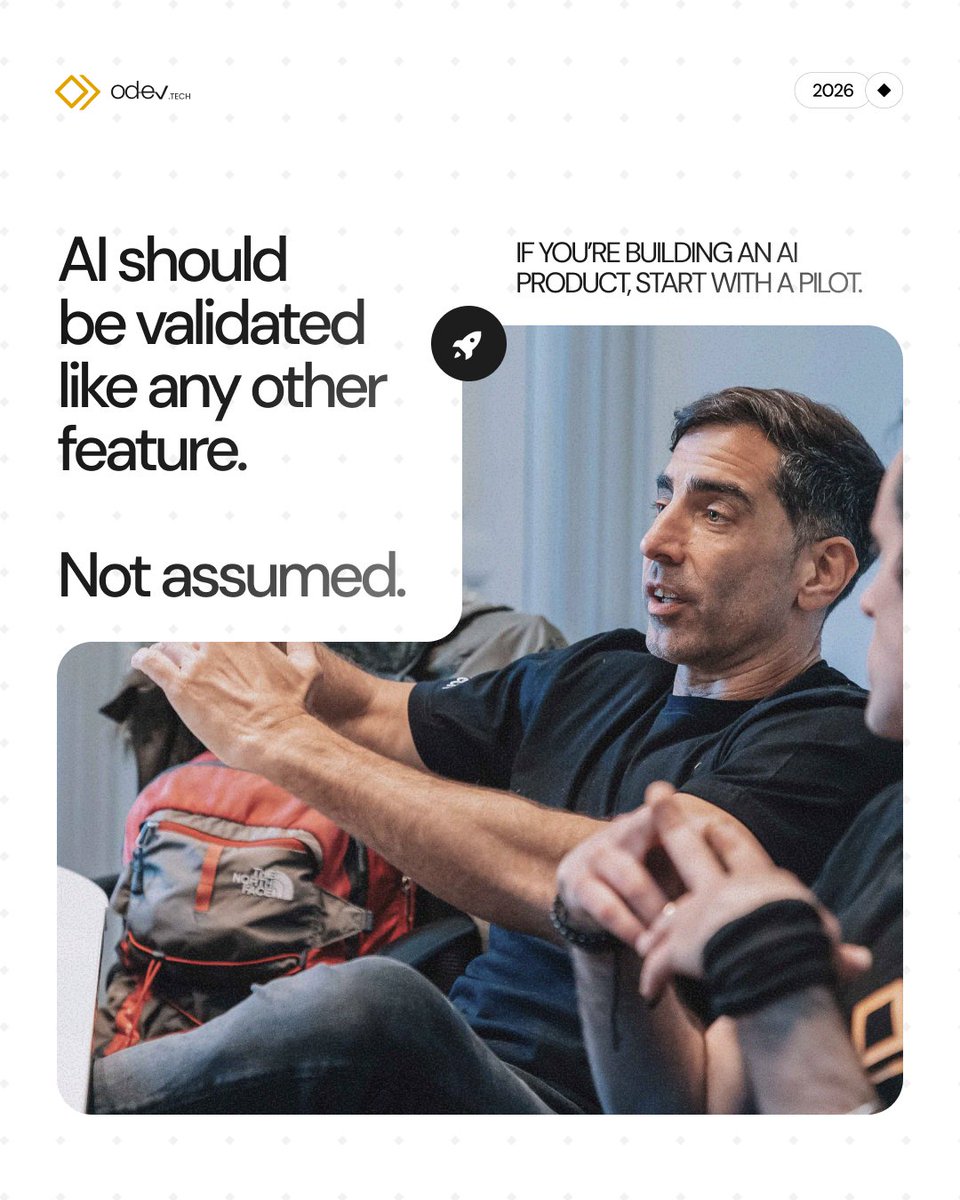
AI should be validated like any other feature.
Not assumed.
If you’re building an AI product, start with a pilot.
11
Apr 16
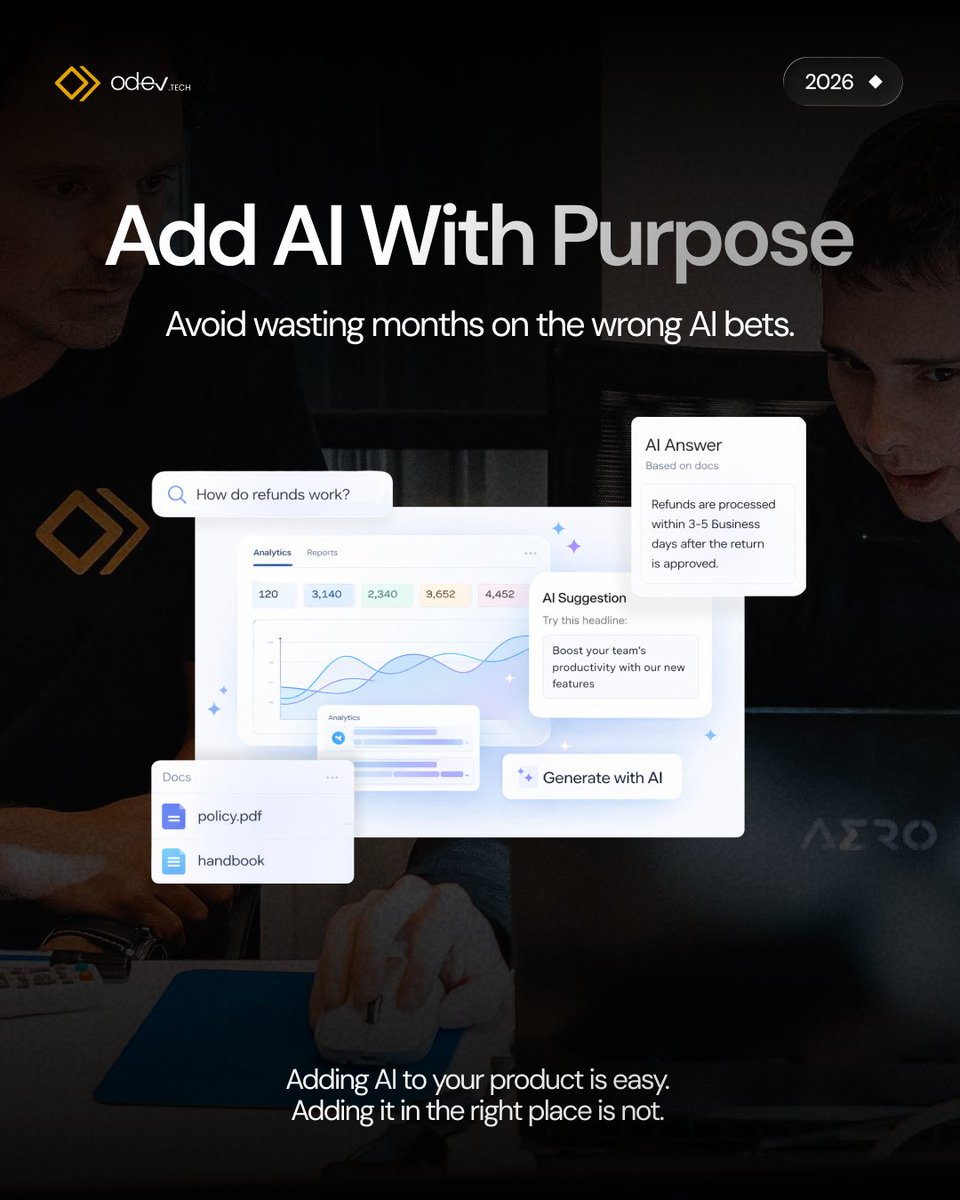
Adding AI to your product is easy.
Adding it in the right place is not.
Most startups don’t fail at AI because of technology.
They fail because they apply it in the wrong layer.
What we see:
AI added as a feature → no real usage
AI added too early → no clear ROI
AI added everywhere → product becomes confusing
Our approach is simple:
Before writing a line of code:
Identify where AI creates real value
Define 1 high-impact use case
Test it fast (not scale it yet)
That’s how you avoid wasting months on the wrong AI bets.
If you’re thinking about adding AI:
Start with clarity, not implementation.
Reply “AI” and we’ll help you map your best use case.
9
Apr 13
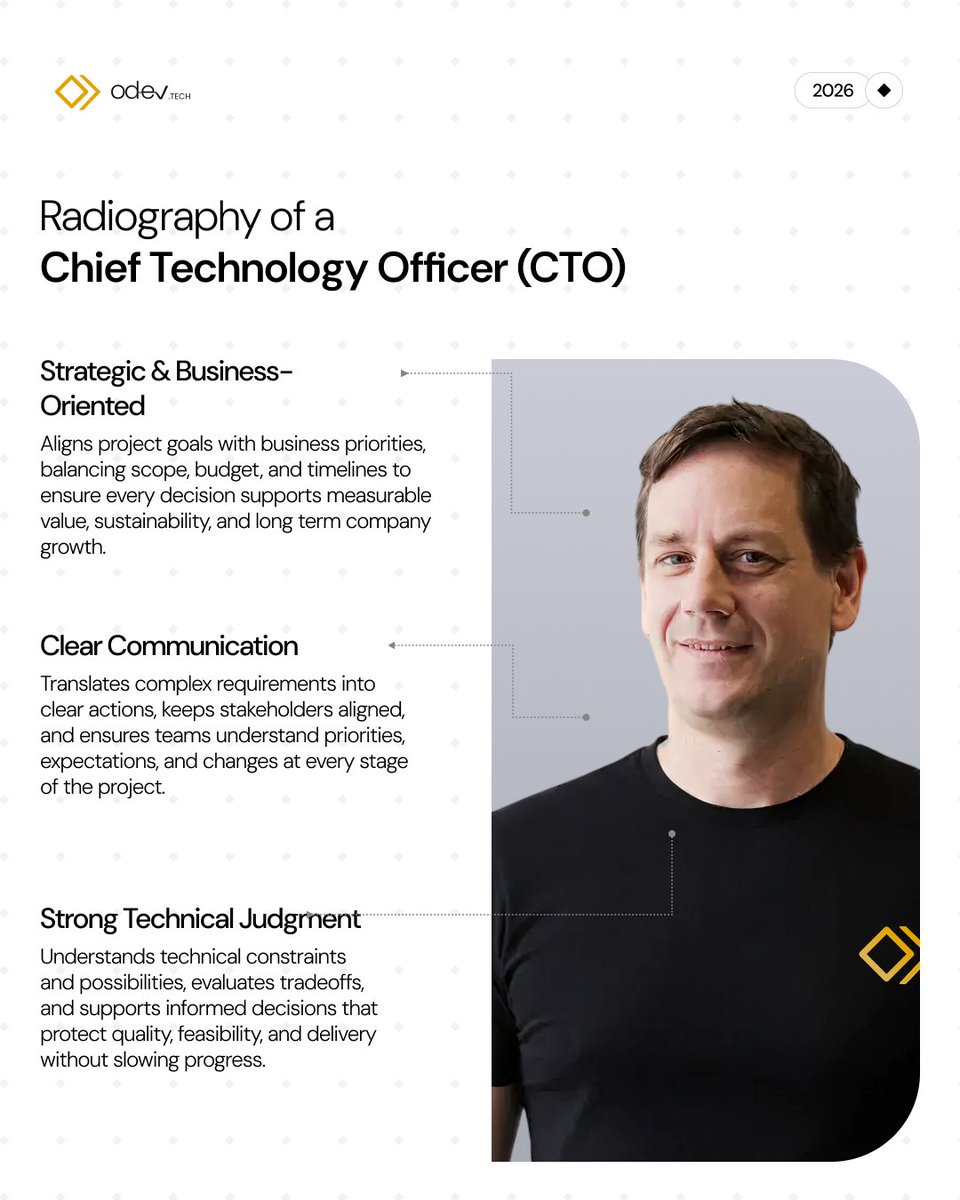
A great CTO sits right in the middle of business goals and technical reality.
At Odev.tech, we’ve learned that the best outcomes come from three things:
💼 Strategic and business oriented thinking
Not every feature is worth building. A strong CTO keeps scope, budget, and timelines tied to real business value.
🗣️ Clear communication
No mystery plans, no “we’ll figure it out later.” Just priorities everyone understands, from founders to developers.
⚙️ Strong technical judgment
Tradeoffs are constant. The right CTO protects quality and delivery at the same time, without slowing the team down.
If you’re scaling a product, these aren’t “nice to have.” They’re what keeps you from expensive detours.
What’s the best CTO trait you’ve worked with (or wish you had)? Drop it in the comments 👇
11
Apr 9
If you are a startup, you don’t just need to build. You need to build the right thing.
Right now, most teams are rushing to add AI into their product.
But the real challenge isn’t adding AI, it’s knowing:
→ Where it actually creates value
→ What to build first
→ How to avoid wasting time and budget
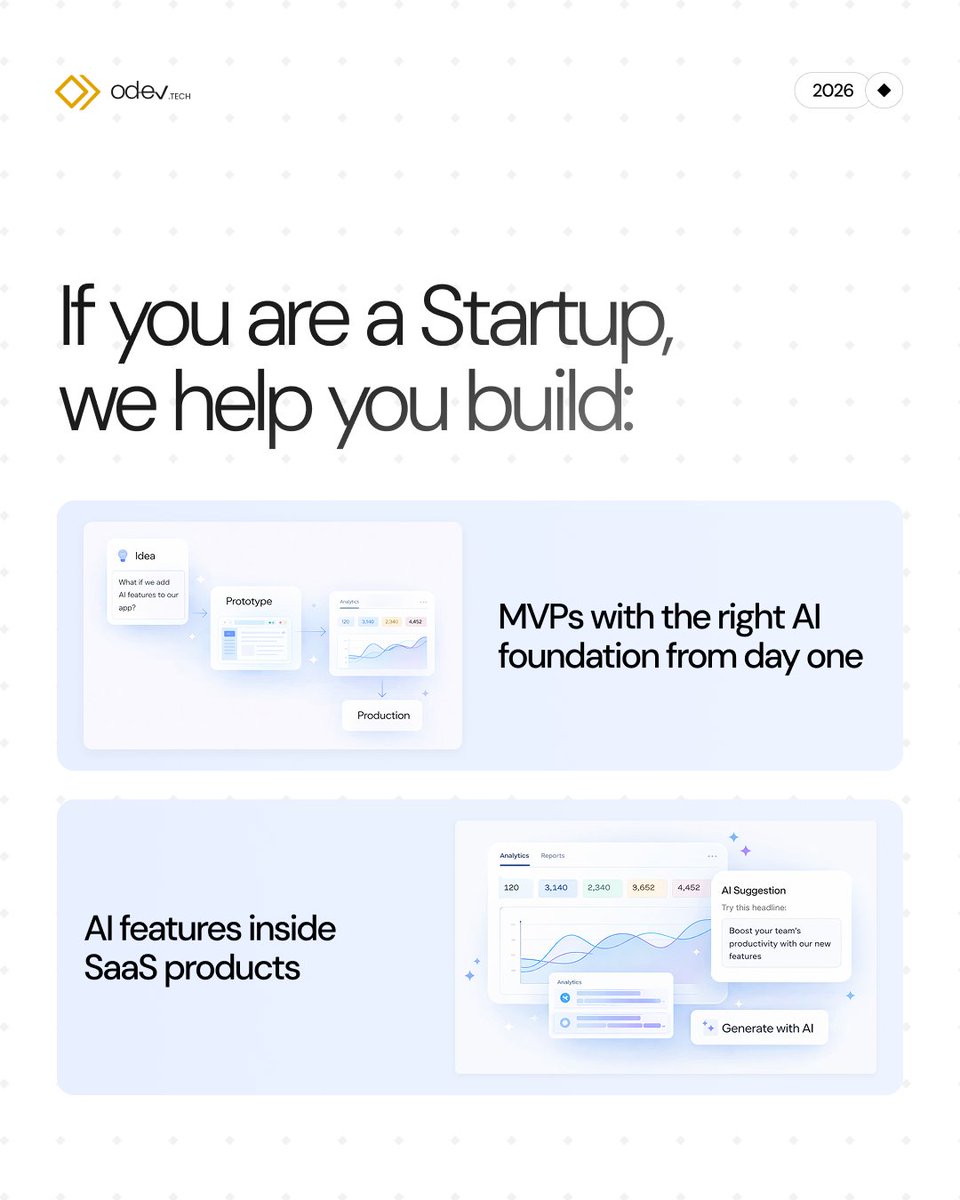
At Odev.tech, we help startups go from idea to AI-ready product with a clear path:
• MVPs with the right AI foundation from day one
• AI features integrated inside SaaS products
• Fast validation before full implementation
No hype. No unnecessary complexity.
Just clear decisions and predictable execution.
Because AI is not the product.
It’s part of the system you’re building.
If you're exploring how AI fits into your product:
Start with clarity, not code.
13