
Neuroscience of self-consciousness | Altered states | Meditation |Neuroprosthetics | Virtual Reality | Robotics/Haptics | @Neuro_X_EPFL | @Brainmind_EPFL
Joined May 2022
- Tweets 182
- Following 142
- Followers 1,350
- Likes 269
32 Photos and videos

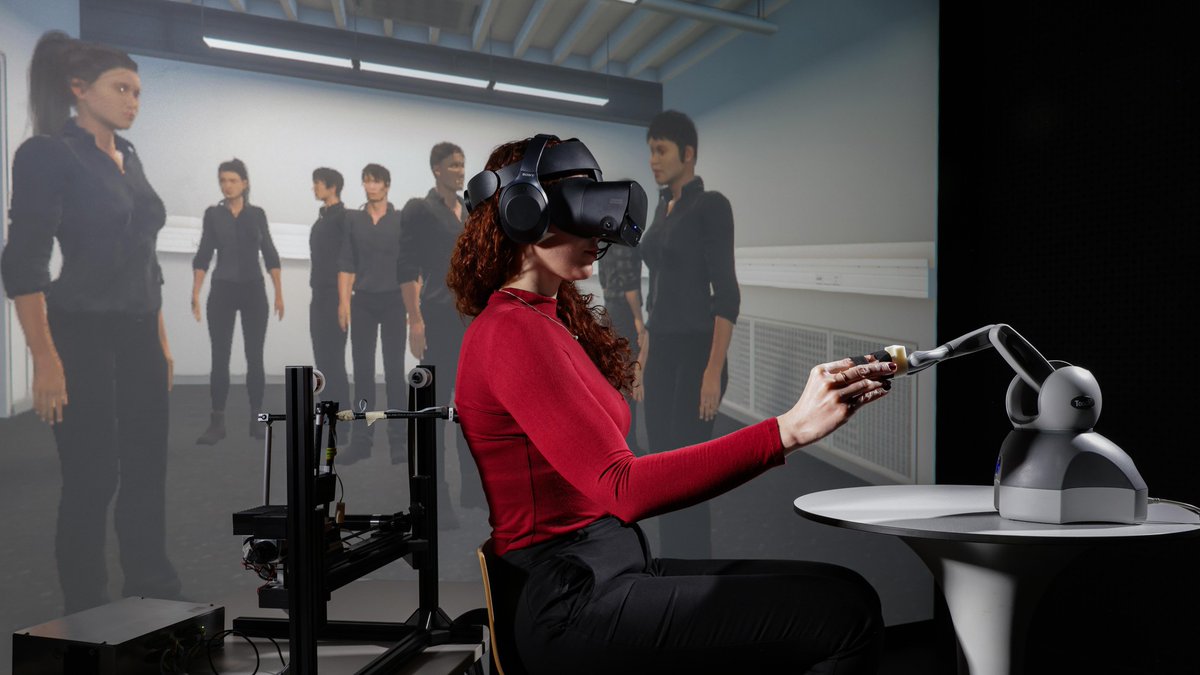
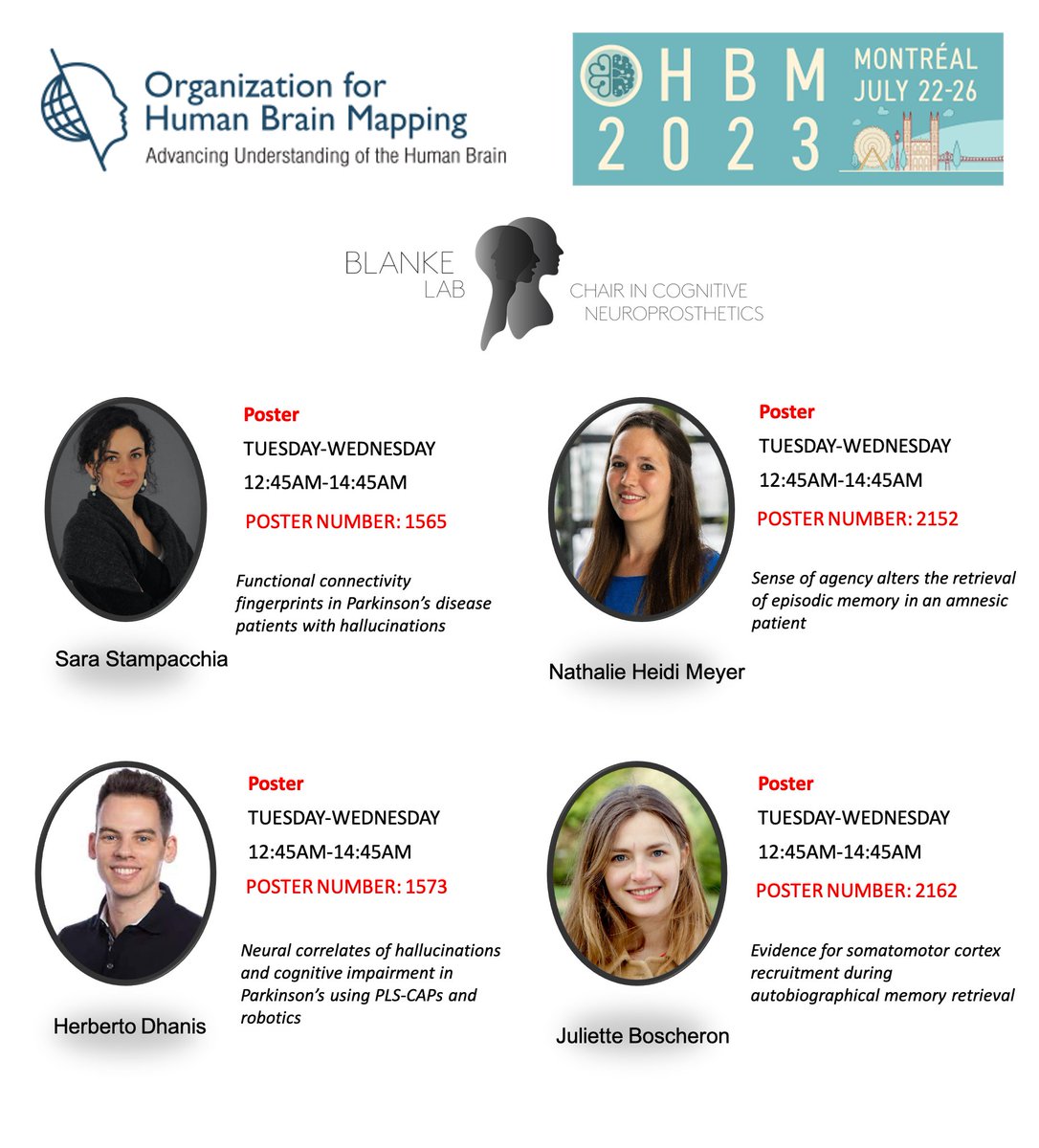


Jun 10
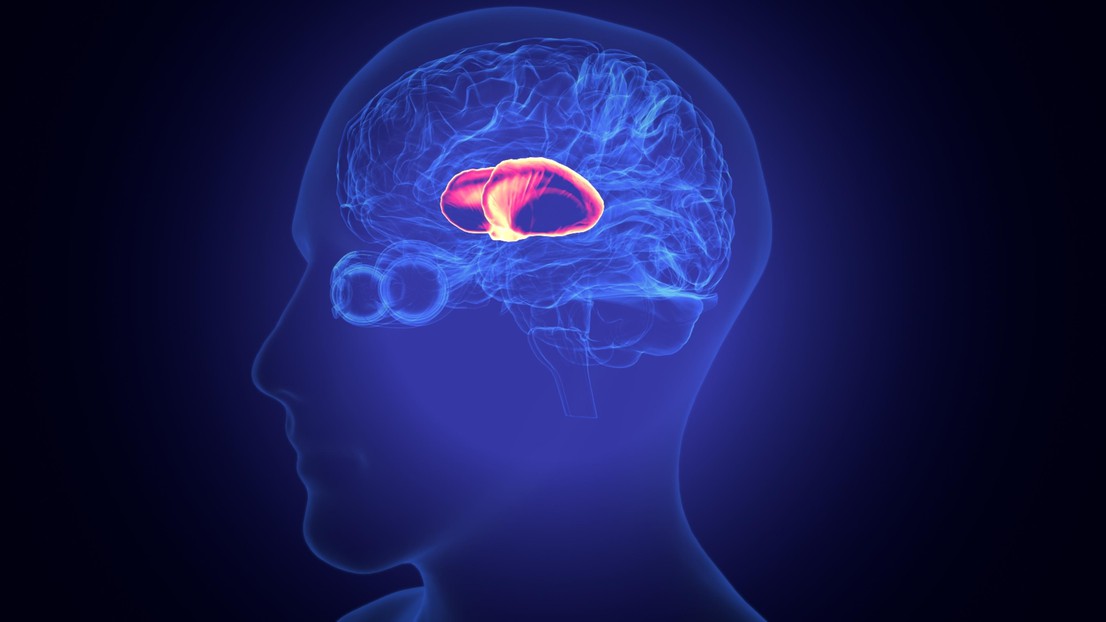
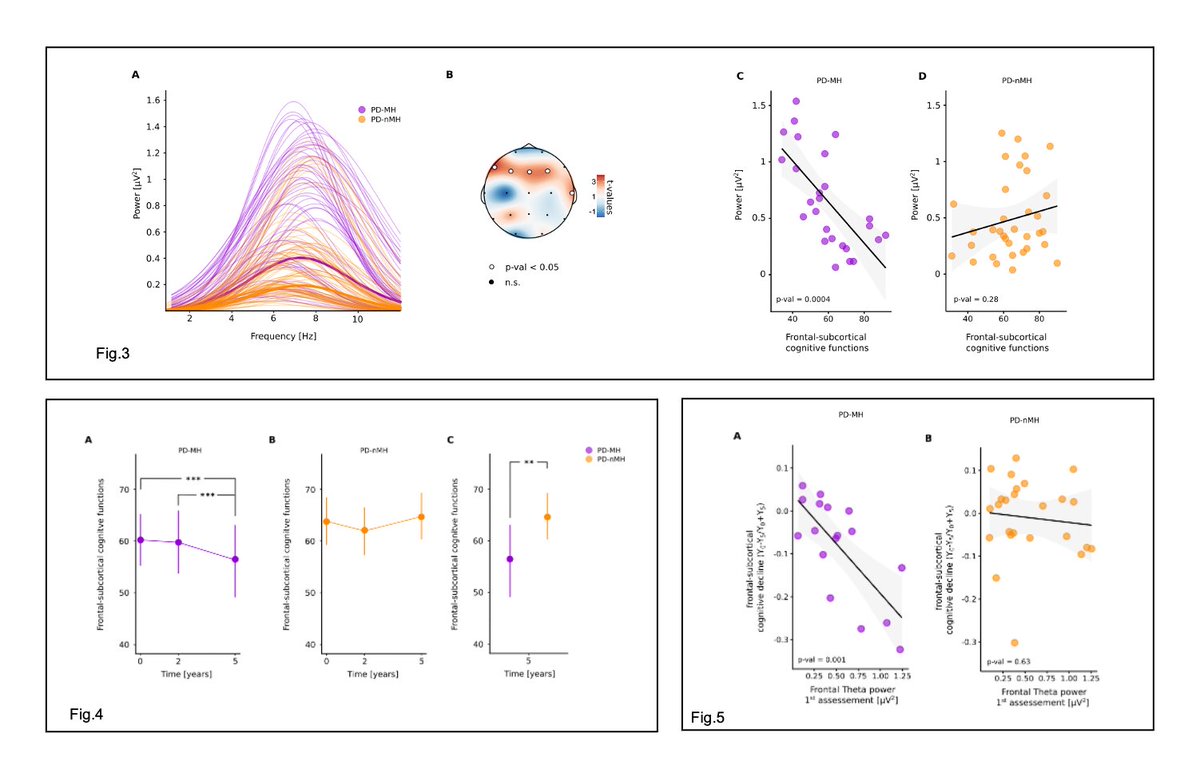
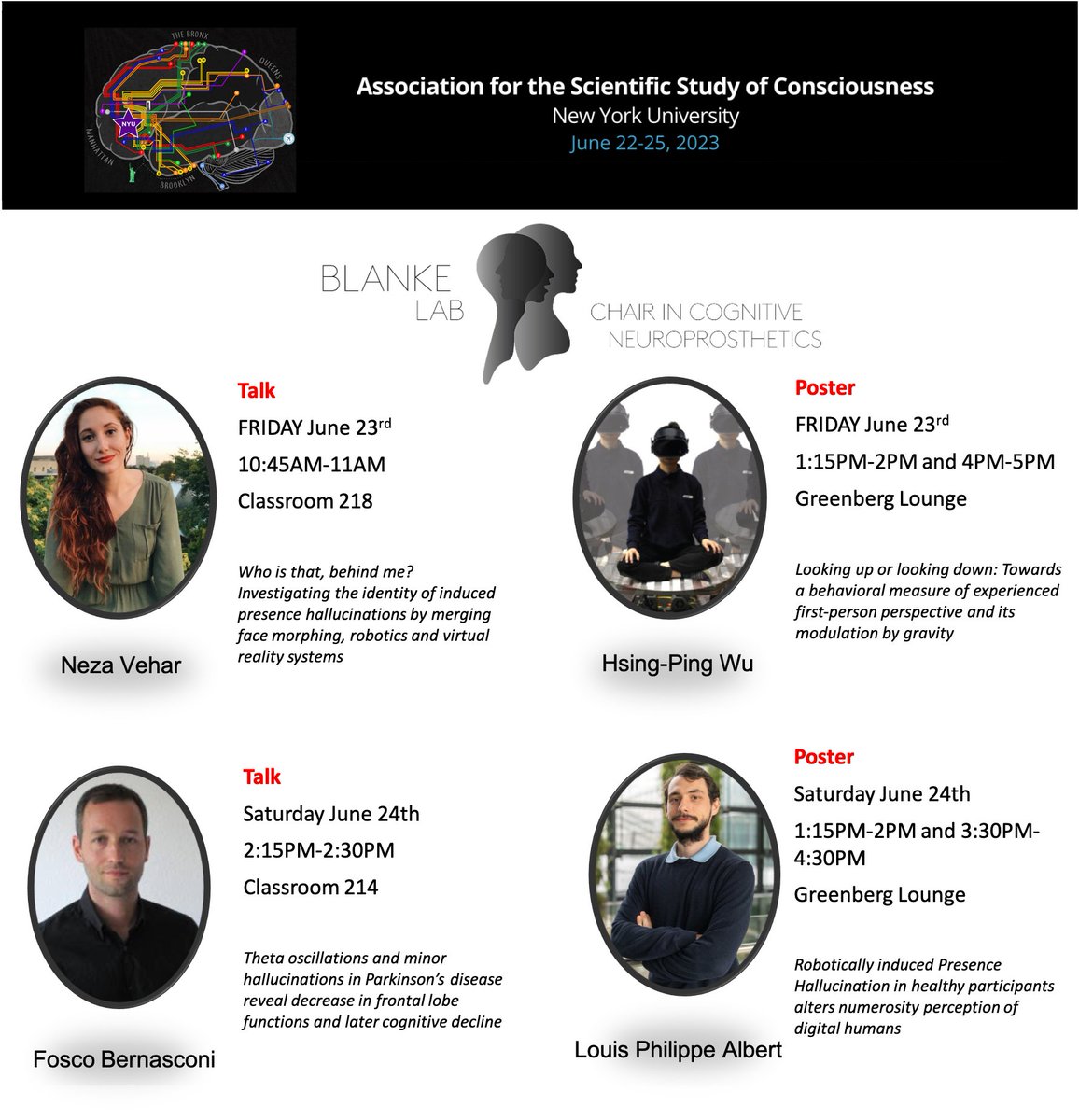
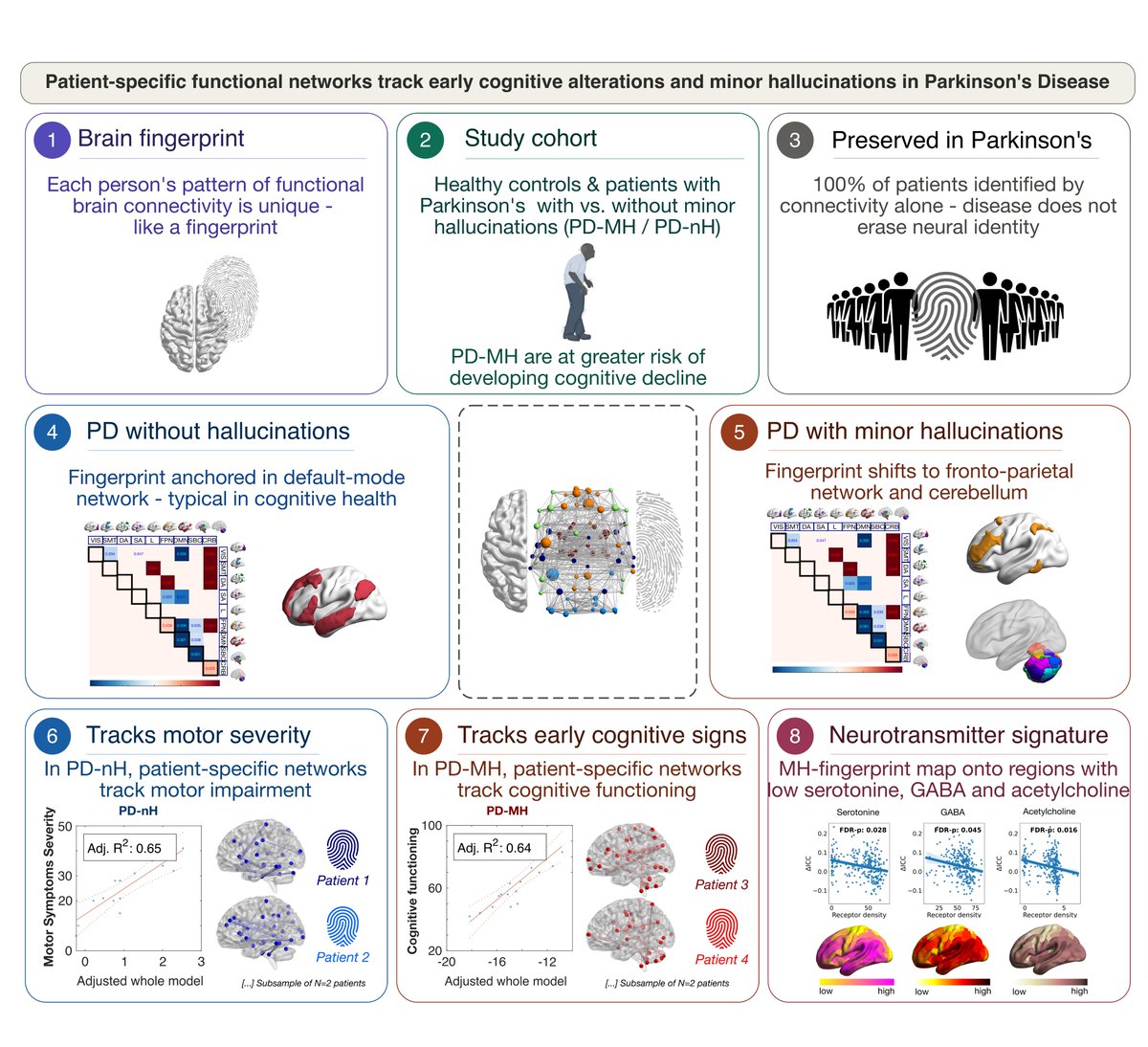
Thanks @epflSV @Neuro_X_EPFL @Brainmind_EPFL for promoting our latest work! 🧠 Led by @SaraStampacchia and published in @NatMentHealth, we reveal individualised neural substrates of early cognitive changes and minor hallucinations in Parkinson's Disease 👉 actu.epfl.ch/news/brain-scan…
1
3
5
455
Jun 10
Full paper here: nature.com/articles/s44220-0… or here: rdcu.be/fm8kx Special thanks to all co-authors for making this work possible @BernasconiFosco @Enri_amico @la_da_k @John_PaulTaylor Alan Thomas @javipagor Jaime Kulisevski
3
134
Blanke Lab retweeted
🧠 New paper in @NatMentHealth !
In Parkinson's Disease, we show that patients at risk of cognitive decline have a distinct brain fingerprint, and that patient-specific networks associate with clinical outcomes and neurochemical substrate.
Paper 👇
4
21
57
3,773
May 10
📰 Robotics to detect cognitive decline: our new study demonstrates that early cognitive dysfunction relates to minor hallucinations in Parkinson’s disease.
Read the full paper: 👇journals.sagepub.com/doi/10.…
4
289
Mar 20
Jevita Potheegadoo spoke at the “Rendez-vous Recherche” webinar on the 9th of March hosted by @FranceParkinson with 400 participants joining to learn about minor hallucinations and cognitive impairment. Watch 👇 youtube.com/watch?v=udSwHlwH…
2
320
Jan 15
📰New Paper out: Altered interoceptive brain mechanisms in Functional Neurological Disorder. Work led by Natascha Stoffel and conducted in collaboration with Prof. Selma Aybek from the University of Fribourg actu.epfl.ch/news/altered-in… #epfl
1
243
26 Sep 2025
Rare amnesic patient reveals body's role in autobiographical memory. Check out our new paper led by @nathalie_heidi and @BaboRebelo !
actu.epfl.ch/news/rare-amnes… #epfl
3
400
6 May 2025
🧠New paper out!
We show how motor cortex signals relate to free will, developing a new voluntary action paradigm and a brain-machine interface. A step closer to understanding how thoughts become actions — and making brain tech feel like body.
📄 doi.org/10.1371/journal.pbio…
5
17
768
6 May 2025
👥 Why do hallucinations in Parkinson's often feature people or animals?
Our new study finds patients over-perceiving people (but not control stimuli). We link this social bias to loneliness and anthropomorphism.
📄 doi.org/10.1177/1877718X2513…
1
5
452
22 Apr 2025
🧠 New study led by Tommaso Bertoni, published in @NatureComms, shows that pre-movement alpha oscillations shape the sense of agency by gating brain connectivity—using BMI and EEG.
📰 nature.com/articles/s41467-0…
@andrea__serino @DoctorAliRezai @EPFL_en @CHUVlausanne @WVURNI
8
34
1,734
17 Jan 2025
🚨 Research Assistant Position in Clinical Neuropsychology 🚨
Join us to study self-consciousness alterations in healthy & clinical populations 🧠✨
📍 Geneva | 🗓️ Start: 15/03/25 | 📜
Deadline: 15/02/25
🔗 Details & apply: careers.epfl.ch/job/GenÃ%A…
3
13
1,380
31 Oct 2024
Really excited to share our collaborative work with @HummelLab, led by the talented @BeanatoElena and Hyuk-June Moon, now published in @ScienceAdvances!
31 Oct 2024

🔥Our paper combining tTIS and VR during fMRI just made the cover of @ScienceAdvances
In collab. with @OlafBlankeLab, we show modulation of spatial navigation in healthy humans associated to changes in hippocampal activity and grid-cell like activity.
actu.epfl.ch/news/neurotechn…
5
22
1,916
Blanke Lab retweeted

18 Oct 2024
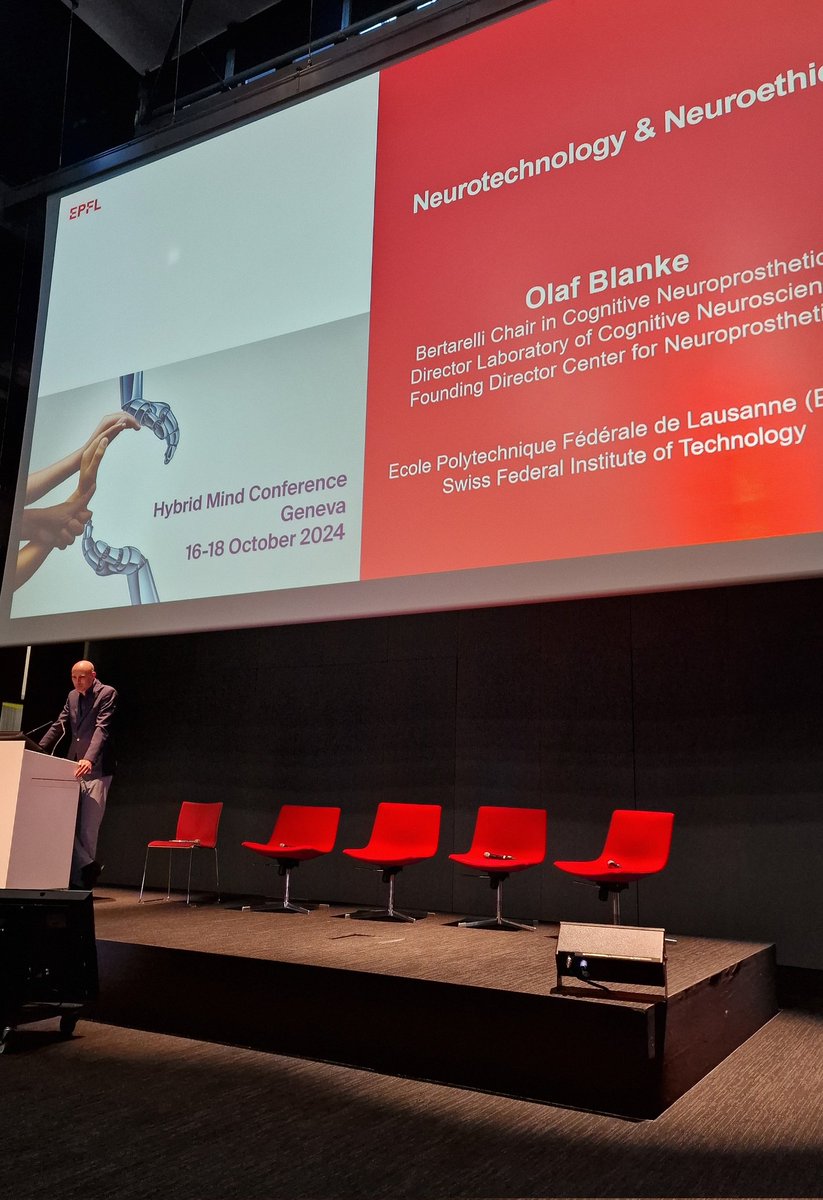
Olaf Blanke (@OlafBlankeLab) presenting exciting work on the sense of agency and paving the way to experimental approaches to #neuroethics questions at #HybridMinds @Neuro_X_EPFL @EPFLcdh
1
2
11
1,049
11 Oct 2024
Co-existence of two selves?
Fitting subjects with autonomous drones we show that two separate spaces of selfhood exist simultaneously at two distinct locations.
📰Preprint --> osf.io/preprints/psyarxiv/tf…
2
8
28
2,950
11 Oct 2024
Work led by Myeong-Seop Song (@seop_myeong), in collab with Andrea Serino (@andrea__serino), Oliver Kannape (Centre de médecine virtuelle CMV @hug_ge), and Dario Floreano (@DFloreano).
4
419
Blanke Lab retweeted

1 Oct 2024
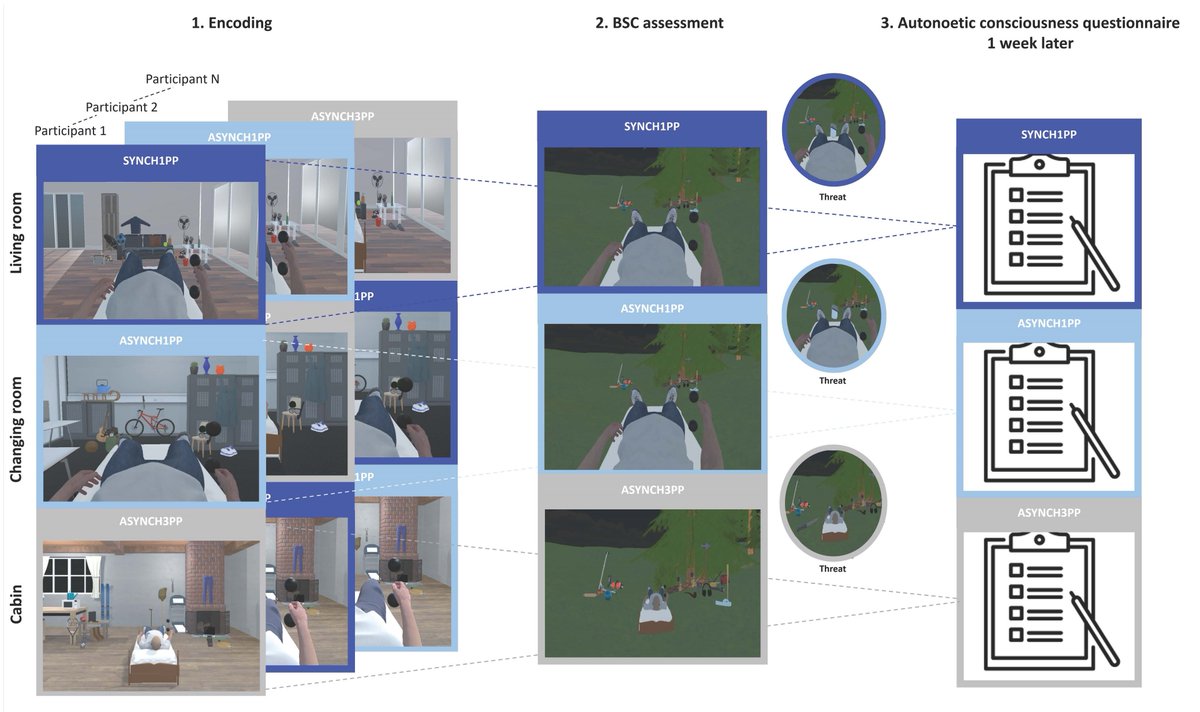
Recently published in #eNeuro: @nathalie_heidi @OlafBlankeLab et al. used virtual reality to assess how we subjectively relive past experiences. @Neuro_X_EPFL @Brainmind_EPFL
eneuro.org/lookup/DOI/10.152…
3
5
1,031
26 Sep 2024
We are happy to announce that the Franco Regli Award 2022/2023 went to Fosco Bernasconi (@BernasconiFosco)
Congrats Fosco!
actu.epfl.ch/news/franco-reg… #epfl
4
22
3,245
Blanke Lab retweeted

18 Sep 2024
Thrilled to see this work in @CommsBio!
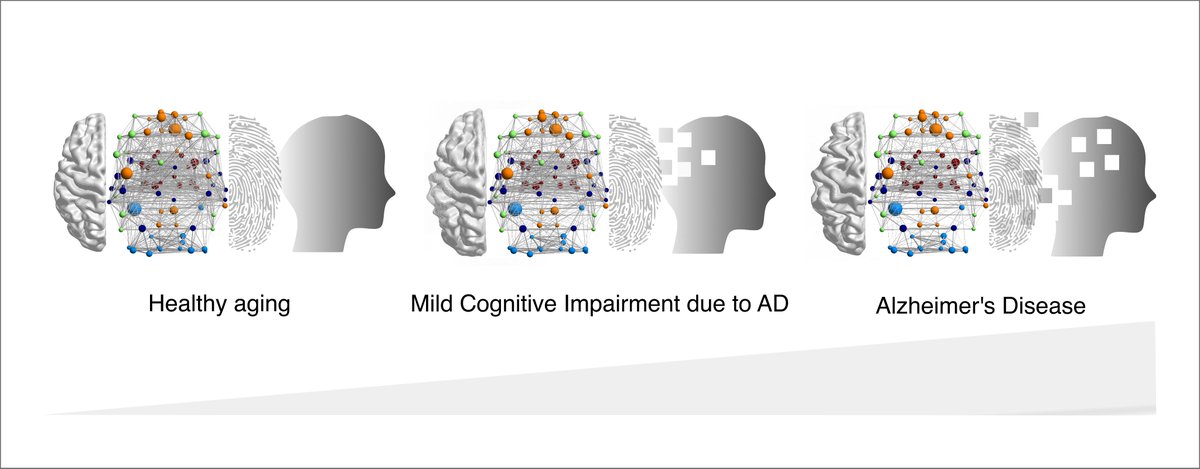
fMRI connectomes enable subject identification 👥 even in #Alzheimers
Brain #fingerprints remain unique but reconfigure as disease progresses, offering exciting potential to capture clinical heterogeneity!
📄 -> rdcu.be/dUjGy
2
7
26
2,070
Blanke Lab retweeted

14 Sep 2024
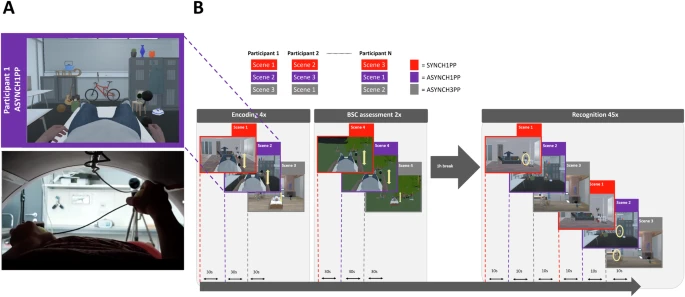
This study describes a premotor-hippocampal coupling in episodic memory, revealing how bodily sensory context and in particular, sense of agency of the observer at encoding is neurally reinstated during memory retrieval.
@OlafBlankeLab, @nathalie_heidi
doi.org/10.1038/s42003-024-0…
5
5
891
Blanke Lab retweeted
13 Sep 2024
fMRI-neurofeedback targeting a hallucination-related whole-brain network allows individuals to control its temporal properties & modify proneness to hallucination induction, showing promise for future therapies.
@HerbertoDhanis @OlafBlankeLab @dvdevill
doi.org/10.1038/s42003-024-0…
5
8
1,234