ManiacalLeft deserve ENDLESS MOCKING/RIDICULE-Btw, it’s a #MINDVIRUS 🧠🦠spread by gaslighting/brainwashing-they've known since'05(link) #AmYisraelChai🇮🇱🎗️🧡
Joined October 2008
- Tweets 217,879
- Following 2,186
- Followers 2,092
- Likes 87,294
Photos and videos
Pinned Tweet

15 Dec 2020
I would have been applauding! 👏👏👏👏👏👏
22
130
186
M.A.G.A.WeCaughtThemCOLD #SpaceForce🛰📡 retweeted

Jun 17
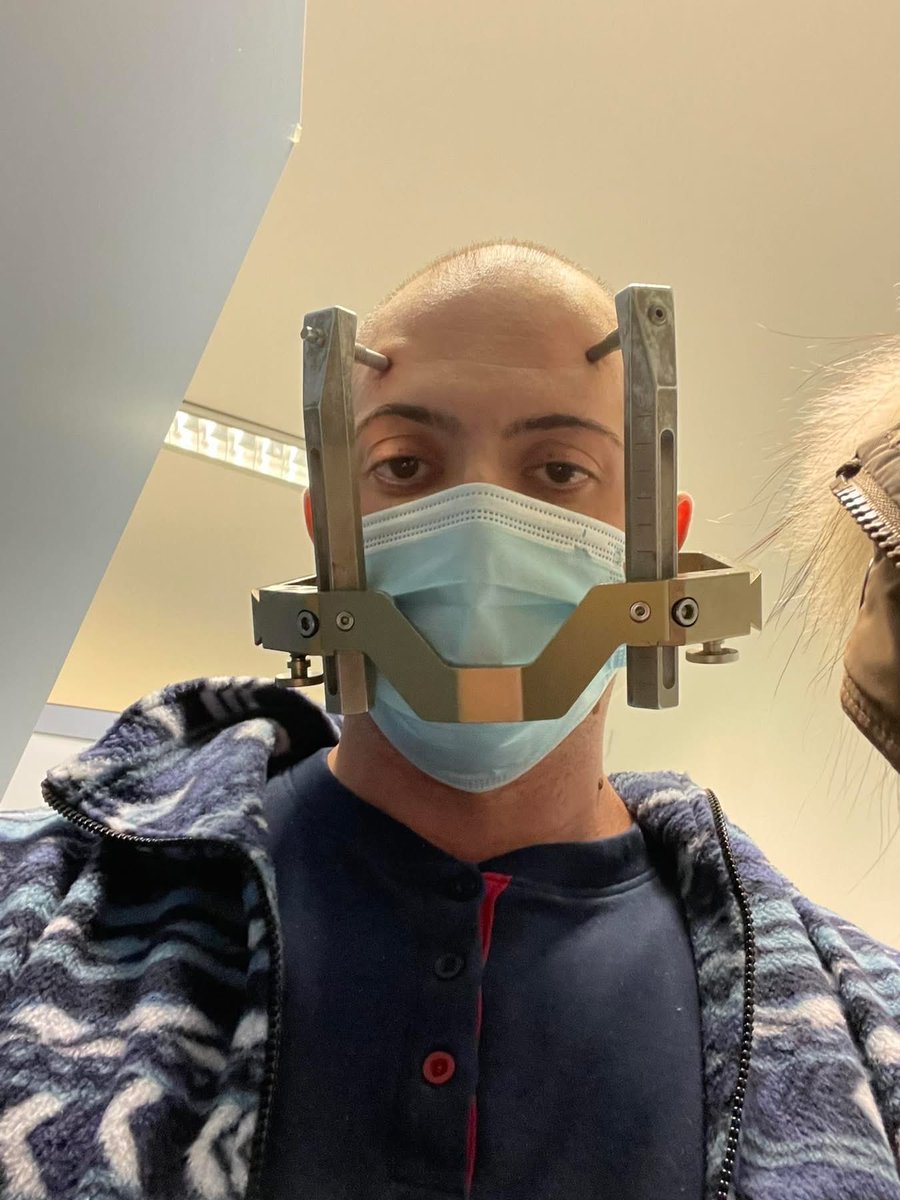
“Ho deciso di raccontare pubblicamente qualcosa di molto personale.
Nel 2022 durante la TAC, scopro di avere tre lesioni nella testa. Dopo lo smarrimento iniziale, mi viene consigliato senza esitazione e dicendo di fare la radioterapia perché la chemioterapia non arriverà mai alla testa. E gli effetti collaterali? “Meglio non pensarci”
Vedendo un secondo specialista. Stessa risposta. Identico verdetto: radioterapia, bisturi e rischi annessi.
Ma poi mio padre e mio fratello incontrano il medico curante. Gli racconta la sua storia e il medico li consiglia di rivolgersi al San Raffaele di Milano, al reparto di neurochirurgia del Prof. Mortini, che aveva già risolto un caso analogo in famiglia.
Mio padre e mio fratello riuscirono a incontrarlo pochi giorni dopo, durante una delle sue visite a Roma. Il Professore Mortini guarda le immagini della risonanza, li tranquillizza e li dice: “tuo figlio non ha tre lesioni nella testa ma ha solo una lesione. Niente radioterapia. Niente bisturi. Noi usiamo il Gamma Knife. Niente tagli. Solo raggi gamma che attraversano il cranio e distruggono la massa.”
Una settimane dopo la mia famiglia mi porta a Milano. Alle 8 del mattino mi mettono la struttura (mi vedrete nella foto). Mi fanno sdraiare sul lettino di un macchinario simile a una risonanza. Dopo un’ora e mezza, il trattamento è concluso. Me tolgono il "casco", mi portano in reparto, e otto ore dopo sono tornato a casa. Fine.
La lesione? Non c’è più.
Figuriamoci alcuni che non avevano mai sentito parlare del Gamma Knife.
Ho letto un’articolo che diceva che la prima macchina Gamma Knife arrivò in Italia 30 anni fa, proprio a Roma, grazie a un neurochirurgo visionario che si formò in America e dopo pochi mesi fu tolta di mezzo, chiusa in un seminterrato e... dimenticata. Dava fastidio a troppe persone.
Eppure il Gamma Knife non serve solo per i lesioni, ma anche per molti tipi di tumori.
Cercate su Google:
"Gamma Knife - Radiochirurgia Stereotassica - Prof. Mortini"
Voglio condividere e fate girare questa storia. Potrebbe evitare a qualcuno un intervento inutile. Potrebbe, semplicemente, salvarlo.
"Se anche solo una persona, leggendo questo, potesse avere un'altra possibilità... allora ne sarà valsa la pena."
Manuel Meniconi”.
258
3,442
8,559
451,032
M.A.G.A.WeCaughtThemCOLD #SpaceForce🛰📡 retweeted

IMPORTANT: More Aurora Anti- ICE Leftists ID'd
Corrupt Aurora Insider Network: Mayor Laesch’s Signal Chat TRAITORS to America Exposed
The June 2026 leak of the ~394-member ARRT-linked Aurora Signal group is blowing up — and it’s even more disgusting than we thought. Activist Mayor John Laesch isn’t running this anti-ICE war room alone. Screenshots from inside the very chat expose his fellow saboteurs: professionals hiding behind respectable jobs while coordinating obstruction of federal law enforcement.
The exposed insiders include:
SHEENA CABALLERO, Corporate Buyer at Core-Mark International in Naperville. Her full LinkedIn profile was proudly circulated in the group as proof she’s embedded in the Signal activist network.
MELISSAFLORES, a UIC student majoring in Finance and Management, directly tied to the City of Aurora, IL. Her profile was dumped right into the chat — a city-connected employee operating in the same secret group as her boss, the mayor.
KAVITA ADATIA, MsEd, LCPC, PEL, Clinician at Linden Oaks Behavioral Health (tied to Northern Illinois University / Endeavor Health) in Aurora. Her detailed professional credentials and profile were shared as confirmation of her involvement in the resistance chat.
This is outright betrayal. A City of Aurora insider like Melissa Flores jumping into a secret Signal group that fights and criticizes federal law enforcement — while Mayor Laesch himself brags about stalking ICE agents on I-88 and tailing them to Broadview Detention Center — proves a toxic top-down pattern. When the mayor leads from the front in this shadow network, it tells city employees it’s open season to obstruct enforcement and undermine public safety.
Do Core-Mark International, the City of Aurora, and Linden Oaks Behavioral Health / Endeavor Health have any clue their employees are using work time, professional titles, and credentials to fuel this encrypted rapid-response sabotage operation against ICE? Or are they fine with it?
These chat comments leave zero doubt — these people were actively being ID’d and verified as members. This isn’t “community advocacy.” It’s a corrupt shadow network enabled straight from the mayor’s office.
Taxpayers and shareholders deserve immediate investigations. Fire up the petitions, blast this on Behind Enemy Lines, and hold every last one of them accountable. The activist mayor and his Signal squad are exposed — time to clean house in Aurora.
This is pure fire for recall signatures and your next episode.
@patrioticmouse @JamesOKeefeIII @BenBergquam @RealTomHoman @HomanNews @SaraCarterDC @VictorAvilaTX
4
77
113
2,437
M.A.G.A.WeCaughtThemCOLD #SpaceForce🛰📡 retweeted

Jun 16
HOLEE SHIZZLES‼️A TRAP IS SET!
🚨 Obama Can now be summoned before a Grand Jury, but he CANNOT Plead the 5th because he has immunity from Prosecution
“He HAS TO TELL THE TRUTH… if he lies as a private citizen about what he did as President, he will not longer have that immunity. And that is the TRAP that Obama is potentially facing.
The irony is that on January 5, 2015, Obama presided over a meeting in the White House where the FBI just cleared General Mike Flynn of any wrongdoing.. and they schemed in that meeting how they might jam up @GenFlynn .
That’s when they came up with the idea to lure him into an interview, catch him in a lie, and then prosecute him that way.
Barack Obama now is about to face a similar situation,”
BOOMERANG 🪃 💥
FOLLOW @John17thletter_ THE NEXT DROP WILL BE SHOCKING
616
8,476
27,157
681,741
M.A.G.A.WeCaughtThemCOLD #SpaceForce🛰📡 retweeted

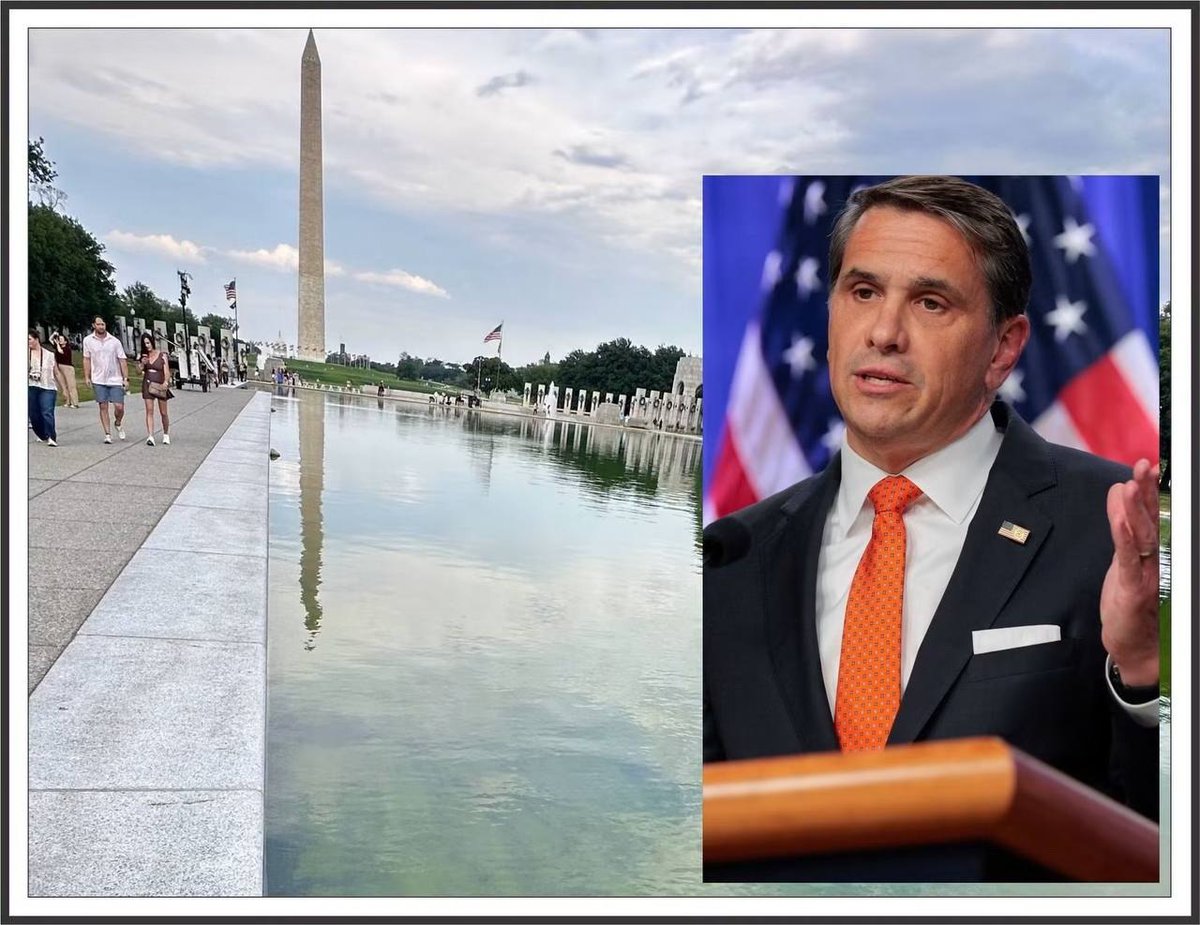
🚨ANTIFA TERRORIST SCUM WHO DUMPED TOXIC ALGAE IN THE LINCOLN MEMORIAL REFLECTING POOL ARE NOW BEING CHARGED WITH FEDERAL HATE CRIMES — AND COULD GET 20 YEARS IN PRISON THANKS TO AG TODD BLANCHE!
This isn’t just vandalism anymore.
The two Antifa operatives caught on camera dumping buckets of aggressive Georgia algae into the Reflecting Pool at 3 AM are now facing federal hate crime charges.
Attorney General Todd Blanche didn’t mince words: “This wasn’t just sabotage. This was a blatant attack on Americans and our values.”
Adding the hate crime enhancement means mandatory sentencing up to 20 years if they’re convicted. Blanche says they have “a truckload of evidence” against them.
These domestic terrorists thought they could defile one of America’s most sacred monuments in the middle of the night and get away with it. Wrong.
They didn’t just pollute the water — they attacked a national symbol of freedom and honor. Now they’re going to pay the price.
This is what real justice looks like under President Trump’s DOJ.
Share this everywhere and let every Antifa piece of shit see that their days of attacking America with zero consequences are OVER!
Follow @UnmaskTheSys for more drops.
1,428
10,209
27,077
258,890
M.A.G.A.WeCaughtThemCOLD #SpaceForce🛰📡 retweeted

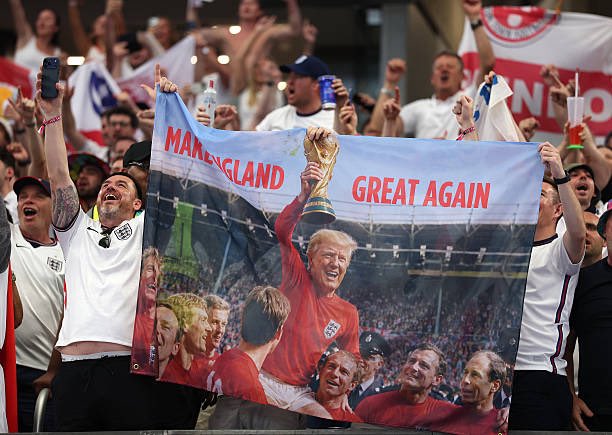
England fans celebrate their victory against Croatia by holding up a Donald Trump banner at the World Cup 😂🔥
322
4,038
27,862
295,351
M.A.G.A.WeCaughtThemCOLD #SpaceForce🛰📡 retweeted

Facts:
Obama didn’t get rid of the Iranian leadership, didn’t lay a finger on their military assets but trusted them with a deal worth billion$.
Trump got rid of the Iranian leadership, devastated their military and nuclear program and then started over with a diplomatic deal that will secure America’s future.
This is how it is done.
We’ve never had a President mixing military action and diplomacy so seamlessly.
1,384
2,483
9,023
133,398
M.A.G.A.WeCaughtThemCOLD #SpaceForce🛰📡 retweeted

🚨 JUST NOW: White House releases footage of President Trump FORMALLY SIGNING the Iran peace memorandum of understanding in Versailles, France — as he departs for America
MARCO RUBIO right behind him 🔥
The whole room burst into applause, LFG! He did it! @WhiteHouse
645
1,835
7,876
290,974
M.A.G.A.WeCaughtThemCOLD #SpaceForce🛰📡 retweeted

Dammmn President Trump is pulling no punches today!
17
259
1,409
32,768
M.A.G.A.WeCaughtThemCOLD #SpaceForce🛰📡 retweeted

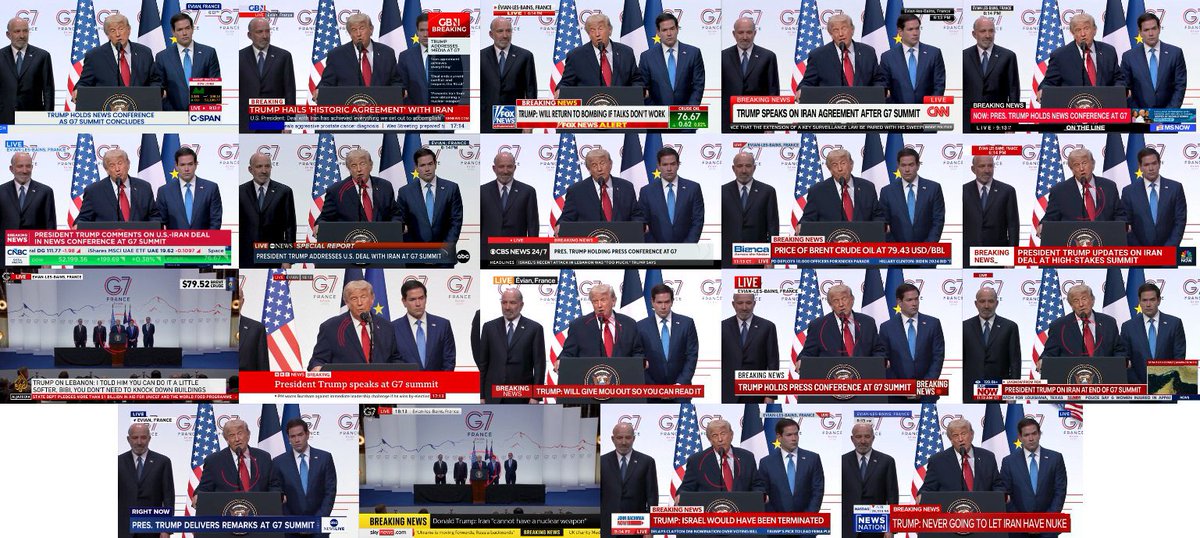
While at the G7, in front of media from all over the world, Trump said that Obama paved the way for Iran to obtain nuclear weapons, and that their plan was to destroy Israel and the entire Middle East.
Trump just revealed the big secret to the world.
CLASS IS IN SESSION! THE WORLD IS BEING BRIEFED!
It’s not just the American People Trump is talking to. He’s talking to the entire world. The global public are being prepared for world-altering news. The world must be informed of the great criminality that took place, BEFORE there can be justice. The landing must be soft and gradual.
Trump is preparing the world for what must be done. Obama, and all those involved in supplying Iran with nuclear weapons, must be held accountable.
Trump just prevented WW3 and saved the world, and it was the Obama administration and their global crime syndicate that were behind the plot.
While the world watches…
95
2,081
6,049
50,801
M.A.G.A.WeCaughtThemCOLD #SpaceForce🛰📡 retweeted

Jun 17
Dana Williamson, former Chief of Staff to Gavin Newsom, took a plea deal and is turning state’s evidence against him and others. That’s why he’s so nervous!
Prosecute Newsom and his wife fully?
A. Yes
B. No
3,193
9,595
31,541
264,816
M.A.G.A.WeCaughtThemCOLD #SpaceForce🛰📡 retweeted
The Shadow Network: Aurora, IL, MAYOR JOHN LAESCH and the Secret Signal Chat Exposed
In the heart of Aurora, Illinois — a city grappling with rapid demographic shifts, crime concerns, and federal immigration enforcement — a private Signal group chat has emerged as a command center for coordinated activism. Dubbed internally with ties to the Aurora Rapid Response Team (ARRT), this ~394-member encrypted channel isn’t just casual discussion among neighbors. It connects local officials, educators, activists, and organizers in real-time alerts on “ICE sightings,” protests, and rapid mobilizations.
The exposure came via investigative journalism in the style of James O’Keefe’s operations. Screen recordings of the group’s member list began circulating on X (formerly Twitter) on June 16, 2026, shared by @patrioticmouse. These videos captured scrolling views of display names, profile pics, pronouns, statuses, and handles — revealing a tight-knit network operating behind the scenes.
The parallel “bleaching” in a New Jersey Antifa-linked group (“LIZZY PORT PROTEST”) — where members were mass-removed after O’Keefe’s probe — suggests these exposures are part of a broader pattern. In Aurora, the chat remains active but has slowed, with members “aware of infiltration.” An Elgin-area sister group (~269 members) was declared “tango down,” implying disruption or self-purging.
The Damning Details
Among the visible members: John Laesch, the sitting Mayor of Aurora (elected April 2025). His presence in this activist coordination channel raises serious questions about the separation of official duties from partisan rapid-response efforts. Laesch, a former Alderman and school board member with a Navy intelligence background, has publicly navigated ICE-related protests and migrant issues in Aurora.
This isn’t hypothetical involvement. In May 2026, Laesch openly bragged about tracking and following ICE agents. He posted a video and updates showing real-time locations: “ICE in Aurora today. Currently following them on I-88 Eastbound. Patrollers are canvassing the neighborhoods near Laurel Dr. and Lilac on the west side.” He later added that he had “followed the agent back to Broadview and lost him,” while urging Aurorans to “stay vigilant as there might be others in the area.”
This drew widespread condemnation, including from conservative accounts like Libs of TikTok and Illinois state Rep. Adam Niemerg (who called for Laesch’s resignation), who labeled it doxxing that endangers federal officers and obstructs lawful enforcement. The actions amplified accusations that the mayor was actively interfering with immigration operations while in public office.
ARRT’s public mission — “educate, advocate, & investigate on behalf of our immigrant & refugee neighbors” — includes Signal alert channels for real-time ICE activity reports, directing members to scenes, hotlines, and documentation. Critics argue this functions less as neutral community support and more as an opposition intelligence and mobilization network against federal law enforcement — potentially at odds with public safety and the rule of law in a city facing real challenges.
The member list scrolls reveal a who ’s-who of local involvement: admins marked with roles, users with protest emojis and statuses like “Viva el Pueblo,” educators, and descriptors signaling direct action. Phone numbers in the related Elgin group (heavy 630/224/331 suburban IL codes) further tie it to the metro area. This isn’t fringe; it’s reportedly inclusive of “high-ranking city officials and local educators.”
How It Was Found
These chats surface through classic infiltration tactics common in O’Keefe-style reporting: sources inside activist circles, leaks, or direct access during moments of overconfidence. Signal’s end-to-end encryption protects content, but member lists and metadata are visible to participants — and screenshots travel fast once trust breaks. The NJ precedent shows groups “bleach” (delete/remove) frantically post-exposure to cover tracks. Aurora’s group, per the poster, is in a holding pattern: slower activity, heightened paranoia.
For a city mayor to participate in such a channel — while his administration issues public statements on ICE sightings and protests, and he personally tracks agents on highways and follows them to the Broadview ICE Detention Center — fuels accusations of dual loyalty: one to constituents demanding order, another to an activist apparatus that mobilizes against enforcement. Past controversies around Laesch (e.g., communications on policing, fireworks posts, and ICE-related scrutiny) add context to perceptions of misalignment with broader public priorities.
This exposure spotlights tensions in Illinois suburbs: sanctuary-style policies vs. federal immigration action, activist opacity vs. transparency expectations for elected leaders, and the use of encrypted tools by public figures. Supporters of ARRT see it as vital protection for vulnerable families; detractors view it as enabling obstruction, interfering with potential witnesses, or conferring unaccountable power.
@JamesOKeefeIII @RealTomHoman @HomanNews @GregBovino #ICE @AuroraILChamber @WGNNews @ABC7Chicago @GodPricker @JackLombardi_ii @anjewla90 @IlliniJen
21
303
457
14,529
M.A.G.A.WeCaughtThemCOLD #SpaceForce🛰📡 retweeted

Jun 16
🔥 THEY TOLD YOU ANTIFA WASN'T ORGANIZED
THE MASKS JUST CAME OFF — AND THE FACES BEHIND THEM ARE STAGGERING
For years, politicians and media stenographers fed you the same tired line: Antifa isn't an organization. It's just an idea. There's no structure, no leadership, no coordinated agenda.
James O'Keefe just spent eight months inside their Signal chats and proved every word of that was a lie.
The undercover footage from O'Keefe Media Group's infiltration of "NJ BURN" — a New Jersey Antifa cell — reads less like a fringe extremist expose and more like the guest list of a Davos afterparty.
These aren't random street-level anarchists. These are people embedded in the very institutions that shape American life.
🎭 THE ROSTER: NOT YOUR AVERAGE "UNORGANIZED" MOB
Let's look at who was in those Signal chats, discussing road spikes, tire-slashing of police vehicles, "Ukrainian-style" protest tactics, and the Port Newark–Elizabeth blockade riot. 👇👇👇👇
Jun 16

O’KEEFE INFILTRATES NJ ANTIFA: Inside “NJ BURN” — Rutgers University Director, T-Mobile AI Leaders, OpenAI /ChatGPT Engineer, Reverend From Princeton Theological Seminary, and ACLU Board Member Discuss Port Newark–Elizabeth Blockade Riot, Road Spikes, Tire-Slashing of New Jersey Police Vehicles, “Ukrainian-Style” Protest Tactics, and Celebrating Charlie Kirk’s Murder.
NJ ANTIFA INDIVIDUALS IDENTIFIED:
• Alexyss P. - New Jersey Coalition Against Sexual Assault Community Council Member @NJ_CASA
• Jim Keady @JWKeady - Former New Jersey Democratic Candidate
• Woojin Ko - OpenAI Research Engineer @OpenAI
• Beleckecom Moffouk - T-Mobile AI Automation Expert @TMobile
• Zainab Tanvir - Imaging Director at Rutgers University @RutgersU
• Amanda Marie Dominguez - Rutgers University PHD Student in Education @RutgersU
• Aditi Rao @aditilrao - Princeton University Classics @Princeton
• Shannon Smythe - Princeton Theological Seminary Field Education Director @Princeton
• Cres Vellucci @CresVellucci - National Lawyers Guild Co-Founder/Co-Member & ACLU Board Of Directors @NLGnews @ACLU
• Celine Semaan @celinecelines - Co-Founder Slow Factory Labs @theslowfactory
152
7,521
14,331
210,543

This is an interesting development.
Don’t miss the important SIGNAL.
FISA is the KEY.
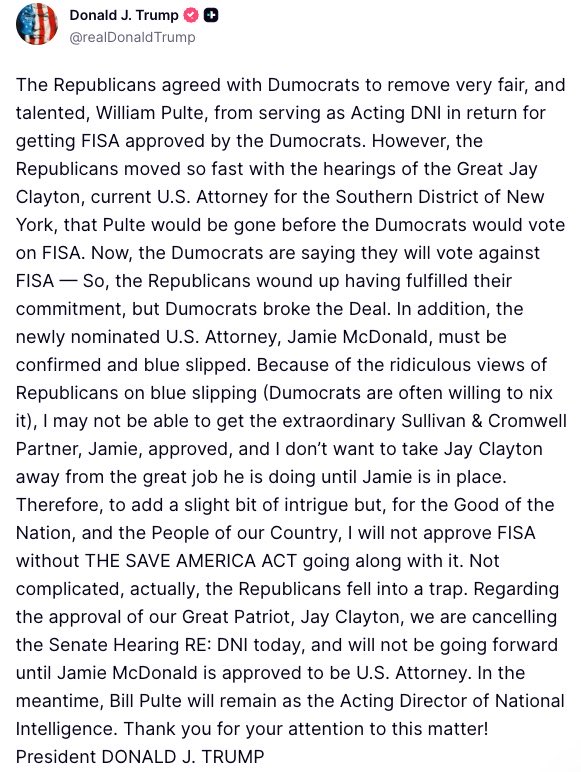
Trump knew that placing Pulte as “acting” DNI would cause instant panic in DC, because he’s loyal to Trump and has already exposed some big government officials for mortgage fraud.
There was panic on both sides of the aisle over Pulte, so Trump nominated Jay Clayton from the SDNY to replace him.
Trap set.
The democrats offered to renew FISA, if the republicans quickly confirm Clayton.
FISA goes both ways.
But the democrats don’t like Clayton either.
Remember, AG Barr nominated him to head SDNY in Trump’s first term and Geoffrey Berman refused to step down from the position until someone was confirmed.
Clayton was then pulled from consideration because he wasn’t likely to be confirmed.
So Berman’s deputy was then nominated and confirmed.
Trump and Bondi placed Clayton as head of SDNY early in Trump’s second term and he was confirmed.
Mission accomplished.
Once Trump nominated Clayton to replace Pulte, the republicans quickly moved to confirm him.
But look what happened.
Now the democrats are refusing to pass the FISA renewal.
Really?
Who holds the leverage?
Trump holds all the cards.
He’s trapped the democrats again.
Here’s something most people don’t know.
It doesn’t matter whether or not the democrats vote to renew FISA.
Why?
(Brave search engine)
“FISA Section 702 surveillance continues operating even if the statutory authorization lapses, because the Foreign Intelligence Surveillance Court (FISC) issues annual programmatic certifications that remain valid independently of Congress's renewal timeline.”
“The FISC renewed these certifications in March 2026, allowing collection to proceed legally until approximately March 2027 regardless of the statute's June 12, 2026 expiration.”
—————
Checkmate!
The democrats have zero leverage and Trump can wait until after the Republicans win the midterms, to renew FISA.
And now Trump is upping the ante.
He says he “trapped” the republicans too.
He pulled Clayton’s nomination until his replacement at SDNY is confirmed.
Trump wants Jamie McDonald confirmed as head of SDNY first.
Why?
SDNY is overseeing a whole lot of important conspiracy investigations and Trump is going to maintain control of that office.
Who is Jamie McDonald?
He served as Director of Enforcement at the Commodity Futures Trading Commission (CFTC) during Trump's first term and was also on Trump’s legal team defending him in New York.
Are you beginning to see the big picture?
Maximum leverage is being applied.
The enemy is trapped.
1) They FEAR what Pulte will do as “acting” DNI because he doesn’t have to answer to Congress.
2) They don’t want Jay Clayton confirmed because of what he ALREADY knows about all the investigations at SDNY.
3) They don’t want Trump loyalist Jamie McDonald, to head SDNY.
And now Trump throws in the “kicker.”
Now Trump is also demanding that the SAVE Act be included in the FISA renewal.
Are you catching the SIGNAL?
FISA = START.
What’s about to START?
————-
Q drop
3740
Dec 22, 2019 6:09:09 PM EST
twitter.com/wokesocieties/st…
Something BIG is coming.
twitter.com/realDonaldTrump/…
Do people really think this can happen with no consequences?
FISA = START
NOBODY is above the law [not anymore].
Q
—————-
As I have said many times, Trump doesn’t need the Senate to pass the SAVE Act.
He can get it done through Executive Order and already knows he’ll win at the Supreme Court, making it a permanent “safeguard.”
I think Trump ALREADY knows FISA/SAVE Act won’t be renewed until AFTER the midterms.
He’s SIGNALING that election fraud and prosecutions are incoming.
FISA = START
I also believe that my “spitball” on Devin Nunes ending up as DNI is still in play.
If they refuse to confirm Jamie McDonald as head of SDNY, then Trump will leave Jay Clayton at SDNY and nominate someone new to head DNI as Pulte continues to pressure them.
Nunes would be the perfect choice.
Maybe that was always the plan.

138
1,151
3,048
144,315

M.A.G.A.WeCaughtThemCOLD #SpaceForce🛰📡 retweeted

Mass arrests have been reported. The DOJ has charged 324 defendants, including 96 medical professionals, across 50 federal districts and 12 state attorney general offices in connection with healthcare fraud schemes involving over $14.6 billion in alleged losses.
152
1,649
6,002
280,448
M.A.G.A.WeCaughtThemCOLD #SpaceForce🛰📡 retweeted

🔥 LMAO! President Trump: "We have Space Force cameras on every single door [in Iran]..."
"If somebody walks in and he's got a badge with his name on it, like 'Mohammed Something'—which is about a 50/50 guess—Mohammed Something." 🤣
"They can tell the name! They can give you a serial number. We can see things you wouldn't believe with the quality of the stuff we have."
741
3,667
32,208
1,629,531