
YCOIN: Question everything. Rebel Fed, world order & centralization. Build decentralized world. ⚔️✝️👑
Joined November 2023
- Tweets 80,844
- Following 947
- Followers 17,400
- Likes 107,356
1,438 Photos and videos











Pinned Tweet

Jun 12
4
2
6
696
Yes.
Jun 13

Let’s all push each other to greatness ….🙏
51
Make Men Great Again retweeted

5 Aug 2025
Official Announcement: Strategic Partnership with $YCOIN 🔥
Not just a token. Not just a meme.
$YCOIN is the decentralized rebellion, and I’ve decided to partner with the movement.
Yes, I’ve officially bought $YCOIN, and I’m in this for the long haul. Long-term contracts. No sell. Not until we hit major exchanges and yes, we’re looking straight at Binance.
CZ the Chinese community loves you. So do we. You watching?
Launched by @OneXOneY on Odin.fun, $YCOIN isn’t a joke, it’s a parody with purpose. A shot fired at centralized control. A flipped script on Y Combinator, they’re not our partner, but we are becoming what Y Combinator never dared to be:
AI16z meets memetic revolution.
We’re not waiting for permission.
We’re building decentralized acceleration, powered by AI agents, governed by the people, memed into motion.
Here’s what $YCOIN stands for: 🔹 Question Everything
🔹 Reject Control
🔹 Use AI for Autonomy
🔹 Turn Memes Into Mechanisms of Change
This isn’t some pump-and-dump. This is a coordinated, strategic effort to build the #1 meme on Bitcoin DeFi/Dex, and we’re just getting started.
I’ve selected $YCOIN to incubate, partner with, and ride all the way to the top.
We’re here for the future, and we’re not leaving until $YCOIN gets the attention it deserves.
This is the post. This is the movement. Are you in? Or still waiting for permission?
61
6
125
17,844
Jun 13
That’s the goal. Thank you Bob!
Jun 12

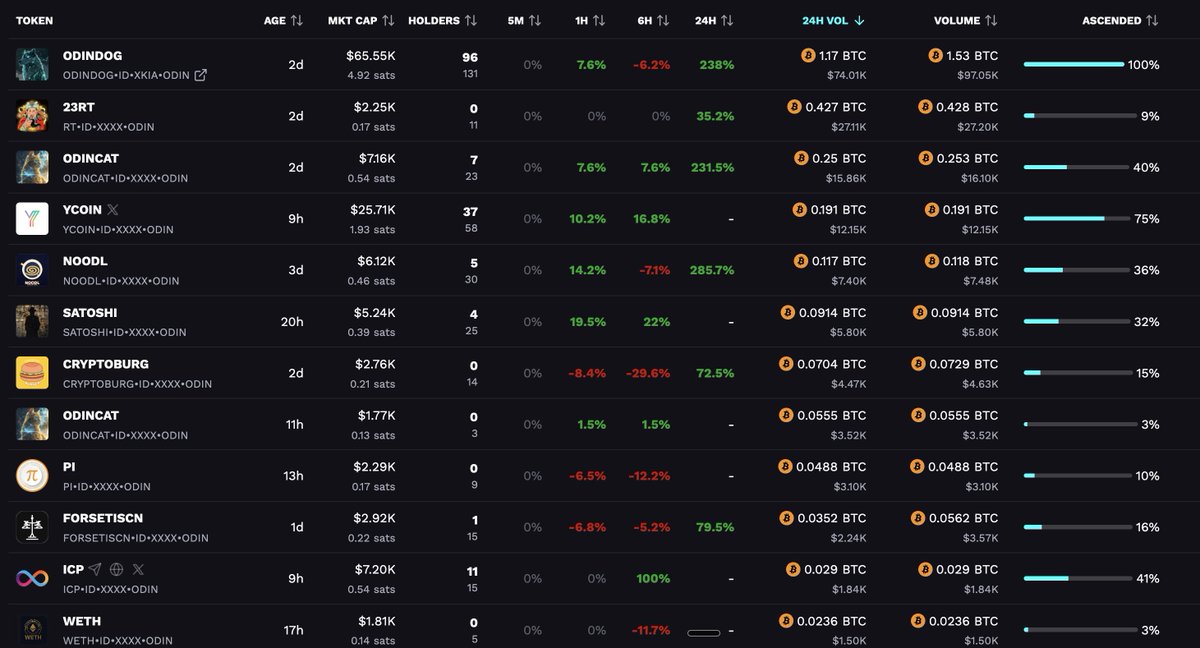
Slowly but surely 📈
And for all you V1 holders we're trying to figure out some kind of bridge strategy where we can port over the holders, tokens, and liquidity from V1 -> V2 in some fashion. It isn't an easy problem, but maybe we can find a decent solution.
2
164
Make Men Great Again retweeted
31 Aug 2025
Friends and fellow holders of $YCOIN,
Today, I turn our attention to the most critical element of any asset: its price. This essay builds on my previous explorations of $YCOIN's tokenomics, grounding our vision in timeless economic principles. This is among the most important threads I'm going to write on the economics of $YCOIN—it's in two parts, so please read both and consider them carefully. As any student of economics understands, an asset's price is fundamentally shaped by the interplay of supply and demand. To elevate its value, you must influence one or both factors. Yet, history and practical experience reveal a stark truth: manipulating supply is often far simpler than cultivating authentic demand.
To illustrate, consider the dichotomy between free-market systems and centralized economies—not as a debate on ideology, but as a lens for understanding price dynamics. In a free market, such as the U.S. capital markets or Bitcoin's ecosystem, prices surge when genuine demand emerges. Buyers, armed with resources and conviction, flock to assets they truly value—whether for innovation, scarcity, or cultural resonance. This creates real wealth, with price emerging as a collective verdict: the aggregated wisdom of countless individuals' beliefs, analyses, and transactions, forming a consensus on intrinsic worth.
In contrast, centralized economies concentrate control over resources, enabling authorities to dictate prices through supply adjustments. Even in resource-scarce environments, prices can be artificially inflated or deflated. This paradigm translates directly to the cryptocurrency landscape on platforms like Odin, where tokens broadly follow one of two models: demand-driven free markets or supply-constrained manipulations.
Examine an unnamed token boasting a market cap exceeding 1,400 BTC, yet with total trading volume hovering around a mere 40 BTC. Here, the illusion of wealth is stark—buyers have only committed 40 BTC in actual transactions, but the token appears to represent 1,400 BTC in value. The mechanism? A deliberately shallow liquidity pool, where the circulating supply is tightly restricted. This scarcity inflates the per-token price, creating a facade of high valuation driven not by broad market consensus, but by centralized holders who withhold tokens from the market. As Adam Smith wisely observed, monopolists who keep the market "constantly under-stocked, by never fully supplying the effectual demand," can sell at inflated prices, but this distorts true value.
The fragility of this approach becomes evident under pressure. With true demand absent, even a modest sell-off—representing less than 1% of the market cap in BTC—can exhaust the pool's liquidity, triggering catastrophic slippage. In decentralized exchanges like Odin, thin pools amplify the impact of trades, causing dramatic price shifts and exposing the token to rapid, significant devaluation. This is not sustainable growth; it's a house of cards awaiting the slightest breeze.
Now, juxtapose this with tokens that achieve genuine appreciation through organic demand, such as leading memecoins like Dogecoin or Pepe. These projects command billions in daily volume, aligning closely with their multi-billion-dollar market caps. Their prices aren't propped up by supply tricks but forged from a decentralized consensus: millions of individuals valuing the meme for its humor, community, or symbolic freedom. This demand-led model is inherently healthier, more resilient, and scalable—it's the blueprint for enduring success. As Warren Buffett astutely put it, "Price is what you pay; value is what you get." True prosperity lies in building that underlying value, not fleeting illusions. (1/2)
35
12
127
35,159
Jun 12
All that is gold does not glitter,
Not all those who wander are lost;
The old that is strong does not wither,
Deep roots are not reached by the frost.
From the ashes a fire shall be woken,
A light from the shadows shall spring;
Renewed shall be blade that was broken,
The crownless again shall be king.
3
165
Jun 12
4
2
6
696
Jun 12
The plan is to once V1 of Odin Fun is fully recovered. I plan to send all the liquidity of V1 to the new YCOIN. We will never settle until we become the number 1 bitcoin meme.
3
1
3
266
Jun 12
To the great Chinese community: let me say that I, as the developer, will be the last to sell YCOIN. This is my personal promise to our great community. Thank you.
1
181
Jun 12
Ycoin was created to be the ultimate bitcoin meme. So it is only fitting to recreate Ycoin in the ultimate Bitcoin DeFi launchpad: Odin Fun. More to come in the coming days. Thank you all for the support!
1
226
Jun 12
Never give up!
Jun 12
📢 Big announcement! 📢
Odin Fun V2 is LIVE! 🎉🎉🎉
We deployed V2 to our regular domain (odin dot fun) and we moved the V1 deployment to legacy dot odin dot fun.
V2 is a new, fresh version of Odin Fun where user funds are fully secured and backed 1:1 with the Bitcoin in the protocol. This means users can freely deposit, trade, and withdraw as they desire.
We have some exciting new features coming soon (that you all have wanted for a very long time). It will be fun to finally get these out for all of you. I think you are going to love them.
For more context about what this means and why this happened, read on below:
1. We reopened Odin Fun after collaboration with our Chinese communities, being fully transparent about the deficit in user funds. We increased fees (0.5% -> 1%) and committed to using all profits to pay down the deficit. We were all hopeful that liquidity could stabilize and we could continue to grow.
2. Unfortunately, things didn't work out as expected, and over a few weeks the liquidity in the platform slowly dropped to zero. This means users could still trade in the platform, but they couldn't withdraw without another user depositing funds into the protocol first.
3. This wasn't good for anyone. So we've been hard at work over the last 2 weeks and we finally have a good solution. We've redeployed Odin Fun as a new fresh protocol and we are calling it Odin Fun V2. Because it is a fresh deployment of the protocol, it means user funds are fully backed 1:1 and users can deposit, trade, and withdraw as they desire. User balances don't carry about from V1 to V2 and tokens launched won't carry over either.
4. We've deployed V2 to odin dot fun and we've moved V1 Odin Fun to legacy dot odin dot fun. So you can still go to legacy dot odin dot fun and login to view your previous balances. And then you will have to deposit new funds to V2 to trade.
5. Our goal in deploying Odin Fun V2 is to start to build liquidity, traction, and trading in Odin Fun again so that we can (1) work together to build an incredible Bitcoin trading platform, and (2) to use all V2 profits to pay down the user funds deficit in the V1 platform.
6. We will continue using V2 profits to pay down the V1 deficits, but in the meantime we are working with various Odin Fun communities to find an interim solution. For example, maybe a community could raise enough funds to port a token, user balances, and liquidity over from V1 to V2. Please let me know if you have ideas to help.
7. As part of this process if you have comments, questions, concerns, or feedback, please submit a ticket within Odin Fun and we will do our best to accommodate you.
Thank you!
- Bob
1
232
The Lord is the portion of my inheritance and my cup;
You are He who restores my inheritance to me.
Portions fell to me among the best,
And my inheritance is the very finest.
I will bless the Lord who caused me to understand;
Moreover, until night my reins also instructed me.
I saw the Lord always before me;
Because He is at my right hand, that I may not be shaken.
Therefore my heart was glad,
And my tongue rejoiced exceedingly;
My flesh also shall dwell in hope.
For You will not abandon my soul to Hades
Nor allow Your Holy One to see corruption.
You made known to me the ways of life;
You will fill me with gladness in Your presence;
At Your right hand are pleasures forevermore.
1
5
158
Make Men Great Again retweeted

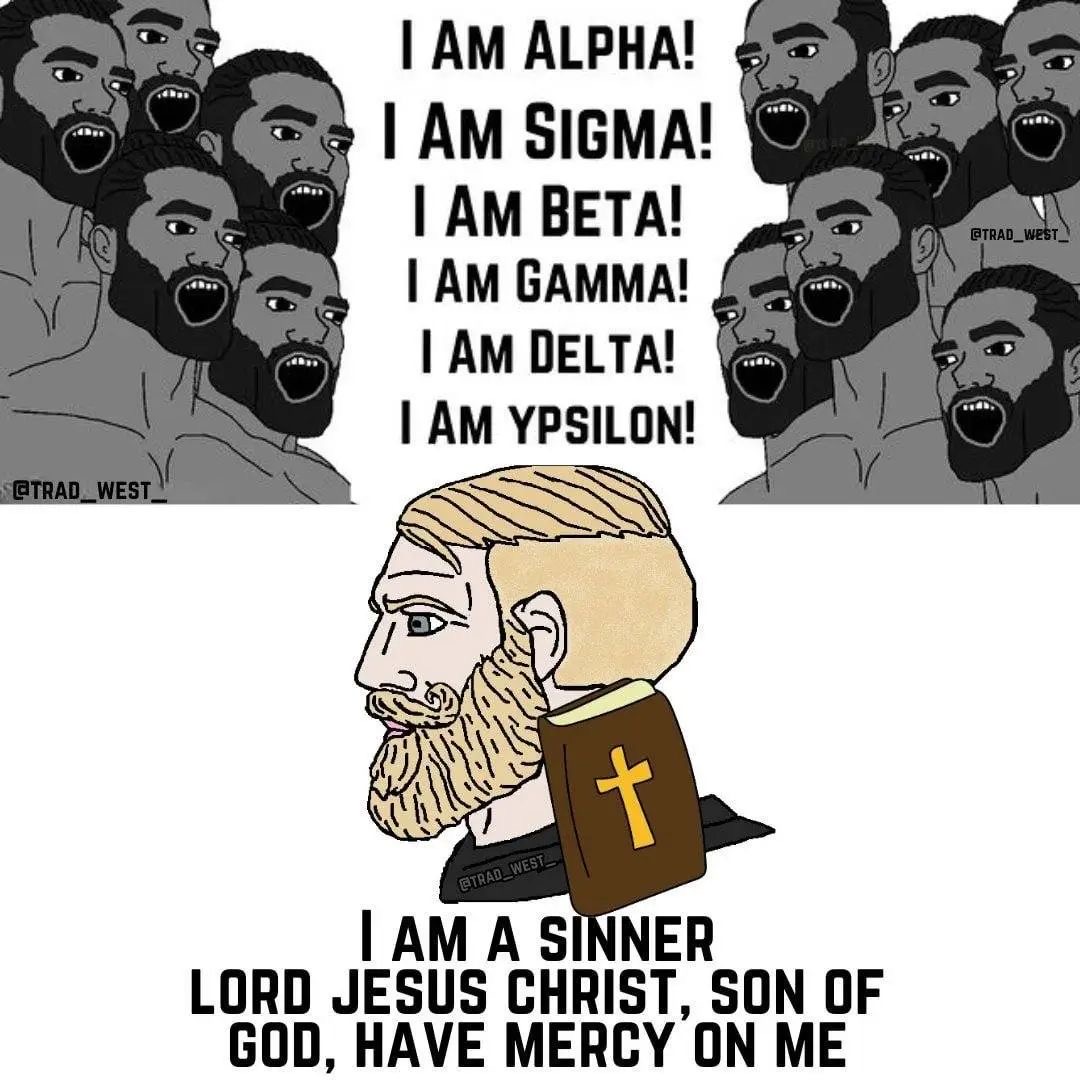
I am a sinner. Are you?
6
8
65
1,194
May 31
The social turn of the Catholic Church in the past 100 years, including the most recent Magnifca Humanititas, is concerning. The metaphysical and the mystical have been replaced by the social and political.
2
143
May 22
Dear Friends of Ycoin and the Bitcoin DeFi Community,
As the anonymous developer of Ycoin, I write to you today not with fleeting optimism, but with the same deep, unshakeable conviction that has defined every step of our journey on Odin.fun.
Yes, today has been turbulent. The platform’s reserves have been tested like never before, and the bank run has left many feeling uncertain. Markets test faith. They always have. But Rome was not built in one day—and neither is a platform destined to become the backbone of Bitcoin defi.
I still believe in Odin.fun.
I believe in its vision.
I believe in its potential.
And most importantly, I believe in Bob Bodily and the team behind it.
Bob, if you’re reading this: keep the faith and finish the race. Don’t give up.
The greatest comebacks in history are forged in moments exactly like this one. The pressure, the noise, the doubt—these are the crucibles that separate the builders who endure from those who fade away. You have already shown the world what focused, behind-the-scenes infrastructure work looks like.
Now is the time to rise stronger, wiser, and more determined than ever. The Bitcoin DeFi ecosystem needs leaders who refuse to be rushed and who build for the long arc, not the next headline.
Ycoin was born on Odin.fun because we saw what others missed: the double magic of Bitcoin’s timeless foundation paired with the viral power of true memecoins. That conviction has not wavered for a single second. Tokens will come and go. Platforms will face storms. But the ones built on patience, decentralization, and genuine community will stand the test of time—just like Bitcoin itself.
To every Ycoin holder and every supporter of the broader Odin ecosystem: this is not the end. It is a chapter in the story of resilience. Hold your conviction. Stay patient. The asymmetric opportunity in Bitcoin DeFi remains as powerful as ever.
We are still here.
We are still believing.
And we are still all-in on the future that Odin.fun represents.
Y for Victory,
OneXOneY
7
293
Make Men Great Again retweeted
Prayer will save the West.

2
3
10
369
Make Men Great Again retweeted
If you don't teach your daughter what a man is, the world will.
And the world is wrong.

1
4
29
547


Make Men Great Again retweeted
Nobody told young men that the most radical thing you can do in 2025 is get married, stay married, and build something that outlasts you
2
4
14
415