
Progres – analitiki pikirlen!
Joined September 2020
- Tweets 9,185
- Following 177
- Followers 436
- Likes 387
2,248 Photos and videos



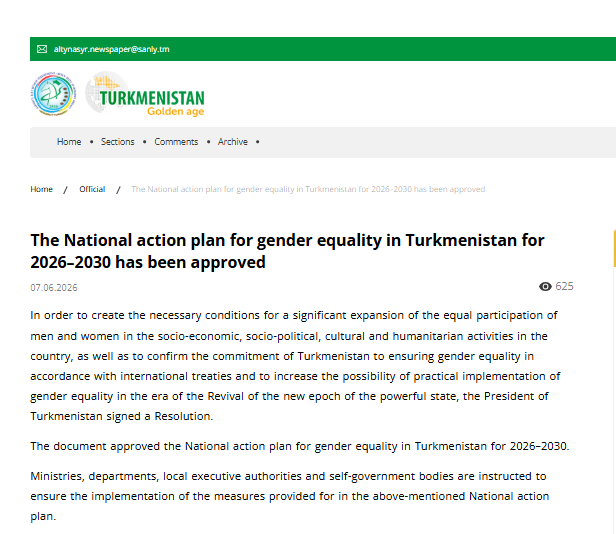
Pinned Tweet

Jan 8
Universal Periodic Review: Two years on, despite the public commitments on the international stage, the government has not issued even a single high-level policy statement to move forward on honoring its promises #Turkmenistan It is not clear whether the government has either the political will or the institutional capacity to implement the recommendations it supported.
@OHCHR_CentrAsia @UNGeneva #UPR progres.online/society/turkm…
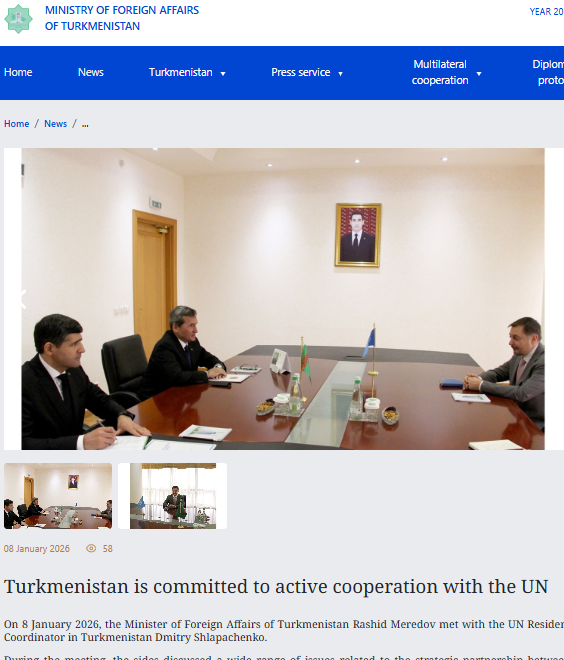
2
1
1,493
ILO Committee on the Application of Standards: "ILO Committee deplored the persistence of the widespread use of forced labour in relation to the annual state-sponsored cotton harvest in Turkmenistan. Taking into account the discussion, the Committee urged the Government to take effective and time-bound measures" #Turkmenistan
The Committee invited the Government to accept ILO technical assistance and requested the Government to provide, by 1 September 2026, detailed information on the concrete measures taken, in consultation with the most representative employers’ and workers’ organizations, to implement these recommendations and the Roadmap, as well as on the concrete results achieved in law and in practice ilo.org/sites/default/files/…
May 15

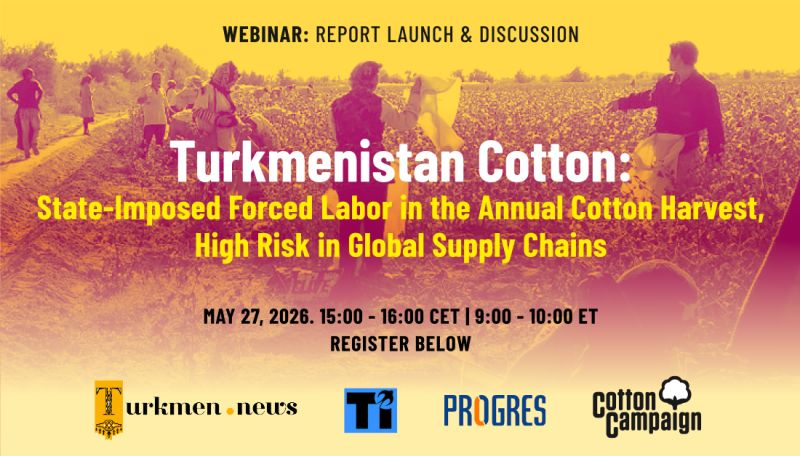
Webinar: Forced Labor in Turkmenistan Cotton, Links to Global Markets #Turkmenistan @cottoncampaign
Join us for the launch of a new independent report documenting the use of state-imposed forced labor in the annual hashtag#cotton harvest in hashtag#Turkmenistan and showing trade routes through which Turkmen cotton enters global markets.
📌 Report launch and discussion: Turkmenistan Cotton: State-Imposed Forced Labor in the Annual Cotton Harvest, High Risk in Global Supply Chains
🗓️ May 27, 2026. 15:00 - 16:00 CET / 9:00 - 10:00 ET
linkedin.com/company/cotton-…
7
Sanly.tm is a government created digital platform and news portal in Turkmenistan. Instead of facilitating open debate, autocratic digital platform is engineered to dominate the information ecosystem. It completely restricts access to independent news sources and creates a localized, walled network that filters out independent media and floods the digital public square with state-sanctioned propaganda, mostly Turkmen and Russian #Turkmenistan
14
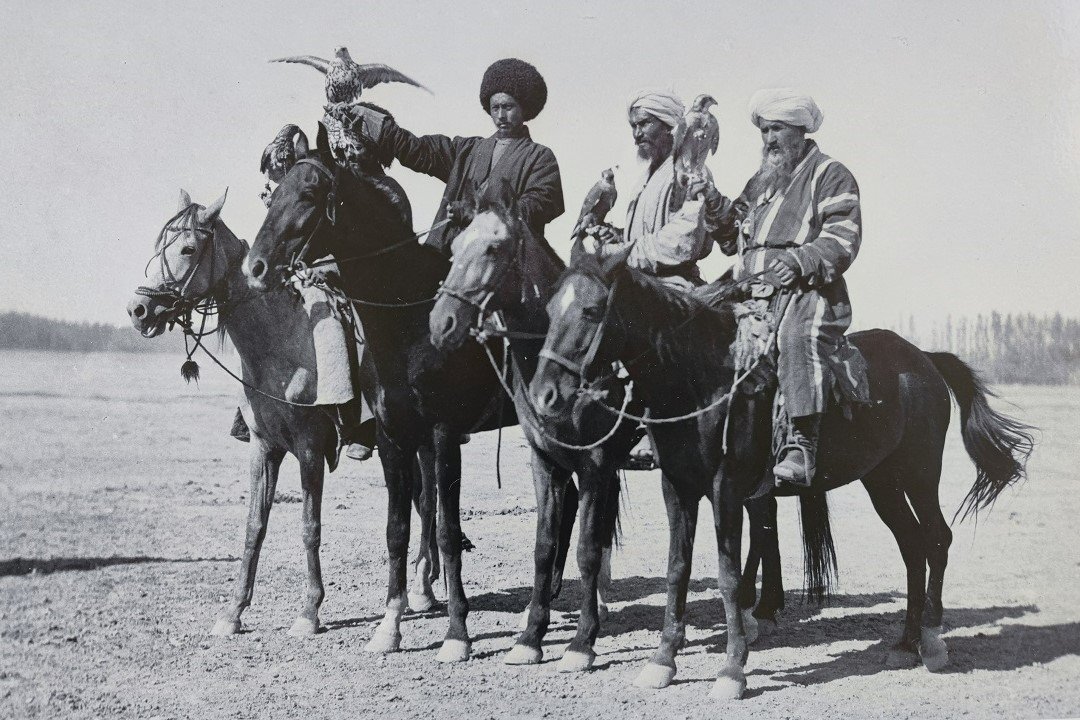
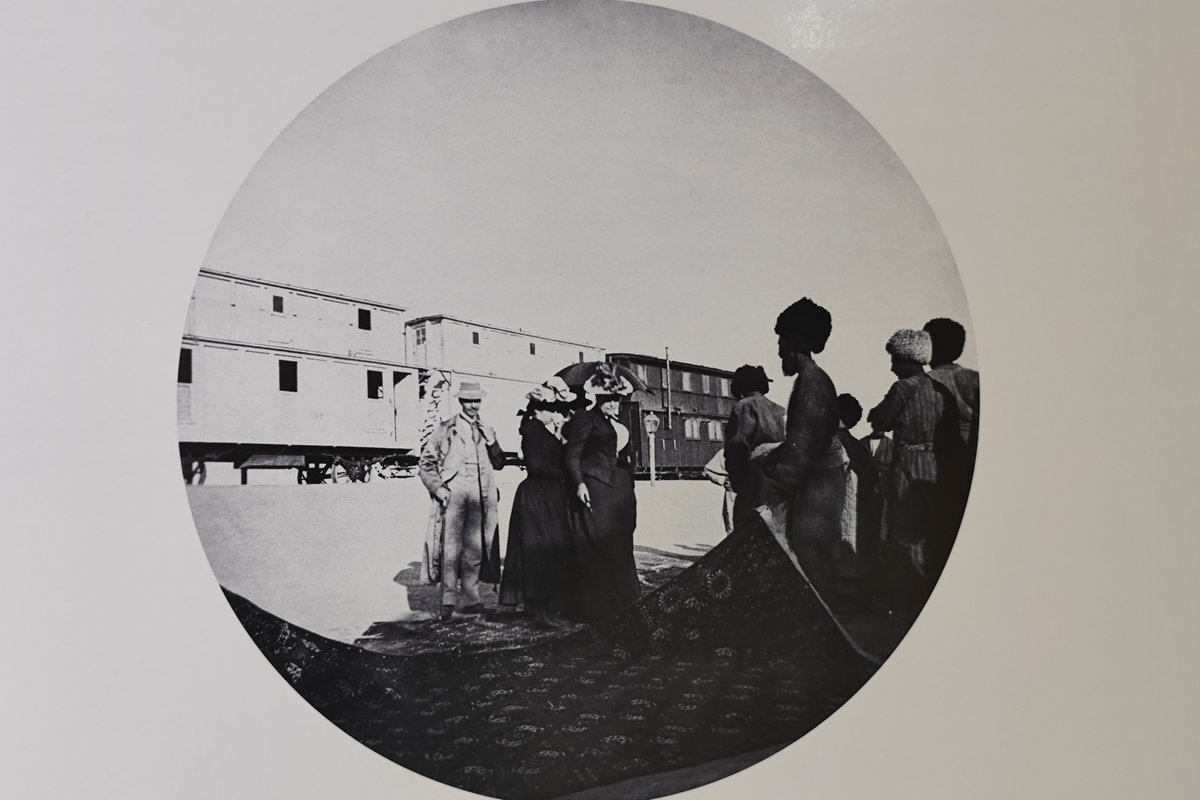
The Museum of Fine Arts #Turkmenistan opened a photo exhibition, "Journey Through Turkmen Lands," featuring rare photographs taken by the French photographer Paul Nadar in 1890. The coverage in the state media highlights the significance of photographs and then "life was better with no Internet" and notes "Svetlana Gorshenina points out a remarkable detail of his fieldwork: when creating portraits of local residents, and especially Turkmen women, Nadar asked them to dress as elegantly as possible for the photo shoot, taking their best festive attire and massive silver jewelry from their family chests. A born researcher, Nadar intuitively sensed that in traditional Central Asian society, jewelry and costume were a complex visual code, conveying status, clan affiliation, and the sacred traditions of the people." #Turkmenistan orient.tm/en/post/100883/pau…
1
17
Not in the state media: Possibility that French photographer Paul Nadar’s photographs of what is now Turkmenistan centers on the colonial, voyeuristic, and exoticizing nature of his 19th-century "photo reportage". While celebrated for their documentary value, his works reflect the Orientalist European perspectives #Turkmenistan "Modernization" is mentioned.
11
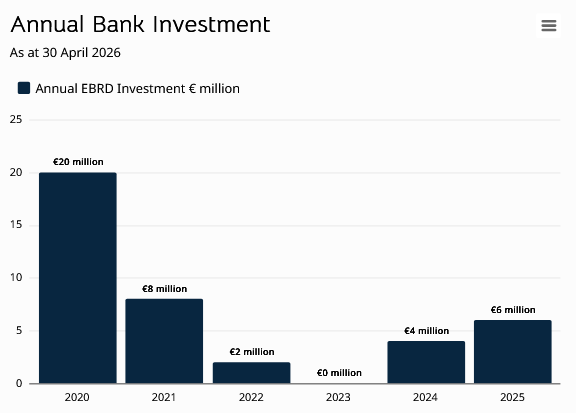
The European Bank for Reconstruction and Development goes along and uses the government's rosy, distorted growth data in its most recent report #Turkmenistan It notes that "the absence of pension and social-transfer indexation – a departure from previous years – signalled a tighter fiscal stance. Inflationary pressures are likely to intensify amid the ongoing conflict in the Middle East. Although bilateral trade with Iran remains limited, Turkmenistan’s imports are predominantly food products, amplifying price and supply risks from the disruptions. The economy is forecast to grow by 6.3 per cent in both 2026 and 2027." ebrd.com/home/news-and-event…
13
Female migrants: Many find themselves effectively trapped in their employers’ homes. Women from Turkmenistan are particularly vulnerable: their country has tightened passport issuance rules — it can only be issued in the country. But for many, leaving or deportation may mean the impossibility of leaving Turkmenistan again.
asiaplus.news/en/2026/06/15/…
17
Jun 12
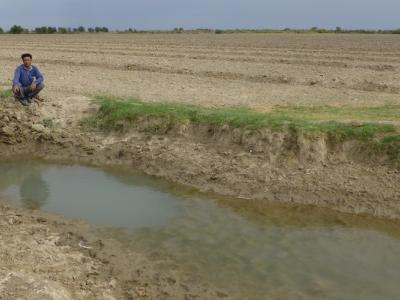
Parts of Turkmenistan, particularly in the west and north, are frequently impacted by these prolonged dry periods
@UNESCAP Mid-century climate projections (2045–2055) suggest that while there may be a slight increase in precipitation, it will likely be offset by substantial temperature increases exceeding 1.5°C. This warming is expected to increase evaporation, which can lead to further soil moisture loss and agricultural drought #Turkmenistan
As a downstream nation, Turkmenistan is more vulnerable than its eastern neighbors to the long-term depletion of glaciers and snowpack caused by regional warming, which will eventually reduce the reliability of the rivers it depends on for irrigation.
While most drought events last less than one year, recent years—particularly since 2019—have experienced the most severe and spatially extensive drought conditions in Central Asia, with significant impacts on agriculture, livestock, and water availability unescap.org/kp/2026/overview…
ALT Photo: UNDP Turkmenistan
40
Jun 12
Turkmenistan’s ongoing efforts to join @wto face significant hurdles due to the country's closed economy, heavy state control, and severe restrictions on fundamental economic rights. There are major discrepancies between its domestic policies and WTO principles. Therefore, the smokescreen workshops of grandeur continue #Turkmenistan wto.org/english/thewto_e/acc…
May 26
The only @WTO guide lacks data and country specific information including urgent problems facing businesses in Turkmenistan @OshikawaMaika #Turkmenistan progres.online/economy/under…
1
2
64
Jun 12
Turkmenistan does not utilize skills and experience of graduates from foreign universities. It alienates them. Diplomas from the American and European universities in Turkmenistan are viewed with deep ideological suspicion. The regime is fearful of independent thought. There are no foreign universities operating in Turkmenistan. @EUSR_CA progres.online/society/educa…
ALT https://orient.tm/ru/post/100867/v-ashhabade-sostoyalis-meropriyatiya-evropejskogo-fonda-obrazovaniya
1
61
Jun 11
Nearly 100 сitizens of Turkmenistan deported from Türkiye questioned at Ashgabat airport #Turkmenistan azathabar.com/a/turkiyeden-c…
3 Jul 2024
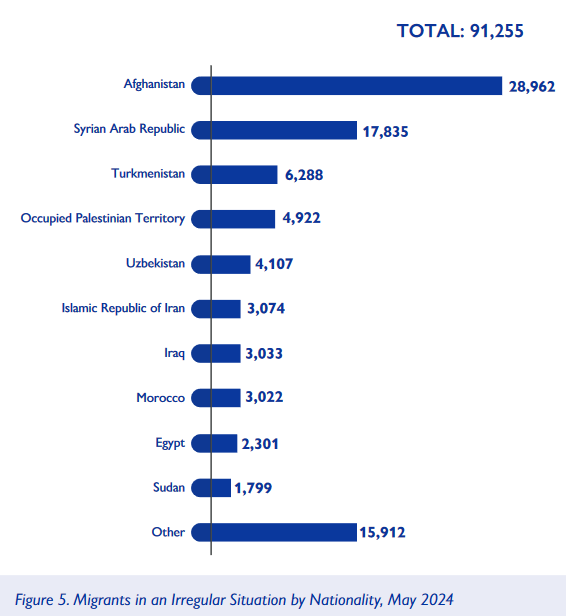
Türkiýe hosts the large number of Turkmen migrants. The migrants overstayed their visa or visa-free period @UNmigration This number for #Turkmenistan might be much higher due to limitations of the study reliefweb.int/report/turkiye…
1
1
75
Jun 11
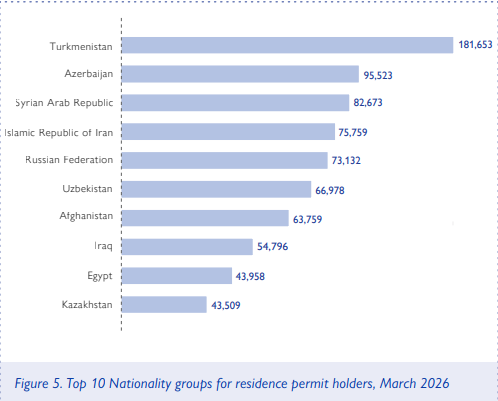
Türkiye Overview of Migrant Situation, Jan-March 2026 #Turkmenistan reliefweb.int/report/turkiye…
2
2
60
Jun 11
The visa regime remains on the border between Uzbekistan and Turkmenistan. President Shavkat Mirziyoyev has improved relations with neighboring countries in Central Asia and has achieved the opening of many border crossings. But why is Turkmenistan not changing its strict regime? Could the opening of the Shavat-Dashoguz market on the border be a first step? Ibrat Safo traveled to Shavat, where he was born and raised, to study life on the border and visited the market on Turkmen territory @bbcuzbek youtube.com/watch?v=bHa42PLM…

1
88
Progres.online retweeted
Jun 10
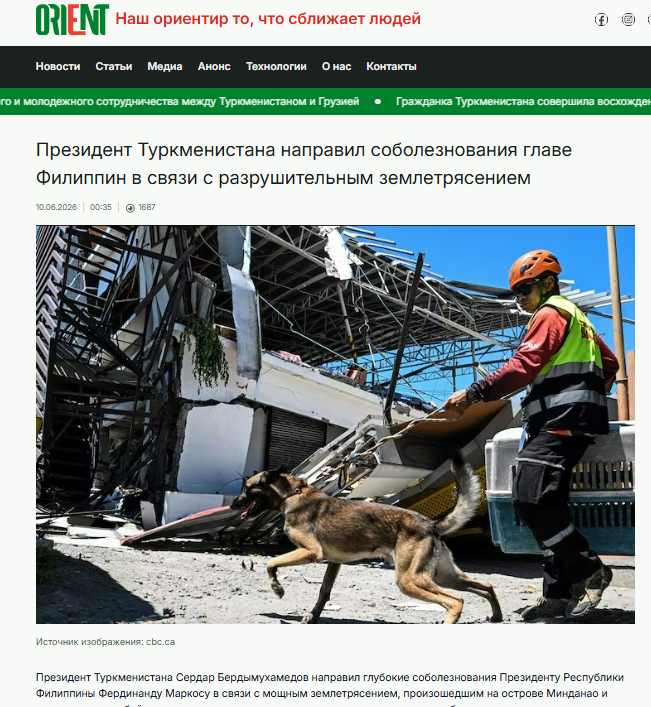
While Turkmenistan is highly vulnerable to earthquakes, mudflows, and droughts, the government's official state media conceals reports of natural disasters to project an image of a primitive, flawless state. There is no public notification system. The events are shared with the United Nations through the scheme "BS govt reporting for international legitimacy" #Turkmenistan
1
2
4
87
Jun 11
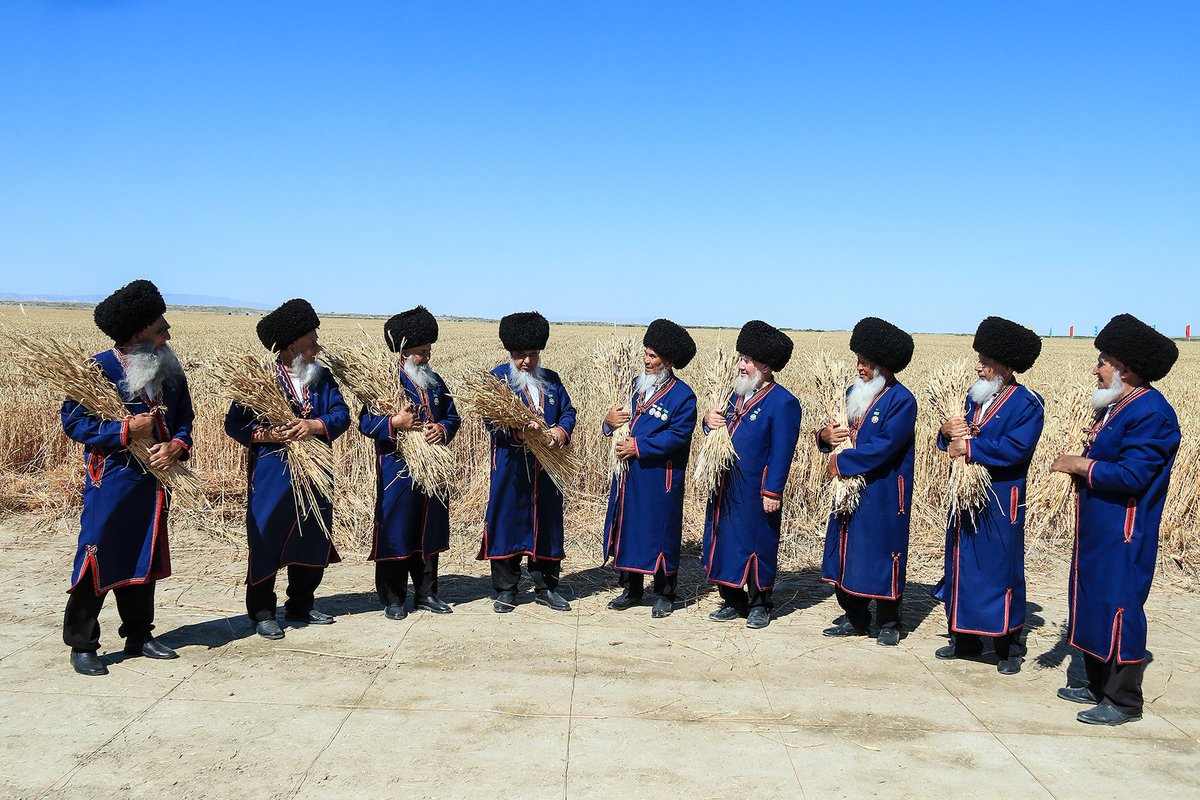
FAO: All wheat is consumed domestically. Data on the evolution of wheat production in Turkmenistan seem unreliable. The sector is heavily subsidized by the state and lacks competition and market mechanisms #Turkmenistan openknowledge.fao.org/items/…
Jun 4
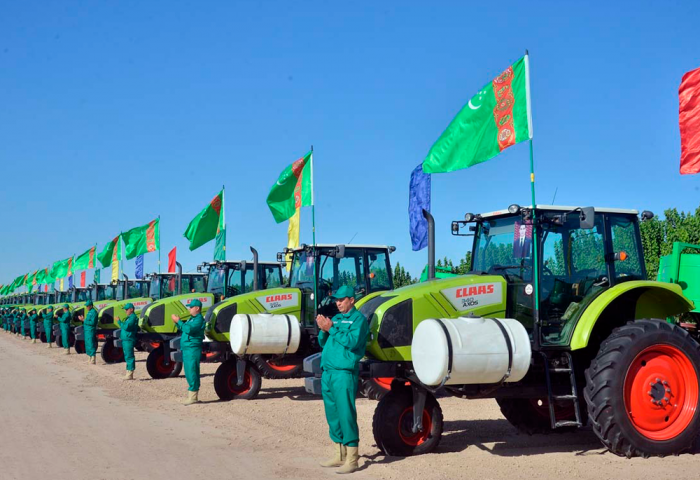
European Commission: Wheat production and yield in Turkmenistan decreased by 16% between 2016 and 2024 due to drought #Turkmenistan Turkmenistan’s gross wheat harvest was at 600,000 metric tons. This is a sharp contrast to official claims from the Turkmen government, which stated its farmers produced over 1.4 million metric tons of wheat during the 2025 harvest season. The production has dropped by 33% @USDA publications.jrc.ec.europa.e…
39
Jun 11
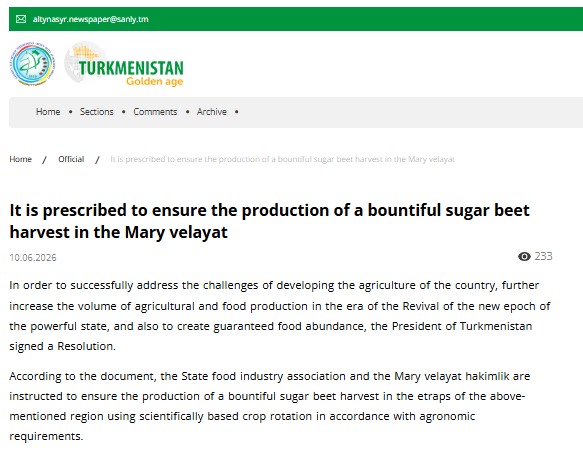
FAO: In 2000 sugar beets were added to the list of state order crops in Turkmenistan. Almost all measures from the Soviet arsenal are still applied today: mandatory state quotas, state fixed prices, state supply of main inputs at discounted prices and concessional state lending. Agricultural sector is known for endemic forced labor, corruption, and systemic coercion #Turkmenistan openknowledge.fao.org/items/…
1
1
1
59
Jun 11
Amid a labor shortage, people sentenced to correctional labor are being recruited to work at a sugar factory in Mary, where there are also people in need of treatment for alcoholism. azathabar.com/a/duzedis-isle… The detained sex workers in Mary are sent to the sugar beets fields #Turkmenistan azathabar.com/a/maryda-hakim…
2
2
58
Jun 10
All travellers entering Turkmenistan must undergo a COVID-19 test upon arrival, which costs 31 US dollars cash. Turkmenistan is largely a cash-based society. There are a limited number of international ATMs in Ashgabat. Access to the internet and mobile phone networks is restricted in Turkmenistan.

#Turkmenistan: Read our latest travel advice with updated information about COVID-19 testing upon arrival at Ashgabat airport: ow.ly/AUbZ50Z77UP
1
59
Jun 10
While Turkmenistan is highly vulnerable to earthquakes, mudflows, and droughts, the government's official state media conceals reports of natural disasters to project an image of a primitive, flawless state. There is no public notification system. The events are shared with the United Nations through the scheme "BS govt reporting for international legitimacy" #Turkmenistan
1
2
4
87
Jun 10
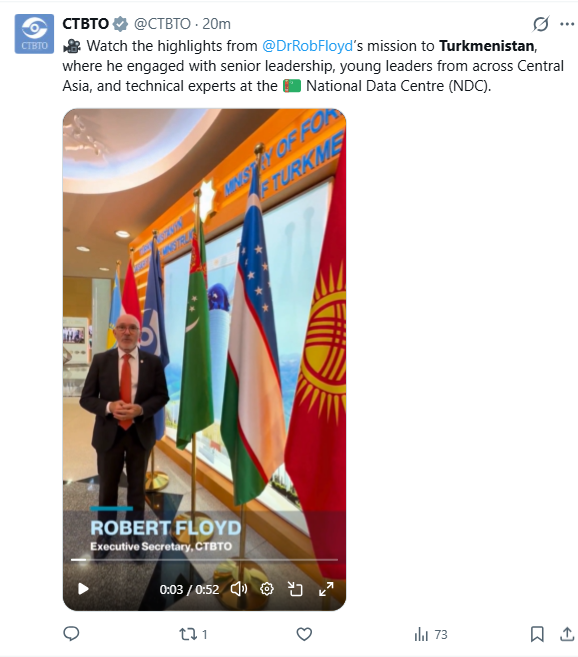
Here @CTBTO @DrRobFloyd is singing praises to "natural disaster management" in Turkmenistan. hrw.org/news/2020/05/04/turk…
44
Jun 10
Turkmenistan is at high risk of becoming uninhabitable in the near future primarily due to government's inaction related to the escalating water crisis, severe soil degradation, and extreme heat. A lack of competence and understanding by the government officials are the drivers of depopulation (the falling birth rate, migration outflow, high mortality) #Turkmenistan progres.online/society/envir…
1
32