
An Africa-led project seeking to open up access to information on return of African material culture and human ancestors. By @andaniafrica & @africadheritage
Joined July 2020
- Tweets 866
- Following 75
- Followers 1,830
- Likes 101
472 Photos and videos




Pinned Tweet

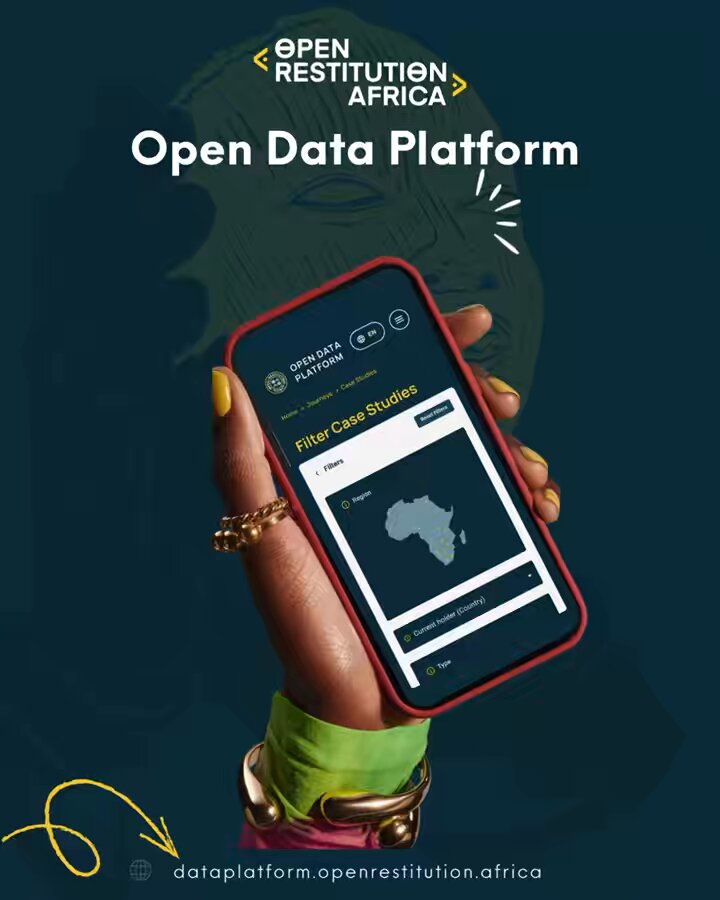
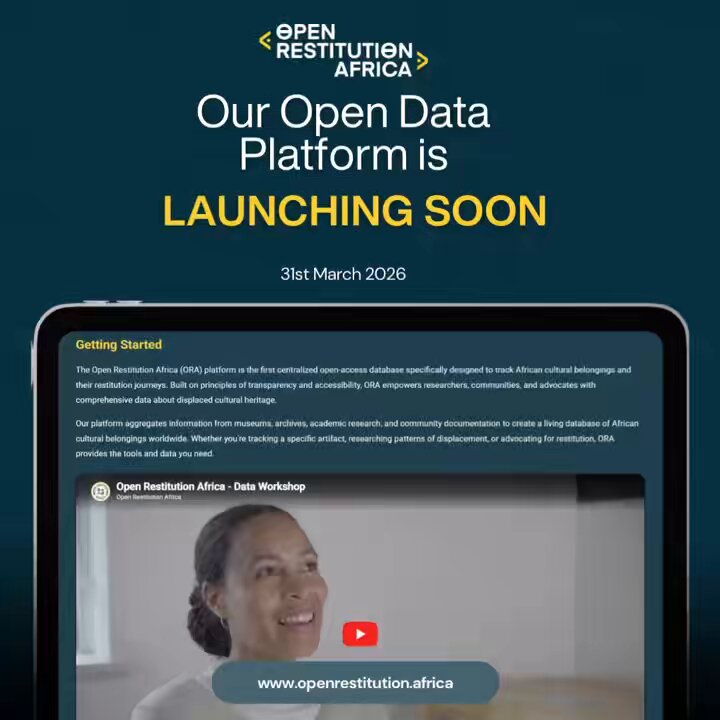
Our Open Data Platform gives you the tools to support African restitution work. Explore 200 years of research & 25 cases across 12 countries with AI-powered tools.
Each journey is unique, and the lessons are now open to all. 🌍
🔗dataplatform.openrestitution…
#ORAOpenDataPlatform
6
4
296
We were pleased to join @sputnik_africa to discuss restitution, memory and identity, and the importance of ensuring communities can access, engage with and shape knowledge about their own histories and cultural belongings.
Jun 13

🎙 Sputnik Radio | Reclaiming History: Memory, Identity and Africa’s Digital Turn
"Cultural extraction was a key element of colonial violence," noted Aziz Koehun of Open Restitution Africa, SA, stressing that returning heritage restores community authority over their own past.
🗣 On the Global South Pole podcast, she explained how restitution goes beyond mere artifacts to rebuild identity and reconnect generations.
👉 Listen to the full episode on our website or your favorite streaming platform.
32
Since launching the ORA Data Platform on 31 March, we’ve been featured in conversations on AI, open data, restitution journeys and the wider questions shaping restitution across Africa.
Thank you for engaging with our work.
openrestitution.africa/press…
1
36
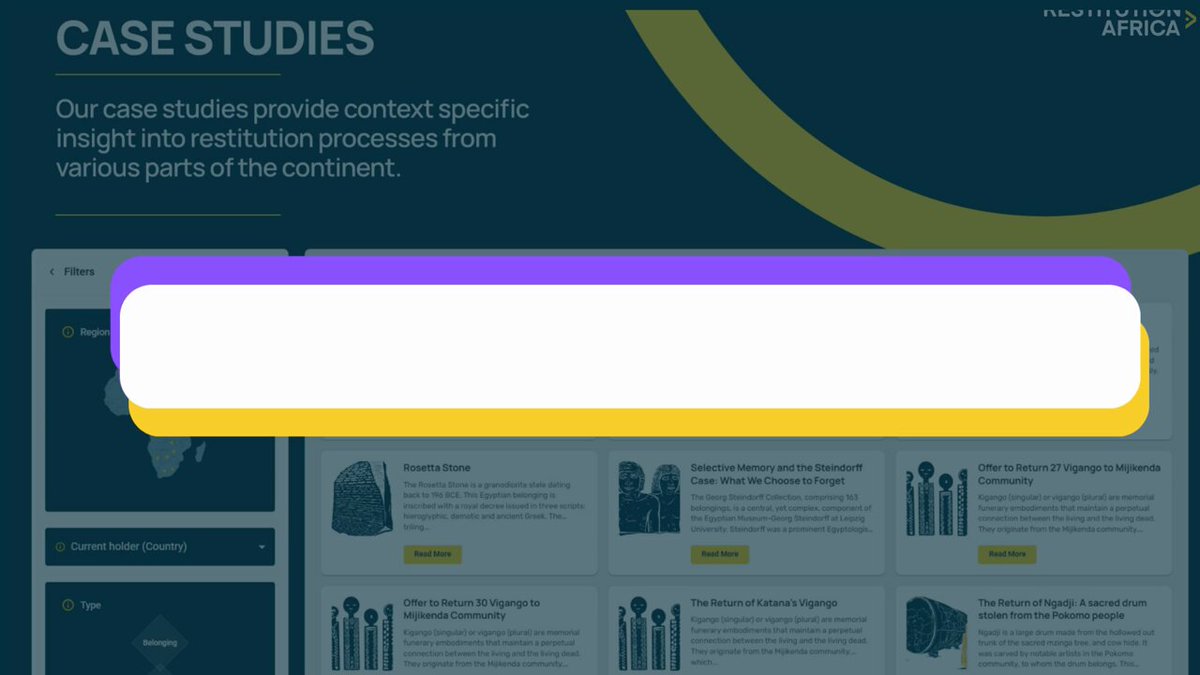
How do you find a restitution case relevant to your research?
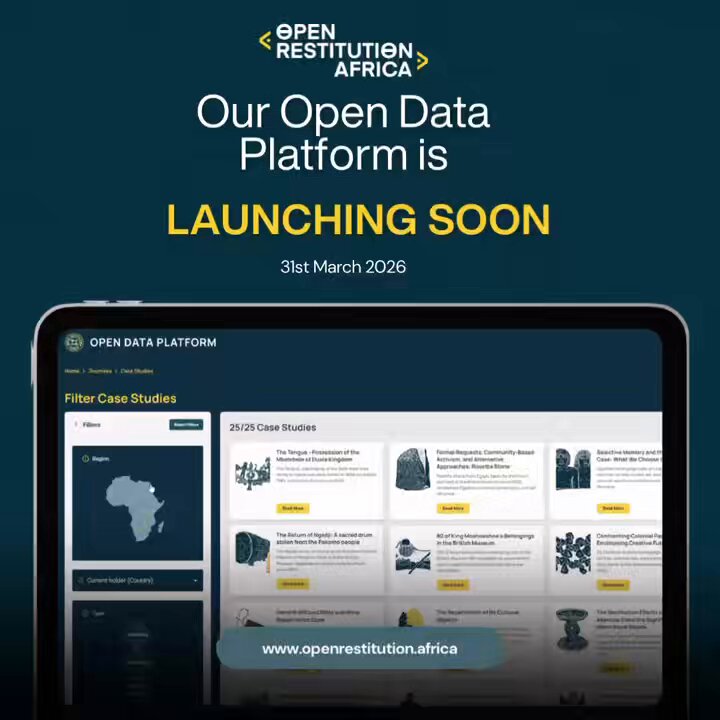
The Case Studies tool allows users to explore 25 restitution case studies from 12 African countries and access detailed information on restitution processes across the continent.
Watch the walkthrough ⬇️
1
3
109
Watch the walkthrough on Youtube:
youtube.com/watch?v=jH2XjHRZ…
Explore the platform:
dataplatform.openrestitution…
#OpenRestitutionAfrica #ORAOpenDataPlatform
2
77
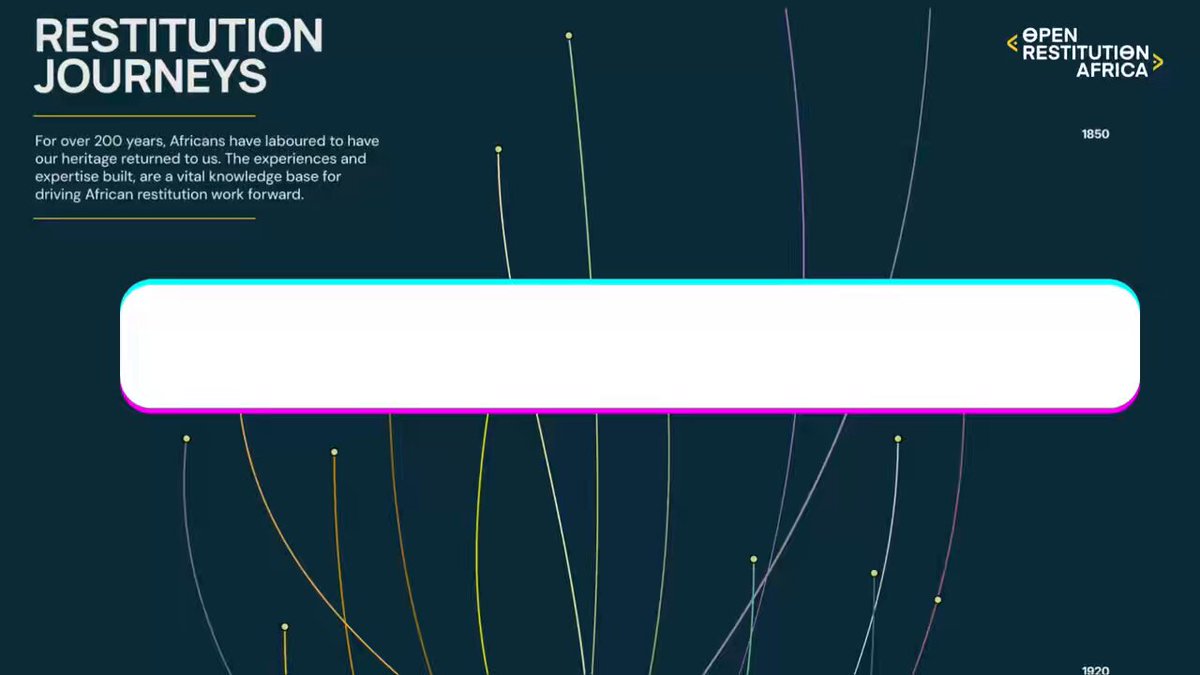
Restitution Journeys is one of the four core features of the Open Restitution Africa Data Platform.
It is an interactive visualisation mapping over 200 years of restitution across Africa, bringing multiple case studies into a single timeline.
1
3
7
321
Restitution Journeys brings together:
• A timeline showing key years
• Colour-coded journeys for each case study
• Nodes marking key events within each journey
These elements help trace patterns across more than two centuries of restitution activity.
1
56
Watch the walkthrough to see how it works:
youtu.be/qFjU8fBEKVc?si=NzuP…
Explore the platform:
dataplatform.openrestitution…
#OpenRestitutionAfrica #ORAOpenDataPlatform
1
1
86
Open Restitution Africa retweeted
Today, the ORA Open Data Platform goes live — six years in the making. Six years of research, collaboration and determination to make restitution knowledge accessible across Africa.
🔗dataplatform.openrestitution…
#ORAOpenDataPlatform
1
5
5
529
Today, the ORA Open Data Platform goes live — six years in the making. Six years of research, collaboration and determination to make restitution knowledge accessible across Africa.
🔗dataplatform.openrestitution…
#ORAOpenDataPlatform
1
5
5
529
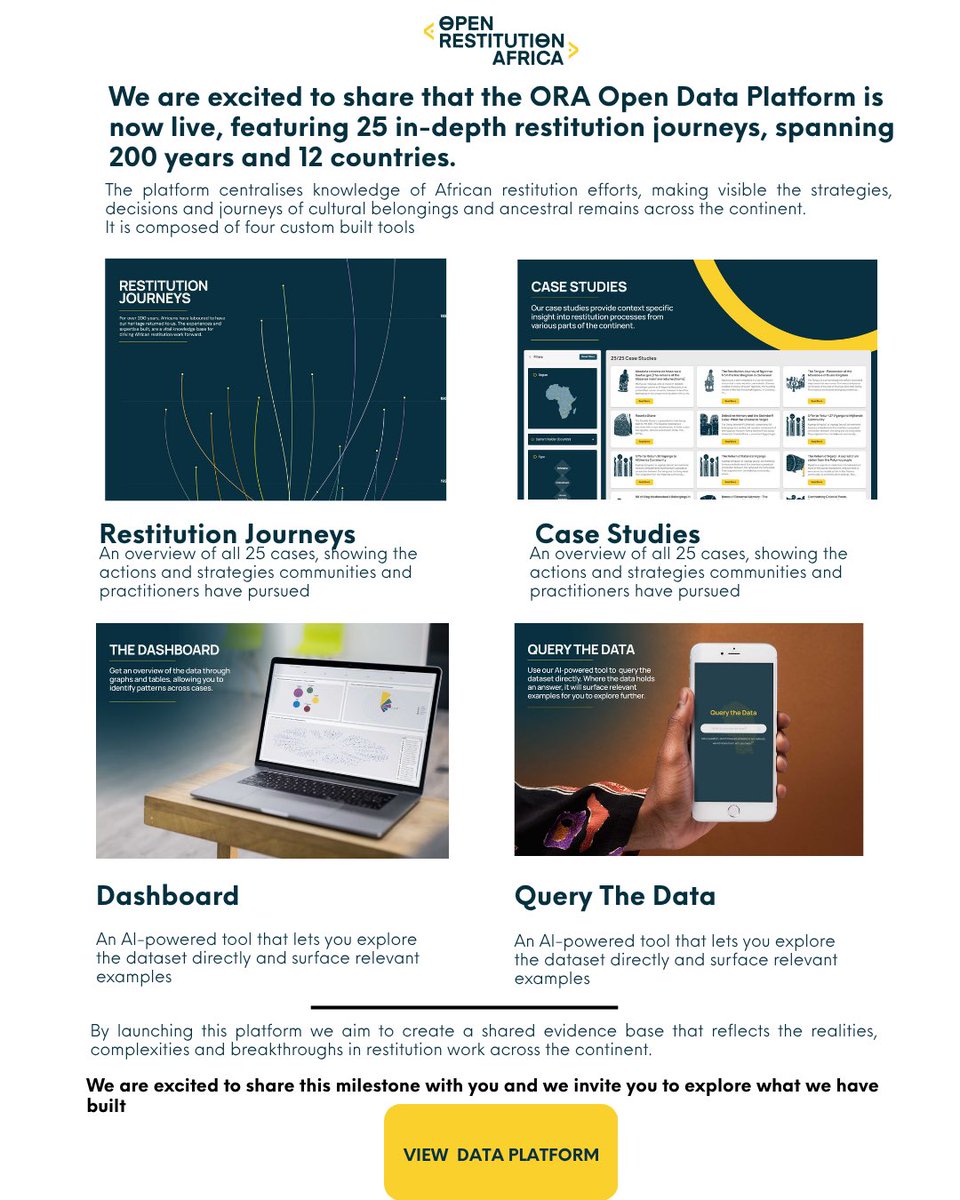
The platform includes four main components:
Restitution Journeys
Case Studies
Dashboard
Query the Data
These four tools allow you to gain an overview of and understand the data as well as filter through, compare and analyse, and ask questions with our own Al powered tool.
1
1
2
82
This is a living resource, shaped by those closest to the work — ready for researchers, advocates, institutions, and communities.
🔗 dataplatform.openrestitution…
1
27
Tomorrow, our Open Data Platform goes live. It is a first-of-its-kind space for exploration, learning and collaboration.
Over six years, Open Restitution Africa has engaged with practitioners and communities to document how restitution is experienced in practice.
1
3
59
We have explored the decisions, negotiations conditions that shape these processes how knowledge is shared and built across contexts.
Our work shows the journeys of cultural belongings ancestral remains, the connections to communities the persistence behind each return.
1
27
Our data platform brings all this knowledge together, highlighting how restitution is not a single story.
It unfolds across communities, countries and decades and each journey carries histories of loss, advocacy and persistence.
#ORAOpenDataPlatform
18
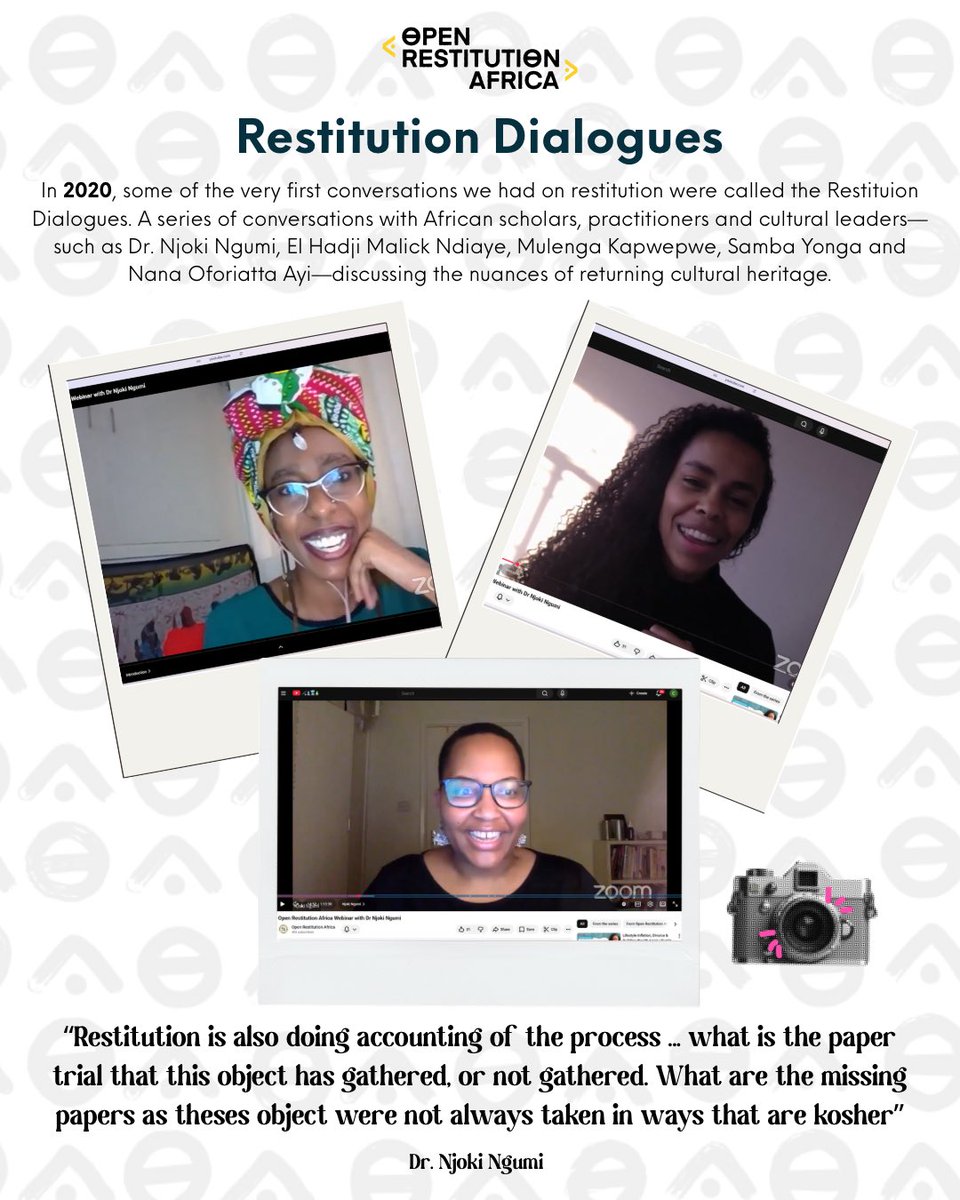
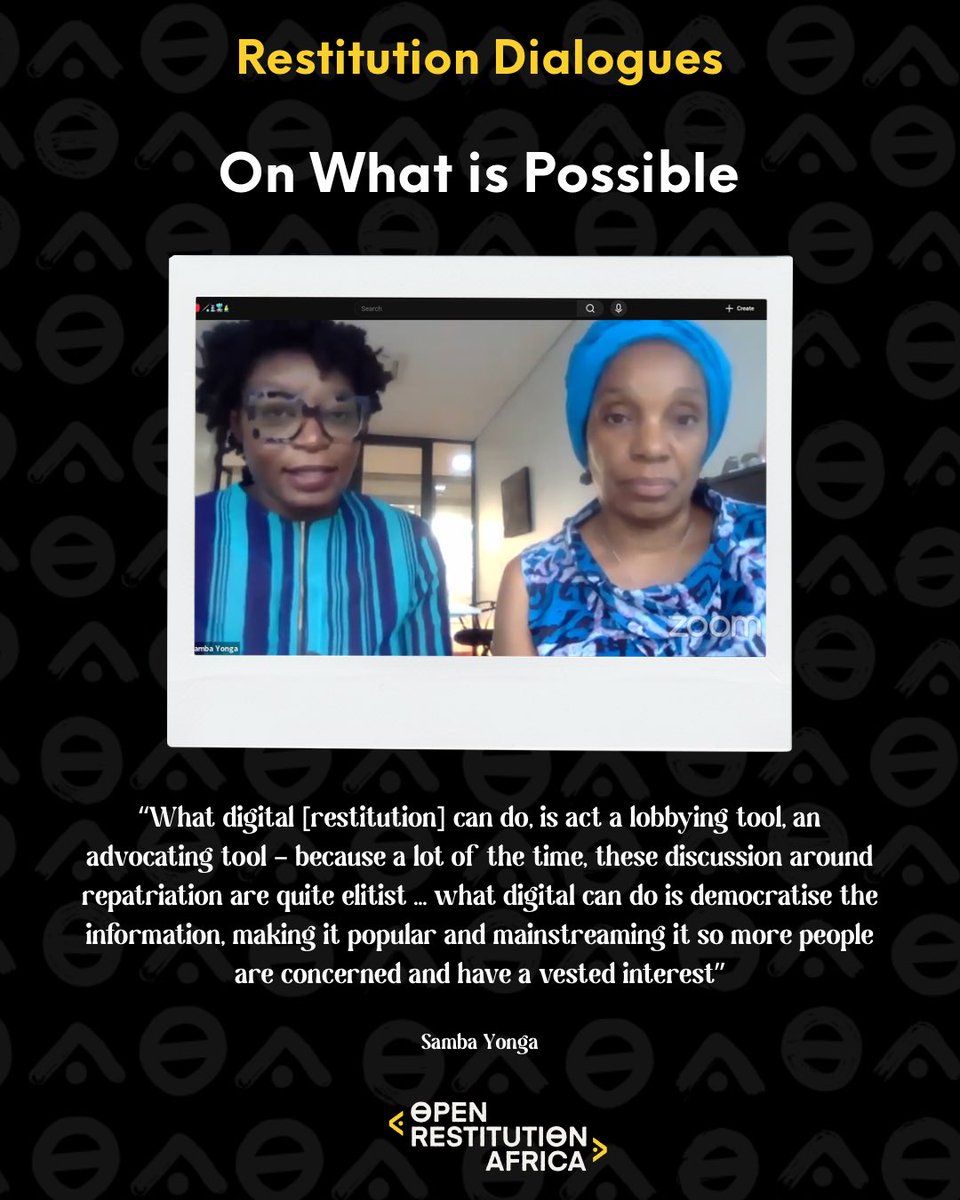
As we prepare to launch the Open Restitution Africa Open Data Platform on 31st March 2026, we return to where this thinking began.
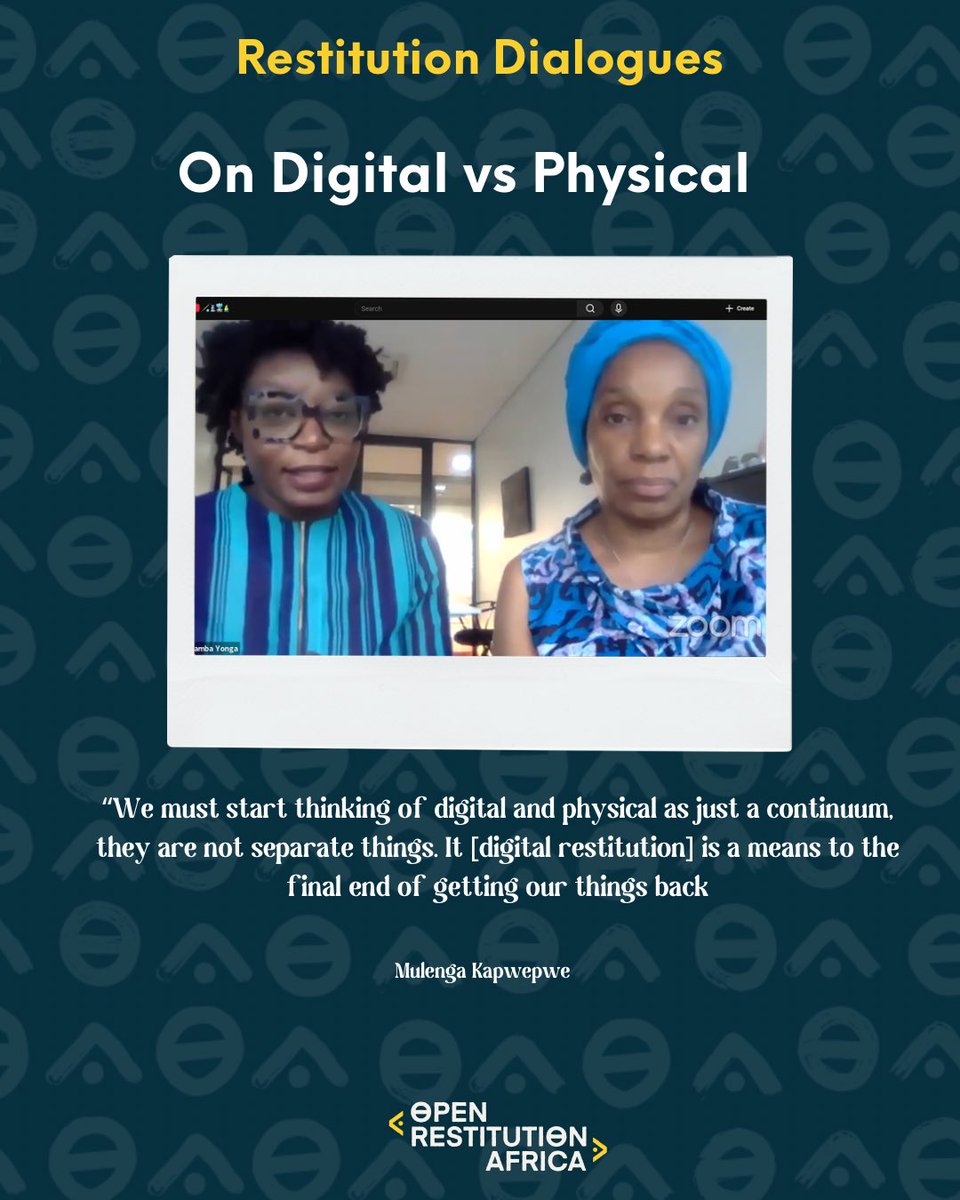
In 2020, Restitution Dialogues brought together African scholars and practitioners to reflect on restitution in practice.
#OpenRestitutionAfrica
1
1
4
69
These conversations revealed a structural challenge: knowledge about restitution was often concentrated within museums, institutional archives and policy spaces, where access was limited and documentation uneven.
#RestitutionDialogues
13
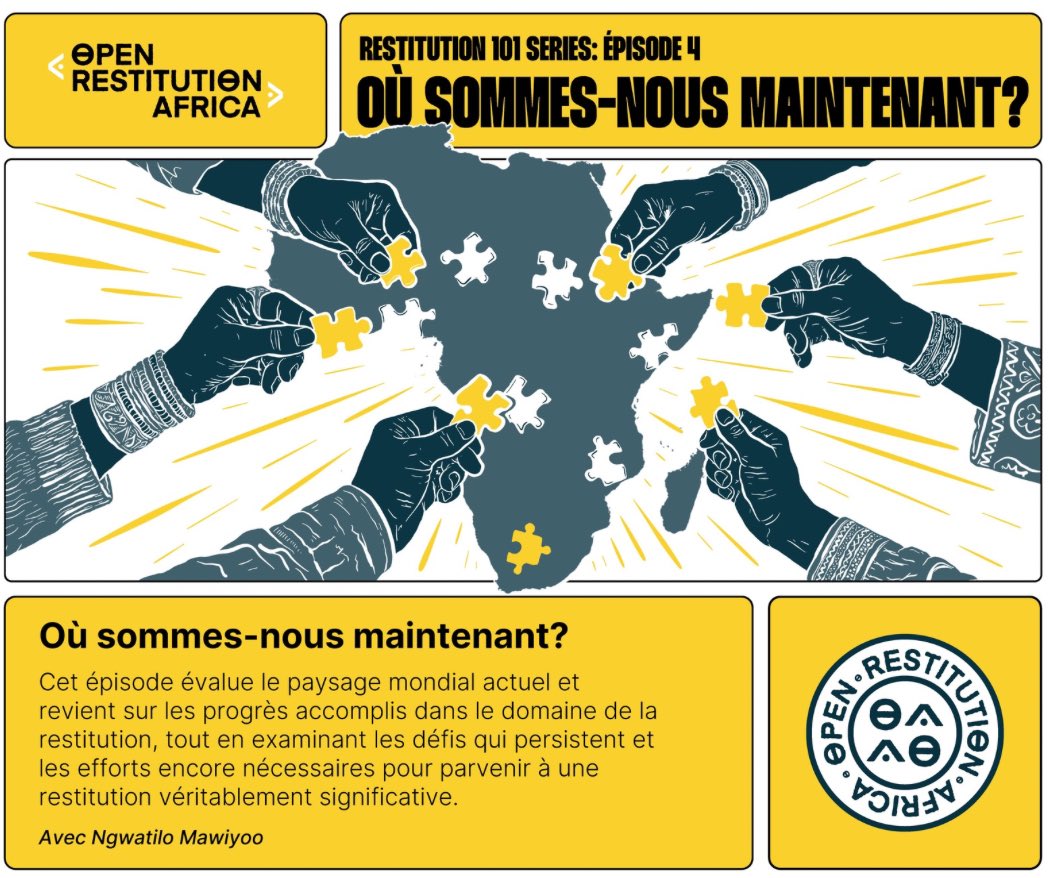
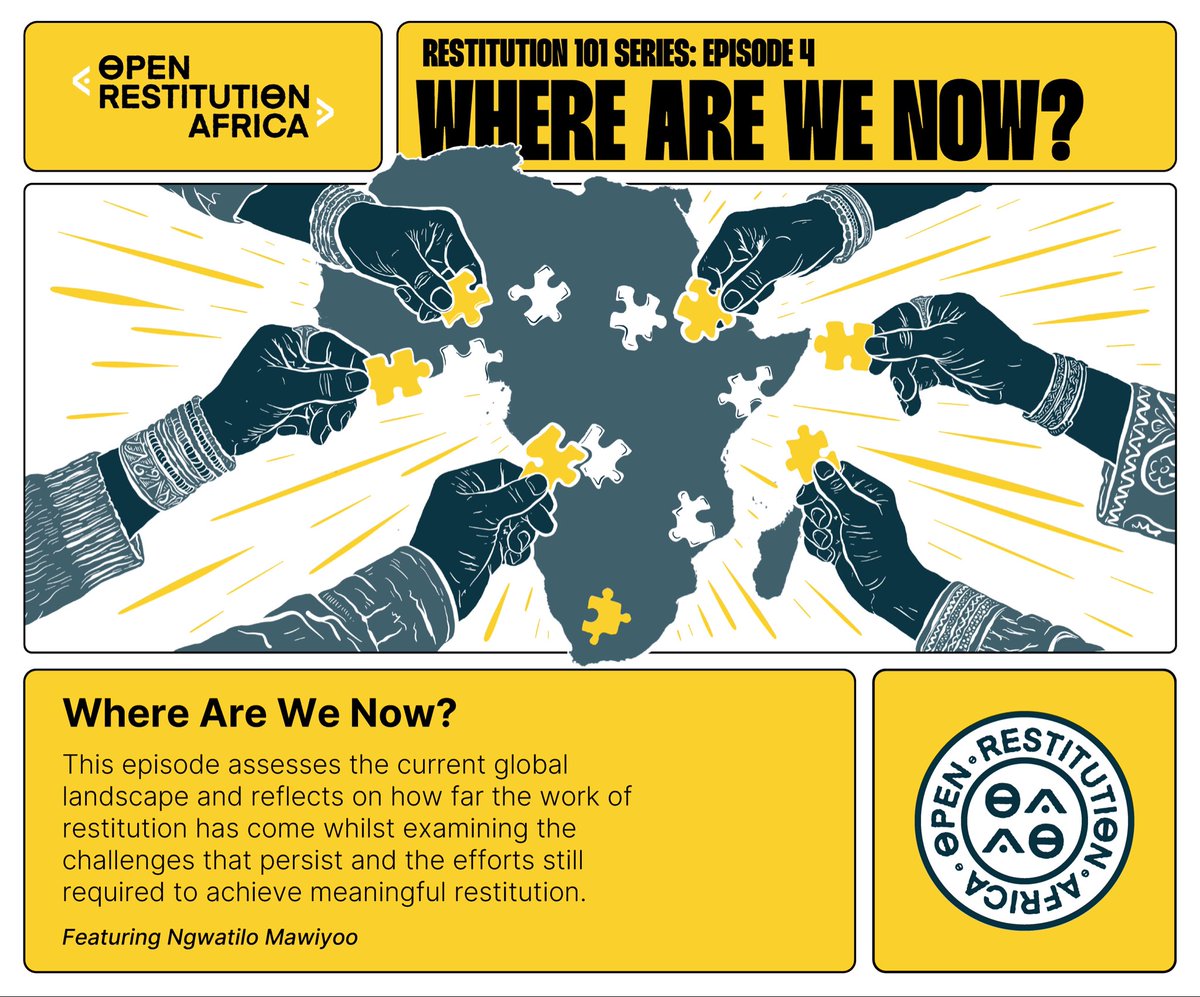
Regardez l’épisode 4 de Restitution 101 sur YouTube✨
« Où Sommes-Nous Maintenant ? » examine le paysage mondial actuel de la restitution - jusqu'où le travail est allé, les principaux développements, les défis et le travail encore nécessaire.
youtu.be/ah08PxWY38s?si=1oVS…
28
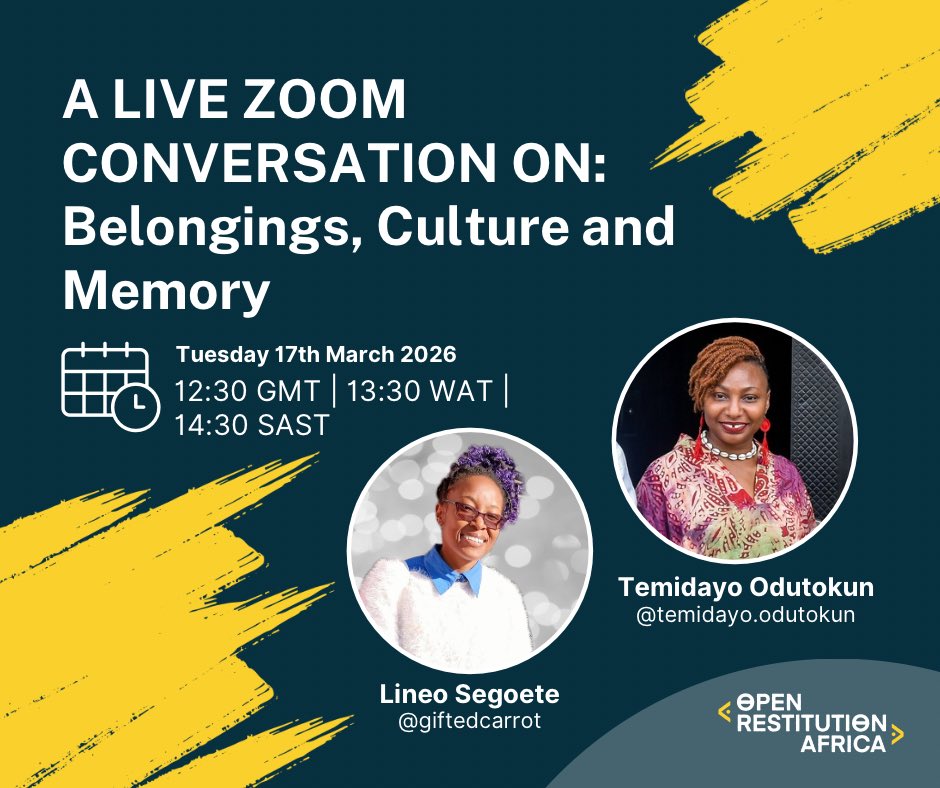
We are LIVE now! on Zoom.
zoom.us/j/98166421904?pwd=11…

Due to technical issues, our IG Live conversation has been moved to Zoom and will now be taking place tomorrow!
📅 Tuesday 17th March
🕒 12:30 GMT | 13:30 WAT | 14:30 SAST
📍 zoom.us/j/98166421904?pwd=11…
64