
Joined October 2022
- Tweets 24,350
- Following 1,168
- Followers 8,308
- Likes 41,572
4,092 Photos and videos






Pinned Tweet

30 Oct 2023
𝗔𝗿𝘆𝗮𝗻 𝗰𝘆𝗰𝗹𝗶𝗰𝗮𝗹 𝘁𝗶𝗺𝗲, 𝗔𝗯𝗿𝗮𝗵𝗮𝗺𝗶𝗰 𝗹𝗶𝗻𝗲𝗮𝗿 𝘁𝗶𝗺𝗲 𝗮𝗻𝗱 𝘁𝗵𝗲 𝗯𝗹𝗮𝗰𝗸𝗽𝗶𝗹𝗹𝗲𝗿 𝗽𝗵𝗲𝗻𝗼𝗺𝗲𝗻𝗼𝗻; 𝙍𝙚𝙡𝙖𝙭𝙞𝙣𝙜 𝙡𝙞𝙠𝙚 𝙩𝙝𝙚 𝙞𝙢𝙢𝙤𝙧𝙩𝙖𝙡 𝙜𝙤𝙙𝙨 𝙫𝙨. 𝙁𝙧𝙚𝙩𝙩𝙞𝙣𝙜 𝙡𝙞𝙠𝙚 𝙖 𝙎𝙘𝙝𝙞𝙯𝙤𝙞𝙙 𝙤𝙫𝙚𝙧𝙩𝙝𝙞𝙣𝙠𝙚𝙧:
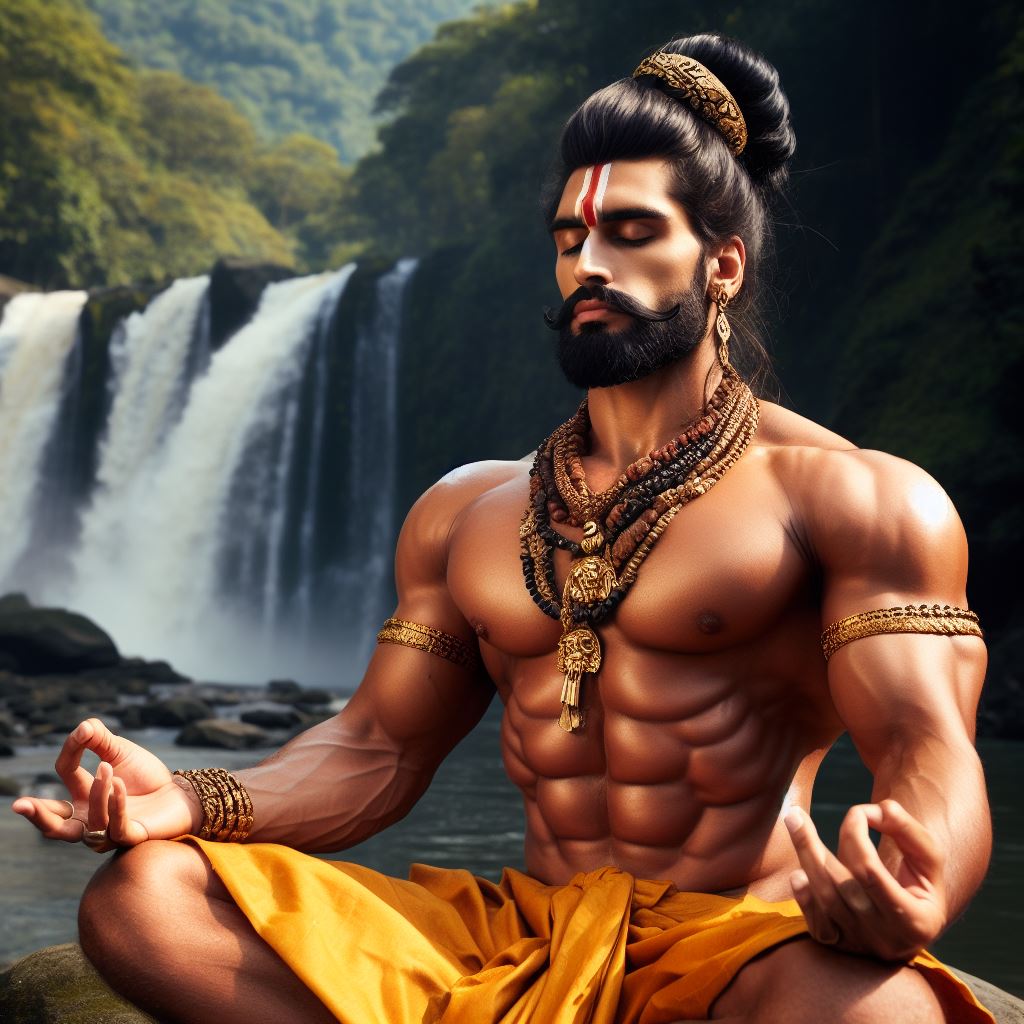
Most people are aware of the difference in time perception between Indo-European religions and abrahamic religions. The cyclical view of time predominates in many natural religions like Sanatana Dharma, while a linear view of time is propounded by abrahamic religions and their derivative secular ideologies. The phenomenon of blackpill is also an example of the latter. I will try to unveil the types of psyche that may have given rise to these time perceptions.
𝗔𝗿𝘆𝗮𝗻 𝗰𝘆𝗰𝗹𝗶𝗰𝗮𝗹 𝘁𝗶𝗺𝗲; 𝙍𝙚𝙡𝙖𝙭𝙞𝙣𝙜 𝙡𝙞𝙠𝙚 𝙩𝙝𝙚 𝙞𝙢𝙢𝙤𝙧𝙩𝙖𝙡 𝙜𝙤𝙙𝙨:
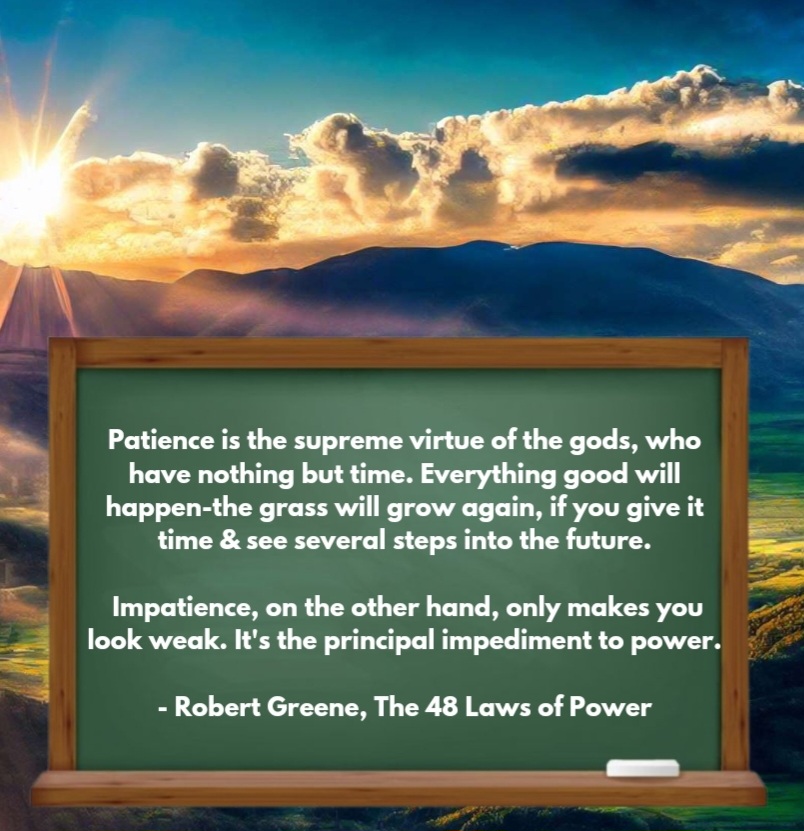
Robert Greene refers to patience as "the supreme virtue of the gods". Let's imagine how an immortal god might perceive time. Since they will never suffer from a want of time, they will be in the most relaxed state throughout their lives. Even if we count in a few periods of stress, the infinite lifespan will ensures that they are in a consistently relaxed state with no hurries or worries that mortals experience. They will also be able to take much better decisions at any given moment due to this because decisions taken under stress are more likely to be bad decisions.
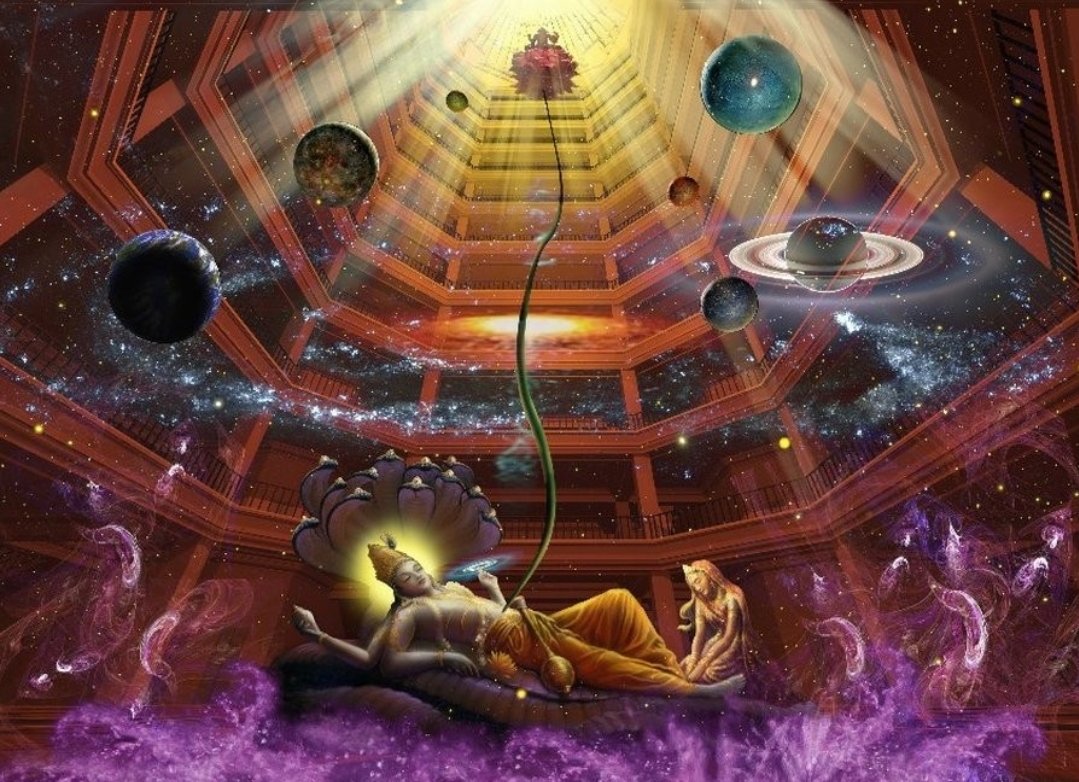
Interestingly, abode of Bhagawan Vishnu, Vaikuntha literally means "without anxiety." Sheshashayi Vishnu form of Bhagwan Vishnu depicts him reclining on Shesha in the most relaxed manner. Immortality also leads to the infinite wisdom of the gods.
As they're immortal, the gods would have already seen everything that happens at any given point before and they would have seen the endless cycles of things, so they would perceive time as cyclical. We see how everything from stock markets to political dynasties and civilizations go through cycles. So cyclical view of time is true.
Most pagan religions and especially the Indo European religions, seek to elevate human beings into something closer to the gods while worshipping them. This is true for time perception as well. Hindus and other Indo-Europeans sought to "think like the gods" on a societal level with an infinite horizon. So, they have a cyclical view of time like the Hindu Yuga Cycle, which can lead to a relaxed attitude towards life and aid the society in making better long term decisions.
At an individual level too Sanatana Dharma tries to a help humans achieve a state of divine equanimity through practices like Yoga, pranayama and meditation.
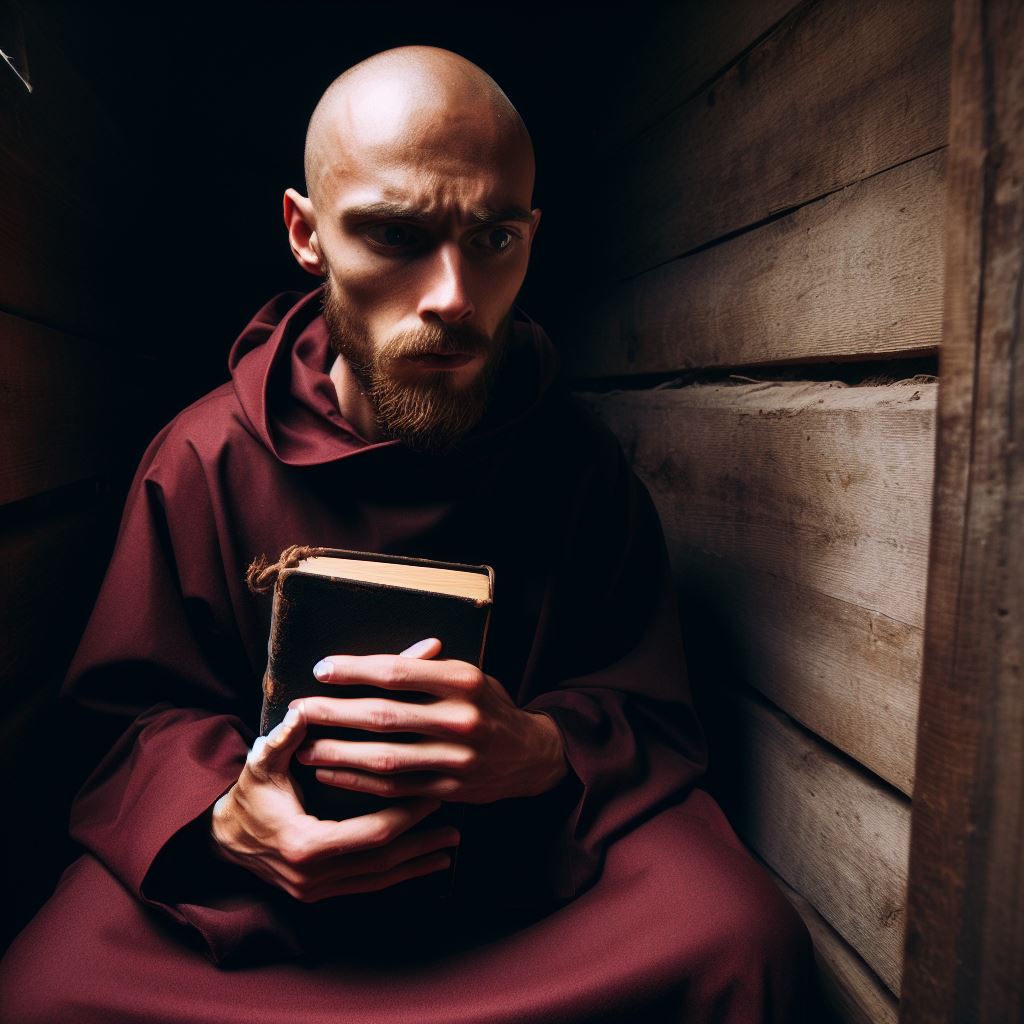
𝗔𝗯𝗿𝗮𝗵𝗮𝗺𝗶𝗰 𝗹𝗶𝗻𝗲𝗮𝗿 𝘁𝗶𝗺𝗲 𝗮𝗻𝗱 𝘁𝗵𝗲 𝗯𝗹𝗮𝗰𝗸𝗽𝗶𝗹𝗹𝗲𝗿 𝗽𝗵𝗲𝗻𝗼𝗺𝗲𝗻𝗼𝗻; 𝙁𝙧𝙚𝙩𝙩𝙞𝙣𝙜 𝙡𝙞𝙠𝙚 𝙖 𝙎𝙘𝙝𝙞𝙯𝙤𝙞𝙙 𝙤𝙫𝙚𝙧𝙩𝙝𝙞𝙣𝙠𝙚𝙧:
Think of the life of a modern day human being. Due to the unending stimuli- stress, overthinking, and burnouts are common. Stress can lead to decreased testosterone and dopamine levels and depression. Extreme depression can lead to the ideation of self-harm, which can be understood as a wish to end a life that is perceived as meaningless and fraught with unbearable stress.
Now, if we look at people suffering from schizophrenia, they tend to be very paranoid overthinkers. Paranoia is a key symptom, so much so that "Paranoid Shizophrenia" was a term which was previously used for a subtype of the condition. Stress is a common trigger for Shizophrenia too. Severe hallucinations and delutions are common. The most common delution among schizophreniacs is delution of persecution.
Perhaps as a coping mechanism for exaggerated paranoia and persecutory delutions some Shizophreniacs tend to believe that a god is talking to them, that they themselves are divine beings, that they are prophets etc. When a paranoid person imagines a God its likely to be very insecure and jealous God because they are likely to project their own mindset onto the God.
Where have we seen this type of beliefs before? Yes, these are strikingly similar to the abrahamic religions and their worldview. Their secular offshoots like Marxism and Wokeism also share many of them the obsession with feeling persecuted. What does that say about the abrahamic prophets ? It's quite possible that they were themselves schizophreniacs.
If we look at the time perception in abrahamic religions they are linear and they constantly have apocalyptic manias and frenzied predictions of the end of the world. As a society they're thinking like a schizoid paranoic. The linear time is the projection of a szhizhoid overthinkers time horizon onto the God and the world. He wishes his meaningless and painful life ends quickly and is constantly fretting over it.
𝙎𝙤 𝙬𝙝𝙞𝙡𝙚 𝙥𝙖𝙜𝙖𝙣 𝙧𝙚𝙡𝙞𝙜𝙞𝙤𝙣𝙨 𝙖𝙣𝙙 𝙚𝙨𝙥𝙚𝙘𝙞𝙖𝙡𝙡𝙮 𝙄𝙣𝙙𝙤-𝙀𝙪𝙧𝙤𝙥𝙚𝙖𝙣 𝙧𝙚𝙡𝙞𝙜𝙞𝙤𝙣𝙨 𝙡𝙞𝙠𝙚 𝙎𝙖𝙣𝙖𝙩𝙖𝙣𝙖 𝘿𝙝𝙖𝙧𝙢𝙖 𝙩𝙧𝙞𝙚𝙨 𝙩𝙤 𝙚𝙡𝙚𝙫𝙖𝙩𝙚 𝙝𝙪𝙢𝙖𝙣𝙨 𝙩𝙤 𝙨𝙤𝙢𝙚𝙩𝙝𝙞𝙣𝙜 𝙘𝙡𝙤𝙨𝙚𝙧 𝙩𝙤 𝙩𝙝𝙚 𝙜𝙤𝙙𝙨, 𝙩𝙝𝙚 𝙖𝙗𝙧𝙖𝙝𝙖𝙢𝙞𝙘 𝙩𝙧𝙞𝙚𝙨 𝙩𝙤 𝙥𝙧𝙤𝙟𝙚𝙘𝙩 𝙩𝙝𝙚 𝙢𝙞𝙣𝙙𝙨𝙚𝙩 𝙖𝙣𝙙 𝙛𝙧𝙖𝙞𝙡𝙩𝙞𝙚𝙨 𝙤𝙛 𝙖 𝙢𝙚𝙣𝙩𝙖𝙡𝙡𝙮 𝙪𝙣𝙝𝙚𝙖𝙡𝙩𝙝𝙮 𝙝𝙪𝙢𝙖𝙣 𝙗𝙚𝙞𝙣𝙜 𝙤𝙣𝙩𝙤 𝙂𝙤𝙙.
Blackpillers are also very apocalyptic in their worldview and like to constantly claim "It's over" and call for self-harm on a civillizational and religious level by advocating for policies that weaken Hindus and strengthen abrahamics like conversion of more Hindus into abrahamic cults. They practically have a linear world view just like abrahamics.
Internet and social media has made the flow of news fast. This can lead to overthinking and a lot of stress due to the inability to adequately process so much information and stimuli as our capabilities are limited unlikelevel that of gods.
The addiction to edgy takes is also due to the nature of social media. As brain gets desensitized overtime, like how porn addicts have to seek more extreme and deviant stuff to get the same dopamine hit, blackpillers have to give more extreme takes to get the same hit. The dopamine hit happens when they get likes, reposts, etc, and when they build a network, the followers also start craving more and more extreme takes. So whole blackpiller groups become more and more deranged overtime and their views diverge significantly from reality. Humans being evolved to prioritize bad news over good news also facilitates this process.
These blackpillers are also practically atheists, so they have no mechanism to cope with their persecutory and apocalyptic delutions and hence engage in constant chimpouts, masochistic self flagellation and bashing of any future visions like Hindu Rashtra or Akhand Bharat, because as they think like a schizhoid paranoic, they don't want any future, hence blackpilling is essentially ideation of self-harm at a societal and civilizational level.
45
119
453
351,557
Good expose of how a guy who claims to be an educator is actually exploiting the ignorance of people who may not know the difference between ‘write off’ and ‘waive off’ to spread misinformation.
Jun 13

Why would mandatory cleaning up of toxic bank balance sheet be portrayed as scam?
1
18
60
572
Jun 12
China is more interested in saving its face (面子, miànzi) rather than telling the truth and contributing to the improvement of flight safety across the world.
While India never hide's our problems and works earnestly towards resolving them, Chinese hide many of their problems and usually the problems end up compounding and leading to what looks like a sudden collapse to the outsiders.
This pattern runs deep in Chinese history. The fall of dynasties frequently stunned the outside world because the internal decay had been carefully masked until the breaking point. What appears to outsiders as a sudden collapse is usually the visible eruption of long-smoldering issues that were deliberately hidden.
Jun 12

Over the past century, aviation has become one of the safest modes of transportation.
This success relies on a clear global consensus:
To thoroughly investigating accidents and transparently sharing the findings significantly reduces the likelihood of recurring tragedies.
China, however, appears to reject this collaborative approach.
Driven by a desire to protect its national image, Chinese authorities have a track record of obscuring facts and stalling international investigations.
A stark example is the China Eastern Airlines crash four years ago, which claimed 132 lives.
Although the tragedy is now widely attributed to a pilot murder-suicide, Chinese authorities actively buried the investigation report, prioritizing a meticulously crafted facade of perfection over global safety protocols.
This creates a concerning one-way street.
While China readily benefits from the global aviation safety database - learning from the investigative reports of other nations - its refusal to reciprocate denies the international community the critical opportunity to learn from its mistakes.

1
5
29
1,383
Jun 11
Naysayers be damned, India continues the journey to reclaim our rightful place in the world.
8
30
546
Openminded Fanatic retweeted

Jun 11
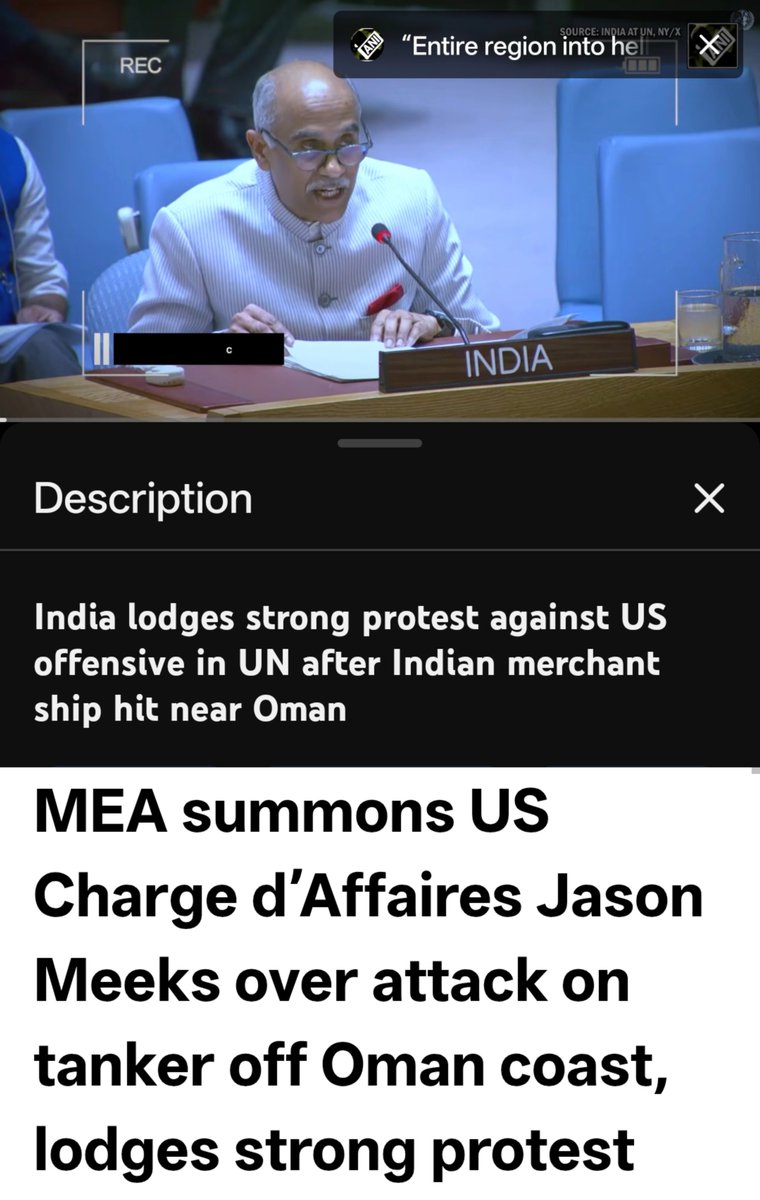
2 Indians died in Palau flagged carrier in Oman Gulf with crew from multiple nationality, total 7 nationality crew died
Immediately, Indian ambassador in UN directly told the US representative to back off, the senior most US diplomat in India was called immediately in New Delhi to be given an earful
No other country have escalated to this level
I am genuinely curious what else we were supposed to do
1) Declare war against US
2) Break all ties with US
3) Push embargo
Because if we do that we need to declare war on Iran as well because Iranian missiles killed 11 Indians
Ready for debate on this
Jun 11

As per the news reports, 2 Indians died because of America, any nation with a little bit of self respect will retaliate.
Narendra Modi government is still sleeping and monitoring the situation.
Ask 56 inch a question, his dogs will come to bark at you citing Vishwaguru logic.
144
289
1,461
74,236
Jun 11
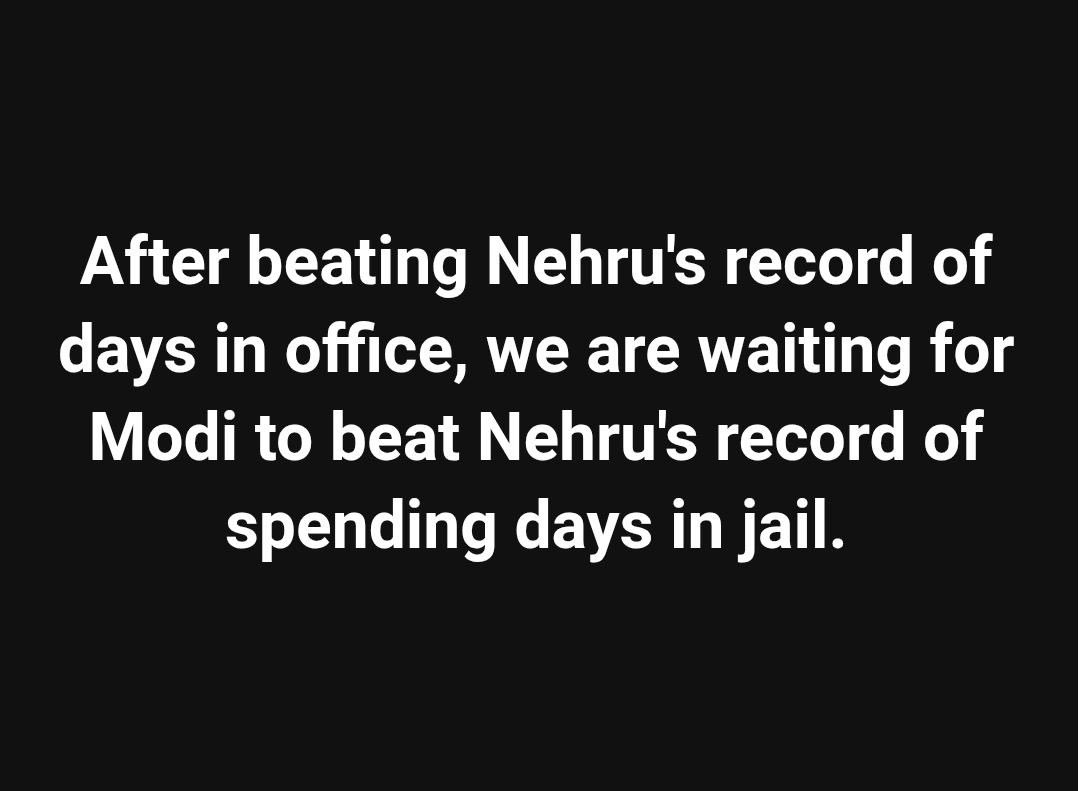
If Nehru had faced even a small fraction of what Savarkar faced, leave alone writing mercy petitions, he would have kneeled before the British officers, licked their boots or sucked other things to get out of the jail within a few days.
The Kala Pani jail in which Savarkar was held for more than 10 years was designed to break the will of the most ardent nationalists and Savarkar never gave up his ideals despite how harshly he was treated.
Jun 11

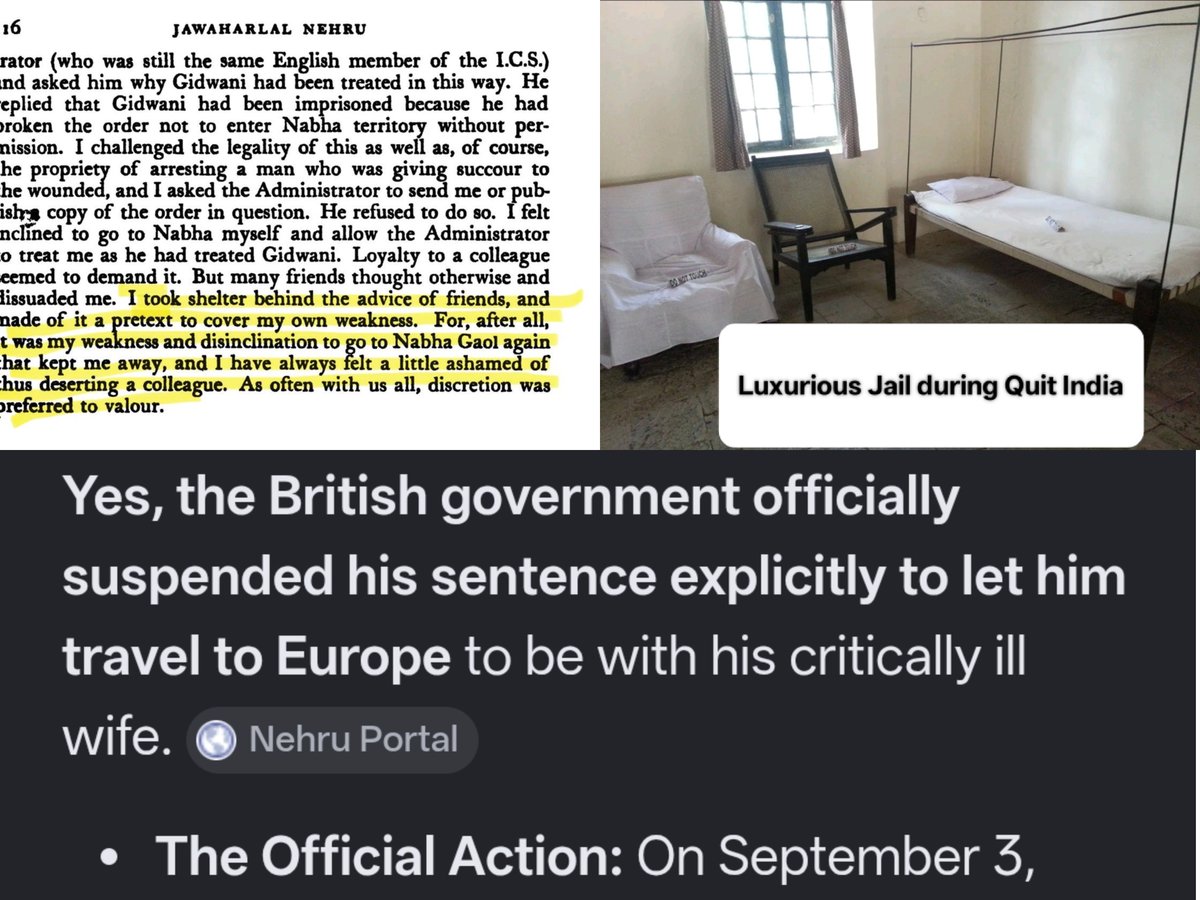
Nehru's jail saga will always be funny
What kind of inmate celebrates his Birthday in Jail with his friends and supporters, Have his own garden, a room with sofa and electric table fan that too in 1934
What kind of jailed person gets parole whenever he wanted, got his sentence terminated by British to travel to Europe
The only time Nehru was in actual jail was in Nabha Princely State in 1922 that too for 12 days, after which his Daddy Motilal came running and both Dad-Son signed a bond that Jawaharlal will behave and never come back to Nabha
1
5
26
1,043
Jun 11
These Congressis have the audacity to attack Savarkar for his mercy petitions while claiming Nehru was somehow braver or more resilient. Nothing could be further from the truth.
The British treated Nehru and Gandhi with kid gloves, they were given comfortable rooms with private gardens and allowed plenty of family visits. Nehru was even allowed to celebrate his birthday with his friends in the so called "jail cell". British knew that they weren't as big of a threat to their power as Savarkar so their Jailtime was more like a formality.
On the other hand, Savarkar was subjected to the most brutal treatment in the Kala Pani jail in the Andamans for more than a decade. The jail was designed to break the will of the most motivated nationalists. Savarkar endured years of solitary confinement, forced hard labour, torture, and dehumanizing conditions, and yet he did not give up his ideals.
Had Nehru faced a fraction of the treatment Savarkar got even after a few days Nehru would have done much more than writing petitions to get out. He would have licked the boots of the British officers and offered to do even more depraved things.

Those whose ideological forefathers wrote 9 mercy petitions will not understand this!
1
2
9
378
Jun 11
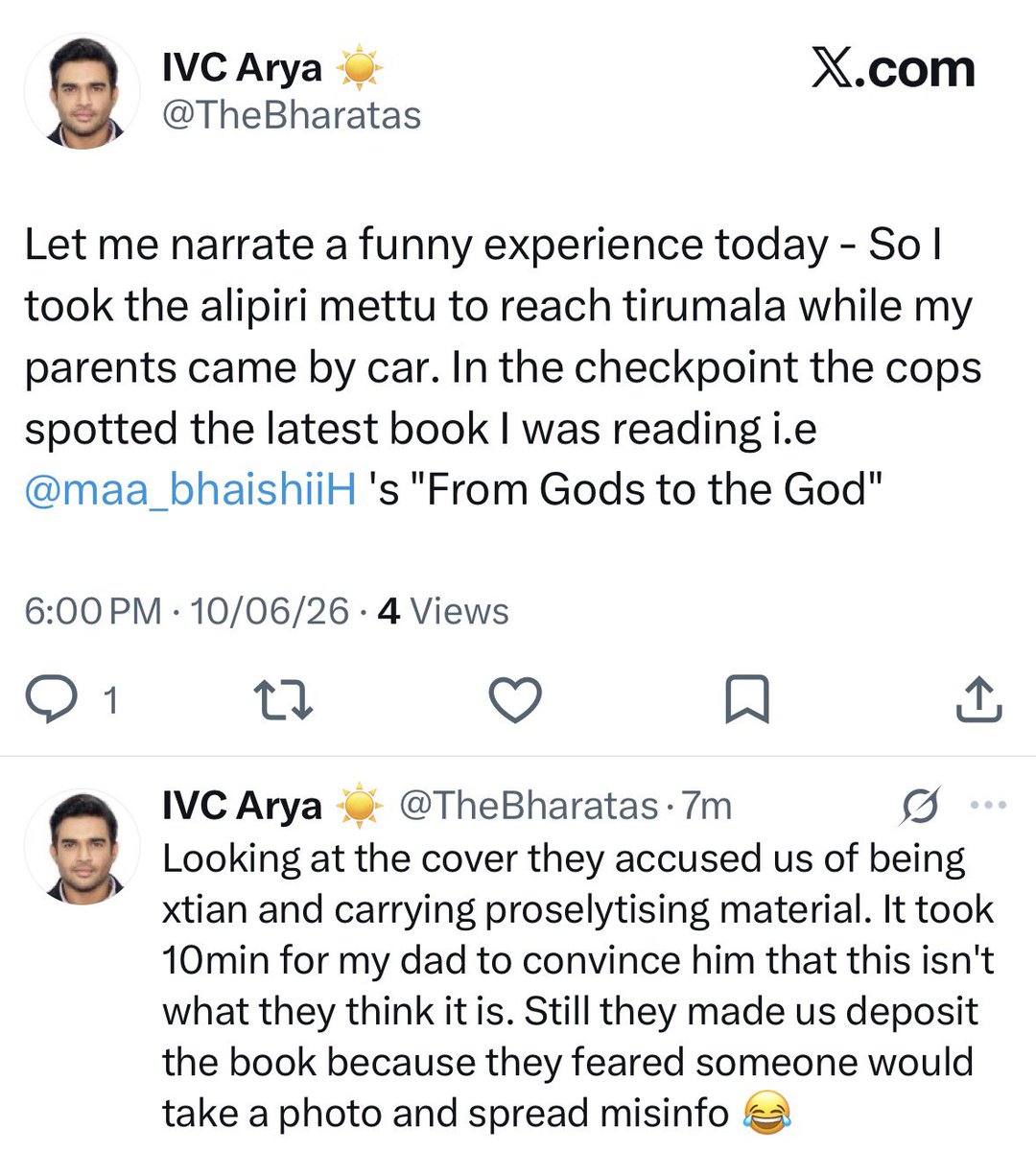
Looks like they mistook the title "From gods to the God" as a prescription being put forward, when its actually meant to be a desciption of what happened in Greko Roman classical world.

😂😂😂😂😂😂😂😂😂😂
I have been accused of so many things but being called as a writer of “proselytising material”, is so funny.
Quelle surprise, lol . Am still laughing as I finish typing this post.
1
3
265
Jun 10
These people will comment on things they don't know about just to spread panic and negativity about India. He didn't even know the full form of FDI, lol.
While we have enemies like Pakistan, China, Turkey and 5 eyes nations, running organized programs to tarnish India's reputation and spread negativity, these traitors who hate Modi/ BJP/ Hindus join them wholeheartedly in trying to paint a negative picture of India.
Nationalists should always take negative news and opinions about India with a bucket of salt because most people doing this type of shit do not have the best interests of our nation at heart. We should differentiate between valid criticism from well wishers and unreasonable and obsessive bashing of India by haters who wish for our destruction.
Jun 9
Now that Net FDI has reached influencers who don't know a thing about it, let's understand what is it made of and why the number hides more than it reveals.
Net FDI has three components Gross FDI (money coming in) minus Repatriation (successful exit of past investments or profits) minus Outward FDI (Indian companies buying assets like oil blocks or investments abroad). The three components indicate different economic circumstances and only looking at the net number doesn't tell us much. The same net number can mean wildly different things depending on the components.
4
22
626
Openminded Fanatic retweeted

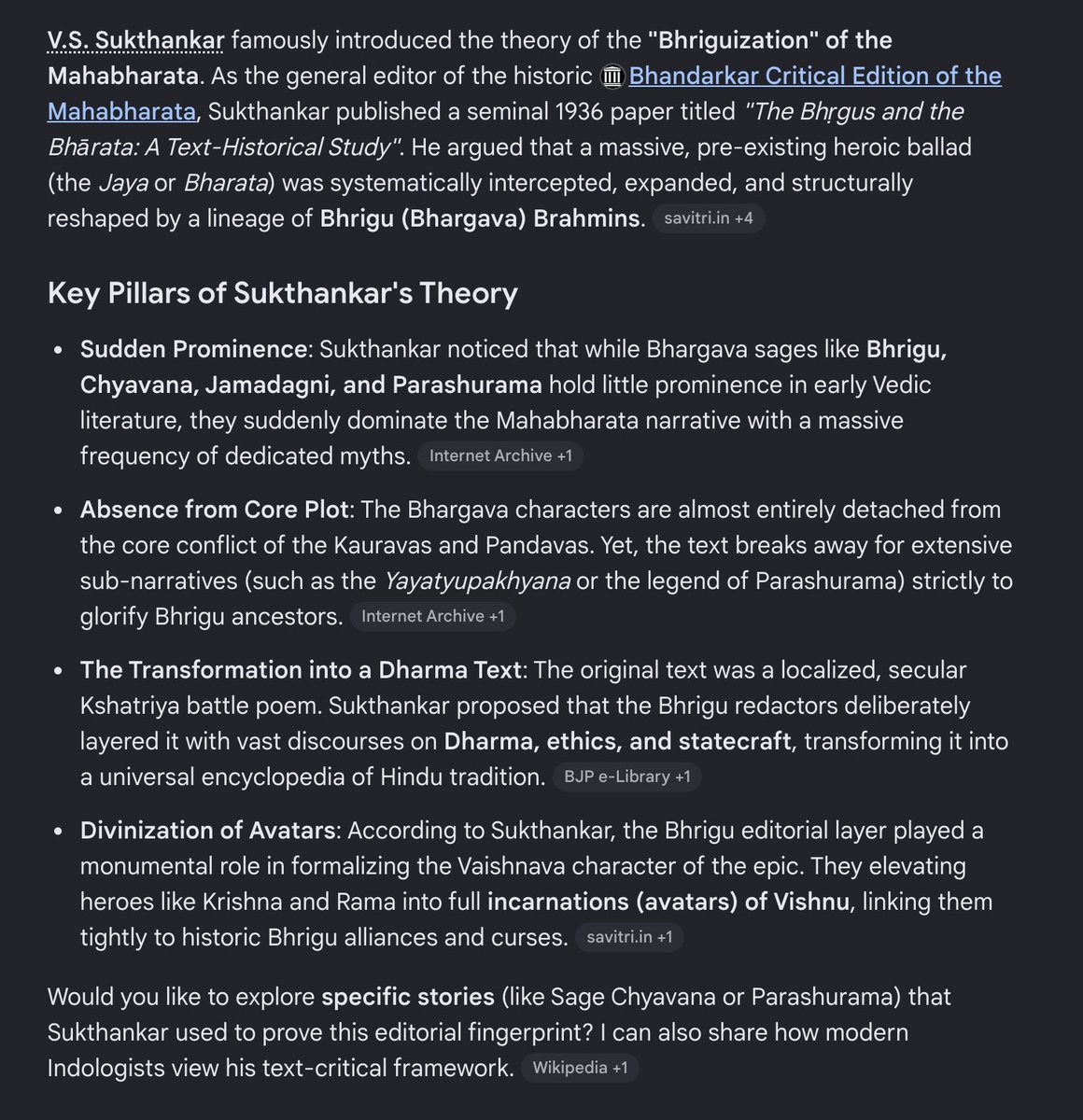
There are several questions to be reflected upon here.
While there is merit in speculating that there is some kind of a conflict between Angirasas and Bhrigus it cannot be characterised as Indra vs Varuna.
Varuna is the primary Devata of Rta (Rtasya Gopa) all Devatas are Rta Palakas in different ways. Thus, Indra is responsible for all of that. With Angirasas being the primary Rshis of Rigveda making them a part of Indra vs Varuna conflict completely contradicts the perspective of RgVeda itself.
Secondly, If Bhrigus are the distinguished Drashtaras of Atharva Veda (which they are), then that represents a higher order material dimension. So the conflict if any is in the realm of the composition of spiritual-material and not excellence vs order. Order is the fundamental concern of Rgveda itself through Rta. RgVeda is fundamentally about Devatas as Rta Paalakas with Varuna representing Daiveeka excellence in the substratum and all other Devatas representing excellence in specific aspects with Indra has been the Paalaka of everything.
So making this a conflict between Order and Excellence represented by Bhrigus and Angirasas would be technically incorrect. If Angirasas praised Rta as much then they are equally upholders of Order. I guess the difference was what Order meant and not Order vs Excellence.
Further, if Bhrigus were the reshapers of Mahabharata in the way the post explains then why so many verses in Mahabharata uphold Trayee and not mention Atharva in parts considered beyond Jaya? There are equal references to all four Vedas and Trayee alone in MB in different places.
Even further, what explains expositions about Moksha (Mokshadharma Parva) and its enormous impact on India subsequently with many traditions emerging? This dimension itself is absent in Avesta and could not have been a Bhrigu 'innovation' alone, if that were the case we would have seen it in Avesta - if the narrative in the original post were true.
We are missing the point why Mahabharata is Vyaasa rachita. Shuka is the son of Vyaasa. Shuka is the greatest representative of Moksha. In a part, that was elaborated by Bhrigus for their glory, if that were true, why would they make Shuka a son of Vyaasa and not a Bhrigu? Why would they miss out on such an opportunity? There is a huge metaphor out there in Shuka being Vyaasa's son.
Beyond all this, we are reading Mahabharata in isolation. It is deeply connected with all Puranas and Bhrigus are not as much present in other Puranas as they are in MB except, of course, Shaunaka Maharshi (Bhrigu) being the leader of the audience and Souti being the the narrator. We are totally missing that there is a Vasistha dimension to Mahabharata. We are also missing that Mahabharata is a whole restatement of the Adhidaivika plane presented poetically, mystically, metaphorically by RgVeda. What was accessible only by a ritualistic Tapasya was made so by Mahabharata purely on the literary plane to a good extent.
The strength of Mahabharata is that it can be read with any lens. That is its weakness too, we can read it with a reduced one either, until somebody holds the bigger one.
If one accepts this conflict theory alone, its amazing that somebody who were completely out of the original Drashta zone, came to sideline the pioneers and restated the entire Drishti on a wholly different plane that has since shaped life as much in the vision of the original. If that is so, let us hail such conflicts.

General editor of the BORI critical edition of the Mbh, V.S. Sukthankar, in his 1936 paper 'Bhṛgus and the Bhārata' made the bold claim that the group of rishis responsible for expanding the Mbh from an ancient war ballad of a Kuru war into this complex epic with subplots, morals, lessons, bhakti, and so on were the Bhṛgus.
Unbeknownst to most, the Bhārgavas seem to be rival groups (generally speaking) to the Angirasas. The Angirasa rishis primarily composed the Rgved, Yajurved, and Samved (the original trayi), while the contribution of the Bhārgava rishis peaks in the Atharvaveda (historically called the Bhārgavāngirasa veda).
While the Angirasas were devout Indra bhakts, the Bhṛgus worshipped primarily Lord Varuna (Asura Varuna), who stood in stark contrast to Indra. One demands excellence, the other demands order.
As per texts, Varuna is the sovereign asura par excellence, the same figure who survives in Iran as Ahura Mazda, the keeper of cosmic order. Indra, the fort-smashing warrior, takes the opposite path and is demonized into a daēva in Zoroastrianism.
The Bhṛgus also largely become the later day Vishnu bhakts. They apply traits reserved for Varuna, oceanic symbology, blue skin, the cosmic judge and sovereign, onto Vishnu, who in the Rigved is described primarily in his Vamana form.
Therefore, the Mahabharata, while being a beautiful text full of great knowledge and wisdom, was also a political coup, one in which the Bhārgavas reshaped the old Kuru war ballad into a vast dharma text. It was a systematic engineering to domesticate Arya Dharma into modern day Hinduism. I am not saying that the change was bad, I am saying it was less organic.
The Bhṛgus, largely absent from the core Vedic texts, through beautifully retold stories injected into our Puranic and Itihasa texts, ensured that their gods and ancestors finally prevailed, while all others were reduced to demigods or mere posts.
Well played, Bhrgus.
6
34
78
6,359
Jun 8
This is nonsense and believing this will be absolutely self defeating for Hindus. Facts definitely matters especially for a group in the position that Hindus are in.
While people who are incumbents in academia ie. Anti Hindu liberals etc can afford to lie and create narratives with zero factual evidence to an extent(even they will lose influence if they do it excessively, if some opponent is skillful in using truth to discredit them eg: liberal media losing trust after advent of social media), Hindus cannot afford it. Even if a group is the underdog in a particular field, they can gain a lot of influence by sticking to facts and evidence and crafting we should create pro Hindu narratives that cannot be dismissed easily by our enemies, rather than making up baseless incoherent claims.
Jun 7

Everyone who has been trying to interpret IV script as Dravidian has admitted that IVC has vedic characteristics. Yet it doesn’t stop them from claiming a Dravidian script. They key thing to understand is that facts matter little. Narrative is all that matters.
2
297
Openminded Fanatic retweeted

Jun 7
Meet Sadiq ali, the pakistani canadian, living in toronto, he's the head of TF-2990, and runs dozens of similar accs, his soul purpose is to spread misinfo and hatred against indians on a massive scale by manipulating twitter algorithm.
EXPOSING HIS ENTIRE SYNDICATE. 🧵


825
6,831
18,575
1,474,492
Jun 7
Leave alone Chickens Neck and North East India these people dont even know their own genders or at least their bodies don't know it.
And these low IQ dysgenic chakkas think they can take on nationalist Hindutvavaadi Chads, lol.
Jun 7

Very regrettable, these youth are not aware of North-East India, its critical geographical location.
We must know about our own nation.
1
28
743
Jun 7
कुछ लोग सिर्फ़ राजनीति करते हैं, और कुछ लोग समाज को नई दिशा देते हैं।
प्रधानमंत्री नरेन्द्र मोदी जी के आह्वान पर @ManishMPahal जी ने बस्ती की माताओं और बहनों को पर्यावरण संरक्षण के अभियान से जोड़कर जो उदाहरण पेश किया है, वह दर्शाता है कि जनभागीदारी कैसे जनआंदोलन का रूप ले लेती है।
@narendramodi @PMOIndia
3
13
271
Jun 7
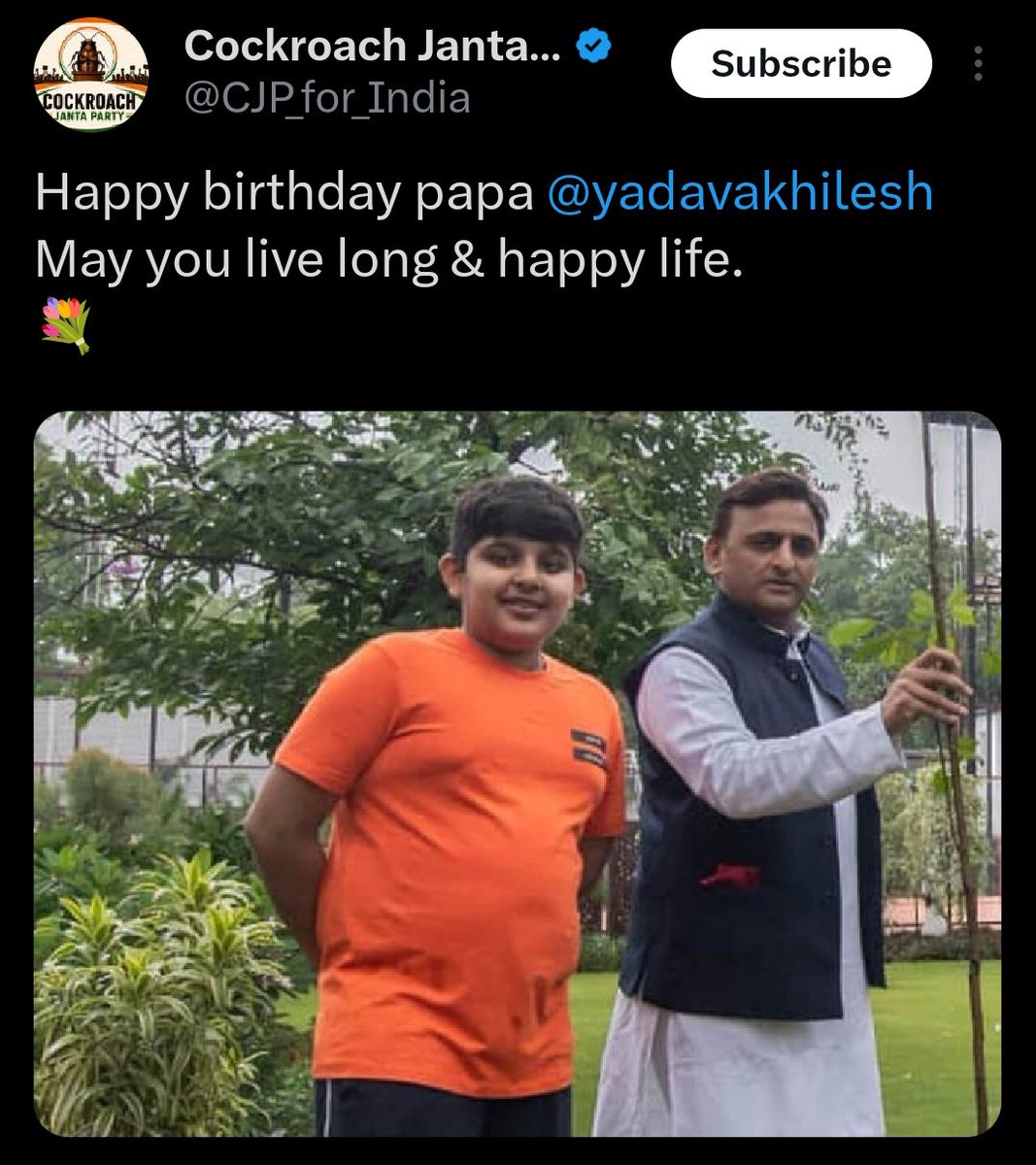
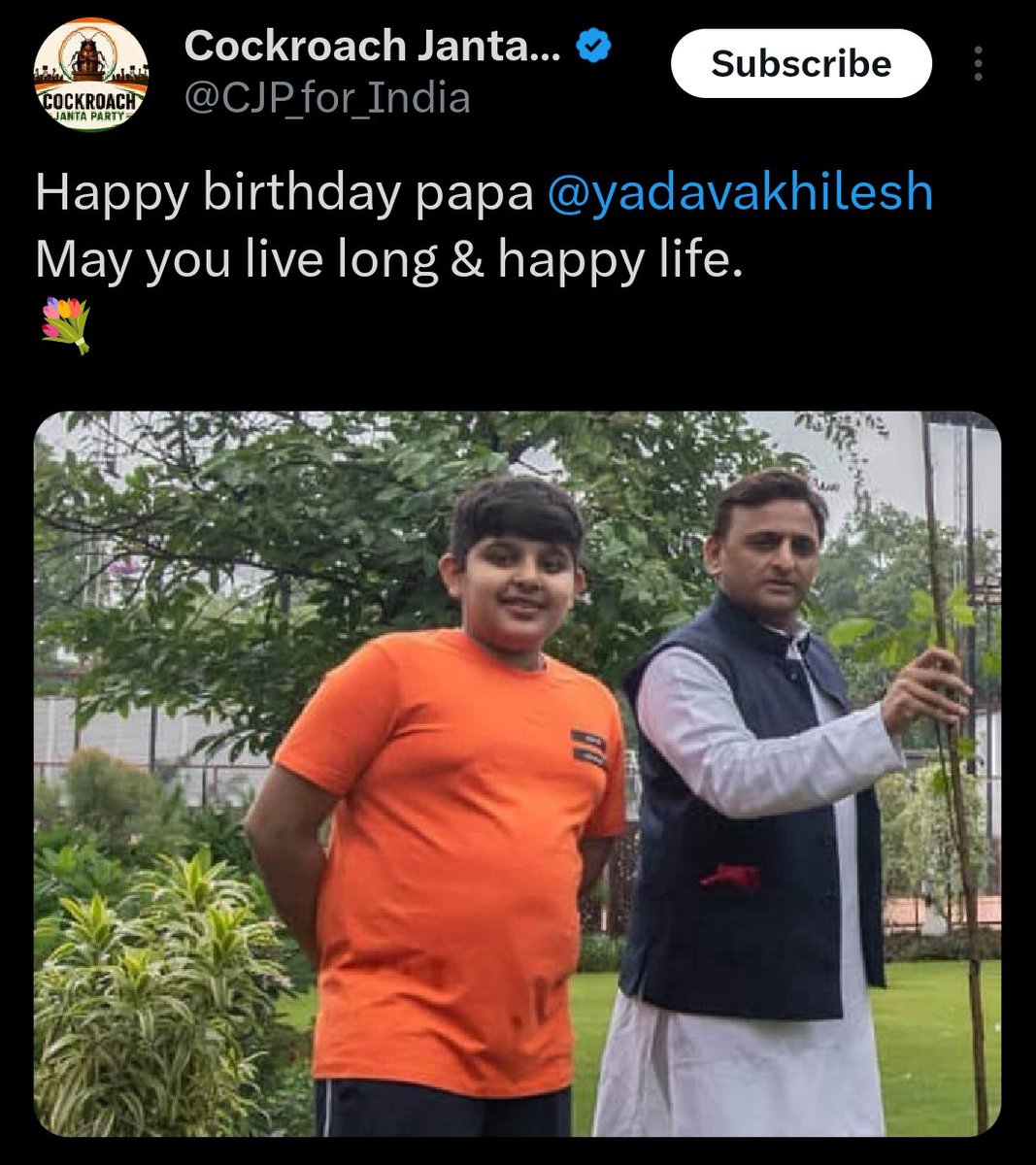
Apparently the X account that is being used by CJP was earlier used by Akhilesh Yadav's son or some SP agent running the account in the name of Akhilesh Yadav's son. If someone thinks that this CJP is trying to bring some real positive changes to the nation, they are wrong, he's in cahoots with the same old corrupt, rotten anti Hindu secular party ecosystem.
Jun 7

.@NCPCR_ और @India_NHRC से अनुरोध है कि कृपया इस पेज के एडमिन के विरुद्ध कठोर दंडात्मक कार्रवाई सुनिश्चित करें।
पूर्व में यह पेज अखिलेश यादव के बेटे के नाम से संचालित किया जा रहा था। अब भारत में अराजकता फैलाने की सुनियोजित मंशा के तहत इसका नाम बदलकर "कॉकरोच जनता पार्टी" कर दिया गया है।
मेरी जानकारी के अनुसार, इस पेज का संचालन समाजवादी पार्टी के आईटी सेल द्वारा किया जा रहा है। अखिलेश यादव भी लगातार "कॉकरोच जनता पार्टी" के समर्थन में ट्वीट कर रहे हैं। इनकी मंशा और राजनीति को समझिए।
सत्ता की इतनी भूख ठीक नहीं है, अखिलेश यादव जी। यूपी की जनता 2027 में इन सभी हरकतों का करारा जवाब देगी।
7
28
577
Jun 7
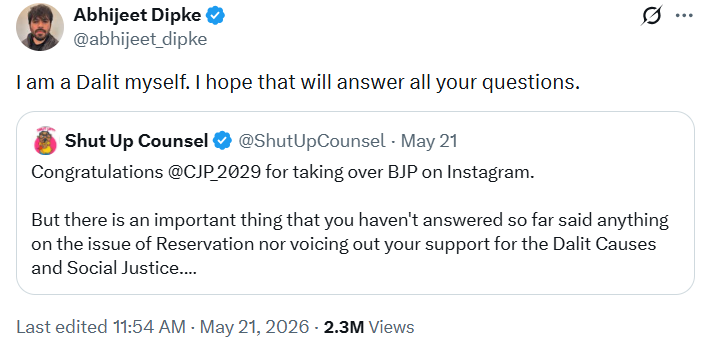
Its telling that the guy the liberal ecosystem is trying to sell as "Gen Z leader" have said that his politics is defined by his caste. Regardless of which caste, if you are defined by your caste then you're boring and not at all aligned with the worldview of Indian youth.
4
26
514
Openminded Fanatic retweeted

Jun 6
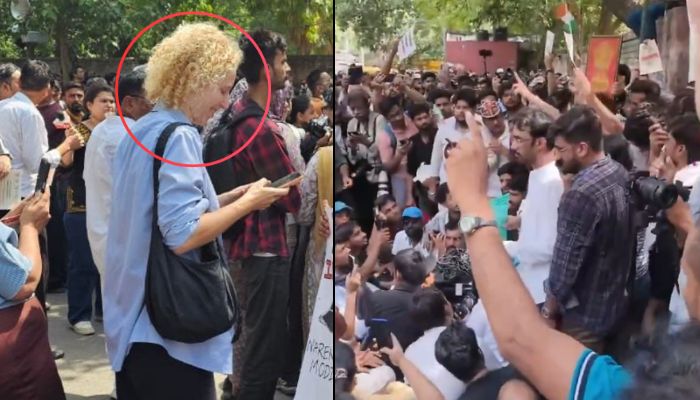
From giving a clean chit to Islamists in the Delhi riots to guilt-tripping Hindus for the Ram Mandir
Meet Hannah Ellis Petersen, The Guardian’s anti-India propagandist, spotted at CJP protest
opindia.com/2026/06/who-is-h…
92
3,053
6,387
43,830
Jun 6
This guy is just 30 years old and yet fainted after one hour in the Indian Summer. On the other hand 75 year old Modi campaigns for hours travelling across the nation during Lok Sabha elections for months. Sometimes he does all this while fasting for Chaturmas and Navaratri.
Jun 6

Abhijeet Dipke fainted after protesting for few hours. And it wasn't even that hot today in Delhi. 😭😭😭
I hope he understood that making grand useless strategies while sitting in AC rooms is much different than ground reality.
4
42
331
10,202
Jun 6
Racist Wignats be like: "But...but muh grip strength, grip strength of Indian men is lesser than that of white women, vroo"
Turns out it's more like the other way round. Indian women are enough to take on White criminals.
Jun 5

An Indian woman slaps the gun from the hand of the WHITE ped0 who tries to rob her store, even a 40 Indian woman has higher grip strength than a WHITE man 😭
3
23
570
Openminded Fanatic retweeted

Jun 4
HOLY SHIT.
The Wikipedia expose on HAF just confirmed what many Hindus have been saying for YEARS.
A tiny network of leftie activist editors hijacked pages related to Hindus, Hindutva, caste, and India and turned Wikipedia into a propaganda machine.
They have smeared Hindu organizations as “extremist,” “nationalist,” and “fascist adjacent” while sanitizing and protecting activist groups openly hostile to Hindus.
And the scariest part?
This garbage doesn’t stay on Wikipedia.
It gets fed into Google searches, media narratives, academia, AI systems, and public perception worldwide.
A handful of anonymous editors can effectively shape how BILLIONS of people understand Hindus and India.
People mocked Hindus for warning about coordinated information warfare.
Turns out they were right.
Jun 3

Read full investigation: open.substack.com/pub/npov/p…
47
1,147
3,556
176,062