
Opposition International is a non-profit helping opposition political parties to hold governments accountable, propose alternate policy, and contest elections.
Joined September 2022
- Tweets 490
- Following 618
- Followers 100
- Likes 104
Photos and videos
Opposition International retweeted

Mar 23
“If citizens living under authoritarianism were able to access independent information, it would put the dictators on the defensive.” Read the latest from @jamiefly on #Iran
freedomhouse.org/article/ira…
1
9
18
2,946
Opposition International retweeted

Mar 17
This initiative to provide updates on the government's accomplishments is very welcome. In many countries, election promises are soon forgotten. This indicates that the PM and his team are planning to hold themselves accountable.
daily-sun.com/politics/86387…
6
3
24
1,024
Opposition International retweeted

Feb 11
Tomorrow, Bangladesh will hold an election that will not only set it on a new political path but also reestablish its constitutional order. Will it work?
journalofdemocracy.org/onlin…
1
1
2
188
Opposition International retweeted
7 Mar 2025
At the half way point of our visit to Bangladesh, a couple things have come into clear focus. First, nobody in Bangladesh subscribes to the narrative that the supporters of the fallen dictator are trying to portray. Of course there are problems, and these are discussed openly. But the narrative about chaos, breakdown in law and order, unchecked extremism, and terror in the minority community is clearly a construct of those whose regime ended in August and their external backers.
Second, the broad outlines of the path forward are clear: there will be a consensus reached on reforms and elections will be held within the time frame agreed upon by the interim government and the political parties. Not surprisingly, what people say in private is often different from their public utterances. The next election campaign is already underway, well before the specific date is fixed. Public statements are intended to position individuals and parties prior to that date.
Finally, while the initial euphoria of early August has understandably passed, Bangladesh is fundamentally changed from the pre-July period. Nobody wants to go back and there is no nostalgia for Hasina's regime. Slowly, the outlines of Bangladesh 2.0 are emerging and citizens across the political spectrum are finding their voice and exercising their freedoms--as messy and chaotic as that may appear to outside observers.
I look forward to further engagements across the coming days.
44
28
217
11,772
Opposition International retweeted
27 Feb 2025
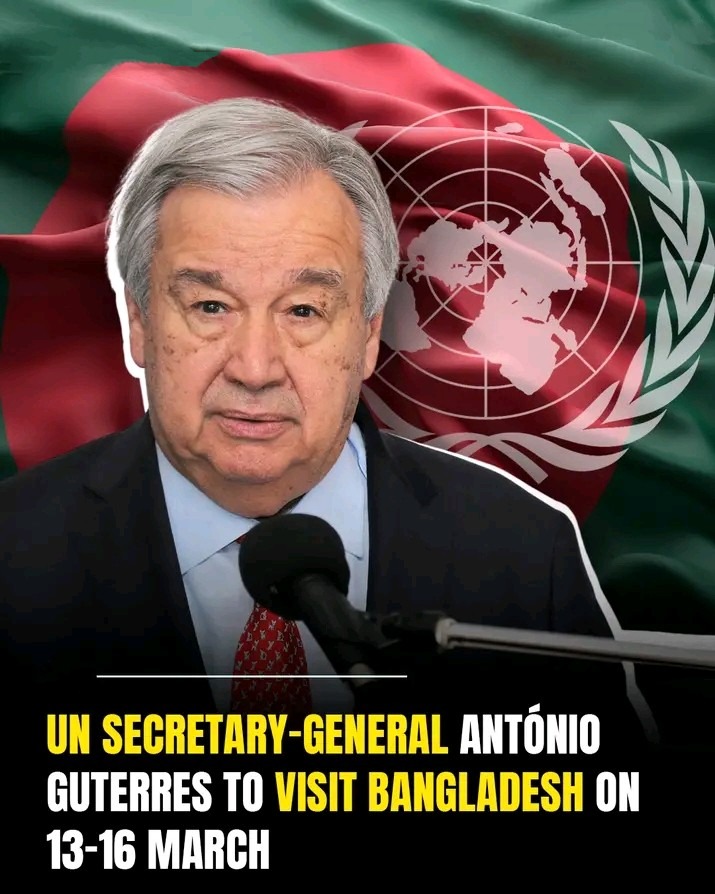
This visit is an opportunity to highlight Bangladesh's efforts to promote long overdue political and economic reforms prior to free and fair elections. It also will highlight Bangladesh's critical contribution to regional and global peace. Those who oppose reform and democracy have become increasingly isolated at home and abroad.
27 Feb 2025

We look forward to welcoming UN Secretary-General António Guterres to the new Bangladesh, a nation steadfast in its commitment to upholding human rights, reinforcing the rule of law, and fostering a just and inclusive society.
@antonioguterres
3
19
134
2,998

14 Dec 2024
The new #FreedomInTheWorld report from @freedomhouse documents the 18th consecutive year of global freedom in decline.
The deterioration was largely driven by flawed elections and armed conflict witnessed throughout 2023.
Read their full analysis: freedomhouse.org/report/free…
38
16 Nov 2024
Behind the scene in German Bundestag: Strained Democracy opposition.international/202…
12
12 Nov 2024
Mauritius: A Competent Opposition can halt Democratic Backsliding opposition.international/202…
20
22 Jul 2024
Quota Riots and Deaths: Bangladesh's Democratic Crossroads opposition.international/202…
1
2
1,230
22 Jul 2024
Quota Riots and Killings: Bangladesh's Democratic Crossroads open.substack.com/pub/opposi…
39
7 Jun 2024
King’s College’s Ben Graham Jones gives South Africa’s Opposition party, Democratic Alliance, Five principles for coalition talks
dailymaverick.co.za/opinioni…
The Democratic Alliance is a … opposition.international/202…
1
103
7 Jun 2024
DWB take on Perceptions of Democracy’s finding of international support
Protest against the foreign influence law adopted in the parliament, Tbilisi, Georgia, 20 April, 2024. Image: Shutterstock, licensed for use on this opposition.international/202…
71
5 Jun 2024
Tiananmen Square: the once and future past — its continuing meaning
linkedin.com/pulse/35-years-… opposition.international/202…
13
Opposition International retweeted

30 May 2024
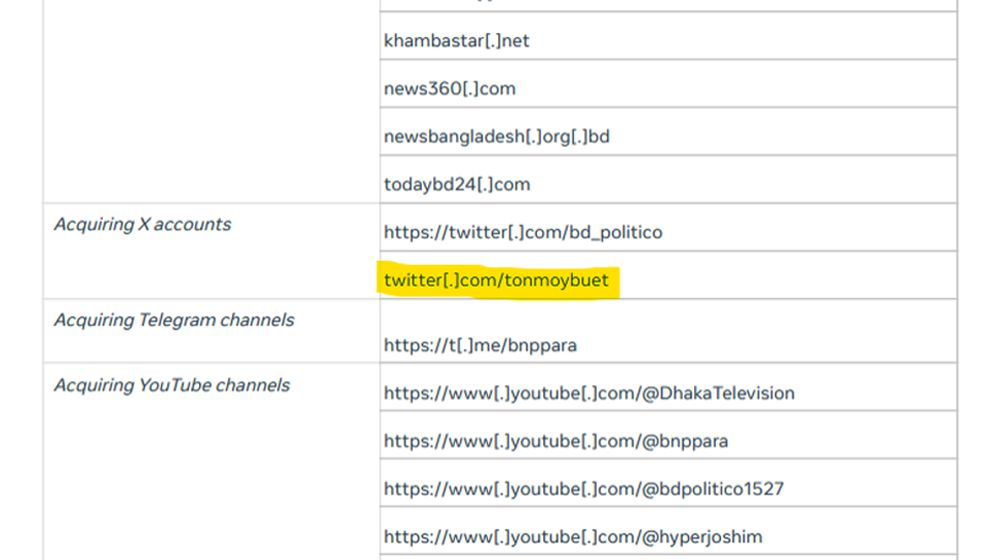
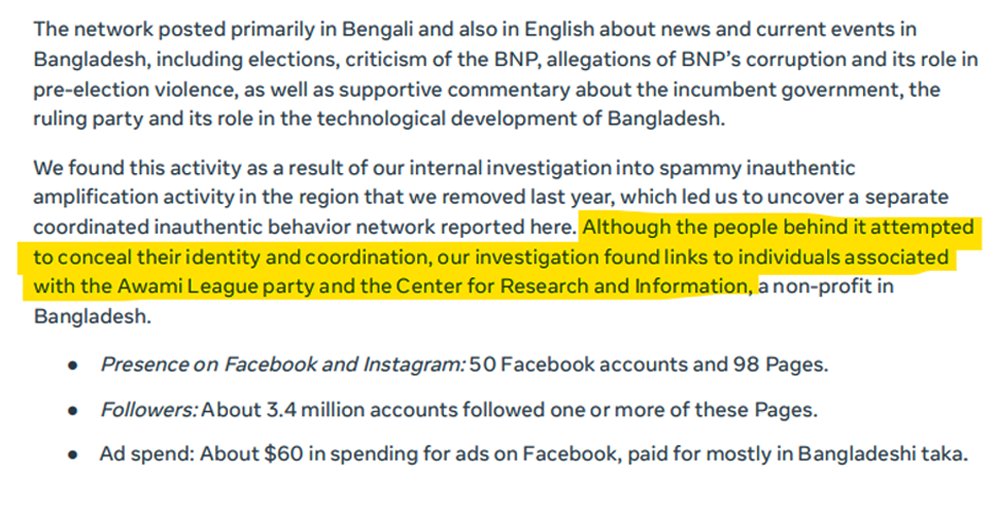
Facebook has identified the Awami League and its research cell, the Center for Research and Information (CRI), as being involved in false propaganda. As a result, Facebook has shut down 50 accounts and 98 pages in Bangladesh. This network, based in Bangladesh, primarily targeted the country's citizens. This information was revealed in the first quarter report of Meta, Facebook's parent company, released on Thursday.
The Awami League and CRI were linked to these activities, according to the report. The perpetrators used fake Facebook accounts, many of which were detected and deactivated by automated systems. Some of these pages represented entirely fictitious organizations, while others misused the names of established Bangladeshi media outlets.
#Propaganda #Misinformation #Disinformation #Meta #Facebook
3
7
29
1,499
Opposition International retweeted
20 May 2024
A good move by @StateDept, but this would have been more impactful had it been announced before #Bangladesh’s election. Those who support and enable the country’s autocratic regime need to know they and their family members will face consequences.
state.gov/designation-of-for…
17
14
114
2,293
Opposition International retweeted

7 May 2024
"The cause of freedom in the world is indivisible. ... Every democratic loss or failure has potential diffusion and demonstration effects. And likewise, every birth or defense of democracy becomes a source of instruction and inspiration."
journalofdemocracy.org/artic… @JoDemocracy
1
5
16
3,781