
11,852 Photos and videos

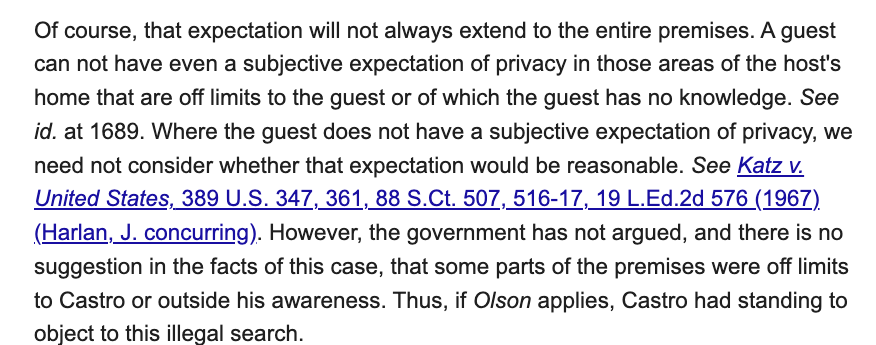
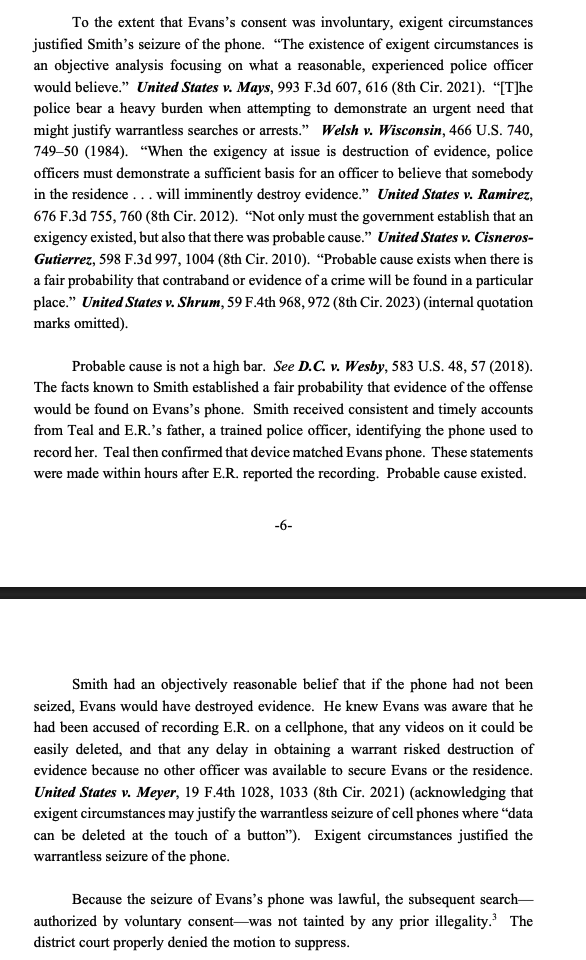
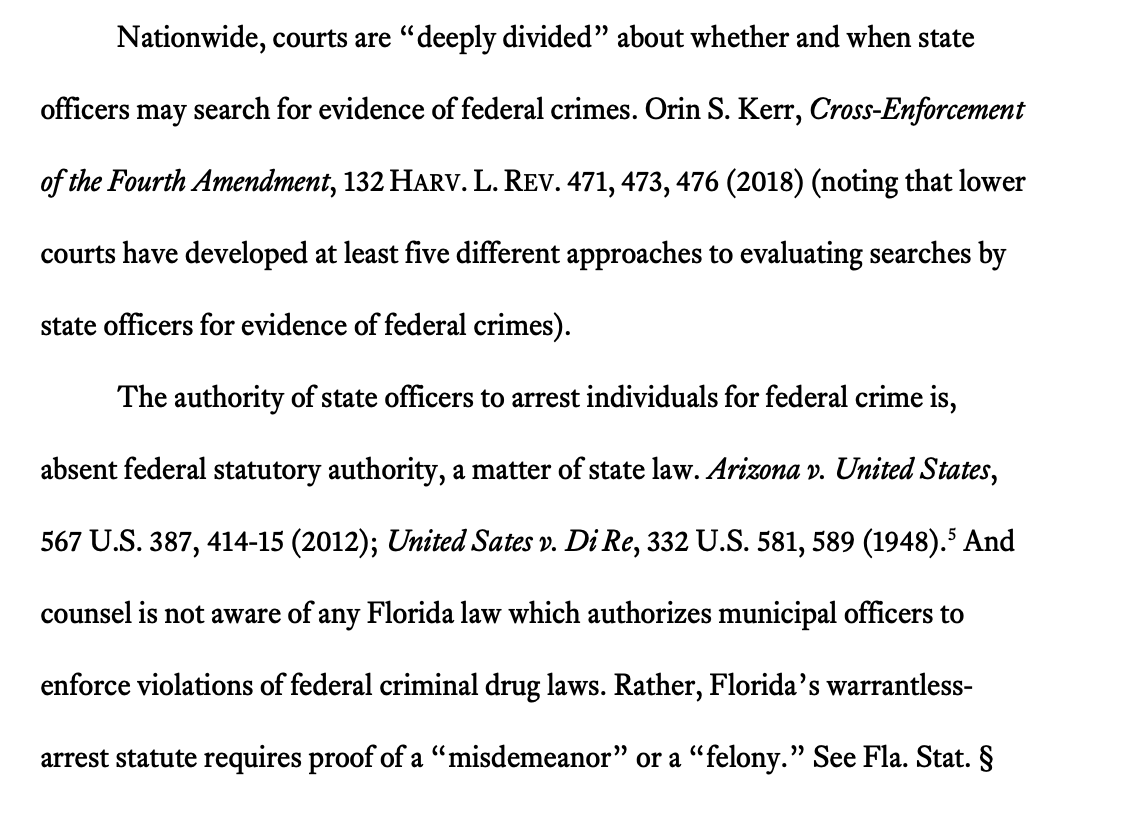
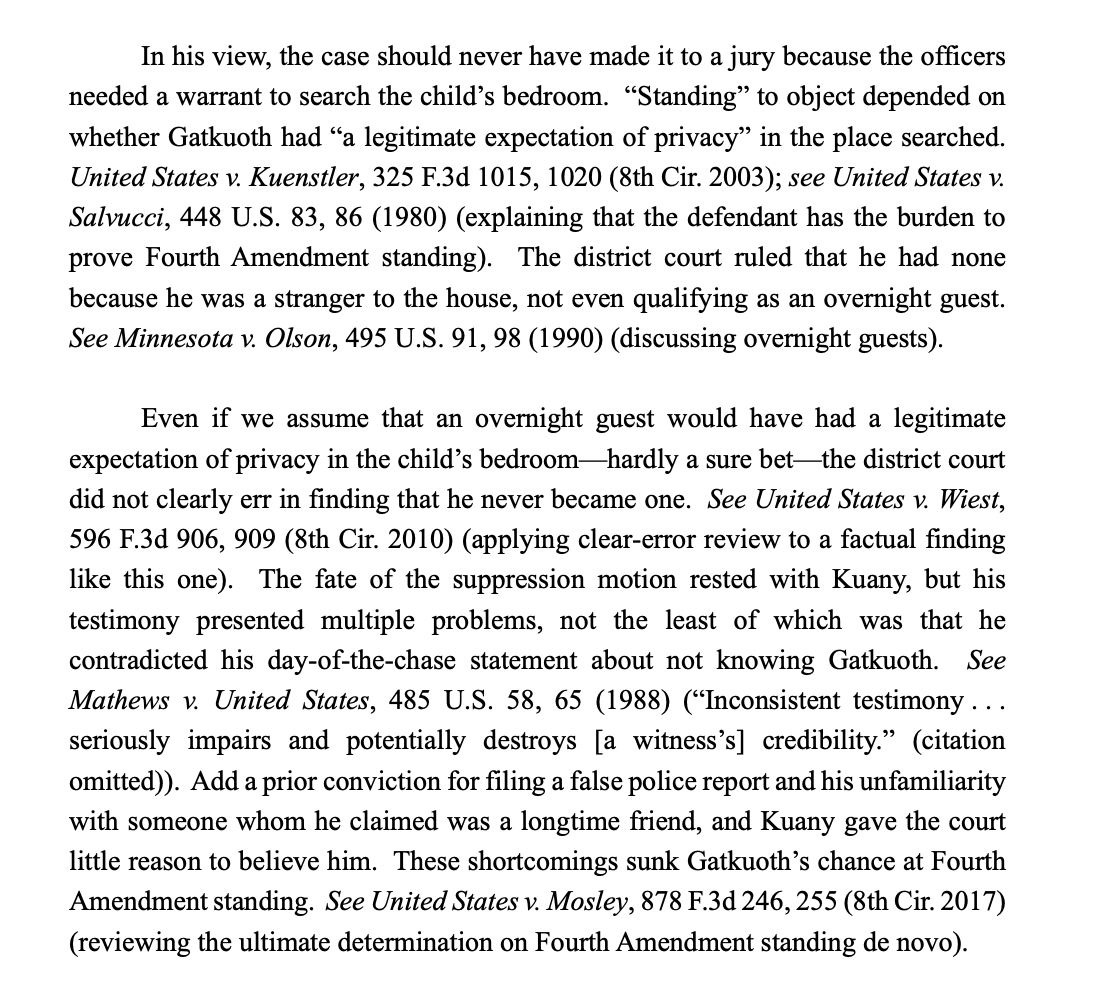
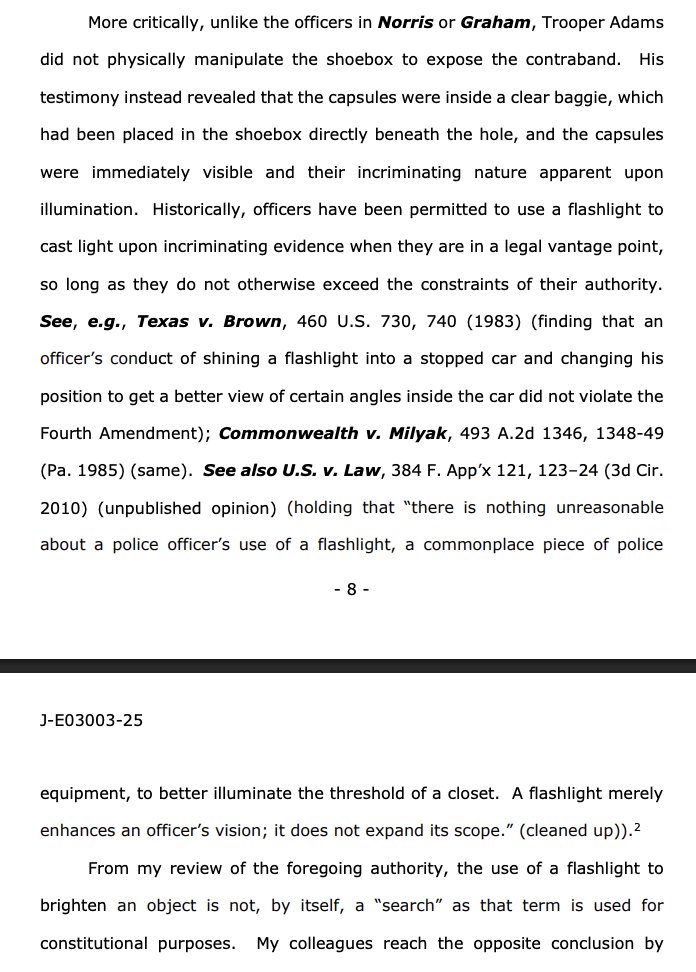

NEW ARTICLE: Fourth Amendment law recognizes a buffer zone around the home—so-called "curtilage," that cops can't enter outside an "implied license." SCOTUS says this is all intuitive and found in social norms.
But is it? We decided to ask people.
BONUS: Lots of pictures!

9
9
115
31,727
Important CFAA case argued before the CA9 last week: Amazon v. Perplexity, on whether the use of an AI agent to use Amazon violates the CFAA. Video:
youtube.com/watch?v=O0e3vJP6…
1
121
Orin Kerr retweeted

Jun 12
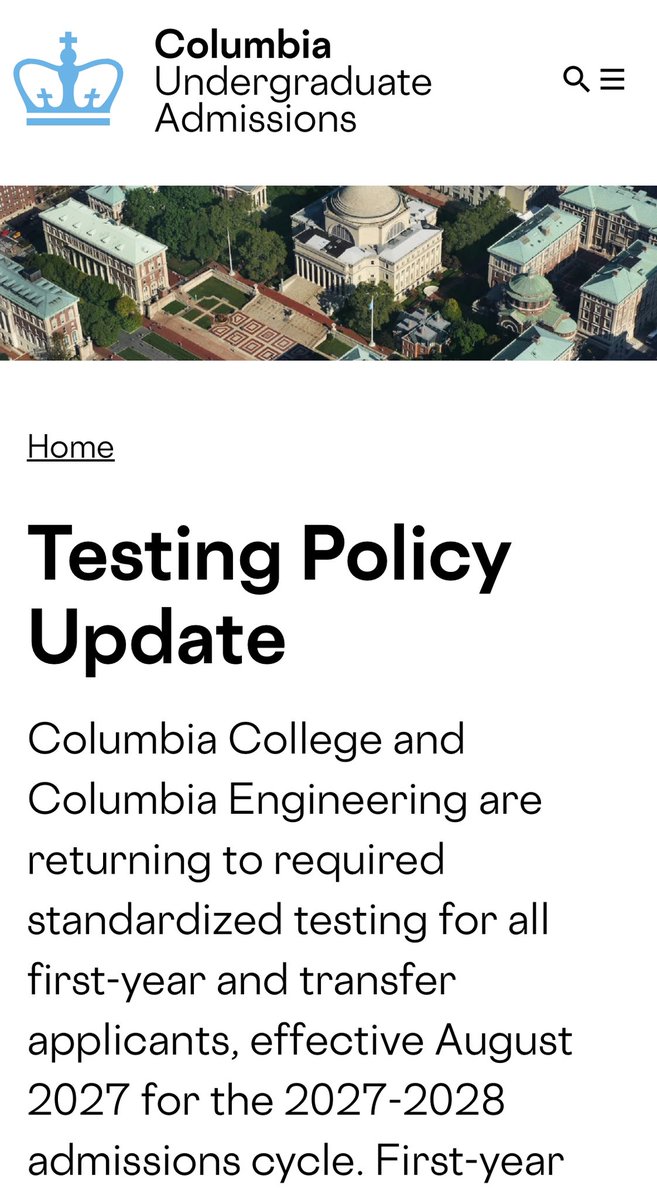
Columbia University has reinstated standardized testing for admissions — the last Ivy League school to do it.
“Through a multi-year faculty review, it was determined that test scores, among other factors, were a useful indicator of potential student success.”
57
129
671
231,741
Super niche tweet, but it's remarkable how much information is available about how to become a law professor as compared to when I went on the market <checks notes> 26 years ago.
These days, there's a ton of information out there about the hiring process: Articles, videos, blog posts, podcasts, you name it. Some schools also have channels to help their students and grads navigate the process. There's Sarah Lawsky's annual report, which tells you who got jobs and where. And even at a more basic level, you can easily look up the resumes of assistant profs to get a sense of who different schools are hiring. And if you get a VAP aimed at the market, there's usually a lot of resources to tap and people ready to help you. There's a ton of information.
It was pretty different not all that long ago, at least if I can call my own experience not that long ago (which gets less doable with age, but go with it). I think it was pretty much the norm to sort of learn as you went, maybe getting a quick overview of the process from someone who knew but mostly just going in cold. VAPs were uncommon, so most people were just applying from practice. When I went on the market, I don't think schools had faculty bios on websites yet, so you had to purchase the AALS bios book just to know who taught where. You would write an article or two on your own, try to get them published, and then submit your FAR form and hope for a call. The details of the process were largely a mystery.
A relevant anecdote: I remember going on the market and hearing from a school that was interested in seeing my "research agenda." I didn't know what a research agenda was, as I don't think I had heard of them. So I had to ask around and find out what such a thing was, and then I had to quickly write something up so I could send it to them. I think that was pretty standard. I'm sure there were some people who were plugged in and super informed, but I think most of us were just pretty clueless.
Is it better now or then? It's more rational now, I think: Tenure rates at law schools are high, so getting that entry-level job is often a life ticket. It makes sense that people would prepare for it rather than just sort of wing it. And it makes sense that schools would prefer to have more information for hiring, which probably results from a more prepared applicant pool. But I don't know.
3
50
16,444
Good panel discussion of scholarship expectations for entry-level lawprof hiring with my colleague Jennifer Chacón, Afra Afsharipour, and Eric Goldman, from an event last fall at @BerkeleyLaw.
youtube.com/watch?v=Ops-s9Gb…
2
11
4,512
"Contemporary American society tends to value rigor and hard work much more in the youth sports context than in the academic context," interesting aside by @mattyglesias in the latest Slow Boring.
1
10
2,145
Tony Williams, Love Song, from "Spring" (Blue Note rec. 1965), with Williams on drums, Sam Rivers on tenor, Herbie Hancock on piano, and Gary Peacock on bass. A perfect intro to Sam Rivers, whose work is fantastic but can sometimes be hard for newbies.
youtube.com/watch?v=yjbi7P3c…
1
2
6
4,308
Orin Kerr retweeted

Jun 11
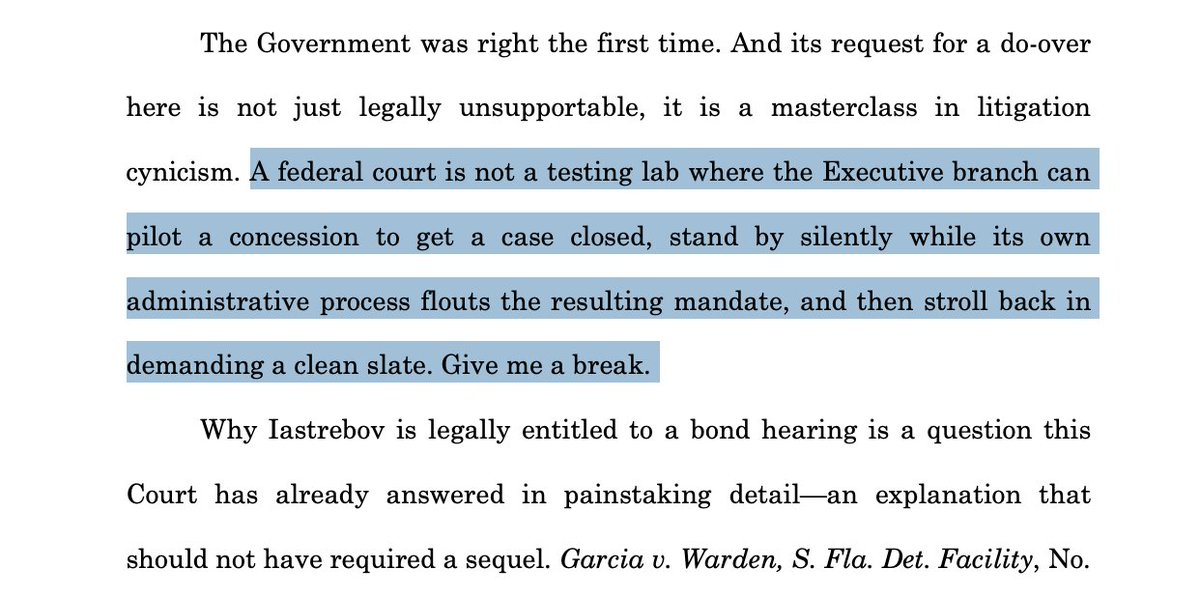
👀 A federal judge in Florida is excoriating the Trump administration for a "masterclass in litigation cynicism" by accepting immigration judge's ruling that conflicted with (and is legally superseded by) his own.
"Give me a break." Judge Dudek says.
storage.courtlistener.com/re…
15
562
1,743
104,995
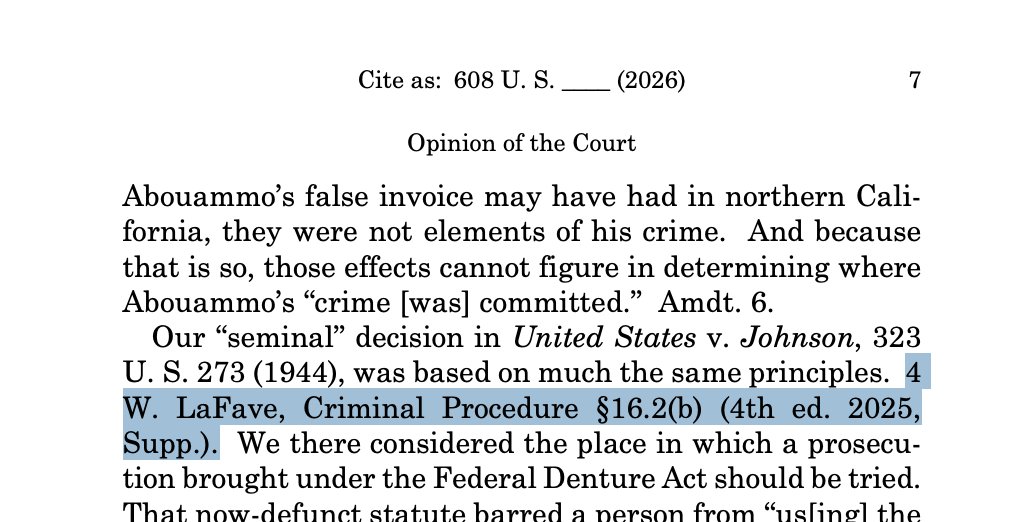
I never mind seeing our Criminal Procedure treatise cited at the Supreme Court, even if (as here) it's a chapter I have nothing to do with.
supremecourt.gov/opinions/25…
23
4,048
Held, 9-0, venue is where the act is, not the intent. Per Kagan, who often writes on substantive crim issues, here in just 12 pages. supremecourt.gov/opinions/25…

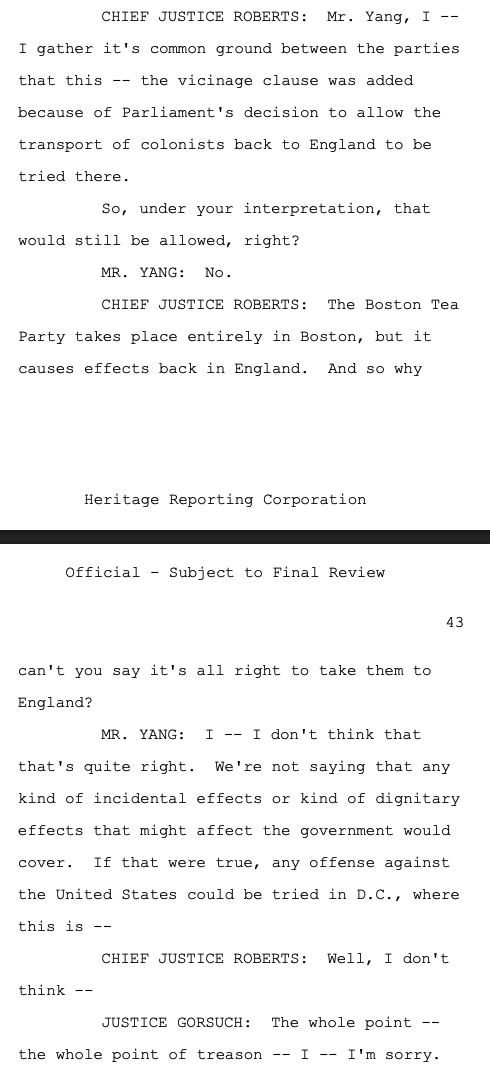
I recently listened to the oral argument in an important case on venue for federal criminal prosecution, Abouammo v. United States, argued March 30th.
Federal venue is interesting for crim law nerds because it follows the Model Penal Code's breakdown of the types of elements. To make a long story short, the conduct element is what establishes venue, while attendant circumstance elements don't.
In Abouammo, the government offers some theories for a broader view of venue based on the somewhat sui generis standards of conspiracy law. But as I hear the Justices, they weren't interested in that. (Rule of thumb: When the Justices ask if your standard would have allow for prosecuting the Boston Tea Partiers back in England, it doesn't look good.).
But we will see.
Links to audio and transcript: supremecourt.gov/oral_argume…
8
15
117
58,997
If you're starting law school this fall, you might be interested in this 40-minute talk on how to think about the first month of school. Maybe something to watch sometime over the summer: "So You're About to Start Law School"
youtube.com/watch?v=Ayl3fl3H…
1
10
2,912
Orin Kerr retweeted

Jun 10
Random maritime law fact of the day: Our maritime law is fundamentally civil law (not common law) even though we inherited it from Britain. Related to this: Common law was not taught in Oxford and Cambridge until Blackstone in 1758.
14
15
219
19,505
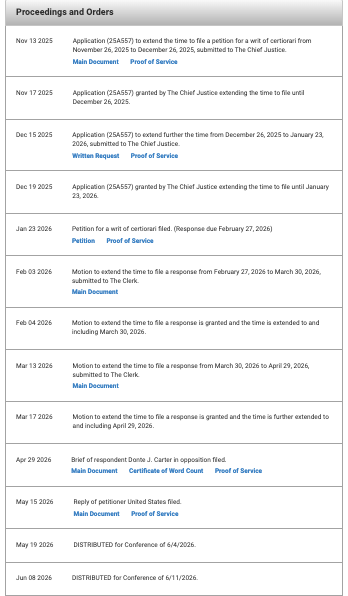
Some have asked me what 4A issue SCOTUS might grant cert on next. Good chance they'll take US v. Carter, on whether a person's race factors into whether they are 'seized' under the 4A. OSG on top, already relisted once.
supremecourt.gov/search.aspx…
3
9
44
10,541
Orin Kerr retweeted
Jun 10
Probably the biggest legal hack that most people never even try is just hiring a high-priced lawyer to solve the problem for you.
20
46
867
58,213

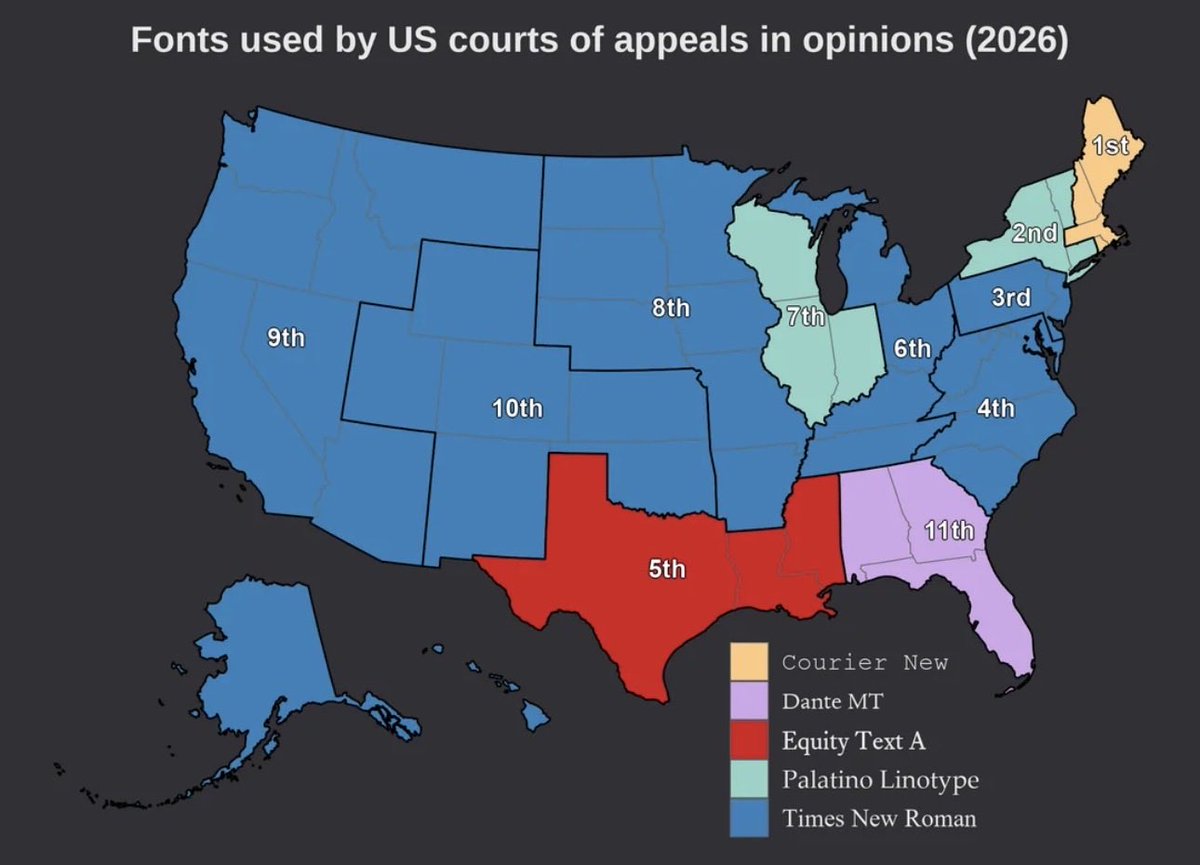
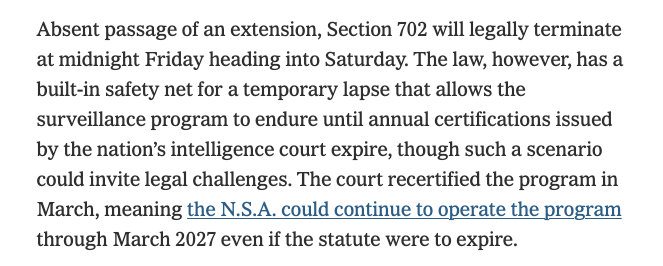
I'm not a Section 702 expert, so I may be wrong, but the caveat below in the screenshot, in the 21st paragraph of the story, seems pretty important. (No idea what the legal challenges are that could be filed.)
nytimes.com/2026/06/10/us/po…
1
2
9
3,912