Our World in Data is a free, nonprofit website with a mission to increase understanding of the world’s largest problems and drive informed action to solve them.

Joined April 2015
1,390 Photos and videos
Pinned Tweet
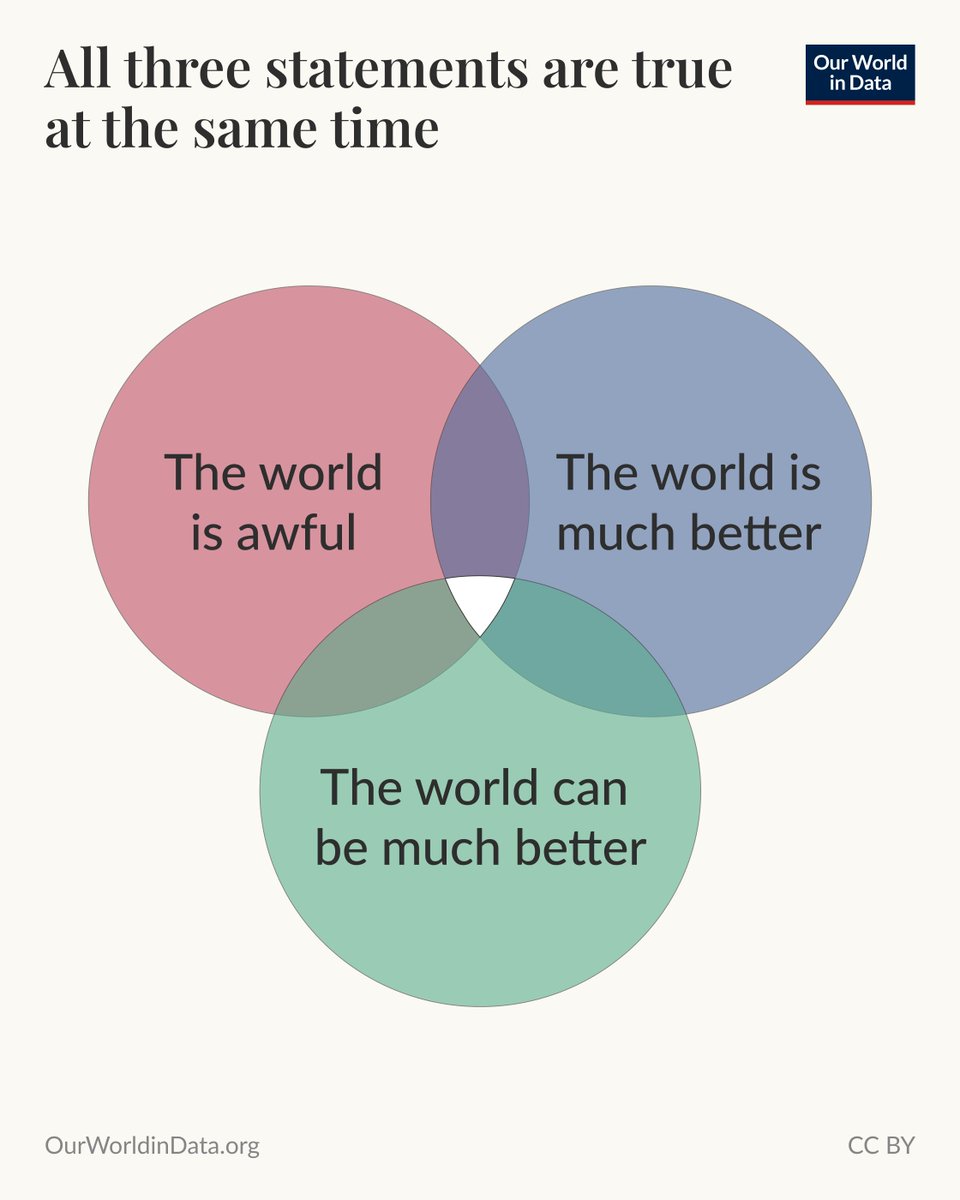
All three statements are true at the same time—
44
388
2,077
106,067
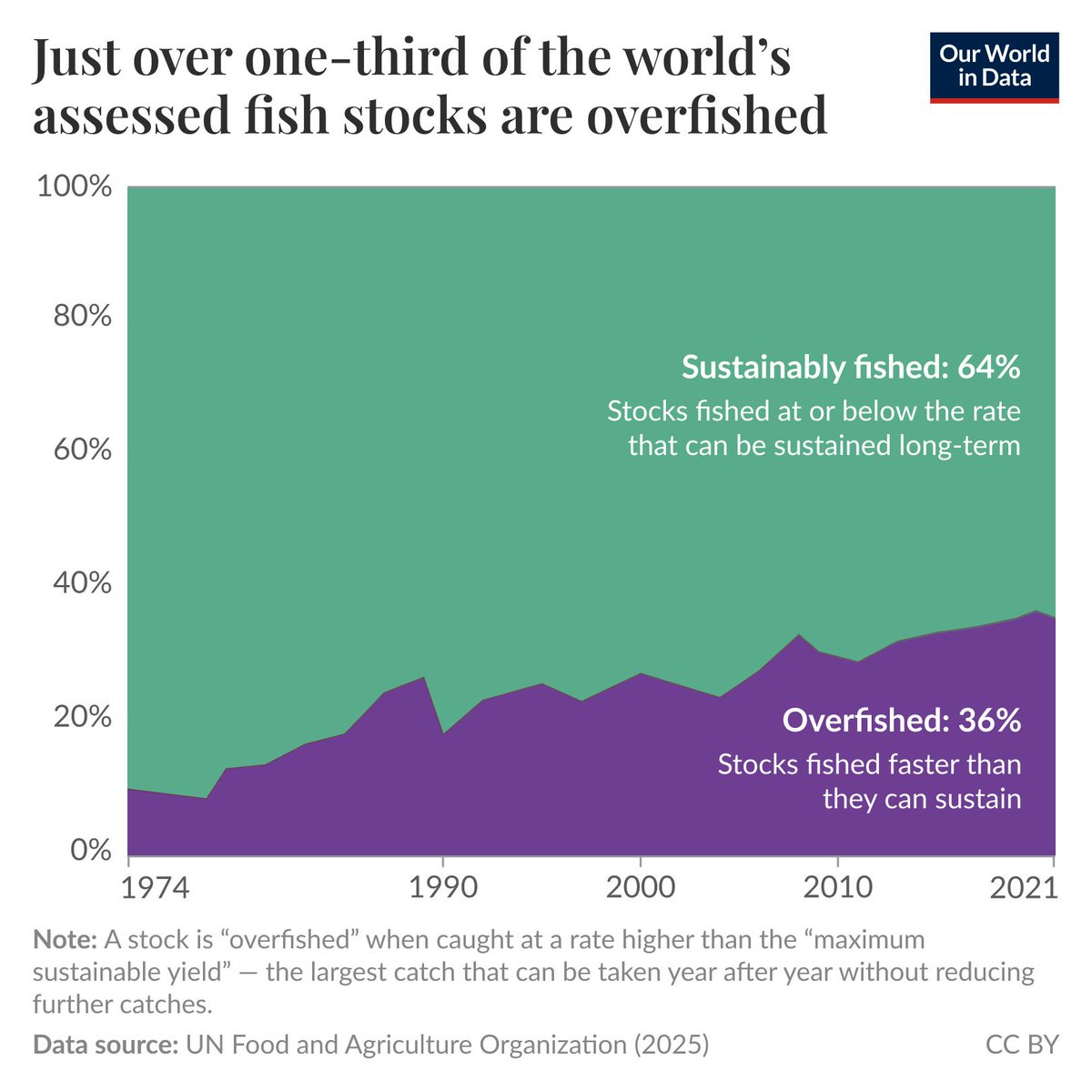
Just over one-third of the world’s assessed fish stocks are overexploited— How much of the world’s fish stocks are overfished? Fisheries scientists often answer this question with a specific metric: the “maximum sustainable yield” — this is the largest catch that can be taken from a fish stock without depleting it to the point that future catches decline. When a stock is fished at a rate above this level, it is considered overfished. The Food and Agriculture Organization of the United Nations (UN FAO) estimates that just over one-third of the world’s assessed fish stocks are overfished. As the chart shows, this has increased from around 10% in the mid-1970s. Getting high-quality global estimates of this metric is difficult; many regions have formal assessments of fish stocks and catch rates, but many fish stocks across Africa, Asia, and South America are not assessed rigorously. To get global estimates, the UN FAO combines these formal assessments with expert opinion and extrapolations based on available national and regional data. The FAO’s report — The State of World Fisheries and Aquaculture 2024 — provides more detailed breakdowns of which species are overfished. (This Data Insight was written by @_HannahRitchie and @parriagadap.)
4
21
66
6,931
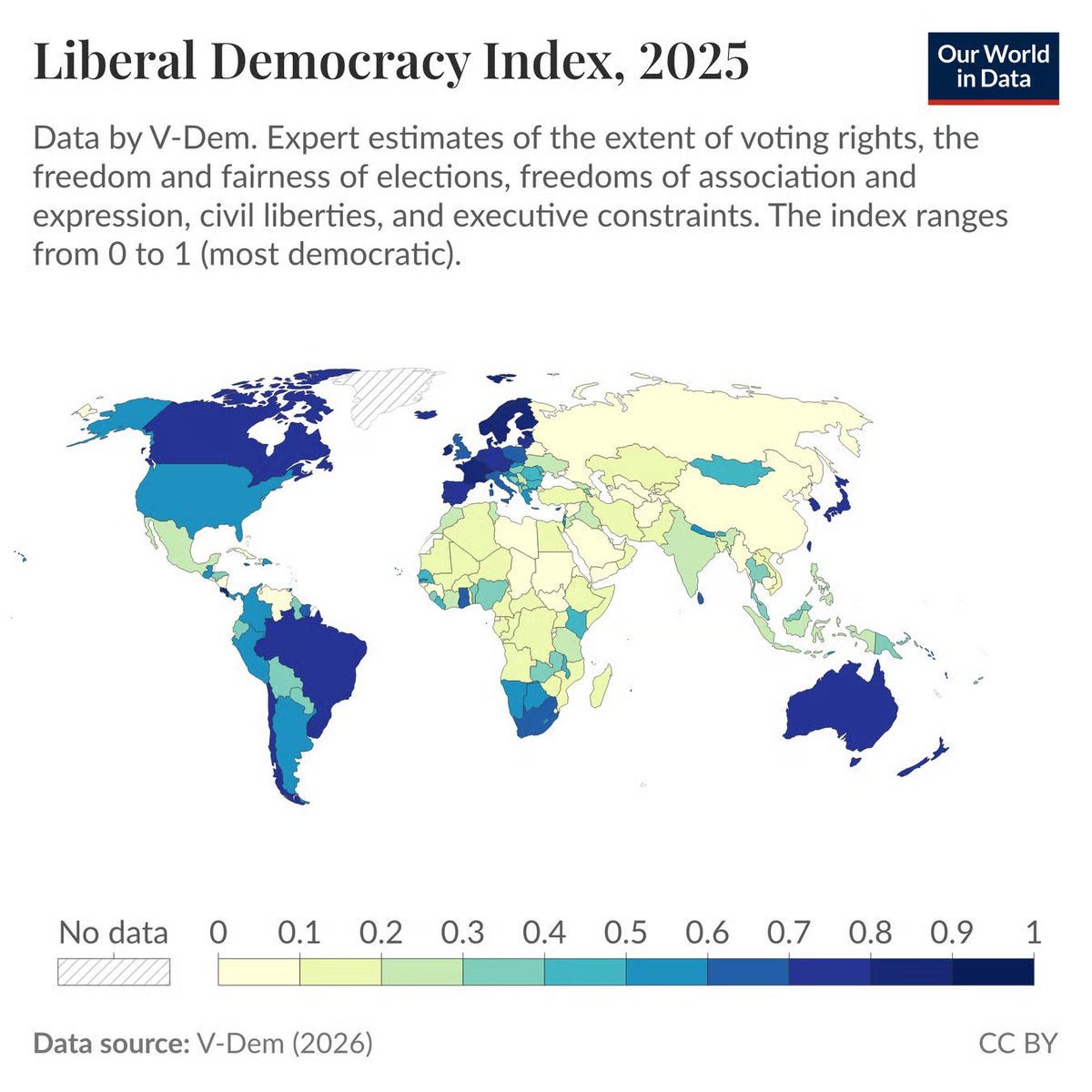
How can we measure the state of democracy around the world? Measuring democracy is challenging. It has many dimensions, and researchers assess them in different ways. No single source of data captures the full picture, so we present data from several of them. These include Varieties of Democracy (V-Dem; shown in the map here), the Lexical Index, Freedom House, and the Bertelsmann Transformation Index. Some of these data sources focus on broad characteristics of political systems to identify which countries are democracies at all. Others use expert surveys to assess smaller differences in the degree of democracy. Our colleagues Mojmír Vinkler and @lucasrodesg recently updated more than 250 of our democracy charts with the latest available data from our sources, which now include data for 2025.
16
43
179
32,126
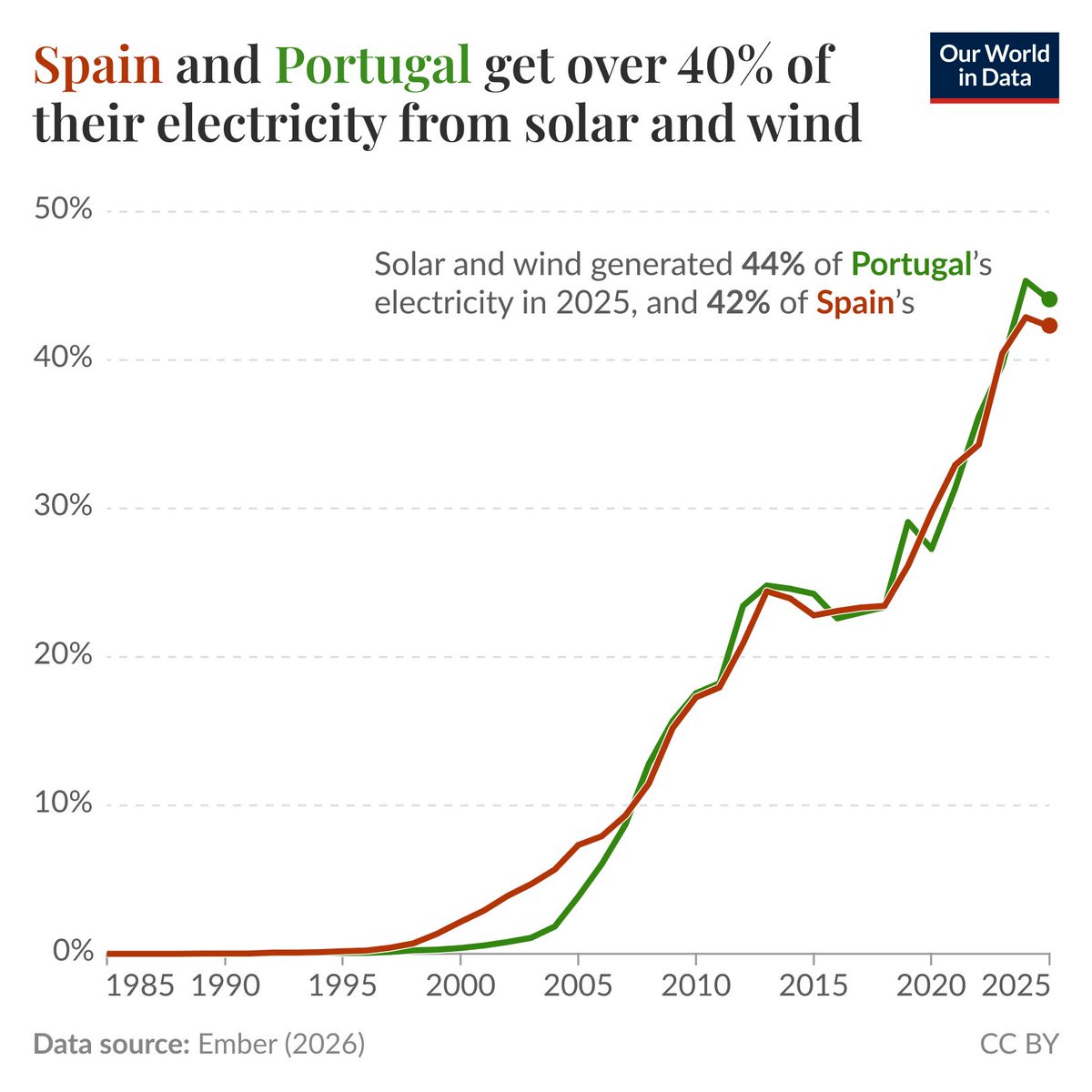
Spain and Portugal both get over 40% of their electricity from solar and wind— On the Iberian Peninsula, Spain and Portugal have scaled up solar and wind power almost in step. In the chart, you can see the share of electricity coming from solar and wind. Both countries generated over 40% of their electricity from these sources in 2025. That was higher than the European Union average of 30%. The two countries have very similar geographies and share an electricity market. They also have weak connections to the rest of the European electricity grid, forcing them to generate clean power at home rather than rely on imports. Wind power is more prevalent in Portugal, while solar is ahead in Spain. (This Data Insight was written by @_HannahRitchie and @parriagadap.)
18
112
354
22,344
Subscribe to our Data Insights newsletter to receive our bite-sized insights on how the world is changing, right to your inbox every few days: ourworldindata.org/subscribe
11
4,157
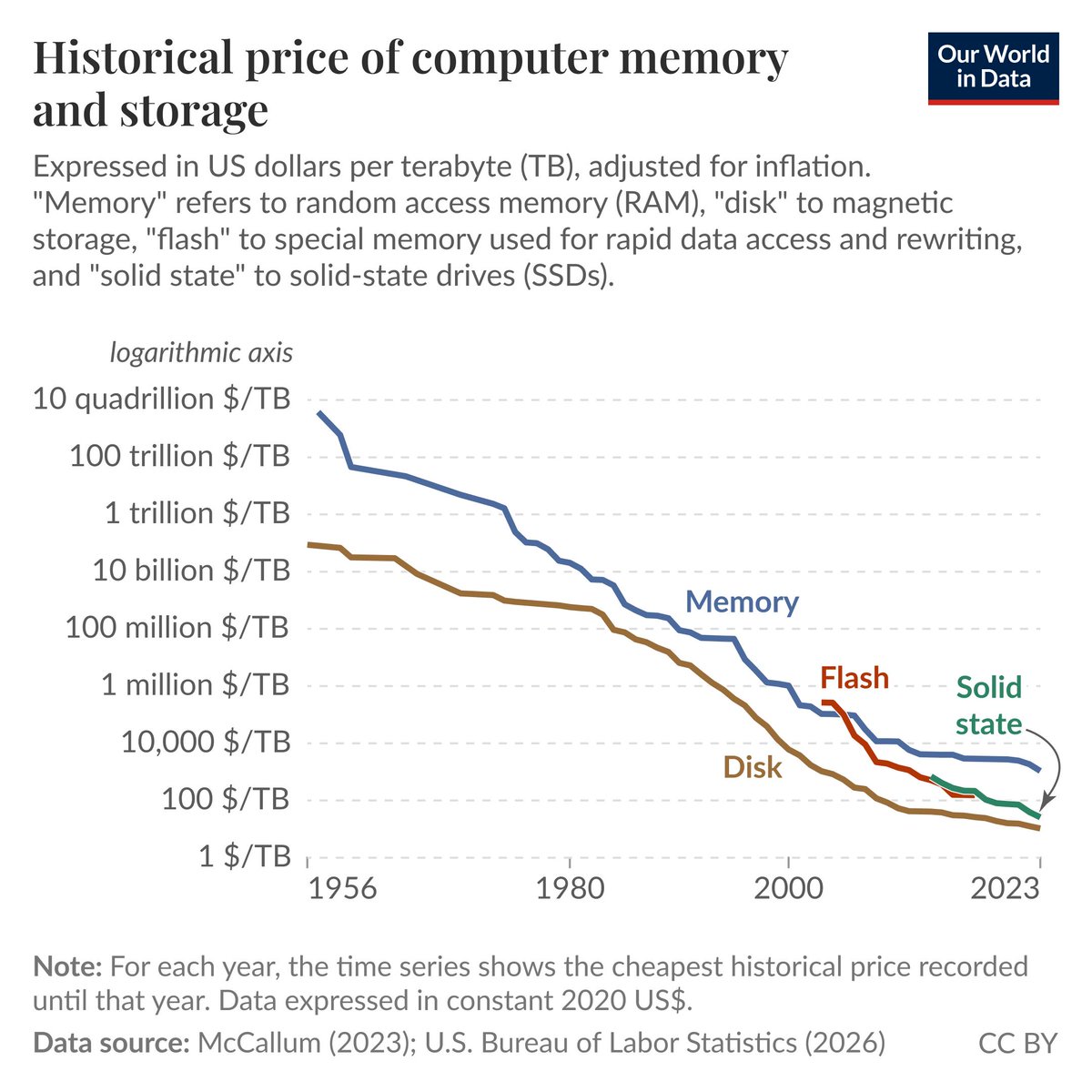
The cost of computer memory and storage has fallen exponentially.
5
33
128
9,424
Exponential growth is at the heart of the rapid increase of computing capabilities in the last decades. Learn more in our articles: "What is Moore's Law?": ourworldindata.org/moores-la…
1
3
14
4,024
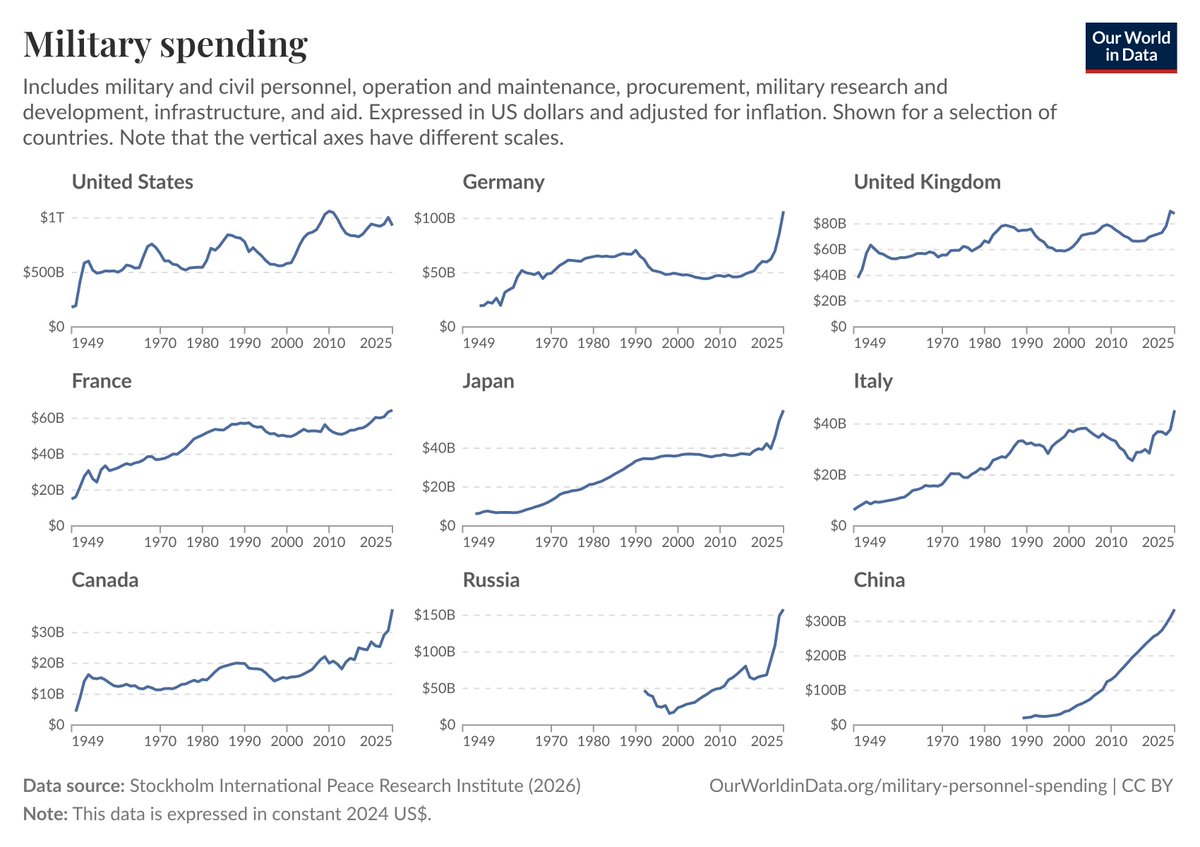
How much do countries spend on their militaries? How has this changed over time, and how do different countries compare? The Stockholm International Peace Research Institute (@SIPRIorg) provides a key resource for answering these questions and more. SIPRI compiles the most consistent long-run data available on military spending: in absolute terms (as shown in the chart here) and as a share of both GDP and overall government spending. SIPRI builds the database from open sources — defense budgets, audit reports, and IMF and World Bank figures — and adjusts for differences in how countries report their fiscal years, so the numbers are comparable across borders. The latest release covers around 150 countries from 1949 to 2025, though not all countries and regions have data for the full period. Our colleague @parriagadap recently updated our charts with the latest release. SIPRI updates this data annually, with the next release expected around April 2027.
3
27
74
8,114
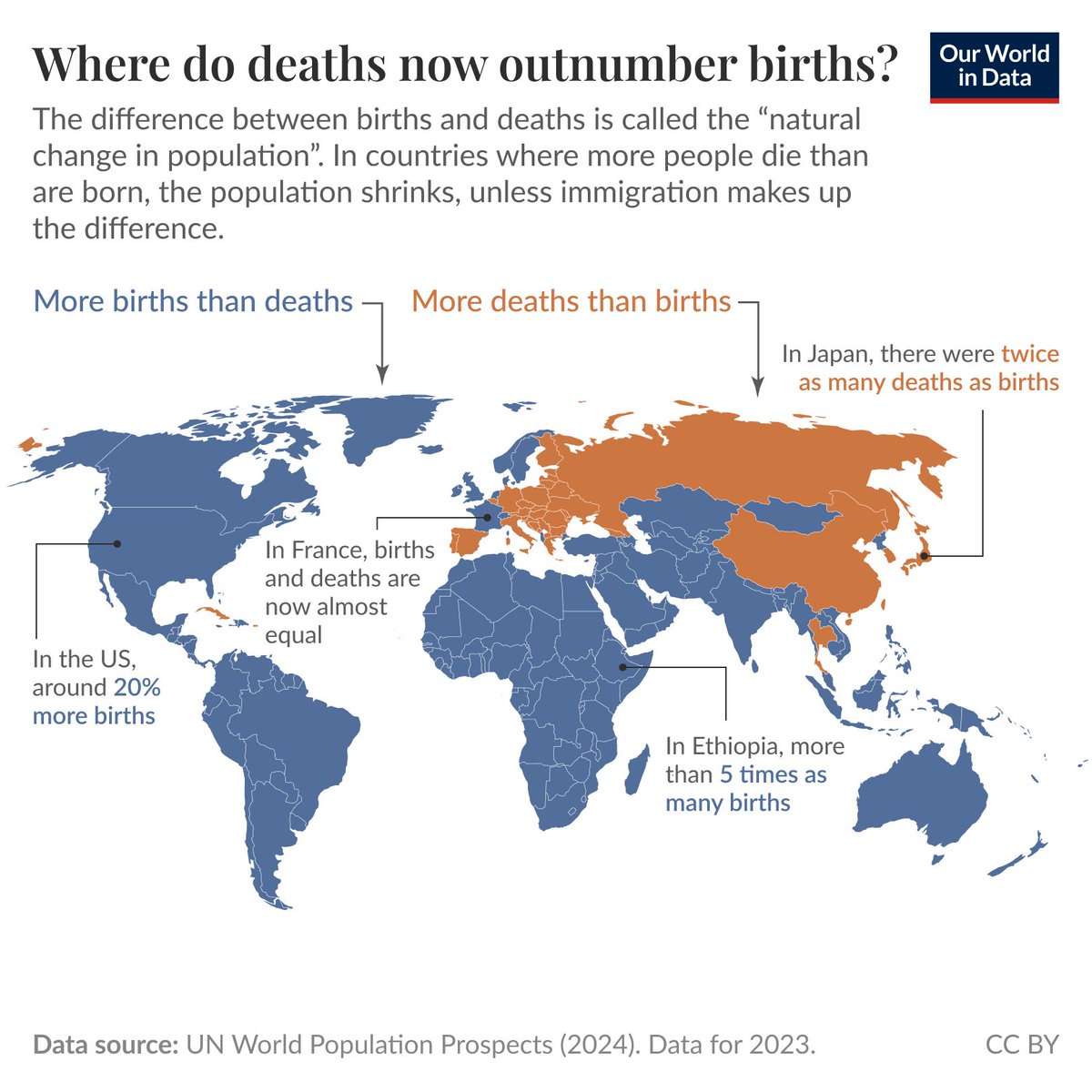
Where are more people dying than being born? For most of human history, more people were born each year than died. Populations grew very slowly for most of this history, then rapidly in recent centuries, as child mortality plummeted and people lived longer. But this is changing. As the map shows, deaths now outnumber births in a growing number of countries across Europe and East Asia. The balance of births and deaths tells us about a country’s “natural population change” — whether it would grow or shrink without any international migration. Where deaths outnumber births, the population will shrink unless enough people move in from abroad to make up the gap. (This Data Insight was written by @_HannahRitchie.)
14
99
296
40,211
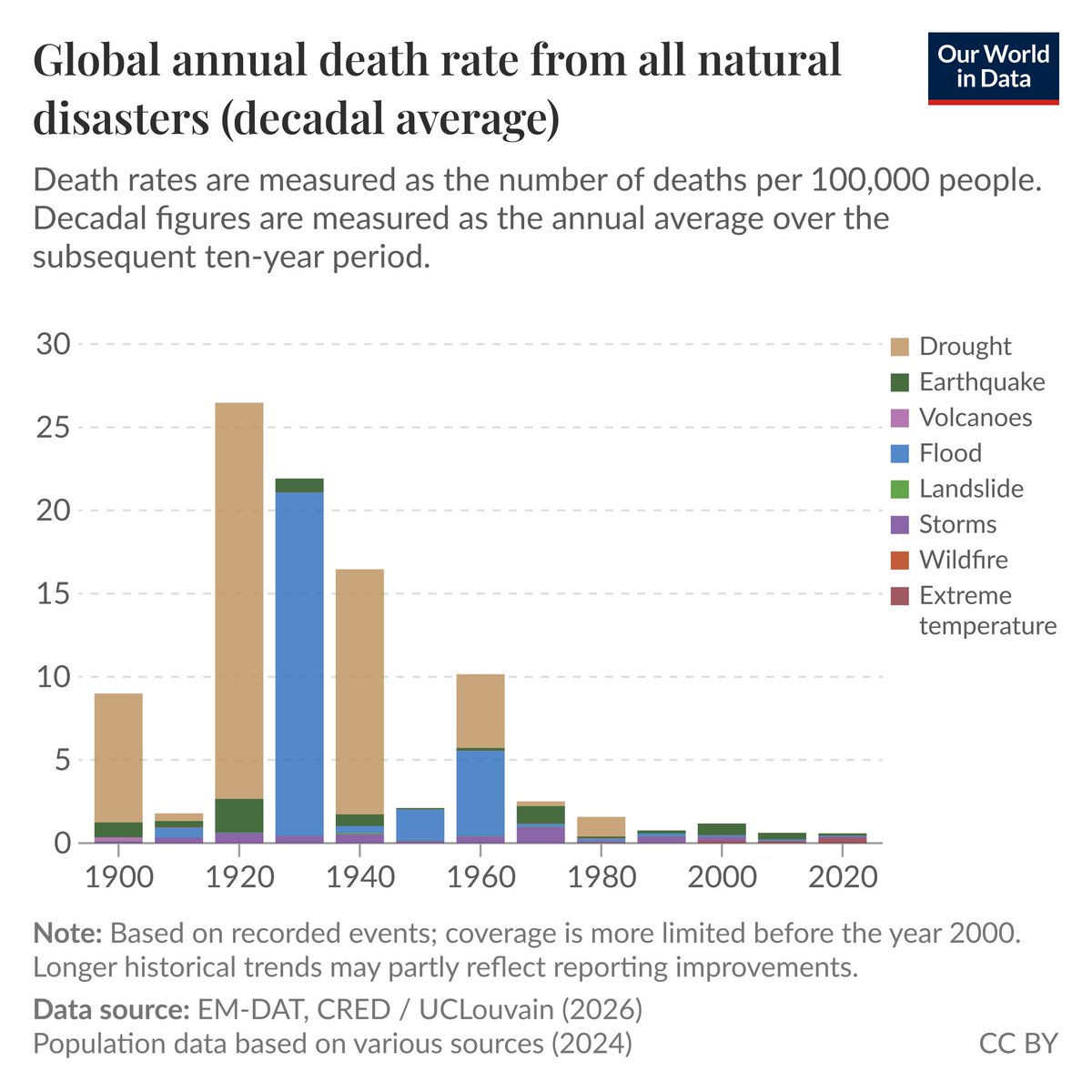
The world has become much more resilient to disaster events over the last century. In the chart here, you can see estimates of average death rates — measured as the number of deaths per 100,000 people — by decade since the early 20th century. Over the last century, death rates have fallen by more than 90%. Records from a century ago are much less complete, with many small and medium-sized events missed, so this may even be an underestimate. This is not because hazards have become weaker. It’s because societies have become more resilient. – Weather forecasting has allowed us to know when disasters are coming ahead of time, giving societies time to prepare. – Early warning systems allow local populations to take cover and stay safe. – Better buildings can withstand earthquakes and hurricanes. – National and international cooperation, combined with transport and trade, means others can provide assistance when a disaster does strike. – Food systems are more productive and better connected, making the impact of a lost harvest less severe than it would have been a century ago. Continuing to improve the resilience of systems worldwide remains crucial to reducing the toll from disasters in the future.
5
50
123
20,865
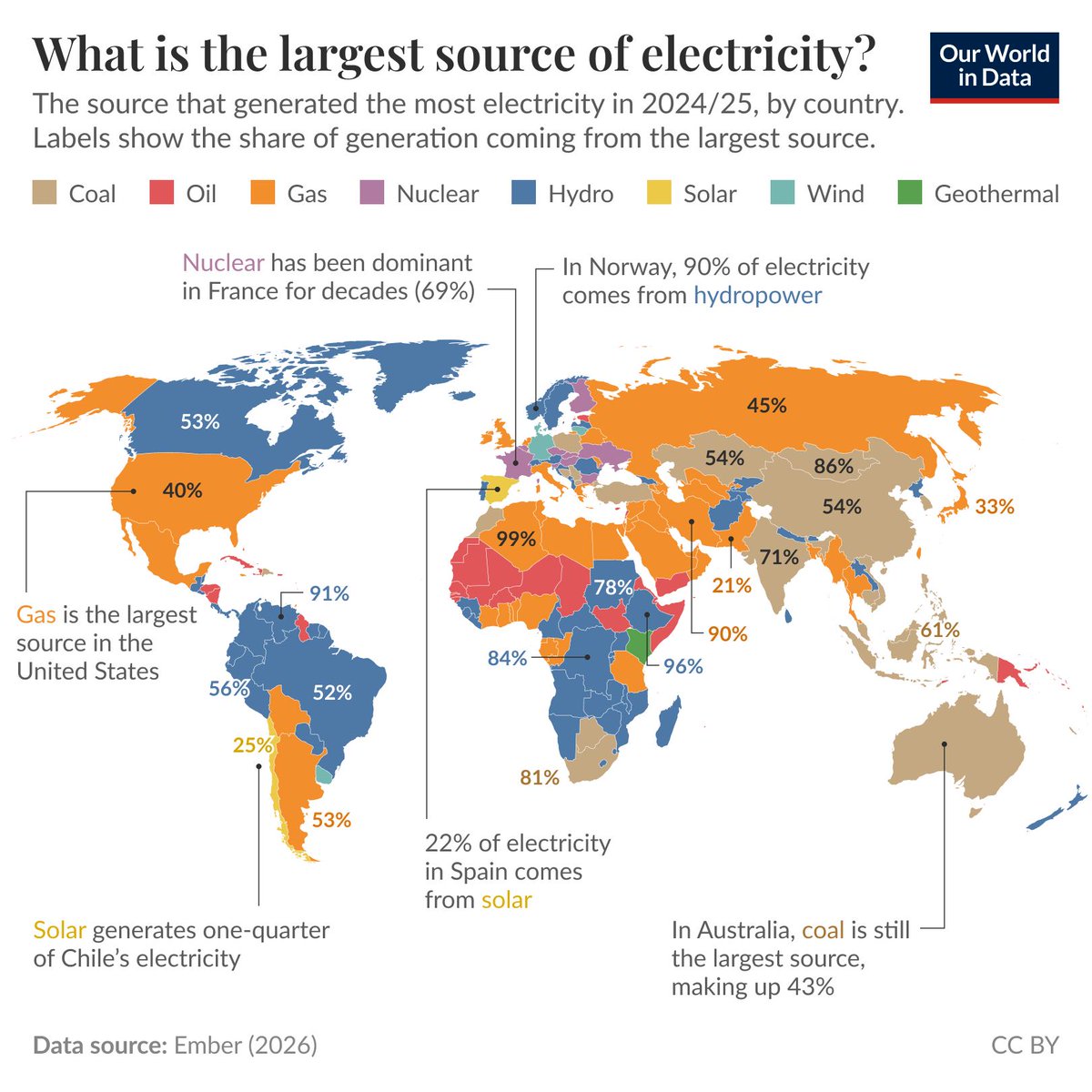
What is the largest source of electricity in each country? Coal generates one-third of the world’s electricity, more than any other source. But zoom into the country level, and the picture is much more varied. The map shows which source generated the most power in each country in 2024 or 2025 (the latest year available). Thanks to large reserves, coal dominates across Asia. It’s the largest source in China, India, Indonesia, and Malaysia. These are huge power producers, which is why coal is so dominant at a global level. Across most other regions, it’s mostly a mix of gas and hydropower. On islands and parts of North Africa, it’s oil. Europe has the most diverse mix, with nuclear power dominating generation in countries such as France and Finland, and solar and wind overtaking fossil fuels as the largest sources in countries such as Spain and Germany. Solar and wind are growing quickly in many countries; when these sources are combined as “variable renewables”, they become the largest source in six more countries: the Netherlands, Portugal, Greece, the United Kingdom, Belgium, and Pakistan. (This Data Insight was written by @_HannahRitchie.)
31
204
557
48,066