
Joined December 2009
- Tweets 13,611
- Following 37,355
- Followers 38,248
- Likes 20
923 Photos and videos


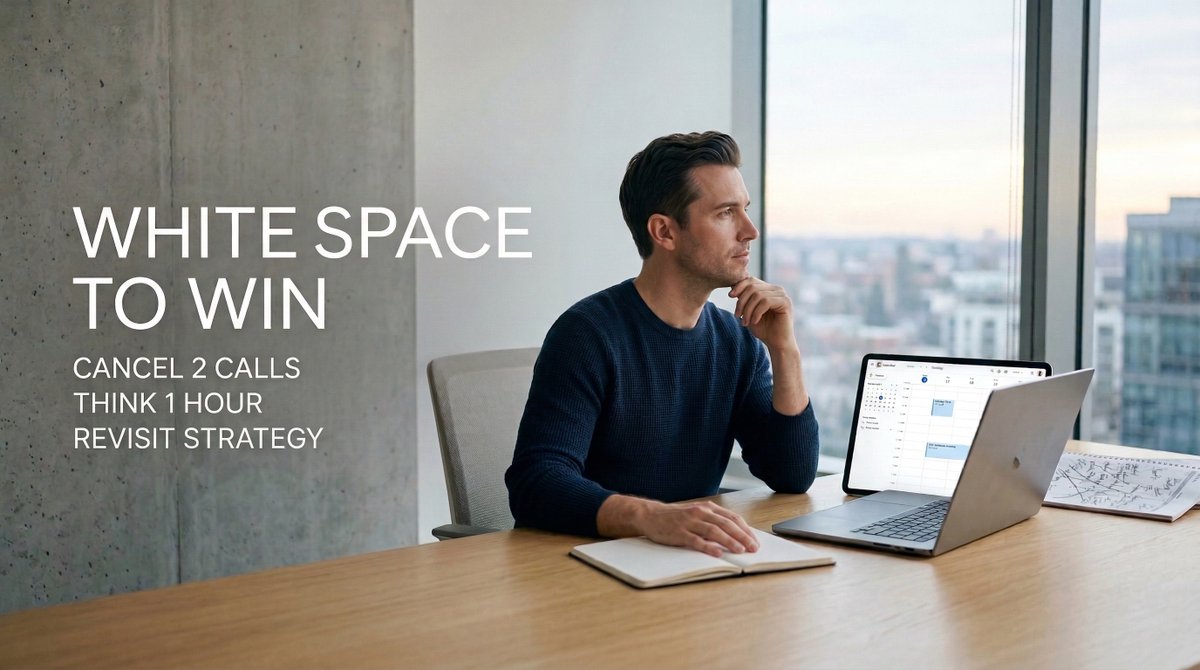

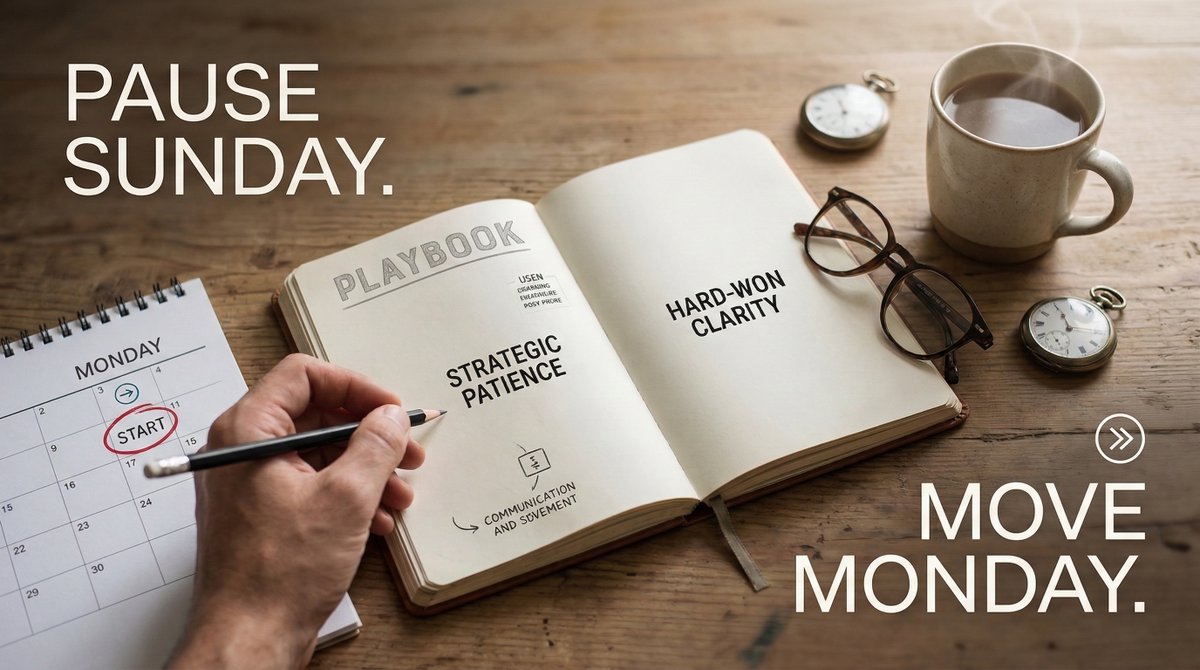


You have to stay sharp under pressure.
Research demonstrates when cognitive load spikes, your capacity to perform collapses — but a response you drilled in advance still fires.
Gollwitzer's work calls it strategic automaticity. 'If-then'.
A decision made before the pressure hits.
Pre-loading the move.
Results in automatic execution.
Like Jason Bourne.
37
Thursday AM. You're grinding. Because you believe that gets you to Friday.
You don't accelerate to the finish line.
You decelerate to think.
What you need: 20 minutes off the throttle.
Step back.
Let your nervous system settle.
Then the next decision you make will be sharper than the one you would have made on fumes.
Deceleration is not weakness.
It's the sharpest move available to you right now.
37
Most people recover too late.
They wait until they are depleted, reactive and cognitively fried.
Then call the weekend “recovery.”
That was me for 20 years.
That's not recovery.
That's damage control.
The better model:
Conserve → Deploy → Restore.
Conserve where intensity is unnecessary.
Deploy maximum force when the moment matters.
Restore before your nervous system starts making decisions for you.
The hardest people do the softest practices.
Because sustained output requires sustained recovery.
10 min episode: Recovery as Competitive Advantage.
Link in first reply.
1
165
10 mins - no fluff pod.fo/e/416929
146
Willpower isn't a mindset. It's a piece of brain tissue you can measure — and grow.
Neuroscientists studying tenacity have zeroed in on the anterior midcingulate cortex.
It strengthens when you repeatedly do the hard thing you'd rather skip.
Discipline isn't a personality you were born with or without.
It's hardware.
And hardware responds to load.
You don't read your way to it.
You build it.
38
The moment pressure spikes, your internal monologue becomes a performance tool or liability.
“I’m screwed” drives panic deeper into the system.
But using your own name creates distance:
“Martin, breathe. Stay steady. Next move?”
Reactivity drops. Thinking stays.
Talk to yourself like a commander, not a casualty.
Research validates and Tier One Operators use.
97
AI gives you infinite answers. But strategic insight requires empty space.
Neuroscience shows that breakthrough ideas originate in the Default Mode Network—a brain circuit that only activates when you stop consuming external information.
If you fill every spare minute with inputs, podcasts, and data, you suffocate your strategic edge.
Silence isn't empty.
It is where the strategy is built.
45
Useful HBR piece on the 6 ways leaders respond to stress.
My take: the labels matter less than the pattern.
Under pressure, you don’t become more strategic.
You become more default.
The edge is noticing your pattern fast enough to shift before your blind spot becomes the decision.
Link below.
1
402
365
Most high achievers are using a broken model for recovery.
They push hard, ignore the signals, and wait for the weekend or a holiday to reset.
That's the crash-and-recover model. If your only recharge kicks in after you are already depleted, you are not managing recovery. You are managing damage.
The alternative is Continual Recharge.
Subtract unnecessary context switching.
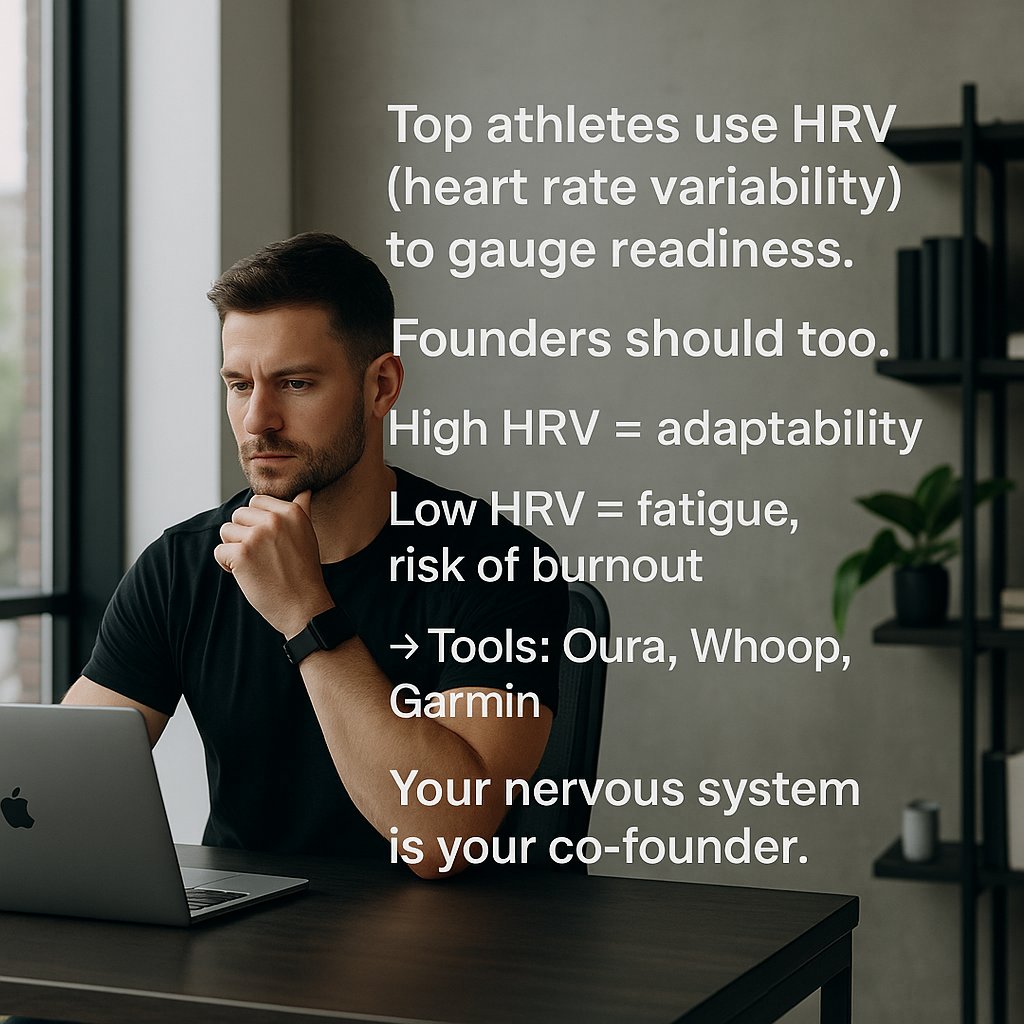
Build a 3-minute physiological reset between meetings. Catch the slide in your state before your performance drops.
That's how you build a sustained edge—the capacity to think clearly and decide well when everyone else is reactive.
Link to protocol in first reply.
1
393
14 mins - Continual Recharge Protocol pod.fo/e/423017
358
Your inability to focus at 3 PM tomorrow is decided by what you do at 7 AM today.
Circadian biology confirms that early morning sunlight directly on the retina is what sets your biological clock. It optimises your waking cortisol pulse and guarantees the melatonin release required for deep sleep tonight. Sleep architecture dictates your cognitive edge.
Control the inputs
68
Every decision you make today feels like it has ten dependencies.
Neuroscience shows that rapid context-switching doesn't just make you tired. It leaves "attention residue," structurally degrading your cognitive capacity for the next task by over 20%.
You jump from a cash flow crisis to a product review without a bridge.
You don't need a better agenda.
You need a 90-second state reset between rooms. Clean judgment requires clean capacity.
305
Brain imaging shows a 20-minute NSDR (Yoga Nidra) protocol restores striatal dopamine reserves by up to 65%.
Further, it mimics the cognitive reset of a 90-minute sleep cycle.
Better than a double espresso.
271
You can't think your way calm before a board meeting.
Hours of narrowed focus at a screen has already spiked your arousal. Your prefrontal cortex is flooded before you walk in.
The Override = Wide gaze, Panoramic vision. Ninety seconds.
Confirmed by Neuroscience.
Manual control over the hardware your decisions run on.
1
293
WEF McKinsey, Report 2026:
In the age of AI, the human brain does not become less important. It becomes more important.
The advantage is shifting upstream — to the quality of the mind using the tools.
Not who has best AI.
Who thinks clearest when everyone else is reactive.
12 min episode in first reply below.
1
102
12 min audio pod.fo/e/416919
91
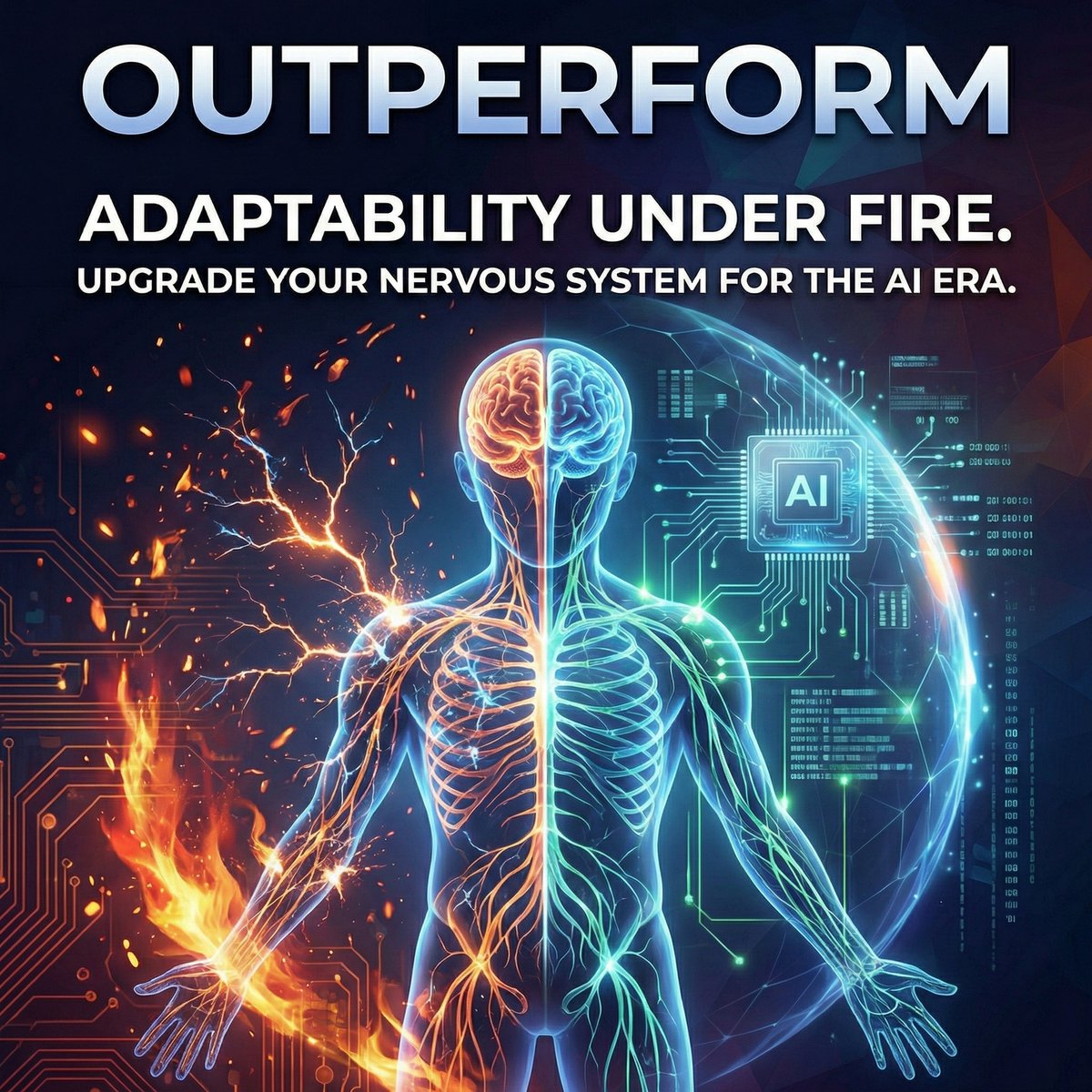
Telling someone to adapt when their system is fried is like telling them to get fit by running while their legs are broken.
People are being told to "adapt" to AI while running on crashed hardware — a nervous system stuck in chronic overdrive, and a brain that can't think, learn, or pivot cleanly under pressure.
This 14 min episode explains how to upgrade your nervous system for the new era. Link in first reply.
1
108
14 mins no fluff pod.fo/e/416928
73