
@APSphysics's interdisciplinary journal for quantitative biological research - the first of its kind and #OpenAccess.
- Tweets 1,087
- Following 32
- Followers 1,924
- Likes 469
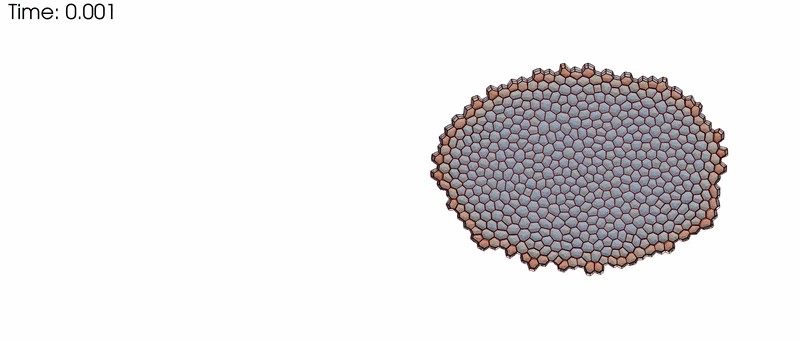
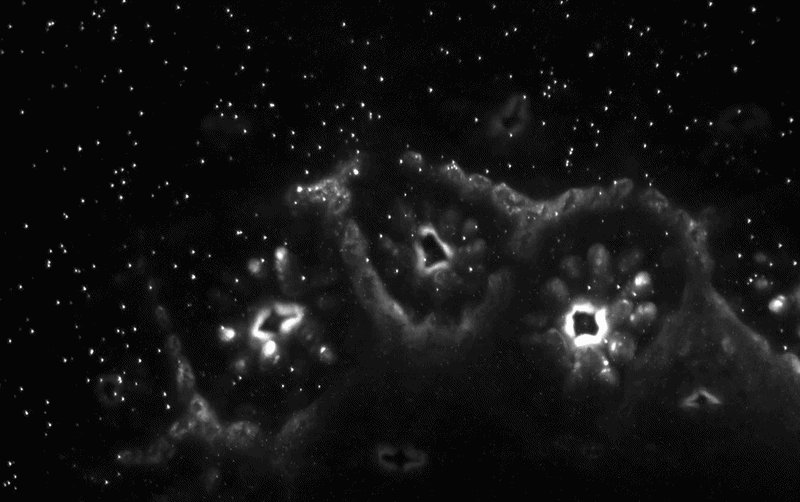

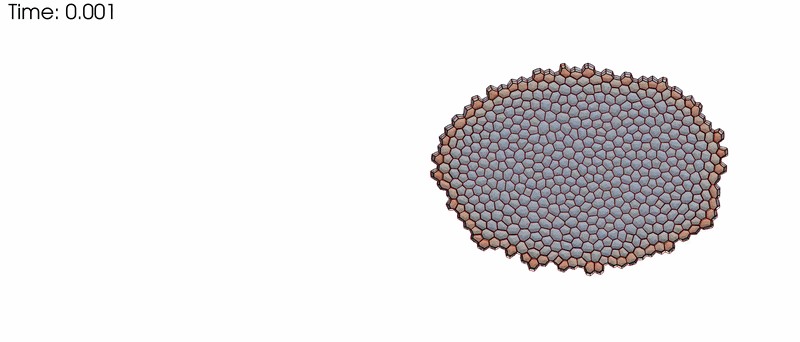

ALT A gif showing the self-organized locomotion of a tissue interacting with a substrate by adhesion and friction. Time is normalized by the turnover timescale.
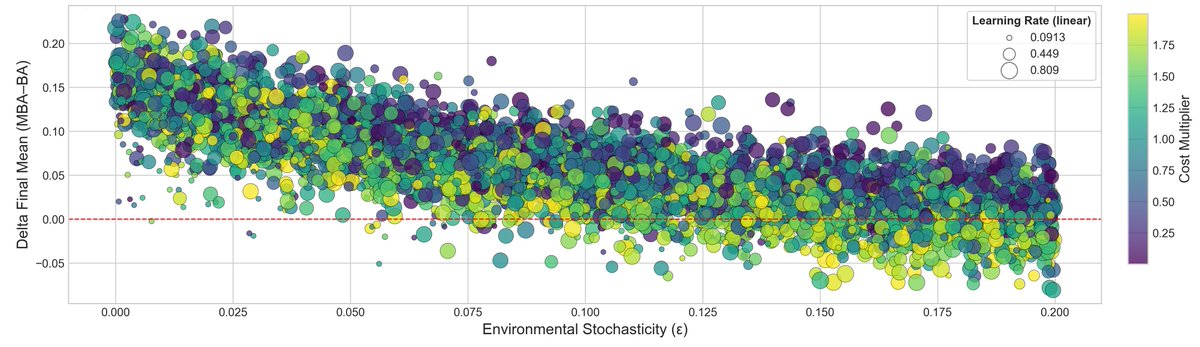
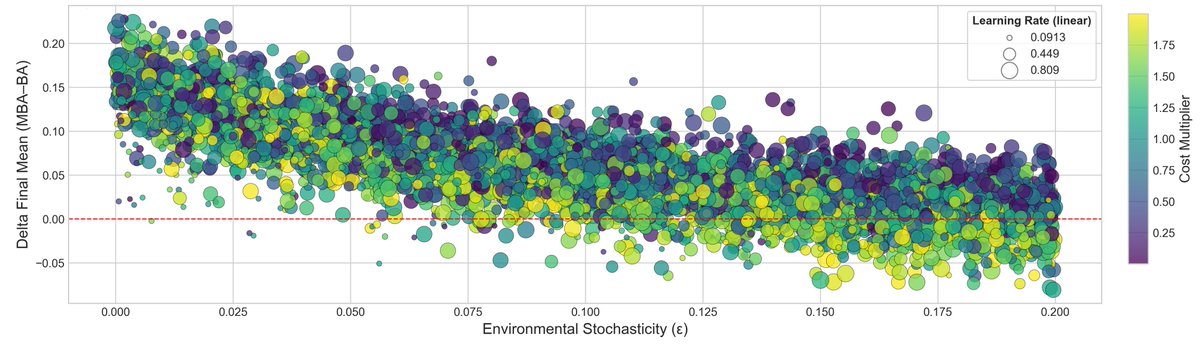
ALT A graph showing the performance landscape of the learning agent across environmental stochasticity, ε, on the x axis and delta final mean, MBA-BA, on the y axis. On the right is a color scale bar labeled cost multiplier, with lower values in blue, medium in green, and high in yellow. The size of the marker indicates the learning rate, with smaller rates as smaller circles and larger rates as larger circles. A red dashed line marks ∆ = 0, the point where fixed strategies outperform.


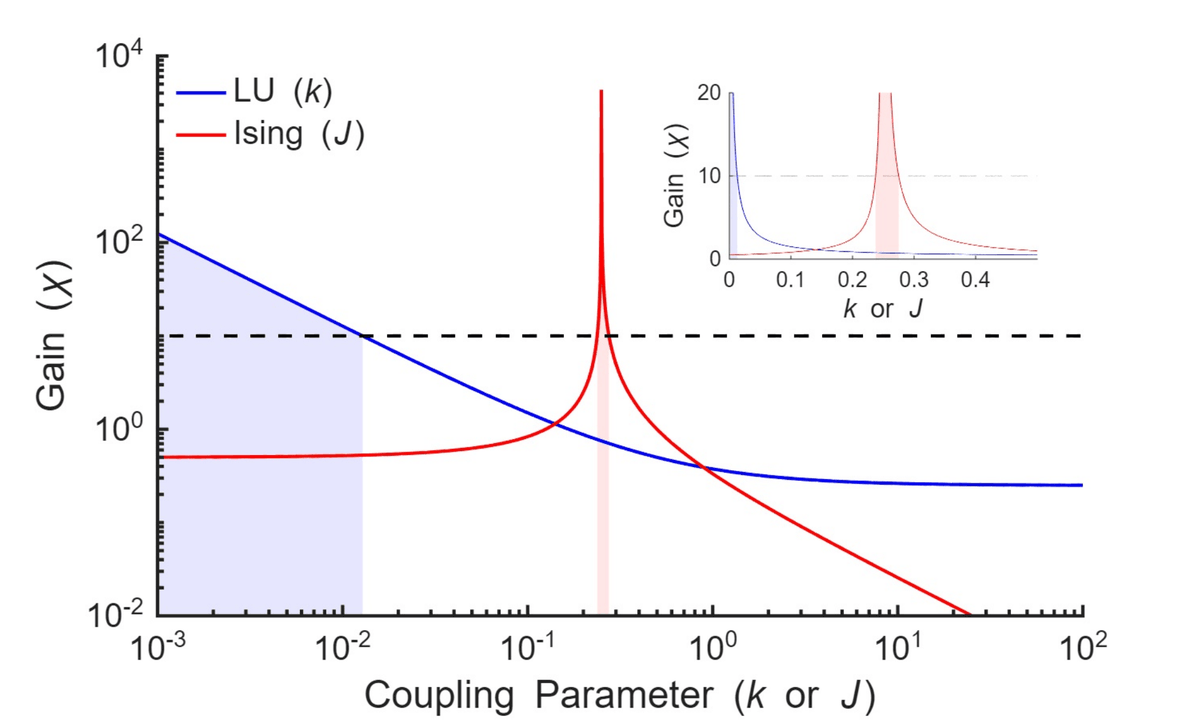
ALT Chart plotting gain (X) as a function of the coupling parameter (k or J), comparing the gain between the paper’s lattice ultrasensitivity (LU) model and the established Ising model. A red line representing the Ising model (coupling parameter J) stays at a low gain and only achieves high gain at a critical value, before rapidly falling off as the coupling parameter increases. A blue line representing the LU model (coupling parameter k) starts off at a much higher gain at a low coupling parameter, before steadily decreasing as the coupling parameter rises. At the top right, a smaller inset graph also displays gain (X) as a function of k or J for the LU and Ising models.
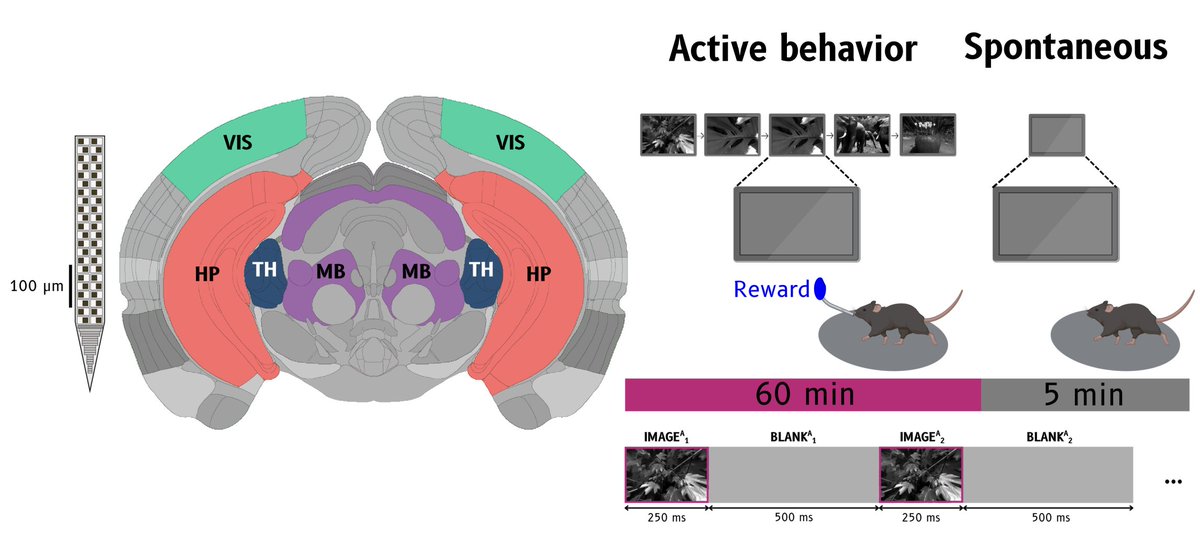
ALT An illustration of the experimental setup used in this study. On the far left is an image of a neuropixels 1.0 probe with a scale bar showing 100 micrometers. To its right is the coronal section of the brain showing the visual cortex (abbreviated VIS and shown in green), thalamus (abbreviated TH and shown in blue), hippocampus (abbreviated HP and shown in coral), and midbrain (abbreviated MB and shown in purple). On the far right are the behavioral tasks during active behavior epoch. Animals viewed natural images, shown for 250 ms each, followed by 500 ms blank screens, and received a water reward for reporting detected changes.
ALT A graph showing the performance landscape of the learning agent across environmental stochasticity, ε, on the x axis and delta final mean, MBA-BA, on the y axis. On the right is a color scale bar labeled cost multiplier, with lower values in blue, medium in green, and high in yellow. The size of the marker indicates the learning rate, with smaller rates as smaller circles and larger rates as larger circles. A red dashed line marks ∆ = 0, the point where fixed strategies outperform.

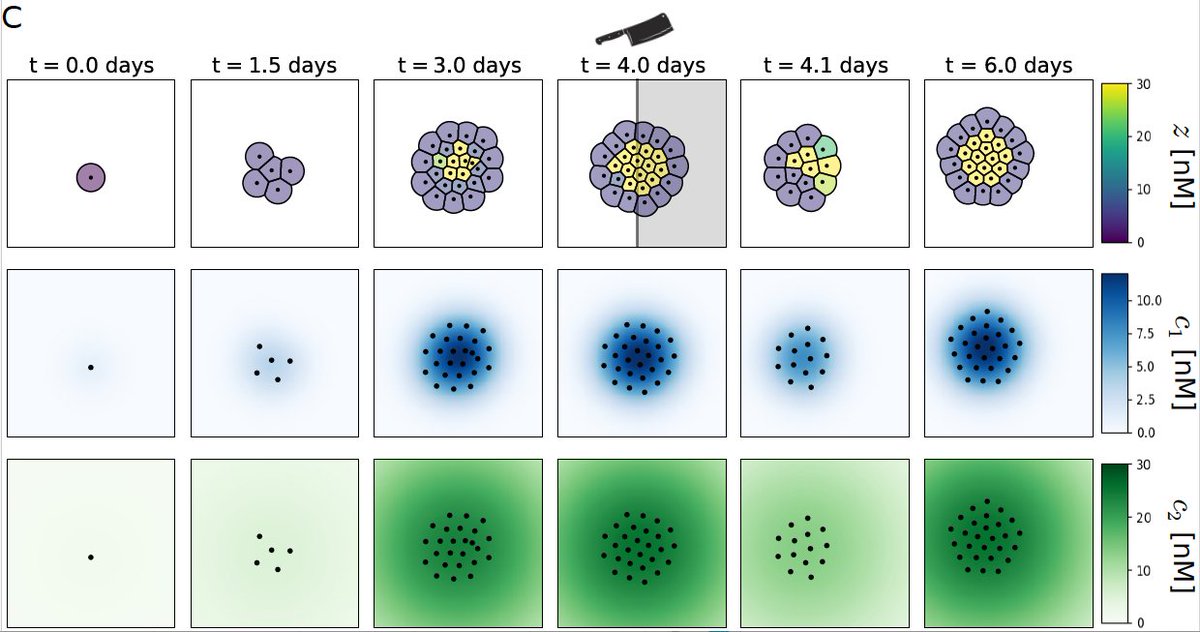
ALT The figure displays three rows and six columns of images visualizing the growth dynamics of a single cell from day 0 to day 4 into a stable developed organism. The organism is bisected at day 4 and regrows until day 6. The top row displays the position of cells (black dots), cell boundaries in Voronoi constructions, and the state level of each cell denoted with color shading increasing from dark blue to yellow. The middle and bottom rows depict the corresponding nanomolar (nM) concentrations of c1 and c2, respectively. c1 is measured with color shading increasing from white to dark blue, and c2 is measured with color shading increasing from white to dark green.
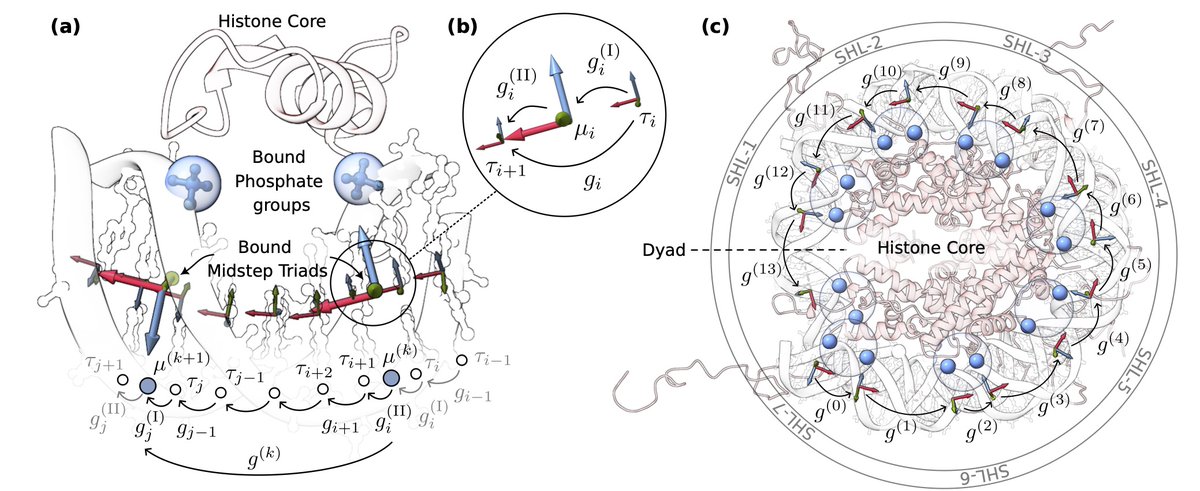
ALT Two illustrations of mathematical descriptions of the nucleosome in the context of the rigid base pair model. On the left is an image of a segment of nucleosomal DNA wrapped around the histone core, with two bound phosphate groups shown as blue spheres. Large reference frames denote corresponding mid-step triads µ (k), and the junction connecting these triads g (k) spans across multiple bp steps gi and comprises two half-step junctions, shown in a small inset image on the right and defined by gi = gi (I) gi (II) and µi = τigi (I). On the far right is the complete nucleosome core particle, PDB 1KX5, highlighting bound phosphate groups, shown as blue spheres, associated mid-step triads, and junctions g (k) spanning between them. Each superhelical location, labeled SHL, contains two binding sites grouped by circles.
ALT Panel a displays a schematic of the study’s TASEP model, which uses particles and sites to represent ribosomes and codons, respectively. Ribosomes are portrayed with blue ovals and paused ribosomes with red ovals, and codons are represented by a dashed line l. Ribosomes initiate translation at a rate of 𝛼, and elongate at a rate of 𝛆 if the next codon is unoccupied. They pause and unpause at rates of kp and ku, respectively, and terminate translation at a rate of ꞵ. Panel b displays a larger schematic illustrating the dynamics of pausing events and mRNA degradation at a larger scale. Here, ribosomes fill the lattice until a TASEP steady-state is established, and a pausing event occurs at a random position (labelled as Xf). The time to fill the lattice is labelled as T0fill, the duration of the TASEP steady-state is labelled as T0SS. At the bottom right, a yellow Pac-Man symbol represents the finite lifetime of the mRNA lattice due to stochastic degradation.
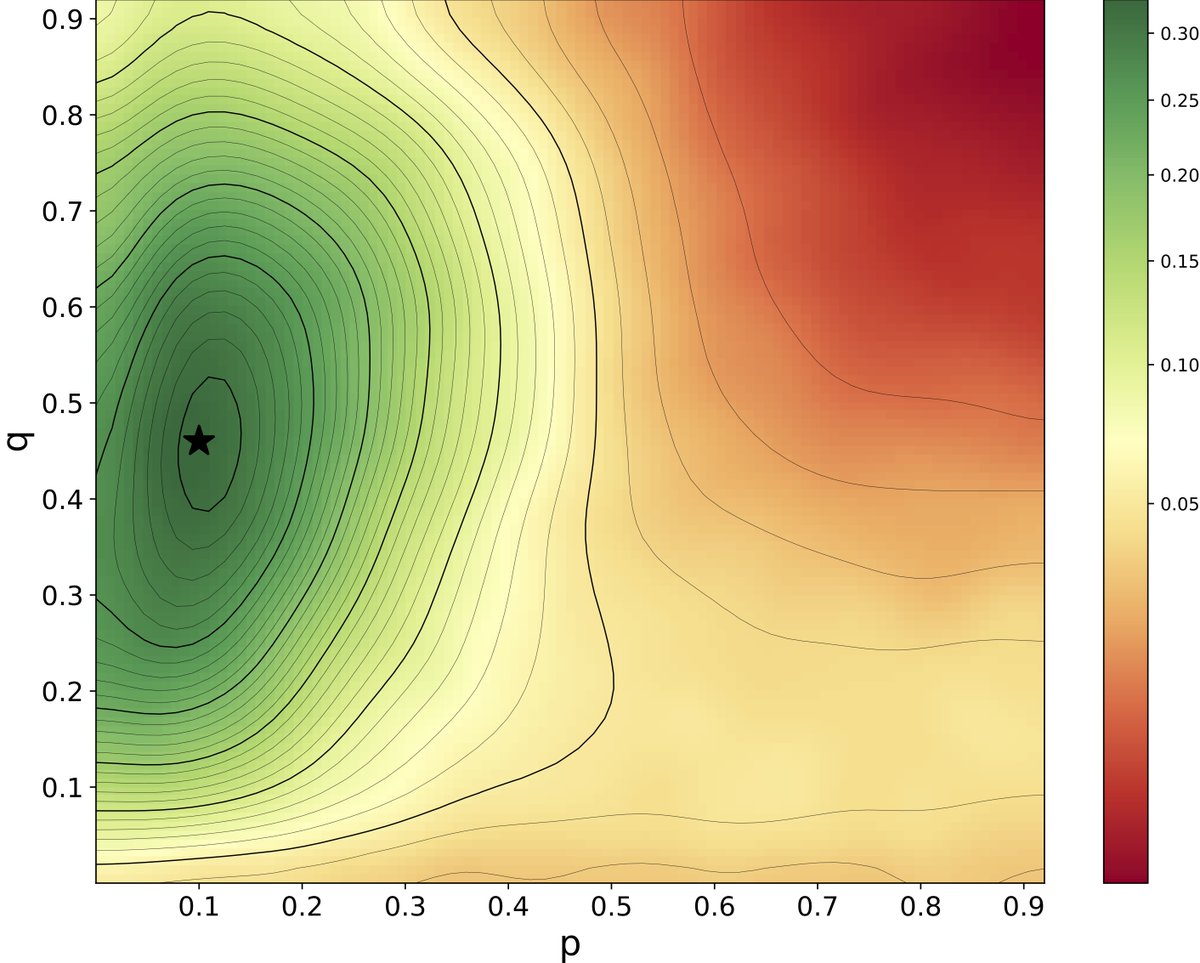
ALT The hereditary map of the Stochastic Kirkwood-Hollyday model, with parameters p on the x axis and q on the y axis. A color scale bar on the right shows red as lower values and yellow and green as higher values. For these parameters, 103 Stochastic Kirkwood-Hollyday trees were generated with kmax = 7. For each tree, the inheritance test was run with R = 103 reshufflings and the fraction Φ of trees that pass the test were measured. A larger value of Φ, shown as green, represents a more hereditary region of the model, while a smaller value of Φ, shown in red, represents a less hereditary one. Contour lines start at Φ = 0.01 and have spacing ∆Φ = 0.01. Their steep density in the green zone shows how sharp the inheritance sector of Stochastic Kirkwood-Hollyday is. On the left, a star marks the position of the mean Maximum Likelihood Estimate fit of the Stochastic Kirkwood-Hollyday model to the experimental colonies.
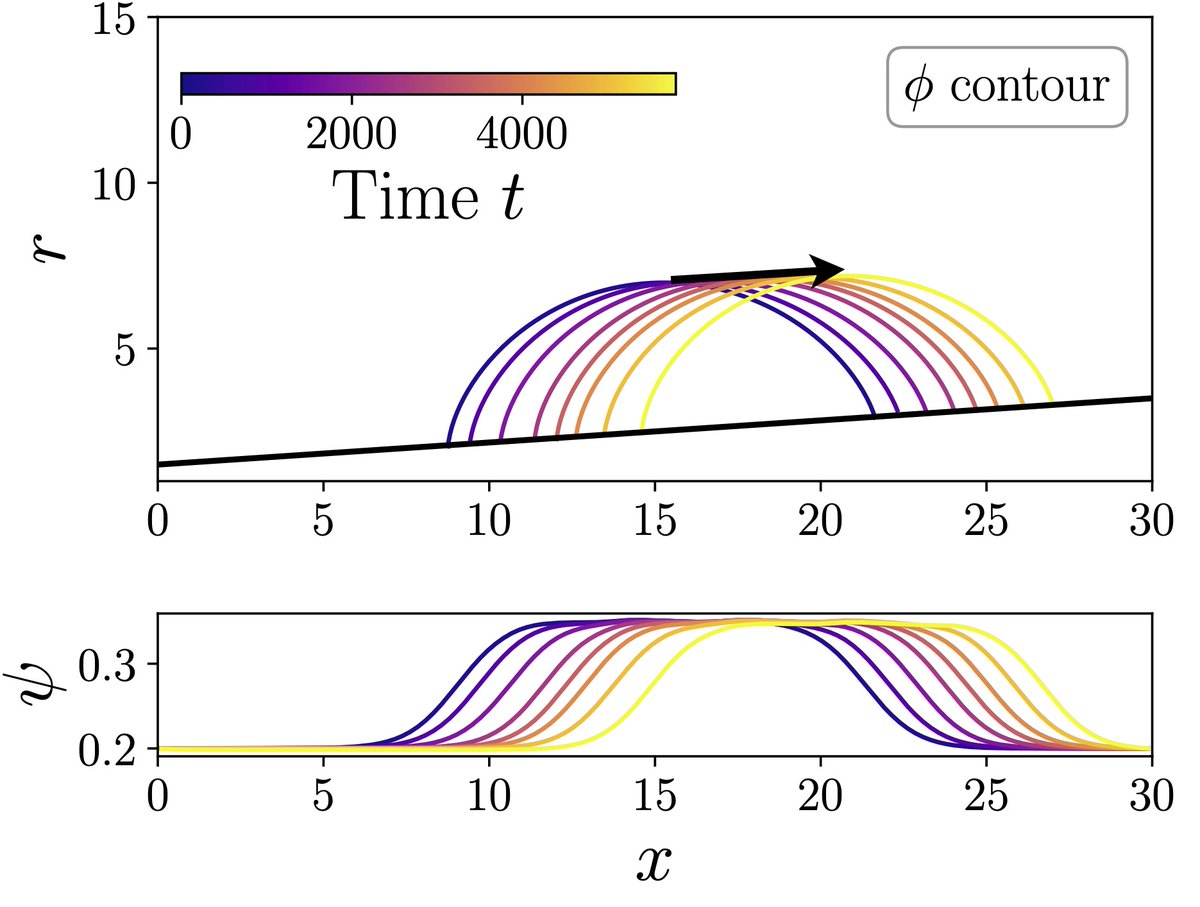
ALT A graph showing how mobile tethers affect condensate migration on a tubule of varying radius in a truncated cone geometry where the tubule radius varies linearly along its long axis. The graph shows a time course of the condensate ϕ, shown on the top contours, and tether ψ, shown on the bottom, densities on a tubule of varying radius in cylindrical coordinates r, x where x runs along the central axis of the tubule. Curves of different colors represent different times, as shown in a color scale bar with smaller values in dark blue and larger values in yellow. The arrow indicates the direction of migration. The black line indicates the tubule surface.
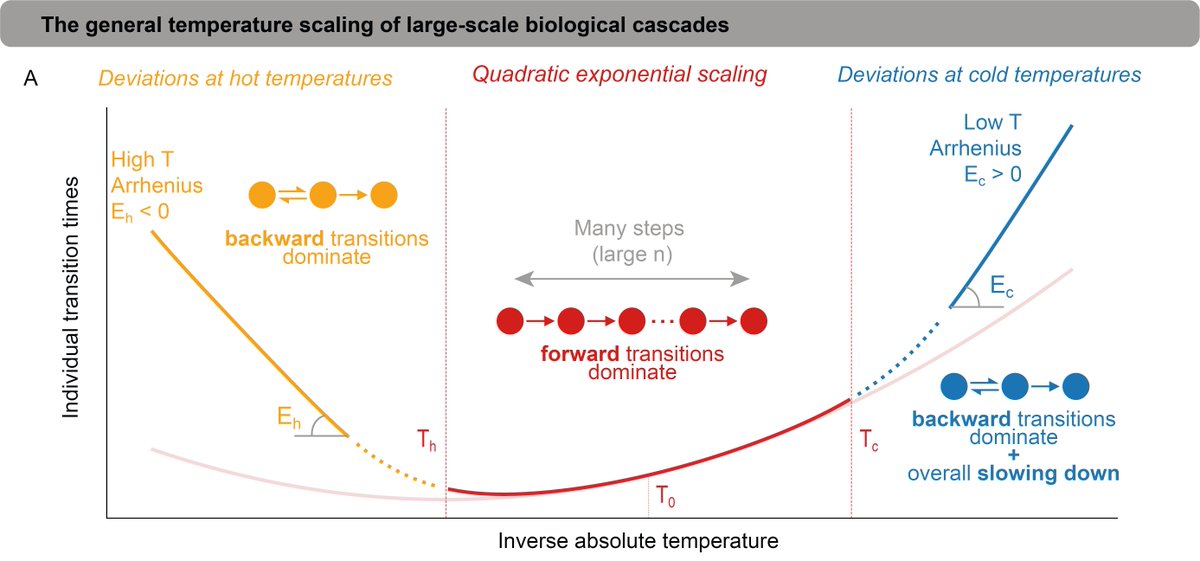
ALT A schematic illustrating the three-regime scaling structure identified by the study for biological systems. The figure portrays a graph with inverse absolute temperature on the x-axis and individual transition times on the y-axis. At hot temperatures (yellow, left) and cold temperatures (blue, right), the function displays Arrhenius-like single-exponential scaling, with backward transitions dominating. At more intermediate temperatures (red, middle), the function follows quadratic exponential scaling with forward transitions dominating.