Investment Advisor to @neetifund and bringing value investors together @valuexme. I write about business, investing and entrepreneurship.
Joined March 2012
- Tweets 1,250
- Following 604
- Followers 841
- Likes 408
226 Photos and videos
Pinned Tweet

23 Jul 2024
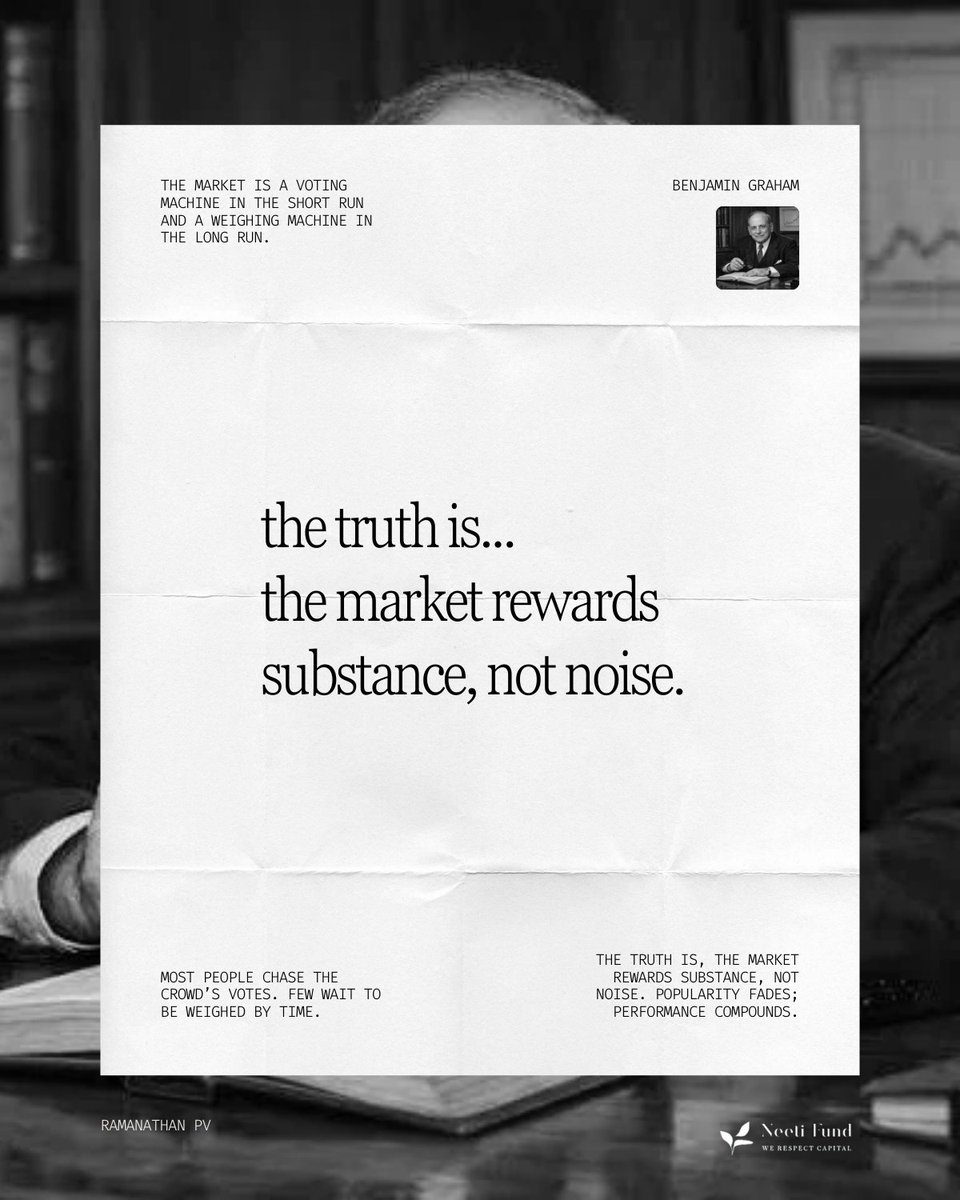
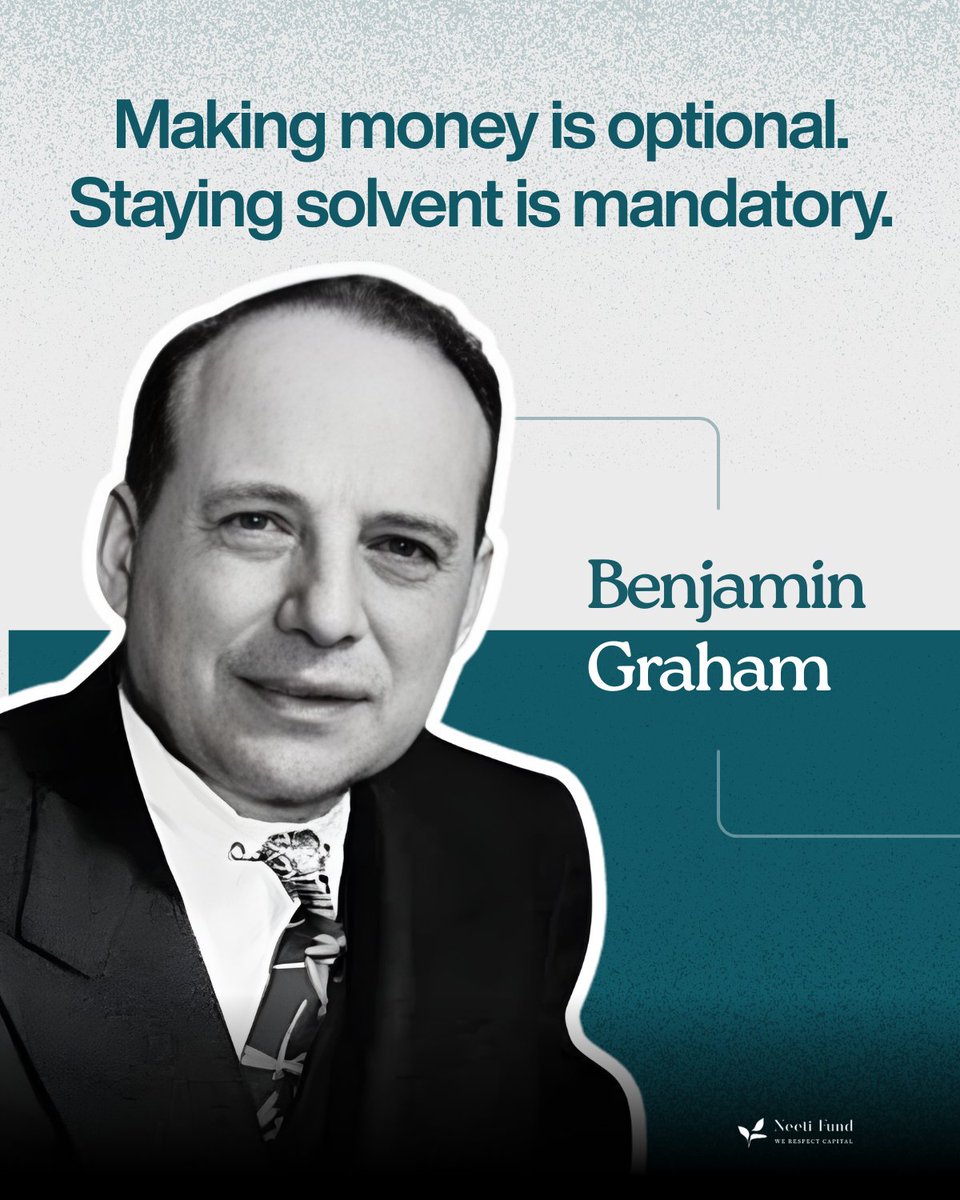
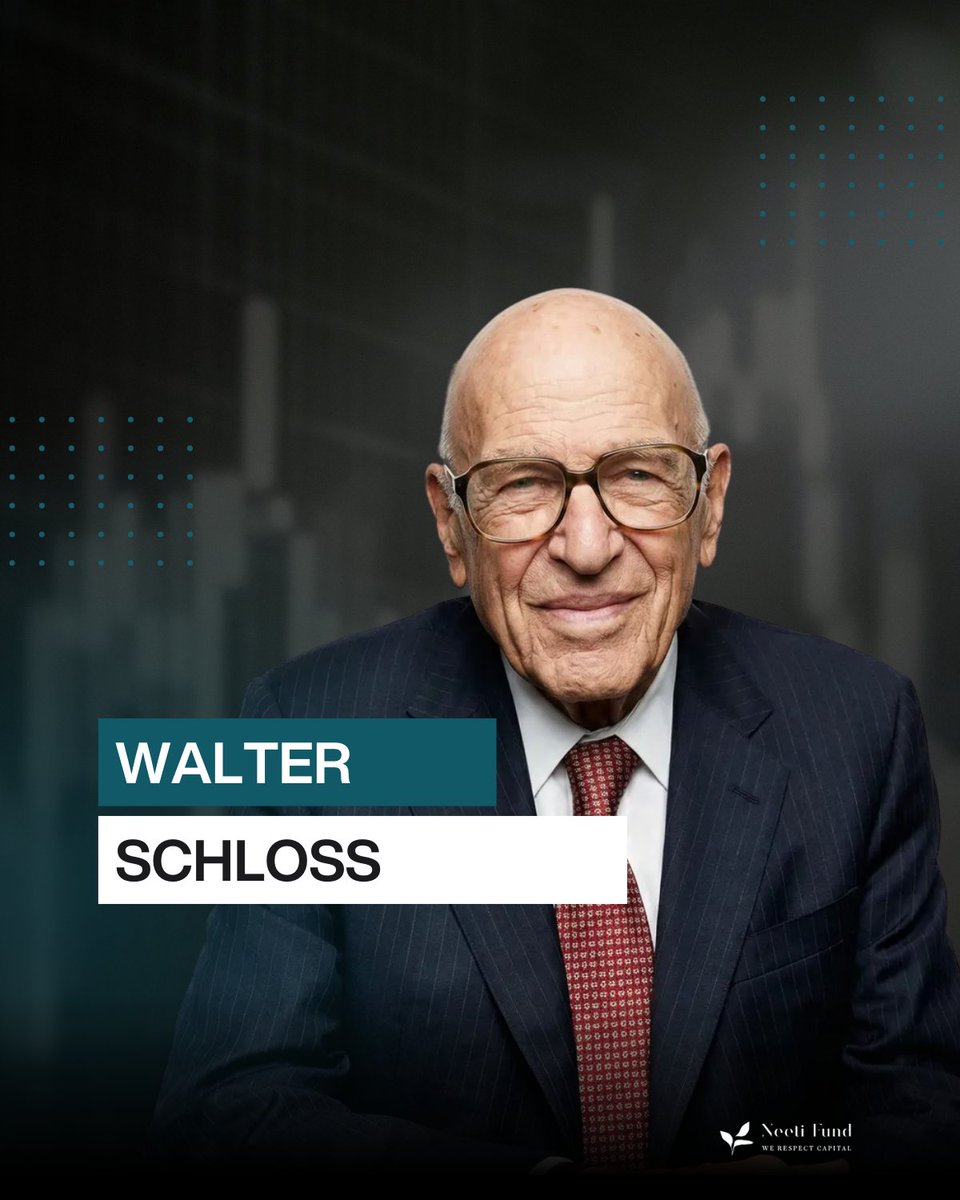
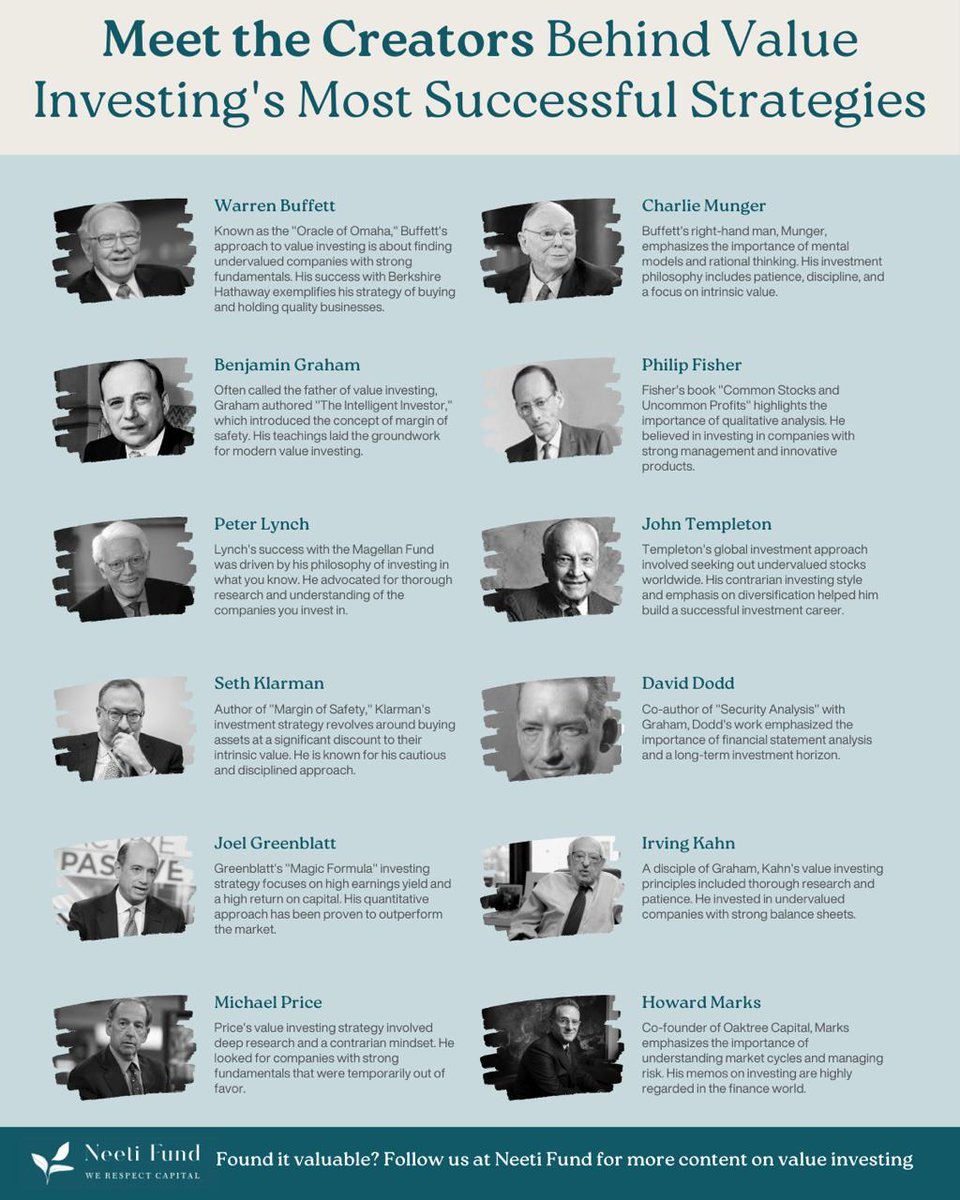
Forget "get rich quick"!
The OG moneymakers of value investing built fortunes on patience & smarts.
Here are the 12 creators behind value investing's most successful strategies:
8
23
3,332
P V Ramanathan retweeted
Jun 13
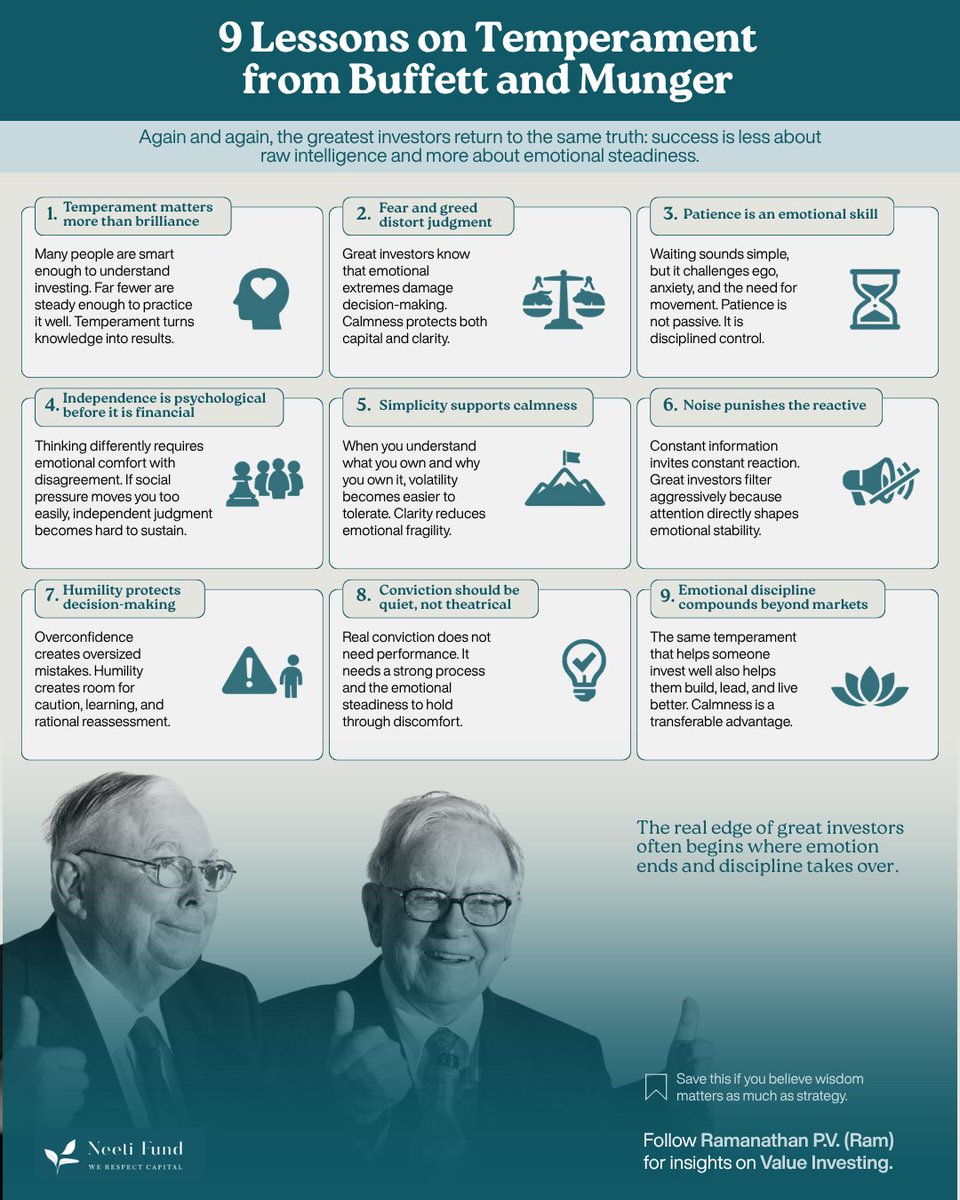
Most people are attracted to value investing because it promises better returns.
The real gift is something deeper.
It teaches patience in a world obsessed with speed.
It teaches discipline in a world driven by impulses.
It teaches conviction when everyone else is chasing the next shiny opportunity.
That is why the best value investors often become better decision-makers, not just wealthier individuals.
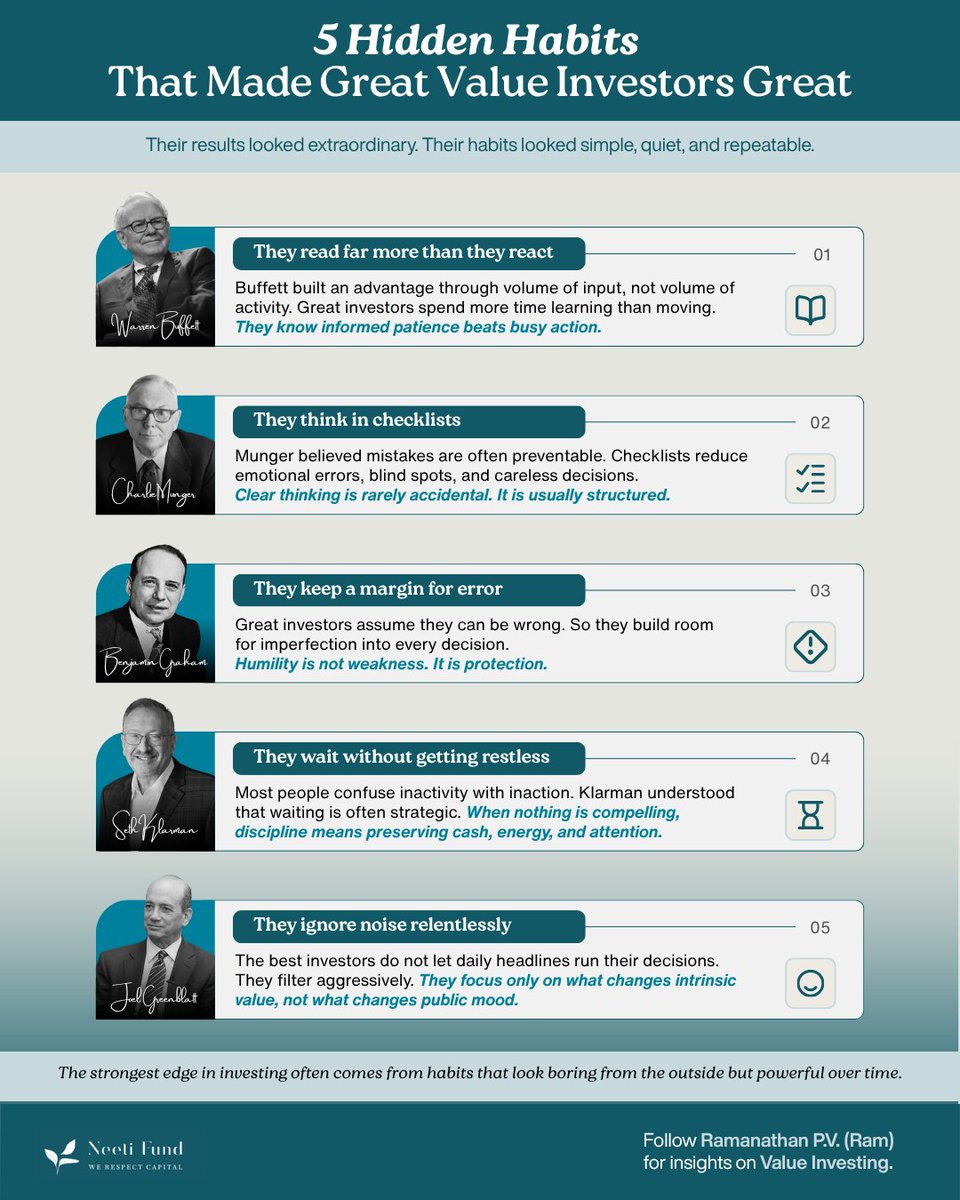
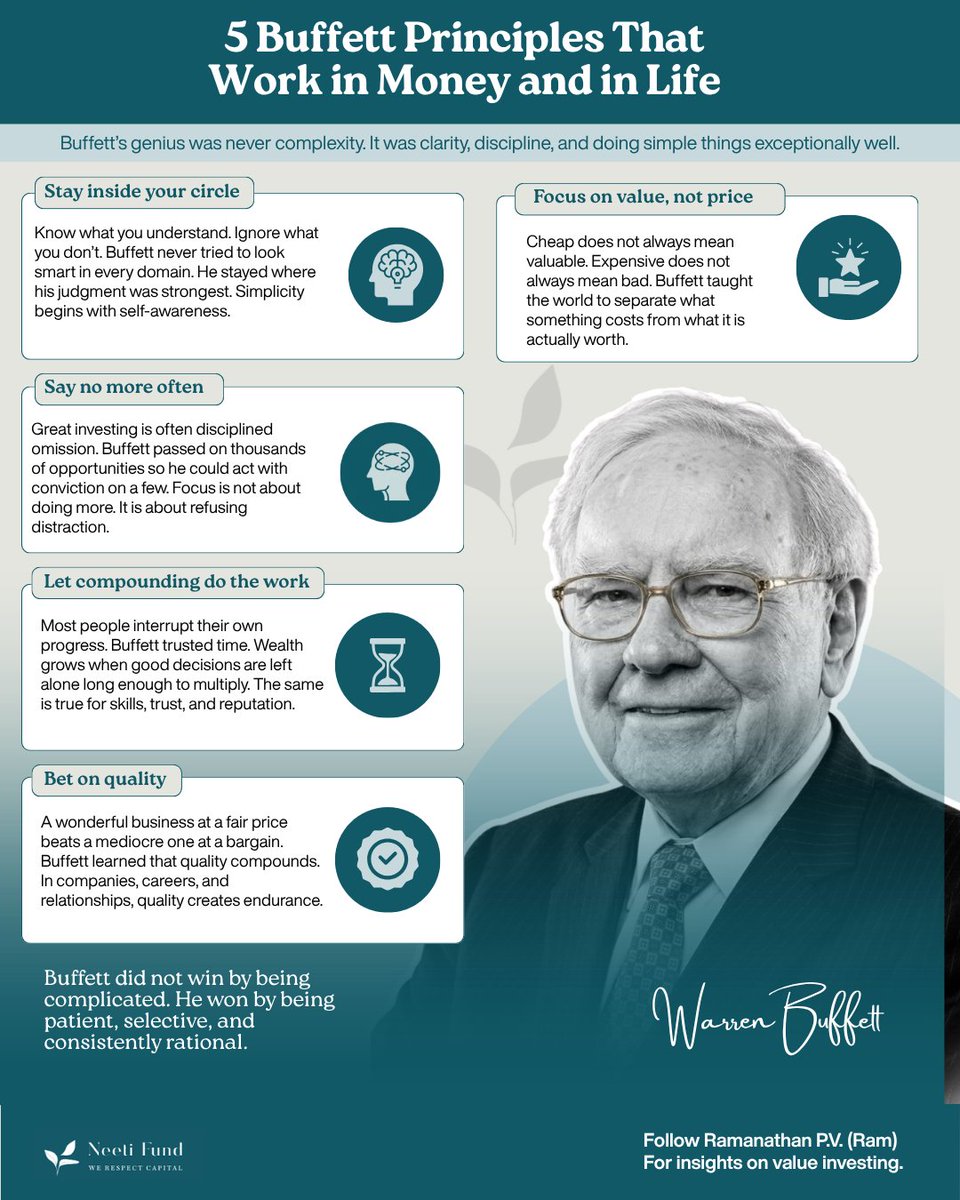
As Buffett demonstrated, wealth is rarely built through constant action.
It is built through thoughtful action, repeated consistently over long periods of time.
Value investing is not simply a strategy for compounding capital.
It is a framework for compounding character.
And in the end, character is what allows wealth to endure.
Follow me @PRamanathan for more such value investing insights.
1
2
113
Jun 8
I have spent forty years around money.
This week, a friend reminded me how little of it actually matters.
Guy Spier is one of the most respected value investors of his generation.
He won a charity lunch with Warren Buffett.
He built ValueX in Zurich — the community I have travelled to almost since it began, and the reason ValueX Middle East exists today.
Now @GSpier is living with glioblastoma.
He has closed his fund. He sent every outside investor their money back.
And in his interview with CNBC, he said something I cannot stop thinking about.
He said every day is now a gift.
He said his job is to win as many points as he can against the Grim Reaper — not by fighting, but by doing the things he loves and not hurting anyone along the way.
And he said the courage everyone sees in him is not courage at all. It is the love coming in from the people around him.
Here is a man who could talk about markets, returns, and track records for hours.
And when the noise fell away, what he wanted to talk about was truth, love, and the people he gets to spend his days with.
That is the whole lesson.
It always was.
Guy, my friend — thank you.
For the community you gave us, and for showing us how to live while you are teaching us how to face the hardest thing of all.
youtube.com/watch?v=TbQhb04P…
3
262
May 22
Every time you log in during a market decline, you face a choice.
Hold or sell.
The right answer is almost always hold.
But the experience of watching the number fall creates pressure that rational analysis alone cannot overcome.
The more you check, the more often you face that pressure.
1
2
79
May 21
Buffett's favorite holding period: forever.
That sounds extreme.
Until you see what it produced.
Coca-Cola: bought in 1988. Still held today.
The original investment has multiplied more than 20 times.
Time did most of the work.
1
110
May 21
Investors who check their portfolios less frequently make better decisions.
Not because they are less informed.
Because they have fewer opportunities to act on short-term discomfort.
Every check is an invitation to interrupt.
1
2
82
May 21
The discomfort of watching a position fall is temporary.
The cost of selling prematurely is permanent.
Most investors experience the discomfort.
Few are still invested long enough to receive the permanent gain.
63
May 20
1942. Buffett is eleven years old.
Buys Cities Service Preferred at $38.
Falls to $27. Holds, nervously.
Recovers to $40. Sells. Relieved.
Stock later rises to $200.
He learned what impatience costs before he could drive.
2
149
May 20
The market does not reward activity.
It rewards patience.
Most investors confuse movement with progress.
Design your portfolio to minimize unnecessary decisions.
Every decision is an opportunity to make the wrong one at the wrong time.
1
43
May 20
Peter Lynch's Magellan Fund returned 29% per year from 1977 to 1990 - one of the greatest investment records in history.
The average investor in the fund lost money.
They bought after good years and sold after bad ones.
The market rewarded patience.
Not the investors.
102
May 19
The stock market returns ~10% per year over long periods.
The average equity investor earns ~3-4%.
Same market. Same funds.
The difference is not intelligence.
It is interference.
1
66
May 16
The curve bends sharply upward at the end.
But only for those who are still there.
Most investors are not still there.
They interrupted the compounding when it felt necessary — during a crash, during underperformance, when something else looked better.
Munger's rule is simple. The behavior is not.
1
1
100
May 16
That is the standard Neeti Fund is built around — patient capital, structural patience, aligned managers.
If it resonates, this week's full newsletter is at link in bio.
Subscribe free. One essay a week.
1
49
May 16
Most investors understand compound interest in theory.
They can calculate the numbers.
But they don't feel it.
And because they don't feel it, they don't protect it.
They interrupt it.
Because the short-term discomfort is immediate and the long-term reward is distant.
1
1
58
May 16
DALBAR. Lynch. Buffett. Munger.
Four data points that all point to the same conclusion.
This week's Neeti Fund essay pulls them together.
Link in bio.
46
May 16
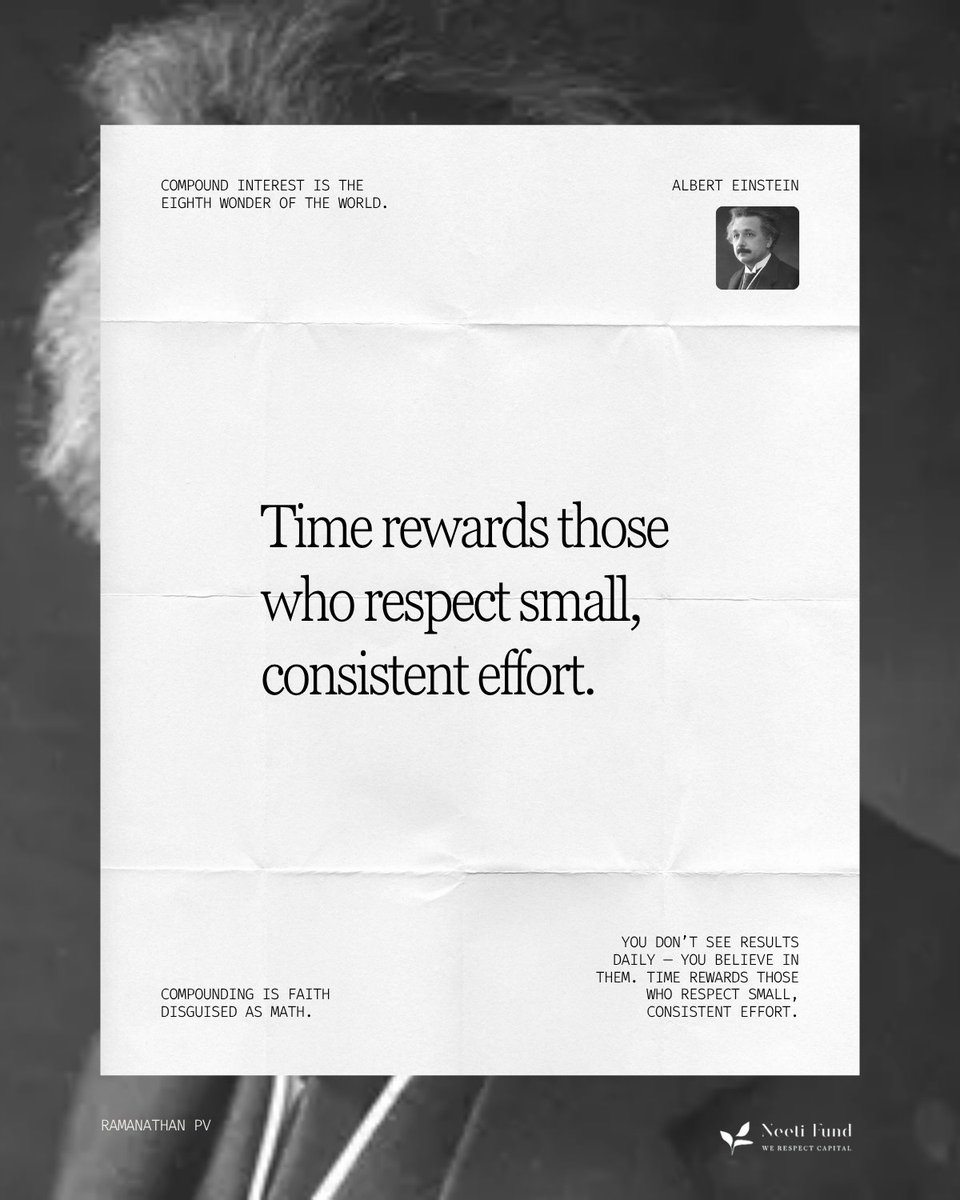
Munger's rule: "The first rule of compounding is to never interrupt it unnecessarily."
He was not being clever.
He was describing how compounding actually works.
It requires time. Time requires patience.
Patience requires not acting when action feels necessary.
1
2
77
May 16
Forgotten capital is not negligence. It is intentional design.
This week's newsletter explains the difference — and how to build it into your own capital structure.
Subscribe at link in bio.
43
May 15
The investors I respect most share one design choice.
A significant portion of their wealth sits in structures where patience is the default — not a daily act of discipline.
Not because they lack discipline.
Because they understand that markets test discipline constantly.
And structure wins.
1
1
67
May 15
The investors who build extraordinary wealth are not smarter.
They are simply still there when the curve steepens.
This week's full essay at link in bio. One read worth your time.
42