PAICON transforms healthcare through advanced AI and data solutions #FromDataToDiagnostics
Joined August 2024
- Tweets 126
- Following 70
- Followers 25
- Likes 1
57 Photos and videos







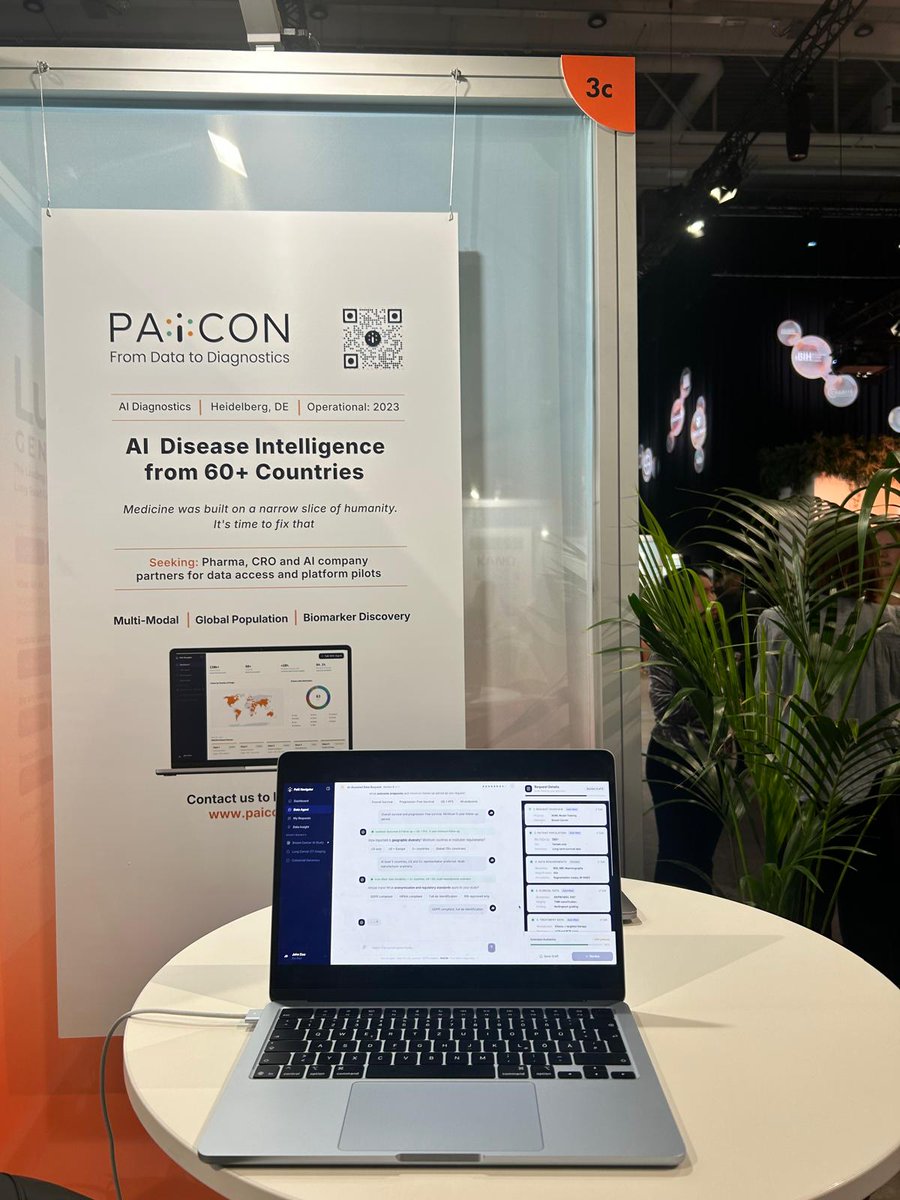
Berlin called and we showed up. PAICON joined the first-ever bio:cap in Berlin this week.
Three days. Countless conversations. And a clear signal from the room: the industry is ready for a new kind of disease data infrastructure.
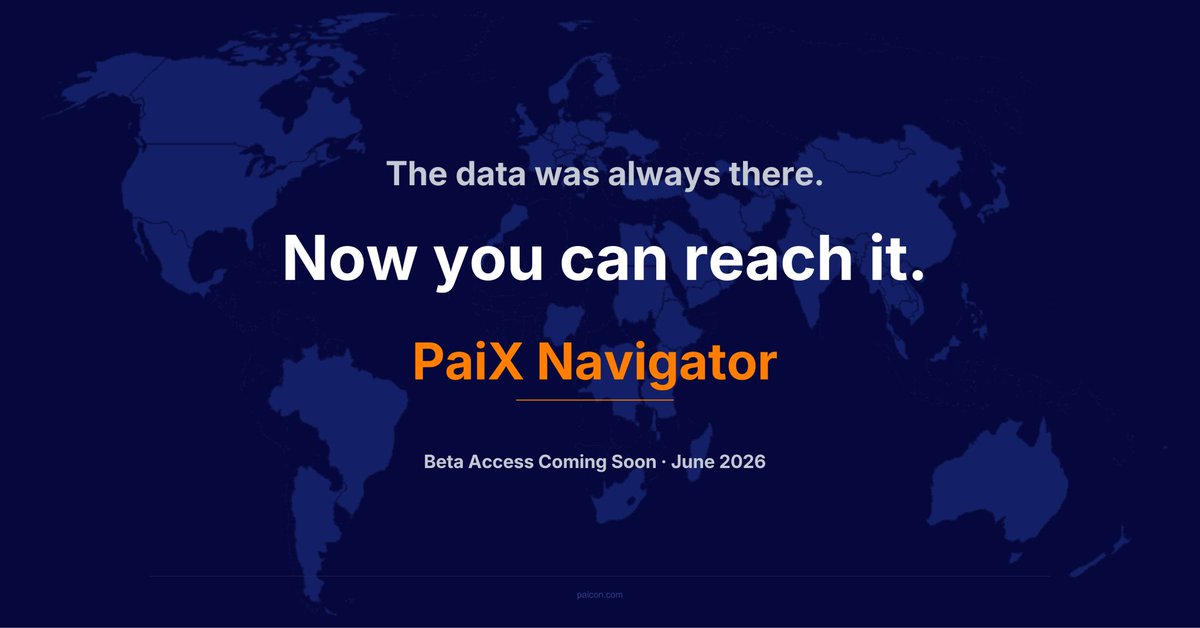
We had the chance to demo #PaiX Navigator live, showing what it looks like when data access and deep insights live in the same platform. The interest was real, and the feedback spoke for itself.
The question we heard most wasn't about its features. It was: "Why hasn't this existed until now?". The honest answer goes deeper than technology. It's a problem that was never prioritized at the system level. And problems that aren't prioritized don't get solved. PaiX Navigator is our answer to that.
PaiX Navigator beta is launching soon. If you missed us in Berlin and want to be among the first to explore the platform, join the waitlist here: 144495326.hs-sites-eu1.com/p…
Thank you to everyone who stopped by our booth, asked hard questions, and pushed our thinking. And thank you to the bio:cap Europe team for a strong first edition.
#PaiXNavigator #HealthAI #Remaining84 #PAICON #biocapEurope


32
What if finding the right data felt less like a search and more like a conversation?
That is the question #PaiX Navigator was built to answer.
130,000 patient cases. 60 countries. Built from the ground up to make global disease data actually reachable for clinical research, diagnostic model development, and everything in between.
The data was always out there. We built the platform to make it accessible.
Beta access opens in two weeks. If you want to be among the first to use it, your spot is one form away: 144495326.hs-sites-eu1.com/p…
2
14
"A drug that works in a white, middle-aged man might not work in a woman in the Caribbean, that is of African descent."
- Dr. Christian Tidona
On #ByteSight, Dr. Christian Tidona joins Dr. Manasi A-Ratnaparkhe to explore why medical discoveries don’t reach patients, from biased clinical trial populations and black-box AI, to BioMed X’s landmark Barbados project building an AI model for diabetic kidney disease in a population of African descent.
🎧 Listen now:
Spotify: open.spotify.com/episode/4Vt…
Apple Podcasts: podcasts.apple.com/us/podcas…
🔗 Learn more about Dr. Christian Tidona: bmedx.com
16
We have been talking about the same problem for months. The data is missing. The populations are underrepresented. The tools built to understand disease were never built to see the full picture.
We have been building toward something. And we are almost ready to share it.
#PaiXNavigator is a platform that makes global disease data across 60 countries accessible to the people who need it most. Not a dataset. Not a dashboard. Something built from the ground up to close the gap we have been talking about since day one.
We are opening beta access in June. If you want to be among the first to use it, the form is here: 144495326.hs-sites-eu1.com/p…
#PAICON #PaiXNavigator #HealthEquity
2
12
"It costs so much to do a disease trial today that it's just not economically viable to look into those rare diseases. As sad as it may sound."
- Faizan Shaharyar
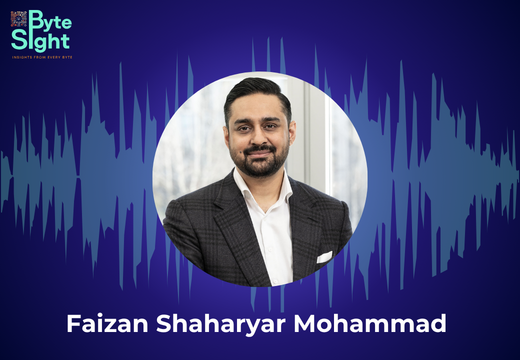
In this episode of #ByteSight, Dr. Manasi A-Ratnaparkhe speaks with Faizan Shaharyar, founder and CEO of Leg&airy, about the uncomfortable reality behind the term "#raredisease".
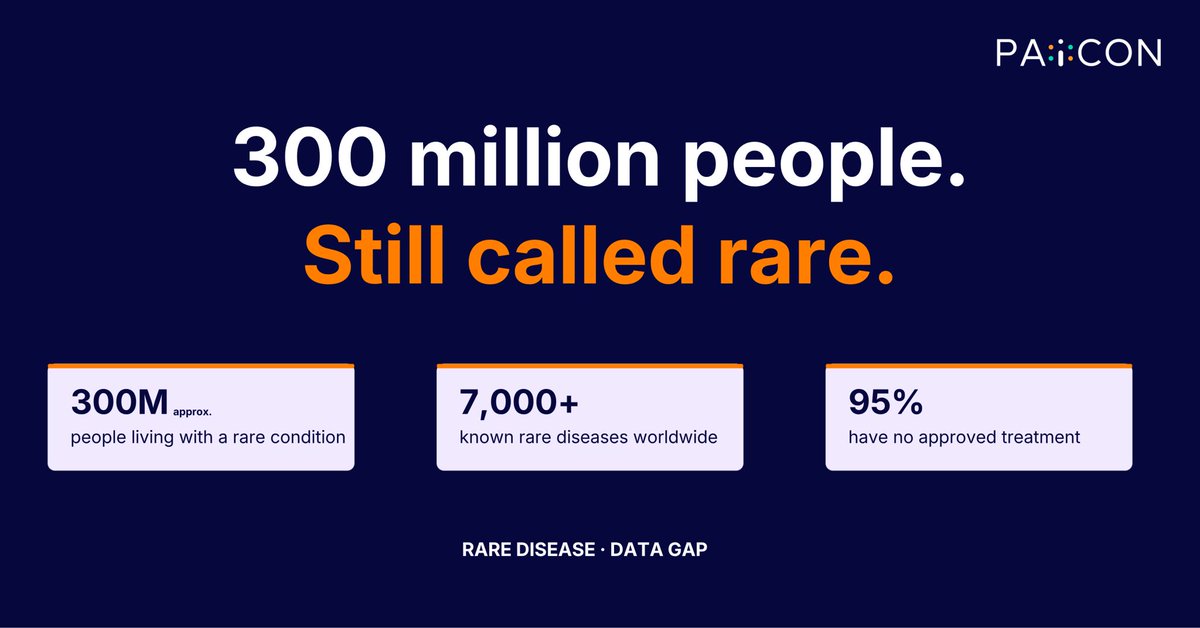
With an estimated 300 million people globally living with a rare condition, are these diseases actually rare, or just chronically under-researched, underfunded, and misunderstood? Faizan brings both personal experience and entrepreneurial insight to a conversation about why translation, not technology, is the missing link; why AI cannot fix what incomplete data created; and what it will take to build a healthcare system that finally sees these patients.
Tune in for an honest, thought-provoking conversation about the next frontier of medicine and who will pioneer it.
paicon.com/media/podcasts/20…
10
300 million people live with a #raredisease. 95% of those conditions have no approved treatment. That number is not a research gap. It is a data gap.
Rare disease is where the #remaining84 problem is most visible. Patient populations are small, geographically dispersed, and clinically heterogeneous. The same condition can present differently depending on ancestry, environment, and access to care, yet the datasets built to understand them are drawn from the same narrow slice of the world
The result: a field where the foundational resource that modern research depends on, well-documented and representative patient data, is missing by default. Not because these patients don't exist. But because the infrastructure to find them, connect their data, and document it consistently has never been built at the right scale.
Why is rare disease where the data gap becomes impossible to ignore? We broke it down: paicon.com/media/news/2026/0…
8
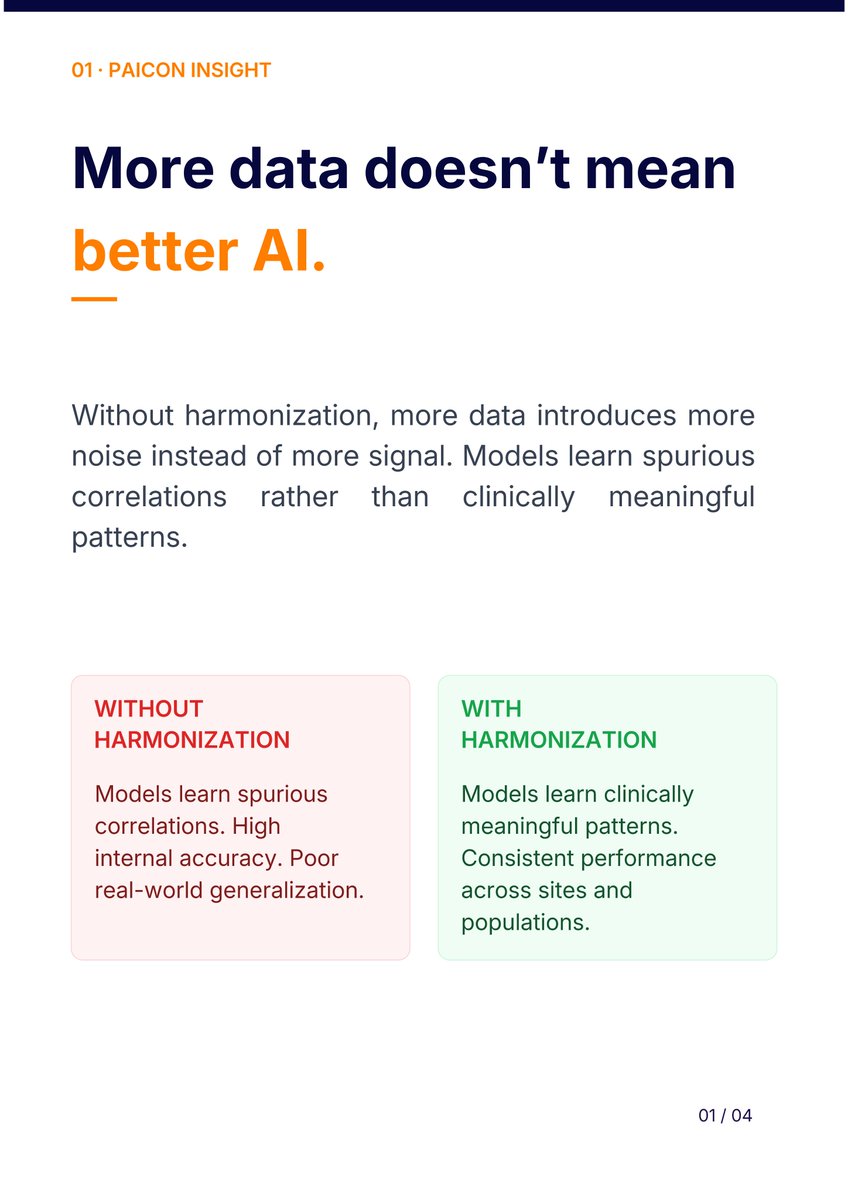
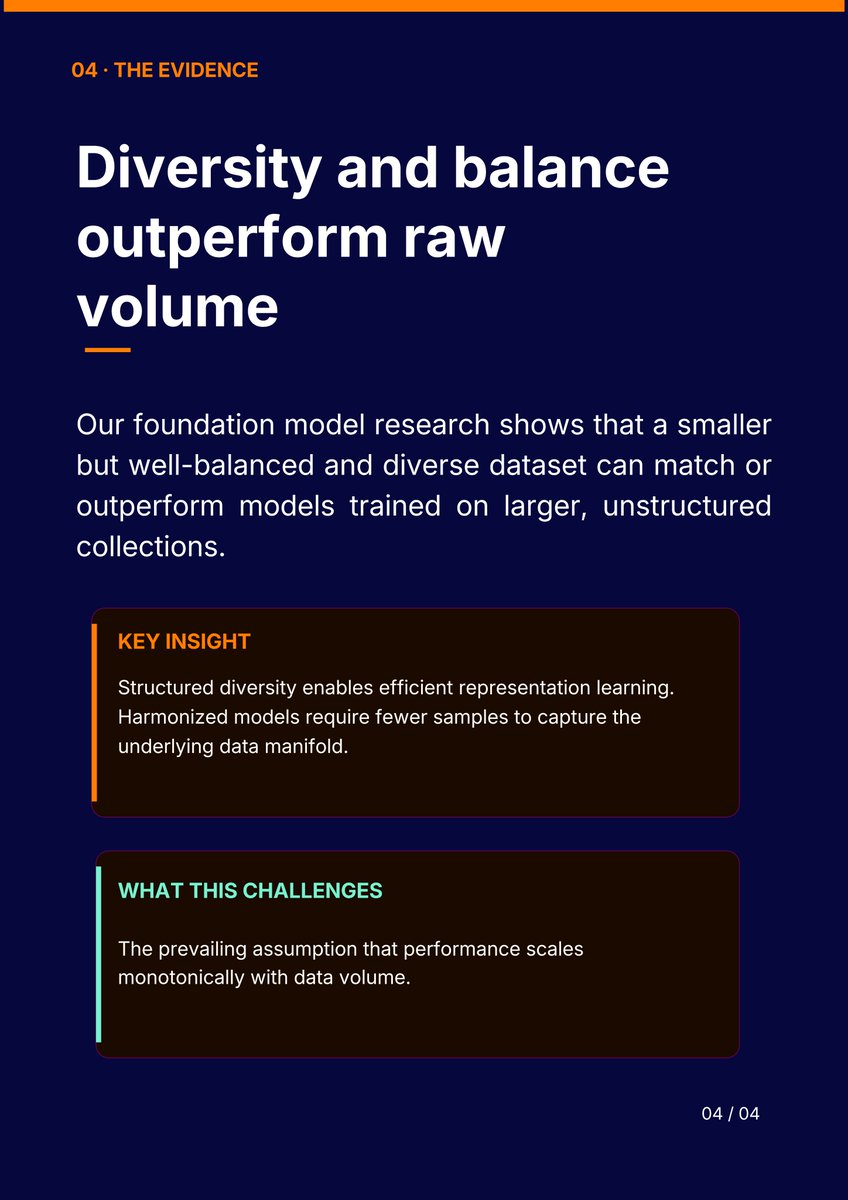
More data doesn't always mean better AI.
In his latest blog, our AI Scientist Christoph Bosch breaks down why, and the answer comes down to one word: #harmonization.
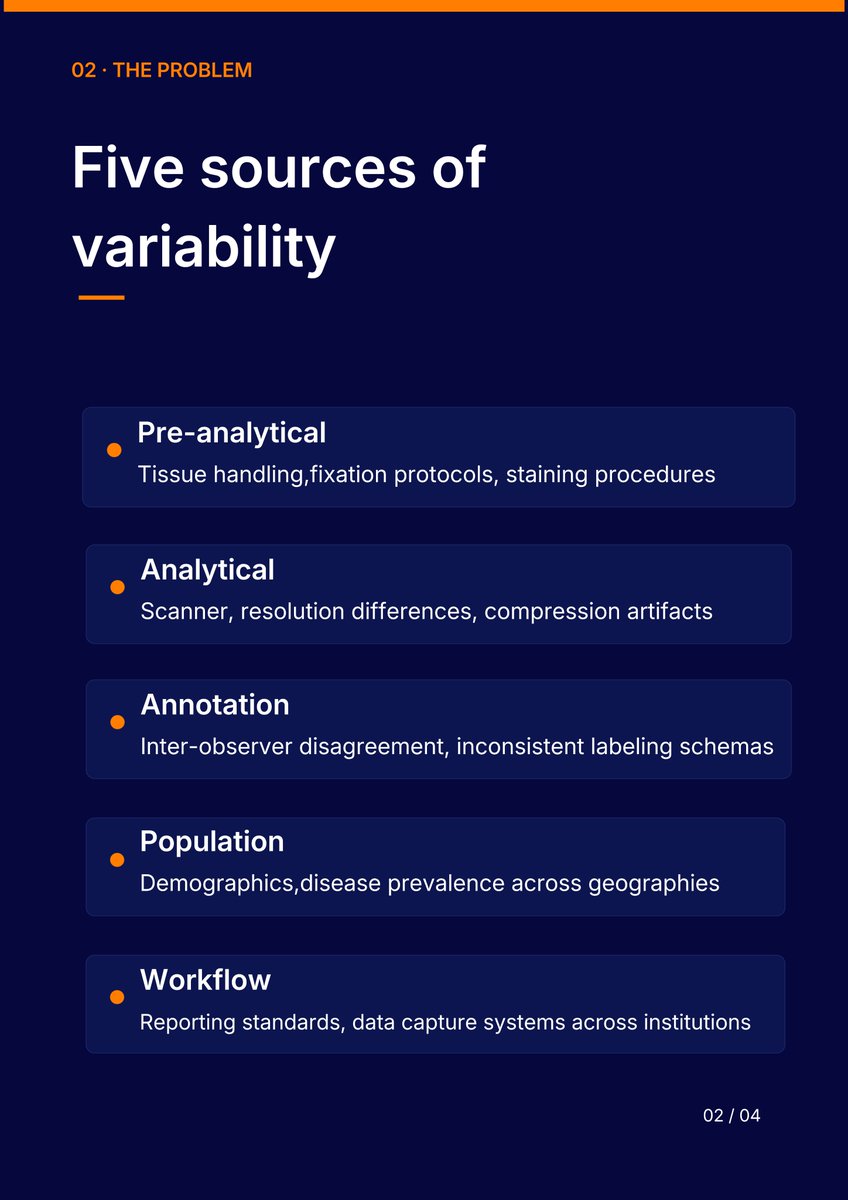
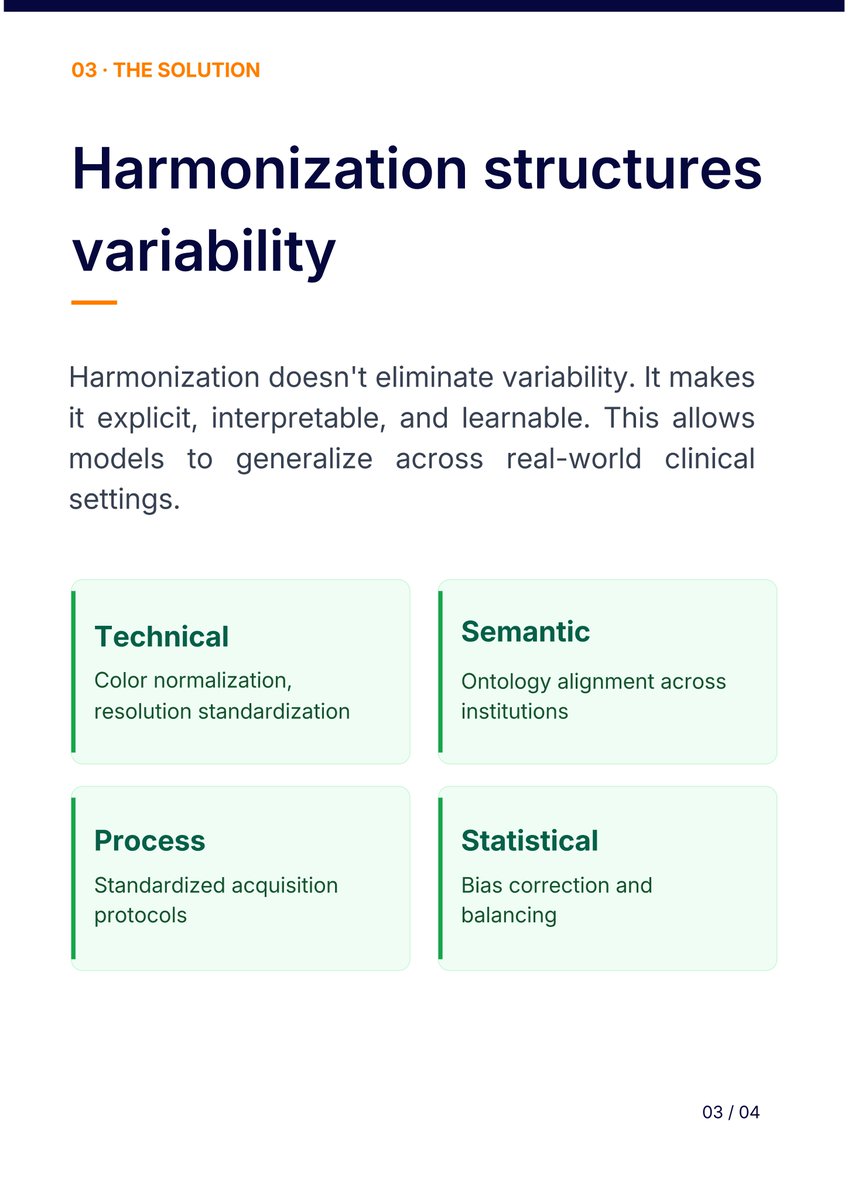
Without it, large datasets introduce uncontrolled variability. Models learn noise, not signal. They perform well in benchmarks and fail in the clinic. With it, even smaller datasets can outperform larger unstructured ones because structured diversity enables better #generalization.
Swipe through to see where variability comes from and how harmonization addresses it at every layer. Read the full blog: paicon.com/media/blogs/2026/…
11
Most #medicalAI was trained on a narrow slice of the world.
Primarily North America and Western Europe. Which means a patient in Sub-Saharan Africa, Southeast Asia, or Latin America is often being assessed by a model that was never built with them in mind.
And high benchmark accuracy doesn't change that. A model can look impressive in controlled conditions and fail silently in the clinic. The reason is not because the algorithm is wrong, but because the data it learned from was never representative to begin with. We explored exactly this pattern here: paicon.com/media/news/2026/0…
Data equity in healthcare isn't an abstract ideal. It is the condition that determines whether medical AI works for everyone or only for a selected few.
What does data equity in healthcare mean to you? Is it about who's in the training data, equal performance across demographics, or something else? Drop your perspective in the comments 👇
#Remaining84 #MedicalAI #HealthEquity
21
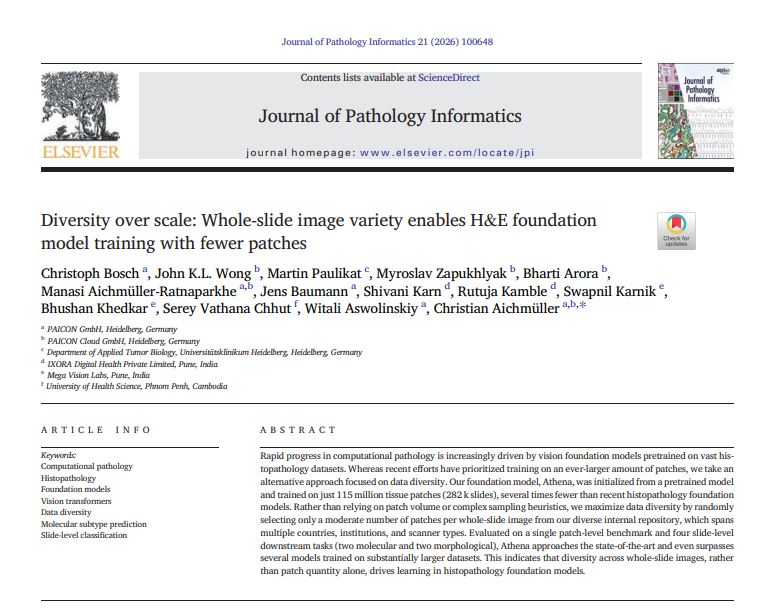
More data. Bigger models. Same generalization problem.
In our latest publication, Christoph Bosch, our AI scientist, challenges a common assumption in AI: performance doesn't scale with data volume alone; it depends on what data you train on.
With #Athena, we show that a foundation model trained on fewer patches can still reach state-of-the-art results by prioritizing diversity across countries, centers, and real-world variability over quantity.
The takeaway is simple: if your data isn't representative, your AI won't be either.
Curious what this means for real-world AI development?
👉 Read the full article: sciencedirect.com/science/ar…
👉 Want to work with diverse, real-world data or explore collaboration? Let’s talk: info@paicon.com
ALT AI-driven cancer diagnostics study highlighting the impact of diverse whole-slide image data on model accuracy and generalization.
2
30
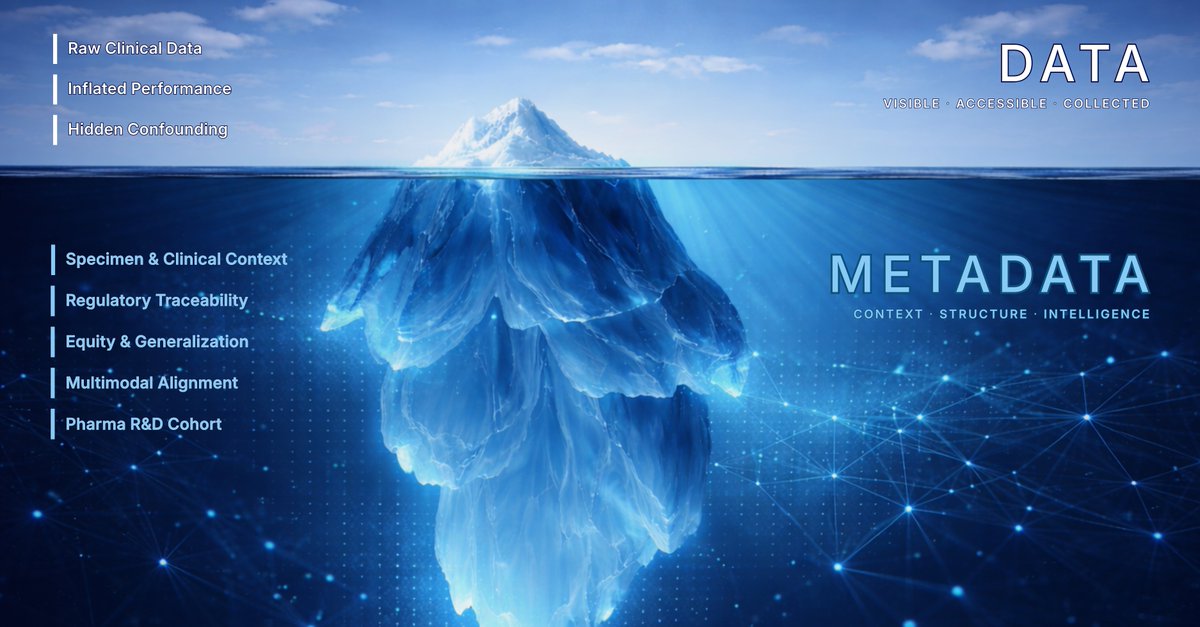
What if the biggest limitation in cancer AI isn’t the model… but the metadata behind it?
While the field focuses on bigger datasets and more powerful algorithms, many AI systems still struggle to move from research to real clinical use. One key reason: missing or fragmented metadata.
In our latest blog, Dr. Myroslav Zapukhlyak, Senior Data Manager at PAICON explores why metadata is the hidden infrastructure layer of scalable cancer AI.
Read the full article: paicon.com/media/blogs/2026/…
ALT Cancer AI doesn’t fail because of weak algorithms, but it fails because of missing metadata, the invisible infrastructure layer that determines whether models generalize, meet EU AI Act requirements, and truly scale across institutions.
7
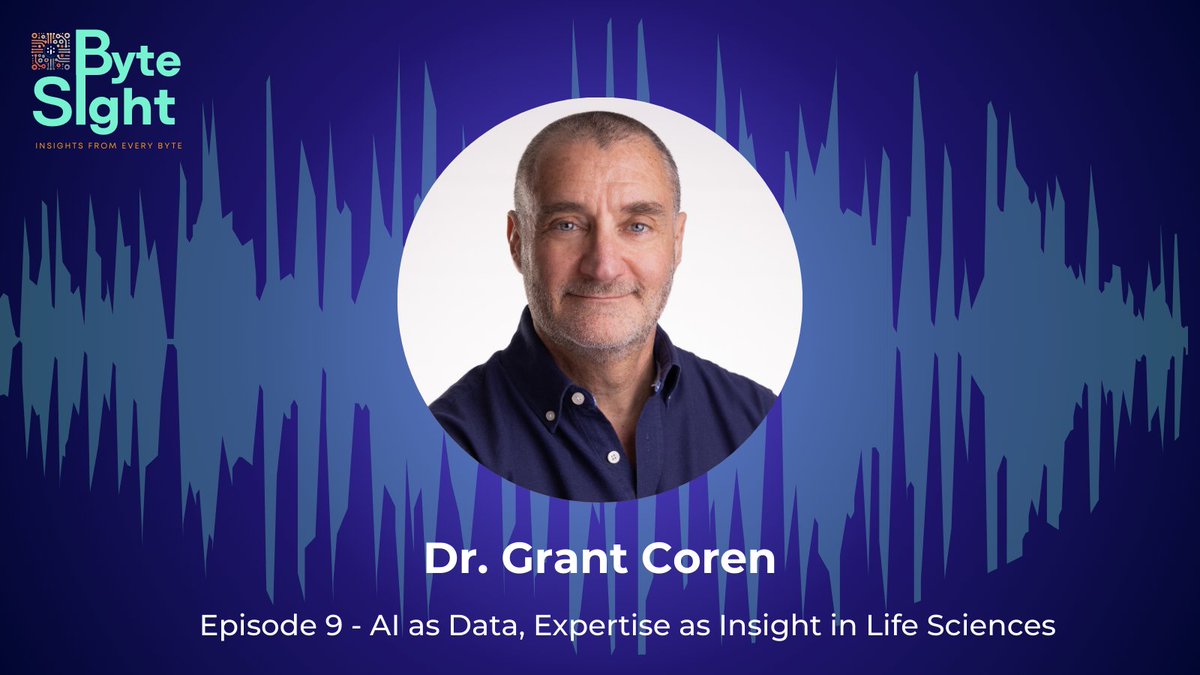
"If you're not putting diverse data in, you're not going to get diverse outcomes." -
@dr_grant_coren
On this episode of #ByteSight, Dr. Grant Coren joins Dr. Manasi A-Ratnaparkhe to discuss how AI is transforming drug discovery and clinical trials, why data diversity is essential for equitable outcomes, and why human expertise must remain central to innovation in the life sciences.
Tune in for a thoughtful conversation on the future of responsible innovation in life sciences 👇
Listen to the full episode here:
Spotify: open.spotify.com/episode/68u…
Apple Podcasts: podcasts.apple.com/us/podcas…
1
22
AI didn't create the data gap in healthcare. It revealed it.
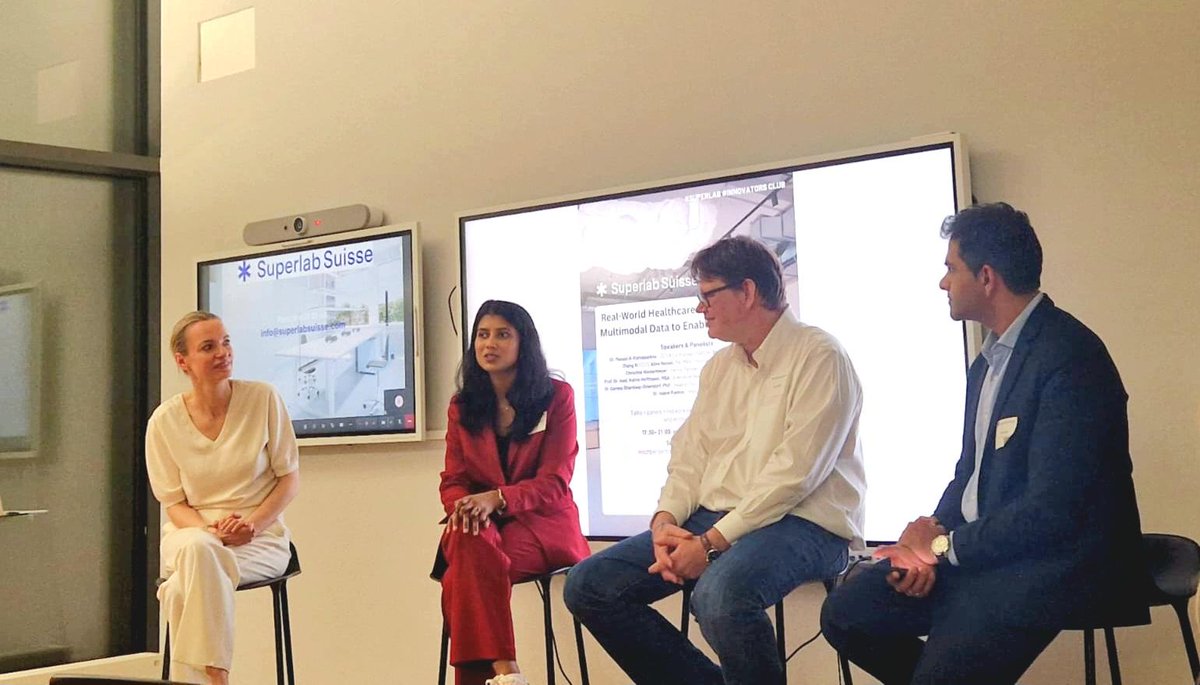
At #healthtechglobalsummit, conversations across sectors from Roche's perspective on healthcare innovation to Amal Clooney's remarks on equity reinforced a common theme: progress in global health must be inclusive.
At the #SuperlabSuisse side event (moderated by Jubin Shah, PhD), our CEO & Co-Founder Dr. Manasi A-Ratnaparkhe captured the challenge clearly:
"Data gaps existed long before AI. It just made the gap visible."
At PAICON, we address this issue by building globally diverse, technically harmonized oncology datasets to develop trustworthy AI in healthcare.
Request access to PAICON's global oncology data infrastructure: paicon.com/services/datalake…

22
What if cancer AI didn't interrupt your clinical workflow at all?
At PAICON, complex #pathology cases run in the background, so no frozen screens, no manual refresh, no waiting around. You submit the case and continue working. When the AI completes its analysis, the results appear automatically, fully integrated.
Behind this seamless experience: background processing, real-time updates, and secure user-specific controls engineered for real clinical environments.
See how we made complex AI feel invisible: paicon.com/media/blogs/2026/…
Because #cancerAI should support clinicians quietly, not slow them down.
18