
The official @Syscoin wallet suite. Open source, easy to use and multichain.
Joined September 2021
- Tweets 933
- Following 267
- Followers 4,677
- Likes 2,692
86 Photos and videos







Pali retweeted

May 13
Alot of misinformation here because NEVM is for settlement not for retail, zkSYS which we are launching is showing you how to scale in a modular way properly. It's called seperation of concerns in software and ensuring we seperate scale from security. The blocktimes are purposefully high on L1 and zk layers (migrating from rollux) is where activity should be. It has taken 10 years to get here because thats how long its taken for the design/crypto to mature to get here, it simply wasn't possible before and it is now.
5
11
49
1,238

May 12
Thanks for the highlight, @letsexchange_io! 🙌
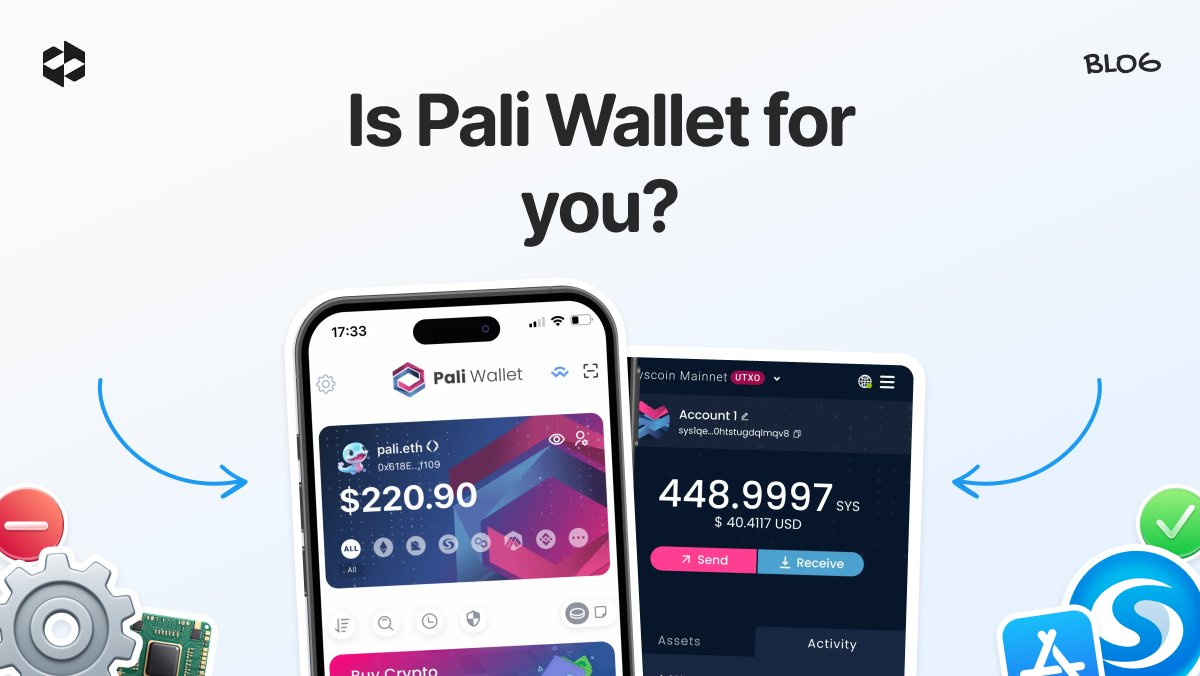
Pali was built for users who don’t want to choose between worlds: EVM flexibility, Bitcoin-style UTXO support, @Syscoin-native assets, self-custody, and dApp access, all in one wallet.
Different needs. One interface. ⚡
May 8

Imagine a wallet that one minute is handling EVM chains, the next is casually dealing with Bitcoin-style UTXO like it owns both worlds ⚡️
That’s the idea behind @PaliWallet. Multichain, non-custodial, and trying to make different #blockchain models actually get along for once. Bold move 💥
@letsexchange_io took it for a spin and broke down what it really delivers. Curious if it’s the right wallet for you? ✅ Click the link below and find out 👇
go.letsexchange.io/pali-wall…
#LetsBlog #LetsReview
6
5
16
1,060
May 5
Reminders set for Thursday's AMA ✅
zkSYS testnet, Sysnode, bridge work, builders, infra upgrades, and Pali V4 live with community bounty and content!
Pali is proud to keep improving wallet functionalities for everything being built across Syscoin 🚀

New Syscoin Ecosystem Update is live AMA alert 📢
Following the zkSYS Public Testnet launch, this edition brings what's new in infrastructure, research, and ecosystem work moving Syscoin’s modular ZK roadmap forward.
🔗 syscoin.org/news/eco-update-…
🛰️ NEW: Sysnode, the official Sentry Node dashboard governance tooling
⚡ zkSYS bridge: advanced internal testing
🧩 Modular ZK roadmap: proving economics, DA based bridging
🌎 DevRel: Proof of Builders V reaches 800 builders in LATAM
🎒 @PaliWallet: V4 rollout community bounty
☂️ @LunosDAO: Month 3 report Asset Manager QA
🧑🚀 @SuperDappAI: infrastructure migration, Base bridge work AI Agent testing
✅ Upcoming: set your reminders for an AMA with the Syscoin Core Team, this Thursday (May 7th) at 16:00 UTC, covering all recent updates 👇
Set reminders: x.com/i/spaces/1qxvvkXegewxB… 📅
3
4
18
506
Apr 30
You can download and start using Pali V4 in your Chrome extension store:
🔗 chromewebstore.google.com/de…
If you already had the Pali Wallet extension, all you have to do is update the extension to the most current version (high chances it has already updated automatically) 🫶
Apr 25

Where can I download paliv4?
2
2
12
636
Apr 27
Strong foundations don’t happen by accident, and it's not simple to get it done. But it's necessary.
Bitcoin-merge-mined security. Multichain execution. Sovereign ecosystem for users and builders.
Over a decade of deliberate design choices compounding. This is what it means to build for the long term.
Apr 27

I built and designed @syscoin to thrive in the good times and survive in the bad:
1. It started with merged mining (AuxPoW) over 10 years ago! This allows you to “borrow” security (not “transfer”) from participating @Bitcoin miners.
2. Simple assets as UTXO representations(coloured coins) were developed, which are efficient and allow us to connect UTXO asset world to VMs like our EVM. At the same time we added Sentry Nodes that finalize the chain and allow us to “transfer” auxpow security due to allowing chain locks to prevent selfish mining (falling back to longest chain rule if chainlock doesn’t form).
3. Introduced NEVM (Network enhanced Virtual Machine), this runs a full EVM node and processes blocks 1:1 between UTXO and EVM state.
4. Kept layer 1 slow methodically arriving to conclusion that layer 1 should be settlement not retail processing. We enabled Data Availability as a quantum secure hash based variant that helps scale rollups off of NEVM. It was called Proof of Data Availability (PoDA), or Bitcoin DA.
5. Chain locks were enhanced to multi-quorum chain locks. This doubles down on our modular thesis because it takes 3x longer to form a chain lock but still happens in seconds. 3 out of 4 quorums need to arrive to consensus on the state of the chain before finalizing. Again backed by PoW when consensus isn’t achieved by Sentry Nodes. Security = super majority SN majority AuxPoW.
6. Added @RolluxL2 as an optimistic showcase to the modular layer as a stopgap towards full ZK.
7. Just recently released the zkSYS zk stack framework on testnet (based on @zksync guts but with our DA and settlement layer customizations). This will allow real-time interoperability amongst chains settling on top of gateways which scaling independently, amortizing the settlement layer constant cost, ZK proving and DA of the layer 1 across each user transaction.
8. Now we are about to migrate testnet to our Airbender prover and RISC V zk proving with EVM emulation at 22mhz speeds. Yes this is close to real-time proving of blocks with very low cost hardware to support economy of scale throughout.
9. We maintain focus on AuxPoW tags and zk based bridging between Bitcoin and Syscoin, along with “based” bridging from NEVM to other EVMs as a slow/steady/secure interop layer across chains.
All of these were stepping stones to something greater, a holistic package that stays resilient and robust during good and bad times, when technology throws curve balls we try to adapt and thrive. I think the team did a very good job at ensuring we focused on long-term objectives and we are now close to completing the vision. We didn’t have to invent every piece of the puzzle but we found and adapted the right ones and it all fits together elegantly.
Given the above design, not only is it a cohesive plan that may adapt well to the PQ environment(slow blocks=good) it also helps us survive reorg challenges with respect to PoW (which is one of the few drawbacks of PoW, see @litecoin recently). We think the combination of a pseudo PoS of multi-quorum chain locks along with AuxPow creates a better cohesive mechanism design that may offer security that rivals or competes with any other design, while offering superior permissionlessness of PoW.
We are always open to work with others to improve the status quo, as technical thought-leaders in the space. We provided our thoughts in the form of code to our community. Coding was hard, but it is easy compared to trying to navigate uncertainty around exponential technological growth, and this is where I believe @syscoin will continue to shine the most.
3
15
314
Apr 24
Crypto doesn’t need more advanced and complicated features.
It just needs better tools.
Fast, clear, reliable wallets are what actually onboard users.
That's what Pali is made for. ✅
2
1
13
221
Apr 20
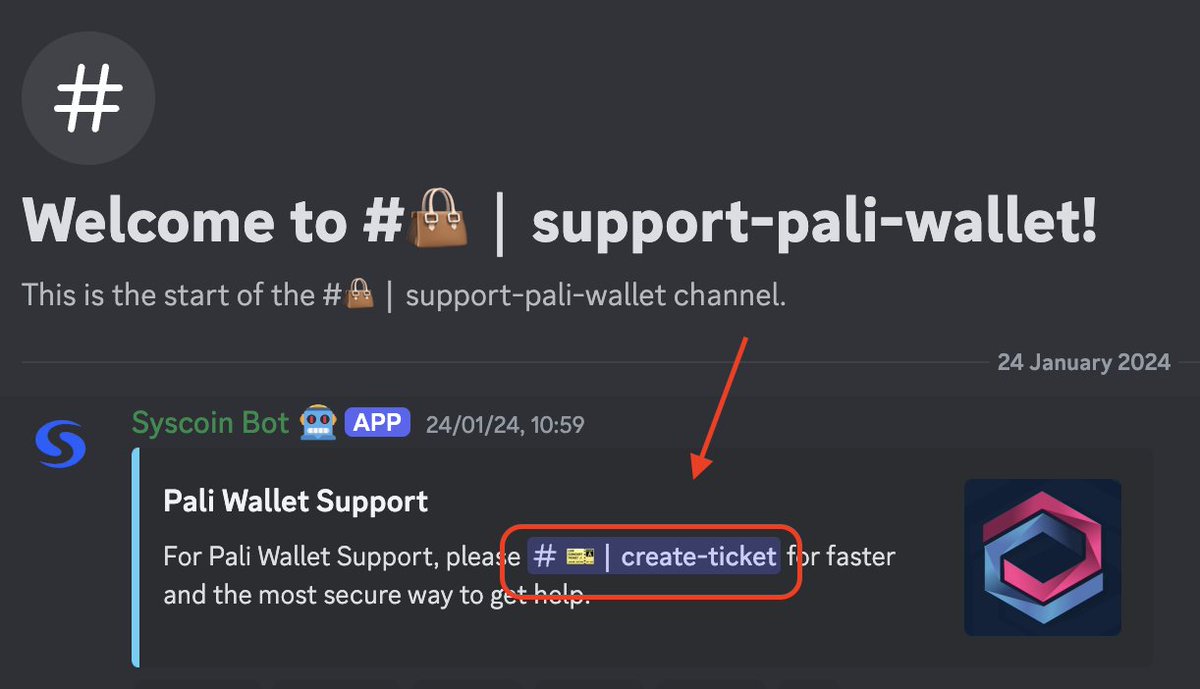
Having any issues with Pali? Just ask for help.
The team is always here to help you. 🤝
Apr 16

It’s all working. The discord team was very nice and helpful. They have had sorted the issue in very good time. I’ll get that post down as well as not necessary anymore! Thank you all!
3
2
17
395
Apr 13
Congrats to all teams in Proof of Builders! 👏
Builders ship. Infrastructure proves it.
Pali is where users connect, transact, and interact with what gets built.
More apps live → more real usage → better wallets
At the end of the day, it all compounds 🚀
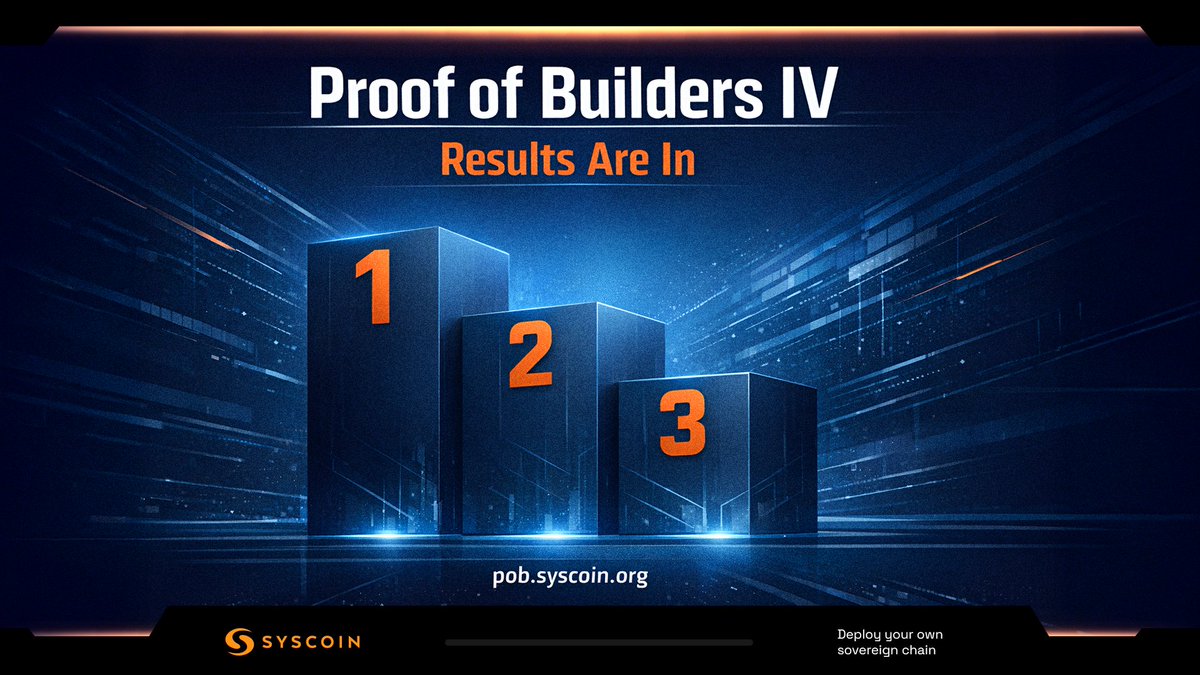
Proof of Builders IV results are in!
🔗 pob.syscoin.org
Five teams delivered. The jury voted. Three took the top positions. Every team that shipped walked away with something the hackathon did not give them: a product running on Syscoin infrastructure. That part is permanent.
3
3
14
400
Apr 8
Users don’t leave because crypto is hard. 🤷
They leave because the tools are.
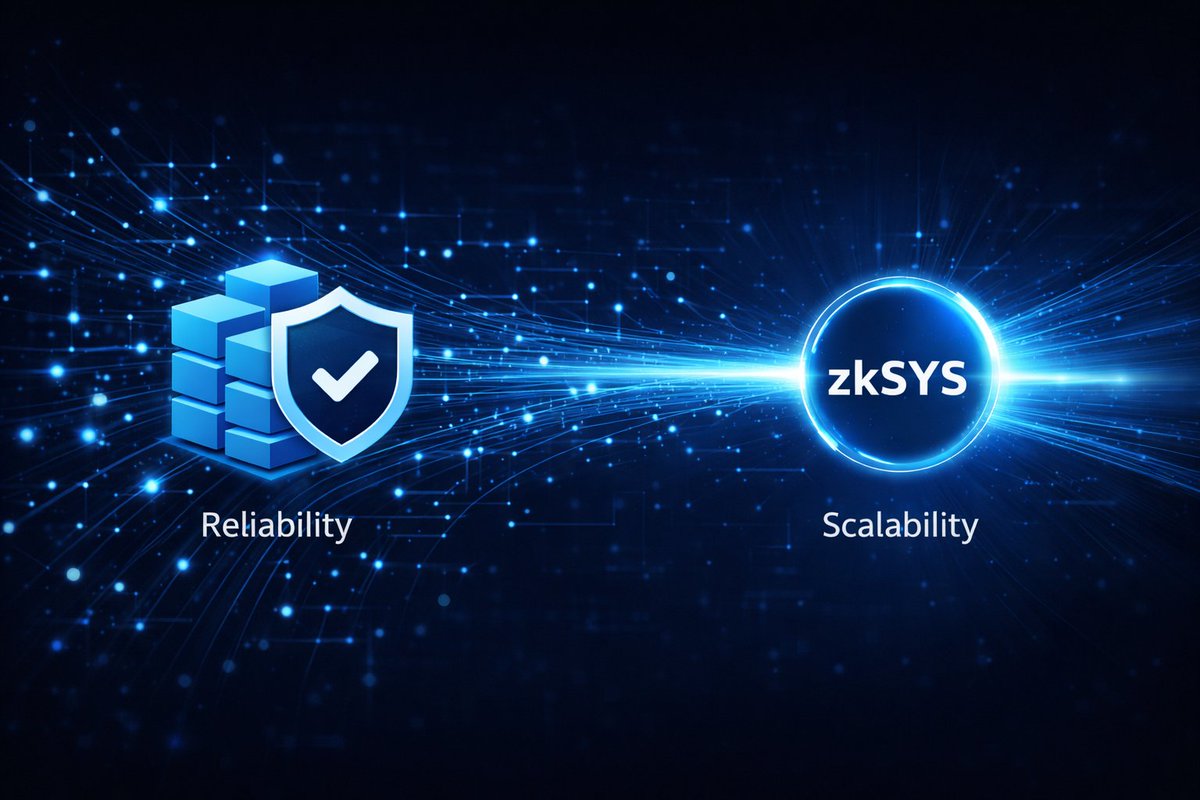
As the wallet for your journey on the @Syscoin ecosystem, Pali V4 brings this same balance, with reliability underneath, scalability on top, and a UX that finally keeps up.

Most systems don’t fail because they can’t start.
They fail when usage grows and the design can’t keep up.
Syscoin is built to handle that reality.
A stable base layer combined with scalable execution through zkSYS means the network can grow without slowing down.
That’s how infrastructure stays reliable as demand increases.
3
5
19
419
Apr 3
🏆 Pali V4 Content Bounty Winners 🏆
Submissions reviewed, and the winners of the $SYS prizes are:
🥇1st ($75): Kimberly - @Syscoin_Hispano Volunteer
🥈2nd ($50): Ogszn - @ogszn_
🥉3rd ($25): Mike Web3 - @MikiyasP96766
Thank you for participating and showing V4 to the world!
12
5
34
1,811
Pali retweeted

Apr 2
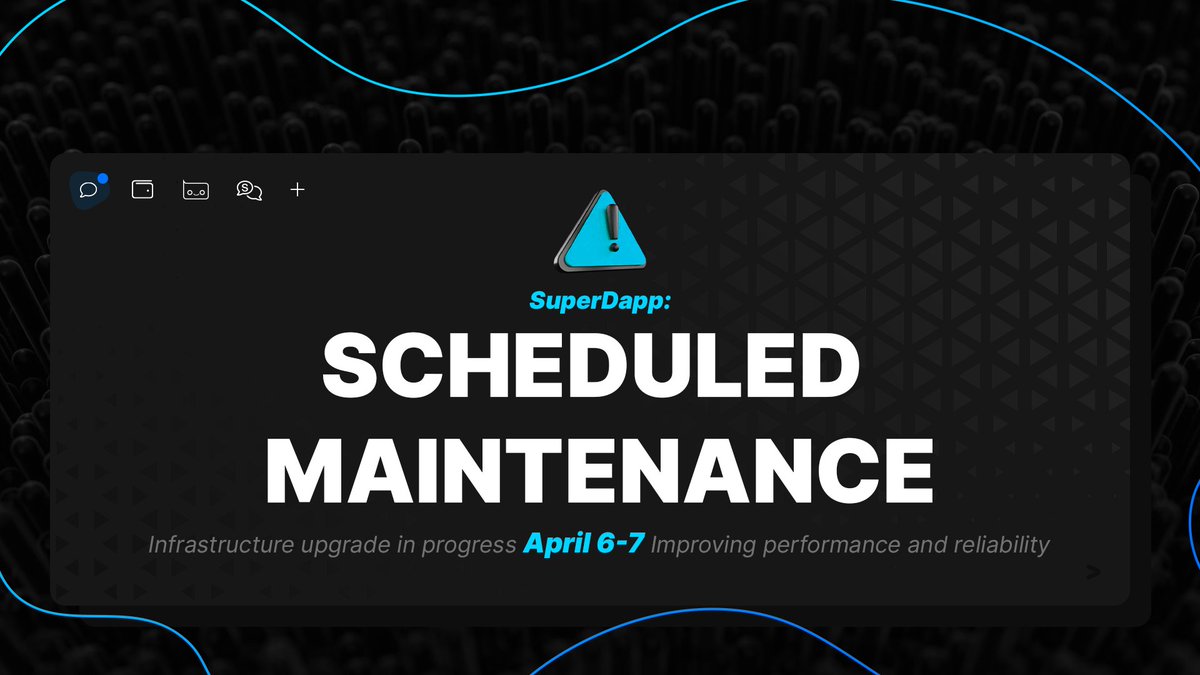
PSA: SuperDapp will be temporarily unavailable on April 6-7 for scheduled maintenance. ⚙️
This is part of an infrastructure upgrade for improving performance and reliability.
Service is expected to resume on Tuesday (7).
Thanks for your patience, stay tuned for updates 📡
3
9
33
3,242
Mar 31
Pali V4 Content Bounty update 💰
Submissions are already being evaluated and winners will be contacted this week still. Stay tuned for the winners announcement! 🎉
3
6
27
361
Mar 27
More great submissions to Pali V4 content bounty 📽️
You still have a few hours to submit your video and win part of the $150 giveaway prize pool! Great videos coming in! 🔥
Mar 26

🧐You still using outdated wallets?
😎It’s time to upgrade!
💀@PaliWallet V4 is Out!
Pali wallet V4 is faster, smarter, and fully multichain-ready. I break down what changed, why it matters, and why V4 makes crypto management effortless. 🎥 Watch my honest review!😏 #paliv4
4
2
14
411
Mar 26
24 hours left to submit your video and win a part of the $150 prize pool in $SYS and spread the news about Pali V4 🔥
Giveaway prizes are $75 (1st place), $50 (2nd), and $25 (3rd)! If you already submitted your video, quote your post in the comments 👇
Mar 4

Show Pali V4 to the world and win $SYS! 🎥💰
New bounty live: create a short video showcasing the new Pali V4's UX, capabilities, security, and real usage!
🏆 $150 prize pool in $SYS
⭐ Read more and submit: forms.gle/xmCoE5QD6fiWzgBz5
Show the world what Pali (and you) can do! 🚀
📅 You can submit your entry until March 27th, 2026
ℹ️ All information is provided on the submission form
❔ Got any questions? Drop them in the comments!
🫂 Tag your friends so they can join this bounty and win with you!
3
5
28
1,897
Mar 25
Another great submission to the Pali V4 content bounty 🫶
If you haven't made your video yet, you still have until the end of Friday (27th) to submit your video and win part of the $150 in $SYS prize! 💰

I just explored the @PaliWallet v4 and here are my top three features!
- Multichain feature [ UTXO and EVM ]
- Language feature [ Everyone is welcome at Pali! ]
- Currency feature [ Set to NGN as default :) ]
Check it out below.
3
1
15
629
Mar 24
🗓️ Tomorrow, March 25th
🕚 16:00 UTC
@Syscoin spaces. Don't miss it, mark your calendars.
1
6
19
263
Mar 23
Last week to submit your videos to this content bounty and participate in the $SYS prize pool giveaway! 🤑
Remember to tag @PaliWallet on your official post 🫶
Mar 4
Show Pali V4 to the world and win $SYS! 🎥💰
New bounty live: create a short video showcasing the new Pali V4's UX, capabilities, security, and real usage!
🏆 $150 prize pool in $SYS
⭐ Read more and submit: forms.gle/xmCoE5QD6fiWzgBz5
Show the world what Pali (and you) can do! 🚀
📅 You can submit your entry until March 27th, 2026
ℹ️ All information is provided on the submission form
❔ Got any questions? Drop them in the comments!
🫂 Tag your friends so they can join this bounty and win with you!
1
4
214

Alright. Here it is...
Join the official @Syscoin X Space this Wednesday for a live announcement and open Q&A.
The world is invited to listen. March 25th, at 16:00 UTC. This Wednesday the world gets the full picture.
Bring your questions & stay tuned for the link.
21
40
126
9,531
Mar 20
Seems like @syscoin is cooking something... 🧑🍳
Something is coming.
We are not telling you what it is yet. But it is big.
Guess...
2
7
32
561