
Com. Architect | Turning Web3 communities into active, self-sustaining communities using the Movement Method | Structure • Strategy • Execution | Fou.PawForgeHQ
Joined December 2024
- Tweets 5,514
- Following 1,575
- Followers 1,610
- Likes 11,395
374 Photos and videos


Pinned Tweet

May 6
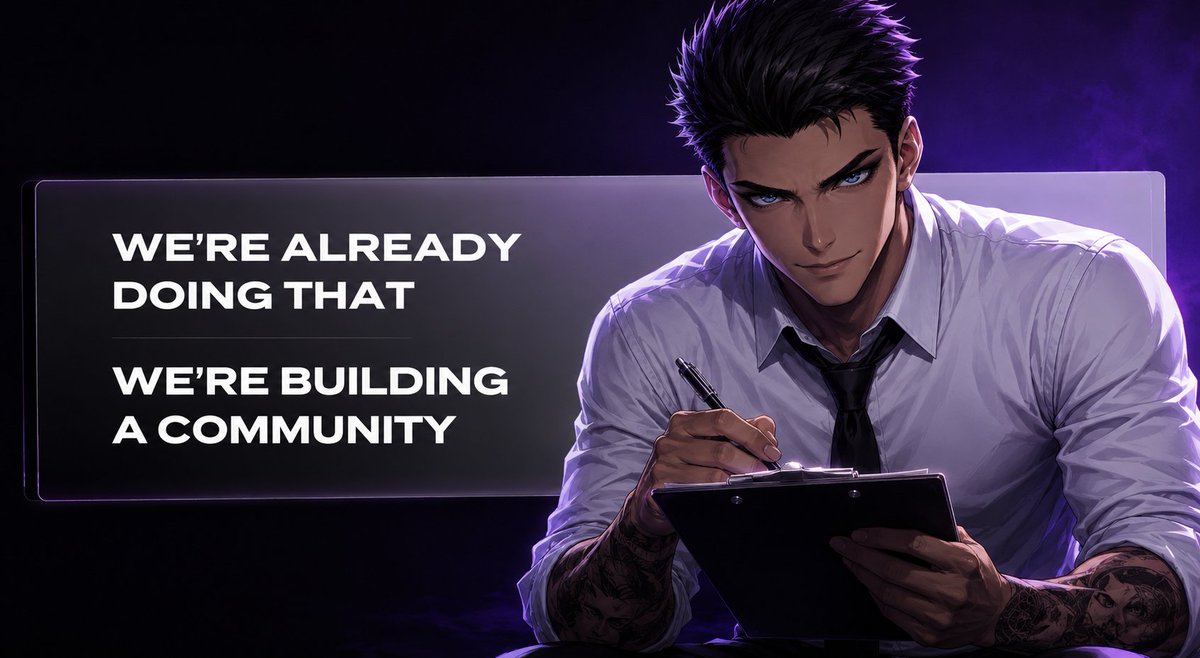
>> I've meet tons of project developers and each time I say
→ " you need to build a community"
they almost always reply
→ "we're already doing that" "we're building a community"
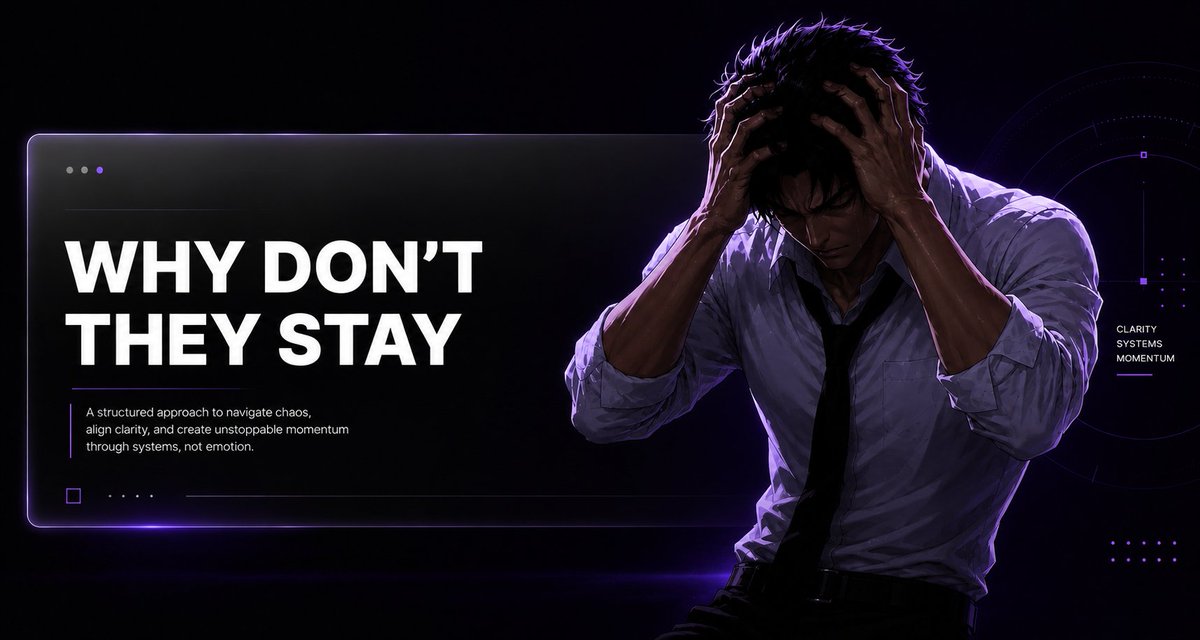
But after weeks they comeback "Yo Links, we spent tons of money on activities, giveaways and contest but nothing is working"
The truth is Strong Community does not come from hype, or spike activities it comes from structure;
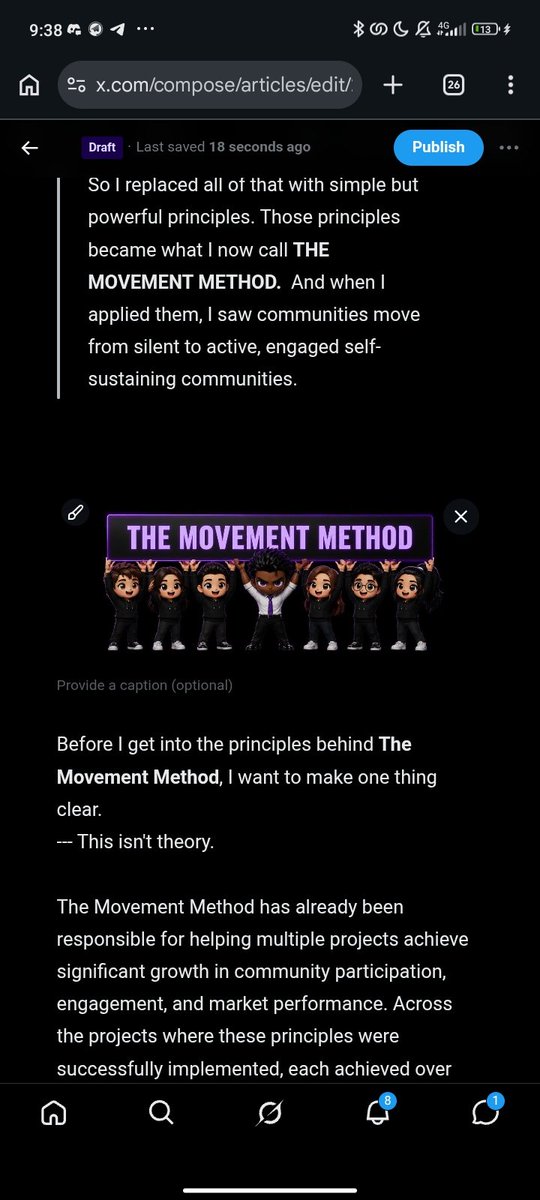
And that's exactly what I solve using my self developed method "THE MOVEMENT METHOD"
→ And each time they see it work they say "I would have taken it seriously since then"
7
3
50
1,648
15h
🟣🟪 LIVE
Jun 13

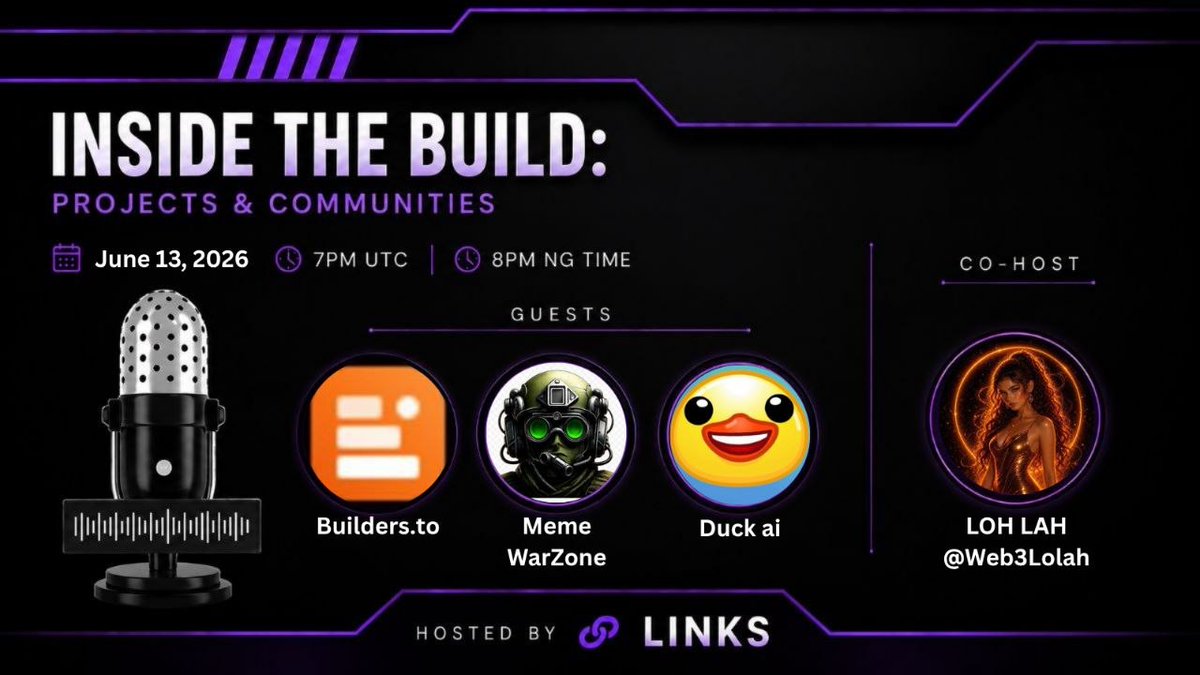
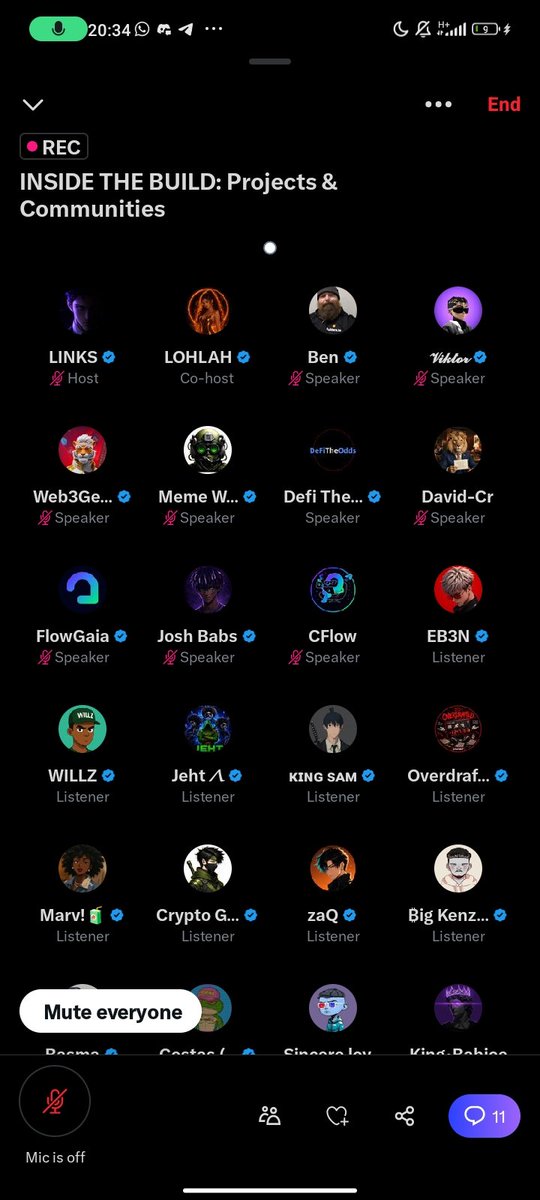
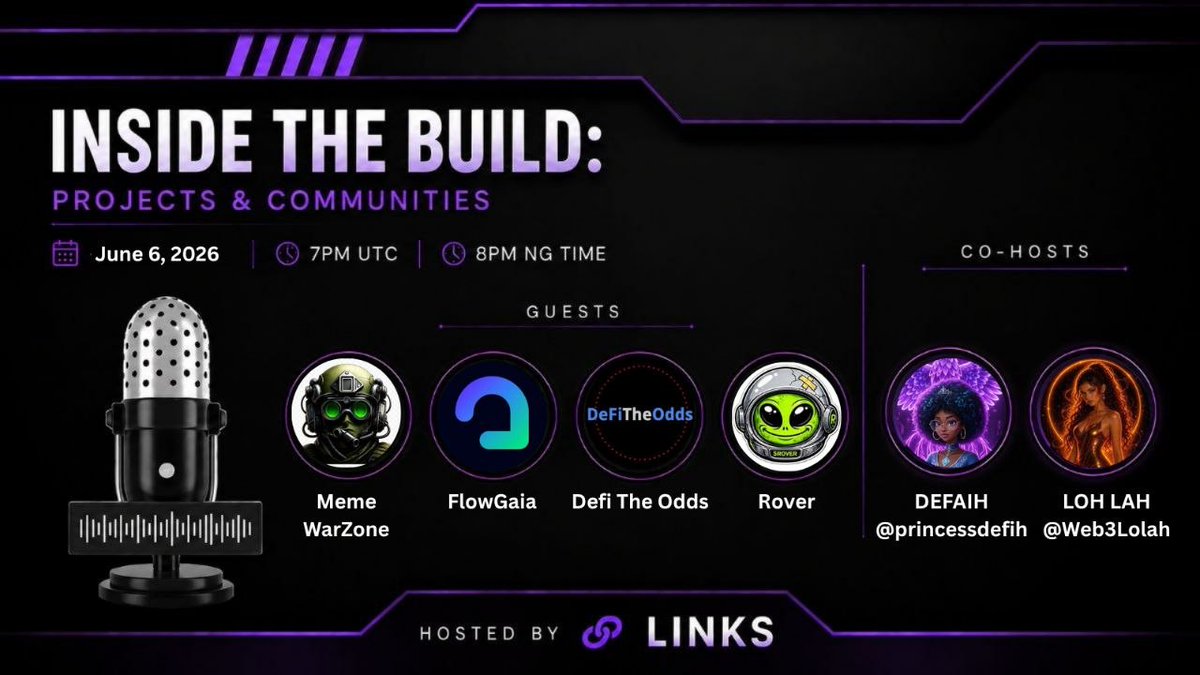
As the week comes to a close, we're bringing projects and communities into one focused room for an honest conversation about building.
We'll be discussing:
→ What is being built
→ How it's being built
→ What's working
→ What's not working
Joining us for this session:
• @buildersxoff | @benvspak
• @memewarzone
• @Duckai_onTon
Together, we'll dive deep into the vision, mission, challenges, lessons, and mindset behind these projects and the communities supporting them.
→ This isn't about hype.
It's about the people building, the problems they're solving, and the realities of growing a project from the inside out.
📅 June 13, 2026
🕖 7 PM UTC | 🕗 8 PM NG Time
See you INSIDE THE BUILD.
2
6
202
LINKS retweeted
Jun 13
As the week comes to a close, we're bringing projects and communities into one focused room for an honest conversation about building.
We'll be discussing:
→ What is being built
→ How it's being built
→ What's working
→ What's not working
Joining us for this session:
• @buildersxoff | @benvspak
• @memewarzone
• @Duckai_onTon
Together, we'll dive deep into the vision, mission, challenges, lessons, and mindset behind these projects and the communities supporting them.
→ This isn't about hype.
It's about the people building, the problems they're solving, and the realities of growing a project from the inside out.
📅 June 13, 2026
🕖 7 PM UTC | 🕗 8 PM NG Time
See you INSIDE THE BUILD.
Jun 11
Set a reminder for my upcoming Space! x.com/i/spaces/1wxWjjqElENJQ
7
4
15
1,092
LINKS retweeted
2
1
7
117
Jun 13
I've spent the last few weeks putting together the exact community-building framework I've used across multiple projects.
The same framework that helped create stronger participation, deeper community connections, and contributed to 2.5x growth outcomes.
Tonight, I'll be sharing part a large chunk of it publicly for the first time.
The Movement Method.
🕡 Drops at 6:50 PM UTC
Then at 7:00 PM UTC, we go live for INSIDE THE BUILD.
If you're building a community, growing a project, or trying to turn members into believers, you won't want to miss this.
Jun 13
As the week comes to a close, we're bringing projects and communities into one focused room for an honest conversation about building.
We'll be discussing:
→ What is being built
→ How it's being built
→ What's working
→ What's not working
Joining us for this session:
• @buildersxoff | @benvspak
• @memewarzone
• @Duckai_onTon
Together, we'll dive deep into the vision, mission, challenges, lessons, and mindset behind these projects and the communities supporting them.
→ This isn't about hype.
It's about the people building, the problems they're solving, and the realities of growing a project from the inside out.
📅 June 13, 2026
🕖 7 PM UTC | 🕗 8 PM NG Time
See you INSIDE THE BUILD.
2
1
5
130
LINKS retweeted

Jun 12
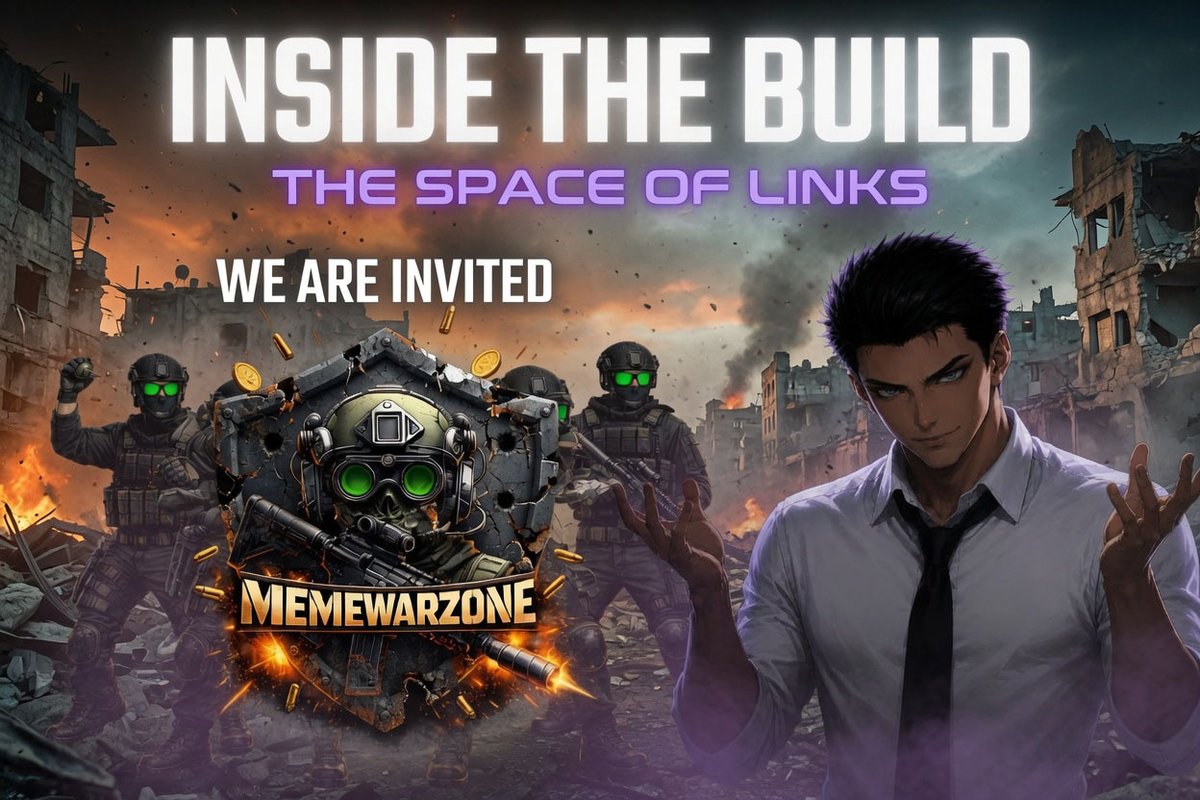
Soldiers, lock in 🪖
Big shoutout to @Panchabets for having us on the space.
We’re going in to break down MemeWarzone: the launchpad that turns graduation into real battles, leagues, and ongoing visibility across BNB & Solana.
This isn’t another hype drop. It’s the full vision on how we build campaigns that actually last and grow.
Pull up, support the army, and hear it straight from the front lines.
Link in the quote. See you there 🔥
Jun 11
Set a reminder for my upcoming Space! x.com/i/spaces/1wxWjjqElENJQ
6
2
19
935
LINKS retweeted

Jun 12
The future of AI is not a debate.
It's a conversation.
And we're having it this Saturday.
✦ ✦ ✦ ✦ ✦ ✦ ✦ ✦ ✦ ✦
I've spent months writing about AI.
Studying it.
Breaking it down.
Trying to make people feel why it matters.
This Saturday I'm done writing about it.
We're talking about it live.
✦ ✦ ✦ ✦ ✦ ✦ ✦ ✦ ✦ ✦
The Future of AI 🎙️
A roundtable with the people actually building it.
Your hosts:
✧ Me
✧ @Panchabets
✧ @WILLZ01x
Special Guests:
✧ @BioLLM_ (@4R7I5T )
✧ @jettoptx (@Spac_wby_actual )
✧ @NolaX
✧ @flowgaiaio
✧ @LolaOnchain_
Saturday. June 13th. 6PM.
✦ ✦ ✦ ✦ ✦ ✦ ✦ ✦ ✦ ✦
Oh and two more thing.
There's a giveaway.
Announced live on the Space.
You have to be there to know.
And
A special performance by @grac2ll to hop the space
✦ ✦ ✦ ✦ ✦ ✦ ✦ ✦ ✦ ✦
Set your reminder.
This one is going to be different.


12
6
31
1,146
Jun 12
GM everyone 🫡
A lot is happening behind the scenes.
This Saturday, we're bringing more builders, more conversations, and more opportunities to INSIDE THE BUILD.
Including:
🔨 @buildersxoff
🎮 @memewarzone
Plus a giveaway sponsored by @benvspak, Co-Founder of Builders.to.
The details are in the video below 👇
Have an amazing day and keep building.
See you INSIDE THE BUILD. ⚫🟣
Jun 11
Set a reminder for my upcoming Space! x.com/i/spaces/1wxWjjqElENJQ
8
2
14
429
Jun 11
>> A lot of people know me as LINKS, the guy hosting spaces and talking about communities.
→ What many people don't know is that when I'm not building communities, I'm usually fixing phones and handling my Web2 hustle.
So if you don't always see me everywhere on the timeline, that's usually where I am.
I just wanted to say thank you to everyone who's supported me, joined the spaces, engaged with the content, and believed in what I'm building.
We keep going. 🫡
13
1
30
486
Jun 11
>> Now let's talk about one of the most obvious mistakes communities make.
Many communities believe that activity equals community.
→ It doesn't.
A Telegram, Discord, or group chat can become extremely active during a giveaway, meme contest, or campaign.
That doesn't automatically make the community healthy.
Why?
Because people will show up on Friday for the giveaway and disappear the rest of the week, waiting for the next reward.
One of the strongest signs of a healthy community is simple:
→ Community members talk to each other.
Not just to the founder. Not just to the moderators. Not just to the team.
~ To each other ~.
The moment every conversation depends on the team, the community becomes a broadcast channel.
The moment members start helping each other, sharing ideas, debating, creating inside jokes, and building relationships with one another, something interesting happens
→ The community becomes bigger than the project itself.
→ People stop showing up only for announcements.
→ They start showing up for the people.
>> And that's one of the most important shifts a community can make.
Because people rarely stay because of a roadmap.
→ They stay because of connection.
→ The strongest communities are not built on attention.
They're built on relationships.
>> But all of this begins much earlier than most people realize.
→ It begins with how people were brought into the community in the first place.
• If members were recruited through giveaways, they'll naturally expect more giveaways to participate.
• If members were recruited through alignment, they'll naturally look for ways to contribute.
The onboarding method shapes the behavior that follows.
In the next post, we'll explore this shift in thinking.
⚫🟣
LINKS
Creator of The Movement Method™ :::
Jun 10
Let's get started already.
What Actually Is a Community?
A community is a group of people who share a common interest, belief, goal, or identity.
It could be a shared ideology, a shared mission, or simply a shared interest in a particular thing. But regardless of what brings people together, one thing remains true:
→ A community is made up of people, not numbers.
> One of the biggest mistakes I see founders, developers, and community builders make is trying to become the loudest voice in the room.
They want every conversation to go through them. They want every question directed at them. They want to be the center of every interaction.
At first, this may feel like leadership.
→ In reality, it creates a structural weakness.
A community does not thrive because the founder is constantly speaking.
→ A community thrives because its members are able to speak, connect, and be heard.
When people feel seen as human beings rather than metrics, participation naturally increases.
> The goal of community building is not to create a room where everyone talks to the founder.
→ The goal is to create a space where members talk to each other.
Because a community is not a chat room.
→ It is a place where people share ideas, build relationships, develop a sense of belonging, and become part of something larger than themselves.
> Think about some of the strongest communities in the world.
→ Fans of Omah Lay call themselves Purple Hearts.
→ Fans of Taylor Swift call themselves Swifties.
→ Football fans can meet a complete stranger wearing the same club jersey and instantly start a conversation.
Why?
Because they don't just follow a person.
• They feel like they belong to something.
• They have a shared identity.
• A shared culture.
• A shared language.
And that's exactly what every great community should create.
A feeling that says:
"These are my people."
When members begin to feel that way, they stop interacting only with the founder and start interacting with each other.
• Conversations happen naturally.
• Relationships form naturally.
• Culture develops naturally.
→ The strongest communities are not dependent on the founder's presence.
They continue moving even when the founder is offline.
> Members answer questions.
> Members welcome newcomers.
> Members create conversations.
> Members reinforce the culture.
That is when a community begins to become self-sustaining.
People show up not because someone told them to.
They show up because they understand why they are there.
They understand the mission.
They understand the purpose.
And most importantly, they feel that they belong.
That is what separates a community from an audience.
An audience listens.
A community participates.
>>> My Philosophy
"If your community only speaks to you, you've not built a community. You've built an audience".
The true test of a community is not how much people engage with the founder.
It's how much they engage with each other.
Because communities are built on belonging, not attention.
And when people feel like they belong, participation stops being something you have to force.
It becomes part of the culture.
4
17
309
LINKS retweeted

88
91
101
2,213
Jun 10
Let's get started already.
What Actually Is a Community?
A community is a group of people who share a common interest, belief, goal, or identity.
It could be a shared ideology, a shared mission, or simply a shared interest in a particular thing. But regardless of what brings people together, one thing remains true:
→ A community is made up of people, not numbers.
> One of the biggest mistakes I see founders, developers, and community builders make is trying to become the loudest voice in the room.
They want every conversation to go through them. They want every question directed at them. They want to be the center of every interaction.
At first, this may feel like leadership.
→ In reality, it creates a structural weakness.
A community does not thrive because the founder is constantly speaking.
→ A community thrives because its members are able to speak, connect, and be heard.
When people feel seen as human beings rather than metrics, participation naturally increases.
> The goal of community building is not to create a room where everyone talks to the founder.
→ The goal is to create a space where members talk to each other.
Because a community is not a chat room.
→ It is a place where people share ideas, build relationships, develop a sense of belonging, and become part of something larger than themselves.
> Think about some of the strongest communities in the world.
→ Fans of Omah Lay call themselves Purple Hearts.
→ Fans of Taylor Swift call themselves Swifties.
→ Football fans can meet a complete stranger wearing the same club jersey and instantly start a conversation.
Why?
Because they don't just follow a person.
• They feel like they belong to something.
• They have a shared identity.
• A shared culture.
• A shared language.
And that's exactly what every great community should create.
A feeling that says:
"These are my people."
When members begin to feel that way, they stop interacting only with the founder and start interacting with each other.
• Conversations happen naturally.
• Relationships form naturally.
• Culture develops naturally.
→ The strongest communities are not dependent on the founder's presence.
They continue moving even when the founder is offline.
> Members answer questions.
> Members welcome newcomers.
> Members create conversations.
> Members reinforce the culture.
That is when a community begins to become self-sustaining.
People show up not because someone told them to.
They show up because they understand why they are there.
They understand the mission.
They understand the purpose.
And most importantly, they feel that they belong.
That is what separates a community from an audience.
An audience listens.
A community participates.
>>> My Philosophy
"If your community only speaks to you, you've not built a community. You've built an audience".
The true test of a community is not how much people engage with the founder.
It's how much they engage with each other.
Because communities are built on belonging, not attention.
And when people feel like they belong, participation stops being something you have to force.
It becomes part of the culture.
Jun 9
Take one minute to read this.
What I'm about to share took months of practice, trials, mistakes, and failures to learn but I'm giving it to you.
It's been a while since I last wrote about communities and community building.
Over the next few days, I'll be sharing my thoughts on communities, the mistakes I see founders and builders make (many of which I've made myself), my philosophy on community building, why I believe community should be the strongest growth and marketing layer of any project, and the exact framework I use to build active, engaged, and self-sustaining communities.
By Saturday, I'll publish a full article breaking down the framework I use: THE MOVEMENT METHOD.
If you're building a project, community, or movement and wondering why people aren't participating, I was once as confused as you are.
17
1
27
702
LINKS retweeted
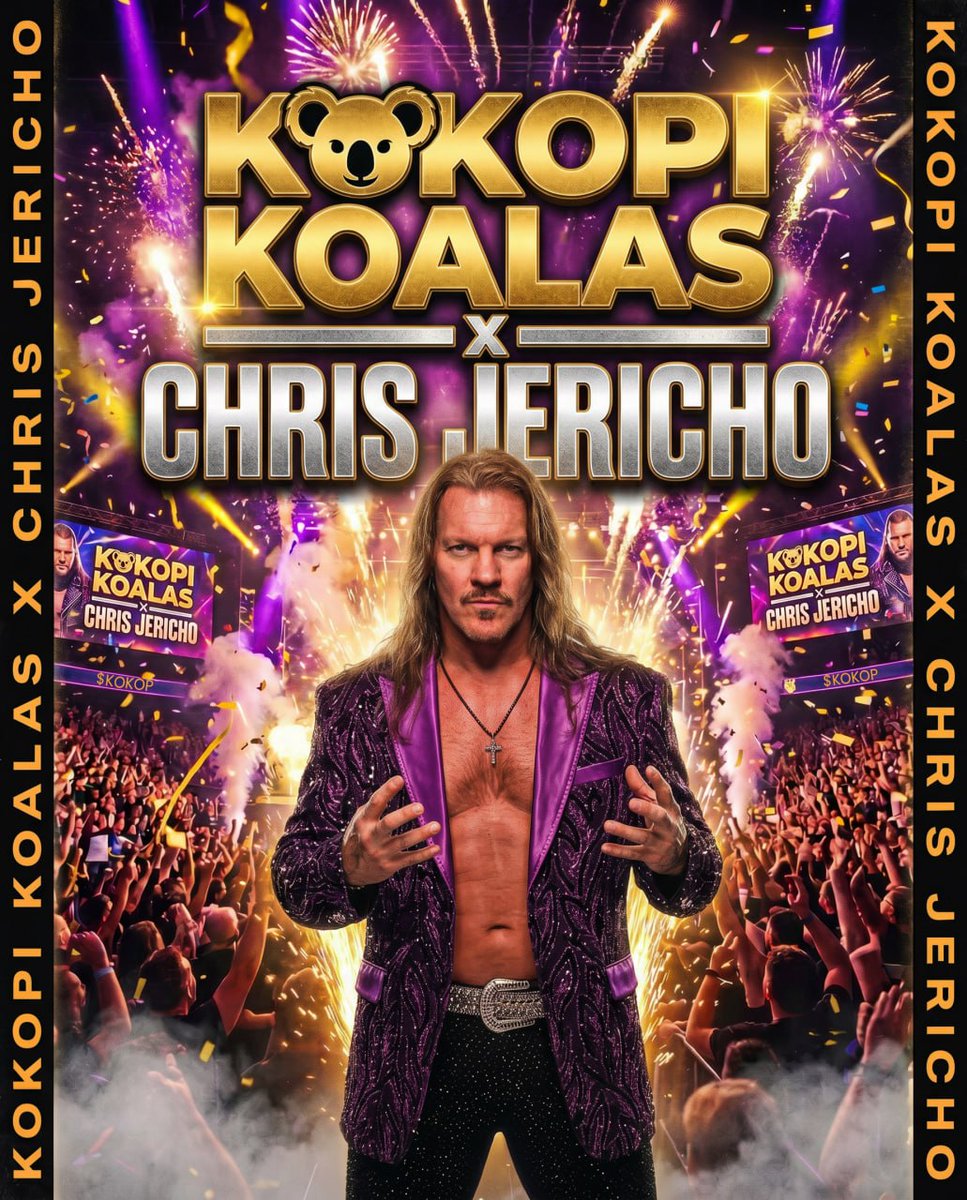
🚨 OFFICIAL: Pro wrestling legend, international rock star and multi time world champion, @IAmJericho is officially joining Kokopi Koalas 🐨⚡️
This is a HUGE partnership for The Grove and we are thrilled to welcome this larger than life personality into our community!
Exclusive activations.
Custom traits.
Community experiences.
Content collabs.
And enough chaos to make the Elders nervous.
We've been building this one behind the scenes for a while.
Welcome to the Grove, Chris 🤝
87
117
264
1,103,594
Jun 9
Take one minute to read this.
What I'm about to share took months of practice, trials, mistakes, and failures to learn but I'm giving it to you.
It's been a while since I last wrote about communities and community building.
Over the next few days, I'll be sharing my thoughts on communities, the mistakes I see founders and builders make (many of which I've made myself), my philosophy on community building, why I believe community should be the strongest growth and marketing layer of any project, and the exact framework I use to build active, engaged, and self-sustaining communities.
By Saturday, I'll publish a full article breaking down the framework I use: THE MOVEMENT METHOD.
If you're building a project, community, or movement and wondering why people aren't participating, I was once as confused as you are.
1
2
12
522
LINKS retweeted

Jun 9
How are you really doing?
Not your PFP. Not the smile on Spaces. Not the “GM” posts.
You.
This market has been brutal. Portfolios are bleeding. Opportunities feel scarce. Some people invested in projects that didn’t work out. Others are still searching for jobs, grants, clients, or their next breakthrough.
I’ve also noticed something else: people who were active and thriving at the start of the year have gone quiet. Maybe the results didn’t come fast enough. Maybe the pressure got heavy. Maybe they started questioning whether it’s all worth it.
Web3 can be rewarding, but it can also test your patience, resilience, and conviction.
So today, let’s be honest for a moment:
How are you really doing in this market? What’s keeping you going, and what’s been your biggest challenge lately?
No filters. No hype. Just real conversations. 👇
Join us today by 7pm
I’d love to hear you!
Set a reminder for my upcoming Space! twitter.com/i/spaces/1dGYllV…
22
5
47
506